

Discovering the Festival’s Deeper Message of Peace, Love and Inner Renewal
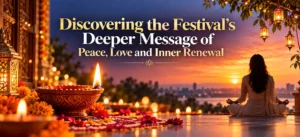
A beautifully illuminated home is a joy to behold. Yet Diwali invites us to consider another kind of illumination: the light we bring to our thoughts, relationships and everyday actions. As we prepare to light a lamp, a meaningful question arises: What needs to become brighter within me? Diwali, also known as Deepavali, takes its name from a row of lamps. Its familiar lights express the victory of light over darkness and the hope of spiritual renewal. This celebration is also an invitation to rediscover the soul’s inner light and renew our relationship with the Divine. The festival’s message becomes especially meaningful when its outer beauty is reflected in the way we live.
The light of the soul
Our deepest identity is the soul: an eternal point of spiritual light, distinct from the physical body through which we express ourselves. This understanding encourages us to look beyond appearance, possessions and social roles, and recognise the spiritual being within.
Viewed through this understanding, the traditional earthen lamp carries a beautiful symbolism. The clay represents the body, while the lighted wick represents the soul.
The oil symbolises spiritual knowledge that sustains awareness of our original qualities, including peace, love, purity and joy. Just as a lamp needs replenishment, our inner life needs attention and nourishment.
The question, therefore, is not simply whether we have lit a lamp, but whether we are allowing its message to guide us. Can I remain respectful during a disagreement? Can I recognise another person’s worth without comparing it with my own? Can I bring understanding into a conversation that might otherwise become an argument?
These everyday choices give the festival a life beyond the evening’s celebrations.
Cleaning the inner home
Preparing for Diwali often involves cleaning and refreshing the home. The Brahma Kumaris interpret this as an invitation to examine the mind as well: to notice resentment, jealousy and unhelpful habits, and consciously cultivate new ways of thinking and behaving. The emphasis is not merely on removing the old, but on nurturing something better in its place.
We might begin with one honest question: “Which habit would I like to change?” Perhaps it is speaking before listening, repeatedly revisiting an old disagreement, or overlooking the good in someone close to us. Instead of demanding a complete transformation overnight, we can practise one different response today.
The custom of settling old business accounts and opening new ones also has a spiritual interpretation. It can remind us to address unresolved relationships, take responsibility for our conduct, and begin again with respect and goodwill. In this sense, Diwali invites us to stop adding fresh bitterness to an old difficulty.
Forgiveness need not mean pretending that a hurt never occurred or accepting harmful behaviour. We can maintain necessary boundaries while choosing not to make resentment the centre of our lives. An apology, an honest conversation or a quiet decision to stop retaliating may be our first step towards a new beginning.
Even the exchange of sweets offers a lesson. In Brahma Kumaris teachings, it is a reminder to bring sweetness into speech: words that convey sincerity, affection and respect rather than sarcasm or humiliation. A sweet offered by hand becomes more meaningful when accompanied by kindness from the heart.
A different kind of wealth
Diwali’s association with Lakshmi invites reflection on what it means to be prosperous. Honouring Lakshmi involves more than seeking material abundance; it is an invitation to cultivate a virtuous life. Their teachings also connect Diwali with the coronation of Lakshmi and Narayan in the Golden Age, understood within their spiritual worldview as an era of purity, harmony and abundance.
Beyond material possessions, are we cultivating the inner wealth of peace, kindness and contentment?
Financial security deserves care and responsible effort. Alongside it, however, we can value the wealth of a clear conscience, trustworthy relationships, generosity and contentment. A celebration need not become a competition over decorations, clothing or gifts. Its richness can lie in making someone feel welcome, appreciating a family member or sharing without expecting recognition.
The spiritual challenge is to let the qualities we admire become qualities we practise.
Keeping the flame alive
Raja yoga meditation involves recognising oneself as a soul and establishing a loving connection with God, the Supreme Soul, understood as an incorporeal source of spiritual qualities and strength. The practice can be undertaken with open eyes and brought into ordinary daily life.
A simple Diwali reflection might be I am a peaceful soul. I turn my attention towards the Supreme Source of peace and love. Today, let my words be gentle and my actions considerate.
The purpose of such a pause is not to withdraw from responsibilities, but to approach them with a clearer intention. Before answering a difficult message, entering a busy workplace or beginning a family conversation, we can remember the quality we wish to express.
From celebration to daily living
Brahma Kumaris Diwali messages emphasise that this light is to be shared across the human family. Inner renewal and concern for others belong together: the celebration becomes an opportunity to bring hope, humility and goodwill into our relationships.
We can give this message a practical form by including someone who might otherwise be alone, listening to a person whose experience differs from ours, or offering help without making them feel indebted. These gestures need not be grand to be meaningful.
When the decorations are put away, what will remain of our Diwali? Perhaps a kinder habit, a repaired relationship or a renewed commitment to live with integrity.
Let us enjoy the lamps, the colours and the shared happiness. Alongside them, let us make room for a quieter celebration within the decision to replace harshness with understanding, selfishness with generosity, and indifference with care.
Brahma Kumaris Shailer Park provides free courses in Raja Yoga meditation, positive thinking, and anger management. For further information, contact 0452 620 674 or email [email protected]. Visit brahmakumaris.org.au to learn more and discover upcoming events near your location.
Celebrate the Light of Diwali with Us!
Brahma Kumaris Shailer Park warmly invites you to a free Diwali Community Celebration on Saturday, 24 October 2026, from 4:00–6:00 pm at Logan East Community Neighbourhood Centre, 53–57 Cinderella Drive, Springwood. Enjoy meditation, music and dance as we celebrate the spirit of Diwali and share its message of peace, love and harmony. All are welcome!
Register via the QR code on the flyer. For enquiries, call 0452 620 674.
-Om Shanthi –
