How Indian Youths Should Relate to Diwali and continue the Rich Culture and Heritage
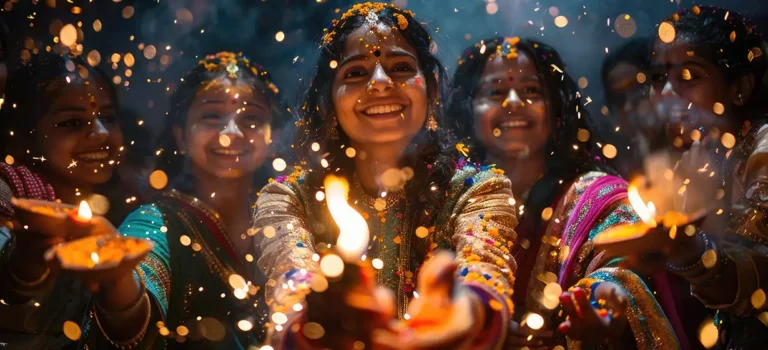
Diwali, the Festival of Lights, is a vibrant celebration that signifies the triumph of light over darkness and good over evil. It embodies profound cultural and spiritual significance, deeply rooted in Indian heritage. As India embraces modernization and globalization, it becomes increasingly important for Indian youth to connect with Diwali in meaningful ways, ensuring the continuation of this rich cultural legacy. We are going to explore how the youth can engage with Diwali and contribute to preserving the traditions that define their heritage.
Understanding the Cultural Significance of Diwali
For Indian youth, the first step in relating to Diwali is to grasp its cultural significance. Diwali is not merely about fireworks, sweets, and festive lights; it is a celebration steeped in mythology, spirituality, and communal values. The festival celebrates various legends, including the return of Lord Rama to Ayodhya, the victory of Lord Krishna over Narakasura, and the enlightenment of Lord Mahavira. Each story conveys powerful moral lessons that resonate with contemporary challenges, such as the importance of justice, compassion, and unity.
By understanding these narratives, young people can appreciate Diwali’s rich tapestry of meaning. This understanding fosters a sense of identity, encouraging them to take pride in their heritage and share these stories with others.
Embracing Traditions
Indian youth can honour Diwali by embracing and participating in traditional practices. These practices include cleaning and decorating homes, performing rituals, and preparing festive foods. Engaging in these activities allows young people to experience firsthand the joy and togetherness that comes with preparation and celebration.
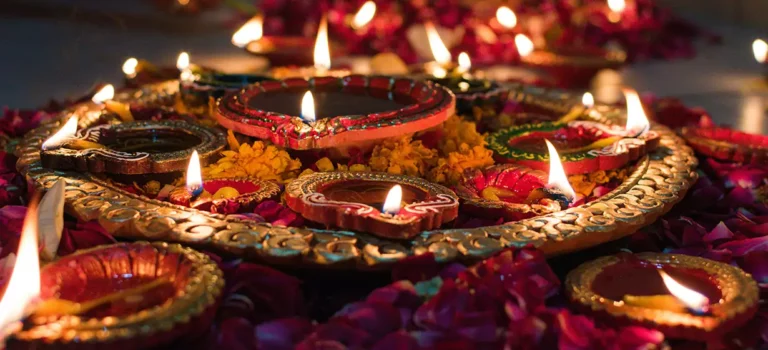
Moreover, learning traditional crafts associated with Diwali, such as creating rangoli (decorative patterns made from coloured powders) and making diyas (oil lamps), can be a fulfilling way to connect with cultural roots. Workshops and community events focused on these crafts can serve as platforms for youth to express creativity while preserving age-old skills.
Promoting Sustainable Celebrations
In a rapidly changing world, young people have a unique opportunity to influence how traditions are celebrated. With growing concerns about environmental sustainability, Indian youth can promote eco-friendly practices during Diwali. This includes reducing the use of firecrackers, opting for organic decorations, and using natural materials for diyas and rangoli.
By leading initiatives for a “Green Diwali,” young people can raise awareness about the environmental impact of traditional celebrations. Organizing community clean-up drives after the festivities or hosting workshops on sustainable practices can inspire others to adopt similar approaches. Such actions not only honour the spirit of Diwali but also show a commitment to future generations and the planet.
Engaging in Community Service
Diwali is fundamentally about togetherness and goodwill. Indian youth can embody this spirit by engaging in community service during the festival. Volunteering at local NGOs, organizing food drives, or participating in outreach programs for underprivileged communities can create a profound impact. Sharing the joy of Diwali with those in need fosters empathy and reinforces the importance of community support.
By involving themselves in charitable activities, young people can also help bridge the gap between tradition and modernity. They can use social media to raise awareness and mobilize resources, encouraging their peers to contribute to meaningful causes during the festival.
Celebrating Diversity
India is a melting pot of cultures, languages, and traditions. For Indian youth, Diwali offers a unique opportunity to celebrate this diversity. By exploring how different communities observe the festival, young people can foster an appreciation for the rich tapestry of Indian culture.
Participating in interfaith Diwali celebrations or cultural exchange programs can help youth understand and respect various interpretations of the festival. This engagement promotes inclusivity and harmony, aligning with the core values of Diwali—unity and love.
Utilizing Technology for Cultural Preservation
In today’s digital age, technology can play a crucial role in preserving and promoting cultural heritage. Indian youth can leverage social media, blogs, and video platforms to share their Diwali experiences, traditions, and stories. Creating content that highlights the significance of Diwali, traditional recipes, and family rituals can inspire a broader audience to appreciate and engage with their culture.
Furthermore, online workshops and virtual celebrations can connect youth from diverse backgrounds, fostering a sense of community and shared heritage. By utilizing technology creatively, young people can ensure that the essence of Diwali reaches a global audience, transcending geographical boundaries.
Passing Down Stories and Values
Another essential way for Indian youth to relate to Diwali is by becoming storytellers. Sharing the legends, values, and teachings associated with the festival can help keep these narratives alive for future generations. Storytelling can take various forms, including discussions, performances, or even modern adaptations through art and media.
Encouraging dialogue about the moral lessons embedded in Diwali stories can help youth reflect on their own lives and values. These discussions can also inspire them to integrate these lessons into their daily actions, promoting kindness, integrity, and resilience.
Celebrating Family and Relationships
Diwali is inherently a family-oriented festival, providing an opportunity for young people to strengthen bonds with loved ones. Engaging in family traditions, whether it’s preparing meals together or participating in rituals, fosters a sense of belonging and continuity.
Youths can also take the initiative to involve older family members in their celebrations, learning from their experiences and stories. This intergenerational connection not only preserves traditions but also enriches the festival with deeper meanings and shared memories.
Conclusion
For Indian youth, Diwali represents a unique opportunity to connect with their cultural roots and contribute to the preservation of rich heritage. By understanding the festival’s significance, embracing traditions, promoting sustainability, engaging in community service, and celebrating diversity, young people can play an essential role in keeping the spirit of Diwali alive.
As they navigate the complexities of modern life, it is vital for them to remember that traditions like Diwali offer not only joy and celebration but also valuable lessons in unity, compassion, and resilience. By actively engaging with Diwali and its heritage, Indian youth can ensure that this cherished festival continues to illuminate lives for generations to come.
JD Media Corp: Uniting Australian Indians Through Empowering Media
In a world where media shapes narratives and communities, JD Media Corp stands out as a beacon for the Indian diaspora in Australia. As a leading cross media establishment, JD Media Corp plays a pivotal role in not only informing the community but also fostering a sense of belonging and unity among Australians of Indian descent. This editorial explores how JD Media Corp strengthens the voice of Indian Australians, amplifying their stories and cultural heritage while advocating for their rights and interests.
At its core, JD Media Corp provides a vital platform for Australian Indians to connect with their heritage and each other. Through various media outlets—print, digital, radio, and television—the organization showcases a wide array of content that resonates with the community. From covering significant festivals and cultural events to highlighting local achievements and stories of resilience, JD Media Corp serves as a bridge between the Indian community and the broader Australian society.
This connection is especially crucial for new immigrants who may feel isolated in a foreign land. By presenting relatable content that reflects their experiences, JD Media Corp helps newcomers find their footing while also providing long-time residents with a space to celebrate their identity. The ability to access news, entertainment, and cultural programming in their native language fosters a sense of belonging and encourages community engagement.
One of the most significant roles of JD Media Corp is amplifying the voices of Australian Indians. This demographic often finds itself underrepresented in mainstream media, leading to a skewed understanding of their contributions and challenges. JD Media Corp actively works to fill this gap by featuring stories that highlight the achievements of Indian Australians in various fields, from business and science to arts and community service.
By giving a platform to diverse voices, JD Media Corp not only showcases the richness of Indian culture but also addresses important issues that affect the community. Topics such as immigration, education, employment, and health are covered extensively, providing valuable insights and resources to navigate the complexities of life in Australia. This commitment to transparency and representation fosters a sense of empowerment within the community, encouraging individuals to share their experiences and advocate for change.
Cultural preservation is another critical aspect of JD Media Corp’s mission. In an increasingly globalized world, maintaining cultural identity can be a challenge for immigrant communities. JD Media Corp takes this responsibility seriously, promoting Indian traditions, festivals, and languages through its content. From Diwali and Holi celebrations to coverage of local cultural events, the organization ensures that these rich traditions are not only preserved but also celebrated within the Australian context.
By actively engaging in cultural events and collaborating with local organizations, JD Media Corp fosters a sense of pride in one’s heritage. These initiatives help bridge generational gaps, enabling younger members of the community to connect with their roots while adapting to their Australian surroundings. This dual identity enriches the Australian multicultural landscape, making it more vibrant and inclusive.
Beyond cultural representation, JD Media Corp serves as an advocate for the Indian community in Australia. By addressing pertinent issues and facilitating dialogue, the organization empowers its audience to engage with local and national policies that affect them. Whether it’s advocating for better representation in government or addressing social justice issues, JD Media Corp is committed to ensuring that the Indian voice is heard.
This advocacy is particularly crucial in times of crisis. By providing updates on health guidelines, vaccination drives, and support services, the organization demonstrated its commitment to the well-being of its audience. This proactive approach reinforces the importance of community cohesion, especially during challenging times.
In addition to its media initiatives, JD Media Corp actively engages with the community through various programs and events. Networking opportunities, workshops, and seminars aim to empower individuals and foster collaboration among community members. By creating spaces for dialogue and interaction, JD Media Corp helps build a stronger, more interconnected community.
Moreover, these initiatives provide a platform for young leaders and entrepreneurs to showcase their talents and ideas. By nurturing the next generation, JD Media Corp ensures that the Indian community continues to thrive and contribute to Australia’s multicultural narrative. This investment in the future not only strengthens community ties but also enriches the broader Australian society.
In conclusion JD Media Corp plays an indispensable role in uniting Australian Indians and empowering their voices. Through its diverse range of media platforms, the organization fosters a sense of belonging, amplifies stories, preserves cultural heritage, and advocates for the community. In doing so, JD Media Corp not only contributes to the vitality of the Indian diaspora in Australia but also enhances the multicultural fabric of the nation.
In a world that often seeks to divide, JD Media Corp stands as a powerful reminder of the strength found in unity. By continuing to champion the voices of Australian Indians, the organization paves the way for a more inclusive and harmonious future, where every story matters and every voice is heard. Together, we can celebrate our shared humanity and work towards a society that reflects the richness of its diverse communities.
Diwali: A celebration of lights and its significance
Diwali, often referred to as the Festival of Lights, is one of the most cherished and widely celebrated festivals in India and among Hindu communities around the world. With roots tracing back over 2,500 years, Diwali symbolizes the triumph of light over darkness, good over evil, and knowledge over ignorance. This vibrant festival transcends cultural and religious boundaries, celebrated not only by Hindus but also by Jains, Sikhs, and some Muslims, each adding their unique interpretations and significance to the occasion.
The origins of Diwali are complex and varied. The term “Diwali” is derived from the Sanskrit word “Deepawali,” meaning “row of lights.” It is believed to have evolved from ancient harvest festivals in South Asia, where communities would celebrate the harvest’s bounty and give thanks for a prosperous season.
While the exact historical origins are difficult to pinpoint, several legends are associated with the festival. For Hindus, Diwali marks the return of Lord Rama, along with his wife Sita and brother Lakshman, to their kingdom Ayodhya after defeating the demon king Ravana, as narrated in the epic Ramayana. The joyous citizens of Ayodhya welcomed them home by lighting oil lamps, symbolizing the victory of good over evil.
In the Jain tradition, Diwali signifies the day when Lord Mahavira, the last Tirthankara, attained Nirvana, or liberation. For Sikhs, the festival commemorates the release of Guru Hargobind from imprisonment in 1619, while for Buddhists, it marks Emperor Ashoka’s conversion to Buddhism.
At its core, Diwali represents several key themes: 1. Victory of Good Over Evil: Central to Diwali is the celebration of the victory of good over evil. The story of Lord Rama’s return and the defeat of Ravana serves as a reminder that righteousness prevails in the end. 2. Light Over Darkness: Diwali is fundamentally a celebration of light. The illumination of homes with diyas (oil lamps) and colourful rangoli (decorative patterns made from coloured powders) signifies the dispelling of ignorance and the arrival of knowledge. 3. New Beginnings: Diwali also heralds new beginnings. It is a time for people to reflect on the past year and set intentions for the year ahead. Many choose this time to start new ventures, believing that the blessings of Goddess Lakshmi, the deity of wealth and prosperity, will guide their efforts. 4. Unity and Community: The festival emphasizes unity among families and communities. It is a time for gatherings, sharing meals, and exchanging gifts. The communal celebrations foster a sense of belonging and reinforce social bonds. 5. Spiritual Reflection: Beyond the festivities, Diwali encourages spiritual reflection and inner growth. The rituals performed during the festival, such as prayers and meditation, provide an opportunity for individuals to connect with their spirituality.
The Five Days of Diwali
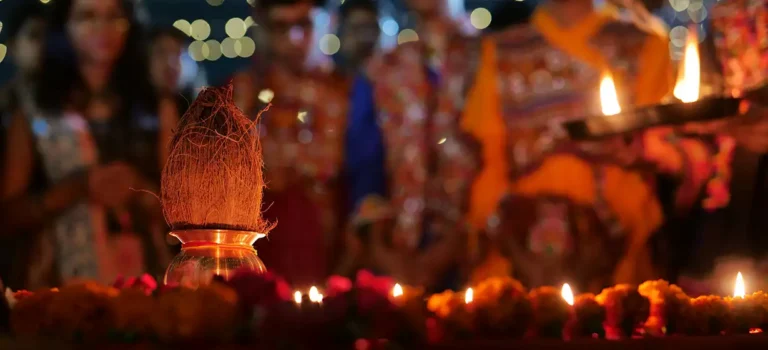
Diwali is celebrated over five days, with each day having its unique significance: 1. Dhanteras: The festival begins with Dhanteras, dedicated to wealth and prosperity. On this day, people clean and decorate their homes and purchase new items, especially metals, to invite good fortune. Devotees also worship Lord Dhanvantari, the god of Ayurveda, for health and well-being. 2. Naraka Chaturdashi (Choti Diwali): The second day, also known as Choti Diwali, commemorates Lord Krishna’s victory over the demon Narakasura. Celebrations include early morning rituals and the lighting of lamps to ward off darkness. 3. Diwali (Lakshmi Puja): The main day of the festival is dedicated to worshiping Goddess Lakshmi. Families perform Lakshmi Puja (prayer) in the evening, welcoming her into their homes. The night is filled with fireworks, and people exchange sweets and gifts, symbolizing joy and goodwill. 4. Govardhan Puja: The day after Diwali celebrates Govardhan Puja, honouring Lord Krishna’s defeat of Indra by lifting the Govardhan Mountain to protect the villagers. It is a day of feasting and preparing special meals. 5. Bhai Dooj: The final day of Diwali is Bhai Dooj, which celebrates the bond between brothers and sisters. Sisters pray for their brothers’ prosperity and well-being, and brothers, in turn, vow to protect their sisters.
Diwali celebrations today blend tradition with modernity. While many customs remain intact, urbanization and globalization have introduced new practices. In cities, elaborate public displays of lights and fireworks create a festive atmosphere, and community events often take place.
Social media plays a significant role in Diwali celebrations, with families sharing their festivities online. Virtual gatherings have also become common, allowing loved ones separated by distance to connect and celebrate together.
Food plays a central role in Diwali celebrations. Families prepare a variety of sweets and snacks, symbolizing the sharing of joy. Traditional treats like ladoos, barfis, and savory snacks are prepared and exchanged among friends and neighbours.
In recent years, there has been a growing awareness of the environmental impact of Diwali celebrations, particularly regarding air and noise pollution caused by fireworks. Many communities are adopting eco-friendly practices, such as using fewer firecrackers and opting for sustainable decorations.
Initiatives promoting “green Diwali” encourage the use of natural materials for decorations and the creation of eco-friendly lamps. Educating communities about the importance of environmental conservation during festivities has become a significant focus, reflecting a broader shift towards sustainability.
Finally, Diwali is much more than a festival; it is a profound celebration of life, hope, and community. With its rich history and deep significance, Diwali encourages individuals to reflect on their values, promote positivity, and strengthen bonds with loved ones. As the Festival of Lights continues to evolve, it remains a timeless reminder of the enduring power of goodness and the light within each of us.
This remarkable celebration, steeped in tradition yet adaptable to contemporary values, will undoubtedly continue to inspire generations to come, illuminating lives and hearts with its radiant spirit.
When an appliance or car is purchased, it comes with a user manual, but when we become parents there is no instructions included! Fumbling in the dark, sleep deprived, away from community and family young parents try to figure out how to look after their newborn. As a new mother I often wished someone would write me a manual many a time. There have been many moments of doubt and self-criticism. In the end we all do what we can. Being on the path of yoga and training to be a yoga teacher gave me many gifts, in fact it has a manual! Now if only I had found this earlier in my parenting journey.
Yoga is a holistic philosophy that gives us a set of tenets how to navigate life in a connected and meaningful way. Yoga as a practice reminds us there is a depth to life other than just the daily grind. It allows us to find the beauty and wisdom in all that is around us. Yoga as a practice brings harmony between the mind and body. It acknowledges and treats the whole person; we ARE more than our bodies.
To complete my 300-hour yoga teacher training a thesis was required. By this stage my children were young adults, but it dawned on me as I delved deep in study of the one of main texts for yoga – Patanjali Yoga Sutras – that there is something very special here for parents also. Patanjali Yoga Sutras is the collection of verses about the theory and practice of yoga. While the sutras are guide to a person on path of self-inquiry and self-realization; it does also hold wisdom for the house holder.
Contrary to what we see in popular culture yoga is more than just bending the bodies in to fantastic postures. There are eight limbs of yoga, it is prescribed that they are to be learned sequentially, mastering one before progressing to the next. They are: 1. Yama – are principles that guide us how to live wholistically, it teaches us how to treat others and the world around us. 2. Niyamas – are standards fof self-discipline. 3. Asana – practice of yoga postures, allows the one to connect with their body, bring their outwardly focused mind back into the body. 4. Pranayama – breath control, through which we are able to invigorate our bodies and support destressing our nervous system. 5. Pratyahara – withdrawal of senses. It teaches to align focus inwardly for peacefulness. 6. Dharana – is concentration, it is a single pointed focus of the mind that supports meditation. 7. Dhyana – deep effortless contemplation on our reality, meditation.
My thesis focused on the Yama’s and Niyamas, the first two limbs. Specially there are five Yamas and five Niyamas. As you can already see yoga philosophy can be quite systematic. Systems, and routines are essential for parenting. They reduce the chaos of a busy life pulling parents in multiple directions.
As summarized by the Sri Sri Yoga School of Yoga: Yama are five social ethics. They include ahimsa – kindness, satya – truthfulness, asteya – nonstealing, brahmacharya – moderation and aparigraha – generosity. Niyamas are five personal practices or disciplines. They include saucha – purity, santosha – contentment, tapas – austerity, swadhyaya – self study and iswara-pranidhana – surrender.
Over the next issues of the Brisbane Indian Times, I will share what I wrote in my thesis and together we will explore practical strategies and tips of how we can take an ancient text on yoga philosophy and apply it today to parenting. It is a testament to our ancient knowledge keepers that they cognized knowledge that is timeless and relevant to today.
Disclaimer – I am not an expert in the Patanjali Yoga Sutras, I am a STUDENT. As a student what I have learned and understood I wish to share in the forth coming articles. These are my contemplations and learnings, if they resonate use it and do tell me about it! If your curiously has been sparked there are many books on the limbs of yoga and many schools of yoga, you can study with. I wholeheartedly encourage it! You don’t have to become a yoga teacher to do these teacher trainings, to me they are life trainings.
Written by Reema Naresh, Yoga Teacher and Ayurvedic Lifestyle Consultant. Reema, works at the University of Queensland at a research centre professionally. She is a keen holistic health enthusiast.
—————————————————————
August Part 2
Parenting, if only there was a manual!
The chaos parenting can be and why it is essential to have a solid foundation.
If you ask any first-time parents, they will share with you that with the intense joy and love they experience for their newborn infant they also feel intense anxiety and fear of caring for a vulnerable little human being.
It sure is a steep learning curve to fend for an infant’s biological needs, and a lot of focus goes into this in the early days. The new mother is hormonally primed to care and feed the baby. These needs get sorted out eventually and there is a sense of success as rhythms gets established. However, at each age new hurdles present, and parents very quickly learn not to gloat over mastering or achieving something as the baby for sure changes! This heralds in the new journey of a parent as more complex situations present and new parents have to navigate terrains they have never travelled.
Quite a lot of things impact how we parent. These include parents own mental and physical wellbeing, their own experiences of being parented, experience of trauma in early life or stability in marriage/partnerships. Then there is parenting alone, as a single mum or dad, mostly this falls on the mother in many communities. Then there is also progressing and balancing careers, including creating the economic stability to provide for their family. Then throw in the mix the increase and prevalence of behavioural and emotional difficulties, hyperactivity or internalising behaviours like aggression, anxiety and depression that children are experiencing. Let’s not even begin to talk about increase use of screens and the prevalence of attention deficient disorders.
When I think about my own parenting experience, away from my family and community, alone with only my nuclear family, I have immense empathy for newly immigrated families who have young children. Not only are you trying to start or establish your selves in a new job, but you will be learning to navigate new a health and education system, trying settle in new country and on top of all that you could be really home sick for family and traditions that would have surrounded you had you been back home. None of these are an easy feat! So, remember be kind to yourself. As with life – parenting is also a journey. Sometimes we are winning, and all is working well and other times we will be drowning in laundry, crying kids and looming deadlines at work. This is when I have turned to yoga, breathwork and meditation. It has been an iterative journey of self-correcting and as my kids grew older being told by them, when I erred!
Calling in some sanity to the chaos!
Yoga as philosophy is about going inward and becoming centred. When we to operate from a centred state, we are able to cope with whatever life throws at us. It is about creating equanimity in the chaos of life. It is about aiming for smaller/shorter reactions to experiences to the good or bad things that happen. The more centred we are, the more likely we will come from a place clarity and consideration for ourselves as parents and for our children and ourselves. Then we begin to see reactions to good or bad things morph into responses. The elegance of this can surprise you at times! Once, my primary school age kid asked me “you were really mad a minute ago, but now you are fine, how did you do that?”. That was a day I was winning and, trust me there were many when I was not.
I am huge proponent of parents investing in themselves and their wellbeing before they become parents. That’s right, parenting starts before we become parents. Because when all hells comes loose with a screaming, vomity baby at 3 am, several nights in a row; we will inevitably go to our default way of operating. Whether we agree with it, like it or not, we all will have moments where we have parented in ways that we would not have approved of had we not been in the that sleep depraved state!
Here I would encourage parents to invest in themselves before they become pregnant. It is what you have been practicing for a while, and that is the established habit or discipline that you will carry with you in your parenting phase. And, for those who have had babies, its not too late, you can still be work in progress, like the rest of us. Take some time and learn a stress management technique that can support you in your life and in your parenting. I have for over quite a few decades practiced a breathing technique call Sudarshan Kriya. So, by the time my children came this was a well-established practice for me. They grew up seeing me do these practices. So, look around and explore what suits you. If you want to know more about my twenty-minute daily practice you can reach me on [email protected].
So, in addition to having a practice that supports us daily, it helps to have a framework that we can look to for some structure and sanity. In parenting there were many moments when we all could have done with some structure and big picture views.
Let’s dive right into it! Why the Yama are good foundation for parenting: Yama are the social code of conduct, essentially the external discipline that helps create harmony with our outer world. Here are practical suggestions how the Yamas can be translated to parenting.
Disclaimer – I am not an expert in the Patanjali Yoga Sutras, I am a STUDENT. As a student what I have learned and understood I wish to share in the forth coming articles. These are my contemplations and learnings, if they resonate use it and do tell me about it! If your curiously has been sparked there are many books on the limbs of yoga and many schools of yoga, you can study with. I wholeheartedly encourage it! You don’t have to become a yoga teacher to do these teacher trainings, to me they are life trainings.
Written by Reema Naresh, BSc(Hons)(Psych), Yoga Teacher including post and prenatal yoga certified and Ayurvedic Lifestyle Consultant. Reema, professionally works at the University of Queensland at a research centre. She is a keen holistic health enthusiast. You can contact her via [email protected].
Yama Social Code of Conduct
Parent
Commitments of a parent to themselves and to their children
Young child / Teens
Values that parents can inculcate in their children
Ahimsa Kindness
Parent
I will be kind to myself and not be overly critical. I am learning how to be a parent.
I know how I behave will be how you will measure your interactions with others.
I will respect and honour your body. I will touch and speak to you with love and gentleness.
In the way I choose to discipline, I must build you up, not break you down.
Young child
• Mummy/Daddy will use their words; I can also.
• We will use gentle hands and words.
• We do not hit/bite/scream at others.
• We care for animals, nature, and other people
Teens
• I will figure out alternative ways to work through feelings of aggression/ anger/frustration.
• I will ask for help when I am struggling to fine a better way.
• Violence is a poor way to solve problems.
Satya Truthfullness
Parent
I will speak about my needs honestly and will ask for help.
I will speak my truth and walk my truth. I will be an example and role model of truth for you.
I will create the possibility of an authentic relationship between us, by being my true self around you.
You can trust me. I will share what is age-appropriate for you.
Young Child
• Let’s be truthful.
• We tell the truth to each other.
• We speak from the heart.
• Telling the truth is good for my heart. I am happy when I tell the truth.
Teens
• My parents trust me and are honest with me. I will be honest with them also, even when I have done the worst thing and am really scared.
• I will honestly share my feelings with my parents, this way, we can learn how to help each other best.
Asteya Non-stealing
Parent
I will think deeply about what is really needed for me to parent well and what my children’s needs are.
I will be present for my children. I will not steal my attention from you (including screen time, tech hygiene, work life balance).
I will not protect, take away life experiences for you to satisfy my sense of insecurity or fears.
Young Child
• I can share my things.
• I take what is mine/my share and look after my things and others things.
Teens
• I respect others property.
• I will not take that which is not mine.
• I value my mental state of peace rather than taking a thing that is not mine.
• Sometimes I have to learn the hard way, and that means it will not be easy.
Brahmacharya Moderation
Parent
I will honour my body and its needs. I will rest when my baby rests, create time to care for myself.
I will look after my body, and role model healthy choices.
I will aim for the middle path of parenting – not to harden you with too much discipline and neither spoil you with none.
Young Child
• My body is mine.
• I respect and love my body.
• If I am scared or someone hurts me or my body I will talk to my parents
Teens
• I will keep my body clean, nourished, rested and well.
• I will honour your body and others body and their personal space and needs.
• Sex is something really special I will share with someone who I deeply care for.
Aparigraha Generosity
Parent
I will model moderation in my choices for myself and for my children’s needs.
You are not an object I don’t own my child.
My hopes, dreams and goals are mine and you do not have to achieve them.
You do not owe me anything, and you are free to live your own life.
I may not always agree/support all your choices, but I am always here and will always love you. I wish you freedom.
Young Child
• I will share. I don’t have to have all of the toys/biscuits….
• Things in our home belong to everyone, we all look after it.
• I will share my love and joy with everyone.
Teens
• I don’t need the latest and greatest. I will learn to practice moderation. It helps my mind feel at ease.
• I will learn to watch my feelings when I start to hanker and want something desperately.
• Being generous allows this quality to grow all around me.
Football Queensland is thrilled to host the 2024 Pacific Championships on the beautiful Sunshine Coast this September.
Hosted in partnership with the Sunshine Coast Council, the inaugural Pacific Championships will be staged at Maroochydore FC, providing unforgettable moments and a perfect spring getaway for participants and their families.
The Championships will welcome players from across Australia and Overseas to compete.
A selected Under 16 team of Fiji players representing QFFA will be participating in this Pacific Championship, scheduled from 24th to 26h September at the Maroochydore FC grounds in Maroochydore. The Academy Championships serve as a valuable opportunity for the best junior players from across Australia to compete and test themselves against their Queensland FQ Academy counterparts.
Under the auspicious of Football Queensland representative teams from fellow Member Federations and clubs from across the country to participate in the 2024 Academy Championships.
The QFFA U16 team has been preparing for well Under the esteemed guidance of Head Coach Raj Oshen with legends Esala Masi ans Stewart Bola and team manager Aven Sharma forming a formidable team to guide our youngsters.
Team Director is Nick Maharaj. President Jitendra Prasad says We truly believe that the future of QFFA is in our youth
QFFA is very grateful for this opportunity says President Jitendra Prasad who very quickly summarises amongst others the benefits of participating as follows:
– CREATING PATHWAYS, and exposure of our young players to compete with elite players in same age group.
– ENGAGING FAMILIES IN WIDER COMMUNITY
– SPONSORSHIP OPPORTUNITIES
– PUTTING QFFA and FIJI ON THE MAP WITHIN AUSTRALIA
Mr Prasad also thanks the parents of the selected players for their dedication and passion to be part of the journey.
The parents are the unsung heroes, says Jitendra, taking their kids from ground to ground, training as well as friendly matches.
Jitendra also thanks Raj Oshen and his team for the dedication to prepare the team, spending lots of personal time and effort for this tournament.
And Off course Big thanks to all the sponsors for supporting the football journey.
The President of the Queensland Fiji Football Association (QFFA) Mr Jitendra Prasad have been nominated as the Liberal National Party candidate to contest for the State seat of Algester
LNP Leader David Crisafulli praised Jitendra’s nomination, noting his deep connection to the community and his proven track record of service. “Jitendra Prasad is the embodiment of Queensland values—hard work, integrity, and a deep commitment to serving others. His extensive experience in both business and community service makes him an outstanding candidate for Algester. Jitendra will fight tirelessly for the people of Algester, ensuring their voices are heard in Parliament.”
An ardent sportsman and sport administrator, Jitendra was born in Fiji and has lived in Brisbane with his family since 1992. After earning a Bachelor of Commerce and master’s in business administration (MBA) from the University of Queensland, Jitendra established a successful accounting practice in Browns Plains and has operated at the Johnson Road office since 2000.
Jitendra invests his time as honorary auditor for several local not-for-profit organizations, he has ensured financial transparency and accountability, helping these groups maximize their impact.
A Rotary Club District Governor, Jitendra embodies Rotary’s mantra of, “Service Above Self” initiating projects that address critical issues such as youth development, health, and education—issues that resonate deeply with the people of Algester.
Being President of a major Sporting organisation Jitendra meet players and families from across every socio-economic circles. While personally assisting many of them in need and referring others to benevolent Charities, Jitendra deep concerns is obvious where he said “ It is heartbreaking to see our community worried about making ends meet because of cost-of-living pressures and to see so many living in fear about the safety of their homes and well-being caused by increased youth crime. These issues require urgent attention and action”
Australian Indian Times wishes Jitendra Prasad and all Australian Indians from all political learning every success at the polls.
The Gold Coast Chapter of GOPIO (GOPIO-GC) held its Annual Gala Dinner on the 3rd August 2024 at the prestigious Sheraton Grand Mirage Resort Gold Coast. This year, like past years, the dinner was aimed at raising funds to support various charities. The event was graced by the Consul-General of India (Queensland) Ms Neetu Bhagotia, Hon. John-Paul Langbroek, Surfers Paradise, Queensland MP and Shadow Minister for Multiculturalism, and Hon. Rob Borbidge, ex-Premier of Queensland and Chairman of Experience Gold Coast.
The red carpet welcome led people into the main hall which was decorated exquisitely. The photo booth in the lobby allowed people to mingle as well as create special memories via numerous photos. The MC Zain Chams was, as always, engaging and ensured that everything ran smoothly. The attendees were entertained by the Tapori Squad who dazzled with their dance moves and by Manish and Sheker with their melodious singing. If the dancing and singing were a treat to the eyes and ears respectively, the dinner was a heavenly treat for the taste buds. The event concluded with the acknowledgement that there are many in our society who are doing it tough this year. Numerous items were auctioned and raffled to raise money for the charities Homeless in Gold Coast and Life Global Australia. Special thanks to our platinum sponsors Experience Gold Coast, Silver sponsor Global Convenience, and media partners 7 Seas TV for their video coverage.
GOPIO-GC acknowledges the generous support from all the sponsors, auction and raffle prize donors, the special guests, and all the participants who made it a memorable event.
Gaura Travel is thrilled to announce the launch of its biggest Festive Super Sale, offering exceptional flight deals to India. Starting from 20th September, travelers can secure their flights from just a $5 deposit and enjoy an additional 5% discount on return tickets, ensuring they can celebrate the upcoming festive season with loved ones back home.
As the season of festivities approaches, marked by the joy of Durga Puja, the vibrant celebrations of Dussehra, the energy of Navratri, and the warmth of Diwali, many Indians in Australia are eager to join their families and friends in India. Whether it’s dancing to garba, lighting diyas, or savoring traditional sweets, Gaura Travel understands the importance of these cherished moments.
Turn Your Dream Trip into Reality
Gaura Travel’s Festive Super Sale makes flying home easier than ever. With exclusive deals from top airlines such as Singapore Airlines, Qantas, Malaysia Airlines, and Cathay Pacific, customers can lock in today’s prices from a $5 deposit and pay the remaining amount either upfront or in convenient weekly instalments. To add to the flexibility, travelers can mix and match airlines—fly to India with one and return with another. Additionally, customers will enjoy 5% off on return tickets and a generous 30kg luggage allowance to carry all their festival essentials.
For example, while booking directly with Singapore Airlines might cost you around $2,455 for departure from Melbourne to Delhi on 16th October and return from Delhi to Melbourne on 31st October, Gaura Travel offers the same flight for just $1,398. This is possible due to Gaura Travel’s long-standing partnerships with Singapore Airlines and other leading airlines, allowing them to provide exclusive deals that are not available through any other Australian travel agency. Don’t believe us? Visit the Gaura Travel website and see for yourself. Plus, enjoy a further 5% discount on these already unbeatable rates, available only during the Festive Super Sale.
Flights are available from major Australian cities including Sydney, Melbourne, Brisbane, Adelaide, and Perth, with destinations across India such as Delhi, Mumbai, Bengaluru, Hyderabad, Ahmedabad, Amritsar, and many more.
This Festive Super Sale is Gaura Travel’s last major sale of the year, running until 30th September, so don’t miss out on these incredible savings!
About Gaura Travel
For over 17 years, Gaura Travel has been Australia’s leading travel agency for flights to India, serving more than 300,000 customers. Its strong partnerships with major airlines including Qantas, Singapore Airlines, Cathay Pacific, and Malaysia Airlines allow Gaura Travel to offer exclusive deals unmatched by other agencies. During the pandemic, Gaura Travel played a critical role in keeping families connected, operating 102 charter flights between Australia and India.
Gaura Travel is ATIA accredited and has earned numerous industry awards, including the Highly Commended Award at the 2023 IABCA Australia India Impact Awards, and a finalist position in the 2024 IABCA Awards. With a global team of over 150 travel experts and 24/7 customer support, Gaura Travel is committed to providing exceptional service throughout the booking process.
For more information or to book your flight, visit www.gauratravel.com.au or call 1300 359 463.
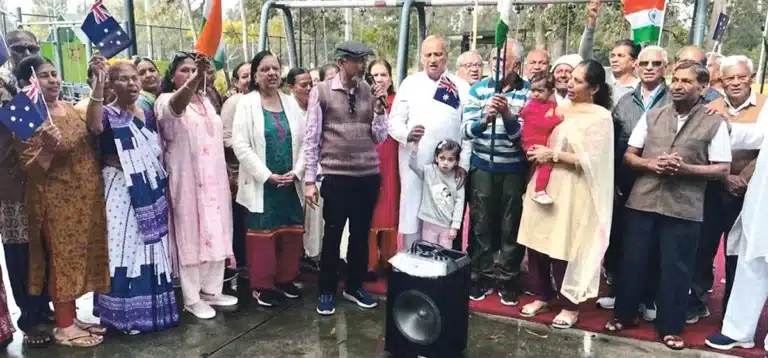
Indian Independence Day celebrations in Carseldine Park by IndoAustralian Seniors Creative Sanatan Sanstha Pty Ltd
IndoAustralian Seniors Creative Sanatan Sanstha Pty Ltd is a Not for Profit
Sanstha (Corporate) that provides Seniors various opportunities for socialising and cultural enhancement. Our members include seniors who are Australian citizens or PR holders.
Once a week, we have a get together in Carsaldine Park, during which the members showcase their talents in music, poetry and singing, share recipes for adapting traditional foods using vegetables that are available in Australia, participate in yoga and meditation for physical and mental well-being, and sharing ideas on how to pass on their traditional knowledge and values with their grandchildren. We also organise cultural programs for Sanatan religious festivals.
We have organised picnics and sightseeing trips to various Australian heritage sites of importance. This helps Seniors appreciate Australia and adapt to the Australian lifestyle while maintaining their Hindu culture.
One of our future programs is to build a Golden Age Carer’s housing facilities for Seniors with special dietary requirements such as vegetarianism and Vaishnav diets. This will also help, to some extent, Queensland and Federal Governments’ in meeting the shortages in housing for Seniors.
On 15 August, we all celebrated Indian Independence Day celebrations and chanted Bharat Mata ki Jai.
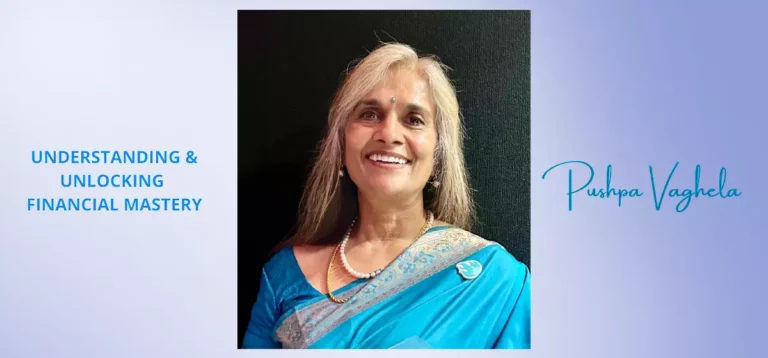
Unlocking Financial Mastery: The Key to True Wealth and Freedom
In today’s fast-paced and uncertain world, financial mastery has become more critical than ever. The global economic landscape is rapidly changing, and with that comes a unique opportunity for those who are prepared to navigate it. Pushpa’s Financial Mastery monthly article is dedicated to equipping individuals with the tools, strategies, and mindset needed to achieve financial freedom and live life on their terms. Whether you are starting from scratch or looking to elevate your existing financial knowledge, this informative writing offers a transformative experience for anyone who wants to take control of their financial future.
Many people talk about improving their lives, but few take the steps necessary to do so. By engaging in Financial Mastery, you are one of the select few taking action to attain the knowledge and understanding needed to apply financial principles effectively. And as you grow in your financial wisdom, you can share this valuable knowledge with others, furthering the ripple effect of financial education in your community.
Through the monthly Financial Mastery articles, you are committing to improving the quality of your life, no matter where you stand financially. This knowledge is not just about accumulating wealth; it’s about achieving true financial freedom and living a life of abundance and peace of mind. When the pressure of finances is lifted, life feels different—more empowering and full of possibilities.
One of the core messages of Financial Mastery is that financial freedom is within everyone’s reach. But it requires knowledge, planning, and the right mindset. We live in uncharted territory—where economic, political, and social landscapes are shifting at an unprecedented rate. Regardless of your financial status or location, these global changes affect us all. But while the world presents new challenges, it also presents exponential opportunities for those who are prepared.
The foundation of Financial Mastery lies in creating yourself a customised financial plan tailored to your unique goals and circumstances. We will guide you through with our articles and the many ways to build wealth in any environment. By learning what to look for and, equally importantly, what to avoid, you can create the financial protection you need. Ignorance is not bliss when it comes to your finances; sitting on the sidelines is no longer an option. These articles will bring together the best knowledge from top financial minds globally, giving you access to proven strategies that work.
However, success in any area of life—including financial freedom—is not just about knowledge or strategies. It’s 80% psychology and only 20% mechanics. The key is developing an unshakeable mindset, one where you have confidence regardless of external circumstances. The Financial Mastery information, generated from my wealth programs, helps you cultivate this mindset, offering you the tools to experience unwavering confidence in your financial decisions and the gratitude and joy that come from financial peace.
To truly benefit from Financial Mastery, you must make a commitment right now. Stay focused, grow in confidence and manage your mindset. Resources alone don’t create change—you do. We will provide the guide, but it’s your determination and action that will bring lasting transformation. As you go through the articles, you’ll see how shifts in your financial understanding can positively impact other areas of your life.
At its core, Financial Mastery is about more than just wealth creation—it’s about designing an extraordinary life on your terms. By consistently improving every area that matters to you, you’ll create a life that feels rich in every sense. Each lesson your read here in financial mastery affects all aspects of life, from relationships to personal fulfillment.
We hope this series of articles will not only educate you about finances but also transform who you become in the process. Your journey toward financial freedom is just beginning, and there is so much to look forward to.
DISCLAIMER: Before investing, carefully consider the objectives, risks, charges, and expenses involved. All investments carry risks, including the loss of principal. Past performance is no guarantee of future results. We are not licensed investment advisors, and the opinions shared here are not to be taken as professional investment advice. Always consult with a licensed financial expert before making any investment decisions.
Pushpa Vaghela [email protected]
Mobile: 0497998829









 Football Queensland is thrilled to host the 2024 Pacific Championships on the beautiful Sunshine Coast this September.
 The Academy Championships serve as a valuable opportunity for the best junior players from across Australia to compete and test themselves against their Queensland FQ Academy counterparts.
 President Jitendra Prasad says We truly believe that the future of QFFA is in our youth


 The Gold Coast Chapter of GOPIO (GOPIO-GC) held its Annual Gala Dinner on the 3rd August 2024 at the prestigious Sheraton Grand Mirage Resort Gold Coast. This year, like past years, the dinner was aimed at raising funds to support various charities. The event was graced by the Consul-General of India (Queensland) Ms Neetu Bhagotia, Hon. John-Paul Langbroek, Surfers Paradise, Queensland MP and Shadow Minister for Multiculturalism, and Hon. Rob Borbidge, ex-Premier of Queensland and Chairman of Experience Gold Coast.


 In today’s fast-paced and uncertain world, financial mastery has become more critical than ever. The global economic landscape is rapidly changing, and with that comes a unique opportunity for those who are prepared to navigate it. Pushpa’s Financial Mastery monthly article is dedicated to equipping individuals with the tools, strategies, and mindset needed to achieve financial freedom and live life on their terms. Whether you are starting from scratch or looking to elevate your existing financial knowledge, this informative writing offers a transformative experience for anyone who wants to take control of their financial future.