


HELP FOR FINANCES AND MENTAL HEALTH

Help for finances and mental health

Coronavirus has brought with it many challenges. These have affected both our financial health and our mental health and wellbeing. You may be experiencing problems sleeping, mood changes, low energy levels or having issues in your relationships.  During times like this, it is important to know where you can get help.HELP FOR FINANCES AND MENTAL HEALTH

Support services

With big changes to your lifestyle it’s normal to feel worried, anxious or stressed. It can help to speak with family and friends, or connect with a health professional. There are a range of services to help people feeling anxious or overwhelmed, including:

Head to Health

For information, advice, and a wide range of support services visit www.headtohealth.gov.au.

Lifeline 

For help and tips on looking after your mental health during the pandemic visit www.lifeline.org.au or call 13 11 14.

Beyond Blue

Beyond blue has a dedicated Coronavirus support service you can use by calling
1800 512 348. You can also visit www.coronavirus.beyondblue.org.au

Kids helpline

Provides free services for children and young people. For more information visit www.kidshelpline.com.au or call 1800 551 800.

Headspace

You can visit www.headspace.org.au for youth support services.

MensLine Australia

MensLine provides free support and counselling services for men. Call 1300 789 978 or visit www.mensline.org.au for more information.

If you or someone you know is in crisis and needs help now, please call 000.

Financial Support

The Australian Government is providing financial help to people, businesses and sole traders affected by Coronavirus.

This is available through Services Australia and includes income support and support for households. Find out more about these services by visiting www.servicesaustralia.gov.au/covid19 or calling 131 202.

The Australian Taxation Office provides help including early release of superannuation funds and minimum drawdown rate options for retirees. Help is also available for eligible businesses, including boosting cash flow and JobKeeper payments. You can find out more about these at www.ato.gov.au/coronavirus.

You can also get free, independent and private advice from a financial adviser. You can access this by contacting the National Debt Helpline on 1800 007 007.

Translating and Interpreting Service

If you are a non-English speaker you can contact the Translating and Interpreting Service on 131 450.

They will connect you to an interpreter in your language. They will then ask you the name and phone number of the organisation you need to contact.

Stay on the line while the operator connects you and the interpreter through to the organisation.

More information

It is important to get information from official sources. Visit www.australia.gov.au for the latest advice, and links to each state and territory. You should also think about downloading the COVIDSafe app to help keep your family, friends and community safe.
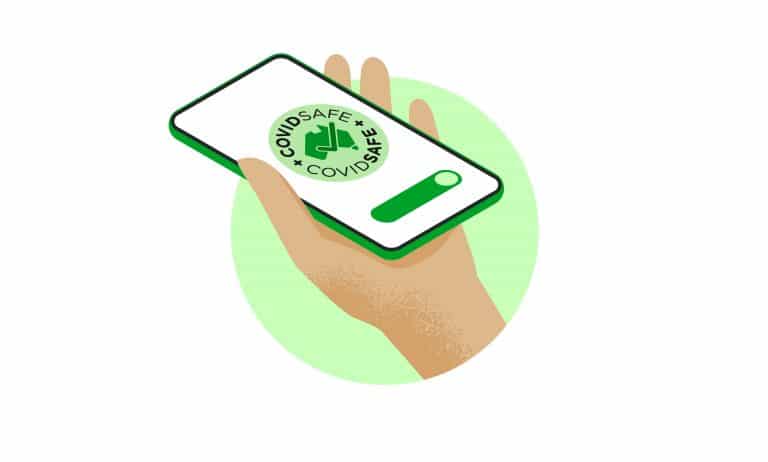
COVIDSafe APP

Here’s what you need to know about the new COVIDSafe app:

Almost 5 million Australians have already downloaded the COVIDSafe app. All Australians with a mobile phone are encouraged to get the app and help slow the spread of coronavirus and support the easing of restrictions.

What is the COVIDSafe app?The COVIDSafe app is a new public health tool to help slow the spread of coronavirus in Australia. It will help keep Australians safe by speeding up the process of notifying people who have been in contact with someone with coronavirus. The app is in addition to practising good hygiene and physical distancing as well as the increased testing of the population.
The app operates in the background on your phone as you go about your day. It uses Bluetooth to find other phones with the COVIDSafe app and records the date, time, distance and duration of contact. The app does not record your location. The app notes the device you have been within 1.5 metres of for 15 minutes or more.

This information is encrypted and stored in the app on your phone. Not even you can access it.

Contact information is only stored in the app for 21 days and after this time is automatically deleted. This period allows for the maximum 14-day incubation period of the virus, and the time it takes to confirm a positive test result.

How do I set up the app?

You can download it from app stores on Android and iOS. The app is free and downloading it is voluntary.

After downloading, you register by entering a name, phone number, postcode and age range.

When COVID-19 is no longer a risk, you will be prompted to delete the COVIDSafe app from your phone. This will delete all information stored in the app. 

How does COVIDSafe help protect the community?

If you are diagnosed with COVID-19, state and territory health officials will ask you for information about everyone you have been in contact with recently. If you have downloaded the app, you can choose to give the health officials access to the information on the app (which would have recorded who you had been in close contact with). This will enable the health officials to contact those people more quickly and prevent the spread of the virus.

Who will use the information?

Only the public health officials in your state or territory will have access to this information, and only so they can contact and let you know:

  • what to look out for
  • whether you need to quarantine
  • how, when and where to get tested, and
  • how you can protect yourself and your family and friends.

More information about COVID-19
It is important to stay informed through official sources. Visit australia.gov.au, call the National Coronavirus Helpline on 1800 020 080 or the translating and interpreting service on 131 450.

HELP STOP THE SPREAD

Australia’s response
Australia will be fighting the coronavirus (COVID-19) pandemic for at least another six months. We are in this for the long haul. The measures the Australian Government has implemented have reduced infections and are saving lives.

The Australian Government wants to help you stay up to date with the latest information.

Stay home
The positive and cooperative way communities are following social distancing requirements has helped reduce the number of new cases. Coronavirus spreads from person to person, usually by sneeze, cough or touch. By staying at least 1.5m from other people we give the virus nowhere to go – each one of us is helping stop the spread.

If we stop social distancing too soon, we will get new outbreaks. Infection rates are falling, but they haven’t stopped. Only leaving the house for essential activities, such as food shopping, medical care, exercise or work and education, protects you and others.

Religious activities
Our faith and religious beliefs are even more important at this time – but coronavirus means we’ve had to change the way we observe them. For now we need to practise our faith at home, on our own or with family who live with us. All religious services are now via streaming or broadcasting online, with strict social distancing in place for the people delivering the service. Bans remain for people attending services.

Advice and support
You don’t have to leave your home to see a doctor, psychologist or midwife. You can receive advice over the phone or online. Telehealth is covered by Medicare. Contact your health care professional about this service. You can also arrange to get medication delivered to your home by your pharmacist.

The restrictions are making some people more stressed, uncertain and exposed to the potential for domestic violence. Family and domestic violence shelters are essential services and remain open. If you are experiencing domestic violence, contact 1800RESPECT, MensLine on 1300 78 99 78 or Kids Helpline 1800 55 1800.

International students, tourists and working holiday visa holders
Australia has welcomed international students, tourists and working holiday visa holders. Many have chosen to return to their home countries in recent months. As the coronavirus pandemic continues, visitor visa holders and international students who cannot support themselves, should consider returning home so they can access the supports available in their home countries.

Visa holders and backpackers can help in the coronavirus crisis in industries like health, aged and disability care, agriculture and food processing. The Government has lifted restrictions on international nursing students so they’re able to work more hours and extended hours for international students working at supermarkets.

More information
As the spread of the coronavirus continues, it is important to stay informed through official sources. Stay up to date via australia.gov.au, call the National Coronavirus Helpline on 1800 020 080 or the translating and interpreting service on 131 450. There is also a free Australian Government app – search for ‘Coronavirus Australia’ on the Apple store or Google Play.