Rising Wages May Force More Australian Business Owners to Sell
New workplace laws that started this week could force many small business owners to sell their businesses before they lose too much money.
On 1 July 2026, Australia’s National Minimum Wage went up from $24.95 to $26.44 an hour. Other minimum award wages also went up by 4.75%. At the same time, a new rule called “payday super” means bosses must now pay their staff’s superannuation on the exact same day they pay their wages.
Experts say these combined changes will raise running costs overnight, especially for businesses that employ a lot of staff and already make very low profits.
The Profit Squeeze
Mary Tamvakologos from the business-for-sale website AnyBusiness AU says many owners have spent years dealing with rising costs for rent, insurance, and supplies. This new wage increase might be the final straw. “Every business owner wants to pay their staff fairly,” Ms. Tamvakologos said. “But small businesses do not have unlimited money to cover another jump in costs. In industries like hospitality, retail, and building, wages are the biggest expense. When profits are already low, even small wage rises can hurt a business badly.”
She explained that these rising costs are changing when owners choose to close or sell.
“Some owners will decide it is no longer worth running the business. Others will realize they need to sell right now, before their profits drop. Buyers look very closely at how much money a business makes. If your profits drop over the next year, your business will be worth much less when you try to sell it.”
Which Businesses Are Most at Risk?
According to AnyBusiness AU, the businesses facing the most pressure right now are:
• Cafes, restaurants, and takeaway shops
• Retail stores
• Hair and beauty salons
• Childcare, aged care, and disability care providers
• Cleaning businesses
• Trades and builders with multiple workers
• Factories with large workforces
What Business Owners Should Do Now
Instead of panicking, experts say owners should use the next few weeks to see exactly how these changes will affect them.
Owners are encouraged to:
• Check their wage budgets and staff costs.
• Update their cash flow plans.
• See if they need to raise their prices.
• Talk to an accountant about their profits.
• Get a professional business valuation if they want to sell in the next few years.
“The biggest mistake we see is owners waiting until they are already losing money before they try to sell,” Ms. Tamvakologos said. “By then, buyers will notice the lower profits and offer less money. Finding out what your business is worth today gives you better options.”
Credit: Mary Tamvakologos, Director of Operations at AnyBusiness AU https://www.anybusiness.com.au/
“Yes or No”: The Accountability Trap Politicians Set for Others
‘Yes or no!’ ‘Don’t play with me here.’ ‘Please answer my question.’ ‘Just answer this question.’ ‘We need the truth.’ ‘Can you answer the question please?’ ‘It’s a simple question.’ ‘You still haven’t answered my question.’
For several hours on 19 June 2026, parliamentarians serving on the Joint Committee on Corporations and Financial Services subjected current and former KPMG executives to scrutiny.
The Committee was examining allegations arising from disclosures made by a KPMG whistleblower. The hearing was uncomfortable and excruciatingly painful viewing. The spectacle was expected.
The questioning was relentless. Many types of elicitation and provocation methods were deployed: open questions, leading questions, loaded questions, rhetorical questions, inimical hypotheticals and preferential treatment exposures.
Committee members dissected answers with clinical precision. They demanded precision and clarification. The careful selection of words by KPMG executives was examined and replacement words of a caustic character were suggested. They challenged qualifications and caveats. They pressed the KPMG witnesses who appeared reluctant to answer directly.
They were not going to accept rejections. More than once, they insisted upon a simple ‘yes or no’ response. At other times, Committee members interrupted. At times they displayed visible frustration with answers they regarded as incomplete, evasive or unresponsive. The KPMG witnesses were pressed repeatedly to respond directly to the question asked.
The unmistakable commitment to accountability displayed by the Committee members on 19 June 2026 is not exceptional. Similar vigour can be observed in other parliamentary inquiries at home, and in select overseas legislatures where committee scrutiny takes on an equally exacting form. One need only look across the landscape in New Zealand and the United States to see a replica of the portrait: the same insistence on precision, and the same intolerance for evasion.
The Committee’s performance, at least in this instance and assuredly in all instances, would almost make the voter proud; the election of such tenacious and inquisitorial parliamentarians holding witnesses to account, despite the occasional distractions from Committee members ranging from the unprofessional to the pettifogging.
However, it was difficult not to be struck by a feature that may have eluded spectators, commentators and reporters who were too intently—and rightly so—focused on the day’s nadir and apogee, and less attuned to the wider dynamic at play.
It is tolerably clear from proceedings of various parliamentary committees that politicians know exactly how an elusive witness acts and what an evasive answer looks like.
Not speculatively. Not approximately. Not probably. Not theoretically. Not as an abstract proposition discussed in a political science textbook. Not in the incubator of a lecture theatre. They recognise it instantly.
The moment a witness begins to wander from the question, politicians notice. The moment a witness seeks refuge in irrelevancies, politicians notice. The moment a witness attempts to answer a different question from the one asked, politicians notice.
They will have none of it, and they rightly object. Attempts at correction are instant, although oftentimes accompanied by theatre.
The KPMG committee hearing—which we may assume to be generally representative of all hearings of committees—demonstrated that politicians possess a highly developed understanding of accountability. They know that meaningful scrutiny requires witnesses to engage inextricably with the question. They know that accountability is undermined when answers become elusive, evasive or equivocative. They know that a person in a position of power should not be permitted to escape examination through clever wordplay or strategic diversion. The theatricality of exposing such tactics is breathtaking.
Yet there is an unforgettable and unforgivable irony at the heart of all this. Parliamentary committees, comprised entirely of parliamentarians, approach their watchdog role characteristically uninhibited by the ‘unclean hands’ doctrine.
While not attempting in any way to engender sympathy for KPMG, many of the parliamentarians who demand direct answers from corporate executives themselves routinely resort to the same forms of evasion when placed under scrutiny by journalists and voters.
How often have we watched a minister refuse to answer a straightforward question? How often have we heard a politician respond to a query with a rehearsed talking point that bears little relation to what was asked? How often have we seen repeated attempts to change the subject, attack the premise of the question or simply consume the available time without providing a meaningful response? The answer, of course, is frequently, if not always. For those preferring quantitative evidence, there are legions of academic studies showing chronic evasion by politicians.
They demand compliance or obedience from witnesses in committees, as much as they engage in evasion of their own in television studios. The contrast is impossible to ignore.
One defence offered by politicians is that government is different. Public issues are complex. Questions cannot always be reduced to a simple ‘yes or no’ answer. Direct answers are impractical, unrealistic or inconsistent with the realities of public life. Context matters. But those features are also writ large within corporate Australia in equal measure. Yet the politicians only are permitted to play the game.
The Committee hearing also exposed a deeper inconsistency.
Parliamentarians are among the fiercest defenders of parliamentary privilege. They regard it as fundamental to democratic government. They insist it protects institutional interests that transcend the interests of individual members. They would rightly resist any suggestion that Parliament should waive its privilege (although waiver might be legally unachievable) simply because outsiders are resolved to questioning proceedings of Parliament outside of Parliament.
Yet when confronted with a claim for legal professional privilege which is often claimed by corporations, calm seas turn choppy.
During the KPMG hearing, enormous pressure was brought to bear upon KPMG to waive privilege. It is one thing to claim legal professional privilege incorrectly. To demand waiver of a properly claimed privilege is quite another. In any case, the message was clear: transparency required disclosure. Public confidence required disclosure. Accountability required disclosure.
Perhaps it did. Perhaps it did not. And yes, the privileges are different. That is not the point. The poignant question is whether the principle is being applied consistently.
Privileges are not tested when the protected information is trivial, but when the information is important, controversial and highly sought after. The true measure of commitment to a privilege is whether one respects it when disregarding it would be politically convenient.
When the privilege belongs to Parliament, it is treated as sacred. When the privilege belongs to somebody else, it transmogrifies into an obstacle to transparency.
This is not an argument for shielding misconduct. Nor is it a defence of KPMG. It is an observation about accountability, and the double standards politicians apply to it.
Watching the hearing, one wonders what might be achieved if ordinary hapless voters and the media possessed similar powers. For the media to be empowered to summon a politician to remain seated for hours while every inconsistency is explored and every qualification examined. It is a Panglossian wonder that will remain in the realm of fairytales. We the people are forever left writing letters, signing petitions, campaigning, protesting and lodging freedom of information requests. Ultimately, we the people are complicit for we have permitted this hypocrisy to live and thrive.
Nilay B. Patel is a lawyer based in Melbourne
Pushpa Vaghela Leads IBP Team to Historic Blue Diamond Success
Creating history is about having the courage to dream bigger, lead with purpose, serve with humility, whilst empowering others to believe that anything is possible.
Being recognised as the first Blue Diamond in India, our IBP (India Business Pioneers) Team, are creating history in India as the highest-performing team. This is one of the greatest honours of the journey we have travelled together. This is far more than a business milestone it is a historic legacy that will inspire generations to come.
For me, this journey has always been driven by my faith and passion to help people live healthier, happier and better-quality lives. With vision, resilience, unwavering commitment and a team to unite around a shared purpose, extraordinary things become possible.
At a time when health challenges are affecting our communities around the world, IBP’s mission has never been more important. Through Weight Management, Beauty, Health and Wellbeing, we are empowering people to take control of their future, restore their confidence and improve their lives, for their loved ones, and the wider Indian community
Every healthier individual, every more confident person, every family empowered and every new leader developed is the true measure of our success.
We are not simply building a business, we are creating a movement for healthier communities, developing stronger leaders and creating a global movement that is transforming lives across India, Australia and beyond.This achievement belongs to every member of our incredible IBP Team, whose belief to our shared vision of impacting millions has made this historic milestone possible. Together, we have proven that people, united by an extraordinary purpose, can create a legacy that changes lives forever.
If you are ready to become part of this historic movement and make a meaningful difference to your own life and the lives of others, I invite you to connect with me. Lets leave a legacy that future generations will thank us for.
Pushpa Vaghela
0497 998 829
The Rhythm of Belonging: How Desi Entertainment is Transforming the Australian Diaspora Experience
By Jitendra Deo Chief Executive Officer JD Group Australia
In recent years, a massive wave of live concerts, plays, and cultural festivals has swept across Australian cities. Far from just musical performances, these events act as vital cultural anchors, offering the South Asian diaspora a powerful sense of home in an adopted country.For anyone who has migrated thousands of kilometres, the initial feeling of dislocation can be sharp. There is an unspoken grief that comes with leaving behind the vibrant, chaotic, and deeply familiar rhythms of the subcontinent. While Australia offers incredible opportunities, safety, and natural beauty, it is perfectly natural to crave the comfort of your roots. For the ever-growing Indian, Fijian, Pakistani, Bangladeshi, and Sri Lankan communities here, desi entertainment has become that much-needed bridge across the ocean.
Whether you reside in Sydney’s cultural hubs like Parramatta, inner-city Melbourne, or right here in the suburbs of Brisbane, the live entertainment landscape is booming. Today, diasporas don’t have to settle for nostalgic DVD viewings or waiting years for a trip back home. Top-tier performers regularly headline sold-out arena tours right in our backyard.
Consider the sheer variety filling event calendars. If you want a taste of Punjabi energy, artists the calibre of Babbu Maan and Karan Aujla sell out huge venues across the country. Classical and cinematic maestros, such as playback singer Sonu Nigam and the renowned Ustad Rahat Fateh Ali Khan who bring generations of musical nostalgia to cities like Brisbane, Sydney, and Melbourne.
But it isn’t just massive concerts that cultivate this feeling of home. Stand-up comedians like Kanan Gill, Harsh Gujral, and Jaspreet Singh travel across Australian venues, offering biting, relatable humour about immigrant quirks and the desi experience. These comedy sets provide a shared, collective catharsis. To laugh alongside hundreds of other expats at the everyday absurdities of living abroad is profoundly comforting.
Furthermore, community-driven cultural events are thriving. The seasonal, high-energy celebrations of Garba with artists like Aditya Gadhavi or Geeta Rabari bring a vibrant slice of Navratri to Australian shores. Meanwhile, local theatre groups like Nautanki Theatre continue to weave semi-autobiographical, South Asian-infused stories into the Australian performing arts scene, proving that diasporic identity can be beautifully preserved and expressed on stage.
What makes these events so profoundly important is their dual nature. Yes, they provide a space to speak in mother tongues, eat street food, and sing along to regional folk songs. But more importantly, they are vital spaces where the diaspora comes together to build localized social networks. They offer safe, energetic environments where second-generation kids can engage with their heritage, and where newly arrived students can find a welcoming community to lean on when homesickness hits.
Entertainment in Australia has evolved to reflect its beautifully rich, multicultural identity. By embracing desi concerts, plays, and festivals, the diaspora isn’t just living in Australia, they are successfully carving out a vibrant, home-like corner of the subcontinent under the Southern Cross. To find upcoming cultural celebrations near you, check out local platforms like Indian Events in Australia or the Australian Indian Times for community gathering.
All talk and no action: Micro suburb founder slams government for lack of response. Other countries interested
Australia’s housing crisis is no longer a lack of ideas, it is a lack of action.
While politicians continue to announce housing targets, affordability strategies, reviews, taskforces and emergency summits, an Australian-developed housing model already delivering results on the ground is being overlooked by the very governments claiming housing is their highest priority.Peter Simms, founder and CEO of Land Title Communities, has issued a blunt challenge to governments, questioning whether politicians are genuinely interested in solving Australia’s housing crisis or simply talking about it.
“Australians are being told housing affordability is one of the biggest issues facing the nation, yet when practical solutions are presented, the silence is deafening,” Simms said.
“We keep hearing promises, targets and announcements. What we don’t see is action.”
Simms wrote to Federal Housing Minister Clare O’Neil in mid May seeking a meeting to showcase what he describes as a groundbreaking micro suburb model designed to rapidly increase housing supply and improve affordability.
He also extended an invitation to the Victorian Housing Minister to inspect existing developments and discuss how the model could be expanded nationally.
To date, he is still waiting for responses.
“Apparently everyone wants to solve the housing crisis until someone actually turns up with a solution,” Simms said.
“We’ve invited ministers to see it firsthand. We’ve invited them to meet residents. We’ve invited them to see communities already operating successfully.”
“So far, we’re still waiting.”
Simms said the lack of response is disappointing. He has now reached out to Angus Taylor and Pauline Hanson.
“These people seem intent on delivering results and reversing the terrible CGT changes that will only punish young people. I am sure they will back an Aussie innovation,” Simms said.
The Australian housing innovation attracting overseas attention
What makes the situation even more frustrating, according to Simms, is that overseas markets are already showing interest in the concept.
“We have had enquiries from overseas groups wanting to understand how the model works and how it can be replicated,” he said.
“It is astonishing that international markets appear more interested in Australian housing innovation than some of our own policymakers.”
The concept centres on creating micro suburbs: carefully planned communities built on underutilised land featuring smart-sized homes, efficient design, lower development costs and significantly faster delivery timeframes.
Unlike traditional housing estates that can take years to navigate planning systems and approvals, Simms believes the model offers a practical pathway to delivering more homes, faster.
“We don’t have a land shortage. We have a bureaucracy shortage, an approvals problem and an inability to embrace innovation,” Simms said.
Australians don’t need bigger homes, they need attainable homes
Simms said one of the biggest misconceptions in Australia’s housing debate is the belief that housing must continue following traditional models.
“Australians are not demanding larger homes, they are demanding homes they can actually afford,” he said.
“Our model focuses on quality, liveability, ownership and community. It delivers what people need without forcing them into crushing debt.”
Several projects have already been completed in Victoria, attracting strong demand from downsizers, retirees and people looking for a more affordable pathway into home ownership.
“The feedback has been overwhelmingly positive because people are looking for alternatives,” Simms said.
“People can purchase a furnished two bedroom home with land for as little as $380,000 in our micro suburbs.”
The forgotten solution sitting in plain sight
Simms believes micro suburbs could also unlock one of Australia’s greatest untapped housing opportunities.
Millions of older Australians remain in large family homes because there are few attractive alternatives available.
Governments frequently talk about freeing up housing stock for younger families, yet Simms says little attention is given to creating destinations where older Australians actually want to move.
“You cannot tell people to downsize if there is nowhere suitable for them to go. Micro suburbs provide a genuine solution,” Simms said.
“When retirees and downsizers move into high-quality, low-maintenance communities, larger homes are released back into the market for families and first-home buyers.”
“That helps everyone. The reality is that micro suburbs are not only good for downsizers, they are ideal for first home buyers and those seeking a modern lifestyle in a smarter setting.”
Housing crisis becoming a national embarrassment
Simms said Australia’s inability to deliver affordable housing despite abundant land and resources is becoming increasingly difficult to justify.
“We are one of the largest countries in the world, yet many Australians feel they have no chance of owning a home,” he said.
“At some point we need to stop blaming market conditions, interest rates and global factors and start addressing the systems that are holding back supply.”
He said planning delays, red tape and resistance to new approaches are creating unnecessary barriers.
“Every year governments talk about housing becoming more affordable while housing becomes less affordable. That is not progress,” Simms said.
Less talk and more homes
Simms said Australians are growing tired of hearing politicians acknowledge the housing crisis without delivering meaningful change.
“The average Australian doesn’t need another housing announcement, they need a roof over their head,” Simms said.
“If governments are serious about solving this crisis, they need to start engaging with innovators, builders and developers who are already creating solutions.”
“At the moment it feels like politicians are very good at identifying the problem but far less interested in backing practical solutions.
“Politicians need to come and have a look. There are many sites across Victoria with hundreds of plots of land that have been built on and are waiting to be built on that are available for sale.
“Why not see the communities, meet the residents and look at the outcomes. If housing affordability really is a national priority, then surely proven ideas deserve a conversation because right now Australians don’t need more talk, they need more homes.
“If other countries are looking at what we are doing, why aren’t our own governments supporting what we are doing.”
About Land Title Communities
Land Title Communities is an Australian property development business redefining retirement and downsizer living through its innovative registered leasehold title model.
The company delivers affordable, lifestyle-focused micro suburbs where residents have a recognised interest in both their home and the land it sits on.
Founded by property expert Peter Simms, Land Title Communities is focused on creating secure, transparent and future-focused housing solutions for Australians seeking simplicity, stability and peace of mind.
28 July 2026 is World Hepatitis Day. This year’s theme is “Let’s break it down”.
Many people find hepatitis confusing. Some people do not know they have it. Others are not sure where to get help.
Let’s break it down.
What is hepatitis?
Hepatitis is a disease that affects the liver. It can be caused by viruses, alcohol, some medicine or chemicals. When hepatitis is caused by a virus, it is called viral hepatitis. The most common types are hepatitis A, hepatitis B, hepatitis C. Of these, hepatitis B and hepatitis C can become chronic (long term) infections. Over time, some chronic hepatitis can cause serious liver damage, liver failure, or liver cancer.
Many people with chronic hepatitis feel healthy and have no symptoms for many years. This is why testing is so important.
Hepatitis around the world
Around 287 million people worldwide are living with chronic hepatitis B or hepatitis C.
Hepatitis in Australia
In Australia:
• More than 227,000 people are living with chronic hepatitis B.
• More than 62,000 people are living with chronic hepatitis C.
• Over 30% of people with chronic hepatitis B do not know they have it.
• More than 70% of people with chronic hepatitis B are not having regular liver check-ups as recommended.
• Many people with chronic hepatitis B were born overseas.
Chronic hepatitis B: It can be managed
There is no cure for hepatitis B yet, but it can be managed well. This means people with chronic hepatitis B need to see their doctor regularly for liver check-ups, including blood tests, ultrasounds for some groups at increased risk of liver cancer, and FibroScans. Treatment may also be needed for some people.
Please remember that not everyone with chronic hepatitis B needs hepatitis B treatment, but everyone needs regular liver check-ups, even if they feel well. There is no such thing as a health carrier
Hepatitis B prevention
There is a vaccine that can prevent hepatitis B. If you are not sure whether you have been vaccinated or protected, ask your doctor for a hepatitis B blood test.
If you were born in a country where hepatitis B is common, or live with someone who has hepatitis B, you may receive free hepatitis B vaccine, details can be found here: https://www.qld.gov.au/health/condition/infections-and-parasites/immunisation/hepatitis-b.
Chronic hepatitis C: It can be cured
The good news is that chronic hepatitis C can be cured.
Treatment:
• Is taken as tablets.
• Usually lasts 8 to 12 weeks.
• Can be prescribed by a GP or Nurse Practitioner.
• Starts with a specific hepatitis C blood test.
A cure greatly reduces the risk of liver cirrhosis (scarring of the liver) and liver cancer.
As there is no vaccine for hepatitis C, it is important to avoid blood contact.
Need help?
The Love Health Program at ECCQ can help you:
• Understand hepatitis B and hepatitis C through free community education and information
• Access testing – we provide free hepatitis B and C screening
• Access support – we provide free support for people with chronic hepatitis B or C and their families
• Access free Fibroscan – with your doctor’s referral
Our bilingual community health workers can provide information and support in your language.
For more information, contact:
Email: [email protected]
Information in different languages is available at:
www.eccq.com.au/bbv
Queensland at Heart: Sport, Community and Mental Wellbeing
By Xavier Hernandez
How good does it feel to be a Queenslander! Like many of you, I’ll be cheering on the mighty Queensland Maroons in the State of Origin decider. I also want to congratulate the Australian soccer team on their outstanding World Cup campaign. There’s nothing quite like watching the game with family and friends, and I wish both teams the very best. It has been wonderful to see how far they have progressed, and we are all proud to support them.
While we enjoy life here in our beautiful state, my thoughts are also with those overseas who have recently experienced hardship, including communities affected by the devastating heatwave across Europe and the tragic earthquake in Venezuela. On behalf of the Australian Indian Times family, we send our heartfelt thoughts and prayers to everyone impacted.
In my previous column, I shared part two of my interview with Cr Nathan St Ledger, Councillor for Division 4 at the City of Logan. Thank you to everyone who took the time to read it and send your encouraging feedback. It is clear that these conversations are making a positive difference, and I hope they continue to encourage people to seek support when they need it. Enjoy the third part of the interview below.
Part Three:
Xavier: In your opinion do family structures influence young people’s wellbeing?
Cr St Ledger: They have their effects because young people need their mum, young people need their dad, or they need those positive male and female influences in their lives to help show them and lead by example what it means to be a good person. Speaking from my perspective as a guy, my role is to show my daughter how she should be treated and what her expectations, as a minimum, should be. I should be modelling solutions and modelling how you treat people with love and respect. That is where that comes from. Sometimes, when things happen in different families, young people do not get that connection or cannot find that positive role model, and sometimes they find it in the wrong place. That is why we are putting things in place for young people to be able to have those positive influences in their life.
Xavier: Are you able to share some words of wisdom about how to face challenges these days?
Cr St Ledger: I think it is hard. I had kids really young with my wife, and it was tough. Nothing that is worth fighting for is easy. Sometimes you have to take a breath, step back, look at what you can control, and control what you can control. Put one foot in front of the other. Do not look for a quantum leap or something massive, like winning the Lotto, to fix everything. It is a matter of deciding what is important to you, and hopefully it is not too many materialistic things. Concentrate on the things that are important to you, and the other stuff will follow. It is easy to sit and say that, but surround yourself with good people. Hurdles come along, and when they do, look for support and get that support to help you through it.
End of Interview
I look forward to sharing more from my conversations with Cr Nathan St Ledger in future editions as we continue raising awareness around mental health and highlighting the people making a positive difference in our communities.
One event I am particularly looking forward to is the Iconic India Day Fair 2026, proudly presented by GOPIO Queensland. To be held on Saturday, 15 August, at Roma Street Parkland, the event promises a fantastic celebration of India’s Independence Day through culture, food, music, dance, entertainment and community spirit. I was delighted to attend the official poster launch, and this year I will be volunteering at the GOPIO Queensland stall throughout the day. If you are attending, please come over and say hello.
Another wonderful community celebration was the Parkinson Multicultural and Dragon Boat Festival at Ken Fletcher Park, Tennyson. Thousands of people attended to celebrate diversity, friendship and teamwork.
Congratulations to the Multicultural Vietnamese Community United team, made up of many members from Forest Lake, Inala and surrounding suburbs, who secured an outstanding second-place finish in the community division after a thrilling day of racing. The team won its opening three races before narrowly missing first place in the grand final by only milliseconds.
Hosted by the Hakka Association of Queensland and powered by the Brisbane Typhoon Crew, the festival showcased the very best of Queensland’s multicultural community. A special thank you goes to Brisbane Typhoon Crew for generously training and mentoring the Vietnamese Community United team in the lead-up to the event. Their commitment and expertise played a significant role in the team’s success. Congratulations also to Khue Oanh Do, President of the Vietnamese Community in Australia – Queensland Chapter, who coordinated the team while also taking on the demanding role of drummer throughout the competition. Events like these remind us that success comes through teamwork, trust and supporting one another.
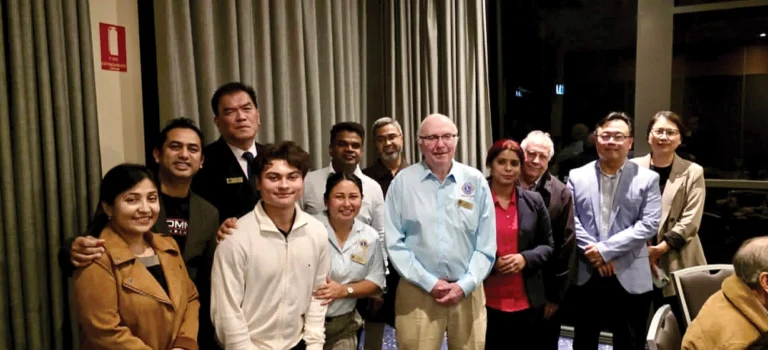
Congratulations are also in order for the Lions Club of Inala, which recently held its 2026–2027 Changeover Dinner. It was an honour to see Nayda Hernandez inducted as President alongside an experienced and passionate executive team committed to serving the community. With members bringing decades of volunteer, professional and leadership experience, the club is well positioned for another successful year of community service.
There has also been plenty of discussion surrounding Queensland’s new personal mobility device laws, which commence on 1 July. Many parents and residents have welcomed the changes, saying they will help improve safety for everyone using our roads and pathways.
For more information: https://www.streetsmarts.initiatives.qld.gov.au/e-bikes-e-scooters/
Across the community, I have also been speaking with residents about the Queensland Government’s 2026–27 Budget. The feedback has been overwhelmingly positive, particularly around initiatives such as permanent 50-cent public transport fares, the Back to School Boost, Play On! sports vouchers, investment in schools and hospitals, and increased funding for housing and community infrastructure. For more information: https://budget.qld.gov.au
Finally, I want to end on a more serious note. Recently, a disturbing incident occurred in my local community of Forest Lake involving a 12-year-old boy who was thrown into the lake in the Lake Parklands by older youths. Watching the footage was heartbreaking. Bullying has no place in our schools, workplaces or communities. It affects people of all ages and backgrounds, and we all have a responsibility to stand against it. I have grown watching people in high levels of government, business and community bully. It doesn’t discriminate.
If you or someone you know is experiencing bullying or struggling with their mental health, please speak to someone you trust or contact Lifeline on 13 11 14. You are also welcome to reach out to me or the Australian Indian Times family, and we will do our best to point you in the right direction.
Night of Pure Magic: Shreya Ghoshal Captivates Sydney with “The Unstoppable Tour”
By Entertainment Desk
SYDNEY — The iconic and timeless voice of contemporary Indian music, Shreya Ghoshal, left an indelible mark on the Emerald City last weekend, delivering a spellbinding, sold-out performance at the ICC Sydney (TikTok Entertainment Centre) on Saturday, 27 June 2026.
As part of the highly anticipated Australia and New Zealand leg of “The Unstoppable Tour,” the night proved exactly why Ghoshal remains an unmatched force in the global music industry, drawing thousands of enthusiastic fans from across the Indian diaspora and beyond.
An Unforgettable, Immersive Entrance
Breaking the traditional barrier between artist and audience, Shreya Ghoshal surprised the Sydney crowd by making her grand entrance directly through the audience before stepping onto the main stage. The venue erupted into a frenzy of cheers and applause as fans caught a close-up glimpse of the melody queen.
Spanning a spectacular career of over two decades, her setlist was a masterclass in musical versatility. From soulful, classical-infused masterpieces to high-octane Bollywood chartbusters, Ghoshal effortlessly cruised through multiple Indian languages.
Fans were treated to breathtaking live renditions of iconic tracks like:
• Deewani Mastani and Pinga (from Bajirao Mastani)
• Ghar More Pardesiya
• Raabta
• Silsila Ye Chahat Ka
Celebrating Local Talent and “Female Power”
A defining highlight of the Sydney concert was Ghoshal’s commitment to collaborating with local artists. During a high-energy performance of the hit song Nagada Sang Dhol, a talented local Sydney dancer joined her on stage, sending the energy in the arena through the roof.
Reflecting on the magical evening and her broader four-city tour—which also saw a female dhol player join her in Melbourne—Shreya Ghoshal shared her immense gratitude:
“Every city was filled with incredible energy, love, warmth, laughter, and celebration… One of the best parts was the surprises in every city. In Sydney, we had a fabulous dancer perform during Nagada Sang Dhol… There was a lot of female power joining us. Those moments made the performances even more magical. I truly feel that my tribe is growing with every show.”
A Growing Cultural Phenomenon
With over 23,000 fans attending the tour across Auckland, Perth, Sydney, and Melbourne, the massive turnout highlights the sustained, booming demand for large-scale live performances by premium Indian artists in Australia.
For the community gathered in Sydney, the evening was more than just a concert; it was a vibrant celebration of shared heritage, nostalgia, and world-class artistry. As Shreya Ghoshal moves forward with the global leg of her tour, Sydney fans are left with the lingering echoes of a truly unstoppable night.
By Sashi Lal-Sydney
As MIFF 2026 comes to a close, I look back with immense gratitude, pride, and unforgettable memories.
The journey of GIRMIT: The Fields of Sadness to the International Competition Section of the 19th Mumbai International Film Festival was much more than a film screening. It was an emotional journey of sharing the story of the Girmitiyas on one of the world’s most respected documentary film platforms.Watching our film on the big screen, alongside my crew, and engaging with filmmakers, critics, students, and audiences from around the world was a truly humbling experience. The conversations, appreciation, and emotional responses to the film reminded us why these stories must continue to be told.
My sincere thanks to MIFF 2026, NFDC India, the Ministry of Information & Broadcasting, the festival team, fellow filmmakers, delegates, critics, and audiences who made this experience so special.
Most importantly, I wish to thank our producers Rajendra Prasad, Aruna Prasad, Shavleen and Michael Heath. My dedicated crew Arunabha Mukherjee, Umakant Jagtap, Kisaloy Roy, Shamin Kulkarni, and Prakash Palav. our supporters and promoters worldwide; and the global Fiji-Indian community. This film is a reflection of your trust, support, and shared commitment to keeping the story of the Girmitiyas alive for future generations.
These photographs capture moments that we will cherish for a lifetime.
Sunny Bank Ramayan Mandali Supports New Hindu Temple Project with Generous Donation
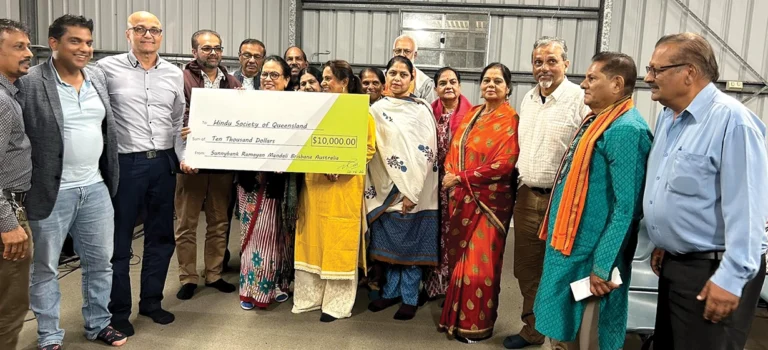
Members of the Sunny Bank Ramayan Mandali in Brisbane gathered last night to extend their support for the proposed $5 million Hindu temple project at Bracken Ridge, Queensland. During a special presentation, the Mandali proudly donated $10,000 to the Hindu Society of Queensland. The cheque was formally handed over by representatives of the Mandali in the presence of community members and executives of the Hindu Society.
The occasion was marked with warmth, devotion, and a shared vision for strengthening Hindu culture and spiritual life in Queensland.
The donation reflects the Mandali’s ongoing commitment to supporting religious, cultural, and community initiatives that benefit the wider Hindu diaspora in Australia. Members expressed their hope that the new temple will become a significant spiritual and cultural landmark for future generations.
Photographs were taken to commemorate the occasion, capturing the spirit of unity and generosity between the Sunny Bank Ramayan Mandali and the Hindu Society of Queensland.



 Mary Tamvakologos from the business-for-sale website AnyBusiness AU says many owners have spent years dealing with rising costs for rent, insurance, and supplies. This new wage increase might be the final straw. “Every business owner wants to pay their staff fairly,” Ms. Tamvakologos said. “But small businesses do not have unlimited money to cover another jump in costs. In industries like hospitality, retail, and building, wages are the biggest expense. When profits are already low, even small wage rises can hurt a business badly.”


 Creating history is about having the courage to dream bigger, lead with purpose, serve with humility, whilst empowering others to believe that anything is possible.
 We are not simply building a business, we are creating a movement for healthier communities, developing stronger leaders and creating a global movement that is transforming lives across India, Australia and beyond.This achievement belongs to every member of our incredible IBP Team, whose belief to our shared vision of impacting millions has made this historic milestone possible. Together, we have proven that people, united by an extraordinary purpose, can create a legacy that changes lives forever.






 How good does it feel to be a Queenslander! Like many of you, I’ll be cheering on the mighty Queensland Maroons in the State of Origin decider. I also want to congratulate the Australian soccer team on their outstanding World Cup campaign. There’s nothing quite like watching the game with family and friends, and I wish both teams the very best. It has been wonderful to see how far they have progressed, and we are all proud to support them.
 In my previous column, I shared part two of my interview with Cr Nathan St Ledger, Councillor for Division 4 at the City of Logan. Thank you to everyone who took the time to read it and send your encouraging feedback. It is clear that these conversations are making a positive difference, and I hope they continue to encourage people to seek support when they need it. Enjoy the third part of the interview below.
 Xavier: In your opinion do family structures influence young people’s wellbeing?
 Cr St Ledger: I think it is hard. I had kids really young with my wife, and it was tough. Nothing that is worth fighting for is easy. Sometimes you have to take a breath, step back, look at what you can control, and control what you can control. Put one foot in front of the other. Do not look for a quantum leap or something massive, like winning the Lotto, to fix everything. It is a matter of deciding what is important to you, and hopefully it is not too many materialistic things. Concentrate on the things that are important to you, and the other stuff will follow. It is easy to sit and say that, but surround yourself with good people. Hurdles come along, and when they do, look for support and get that support to help you through it.
 SYDNEY — The iconic and timeless voice of contemporary Indian music, Shreya Ghoshal, left an indelible mark on the Emerald City last weekend, delivering a spellbinding, sold-out performance at the ICC Sydney (TikTok Entertainment Centre) on Saturday, 27 June 2026.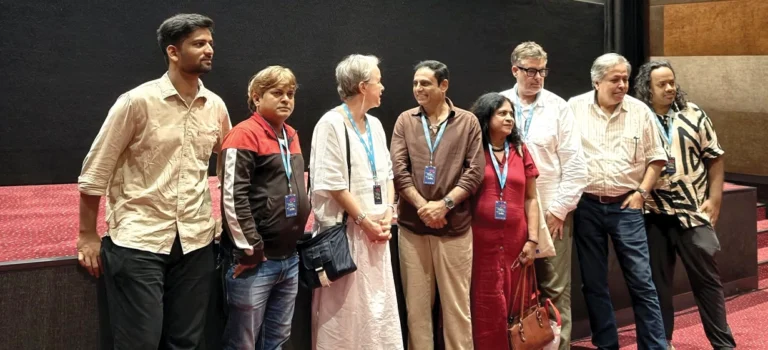
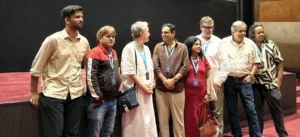 The journey of GIRMIT: The Fields of Sadness to the International Competition Section of the 19th Mumbai International Film Festival was much more than a film screening. It was an emotional journey of sharing the story of the Girmitiyas on one of the world’s most respected documentary film platforms.Watching our film on the big screen, alongside my crew, and engaging with filmmakers, critics, students, and audiences from around the world was a truly humbling experience. The conversations, appreciation, and emotional responses to the film reminded us why these stories must continue to be told.