

The Timeless Radiance of Diwali—From Ancient Roots to the Heart of Subcontinental Culture
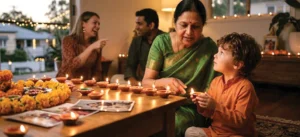
As the October breezes sweep across Australia and spring blossoms into full view, millions of homes across our nation begin to glow with a quiet, expectant warmth. For the Indian diaspora and the wider South Asian community, October signals the arrival of Deepavali—the Festival of Lights.As Publishers of the Australian Indian Times, serving readers across every state and territory of our adopted home, we often find ourselves reflecting on the profound journey of this sacred festival.
To understand why Diwali holds such an enduring grip on our collective soul and why it radiates so brightly in suburbs from Brisbane to Perth, we must journey back thousands of years into the spiritual tapestry and living traditions of India.
The Ancient Roots: The Genesis of Deepavali
The word Deepavali traces its lineage to the ancient Sanskrit language: dīpa meaning “lamp” or “light,” and āvalī meaning “row” or “series”. Together, they form a simple yet powerful phrase: a row of clay lamps.
Historians and scholars trace Diwali’s origins back to ancient agrarian India, where it began as a major post-summer harvest festival. In agrarian society, the end of the harvest brought abundance, gratitude, and a period of rest before winter. Farmers would light small earthenware oil lamps (diyas) to express thankfulness to the Earth and invoke blessings for the coming season. Over centuries, these seasonal celebrations intertwined with sacred texts, spiritual philosophy, and royal histories, becoming the multi-layered festival we cherish today.
Diwali is unique because no single mythology or scripture defines it; rather, it is a grand confluence of sacred stories across the subcontinent:
• The Epic Return of Lord Ram: In North India, Diwali marks the triumphant homecoming of Lord Ram, his wife Sita, and brother Lakshman to the kingdom of Ayodhya after 14 years of exile and the defeat of the demon king Ravan. According to the Ramayan, on that moonless night (Amavasya), the citizens of Ayodhya illuminated every corner of the city with thousands of clay lamps to guide their beloved Prince home through the dark—a tradition that lives on today.
• The Victory over Narakasur: In Southern India, the primary lore focuses on Lord Krishna and his consort Satyabhama defeating the tyrannical demon Narakasur, liberating 16,000 captive women and restoring peace to the cosmos. This triumph is celebrated as Naraka Chaturdashi.
• The Emergence of Goddess Lakshmi: In the Puranic traditions, the central day of Diwali commemorates the churning of the cosmic ocean (Samudra Manthan) by the Gods and Demons, from which Goddess Lakshmi, the deity of wealth, fortune, and spiritual purity emerged to bring prosperity to the universe.
• Plurality Across Faiths: The light of Diwali shines far beyond Hinduism. For Jains, Diwali marks Mahavira Nirvana Divas, the day Lord Mahavira attained final liberation (moksha) at Pavapuri in 527 BCE. For Sikhs, it is celebrated as Bandi Chhor Divas (“Day of Liberation”), commemorating the day Guru Hargobind Ji freed himself and 52 Hindu kings from the Gwalior Fort in 1619, arriving at the Golden Temple in Amritsar amidst thousands of lit oil lamps.
The Five Days of Festivity: How India Celebrates
Across India’s 28 states and 8 union territories, Diwali is not merely a single-day event; it is a five-day spiritual and social symphony, with each day carrying distinct rituals and meanings:
Day 1: Dhanteras (The Day of Fortune)
The festival commences with Dhanteras (Dhan meaning wealth, Teras referring to the 13th day of the lunar fortnight). Homes are meticulously cleaned and scrubbed to welcome divine energy. Families throng the markets to purchase new brass or silver utensils, gold jewellery, or coin charms—symbolizing incoming prosperity and good fortune. Earthenware lamps are lit outside doorways in the evening to ward off untimely adversity.
Day 2: Naraka Chaturdashi / Choti Diwali
Known as “Little Diwali,” this day focuses on physical and spiritual purification. In Southern India, families rise before dawn for Abhyanga Snan, anointing the body with aromatic oils and herbal pastes before bathing, simulating a ritual cleansing in the holy River Ganges. Intricate, colourful rangoli patterns made of rice flour, powdered dyes, and flower petals are drawn at the entrances of homes to invite positivity.
Day 3: Lakshmi Puja (The Main Day of Lights)
The crescendo of the festival occurs on the dark moon night of Amavasya. Homes, temples, streets, and commercial markets across India transform into seas of shimmering light. Families gather in pristine traditional attire to perform Lakshmi Puja, offering flowers, fruits, and traditional sweets (mithai) to Goddess Lakshmi and Lord Ganesha. Firecrackers light up the night sky, symbolizing the joyful expression of humanity’s inner light driving out fear and darkness.
Day 4: Govardhan Puja / Annakut / Padwa
Celebrating unity and environmental gratitude, the fourth day commemorates Lord Krishna lifting the Govardhan Mountain to shelter villagers from torrential rains. In Gujarat and Western India, this day marks the start of the New Year (Bestu Varas), where business owners close old ledgers and open new accounting books (Chopda Pujan). Temples prepare Annakut (“mountains of food”), displaying hundreds of vegetarian dishes in gratitude for nature’s bounty.
Day 5: Bhai Dooj / Bhau-Beej
The festival concludes by honouring the sacred bond between siblings. Sisters apply a ceremonial tilak to their brothers’ foreheads, praying for their long life and well-being, while brothers offer gifts and promises of lifelong protection—a warm, intimate finale to days of public grandeur.
Regional Splendour: One Nation, Many Expressions
What makes Diwali truly majestic in India is its regional diversity:
• In West Bengal and Eastern India, the night is dedicated to Kali Puja, honouring Mother Kali, the divine mother who destroys ignorance and evil forces.
• In Varanasi, along the sacred ghats of the Ganges, thousands of brass lamps float on the river waters, culminating two weeks later in Dev Deepavali the Diwali of the Gods.
• In Gujarat, sweet shops prepare tonnes of ghari and kaju katli, and families visit relatives to exchange the traditional greeting, “Nutanvarshabhinandan.”
From the Banks of the Ganges to the Shores of Australia
As we look out across Australia today, it is breathtaking to observe how this ancient legacy has travelled across oceans to take root here under the Southern Cross.
When our community lights a diya on a verandah in Brisbane, Melbourne, Sydney, or Perth, we are not merely preserving a cultural custom—we are continuing a multi-millennial human tradition. We are passing down to our children the age-old lesson of Tamaso ma jyotir gamaya: “From darkness, lead me to light; from ignorance, lead me to truth.”
May this Diwali illuminate your homes with health, happiness, peace, and prosperity. On behalf of the entire editorial team at Australian Indian Times, we wish you and your loved ones a joyful, safe, and blessed Deepavali!
