

A Delicate Balance: India Welcomes Iran-U.S. Ceasefire as Humanitarian Aid Reaches Tehran
 In a significant diplomatic breakthrough that has sent ripples of cautious optimism across the globe, a ceasefire agreement between Iran and the United States has been brokered, with Pakistan serving as the unexpected primary mediator. The development, finalized this weekend, aims to de-escalate months of heightened regional tension.
India has officially welcomed the agreement, maintaining its long-standing commitment to regional stability while simultaneously reinforcing its role as a “first responder” through a major humanitarian outreach to Iran.
Strategic Neutrality and Regional Peace
The Ministry of External Affairs (MEA) in New Delhi issued a measured statement shortly after the announcement, praising the cessation of hostilities. “India has always maintained that dialogue and diplomacy are the only paths forward in resolving complex international disputes,” the statement read.
India’s position is a masterclass in strategic autonomy. While New Delhi shares a “Comprehensive Strategic Partnership” with the United States and has deep defence ties with the West, it also views Iran as a critical gateway to Central Asia through the Chabahar Port. By welcoming the Pakistan-brokered talks, India has prioritized the prevention of a wider regional conflict that could disrupt global energy markets and the safety of the Indian diaspora in the Gulf.
Humanitarian Diplomacy: The Second Medical Shipment
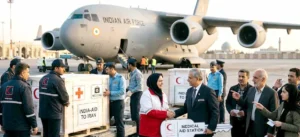
Beyond the diplomatic statements, India has let its actions on the ground speak for its priorities. Even as the ceasefire was being negotiated, India dispatched its second major shipment of essential medical supplies to Tehran.
The consignment, which includes life-saving medicines, surgical equipment, and specialized vaccines, arrived at Imam Khomeini International Airport via a dedicated Indian Air Force transport aircraft. This follows a previous shipment sent earlier this year, solidifying India’s reputation as a reliable humanitarian partner.
International observers have praised India’s “Medical Diplomacy.” By providing aid during a period of conflict, New Delhi has managed to maintain a neutral political stance while demonstrating a clear moral commitment to civilian welfare. This approach has earned accolades not only from the Iranian government but also from international relief agencies who have highlighted the dire need for medical infrastructure in the region.
The View from Australia
For the Indian Australian community, these developments carry significant weight. As a nation with a vested interest in a free and open Indo-Pacific and stable trade routes through the Middle East, Australia views any de-escalation between Washington and Tehran as a positive step.
Members of the diaspora in Queensland, many of whom are engaged in international trade and medical professions, have noted that India’s ability to navigate these “troubled waters” is a testament to its maturing foreign policy. The ability to provide aid to Iran while maintaining a robust partnership with the U.S. showcases a diplomatic dexterity that benefits the entire global community.
Looking Ahead
As the ceasefire takes hold, the focus will shift to whether this temporary pause can be converted into a long-term diplomatic resolution. For India, the priority remains the protection of its strategic interests and the continued flow of humanitarian support.
In a world increasingly defined by polarization, India’s dual approach and welcoming peace talks brokered by a neighbour while providing tangible aid to a friend, serves as a reminder that humanitarianism can often bridge the gaps that politics cannot. For the readers of the Australian Indian Times, this moment represents India’s firm emergence as a balanced, responsible global power.
