

Breaking the Silence
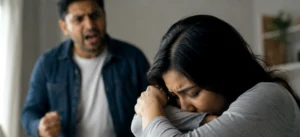
WE often think domestic and family violence happens somewhere else, to someone else. Yet every week, another story reminds us that violence does not recognise culture, profession, education, age or social standing. It can affect anyone, anywhere, at any time.
As communities, we have made important progress in raising awareness, but our work is far from over. Conversations around domestic and family violence must continue, not only during awareness campaigns, but every day. The more we speak openly, the more we reduce stigma, encourage understanding, and let victim-survivors know they are not alone.
Community leaders, faith leaders, cultural organisations and everyday members of our communities all have a role to play. Creating safe spaces for people to seek help, believing those who disclose abuse, and connecting them with appropriate support services can make a profound difference. Protecting those at risk is not the responsibility of one person or one organisation. It is a responsibility we all share.
One question continues to surface whenever domestic violence is discussed: “Why didn’t they just leave?” The answer is rarely simple. Many victim-survivors experience what is known as a trauma bond, a powerful emotional attachment that can develop through repeated cycles of abuse, remorse, affection and hope. This can be compounded by fear, financial dependence, concern for children, cultural expectations, isolation, or uncertainty about what comes next. Leaving is often one of the most dangerous and difficult stages of an abusive relationship, not the easiest.
My first film, Seema, explored the cycle of violence and the hidden realities many victim-survivors endure. The cycle often begins with rising tension, followed by an incident of abuse, then apologies, promises to change and a period of calm before the pattern repeats. Through storytelling, my hope has never been to judge those who remain, but to help others understand why leaving is often far more complex than it appears.
Compassion is one of the most powerful tools we possess. Rather than asking why someone stayed, perhaps we should ask how we, as families, neighbours, colleagues and communities, can better support those finding the courage to leave, rebuild and heal. Every conversation that replaces judgment with understanding has the potential to save a life.
The strongest communities are not those without problems, but those willing to face them together.
