

When Daughters Raise Their Fathers

When Daughters Raise Their Fathers

The Emotional Journey of Millennial Desi Dads in Australia
By Rinchaal Patel, Mindset and Relationship Coach, YOLO Academy

By Rinchaal Patel,
Mindset and Relationship Coach,
YOLO Academy

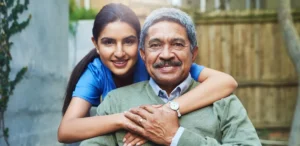
“She tells me she loves me every night before bed. I am 36 years old and I have never said that to my own father.”
In those few words lies the quiet revolution happening in the hearts of millennial desi migrant fathers raising daughters in Australia.
These are men caught in-between, between generations, between cultures, between who they were told to be, and who they’re trying to become.
They were raised by fathers who were respected, sometimes feared—but rarely known. Love was not absent; it was never spoken out loud. Affection was not expressed through hugs, but rather through actions. And now, these men are raising daughters who expect presence and vulnerability. They look their fathers in the eye and say:
“I’m sad.” “You didn’t listen to me.” “You hurt my feelings.”
And in those moments, something cracks open within them, a small voice says, “I don’t want my daughter to feel what I felt. I want her to feel seen. Safe. Soft inside.”

The 3 S’s of 1980s Fatherhood: Silence. Sacrifice. Structure.
For many Indian fathers in the 80s and 90s, parenting wasn’t about emotional closeness- it was about resilience. They wanted to bestow upon their children the survival skills, that were part of the unspoken masculine code of upbringing that was passed down over generations. Silence, Sacrifice and Structure were the foundations of parenting in the 80s and 90s.
Silence, because vulnerability was considered dangerous.
Sacrifice, because love meant working without rest, not words.
Structure, because order and control were needed for survival in a rebuilding, post-colonial India.
And so, affection was shown in subtle gestures:
• A fan left on during a late-night study session.
• The ripest mango set aside for you.
• A reprimand masking deep worry.
You were raised to obey, perform, and achieve; but rarely to feel. Rarely to ask, “Do you love me?” Rarely to hear, “I am proud of you.”
These boys, now men, carried both the strength and the scars of that upbringing into adulthood, starting families of their own and raising sons and daughters, in a different land, in a different time.

A New Landscape: Daughters Who Demand Emotional Fluency
Parenting daughters in modern Australia means navigating a world of bedtime check-ins, school workshops on emotional regulation, and family counsellors who encourage “feeling charts.” For men raised on stoicism and silence, it can feel like stepping onto another planet.
Your daughters become the catalyst for emotional growth within you, a growth you never thought was needed or was possible for that matter. When your daughter’s ask you big questions and speak even bigger truths, you gather the courage to answer them honestly, holding space for them to express themselves- one awkward conversation at a time.
And slowly, unknowingly, these girls begin to raise their fathers.

Raising Daughters, Remembering Sons
When your daughter curls up in your lap after a long day and says, “Papa, I wanted to tell you what I saw outside and you didn’t listen, that hurt my feelings,” you remember being eight years old, doing everything right and still wondering if you mattered.
When she cries because she doesn’t understand why someone was unkind, you remember suppressing your own tears to “be a man.”
In comforting her, you begin to comfort yourself. In saying “I’m here for you,” you begin to hear it for the first time from your own mouth to your own heart.
In saying sorry to your daughter, you realise that she matters just as you mattered when you were her age. Just because your father never apologised doesn’t mean he was cruel, he was never taught how.
This is more than parenting. It is re-parenting. It is healing. It is honouring the parenting journey in its entirety.

Conversations That Never Happened-Now Beginning
Some men find themselves suddenly craving conversations with their own fathers, wanting the warmth and comfort of that paternal love that their inner child so desperately craves.
They pick up the phone, uncertain of what to say, only knowing something needs to be said. Sometimes, it ends in silence. Other times, in small breakthroughs, a father saying, “In our culture we don’t say I love you, but I do love you.”
And sometimes, there is no reply at all. Just a quiet resolution: “I may not get the closure I needed. But I can give my child what I never had.”
In that quiet resolution, there is acceptance. Accepting the way we were parented and supported as a child and bringing awareness to how we parent, help us make better choices.

Breaking the Silence, One “I Love You” at a Time
Saying “I love you” isn’t always easy for desi men. The words feel foreign, clumsy. But they try, because they know that their daughters need it and so did they.
Each bedtime story, each apology, each gentle touch, they are not just acts of parenting. They are acts of personal redemption.
“My father was a good man,” says Aman “But I never really knew him. I want my daughter to know me.”

Five Truths Millennial Desi Fathers Are Learning While Raising Daughters:
1. Love is a language, and it must be spoken.
For generations, desi fathers showed love through provision, protection, and presence, but rarely through words. Now, their daughters crave (and demand) emotional fluency. Saying “I love you” no longer gets stuck in the throat. It flows, slowly but surely, into bedtime routines, lunchbox notes, and school drop-offs. Love has found a new dialect, and it sounds like vulnerability, warmth, and presence.

2. Healing begins with awareness.
You cannot change what you never name. Many of these fathers are beginning to recognise the emotional gaps in their own childhoods, not to blame, but to better understand. This awareness allows them to notice their own triggers, pause before reacting, and offer their children what they themselves never received: emotional safety.

3. You don’t need to be perfect to be protective.
The myth of the flawless father is slowly being dismantled. Today’s daughters don’t need superheroes. They need someone who shows up, stays soft, and tries again when he fails. By allowing themselves to be seen messy, human, and unsure, these dads offer their children a template for real-world resilience and relational safety.

4. Raising daughters can soften what patriarchy hardened.
The same patriarchal conditioning that silenced women also numbed men. Fathering daughters is becoming a powerful act of resistance, an invitation to unlearn toxic masculinity, embrace tenderness, and reimagine strength. As these men make space for emotion, they reclaim parts of themselves they once had to suppress.

5. Breaking cycles is painful and sacred.
Rewriting generational scripts doesn’t come easy. It means sitting with discomfort, holding your child while grieving your own lost childhood, and choosing connection over control. But in every conscious choice to listen instead of lecture, to hug instead of hit, to admit instead of hide a new legacy is being born.

A New Masculinity: Quiet, Soft, and Strong
The modern desi father is not content with being respected from a distance. He wants to be known. He is learning that softness isn’t weakness, it is strength redefined. It is what tells his daughter: “You are safe with me.” And what tells his inner child: “You are safe now, too.”
He kneels beside her when she cries. He apologises when he is wrong. He holds space instead of holding back. He calls his own father not just for logistics, but for connection. And one night, when his daughter whispers, “You are the best dad in the world,” he doesn’t deflect. He doesn’t freeze. He smiles and says, “Thank you, beta. That means everything.” And just like that the silence breaks.

The Legacy Being Built
Millennial desi fathers raising daughters in Australia are not just creating new family dynamics. They are building emotional bridges across time, culture, and memory. They are shifting from command to connection. From silence to speech.
When their daughters crawl into bed at night and whisper, “Papa, I love you,” they don’t freeze. They respond, “I love you too, beta, always.”
And just like that, the silence breaks and a new story of fatherhood begins.

PEEL THE LABELS

PEEL THE LABELS

PEEL THE LABELS

Pastor Suresh Dass Joseph
[email protected]

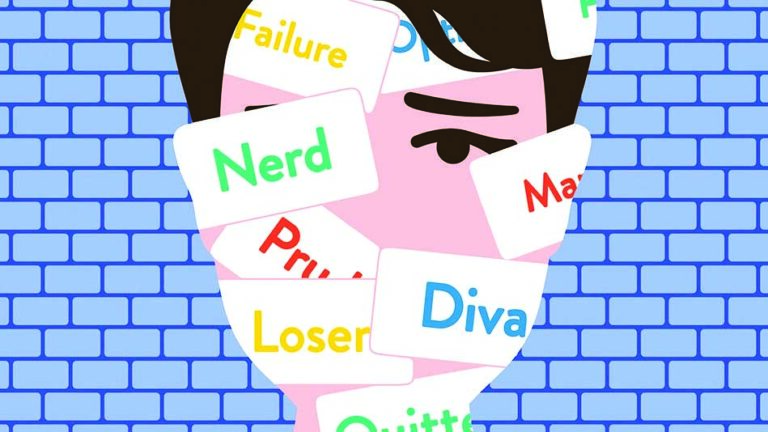
Dear reader, it is with great joy that we bring you the word of God. I want to talk to you today about “Peeling off negative labels.” Throughout life, people constantly stick labels on us, telling us what we can and cannot become, and sometimes this is good. People speak faith into us; they encourage us. But then there are times when people stick negative labels on us. You cannot stop the negative comments, you can’t prevent the negative labels, but you can choose to peel them.
Wrong labels can limit how far you can go in life. Like a brake, it will keep you from rising higher. Labels like, “You are just average, you don’t measure up, you are a low achiever” can hold you back from your full potential.
Some people have the strength, energy, and education, but what is holding them back are the wrong labels they wear. The longer we wear them, the less they describe our past and the more they determine our future.
The good news is that we serve a supernatural God. He can do what medicine cannot do. He’s not limited by your education, your background, or the family you come from. He’s not moved by the things people have spoken over you. He’s not up in heaven all worried, trying to figure out how to get you to your destiny. He knows the end from the beginning. He is called the alpha and the omega. He already has solutions to problems you’ve not even had. He’s all-powerful and all-knowing. People may have tried to push you down, but if you peel off those labels and agree with God, he’ll push you up. He’ll take you where you could not go alone, and you don’t have to figure it all out.
In the Bible, we read about Saul, who was going about persecuting and threatening Christians. On his way to Damascus, he had an encounter with Jesus. His life changed, and he became a Christian himself. But the people around him labeled him a persecutor, a threat, and a violent man. Saul found his new Identity through Jesus and changed his name to Paul. People didn’t love him, yet he felt the love of the Heavenly Father. He made mistakes and failed in the past, but he can now succeed in the future. Though people rejected him, he was chosen by God.
Paul knew that all the wrong labels from people did not match his new Identity through Christ. Like Paul, we, too, are offered the wrong labels by people, but we can choose not to accept them. Labels are for bottles, boxes, and packets, but our true Identity is in Jesus.
In the scriptures, we read about Gideon (Judges 6 &7). The children of Israel were suffering greatly and coming under attack from the Midianites and Amalekites. Their produce from the earth, including their animals, was continually being taken from them. God came to Gideon and said, “The Lord is with you, mighty man of valor.” God said, He was going to use him to save Israel. Gideon was amazed to hear that. All these years, he was carrying the labels, “I am from the weakest tribe, I am the least in my father’s house, etc.”
Gideon was even more fearful when God said He would use Gideon and 300 men to defeat this vast enemy army of the Midianites and the Amalekites. He didn’t think he could do it. So God told him to go and listen to what the enemies were saying. Gideon went at night and heard two men talking. They talked about a dream they had, saying God had delivered them in the hands of Gideon.
Soon after, God caused the enemy army to be defeated, and Gideon won the victory.

Here are 3 things we can learn from Gideon.
1. God called Gideon a mighty man of strength, power, and bravery. Before God could use him, He wanted Gideon to know that he was not what people said he was but what God said about him. People put some labels on him, but God gave him his true Identity. He could only go so far with the labels, but now, with his Identity, he could accomplish his dreams. The scripture says, “I can do everything through Christ, who strengthens me.” Your labels speak of past performance. Your Identity shows your position in Christ.
2. God caused him to hear what two men were saying about him. Gideon’s fear turned into faith when he heard them talking. In the same way, you can feed your faith by listening to the words of encouragement and faith. The Bible is full of inspiration and faith-building words. It says, “Faith comes by hearing and hearing the word of God.”
3. With only 300 men, Gideon had to trust God to come through for him. God defeated the enemy army, and Gideon was victorious. In the same way, we are to remove those negative influences from our lives. Be careful in what we are watching or listening to. Stay away from people who try to label you. You can choose to stop them from putting the wrong labels on you. Listen to what God says about you. He says, “You are a new creation, deeply loved, masterpiece, chosen and redeemed, a child of God.”
I believe all this is possible through a relationship with Jesus.

God bless you.

The V Team

The V Team

The V Team -Rachel Thompson
Rachel Thompson
Keiran-McGowan
Keiran-McGowan

A serendipitous combination of geographical circumstance, global mission and vision and ambitious administrative standards have led to the formation of a vibrant young team of volunteers driving the work of Life Global Australia.
Three young professionals are at the core of LifeGA. Kieran McGowan and Rachel Thompson are founding members of the Board of Directors, and Rebecca Reeve is Director of Digital Media on the Advisory Board. While all live in the home country of LifeGA, Australia, their backgrounds and paths to service for the charity are quite different, and none fits the profile of the typical volunteer.
In Australia, most volunteers are at least in their 60s, with those in their 70s and 50s close seconds. Understandably, those not working, or working few hours, are more likely to be volunteering. So older, retired Australians typically dominate the ranks of volunteers. How, then, do three busily-employed professionals in their 20s and 30s come to dominate the 100% volunteer administration of fledgling charity, LifeGA?

Rebecca Reeve a
Rebecca Reeve a

At first glance, Kieran’s seems the most direct connection. His grandparents were originally from Gujarat in India and gave lifelong support to charitable organisations there.
“My grandfather has been involved with charities in India, including our partner charity, Project Life, since long before we started Life Global Australia. As a child, I had the good fortune of getting to see one of the schools built by those charities, and the joy it had brought to students, teachers, and local families.”
Rebecca Reeve also came to LifeGA with some connection to India. Before moving to Australia from England, she travelled in India and felt an instant connection with the country.
“I wanted to make a positive impact and saw joining LifeGA in July 2023 as my opportunity to be involved in something bigger. I loved learning of the impact LifeGA was making.”
For both Kieran and Rebecca, the chance to make a difference in the world was most alluring. It is also what attracted Rachel.
“What initially drew me to Life Global Australia was the profound impact it has on the lives of the less privileged,” Rachel said.
Rachel probably has the longest experience in volunteering, though all three had volunteered long before they joined LifeGA. While still at school in Singapore, Rachel participated in after-school programs for children with disabilities and was involved in many school camps.
“Notably, I had the opportunity to contribute to house-building projects in Cambodia and took part in the Schools-to-Schools program in Nepal, where we fundraised and delivered shoes to several villages.”
Kieran was in community service clubs while at school in Australia, and volunteered for Meals on Wheels. Rebecca started volunteering while attending university in the UK, working for the charity, House of Bread, in Staffordshire.
“HOB began as a university film project, but their passion rubbed off on me quickly, and I soon found myself joining for their weekly meetup, helping to prepare food bags and essentials, cooking meals and meeting and connecting with vulnerable people across Stafford.”
What clearly differentiates Kieran, Rebecca and Rachel from the typical volunteer is that they have not adopted LifeGA as a way to fill in hours of free time. Each is a busy professional working long days to shape a career in their chosen sector. Kieran has a background in software engineering which has proven useful when it comes to website-related or payments-related tasks, and has meant LifeGA has not had to pay for external contractors. This has been crucial in supporting LifeGA’s commitment that 100% of donations (excluding bank fees) will go to partner charities, which are themselves required to have less than 5% administration costs. Rebecca’s field is marketing and media, and she has improved LifeGA’s connection with its audience by increasing engagement and optimising the LifeGA digital space. Rachel has studied both Psychology and Sustainability and works in the sustainability sector. She has focused on building the Life Global Australia team. Her strength lies in identifying the right individuals, recognising the potential value of their work, inspiring them to join the cause, and bringing them all together.
“None of us could have done this without the supportive team that we’ve built,” Kieran said.
Rachel believes the team is not just a group of individuals working together. “It is a collective force driven by a shared commitment to the mission and values of Life Global Australia.” LifeGA’s mission and vision provide the strong bond within the charity’s team.
“Our primary mission is to bring about real change in the lives of those who lack the opportunities readily available to us in Australia,” Rachel said. “Opportunities we might unintentionally take for granted.”
“I think it’s important to do what is possible to make the world a fairer place for all”, Rebecca said. “It’s very easy to get absorbed in your day-to-day life, and forget about the world outside of your own.”
All three comment on the sense of purpose they have found through volunteering for LifeGA.
“I have learnt that what can be considered a small amount of money in Australia can make a huge impact overseas,” Rebecca said. “We can change lives and increase opportunities for so many.”
Rachel agrees. “Through LifeGA, we have already helped 75 women to achieve economic security, 100 units of blood to be given to needy recipients, and ensured 500 Thalassemia screening tests. Now we are on our way to building a school, raising funds classroom by classroom.”
As Kieran said, “When offered the opportunity to create more of the same kind of change, who could say no?”¬¬¬
www.lifeglobal.org.au

Version 1: A Celebration of Tradition and Talent

Version 1: A Celebration of Tradition and Talent

Version 1 A Celebration of Tradition and Talent

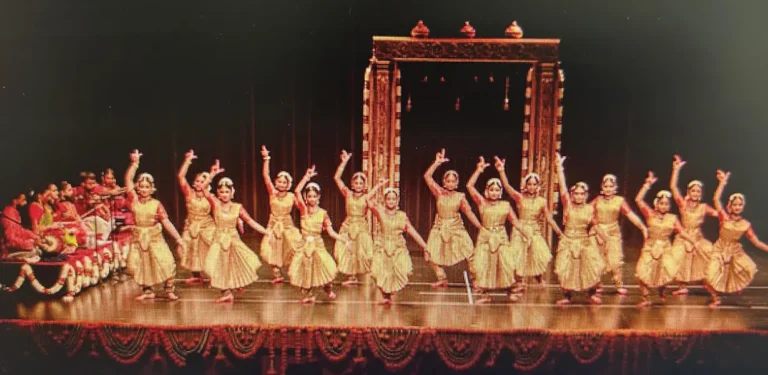
The Lalithakalalaya School of Bharathanatyam recently held its fourth Salangai Pooja – a beautiful milestone for 15 young dancers who stepped onto the stage to formally offer their art in a traditional and spiritual way. For every Bharathanatyam student, a Salangai Pooja is more than just a performance – it marks their readiness to take on deeper training and a lifelong journey in this classical dance form.
This celebration was the result of 8 months of dedicated practice by the students, supported by their parents and guided by their Guru, Smt. Padmalakshmi Sriram. The stage lit up with nine graceful performances, each oneshowcasing the foundation of Bharathanatyam – intricate footwork, rhythm, storytelling, and beautiful group synchronisation. The dancers, dressed in vibrant costumes, moved with confidence and grace, their expressions breathing life into each piece.
The live orchestra added a magical touch to the evening with Smt. Padmalakshmi Sriram and Kum. Shivani Sriram on nattuvangam, Smt. Priyadharshini Swaninathan on vocals, Shri Harish Ravindran on mridangam, Shri Aswin Narayanan on violin, and Kum. Vindhyavasini Sureshchandra on veena. Together, they created a soulful experience for an audience of 400 people who were deeply immersed in the music, rhythm, and culture of India.
The success of the evening reflected the tireless dedication of Guru Smt. Padmalakshmi Sriram, who continues to preserve and share this ancient art form beyond the borders of India. Her ability to prepare 15 young dancers for such a demanding performance is truly commendable. Her efforts were acknowledged by the Consul General of India in Brisbane, Mrs. Neetu Bhagotia, who attended the event and praised the Guru, musicians, and students for their remarkable achievement.
We congratulate these young dancers for reaching such an important milestone and wish them many more opportunities to grow in their artistic journey. May they continue to dance with the same passion, discipline, and joy that lit up the stage that evening.

When You’re Hard on Yourself: The Hidden Invitation to Grow

When You’re Hard on Yourself: The Hidden Invitation to Grow

When You’re Hard on Yourself The Hidden Invitation to Grow

There’s a moment, quiet but sharp, that many of us know well.
You forget something. Miss a deadline. React poorly.
And before anyone else says a word, your own voice turns on you:
“You should’ve done better.”
“What’s wrong with you?”
“Why can’t you ever get it right?”
That voice, your inner critic, is something most people experience. It cuts deep, lingers long, and rarely offers compassion. But could it also carry a hidden grace?
One of the Mind and Motion Cards, Flaws offers a gentle prompt:
“Being hard on yourself can limit growth, but it may also reflect a deeper care for who you are becoming.”
Let’s sit with that.

The Habit of Harshness
Being hard on yourself often masquerades as self-improvement. It insists it’s making you stronger, sharper, more disciplined. But often, it contracts the heart. It limits movement, physically, emotionally, mentally.
From a Vedic lens, the mind is both guide and saboteur. As shared in the Bhagavad Gita:
“For one who has conquered the mind, the mind is the best of friends; but for one who has failed to do so, the mind will remain the greatest enemy.” (Gita 6.6)
When self-talk becomes harsh, it may not foster learning, it can freeze growth. Rather than guide us forward, it may keep us circling past mistakes. And yet, this harshness usually emerges from a protective place, a shield against disappointment, rejection, or failure.
It’s not about weakness. It’s about survival.
But survival is not the same as living.

The Motion of Becoming
Here’s where a subtle shift happens, what limits us may also reveal what matters to us. Beneath self-judgment lies care. We don’t criticise what we don’t value.
If you’re hard on yourself, perhaps it means you care deeply, about your impact, your growth, your values.
The Mind and Motion Card – Flaws encourages curiosity, not condemnation:
“What is this voice protecting?”
“What might it sound like if translated into care?”
From here, we may begin to respond, not with punishment, but with presence.
Like breath returning us to the body, gentleness returns us to movement.

Softness as Strength
If the aim is to grow, not just succeed, but evolve, then kindness must be part of that journey.
Stumbles are part of motion. Awareness, not fear, shapes who we become.

A Reflection Practice
Next time your inner voice tightens its grip, consider this reflective practice, inspired by the Mind and Motion approach:
1. Pause. Take a breath.
2. Acknowledge the voice: “I hear you.”
3. Ask: “What am I afraid will happen if I don’t push myself like this?”
4. Listen with compassion, not correction.
5. Respond: “There may be another way to grow, one that includes care.”
Let that land. Let it move you.
Being hard on yourself isn’t necessarily a flaw, it may be a sign that you’re aware of your own potential. But if you stay caught in the cycle of harshness, you may miss the deeper invitation: To grow, with awareness, with care, and with motion.
So, the next time you hear “You should’ve done better,”
Pause. Breathe.
And whisper back:
“I’m already becoming.”

Explore Further
The Mind and Motion Cards offer guided reflections like this to support your personal growth journey. These tools are designed to complement, not replace, professional support.
For more resources or to purchase the deck, please visit www.monicapema.com/blog

Monica Pema
Integrated Wellness Expert
MSc. Psychology | Dip. Holistic Kinesiology
“From Passion to Purpose in All Walks of Life”
This article is intended for self-reflection and general education only. It is not a substitute for professional medical, mental health, or psychological care.

It’s time for a sexual health check-up!

It’s time for a sexual health check-up!

People with sexually transmissible infections (STIs) usually have no symptoms, but these infections can cause serious long-term outcomes, such as pain or infertility, if not treated.
If you’re having any sex, it’s best to get tested every 6–12 months, even if you have a regular sexual partner. To find your nearest GP, Medicare Urgent Care Clinic, sexual health clinic or community-based health service at https://www.stoptherise.initiatives.qld.gov.au/sti-testing/how-to-book-an-sti-test
You may need more frequent testing if you change sexual partners, if your partner is diagnosed with an STI, or if a condom breaks or slips off during sex. You can test more often between annual checks at https://www.qld.gov.au/health/staying-healthy/sexual-health/chlamydia-test/about-13health-webtest
It’s not recommended that at-home and online self-testing be used as a replacement for annual sexual health testing by a health professional, but as an in-between or extra test. Please see your GP or health professional if you’re sexually active and:
• You haven’t had a comprehensive sexual health check in the last year
• You’ve changed partners or had more than one partner
• You have symptoms that may be an STI

What is the 13 HEALTH Webtest?
This is a free, urine-only test available online from the Queensland Government to check for genital chlamydia and gonorrhoea, the two most common sexually transmissible infections (STIs) in Australia. Your test requests are confidential, and all information collected is de-identified.

Why have a Webtest?
It is important to get checked if you think you may have been exposed to an STI because most people with an STI have no symptoms. A Webtest is a convenient way to get tested.

Who can have a Webtest?
People living in Queensland aged 16 and over, including those without a Medicare Card.
You can check how Webtest works and your eligibility here at https://www.qld.gov.au/health/staying-healthy/sexual-health/chlamydia-test

How can ECCQ help you?
If you need assistance accessing Webtest, please contact ECCQ at [email protected] or refer to our list of bilingual health workers who can assist you directly. You can find the list at www.eccq.com.au/bbv. We can also help if you require an interpreter.
Our team offers community workshops in various languages to help you understand common STIs, prevention methods, and how to access care if needed.
If you need free condoms, contact the Love Health Program at ECCQ via [email protected] or order online at www.eccq.com.au/condoms. We can post condoms to individuals living in Queensland.

Information about STIs is available in multiple languages on our website: www.eccq.com.au/bbv. For additional resources, visit https://www.stoptherise.initiatives.qld.gov.au.
If you are in Cairns, you can contact the team at Cairns Sexual Health Services by calling (07) 4226 4769 or emailing [email protected].  

Yamma Yamma Returns – A Theatrical Masterstroke by Australian Indian Theatre

Yamma Yamma Returns – A Theatrical Masterstroke by Australian Indian Theatre

Yamma Yamma Returns b

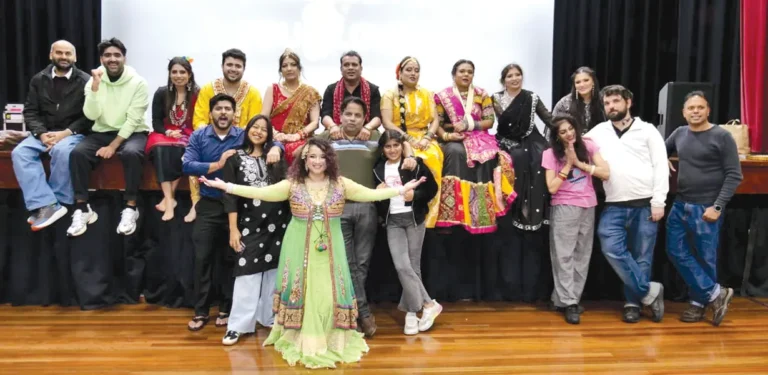
Brisbane’s theatre lovers were in for a treat last weekend as Australian Indian Theatre presented its latest crowd-puller, Yamma Yamma Returns. A great mix of mythology, comedy, romance, and nostalgia, this genre-bending play had the audience laughing, clapping, and reminiscing from start to finish.

Yamma Yamma Returns a
At the heart of this wildly entertaining production was the unstoppable Anu—writer, director, producer, actor, and dancer. Is there anything she can’t do? With her signature blend of humour and heart, she created a magical world where the afterlife collided with true love, time travel, and 90s Bollywood drama. Her sparkling chemistry with Siddharth as Simran and Rahul brought back memories of old-school romantic classics, giving the show its emotional pulse.

Yamma Yamma Returns d
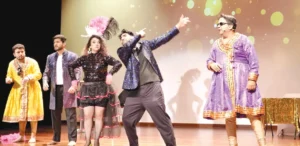
The story followed the lovable Rahul, mistakenly taken by Yamraaj, as he journeyed through different eras in search of his one true love. Every scene was packed with sharp one-liners, quirky twists, and just the right dose of chaos.
Rony, as the majestic yet confused Yamraaj, was a powerhouse on stage—commanding every moment with his presence and comic timing. Siddharth, as Rahul, delivered an effortlessly charming and heartfelt performance that had the audience rooting for him from the start. Together, they were electric.
Casting across the board was a triumph. Panchali, as the glamorous and cunning Menka, was perfectly cast, exuding mischief and allure. Chinar shone as Radha, bringing warmth and wit in equal measure. Monali’s Sarla, with her nasal twang and wide-eyed innocence, was an absolute hoot. Shiv, playing Gupt, nailed every comic beat with impeccable timing and energy—one of the evening’s standout performers.
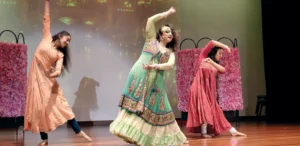
Neelima brought gravitas and delightful wickedness to her role as the villainous Saasu Maa—a character you loved to hate. And Bhavna’s ethereal dance as Yami was visually stunning.

Yamma Yamma Returns c
Gautam supported the ensemble beautifully, taking on multiple characters with confidence and style.
The show’s transitions through time—from black-and-white Bollywood to retro village life to modern chaos—were both hilarious and nostalgic, making the entire experience feel like a vibrant cinematic journey on stage.
For Australian Indian Theatre, this marks yet another successful production in their growing legacy of community-driven, culturally rich theatre. And the excitement doesn’t stop here—plans are already underway for their next big venture: a grand retelling of the Mahabharata in 2026.
A full house, a standing ovation, and an audience that couldn’t stop raving—Yamma Yamma Returns wasn’t just a play, it was an event. A hearty kudos to Anu and her brilliant team for proving once again that Indian storytelling is thriving in Brisbane, and its future is in excellent hands.

Celebrating culture together

Celebrating culture together

Celebrating culture together c

By Xavier Hernandez

This past month has stirred something deeply personal in me and our Brisbane Indian Times readers. From heartfelt community celebrations here in Queensland to the heartbreaking impact of global events. I’ve found myself reflecting on the importance of connection, belonging, and showing up for one another, especially when it matters most. These are the values I see lived out every day across our community and within the Brisbane Indian Times family.

Celebrating culture together d
Before sharing some highlights, I want to acknowledge the devastating 8.8 magnitude earthquake off Russia’s Kamchatka Peninsula resulting in a tsunami that swept across the Pacific. From Hawaii to Japan and across our Pacific Island neighbours, countless lives have been disrupted. In times like these, we’re reminded how precious life is and how essential it is to extend compassion and support across borders.

Celebrating culture together e
Here in Queensland, we are privileged to live in one of the most multicultural states in Australia—a place where people of all backgrounds contribute to our shared future. As the son of a migrant volunteering for community leaders like the Deo Family, I feel proud of the way the multicultural community continues to shape Queensland life, through business, food, the arts, language, education, and most importantly, our collective spirit of family and togetherness. I’d also like to recognise the Deo family—especially JD Deo—for their tireless efforts to uplift and empower our community. Their leadership ensures that our Indian heritage remains visible, valued, and thriving and shaping a better future for all.
These experiences highlight what it means to live in a community that values inclusion and respect. The Indian community here in Queensland is a shining example of that. According to the most recent data from the Australian Bureau of Statistics, more than 71,000 Indian-born people now call this state home. With a median age of just 35, we are a young, vibrant, and dynamic community, grounded in deep cultural roots and driven toward bright, fruitful futures.

Celebrating culture together b
Indian families across Queensland reflect the beautiful diversity of our culture. According to the ABS, Indian couples with children make up the largest group, but our communities also include couples without children, one-parent families, and extended households that span generations. Together, they make up over 32,000 homes, contributing to the heartbeat of this state in every field imaginable.
Education continues to be a proud pillar in our community, with 60 percent of those aged 15 and older holding a bachelor’s degree or higher. This reflects a deep respect for knowledge, opportunity, and hard work. Values passed down from our parents and mentors. And while 67.7 percent of our community identify simply as Indian, many others trace their heritage to Punjabi, Sikh, Malayali, Telugu, Gujarati, or blended ancestries. It’s a rich tapestry that reflects both tradition and the evolving face of modern Australia.
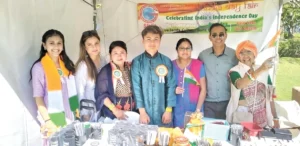
August is Multicultural Queensland Month, and what better time to reflect on the richness of our community and the strength that comes from diversity? It’s also a time to come together in celebration, and I’m excited to share that one of the biggest cultural events of the year—the India Day Fair 2025. Save the date for Sunday, 17 August 2025, from 10:00 AM to 9:00 PM at Roma Street Parkland, Brisbane. Hosted by the GOPIO Qld, the India Day Fair is a vibrant, free, family-friendly event that brings our community together to celebrate India’s Independence Day and showcase the incredible culture, talent, and spirit of Indian Australians. This year, I’ll be volunteering at the GOPIO (Global Organisation of People of Indian Origin) stall, and I look forward to seeing many familiar faces and welcoming new ones. Please come say hello!

Celebrating culture together a
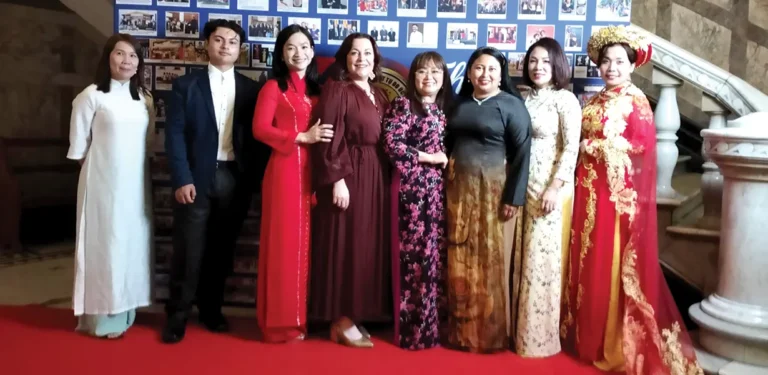
Events like India Day Fair are more than just festival—they’re powerful reminders of what it means to belong. Recently, I had the honour of attending the 50th Anniversary of Vietnamese Migration to Australia at Brisbane City Hall. My mum and I were warmly welcomed by President Kieu Oanh Do and the Vietnamese Community in Australia – QLD Chapter. We’ve been blessed to volunteer with this incredible group over the years, and their kindness and resilience have shaped our journey. One message that resonated with me was, “You are not guests, you are family.” That feeling of belonging left a lasting impression, and I’m pleased our readers feel the same way. We thank you for the feedback you give us.
Another highlight this month was the 9th Annual Church Pilgrimage, honouring St. Mary of the Eritrean Orthodox Tewahedo Church. My thanks to Teferi Wedisele for his warm welcome, and to leaders like Lewis Lee OAM, Jane Wang, and Alan Chen for demonstrating how interfaith unity strengthens our shared values.
Throughout this month, I’ve continued volunteering at the Community Life Uniting Church Op Shop. Each donated item helps fund local initiatives and reduce waste—a small but powerful way to make a difference. I’m helping on the weeks alongside other volunteer people who are really doing it tuff. Many are elderly women who simply are struggling to get by. If you’d like to donate or need support, please reach out to Rev. Emma at the Community life church.
And before I go, don’t forget to join us at the Multicultural Family Picnic on Sunday, 24 August from 11 AM to 2 PM at Captain Burke Park, Kangaroo Point. Hosted by the Queensland Multicultural Council Inc., the event will feature food from around the world (with vegetarian and halal options), a sausage sizzle, and joyful company. Bring a plate to share and a picnic rug—it’s the perfect way to celebrate the end of Multicultural Queensland Month.
Let’s continue to honour our heritage, embrace diversity, and walk proudly together. Because when culture is celebrated, everyone wins.

The Team is the Key

The Team is the Key

BY Hitesh Mohanlal

All business owners want to work less, earn more and build wealth. What most do not realise is that the best performing teams can help you get all three.
Let me make one thing very clear from the off: people think I am some kind of business guru.
I’m not. I can’t prepare a tax return. I cannot prepare a set of financials either. And I can’t run a payroll system. I even struggle to put into place any structure for my own businesses operations.
But I can work out and “implement a strategic framework.” And against all odds and common sense somehow my business works. And it works quite well. And that is down to one thing — my team.
Yes, yes, I might be the one with the mad ideas and the overinflated ego, but when it comes to making things happen? I’m about as useful as a chocolate teapot in the Sahara.
People often say, “Oh you’ve been so lucky with your team.” Or they mutter about good recruitment, fat salaries, or some other HR rubbish. Nonsense. Total codswallop.
The truth? It’s all about attitude. That’s what matters. You can take someone who knows bugger-all about the job, but if they’ve got the right mindset, they’ll figure it out. Conversely, you can hire the most qualified, experienced expert in the galaxy — but if their attitude stinks? They’ll crash your business so fast you will not know what hit it.
Want examples? Well, many of you may also know I am a soccer nut, and I consider running a business and sports to be aligned. So, you will not be surprised to know I got up at 4.45am to watch a European Cup Final some weeks ago which featured a team called Paris Saint Germain. This was a team that had in the past two of the best attacking players in the world – Mbappe and Neymar. They were purchased by the club for £727 Million or AU$1.490bn(!) and, whilst these 2 brilliant players were in the team the team won nothing in Europe. Nil. Zilch. Crap all.
So last year a new manager got rid of them and replaced them with 2 young players no one had heard of. And without the 2 biggest names in the world game, they won the European crown.
So motivated staff? Brilliant. They’re like turbos attached to an engine – except they are strapped to your business. Unmotivated staff? Think of them as dragging an expensive caravan uphill with an equally expensive bicycle. It might be doable but it’s a pain in the backside
It’s Also About Values (Yes, Really)
Now, I used to think all this talk of “values”, “visions”, and “missions” was pure corporate crap. Something dreamed up by men in Gucci shirts with clipboards and no real jobs. But I was wrong.
Values matter. Your business mission matter. Responsibilities matter. Having a clue who’s doing what matters. Otherwise, you end up in a meeting trying to decide who should order the coffee while your entire operation is collapsing.
Here’s the kicker: most small businesses have ten departments. Ten! But in many cases, one poor person — probably you — is wearing all ten hats. And if you keep doing that, your team won’t just lose motivation. They’ll lose the will to live.

The 10 Departments
Let me break them down. Three sit above the line — these are your high-level strategic minds. The other seven are the doing departments — the ones actually getting their hands dirty.

The Big Three (Above the Line)
1. Shareholder – Basically, the money person. They don’t do anything. They just want a return. Like a banker, but without the striped suit, fake smile and charges.
2. Director – Comes up with the master plan to keep the shareholders happy. Usually spends a lot of time on PowerPoint, Spreadsheets and talks a lot.
3. Leadership – The general manager. The person who makes the plan actually happen. In my case Ros, my business partner who can bash brains together and get away with it.

The Seven That Actually Do Stuff (Below the Line)
4. Product & Services Innovation – Decides what you should sell, what you shouldn’t, and occasionally dreams up a new product that’s either brilliant or bananas. You have probably guessed this is a department I like very much because I come up with the occasional brilliant idea after about 2 dozen banana ideas – but you will only ever hear about how I am the genius.
5. Operations – The money-maker. If this fails, everything else is irrelevant. You can have the greatest plan since the moon landing, but if this bit doesn’t work, your business dies. Quickly. You want your best person in this department which in my case is not me. Obviously.
6. Admin/IT – The background noise. Nobody notices it until it breaks. See this department as brakes on your car. You just expect it to work but when they fail you are guaranteed to notice and realise their importance.
7. Marketing – Generates leads. Without them, Sales has no one to charm with buzzwords, espresso and booze.
8. Sales – Converts leads to customers. Doesn’t make money directly — that’s Operations — but without Sales, Operations would be twiddling their thumbs.
9. HR – Hires the right people, makes sure no one’s suing you and tells you all the things you cannot do at the Xmas party. And oh yes keeps reminding you not to swear at interns or do or say anything that will upset anyone including the office dog.
10. Finance – Looks at the numbers and tells you whether you can afford a new coffee machine or if you’re going bankrupt next Tuesday.
Now, here’s the thing: if you don’t get these roles defined, assigned, and properly understood by your team, you might as well go herd cats for a living. And if you try and run them all yourself? Your business (and you) will end up looking like a Holden that’s been driven 400,000km.

How to Demotivate a Team in 5 Easy Steps
Let me list just a few of the classics. These are real disasters — all of which we as a business has stumbled into at some point:
1. Broken Promises
The fastest way to destroy morale. Promise a pay rise, training, or a new office coffee machine — then fail to deliver. It’s like saying telling me you are going to take me to the famous racing track in Nürburgring to race a Ferrari, then driving me to a car park on the Gold Coast to show me a Kia.
Worse still, it teaches your team it’s okay not to deliver. And when they stop delivering to your customers? You’re toast.

2. Insensitive Decisions
Some people are tough as nails. Others burst into tears if you raise an eyebrow. You must know the difference. Easy said than done. We fell foul of this recently and could not work out what went wrong.
One-size-fits-all leadership is like using one tyre for every car — it just doesn’t work.

3. Poor Communication
Either you don’t tell your team enough, and they think they’re just pawns in your twisted game of Risk. Or you bombard them with so many updates they feel like they’re stuck in a Zoom’s version of Groundhog Day.
Find the balance. And when something goes wrong — which it will — ask if there’s something you could’ve done better too. This was something that I got taught recently. A coach told me that if something goes wrong in my business it is probably my fault because we either gave the wrong instructions, do not train adequately or miscommunicated what needed to be done.

4. Too Many Bosses
When everyone’s in charge, no one is. It’s chaos. Like having five people steering a boat in different directions while one person yells about the sails. You need a clear chain of command. Not a hydra-headed monster of conflicting decisions.
We have a simple rule in our business. Our team are given the responsibility to make decisions, and we try to ensure those decisions are followed through and if it goes wrong, they take responsibility. There are some decisions that only I, as the majority shareholder make, but I will usually ask the leadership team of their thoughts. I then do what the hell I want but then when it goes bananas, which it often does, it’s all down to me and this usually makes Ros, my partner, very unhappy.

5. Lack of Recognition
People like to be told they’re doing well. It’s not rocket science. If you ignore their efforts, they’ll assume you don’t care. And if they think you don’t care, they’ll stop trying or caring too. Next thing you know, you’re left with a team who are physically present but spiritually on a beach in Barbados.

The Final Say….
If your team doesn’t know what the business stands for, what the mission is, and who’s actually steering the ship, don’t be surprised if they stop rowing.
Motivating your team isn’t about beanbags, ping-pong tables or branded water bottles. It’s about clarity, honesty, and occasionally admitting that maybe, just maybe, you’re the problem.

Community Leaders Take Oath to Serve and Uplift Through Basava Philosophy in Sydney and Brisbane

Community Leaders Take Oath to Serve and Uplift Through Basava Philosophy in Sydney and Brisbane

Sydney & Brisbane, Australia – July 2025

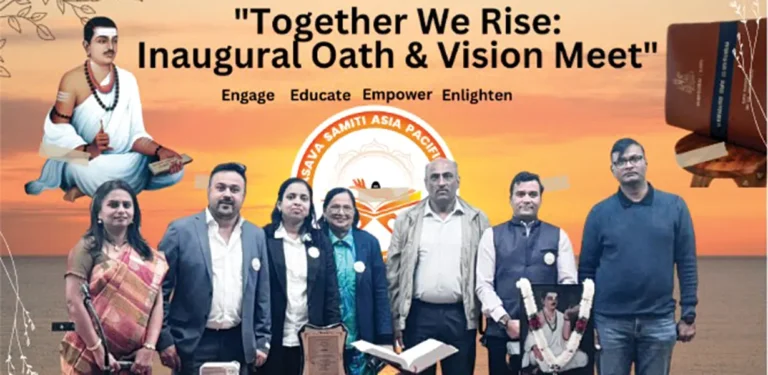
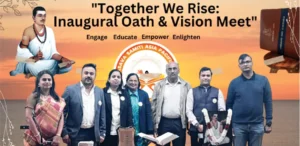
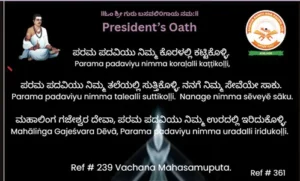
Community Leaders Take Oath to Serve and Uplift Through Basava Philosophy in Sydney and Brisbane aIn a heartfelt show of unity and purpose, newly appointed leaders of the Basava Samiti of Asia Pacific (BSAPAC) took their official Oath of Office in Sydney and Brisbane this month. These solemn ceremonies mark a significant milestone in the charity’s ongoing mission to Engage, Educate, Empower and Enlighten communities through the timeless values of Guru Basava’s philosophy.
In Sydney, Mr. Jayaveer Prasad along with the committee members took the oath on behalf of the newly formed Executive Committee on 19th July 2025, symbolising a bold step towards strengthening BSAPAC’s presence in New South Wales. The Sydney chapter has been instrumental in providing technical expertise, systems administration, and now expanding into human resources and community engagement. Cr Barbara Ward graced the occasion to congratulate the winners.
Meanwhile, in Brisbane, the oath ceremony reaffirmed the commitment of longstanding volunteers who have nurtured the charity’s growth since its early days. With a strong legacy of service and innovation, the Brisbane chapter continues to be a beacon of leadership, embracing digital operations and contributing significantly to STEM-based volunteer programs. Incoming Director Mr. Abhishek Sachdeva assumed office as the Board Director.
These ceremonies are more than just formalities—they are a declaration of service, integrity, and a pledge to build a values-based, in accordance with the values stated in Guru Basava’s vachanas and was led by the Executive Director Mrs. Girija Karekal.
An extensive planning process over the next three years was undertaken while imparting the vision for the public.