

Krishna in the Modern World: Ancient Wisdom for Contemporary Life

Krishna in the Modern World: Ancient Wisdom for Contemporary Life

Krishna in the Modern World

Lord Krishna, a central figure in Hindu philosophy, is widely revered as a divine guide, warrior, friend, and teacher. Though his origins lie in ancient Indian scriptures — particularly the Mahabharata and Bhagavad Gita — Krishna’s teachings transcend time and culture. In an age marked by rapid change, social unrest, and personal uncertainty, his messages remain surprisingly relevant to the modern world.

Who Is Krishna?
Krishna is considered the eighth incarnation (avatar) of Lord Vishnu, the preserver of the universe in Hindu belief. He is both human and divine, playful and profound. Stories of Krishna’s life, from his mischievous childhood to his role as a philosophical guide during the great war of the Mahabharata, offer a rich tapestry of spiritual lessons.
But it is the Bhagavad Gita, a 700-verse dialogue between Krishna and the warrior Arjuna, that holds deep psychological and spiritual insights. Spoken on the battlefield, the Gita explores duty, morality, fear, ego, and the nature of reality — themes that still speak powerfully to today’s world.

Timeless Teachings for a Modern Age
1. Clarity in Chaos
In the Bhagavad Gita, Krishna advises Arjuna — who is paralysed by doubt — to rise above confusion and act according to his dharma (duty). In a world where mental health struggles, job pressures, and political divisions are widespread, Krishna’s guidance to “do your duty without attachment to outcomes” offers a way to stay grounded.
This principle of detached action helps reduce anxiety by shifting focus from results to effort. In corporate life, relationships, and even activism, Krishna’s advice encourages ethical action without being consumed by fear or desire.

2. Inner Peace Through Self-Knowledge
Krishna teaches that true peace comes not from the outside world, but from knowing the self. In an era dominated by social media, material comparison, and external validation, Krishna’s emphasis on inner stability is revolutionary.
His message invites us to turn inward, practice mindfulness, and recognize our deeper identity beyond roles or labels.

3. Balance Over Extremes
Krishna consistently promotes balance — between action and reflection, pleasure and discipline, work and spirituality. His life itself is a model of this: he was a statesman, a musician, a lover, and a yogi. In modern life, which often demands multitasking and productivity, Krishna’s example reminds us that a harmonious life is not only possible, but necessary for true well-being.

Krishna Today: A Universal Mentor
While Krishna belongs to Hindu tradition, his teachings have universal appeal. Philosophers, psychologists, and spiritual seekers across cultures have found inspiration in his words. His counsel to act with compassion, to seek truth, and to understand one’s purpose remains vital in a world hungry for direction.
Krishna is not just a deity of the past — he is a voice of wisdom for the present. In times of conflict, burnout, or doubt, his teachings invite us to live with purpose, grace, and courage.
A Winter Wonderland: ISCA and Ekta Ladies Celebrate First Christmas in July High Tea

A Winter Wonderland: ISCA and Ekta Ladies Celebrate First Christmas in July High Tea

A Winter Wonderland ISCA and Ekta Ladies Celebrate First Christmas in July High Tea c

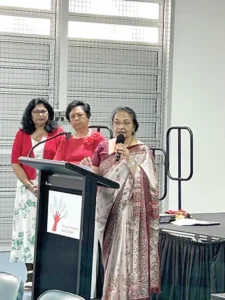
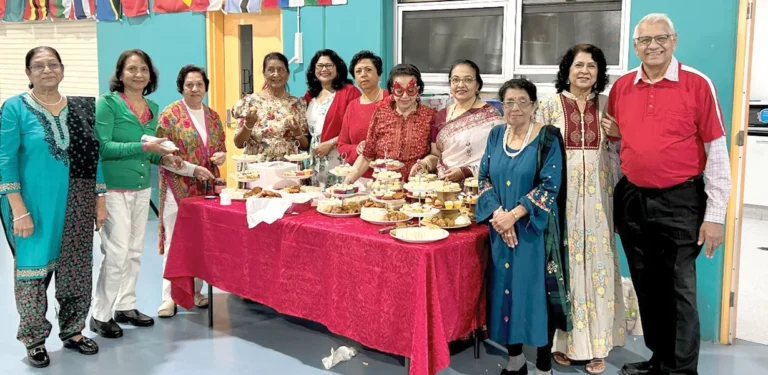
A Winter Wonderland ISCA and Ekta Ladies Celebrate First Christmas in July High Tea bIt may have been the middle of winter, but the festive cheer was in full swing as the Indian Senior citizens association in conjunction with Ekta Ladies group came together to celebrate their first Christmas in July High Tea.
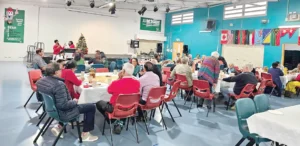
Held on Sunday 27th July at Runcorn State High School, the event brought together cherished members for a morning of laughter, music and delicious high tea all without the summer heat!
It was heartwarming to see our seniors accompanied by family and friends. The event started with a universal prayer followed by a Christmas quiz, games, Prizes and a wide assortment of morning tea.


The president of ISCA, Mrs Roshni Sharma said events like these remind us of the joy and community spirit that make the association so special. She thanked all the guests, members and volunteers for their support and contribution in making the event a huge success. After receiving numerous positive feedback, the ISCA executive members are already planning their next event.

A Winter Wonderland ISCA and Ekta Ladies Celebrate First Christmas in July High Tea d

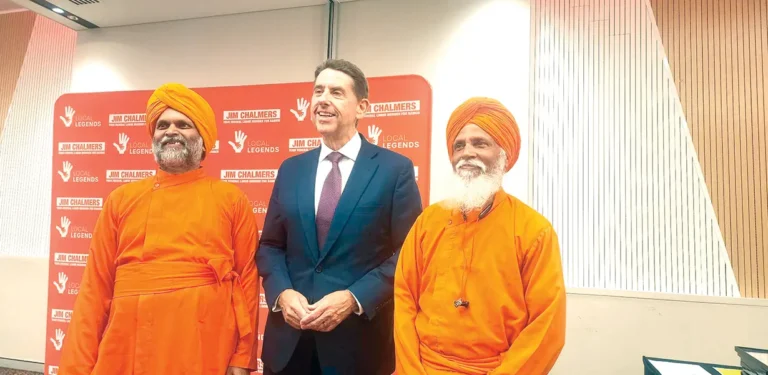
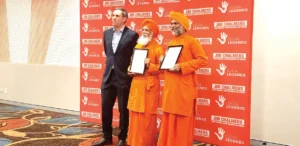
Local Legends Award given to Seva Dharma Mission by Honourable MP, Jim Charmers, Treasurer of Australia

Local Legends Award given to Seva Dharma Mission by Honourable MP, Jim Charmers, Treasurer of Australia

Local Legends Award given to Seva Dharma Mission by Honourable MP, Jim Charmers, Treasurer of Australia d

At today’s Local Legends Award ceremony held at the Calamvale Hotel Suites and Conference Centre, 678 Compton Rd, Calamvale QLD 4116, Brisbane, more than 50 remarkable members of the community were recognised for their outstanding service across a range of community development activities.
Local Legends Award given to Seva Dharma Mission by Honourable MP, Jim Charmers, Treasurer of Australia cHonourable Jim Chalmers MP, Australia’s Minister for Finance, personally presented the awards to recipients, acknowledging their impactful work in areas such as weekly free food distribution, monthly community dinners, JP community work, and various other community development initiatives. The awards were determined based on recommendations submitted by local community members.

Among the distinguished honourees, Seva Dharma Mission was recognised for its exceptional contributions. The Local Legends awards were presented to Acarya Local Legends Award given to Seva Dharma Mission by Honourable MP, Jim Charmers, Treasurer of Australia bKrsnapremananda Avadhuta (Dayashankar Tiwari) and Acarya Devadattananda Avadhuta (Dilip Chaudhury), following heartfelt community endorsements of their service and commitment.


“We are deeply honoured to receive the Local Legends Award and sincerely appreciate this recognition of our contributions to the community. It is truly heartening to know that the spirit of selfless service is valued and celebrated,” said representatives of Seva Dharma Mission.
In a memorable moment, awardees also had the opportunity to meet with the Honourable MP Australia’s Treasurer, further highlighting the significance of their service and the value placed on community-driven action.

India’s Climate Minister Just Revealed the Real Plan for Green Living

India’s Climate Minister Just Revealed the Real Plan for Green Living

India's Climate Minister Just Revealed the Real Plan for Green Living

Ready for some honest talk about climate action? Union Minister Bhupender Yadav just dropped some serious truth bombs at the India Climate Summit 2025 during an exclusive fireside chat with Times Group’s Navika Kumar.
From gradually adjusting your AC temperature to implementing lifestyle reforms that actually work for Indian families, he’s laying out a roadmap that considers our real economic situation, not just wishful thinking. The Minister emphasized India’s commitment to Common But Differentiated Responsibilities, ensuring climate action remains fair and practical for our unique circumstances.
This isn’t about dramatic overnight changes, it’s about sustainable progress that respects where we are as a nation while moving toward a greener future. Don’t miss this eye-opening conversation that’s reshaping how we think about climate responsibility and everyday environmental choices.
Youtube channel credit- Times Now

Air India Investigation Row: Pilots’ Unions Demand Fair Probe Against AAIB Bias Claims

Air India Investigation Row: Pilots’ Unions Demand Fair Probe Against AAIB Bias Claims

Air India Investigation Row

BREAKING NEWS: Air India Crash Investigation Erupts in Fresh Controversy
The Air India crash probe has taken a dramatic turn as pilots’ unions launch a fierce counter-attack against investigation authorities, demanding justice and transparency in what has become India’s most contentious aviation investigation in recent years.
The Indian Commercial Pilots’ Association (ICPA) has strongly condemned what they call “reckless, unfounded insinuation of pilot suicide” that has been circulating since the preliminary report’s release. This explosive statement follows earlier accusations by the Air Line Pilots’ Association (ALPA) that the Aircraft Accident Investigation Bureau (AAIB) is showing bias against pilots.
The pilots’ unions are united in their demand for a fair and impartial investigation, rejecting what they describe as premature blame being placed on flight crew members. The ICPA’s strong-worded response highlights growing tensions between aviation safety investigators and the pilot community over the handling of this high-profile case.
The controversy has raised serious questions about the investigation’s methodology and the premature conclusions being drawn before the final report. Aviation experts warn that such public disputes could compromise the integrity of the investigation and potentially impact aviation safety standards across the industry.
As the probe continues, the aviation community watches closely to see how authorities will address these serious allegations of bias and ensure that the investigation remains objective and thorough. The outcome of this dispute could set important precedents for future aviation accident investigations in India.

The pilots’ unions maintain that only a transparent, unbiased investigation can provide the truth that families of victims and the aviation industry deserve.
Youtube Channel credit- Times Now

India UK CETA Historic Comprehensive Economic Trade Agreement Signed

India UK CETA Historic Comprehensive Economic Trade Agreement Signed

India UK CETA Historic Comprehensive Economic Trade Agreement Signed

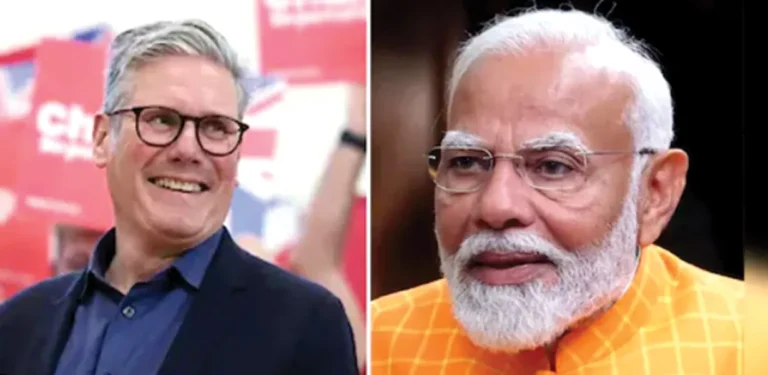
Historic milestone achieved! India and UK have signed the groundbreaking Comprehensive Economic Trade Agreement (CETA), marking a new era in bilateral relations.
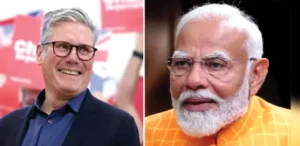
PM Modi and UK PM Starmer celebrate this game-changing Free Trade Agreement that promises massive benefits for both nations:

For India: aBoosted exports of textiles, footwear, and food products aEnhanced market access to UK consumers aStrengthened “Make in India” initiative

For UK: aCheaper whisky, cars, and luxury goods in Indian markets aExpanded business opportunities in world’s largest democracy aStronger post-Brexit trade partnerships
This CETA agreement isn’t just about trade – it’s about deepening cultural ties, creating jobs, and fostering innovation between two nations with shared democratic values.
From Mumbai’s textile mills to London’s financial district, this deal will create ripple effects across industries. Indian consumers get premium UK products at better prices, while British businesses tap into India’s massive market potential.
A true win-win for both economies!
Youtube channel credit – Mirror now Picture credit – NDTV

VP Jagdeep Dhankhar Resigns: Health Reasons or Political Pressure?

VP Jagdeep Dhankhar Resigns: Health Reasons or Political Pressure?

VP Jagdeep Dhankhar Resigns

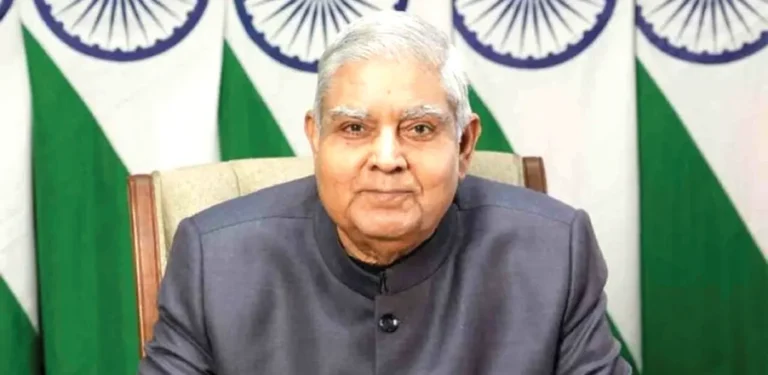
Vice President Jagdeep Dhankhar has officially resigned from his position with immediate effect, citing health concerns and the need to follow medical advice. In his resignation letter to President Droupadi Murmu, he invoked Article 67(a) of the Constitution.
Key Details: Resignation effective immediately (July 21, 2025) Third VP in India’s history to resign mid-term Had 3 years remaining in his tenure Served since August 2022
But what’s behind this sudden move? Political circles are buzzing with speculation: Theory 1: Impeachment Process Pressure Could mounting political pressure and potential impeachment discussions have influenced this decision? The timing raises questions about whether health reasons are the complete story. Theory 2: Internal BJP Tensions
Reports suggest possible disagreements with party leadership, particularly regarding J.P. Nadda’s recent statements. Could internal party dynamics have played a role? While the official reason remains health-related, the abrupt nature of this resignation – just days after Dhankhar mentioned serving until 2027 – has sent shockwaves through political corridors.
This unprecedented move leaves the nation without a Vice President and raises critical questions about succession planning and the real factors behind such significant constitutional decisions. What are your thoughts on the timing and circumstances of this resignation?
Youtube channel credit- Times Now

RF Celebrates Sixth Anniversary with a Pioneering Fashion Show, Challenging Stereotypes and Advocating for Diversity

RF Celebrates Sixth Anniversary with a Pioneering Fashion Show, Challenging Stereotypes and Advocating for Diversity

RF Celebrates Sixth Anniversary with a Pioneering Fashion Show, Challenging Stereotypes and Advocating for Diversity C

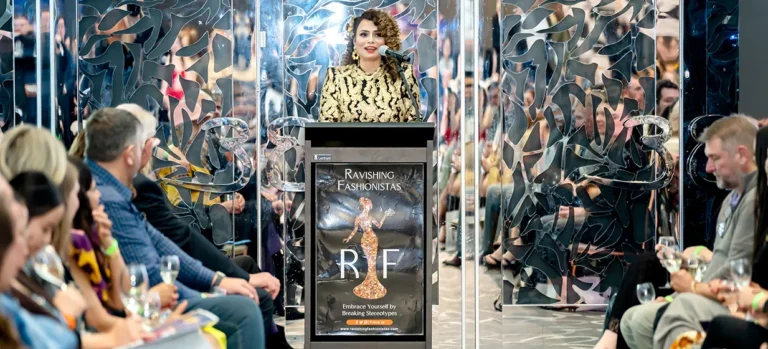
RF Celebrates Sixth Anniversary with a Pioneering Fashion Show, Challenging Stereotypes and Advocating for Diversity IRF’s vision of redefining fashion took center stage on Sunday, July 27th, as the RF hosted its sixth annual runway show at the opulent Emporium Hotel in Brisbane. Marking a significant milestone, this show exemplified the unwavering commitment to breaking down barriers, challenging societal stereotypes, and fostering a more inclusive definition of beauty and style.

Founded with the mission to challenge the traditional beliefs of the fashion industry, RF has consistently sought to stem the tide of exclusivity and promote diversity in all its forms. This year’s show was not merely a showcase of clothing and designs; it was a bold statement aimed at changing perceptions and encouraging acceptance across communities. Over the years, RF has transformed from a local initiative into a global movement, and this year’s event was no different.
RF Celebrates Sixth Anniversary with a Pioneering Fashion Show, Challenging Stereotypes and Advocating for Diversity FThe driving force behind this impactful movement is concept creator Upma Kite, whose visionary leadership and relentless determination have propelled RF’s initiatives. Over the past six to eight months, Upma and her dedicated team have worked tirelessly—mobilizing volunteers, collaborating with designers, and mentoring models—to craft an event that aims to inspire and empower. Her unwavering resolve to foster inclusivity in fashion has earned her praise and respect from both supporters and critics alike.

For the first time in RF’s history, the show featured models with disabilities, children, transgender individuals, middle-aged talents, and plus-sized models—all confidently strutting down the runway, embodying strength, elegance, and resilience. The message was clear: fashion belongs to everyone, regardless of age, gender, or ability. According to Upma, a key objective of the show was to shift perceptions: “We need to redefine how society views beauty. Stereotypes only hold us back from true progress.”
RF Celebrates Sixth Anniversary with a Pioneering Fashion Show, Challenging Stereotypes and Advocating for Diversity jThe Fashion show also showcased a diverse lineup of 12 renowned designers, both from within Australia and internationally. The runway was alive with creativity, featuring a wide array of styles and cultural influences that celebrated the richness of global fashion. An adorable kids’ fashion segment, introduced for the first time, drew admiration from attendees, who appreciated the confidence and natural elegance of the young models.

Adding a groundbreaking element to the show was the debut of RF’s first-ever multicultural segment, where participants from over 25 countries took the stage, displaying stunning traditional and contemporary outfits that highlighted cultural diversity. The audience was captivated by the models’ professionalism, poise, and the stories they told through their attire and presence.
RF Celebrates Sixth Anniversary with a Pioneering Fashion Show, Challenging Stereotypes and Advocating for Diversity EThe significance of the concept extended beyond aesthetics; it received extensive media coverage from major outlets including Channel 10, Channel 7, Courier Mail, and more. Such widespread attention underscored the importance of spreading RF’s message globally—an appeal to reshape the global fashion industry into one that appreciates and celebrates every individual’s uniqueness.


Esteemed guests such as Lady Mayoress Melissa Downs, Damian Anthony Rossi, Emily Seebohm, and other distinguished personalities graced the event. The packed venue—holding over 300 attendees—was filled with joy, laughter, and a collective desire for change. The atmosphere was electric, resonating with a shared commitment to promoting positive body image and dismantling stereotypes that have long been ingrained within societal fabric.

RF Celebrates Sixth Anniversary with a Pioneering Fashion Show, Challenging Stereotypes and Advocating for Diversity G
Throughout the night, attendees witnessed not only fashion but also a cultural and social awakening—an affirmation that everyone deserves respect and representation. The event exemplified how fashion can be a powerful platform for social change, promoting unity and compassion amidst diversity.

RF Celebrates Sixth Anniversary with a Pioneering Fashion Show, Challenging Stereotypes and Advocating for Diversity C
This journey of resilience, growth, and positive transformation is a true testament to Upma Kite’s dedication. Her unwavering focus has been to shift societal mindsets and create a more inclusive future for fashion. As she passionately states, “This is just the beginning. We need to continue challenging norms and advocating for acceptance—because every person’s story matters.”
RF’s impact extends far beyond the runway. This groundbreaking show signals the start of a transformative era, inspiring individuals and communities to embrace differences and celebrate authenticity. It’s a call to action for everyone to participate, support, and be part of this ongoing movement—one that promises to reshape the future of fashion, one step at a time.
Join us in this journey of change. Together, we can make a difference—because every individual deserves to be seen, celebrated, and empowered.

Online Racism Rises Against Indian-Australians

Online Racism Rises Against Indian-Australians

Online Racism Rises Against Indian Australians

Online Racism Rises Against Indian Australians 1

On a Saturday night in Fitzroy, a lively South Indian club night unfolded at Laundry Bar, pulsating with bass and filled with dancing bodies. But beneath the rhythmic beats and carefree moves, the event represented something deeper — a safe space carved out by and for South Asians in Australia, amid a growing tide of online and political hostility directed toward migrant communities.
“It’s a space where [attendees] don’t feel strange or feel they stand out,” said Pradip Sarkar, one of the night’s DJs and a long-standing community radio host. Speaking to the ABC, Sarkar explained the importance of such events for South Asian Australians and international students who often feel out of place in the mainstream.
In recent months, anti-Indian sentiment has been festering online, particularly across platforms like TikTok, Instagram, and X (formerly Twitter). Decontextualised videos portraying migrants — especially South Asians — in a negative light are being shared widely, often originating in the United States and Canada before making their way to Australia. According to ABC News journalist Jeremy Story Carter, these clips frequently stoke xenophobia and fuel the misconception that migrants are “invading” Western societies.
In February, this online racism took a particularly high-profile turn. As reported by the Wall Street Journal, a member of Elon Musk’s DOGE (Department of Government Efficiency) taskforce resigned after racist posts targeting Indians surfaced, one of which encouraged followers to “normalise Indian hate.” Though the staffer was later reinstated with the backing of U.S. Vice President JD Vance, the message to Indian communities around the world was loud and clear: racism is increasingly being legitimised.
Australia has not been immune. During the recent Australia-India Test Cricket series, some fans at the MCG were recorded chanting “Where’s your visa?” — a video that quickly went viral. Another clip showing Melbourne’s Flinders Street Station accompanied by the caption “Mumbai or Melbourne?” attracted millions of views. These seemingly casual jabs are part of what Sarkar refers to as “algorithmic racism” — discriminatory content amplified by social media algorithms, reinforcing harmful stereotypes.
Academic and community voices have raised concerns about the effect this has on Indian-Australians. Dr Sukhmani Khorana, an associate professor at UNSW who has studied the Indian diaspora for over a decade, describes this phenomenon as a new wave of racism born out of digital spaces. “There’s a particular type of racism… directed broadly at international students, but sometimes more specifically at Indian-Australians,” she told the ABC.
This backdrop of cultural tension comes amid a heated federal election campaign in which immigration has emerged as a focal issue. Opposition Leader Peter Dutton blamed migrants for Australia’s housing crisis during the first leadership debate. “If we ask why we’ve got a housing crisis, we can point to [migration],” Dutton said, reinforcing a narrative that directly targets migrant communities.
Such assertions, however, have been debunked by housing and policy experts. Dr Surjeet Dogra Dhanji, a fellow at the University of Melbourne, labelled the idea that migrants are to blame for the housing shortage “a joke.” Speaking to the ABC, she argued that housing stress in Australia has been decades in the making due to underinvestment by successive governments.
Moreover, Dr Dogra Dhanji highlighted the contradiction in political rhetoric during election season. “They rush to the temples, the mosques, the community centres — it is tokenism come the elections,” she said. “You malign me or scapegoat me and then at the same time you want my vote?”
Indeed, the Indian diaspora — now Australia’s fastest-growing migrant community — has become a political football. According to the Australian Bureau of Statistics (ABS), Indians represent the largest group among permanent migrants in Australia. Yet despite making up just 4% of the population, Indian-Australians often find themselves at the centre of national debates on immigration and integration.
A recent study led by Dr Dogra Dhanji titled Victorians’ Perceptions on India and the Indian Diaspora, commissioned by the Australia India Institute, found that while 51% of Victorians viewed the Indian community positively, there remains a notable perception gap among Australians without tertiary education — just 38% held positive views.
“The perception that the Indian diaspora is taking over Australia or Victoria or Melbourne is totally incorrect,” Dr Dogra Dhanji said. But such misconceptions are easily fuelled by media headlines, political scapegoating, and unchecked social media narratives.
Language, she emphasised, plays a critical role. When leaders frame migrants as a “burden” or “problem,” they not only dehumanise communities, but also embolden those already inclined toward racist thinking.
Despite the challenges, many in the Indian-Australian community are refusing to retreat into the margins. Instead, they are creating vibrant cultural spaces that affirm their identities and promote inclusivity.
Back at Laundry Bar in Fitzroy, Sarkar said the night was reminiscent of earlier migrant communities finding their own spaces in a sometimes-hostile society. “I have friends from the Italian community and a lot of them said back in the 1980s they would have Italian clubs… because they felt they could express and be themselves.”
The South Indian dance night is more than just entertainment. For Sarkar and others, it’s a form of cultural assertion, a declaration that Indian-Australians are not just “tolerated” members of society but active contributors to its vibrancy.
Similarly, venue manager Jade Trombley sees the club’s embrace of diverse events not only as inclusive policy but good business sense. In a multicultural city like Melbourne, these events reflect the reality of a community that is broad, youthful, and eager to celebrate its identity.
Professor Khorana notes that despite common misconceptions, migrants don’t vote solely based on ethnic or religious identity. “Most research has shown that ethnicity, race or religion only becomes a salient feature when that community is slighted in a particular way,” she said.
In this light, recent political scapegoating may not only be offensive but politically short-sighted. Migrants, like all Australians, are concerned with cost-of-living, employment, and housing affordability — universal issues that transcend identity.
As Australia continues to grapple with its migration narrative, the voices of Indian-Australians — particularly younger generations — are asserting themselves more powerfully than ever. Whether through radio, dance floors, or the ballot box, the community is making it clear: they’re not going anywhere, and they refuse to be defined by prejudice.
________

Sources
• Story and photos by Jeremy Story Carter, ABC News. “As the migration debate heats up, Indian diaspora carries weight of online racism.” Published July 2025.
• Dr Surjeet Dogra Dhanji and the Australia India Institute, “Victorians’ Perceptions on India and the Indian Diaspora,” 2024.
• Wall Street Journal, reporting on Elon Musk’s DOGE taskforce staffer controversy.
• Australian Bureau of Statistics (ABS), migration data, 2024.
• Interview content from Dr Sukhmani Khorana, UNSW.
Note: This article was prepared with full credit to ABC News and original reporting by Jeremy Story Carter.

The power of education

The power of education

The power of educationNelson Mandela said education is the most powerful weapon you can use to change the world. Life Global Australia was founded largely because Chairperson Dr Dipti McGowan witnessed that weapon in use.
Dr McGowan’s family was originally from Gujarat and, on a visit to her family’s ancestral village, she saw the effects of the transformation of a school by Project Life. At this school, the children had been getting a part-time education as there were not enough classrooms, so lessons were conducted in shifts. Temperatures in summer were 40 degrees and more, and rain came into the rooms during monsoons. This situation was not unusual in a region devastated by an earthquake in 2000.

Dr McGowan’s father decided to donate the funds necessary for Project Life to build a new school in Mulchand. A year later, Dr McGowan attended the opening that led to LifeGA’s foundation, and its ongoing partnership with Project Life.
“I was extremely impressed by the big picture view with which Project Life approached its work. It is always looking to improve lives by giving people autonomy and creating lasting change,” Dr McGowan said.

The power of educationEducation is one of the basic rights of every child, according to the United Nations. The UN Convention on the Rights of the Child recognises that education can mean lifting a vulnerable child and their family out of poverty. UNICEF states that for many children around the world, going to school can be the only opportunity to receive nutritious food and clean water, or a young girl’s only chance to break down gender barriers.

Dr McGowan saw that school buildings often did not meet the needs of the students.
“The lack of separate toilets for girls, for example, meant that they did not attend school consistently, and young girls were being withdrawn to help with working on farms and at home.”

Dr McGowan was particularly aware of this issue as her own mother was withdrawn from school after completing Grade 3 to help at home with younger siblings. Consequently, she made it a priority to ensure the education of her daughter, giving Dr McGowan the opportunity to carve out a successful career based on her studies, and experience firsthand the benefit education can bring to an individual, family, extended family and community.

The power of educationThe UN Convention on the Rights of the Child particularly stipulates the encouragement of regular attendance at schools and the reduction of drop-out rates.
Amisha was a student at Mulchand when Dr McGowan attended the opening ceremony. Her life changed when the new school was built.

“We suffered severely with dark and unlit classrooms, especially in monsoon with water everywhere,” Amisha said.

The new school was constructed as a modern facility with spacious, naturally lit, well-ventilated classrooms. Mulchand is now a “Smart School” in which technology is embedded in the curriculum and pedagogy, thus increasing communication, student engagement, and learning outcomes. As a result, the school has been able to educate thousands of students from poor families.

Amisha is now studying for a degree in Commerce, and is confident her education at Mulchand will ensure her family’s financial security.

“I knew we needed to encourage young children to remain in education by providing a good environment for study,” Dr McGowan said. “They then have a chance to explore and prosper, and both students and the community can develop.”

The power of educationDr McGowan has now attended the opening of several schools, and has spoken to staff about the effect of school transformations on their working lives. They told her that with safe, solid school rooms and buildings, schooling is no longer interrupted by weather.
“We can now actually complete the curriculum,” one teacher said. “We can focus on teaching, and pedagogy, what we all got into teaching to do. We can also run clubs and extracurricular activities with the donors providing sports and music equipment. In essence, we can practise our craft, do curriculum differentiation and help students reach their potential, whether it is in academics, sports or the arts.”

By 2023, Project Life had rebuilt 108 schools. The schools won international excellence grants for rural and regional schools in developing countries such as India.
LifeGA is proud of its success in supporting women’s empowerment (see https://www.gofundme.com/f/international-womens-day-25-empower-women-today) and health programmes in India, but bolstering primary education in rural communities is probably the most ambitious project.

“LifeGA aims to build five state-of-the-art schools in some of the poorest areas of India, and has already received donations to support that goal,” Dr McGowan said.

LifeGA wants to use the powerful weapon of education to support, sustain and enrich people’s lives.
www.lifeglobal.org.au