
A Night to Remember: JD Media Corporation Delivers Another Stellar Performance with the Mohd Faiz & Senjuti Das Show in Brisbane

A Night to Remember: JD Media Corporation Delivers Another Stellar Performance with the Mohd Faiz & Senjuti Das Show in Brisbane


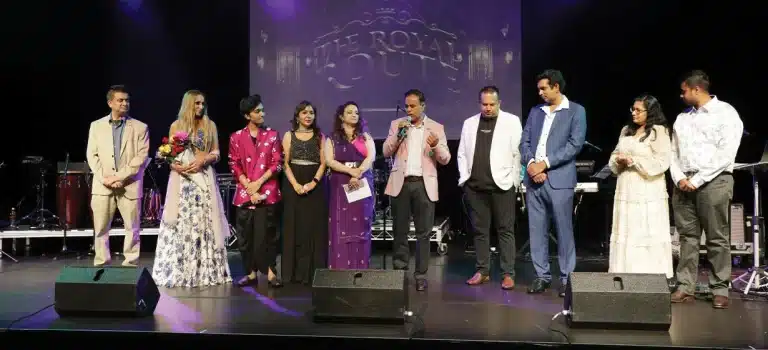
A Night to Remember: JD Media Corporation Delivers Another Stellar Performance with the Mohd Faiz & Senjuti Das Show in BrisbaneBRISBANE experienced a night of magic, music, and memories on Thursday, 24 April 2025, as the sensational Mohd Faiz and Senjuti Das lit up the stage in an electrifying live concert. From the very first note to the final encore, the audience was on its feet, singing, clapping, and dancing to the soulful performances of two of India’s rising musical stars. Behind the scenes and at the heart of this unforgettable experience was none other than JD Media Corporation, the powerhouse that has once again proven its exceptional ability to bring world-class entertainment to Brisbane.

A Night to Remember: JD Media Corporation Delivers Another Stellar Performance with the Mohd Faiz & Senjuti Das Show in BrisbaneThe resounding success of the show is yet another jewel in the crown for JD Media Corporation, following in the footsteps of last year’s much-celebrated Abhijeet Show, which also captured the hearts of Brisbane’s Indian diaspora. As the proud organizer, JD Media Corporation left no stone unturned in curating a night of cultural excellence, immersive music, and unforgettable joy. This event continues to highlight JD Media’s unwavering commitment to promoting South Asian arts and culture in Australia and with hosting partner The Deo Family Charitable Foundation.

JD Media Corporation: A Cultural Beacon- headquartered in Brisbane, JD Media Corporation has been at the forefront of cultural engagement and entertainment within the Indian Australian community.

A Night to Remember: JD Media Corporation Delivers Another Stellar Performance with the Mohd Faiz & Senjuti Das Show in BrisbaneIt is the proud parent company of three dynamic and influential media entities: Australian Indian Radio, Australian Indian Times, and Global Indian TV. Together, these platforms form a powerful network that not only informs but also connects, entertains, and uplifts the Indian diaspora across Australia and beyond.

• Australian Indian Radio, with its round-the-clock programming, continues to be a favourite among listeners for its music, talk shows, and community engagement.
A Night to Remember: JD Media Corporation Delivers Another Stellar Performance with the Mohd Faiz & Senjuti Das Show in Brisbane• Australian Indian Times remains the go-to publication for news, updates, and community stories, delivering quality journalism tailored to Indian Australians.
• Global Indian TV, the latest addition to the JD Media family, extends the group’s multimedia influence by offering engaging visual content ranging from music and interviews to live coverage of community events.

For the Mohd Faiz and Senjuti Das show, all three media arms worked in synergy to promote, amplify, and cover the event, ensuring it reached every corner of the community. The buzz created by JD Media’s platforms in the weeks leading up to the concert was palpable, drawing an enthusiastic crowd that filled the venue and contributed to the vibrant atmosphere of the night.

A Night to Remember: JD Media Corporation Delivers Another Stellar Performance with the Mohd Faiz & Senjuti Das Show in BrisbaneCommunity Support and Strategic Partnerships- no event of this scale is possible without strong community and business partnerships. JD Media Corporation proudly acknowledges and expresses deep gratitude to Shafia Deen of NGU Real Estate, who came on board as the Presenting Partner. Shafia’s support exemplifies the spirit of collaboration that fuels community-driven events and helps elevate them to new heights.

The event was also made possible by a group of dedicated Media Partners, including JD Media’s own platforms—Australian Indian Radio, Australian Indian Times, and Global Indian TV—alongside Radio Brisvaani, a long-standing partner in promoting Indian culture and music. These partners played a pivotal role in keeping the community informed and excited in the weeks leading up to the show, and their continued support was instrumental in the event’s turnout and success.

A Night to Remember: JD Media Corporation Delivers Another Stellar Performance with the Mohd Faiz & Senjuti Das Show in BrisbaneAdding to the flavour of the evening was Tharavadu, the official Catering Partner, whose culinary expertise brought a taste of authentic Indian cuisine to the night, satisfying both the soul and the stomach.

JD Media Corporation also extends heartfelt thanks to its Event Partners: JD Electrical Australia, JD Property Group trading as REMAX Landmark, and JD Media itself. These entities, under the JD Group umbrella, continue to contribute resources, talent, and logistical excellence to every production. It is this integration and collaboration across business and media operations that set JD Media apart as a true force in Australia’s event and entertainment industry.

A Night to Remember: JD Media Corporation Delivers Another Stellar Performance with the Mohd Faiz & Senjuti Das Show in BrisbaneNo great moment is complete without someone to capture it, and this unforgettable night was documented in style by our Photography Partner, Mayur Brahmbhatt. His lens has immortalized the energy, joy, and emotion of the evening, creating lasting memories for all who attended.
Thanks to all the directors Mrs Shanjeshni Deo, Mr Ravneel Deo, Mr Soneel Deo, Ms Vanita Kumar, Mr Imran Mohammed and Mr Ameil Nubh. Also the entire organising team and especially Neeraj Chand and Zahira.

A Heartfelt Thank You to Brisbane
JD Media Corporation is humbled and inspired by the incredible support shown by the Brisbane community. To every audience member who danced, sang, and celebrated with us: thank you.

Your enthusiasm and energy created an electric atmosphere that made this event truly special. It’s your support that motivates us to keep raising the bar and bringing more high-calibre artists and cultural experiences to Australia.

A Night to Remember: JD Media Corporation Delivers Another Stellar Performance with the Mohd Faiz & Senjuti Das Show in BrisbaneThis event was not just a concert—it was a celebration of identity, unity, and the rich musical heritage we all cherish. From the moment the artists stepped on stage to the final bow, the connection between performers and audience was undeniable. It is this connection that JD Media Corporation seeks to nurture with every event, every broadcast, and every story shared through its platforms.

A Night to Remember: JD Media Corporation Delivers Another Stellar Performance with the Mohd Faiz & Senjuti Das Show in BrisbaneWith another successful show in the books, JD Media Corporation reaffirms its commitment to being a leading force in promoting Indian arts and culture in Australia. Whether through radio, print, television, or live events, the mission remains clear: to bridge cultures, build community, and deliver quality entertainment that resonates with the soul.

Brisbane, you have once again shown your love and enthusiasm, and for that, we are deeply grateful. Stay tuned—JD Media has many more spectacular events and announcements on the horizon. Until then, thank you for making the Mohd Faiz & Senjuti Das show an unforgettable chapter in our shared cultural journey.
Our GOPIO Gold Coast Networking Evening

Our GOPIO Gold Coast Networking Evening

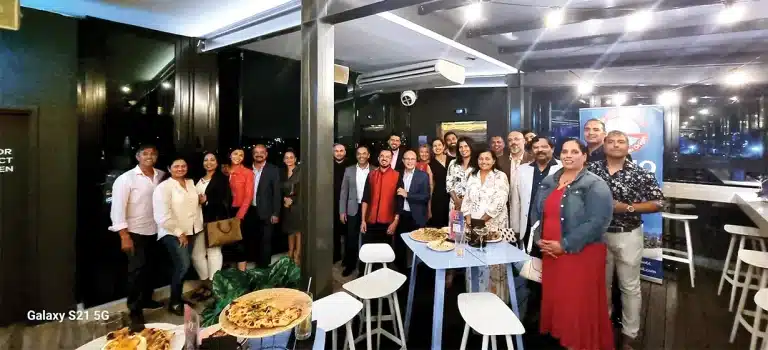
Our GOPIO Gold Coast Networking EveningA Night to Remember at GOPIO Gold Coast Networking at The Aviary Bar.
The recent GOPIO Gold Coast Networking evening, held at the stylish and contemporary Aviary Bar, brought together a vibrant assembly of forward-thinking, like-minded individuals united by a shared passion for personal growth, professional development, and meaningful connections.

Attendees were eager to embrace fresh perspectives, refine their existing skillsets, and broaden their networks in an atmosphere that was both dynamic and intellectually stimulating.

Our GOPIO Gold Coast Networking EveningAn Inspiring Lineup of Guest Speakers
We were privileged to hear from an exceptional panel of powerhouse speakers whose insights captivated the audience:
Dr. Alfeen Varghese – Renowned Leadership Expert & Strategist,
Mr. Navdeep Pasricha – Visionary Entrepreneur & Mindset Coach,
Mr. Abhishek Singh – Accomplished Corporate Leader & Strategic Visionary.

Their thought-provoking talks ignited meaningful conversations and left a lasting impact on all who attended.

Vibrant Conversations & Lasting Connections
The evening was complemented by a delicious selection of canapés and refreshments that kept the energy and enthusiasm at a high. Conversations flowed effortlessly as new friendships blossomed and diverse viewpoints were shared.

Every participant had the opportunity to share their background and engage in deep, enriching exchanges of ideas, insights, and aspirations—an invaluable chance to build relationships that go beyond business.

The uplifting atmosphere and spirit of collaboration made this event not just a networking night, but a celebration of community, inspiration, and growth.
Thank you to the speakers, attendees and supporters for making the event a success.

Honouring Your Need for Change: A Path to Emotional Well-Being through Movement

Honouring Your Need for Change: A Path to Emotional Well-Being through Movement

Honouring Your Need for Change: A Path to Emotional Well-Being through Movement

For years, emotional struggles have been overlooked, treated as something to “get over” or “toughen up” through. Phrases like “He’s just being dramatic” or “It’s not that big of a deal” are common. But it’s time to shift this perspective and recognise that emotional well-being isn’t something we simply endure—it’s something we actively take care of, honour, and transform.

Everyone faces moments of emotional turmoil, stress, or loss. These experiences shape us and challenge our resilience. Whether it’s anxiety, sadness, or burnout, emotional balance is crucial—and you deserve to honour it.

Why It’s Time to Honour Your Need for Change

For too long, we’ve been taught to “push through” when life gets tough. However, enduring emotions without acknowledging them can have lasting effects on emotional and physical health.

We often minimise our struggles or think “other people have it worse.” But the emotional weight we carry is personal. The challenges you face are valid, no matter their scale. If you feel overwhelmed or disconnected, you deserve to prioritise your well-being. Change doesn’t require grand gestures—it begins with small, intentional actions. True transformation starts when we stop running from our emotions and start embracing them.
Start by Asking Yourself the Right Questions

Change starts with awareness. Before transformation can happen, ask yourself:

• What am I feeling right now?
• What would it feel like to make a change, no matter how small?
• What do I need to release to move forward?
• Have I given myself permission to seek support?
Change doesn’t require drastic measures—it’s about being honest with ourselves and taking a step toward emotional well-being.

The Power of Listening and Being Present

Sometimes, all we need is someone to listen. We often focus on fixing problems, but the act of being heard can be transformative. Asking “Are you okay?” can begin the healing process. We don’t need answers or solutions; sometimes, just being seen and heard makes all the difference.
If you’re struggling, opening up may feel uncomfortable, but expressing emotions, seeking support, and sharing your journey can help you begin the change. Remember: you don’t have to do it alone.

Taking Small Steps Toward Change

Emotional transformation doesn’t happen overnight. It’s a gradual process. The journey begins with simple actions:

1. Reframe Your Inner Dialogue: We’re often our harshest critics. When you catch yourself thinking, “I’m not good enough,” challenge that thought and reframe it with self-compassion: “I am enough, and I am doing my best.”

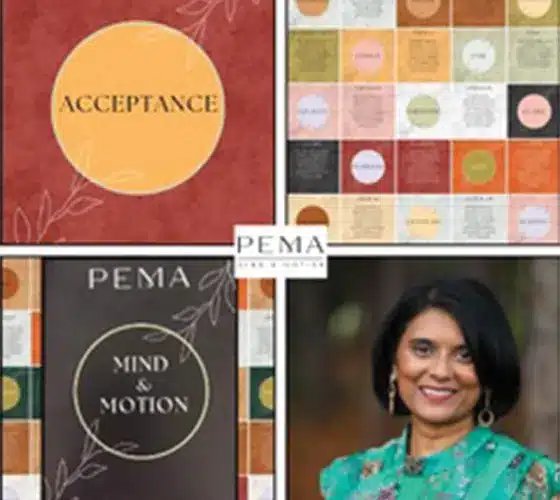
2. Move Your Body: The connection between mind and body is undeniable. At PEMA Mind and Motion, movement plays a key role in emotional well-being. Movement helps release trapped energy, restores balance, and eases stress. Research by Van der Kolk (2014) shows that body-based approaches, like movement therapy, support emotional healing.

3. Seek Professional Support: There’s no shame in asking for help. Professional guidance can offer insights. Sometimes, an external perspective helps navigate life’s challenges.

4. Create Boundaries: Protecting your emotional well-being often involves setting boundaries. Saying no to extra commitments, limiting time with negative influences, or carving out time for yourself helps safeguard you.

5. Practice Mindfulness: Mindfulness is being present in the moment. By focusing on your breath, sensations, and emotions, you engage fully with the present.

The Role of Mind and Motion Cards in Your Journey

The Mind and Motion Cards can support your emotional well-being. These evidence-based cards help you connect with your emotions and explore your mental state. Whether seeking guidance or a reminder to slow down and tune into your emotions, the Mind and Motion Cards serve as a tool for emotional awareness.
Whether you’re seeking to connect with your emotions or integrating mindfulness into your practice, these cards offer a practical way to support mental clarity.

Change Begins with You
The journey to emotional well-being starts with you. Honouring your need for change means accepting where you are, recognizing the need for transformation, and taking the first step toward a healthier emotional state.

As the Bhagavad Gita beautifully says, “You have the right to perform your prescribed duties, but you are not entitled to the fruits of your actions. Never consider yourself to be the cause of the results of your activities, nor be attached to inaction. (Chapter 2)” Focusing on the journey of emotional healing—rather than the outcome—opens us to growth, release, and peace.

Ready to take the first step toward emotional well-being? The Mind and Motion Cards are here to guide you. Visit https://www.monicapema.com/category/media and discover how these transformative cards can support your emotional journey.
Monica Pema
Integrated Wellness Expert

Free testing for hepatitis B and hepatitis C

Free testing for hepatitis B and hepatitis C

Free testing for hepatitis B and hepatitis C Free testing for hepatitis B and hepatitis C

Do you remember or know if you have ever been tested for hepatitis B or hepatitis C?
Many people incorrectly believe they have been automatically tested when they come to live in Australia or if they have ever visited a hospital in Australia. This was not true for most people in the past. Since the 1st of July 2024 changes to immigration requirements have seen more people tested for hepatitis B. In Australia it is estimated 70% of people living with hepatitis B were born overseas. Whilst we do not have accurate data for the number of people living with hepatitis C due to past infections caused by medical procedures in their home country – it is still considered a concern for our overseas born communities.

ECCQ’s Love Health Program is part of a National Research Program with the UNSW and the Kirby Institute helping people in the community to get free, rapid testing.

What are the benefits of knowing if you have hepatitis C or hepatitis B?

• Early diagnosis can help protect you and your loved ones from not only accidental infection, but also long-term health challenges associated with undiagnosed liver disease.

• There is a vaccination available for hepatitis B that is free for (unvaccinated/uninfected) people sharing a house with a person living with hepatitis B, and people with a Medicare Card from hepatitis B endemic countries.

• If you are living with hepatitis B or hepatitis C you may not have symptoms until there is significant damage (cirrhosis) happening to your liver, or liver cancer or liver failure is happening.

• There are good management practices that can help you reduce the risks of developing adverse health outcomes if you are living with hepatitis B. These include minimum recommended routine blood tests to check liver function and viral load, yearly Fibroscan to check for liver damage and regular ultrasounds to check for liver cancer. Your doctor will tell you how often you need these as it differs for different age groups, ethnicities and family history of liver disease.

• There is a simple cure for hepatitis C – with minimal or no side effects at all.

What do the tests for hepatitis C and hepatitis B with ECCQ involve?

• You do not need a Medicare Card to get tested.

• Our team of highly trained bi-lingual health workers will provide you with on-the-spot education about hepatitis B and C, which will be done for most people in their preferred language.

• The test only involves a simple fingerprick to get a very small amount of blood. For hepatitis C the result (antibodies) is available within a minute; for hepatitis B the result (surface antigen) is available within 30 minutes.

• If either result is positive, one of our bi-lingual community health workers can assist with accessing appropriate care if you do not have a regular doctor and provide you with support if needed.

• The testing can be performed in a number of locations including our offices in West End and many community locations. Please contact one of our team members to discuss where and when a session is available that will suit you.

What else can the Love Health Program do for you and your community?

• We always appreciate the support of our communities and if you would like one of our team to provide free information and education to your family or community, please contact us to arrange. Again, this can be done in language. We not only provide information about hepatitis B and C, but also HIV and Sexual Health.
Remember it is better to know your status than not to know.

For more information, please see our webpage at www.eccq.com.au/bbv or contact us by email at [email protected].
If you are in Cairns, you can contact the team at Cairns Sexual Health Services by calling (07) 4226 4769 or emailing [email protected].

PEACE WITH YOUR LIMITATIONS

PEACE WITH YOUR LIMITATIONS

By Pastor Suresh Dass Joseph
[email protected]

PEACE WITH YOUR LIMITATIONS

Dear reader, it is with much joy that we bring you the word of God. We all have limitations, faults, and even weaknesses for which we can feel sorry. Often, we wish we had more of this gift or extra resources, another qualification so that we could do great things. But the good news is that God can use us despite our limitations. In the bible (Luke 1), we read that when the angel announced to Mary that she was going to have a baby, who was to be named Jesus, Mary was afraid and said, “How can this be? I am not even married?”. Finally, Mary said, “Let it be to me according to your word.”
We know we are meant to do great things, but like Mary, we often look at what we don’t have and get stuck. When we look at our limited resources, education, and connections, it is easy to give up on our dreams.

But you must realize that God made you good, and all things, including your strengths and weaknesses, are working for you. Like Mary, you have to agree with what God says about you. And, He can do anything through you. The scriptures tell us nothing is too complicated for God. He is not limited by time, lack, or the enemy.

When God called Moses (Exodus 3) to bring the Hebrew people out of slavery in Egypt into the promised land of Israel, he felt incapable of taking on the responsibility. He looked at his weaknesses, failures, resources, and connections and said to God, “Who am I that I should go to Egypt?” Again, he said, “What if the people don’t believe me?” Finally, he said, “But I can’t even speak well; who will listen to me?”

Here are 3 things we can learn from God’s encounter with Moses.

1. Your weakness may be your limitation, but it is not God’s limitation. When Moses said he was not qualified to lead the Hebrew people out of Egypt, God said, “I will be with you.” God does not ask you to do something on your strength but, through His strength. All He asks for is your obedience.

2. If you didn’t get a gift or missed out on something, then you don’t need it. Moses said, “I cannot speak too well,” God told him not to be disappointed but to take his brother Aaron with him; he surely could speak well.

3. If you needed that gift, God would have given it to you in the first place. God asked Moses what he had with him. Moses replied, “A rod.” God said, “I will use you with what you have.” Moses depended on God and he led the people out of Egypt with a rod in his hand.

Friends, that is how God works with you. Your limitations are God’s opportunity to do great things through you. And I believe all this is possible through a relationship with Jesus Christ.

God bless you

Beyond reporting Media as a force for national unity 

Beyond reporting Media as a force for national unity 

By SHAILENDRA BAHADUR SINGH

Beyond reporting Media as a force for national unity THIS opinion piece is an updated version of the writer’s presentation at the Dialogue Fiji and Fiji Human Rights and Anti-Discrimination Commission panel discussion in Suva on March 21. The event was held to mark the International Day for the Elimination of Racial Discrimination. The article explores the complex relationship between media narratives, ethnicity, and social cohesion in Fiji, around the following three key questions:
1. How have media shaped narratives on ethnicity and what is the impact on social cohesion?
2. What is journalism’s role in promoting an inclusive society?
3. What strategies would you recommend for a racially harmonious Fiji?
How have media shaped narratives around ethnicity and what is the impact on social cohesion?

Questions about how media have shaped narratives around ethnicity and its impact on social cohesion would need a proper study for a definitive answer. Since no such recent studies exist, we can, at best, make some calculated observations.
For a start, media see themselves as a “mirror of society”. Media would argue that they do not shape narratives, but that their reporting simply reflects society as it stands—including its values, issues, and realities.

Therefore, if Fiji is an ethnically divided society, the news will reflect that. Conversely, if Fiji is a model of harmony, that’s what the news should show. If the media portray anything other than this, they are arguably not reflecting reality as it exists.

But claiming that media just mirror society could be downplaying or underestimating their role. Some argue that beyond simply reflecting society, media also function as a magnifying glass: firstly, because media can amplify or exaggerate situations, and secondly because media’s job isn’t just to reflect society, but also question it, challenge its norms, and push boundaries.

Relevant to this is the fact that media are often drawn to conflict and to powerful individuals—elements which are deemed more newsworthy. This explains why politicians often get the lion’s share of news coverage.

Beyond reporting Media as a force for national unity Consequently, how politicians handle race and ethnicity can shape news narratives. For example, the Minister for Defence and Veteran’s Affairs Pio Tikoduadua has frequently spoken out strongly in favour of minority rights, national unity and the rule of law.
But what about the other national leaders? What are they saying in Parliament? Are they promoting unity or are they fueling division? These are crucial questions because much of the media narrative on ethnicity can be shaped by what our leaders say.

Another question then is, do media narratives reflect society as media claim? Or do media preference elite viewpoints, given that politicians dominate news coverage?
What is journalism’s role in promoting an inclusive society?
This is the very question I addressed in my PhD thesis entitled “Rethinking journalism for supporting social cohesion and democracy: Case study of media performance in Fiji” (2014). Based on a review of the literature, I found that historically, media, at times, misrepresented certain issues, which did not help inclusiveness.

These included sensitive topics like land use and population trends, which fostered mistrust. During colonial times, this manipulation was part of deliberate divide-and-rule strategies to drive a wedge between communities. Today, we have a term for such tactics: “disinformation”, which is the intentional spread of false or misleading information to manipulate public perception.

The spread of disinformation didn’t stop completely after Fiji’s independence. For example, during the height of land disputes in 2000, a Fiji Daily Post editorial claimed that landowners would rather see land idle and overgrown, than leased out for economic gain. This was just the editorial writer’s opinion, with no interviews conducted with landowners to seek their views.

In contrast, a study published in the same year did interview landowners. It found many of them wanted to farm their land for profit, and willing to lease surplass land for the right rental, rather than leave it idle. So, this was a clear case of media misrepresentation—based not on facts, but rather a figment of the editorial writer’s imagination.
The problem is that the public is more likely to read newspapers, rather than academic research, meaning that more people would have been exposed to the editorial than to the study.

The lesson here is simple: journalism’s first rule is to be ethical and professional, not condescending, or taking shortcuts. Especially on sensitive issues, the media must be both alert and responsible.
They should educate themselves on key national debates like land, demography, the constitution, and electoral systems.
Which brings us back to the claim that media just reflect reality. As mentioned before, that argument diminishes media’s responsibility.

Media shouldn’t merely mirror society. They should apply a magnifying glass to it by, among other things, interrogating political rhetoric rather than repeating it uncritically under the guise of reporting the facts. Especially concerning issues of race and ethnicity, as they significantly impact national stability, economic development and quality of life in Fiji.
What strategies would you recommend for a racially harmonious Fiji?

It is surprising that until recently, Fiji has never had a proper social cohesion strategy despite the obvious need for one. Without social cohesion, there’s no real development because whatever progress we make is destroyed by upheavals—military and civilian—with ethnic tensions being a key underlying cause.

However, social cohesion is not just the government’s job. It’s everyone’s responsibility. Every organisation and every sector should get behind it. And it starts at home. A lot of the prejudices that we observe today are learnt at home.
What we need is a coordinated national awareness campaign, with media, the education sector and civil society working together.

Moreover, research in this area is lacking. What are our three universities doing about it? Globally, conflict prevention and peacebuilding are major fields of study—to what extent are our universities supporting this effort?

In addition, Fiji must look beyond its borders for inspiration. Countries like Singapore and Malaysia have invested heavily in reducing economic disparities and building a common national identity—with reasonable success.

Mauritius is another multiethnic country from which Fiji could learn. In the 1970s, Mauritius and Fiji had similar per capita GDPs but by 2023, Mauritius’s GDP had doubled compared with Fiji’s, making it twice as wealthy.
While the contexts are different, could Mauritius’s success hold any lessons for Fiji? We will never know unless we regularly engage with Mauritius in a broader way.

Conclusion
In summary, media can shape social cohesion—for better or worse. Their impact depends on whether they report professionally and ethically. Media must make it their business to better understand sensitive national issues and challenge divisive political narratives.
Furthermore, Fiji must look beyond its borders for ideas and inspiration.
And finally, an inclusive society isn’t just the government’s responsibility but a national effort. However, the government must take the lead and set an example.

Dr SHAILENDRA BAHADUR SINGH is an associate professor and head of the journalism program at The University of the South Pacific in Fiji. He has written widely on Pacific media, politics and development. The views in this article are his own and do not necessarily reflect the position of The University of the South Pacific.

Indian American Dr. Shabana Parvez receives prestigious Paul Harris Fellow Award along with Jim Swann & Sue Welch

Indian American Dr. Shabana Parvez receives prestigious Paul Harris Fellow Award along with Jim Swann & Sue Welch

Indian American Dr. Shabana Parvez is the first Indian origin President of the Rotary Club of Arlington Highlands

Indian American Dr. Shabana Parvez receives prestigious Paul Harris Fellow Award along with Jim Swann & Sue Welch

Arlington, TX – April 16, 2025 – The Rotary Club of Arlington Highlands proudly celebrated its 9th anniversary with a memorable Signature Event spotlighting service, leadership, and community transformation. The celebration included a symbolic cake-cutting ceremony to honor the club’s chartering on April 13, 2016, marking nearly a decade of impactful service and global fellowship.

A highlight of the evening was the presentation of the Paul Harris Fellow Award—one of Rotary International’s most prestigious honors. This year’s distinguished recipients included Dr. Shabana Parvez, Indian-American physician, entrepreneur, and current President of the Rotary Club of Arlington Highlands, along with Jim Swann and Sue Welch, who were recognized for their outstanding contributions as Rotarians of the Year—the club’s highest internal distinction. Their Paul Harris Fellowships were generously sponsored by Past President Paul Brodie and President Nominee Becky Gerro, who each sponsor two Paul Harris Fellows annually to support and celebrate service excellence within the club.

Indian American Dr. Shabana Parvez is the first Indian origin President of the Rotary Club of Arlington Highlands Also honored were returning Paul Harris Fellows Becky Gerro, Paul Brodie, and Barbara Brodie, with Barbara receiving an additional distinction—the Blue Sapphire Pin—signifying an elevated level of contribution to The Rotary Foundation.

The evening took on global significance as Dr. Tausif Malik, Indian-American entrepreneur and founder of RiseBack—the world’s first affordable and inclusive EdTech platform—announced the official registration of RiseBack’s Global Headquarters in Arlington, Texas. In recognition of his pioneering work in democratizing access to higher education, Dr. Malik was inducted as an Honorary Rotarian.

Serving as the event’s Chief Guest and Keynote Speaker, Arlington Mayor Jim Ross delivered an inspiring address celebrating the city’s rich diversity, rapid economic development, and rising status as “The Dream City of America.” He warmly welcomed RiseBack’s HQ, emphasizing Arlington’s commitment to innovation and education.

Another milestone highlighted during the celebration was the “Start Here, Go Anywhere” Initiative—a transformative collaboration between the Rotary Club and RiseBack. Already launched earlier this year, the initiative was showcased through a compelling video presentation by Club President Dr. Shabana Parvez, offering attendees a firsthand look at its growing impact.

As the Rotary Club of Arlington Highlands embarks on its 10th year of service, the anniversary event reaffirmed its commitment to local and global impact through innovation, inclusion, and empowerment.

About the Rotary Club of Arlington Highlands:

Rebuilt in 2020 by a group of passionate individuals dedicated to service, the Rotary Club of Arlington Highlands is one of the most diverse in Rotary International. Members include business leaders and community advocates serving on local boards such as the Greater Arlington Chamber of Commerce, River Legacy Foundation, and Longhorn Council. The club proudly supports initiatives including the River Legacy Foundation, Dental Health Arlington, Johns Elementary, Bowie High School, Barnett Junior High, and the Dan Dipert Career and Technical Center.

Alex Kain leads a new wave of purpose-driven entrepreneurs in search of ways to do good

Alex Kain leads a new wave of purpose-driven entrepreneurs in search of ways to do good

Alex Kain leads a new wave of purpose-driven entrepreneurs in search of ways to do good

FROM high-growth tech ventures to deeply personal reinvention, Melbourne-based entrepreneur Alex Kain is charting a new course, one grounded in empathy, values and meaningful impact. With the upcoming release of his debut book The Philosophy this June, Kain is calling on fellow business leaders and changemakers to challenge conventional definitions of success and embrace a new mission: to lift others while lifting themselves.

After building a thriving software business, navigating betrayal and loss and emerging stronger, Kain’s journey reflects a deeper realisation, that real happiness isn’t about personal wins, it’s about helping others win too even if it involves incremental elements of improvement over time. The result is a vastly enhanced world for everyone.

“There’s a new kind of entrepreneur emerging. We’ve built businesses, chased the dream, ticked the boxes but something’s still missing. That ‘something’ is meaning. It’s contribution. It’s impact,” Kain said. “It’s not just donating a percentage of profits. It goes much deeper!”

“I am certainly experiencing a desire to do more and help more through my lived situations and challenges. This is something I have been feeling for a long time which has culminated in me actually writing a book supported by other initiatives that will create a movement of good based on the individual efforts of many to deliver collective and enduring change.

“Sounds philosophical and it is. I feel that if we all as a society made some simple changes to the way we do things, we could improve life and the world for so many.”
Kain’s philosophy is just that, he has called his thinking The Philosophy and has outlined his rationale and methodology in his upcoming book. He asks the big questions to some of society’s most challenging issues and offers a way forward.

Rebuilding from the inside out: The Philosophy

At the heart of The Philosophy is a bold yet practical proposition: the problems society faces today, poverty, division, violence, disconnection – are symptoms. The real cause is a lack of core human values: respect, empathy and gratitude.
Kain, who made a name for himself optimising complex systems and processes for companies through his business, believes the same analytical thinking can be applied to society itself. The Philosophy challenges us to stop fixing symptoms and start redesigning the system beginning with ourselves.

“We need a shift in mindset,” Kain said.
“We keep treating issues like homelessness or domestic violence as isolated. But they all stem from the same place; how we see ourselves and each other. That’s why I believe re-educating our society around values is the key to lasting change.”
The book outlines a vision for transformation including an enhanced education system, one where students are taught not just mathematics and science, but how to become kind, resilient and self- aware human beings. It’s an unflinching, honest and hopeful manifesto for a better future, one led by everyday people who choose to do good.

A voice for the underserved, the overlooked and the curious

Kain represents a growing number of people who’ve started with little, worked hard, succeeded and are now searching for something deeper. He speaks directly to those who feel disillusioned by politics, disconnected from traditional causes, or simply stuck in a world that doesn’t reflect their values.

“I don’t come with letters after my name. I’m just a regular guy who’s been through it, seen it and wants to change it. I’ve failed, I’ve succeeded and I’ve learned a lot along the way, most importantly, that helping others is where true fulfillment lies,” he said. His lived experience including the loss of a business through betrayal and his recovery from it brings authenticity and vulnerability to The Philosophy. It’s not about preaching, it’s about connecting. Pre-launch momentum and the movement ahead set for release in June, The Philosophy will be accompanied by an online platform to connect like- minded thinkers, seekers and change agents. Kain’s vision is to build a grassroots movement, one driven by conversation, collaboration and a shared belief that we can be better, together.

“The book is just the beginning,” he said.
“I want the book to start real conversations; ones that we have been too afraid to have. Let’s redesign the world by redesigning ourselves first.” Kain’s approach blends strategic systems thinking with human insight, humour and humility. As the founder of several strategic optimisation businesses, he’s long been focused on streamlining organisational processes. Now, he’s applying that same mindset to life, leadership and legacy.
“The next era of success isn’t about how far we rise, but how many people we bring with us,” he said.

About Alex Kain

Alex Kain is a Melbourne-based entrepreneur, systems thinker and founder of The Philosophy, a social movement and soon-to-be-published book encouraging a new way of thinking about success, happiness, and collective responsibility. After building several technology businesses over the years, Alex turned his attention to society itself, applying his expertise in systems optimisation to the deeper issues facing humanity. Through The Philosophy, Alex is inspiring business leaders, changemakers and everyday people to lead with empathy, gratitude and purpose and to focus not only on rising, but on lifting others as they go.
To learn more, visit: www.thephilosophy.net

A Prayer Meeting & Vigil by the Indian Diaspora at Mahatma Gandhi’s statue at Roma Parklands on 29th April

A Prayer Meeting & Vigil by the Indian Diaspora at Mahatma Gandhi’s statue at Roma Parklands on 29th April

A Prayer Meeting & Vigil by the Indian Diaspora at Mahatma Gandhi’s statue at Roma Parklands on 29th April A Prayer Meeting & Vigil by the Indian Diaspora at Mahatma Gandhi’s statue at Roma Parklands on 29th April

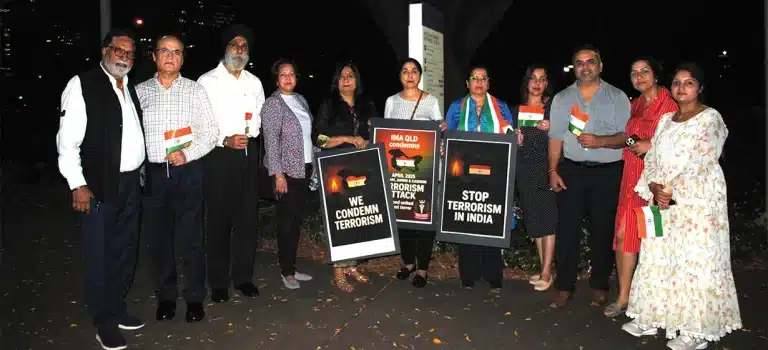
A Prayer Meeting & Vigil by the Indian Diaspora at Mahatma Gandhi’s statue at Roma Parklands on 29th AprilTHIS  gathering served as an expression of grief for those lost in massacre of innocent 27 tourists in Pahalgam, UT of Kashmir in India on 22nd April 2025 .
Nearly 75 members from the Indian diaspora gathered for a solemn prayer meeting, where they bowed their heads and observed a minute of silence,
Pushpinder Oberoi, a respected community leader from the Gold Coast, voiced his deep anguish over the tragic killing of innocent people in Pahalgam.
Yousuf AliKhan, a renowned singer based in Brisbane, condemned the heinous actions of the terrorists with heartfelt conviction.
A Prayer Meeting & Vigil by the Indian Diaspora at Mahatma Gandhi’s statue at Roma Parklands on 29th AprilThe gathering also saw representation from BAPS Queensland, led by Jaynesh Brambhatt and his team.
The Indian Medical Association was represented by Dr. Kothari, Dr. Sudhar, Dr. Gandhi, and Dr. Fernandez.
Their presence symbolized the unity and shared sorrow across different sectors of the community.
A Prayer Meeting & Vigil by the Indian Diaspora at Mahatma Gandhi’s statue at Roma Parklands on 29th AprilDuring the event, the gathering strongly urged the Government of India to take action and ensure justice for the victims, demonstrating their collective commitment to advocating for accountability and peace.
They extended their appreciation to the Consulate General of India in Brisbane and its staff for their empathy and their promise to convey the sentiments of the diaspora to Prime Minister Modi through appropriate channels.
A Prayer Meeting & Vigil by the Indian Diaspora at Mahatma Gandhi’s statue at Roma Parklands on 29th AprilTo mark the occasion, 27 lamps were lit in remembrance of those who lost their lives. These lamps were respectfully placed in front of the statue of Mahatma Gandhi, reinforcing the symbolic importance of peace and non-violence in the face of tragedy.
The gathering concluded with the singing of the Indian national anthem, an emotional and unifying moment that encapsulated the shared grief & condemnation from all the attendees.

A Prayer Meeting & Vigil by the Indian Diaspora at Mahatma Gandhi’s statue at Roma Parklands on 29th April A Prayer Meeting & Vigil by the Indian Diaspora at Mahatma Gandhi’s statue at Roma Parklands on 29th April

The Federation of Indian Communities of Queensland Makes History in ANZAC Day Parade and Commemoration

The Federation of Indian Communities of Queensland Makes History in ANZAC Day Parade and Commemoration

The Federation of Indian Communities of Queensland Makes History in ANZAC Day Parade and CommemorationThe Federation of Indian Communities of Queensland (FICQ), proudly supported by the India-Australia War Memorial Organisation, made its first-ever appearance in the official Brisbane ANZAC Day Parade. This milestone event marked a powerful gesture of unity and respect by the Indian-Australian community in honouring the ANZAC spirit.

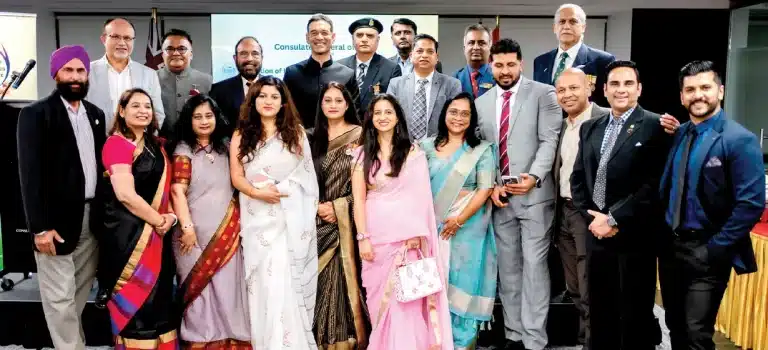
The Federation of Indian Communities of Queensland Makes History in ANZAC Day Parade and CommemorationFICQ also hosted a historic ANZAC Day Commemoration Dinner in collaboration with the Consulate General of India, Brisbane. The evening paid tribute to the valour and sacrifice of ANZAC soldiers and highlighted the often-overlooked contributions of Indian soldiers, particularly during World War I in Gallipoli.

The Federation of Indian Communities of Queensland Makes History in ANZAC Day Parade and CommemorationDignitaries including Hon. Fiona Simpson MP, Shadow Minister Charis Mullen MP, Senator Paul Scarr, Representative for Lord Mayor Councillor Andrew Wines, Councillor Vicky Howard, Captain Geetika Punia, joined community leaders at the event, where FICQ President Dr Preethi Suraj stated:” FICQ Inc. has been at the forefront of working with the Indian diaspora and community organisations for over 27 years and today marks another important milestone in that journey. This event not only honours the ANZAC legacy but brings to light the shared sacrifices of Indian soldiers. It’s a proud and humbling moment for our community.”

The Federation of Indian Communities of Queensland Makes History in ANZAC Day Parade and CommemorationThe dinner also observed a moment of silence for the victims of the Pahalgam terror attack in India on 22 April 2025.

FICQ remains committed to raising awareness of the historic ties between India and Australia through future initiatives, information sessions, and collaborations with veterans and community organizations.

Lest We Forget. Jai Hind.