

Wealth Management

Wealth Management

Wealth Management
By Pushpa Vaghela
CEO of The Women’s Mentoring Foundation (WMF), Managing Director AMS Synergy Group Real Estate & Co-Founder IndiaBiz Pioneers.

Now that we are well into January, this is a gentle reminder to remain consistent in your wealth management practices and explore diverse ventures to create multiple income streams.

Managing Wealth: A Great Way to be consistent in 2025
As of February 2025, it’s the perfect time to reflect on financial strategies and goals. Managing wealth effectively is not just about earning; it’s about creating sustainable systems that allow for growth, security, and future opportunities. Whether you’re an entrepreneur, a professional, or someone looking to get a stronger grip on your financial well-being, now is the time to prioritise strategies that align with your aspirations.

Wealth management is the cornerstone of personal and professional success. For business owners, it goes beyond profit margins—it’s about building systems that create value, ensure stability, and provide a solid foundation for expansion. In my own journey, the principles of wealth management have been pivotal in achieving milestones that once seemed distant.

Expanding Horizons: My Business Ventures in 2025
This year marks an exciting phase of growth for my business ventures. With a strong focus on expansion in the real estate sector, the foundation we laid over the past year has prepared us to soar to new heights. Real estate, known for its potential to create generational wealth, has been a key area of focus. Despite the challenges of entering a competitive market, our strategic approach and disciplined financial processes have positioned us for success.

In just a short span of time, the structures and foundations of this new venture have become stronger than I could have imagined. Through a combination of robust financial management, team building, and operational excellence, we’ve created a business that not only meets but exceeds market expectations.

The Pillars of Wealth Management
So, what drives this success? Effective wealth management rests on three key pillars: planning, investment, and diversification.

1. Planning for Success
Clear goals are essential to managing wealth effectively. Setting financial objectives allows you to allocate resources strategically and measure progress over time. For me, detailed planning is at the heart of every business decision. From budgeting to forecasting, having a roadmap ensures that resources are used wisely and aligns short-term actions with long-term vision.

2. Smart Investments
Investment decisions shape the future of any wealth management strategy. In my case, diversifying into real estate was a calculated move. Real estate offers dual benefits: immediate cash flow from rental properties and long-term appreciation of asset values. Strategic investments in the right locations and markets have allowed us to maximize returns while mitigating risks.

3. Diversification Across Ventures
Running multiple companies requires a careful balance of focus and flexibility. Diversification isn’t just about spreading financial investments; it’s about spreading operational risks. By expanding into different sectors while maintaining a clear vision for each, I’ve ensured that no single setback can destabilize the entire portfolio.

Building Strong Foundations
The strength of any business lies in its foundation. Over the years, I’ve worked tirelessly to create processes that ensure operational efficiency and financial stability. These systems allow me to manage multiple ventures without compromising the quality of output or the well-being of my team.

For example, our real estate expansion would not have been possible without a strong foundation of trust and transparency. From recruiting skilled professionals to establishing partnerships with clients and stakeholders, every aspect of the business is guided by principles of integrity and collaboration.

The Role of Technology
In today’s fast-paced world, technology plays a critical role in wealth management and business expansion. Automated tools for financial tracking, data analysis, and customer relationship management have allowed us to scale operations efficiently. Whether it’s managing cash flows, monitoring market trends, or enhancing customer engagement, technology has been an invaluable ally.

Lessons Learned
Looking back, the journey has been full of lessons. One of the most important is the value of resilience. The road to success is rarely linear, and challenges are inevitable. What matters is the ability to adapt, innovate, and stay focused on the bigger picture.

Another key lesson is the importance of team building. No business can thrive without a strong, motivated team. Investing in people—through training, mentorship, and support—has paid dividends not just in business performance but also in creating a positive, thriving work culture.

A Vision for the Future
As I continue to expand my ventures, the vision remains clear: to create value, inspire innovation, and lead with purpose. Managing wealth effectively is not just about accumulating assets; it’s about creating opportunities for growth and giving back to the community.

The year 2025 promises to be one of growth, resilience, and achievement. For those looking to start the year on the right foot, I encourage you to embrace the principles of wealth management. Set clear goals, make informed decisions, and never stop learning. With the right strategies in place, success is not just a possibility—it’s an inevitability.
To get my latest book that covers the Psychology and State required to become stronger leaders that create exponential wealth please do reach out.

Indian Medical Association of Australia, Queensland Branch (IMAQ)

Indian Medical Association of Australia, Queensland Branch (IMAQ)

Indian Medical Association of Australia, Queensland Branch (IMAQ)The Indian Medical Association of Australia – Queensland Branch (IMAQ), established in 2017, is a dynamic and dedicated not-for-profit organisation registered under the QLD Associations Inc. Act (IA 57004). Based in Queensland, it serves as a vibrant community of doctors of Indian origin who proudly call Australia their home. We value and celebrate Australia’s multicultural society, which has embraced our members and allowed us to integrate fully into the healthcare system, making meaningful contributions across a range of specialties and sectors.

With a growing membership of over 600 professionals, IMAQ includes General Practitioners (GPs), specialists, junior doctors, and academics who actively contribute to advancing healthcare in both public and private sectors. Many of our members also hold esteemed academic positions at Queensland’s leading medical universities. This diverse and highly skilled group is unified by a shared commitment to excellence in healthcare, and we continuously strive to improve patient care and wellbeing across the community.

IMAQ’s work extends beyond healthcare provision into social responsibility. We have initiated and hosted significant community-based activities, such as Domestic Violence Symposiums and online health clinics during the COVID-19 pandemic. These initiatives highlight our unwavering commitment to both the professional development of our members and the welfare of the broader community. Our engagement has also included special projects, such as hosting teams for the World Games for Children with Intellectual Disabilities.

The IMAQ also maintains an active presence in the media, with a monthly health radio program, health-related articles in local Indian publications, and Continuing Medical Education meetings for our members. These initiatives foster both education and awareness within the Indian community and the broader Queensland population. Additionally, our close ties with prominent medical associations like the Australian Medical Association Queensland (AMAQ) and specialist professional colleges allow us to stay at the forefront of the healthcare industry and advocate for policies that benefit our members and patients alike.

Each year, IMAQ organizes Diwali celebrations, a key cultural event in the Indian community, which brings together our members and their families for a joyful celebration of the Festival of Lights. The most recent Diwali event was held on October 12th at Stamford Plaza Brisbane, showcasing IMAQ’s commitment to preserving and celebrating Indian cultural heritage while fostering unity among healthcare professionals.

Dr Cyril Fernandez – President of IMAQ
At the helm of IMAQ is Dr Cyril Fernandez, a highly respected General Practitioner (GP) with over 20 years of experience in the Australian medical system. Dr Fernandez is deeply committed to the health and wellbeing of his patients and the wider community. As President of IMAQ, he leads the organisation with a focus on enhancing the professional growth of doctors of Indian origin and supporting various healthcare initiatives in Queensland.

Dr Fernandez was born in Ernakulam, Kochi, Kerala, India, on April 18, 1959, and completed his medical education at Kottayam Government Medical College and BJ Medical College, Ahmedabad, India. He moved to Australia in 2003 with his wife and two daughters, establishing his practice at WISHART Medical Centre in Brisbane. He is a Fellow of the Royal Australian College of General Practitioners (FRACGP) and has held numerous leadership and mentorship roles in the medical community. He has served as a Senior Lecturer at the University of Queensland and has been an examiner for the Royal Australian College of General Practitioners (RACGP).

Dr Fernandez’s work extends beyond clinical practice. He is a committed mental health advocate and has been listed on Beyond Blue and the Black Dog Institute websites as a mental health care provider. His expertise also includes focused psychological strategies (FPS) and he regularly facilitates workshops for GPs, medical students, and GP registrars. He has played a pivotal role in the “AP KI SEHAT PROGRAM”—a program aimed at providing health and wellness advice, especially to the Indian community in Queensland, and has been a key voice in discussions on mental health, domestic violence, and other community welfare issues.

Dr Fernandez’s leadership extends to his role as a Designated Aviation Medical Examiner (DAME) for CASA, where he conducts medical assessments for pilots and air traffic controllers. He is also actively involved in health services for coal mine and MMQ workers. His contributions to the Indian medical community have not gone unnoticed, as he was named a nominee in the Courier Mail Queensland Indian Power List for 2024.
Dr Fernandez’s leadership, compassion, and dedication to improving healthcare for all communities in Queensland have shaped IMAQ into a dynamic and influential force in the healthcare landscape.

Contact Information for IMAQ:
Indian Medical Association of Australia – Queensland Chapter
101/149 Wickham Terrace, Spring Hill QLD 4000
Phone: +61 404 433 044
Email: [email protected]
Finally, Dr Cyril Fernandez and his team continue to make invaluable contributions to healthcare and the community through IMAQ, promoting the values of excellence, multiculturalism, and compassion in every aspect of their work.

75 years of Bharat Constitution on 26th January 2025

75 years of Bharat Constitution on 26th January 2025

75 years of Bharat Constitution on 26th January 2025

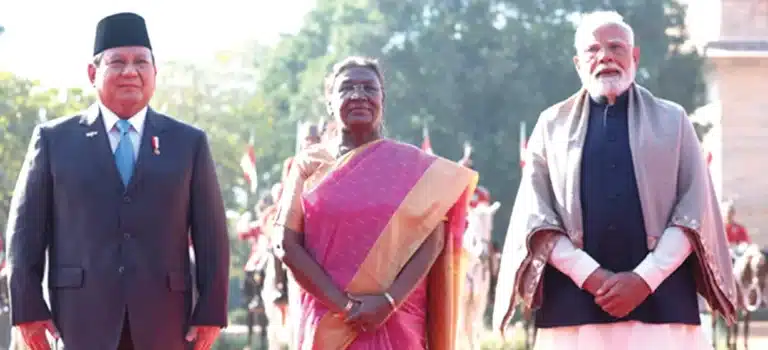
Nearly 1.5 billion Bharatvasis and Bharatvanshis (Indians and Overseas Indians) celebrated a cherished milestone marking 75 years of adoption of the Constitution of India making it a sovereign, democratic, socialist and secular republic. The Sun shone brightly, without fog on a clear blue sky day in the Indian capital of New Delhi on 26th January 2025 as President of India Mrs. Draupadi Murmu, also the Commander in Chief of Indian armed forces, took the salute on Kartavya Path in the heart of the capital. She was joined by Chief Guest Mr. Prabowo Subianto, President of the Republic of Indonesia, Vice President of India Jagdeep Dhankar, Prime Minister of India Narendra Modi, the entire Cabinet of Ministers, Armed Forces Chiefs, Ambassadors and High Commissioners in India, dignitaries, thousands of public and especially the youth. Besides showcasing India’s military might, the focus was on stellar achievements India has made towards inclusive growth, development and prosperity, especially focusing on youth, children, women, tribal and undeserved population. Whilst traditionally the Republic Day is a grand display of the country’s rising armada to secure its sanctity and peace, each passing year has focused on technological, social and economic upliftment of masses that make the world’s most populous country. India today boasts of the fastest growing economy and occupying perhaps the most geo-strategic position in a dramatically changing world of challenges. Watch an incredible celebration of the marvel that Bharat continues to become. Most interesting, at the very end, a world record-breaking choreographed performance by 5,000 people of India of all ages, liks, religions and regions of India, depicts a unique tapestry of unity in diversity and the future of Bharat. Happy Republic Day of India, Jai Bharat!

21L tourists visited state’s heritage sites in 2023-24: Govt

21L tourists visited state’s heritage sites in 2023-24: Govt

21L tourists visited state’s heritage sites in 2023-24: Govt

The state government said on Sunday that 21 lakh tourists visited Gujarat’s heritage sites in 2023–2024—despite the fact that World Heritage Week is being commemorated from November 19 to 25. The government further stated that projects totaling Rs 428 crore are being carried out to improve visitor amenities at several historical locations throughout the state. Every year, from November 19 to 25, Unesco observes World assets Week to increase awareness of the value of protecting historical and cultural assets. World Heritage Week’s theme this year is “Discover and Experiencing Diversity.” The state tourist agency provided the information, stating that Vadnagar and Dholavira are developing amenities valued at Rs 255 crore. The Gujarat government has placed a lot of emphasis on Vadnagar, a historical landmark and the birthplace of Prime Minister Narendra Modi.

Maha Kumbh as interplay of science & spirituality, says Indian sustainability leader

Maha Kumbh as interplay of science & spirituality, says Indian sustainability leader

Maha Kumbh as interplay of science & spirituality, says Indian sustainability leader

Maha-Kumbh-as-interplay-of-science-spirituality-says-Indian-sustainability-leader Vineet Mittal, Chairman of Avaada Group, a leading player in India’s renewable energy landscape attended the Maha Kumbh Mela at Prayagraj. Mittal says that he has been an ardent believer in the interplay between science and spirituality, and its relevance to modern life. Mittal is also an advocate for sustainability. Mittal highlighted India’s Legacy of Science, Spirituality, and Sustainability saying the Maha Kumbh is not just a religious gathering, but a showcase of extraordinary scientific understanding of India’s ancient rishis. Indian Rishis observed planetary alignments and cosmic rhythms thousands of years ago that influence the Earth’s energy fields and human consciousness. According to Indian historians, the Maha Kumbh is based on celestial events such as Jupiter in the zodiac sign Aquarius and the Sun transitioning into Capricorn, aligning with natural energy flows that modern science is only beginning to explore. As part of a unique initiative to promote cultural inclusivity, Avaada Group sponsored a cultural heritage trip for 1,000 individuals from underserved communities across India, offering them an opportunity to witness the grandeur of the Maha Kumbh and deepen their connection with India’s rich heritage. Mittal feels that experiences such as the Maha Kumbh at the Triveni Sangam, the confluence of three revered Hindu rivers namely Ganga, Yamuna and Sarasvati, represents unity, renewal, and harmony of people and energies. Mittal sees the Maha Kumbh representing ecological wisdom embedded in India’s traditions of preserving rivers, promoting sustainable practices, and living in harmony with nature. Mittal’s Avaada Group is a leader in the global energy transition, specializing in solar module manufacturing, renewable power generation, and the development of green hydrogen, green methanol, green ammonia, and sustainable aviation fuel projects. Avaada Energy, the group’s renewable power generation arm, aims to achieve a capacity of 11 GWp by 2026. The group has attracted substantial international investment, including a $1.3 billion commitment in early 2023, with $1 billion from Brookfield’s Energy Transition Fund and $300 million from GPSC, a subsidiary of Thailand’s PTT Group.

Connecting our younger generation to the wider community

Connecting our younger generation to the wider community

Jitendra Deo 
Chief Executive Officer
JD Group Australia

The Indian diaspora is one of the largest and most vibrant communities worldwide. With a history of migration stretching back centuries, millions of Indians have settled across the globe, creating rich, diverse, and multifaceted communities. Today, the younger generation of the Indian diaspora faces the dual challenge of maintaining cultural ties with their roots while also integrating into their host societies. As this generation becomes more active in public life, they have a unique opportunity to foster relationships that go beyond ethnic or cultural lines, ultimately contributing to a more inclusive and harmonious society.

Embrace Multiculturalism
One of the most effective ways to connect with the wider community is by embracing multiculturalism. The younger generation of the Indian diaspora should take pride in their heritage while also celebrating the cultures around them. Multiculturalism is an essential aspect of many countries today, particularly in nations like Australia, the United States, Canada, and the UK. These societies thrive on the blending of diverse traditions, languages, and perspectives.

The younger diaspora generation can contribute to this vibrant cultural exchange by actively participating in local events, festivals, and activities that promote diversity. Whether it’s through collaborating with community organizations, attending multicultural festivals, or celebrating national holidays of different cultures, Indian youth can foster an environment of mutual respect and appreciation for all cultures.

For example, during events such as Diwali or Holi, young Indians can extend invitations to friends from different cultural backgrounds to join in the celebrations. In doing so, they not only share their own traditions but also promote understanding and tolerance. Similarly, they can participate in or even host activities around celebrations from other cultures.

Pursue Education and Career Opportunities that Promote Inclusivity
Education and career paths are some of the most effective ways the younger generation can connect with the wider community. By choosing fields that emphasize diversity and inclusivity, such as social work, education, healthcare, and politics, young members of the Indian diaspora can positively impact society.

In education, young Indian diaspora members can work with peers from various backgrounds to address issues related to social justice, inequality, and community development. Universities and schools often provide platforms for organizing multicultural events or initiatives that promote diversity. By participating in such programs, young Indians can create spaces where people of all backgrounds can learn from one another and understand the value of their cultural contributions.

In the workforce, younger generations can choose careers in leadership roles where they can shape policies that promote inclusivity. In the workplace, they can advocate for programs that celebrate cultural diversity and create spaces for people of all backgrounds to feel valued and respected. As role models and community leaders, young Indians can encourage fellow professionals to engage in cross-cultural learning and dialogue, breaking down barriers and building trust between different cultural groups.

Volunteer for Community Engagement and Social Causes
Volunteering is a powerful tool for connecting with the wider community. It offers a practical and effective way for the younger Indian diaspora generation to actively contribute to society, demonstrate compassion, and build relationships with people from diverse backgrounds. Whether it’s through charity events, social initiatives, or environmental projects, volunteering provides a shared purpose that transcends cultural differences.

By getting involved in community-driven causes such as food banks, health drives, or education programs for underprivileged children, young Indian diaspora members can build bridges and demonstrate their commitment to the greater good. Volunteering helps break stereotypes and foster genuine connections with people who may not have had exposure to Indian culture or traditions.

Furthermore, when Indian youth are seen contributing to causes that benefit everyone, they not only gain respect within the broader community but also become ambassadors of goodwill, showing that they care about the welfare of others irrespective of their backgrounds.

Leverage Social Media for Positive Engagement
The digital age provides unparalleled opportunities for young people to connect with people globally. Social media platforms like Instagram, Twitter, LinkedIn and Facebook can be used to promote cross-cultural understanding, challenge stereotypes, and share personal experiences.

For the younger generation of the Indian diaspora, social media can serve as a powerful tool to amplify their voices and showcase the richness of their culture to a global audience.
By creating content that highlights cultural heritage, addressing important social issues, and celebrating diversity, young Indians can help foster an environment of inclusivity. Additionally, these platforms provide a space to engage in meaningful discussions about the challenges and triumphs of growing up as a member of the Indian diaspora, connecting with others who may have similar experiences.

Through online collaborations, live streams, and webinars, young Indian diaspora members can form communities that foster dialogue, cooperation, and mutual respect across cultural lines. Influencers and content creators from the Indian diaspora can collaborate with individuals from other cultural communities, creating a more united and connected digital world.

Build Relationships through Sports and Hobbies
Sports and shared hobbies are an excellent avenue for the younger generation of the Indian diaspora to connect with the wider community. Whether it’s playing cricket with a group of local friends, joining a soccer team, or participating in artistic pursuits like dance or music, engaging in common activities helps build friendships that transcend cultural boundaries.

Sports have the power to unite people from all backgrounds. The younger Indian diaspora generation can use this to their advantage by forming sports clubs or joining local leagues that include participants from a range of ethnic backgrounds. Cricket, which is immensely popular in India, can serve as an ideal way to connect with people from the wider community who may not be familiar with the sport.

Similarly, hobbies like cooking, arts, and crafts provide opportunities to introduce others to aspects of Indian culture in an informal, enjoyable way. Community centres or local cafes can host cultural cooking classes, art exhibitions, or music nights, where individuals from different backgrounds can come together to appreciate and share their unique traditions.

Engage in Interfaith and Intercultural Dialogues
One of the most significant ways to foster strong relationships with the wider community is by engaging in interfaith and intercultural dialogues. Many young members of the Indian diaspora have a strong sense of spirituality and faith, whether it be through Hinduism, Sikhism, Islam, Christianity, or other belief systems. By participating in interfaith dialogues, they can help dispel misconceptions, promote respect for different religions, and learn from others’ experiences.

Engaging in conversations about religion, philosophy, and spirituality in an open and respectful manner can lead to greater understanding and tolerance among people of all faiths.

Participating in or hosting interfaith events, attending workshops on cultural awareness, and collaborating with religious institutions from different communities can foster peace and unity.

Additionally, young Indian diaspora members can be active in local government initiatives or community programs aimed at promoting unity and resolving conflicts arising from cultural misunderstandings.

The younger generation of the Indian diaspora is in a unique position to not only maintain a connection with their cultural roots but also to help shape a more inclusive and harmonious future. By embracing multiculturalism, participating in community activities, pursuing careers that promote inclusivity, volunteering, leveraging social media for positive engagement, and building relationships through shared activities, young Indians can bridge gaps between cultures and foster stronger ties with the wider community.

As they take on leadership roles in society, this generation can pave the way for future generations to live in a world where mutual respect, understanding, and collaboration define the cultural landscape. The Indian diaspora’s younger generation is the key to nurturing a society that celebrates diversity and promotes unity, ensuring that cultures do not just coexist but thrive together.

Moreton Volunteer Awards Hosted by Graham Perrett MP Federal Member for Moreton

Moreton Volunteer Awards Hosted by Graham Perrett MP Federal Member for Moreton

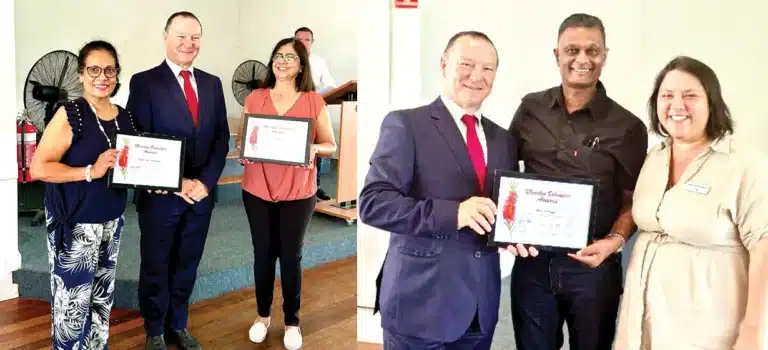
Moreton Volunteer Awards were held on Saturday 1 February. The awards were bestowed to members of community in recognition for the outstanding voluntary contributions to the community in the Federal Electorate of Moreton.

Some of our diaspora members were awarded as well.

Moreton Volunteer Awards Hosted by Graham Perrett MP Federal Member for Moreton c
Mr Praveen Lal with Graham Perrett

Praveen Lal
Queensland Fiji Football Association. Praveen has volunteered for many years with different football clubs and held variety of executive positions. He has also coordinated cultural and religious festivals and developed initiatives to bring the community together.


Moreton Volunteer Awards Hosted by Graham Perrett MP Federal Member for Moreton b
Mrs Bimla Wati Narayan

Bimla Wati Narayan
Damini Women’s Association. Bimla has volunteered with the association for eight years. She is the most senior member, and her dedication, commitment and leadership style are admirable.


Moreton Volunteer Awards Hosted by Graham Perrett MP Federal Member for Moreton a
Kirti Raniga (Far Right)with Graham Perrett and Lila Pratap

Kirti Raniga
Damini Women’s Association. Kirti is a visionary member of Damini Women’s Association of Qld Inc. She works hard to ensure projects are completed in time. Her dedication and enthusiasm directly benefit the community.


Moreton Volunteer Awards Hosted by Graham Perrett MP Federal Member for Moreton d
Rohani Prasad with James Martin MP

Rohani Prasad
Indian Senior Citizens Association. Rohani has volunteered tirelessly as a planner for GOPIO Qld India Day Fair and Secretary of the Indian Senior Citizen Association for five years. She mentors single mothers and supports people in crisis.

Celebrating Women, Community, and Leadership: A Month of Reflection and Action

Celebrating Women, Community, and Leadership: A Month of Reflection and Action

Happy Holi and International Women’s Day! A heartfelt thank you to every woman and female caregiver for the important work you do. As someone raised by a single mum, I’ve seen firsthand how difficult life can be for so many in our community. She has worked tirelessly to ensure that I, and others around us, lead joyful, peaceful, and loving lives. I’m incredibly proud of her and all the women who make such a positive impact. Every woman has a unique journey, and every story is important and should be shared. We’re so fortunate to have so many intelligent, caring, and hardworking women from the Indian diaspora and all over the world, shaping our communities and paving the way for future generations.

This month, I had the privilege of spending time with some very special women in both my personal life and the community. I want to begin by acknowledging Shanjeshni Deo, who has been the heart and backbone of so many community projects. Her efforts have supported young people like me in reaching our full potential. I was an honour to join the Deo family at the Federation of Indian Communities of Queensland (FICQ) Australia Day Celebration in Sunnybank. A special thank you to FICQ President Dr. Preethi Suraj, who made history as the first female president in the organization’s 26-year history. Her leadership and dedication to uniting, supporting, and inspiring the next generation of female leaders is truly remarkable.

I’m also lucky that Dr. Suraj lives in my neighbourhood. Recently, many people have expressed the desire for more representation from women, particularly those from Indian and multicultural backgrounds, in local, state, and federal government positions. There’s a growing call for leaders who reflect the diversity of communities in areas like Springfield, Inala, Oxley, and throughout Queensland. With the Federal Election approaching, many of us are hopeful to see more women from Indian and culturally diverse backgrounds stepping up to represent us. I loved the Hon. Shayne Neumann speech about the importance about cultural diversity, leadership and building relationships with India and Australia. My years of knowing the Honourable Federal Member for Ipswich, he has always supporting member of the Indian community and attended important event that promote preserving our mother language. He was very supportive of an Indian Candidate in Ipswich early last year. Neetu made history as the first female of Indian heritage to nominate for council. She is proud of her faith, her brown skin, her ability to speak more than one language and most of all her Indian heritage. For many, it’s a proud moment to see women like Neetu be the change the people want to see. She was not successful on this occasion, however, she has made her community proud and with her determination I hope to call her councillor one day, I wish her all the best.

It was also a pleasure to attend the 8th Anniversary Celebration of Shree Vishnu Maya Mandir, hosted by Usha Chandra and her husband Umesh Chandra. The event was truly special thanks to MC Umesh Chandra and the team of volunteers who worked hard to bring it all together. Many local leaders and elected officials attended, including Mayor Jon Raven, who spoke about the importance of unity and supporting multiculturalism. Senator Paul Scarr, affectionately known as the “People’s Senator, Logan Senator, and Multicultural Senator” also delivered a powerful speech on the value of supporting and uniting our community. His commitment to helping those in need—regardless of ethnicity, background, or location—is truly inspiring. I was honoured to volunteer at the Lions Club of Inala Citizenship Ceremony, where Senator Scarr personally presented certificates of appreciation to volunteers like me. His generosity has now donated to our Lions Club Backpack Project, which will help more children start school on equal footing and gives a child who needs a smile a much needed backpack.

The hot topic this month, is the upcoming federal election. I encourage everyone to read up on the policies and decisions that will affect you. Take the time to talk to candidates, ask them about their values, and find out what they’ve delivered for the community or individuals. While party politics can often dominate the conversation, remember that individual leaders can truly make a difference. This election will have a direct impact on young people, seniors, and families, so be sure your vote reflects your priorities. Please reach out if you would like to learn more. The surveys found that international relations, government decision, and economics is important. Next month, I will be focusing more on issues, like NDIS, Education, Migration, Health, international relations, the reserve bank and rise of interest rates and food (GDP) etc. Recently many people have been concerned about the rising cost of passports, changes made to immigration policies, and cost of living increasing, and workplace rights changes and taxs, and environment, and Domestic and Family Violence. Please reach out if there is a particular topic you are interested in.
This month, let’s continue celebrating the spirit of community by attending the Festival of Colours in Brisbane, hosted by Platinum Events Services Gold Coast on March 8, 2025. A big thank you to President Manish for ensuring we can come together and celebrate Holi—the Festival of Colours—which symbolizes love, the arrival of spring, and the triumph of good over evil.

Afterward, I invite you to join the Deo family at their International Women’s Day event at the Beenleigh Events Centre. For more details, feel free to reach out to the Australian Indian Times team or check out their Facebook page.
Next month, I’m excited to resume my community surveys. If you have any suggestions or feedback, please don’t hesitate to reach out. I’m truly grateful to everyone who continues to encourage me to write these columns. It means so much to know that I can make a difference in the community I love and consider family.

Be sure to say, hi next time you see me out and about in the community.

FICQ Hosts Grand Celebration of India-Australia Day 2025

FICQ Hosts Grand Celebration of India-Australia Day 2025

The Federation of Indian Communities of Queensland (FICQ) proudly hosted the India-Australia Day celebration on Sunday, 26th January 2025, at SunPAC, Sunnybank. This annual event brought together members of the Indian-Australian community, dignitaries, and friends of India to celebrate the shared values and vibrant ties between the two nations.

The Master of Ceremonies for the event were Mr Zain Chams and Mr Siddharth Nagpurkar, who were exceptional in managing the event all through the evening. The event began with acknowledging the rich heritage and custodianship of the land by Ms Taletha Wright-Morgan. This was followed by the Australian and Indian national anthems, symbolizing the unity and mutual respect between the two democracies.

FICQ President, Dr Preethi Suraj addressed the gathering, stating, “Today, we celebrate not only the bond between India and Australia but also the values that unite us: democracy, multiculturalism, and a commitment to building inclusive communities. This day is a testament to the shared history and the promising future we envision together.”

During the event, FICQ proudly announced two major upcoming initiatives of 2025 for its members: the establishment of a Toastmasters International Club under the FICQ banner to promote public speaking and leadership skills, and the launch of the Unity Cup, a multicultural soccer tournament aimed at fostering camaraderie and celebrating diversity through sports.

A highlight of the evening was the keynote address delivered by Chief Guest of Honour, her excellency Honourable Dr. Jeannette Young AC PSM, Governor of Queensland who commended the Indian diaspora for its contributions to Queensland’s cultural, economic, and social fabric. This was followed by speeches by other distinguished guests – Mrs Neetu Bhagotia, Indian Consul General in Brisbane; Representing Premier – The Hon. Mr Hermann Vorster MP, Assistant Minister for Multicultural affairs and International students’ attraction; The Hon. Jim Chalmers, Treasurer and Federal Member for Rankin; The Hon. Mr Milton Dick MP, Speaker of the House of Representatives; Dr Maha Sinnathamby, Chairman, Springfield City Group and Patron FICQ; The Hon. Mr Shayne Neumann MP Federal Member for Blair; Senator Paul Scarr, Shadow Assistant Minister for Multicultural Engagement and Senator for Queensland; Ms Charis Mullen MP, Shadow Minister for Public Works, Shadow Minister for Multicultural Affairs and State Member for Jordan who commended the Indian diaspora for its contributions to Queensland’s cultural, economic, and social fabric. Their inspiring words emphasized the enduring partnership between India and Australia and the importance of diversity in fostering harmony and progress.

The program featured a vibrant cultural showcase, including traditional Indian dances, musical performances, and contemporary fusion acts that highlighted the blend of heritage and modernity in Indian culture. Community groups and talented individuals across Queensland came together to present a dazzling array of performances.

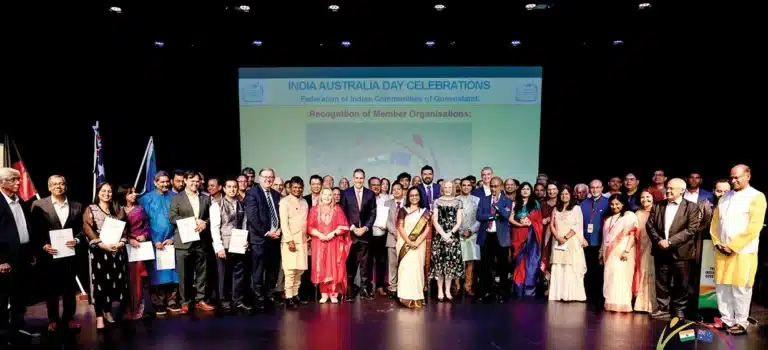
In addition to the cultural program, the celebration recognized FICQ’s member organizations for their outstanding contributions to strengthening India diaspora in Queensland. Certificates were presented to acknowledge their efforts in working together with FICQ.

Attendees enjoyed a sumptuous Indian dinner. The event served as a platform for fostering connections and creating lasting memories for everyone present. FICQ extends its gratitude to the sponsors, volunteers, and community organizations whose support and dedication made the India-Australia Day celebration a grand success.

As we commemorate this special day, FICQ reaffirms its commitment to promoting multicultural harmony and strengthening the bridge between India and Australia. Together, we look forward to many more opportunities to celebrate and grow as one vibrant community.

Australia Day and Indian Republic Day Celebrating Shared Values and Strengthening Bilateral Ties

Australia Day and Indian Republic Day Celebrating Shared Values and Strengthening Bilateral Ties

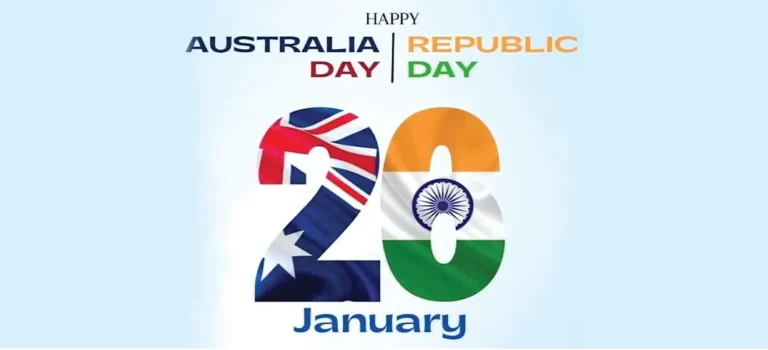
 January 26th marks an important day for both Australia and India, albeit for different reasons. In Australia, it is celebrated as Australia Day, a day to commemorate the arrival of the First Fleet at Port Jackson in 1788, marking the beginning of British colonization. On the other hand, in India, January 26th is celebrated as Republic Day, a day that honours the adoption of the Indian Constitution in 1950, marking the country’s transition to a republic. While these two national days commemorate distinct historical events, they also provide a platform to reflect on the deepening ties between the two nations and their shared values.

Australia Day is celebrating National Identity. Australia Day has evolved from a day of British colonization to one of national reflection. While it initially celebrated the arrival of the First Fleet, it has become a broader celebration of Australian culture, diversity, and achievements. For many Australians, this day is marked by festivities, parades, barbecues, and fireworks. It’s a day that showcases the country’s diverse population, including Indigenous Australians, immigrants, and citizens from all walks of life.

However, Australia Day is also a contentious day for many Indigenous Australians, as it represents the beginning of colonization, which led to dispossession, displacement, and the marginalization of Indigenous cultures. For some, January 26th is observed as a “Day of Mourning” or “Invasion Day,” where protests and reflections are held on the impact of British colonization on Aboriginal and Torres Strait Islander peoples.

The debate over how to commemorate Australia Day has sparked ongoing conversations about reconciliation, justice, and the need to acknowledge the history of Australia’s First Nations peoples. Calls for changing the date or establishing a more inclusive national holiday are part of a broader conversation about how Australia can reconcile its colonial past and move toward a more unified future.

Indian Republic Day is honouring Sovereignty and Democracy. Indian Republic Day, celebrated on January 26th, marks the day in 1950 when India adopted its Constitution and became a republic. While India gained independence from British rule in 1947, the adoption of its Constitution formalized its transition to a democratic republic. The day is celebrated with great enthusiasm across the country, with a grand parade in the capital, New Delhi, showcasing India’s military prowess, cultural diversity, and technological advancements. The Republic Day parade is one of the most anticipated events of the year, drawing millions of viewers.

Republic Day is not just a celebration of India’s sovereignty; it is a reminder of the values of democracy, justice, and equality embedded in the Indian Constitution. The Preamble of the Indian Constitution outlines the country’s commitment to securing justice for all its citizens, irrespective of their background, and promoting a society built on equality, liberty, and fraternity.

These values resonate not only within India but also with countries across the world, including Australia. Strengthening India-Australia RelationsIndia and Australia share a long-standing relationship, built on mutual respect, shared values, and a commitment to democracy. The ties between the two nations date back to the colonial era, but in recent years, the relationship has grown stronger due to economic, strategic, and cultural factors. Both countries are democracies, with a shared commitment to the principles of freedom, equality, and human rights. These common values provide a solid foundation for a strong and growing partnership.

In terms of trade, India is Australia’s fifth-largest trading partner, with bilateral trade valued at over $30 billion. Australia exports a wide range of goods and services to India, including minerals, agricultural products, and education services. India, on the other hand, is a key market for Australian exports, particularly in the areas of education, resources, and agriculture.

The economic relationship between the two countries has the potential to grow even further, particularly in sectors like technology, renewable energy, and infrastructure.
Australia and India also have a strong defence and security relationship. Both countries are committed to a rules-based international order and have worked closely together in forums such as the Quad (Quadrilateral Security Dialogue), which also includes the United States and Japan. The Quad aims to promote a free, open, and inclusive Indo-Pacific region, ensuring peace and stability in the face of rising geopolitical challenges.

Moreover, Australia and India share a strong cultural connection, bolstered by the Indian diaspora in Australia. Over 900,000 people of Indian origin live in Australia, making it one of the fastest-growing communities in the country. This vibrant community plays a crucial role in enhancing cultural ties between the two nations, with Indian festivals such as Diwali and Holi being celebrated widely across Australia. Additionally, the growing interest in Indian cinema, particularly Bollywood, has further deepened the cultural connection.

Strengthening the Bond Between India and Australia.
1. Enhancing People-to-People Ties: One of the most significant ways to strengthen India-Australia relations is by fostering deeper people-to-people connections. Encouraging greater cultural exchange, tourism, and academic collaboration will enable both nations to learn from each other’s experiences and perspectives. Programs like student exchanges, internships, and collaborative research initiatives can promote mutual understanding and strengthen ties in various fields, including education, science, and technology.

2. Increasing Trade and Investment: While trade between India and Australia has grown in recent years, there is still immense potential to be unlocked. By facilitating greater investment, particularly in emerging sectors such as clean energy, technology, and infrastructure, both countries can bolster their economic relationship. Trade agreements such as the India-Australia Comprehensive Economic Cooperation Agreement (CECA) can be expanded and refined to open new opportunities for businesses and entrepreneurs.

3. Strengthening Defence and Security Cooperation: Both India and Australia share common concerns about regional security, particularly in the Indo-Pacific. Enhancing defence cooperation through joint exercises, intelligence sharing, and strategic dialogues can strengthen the partnership between the two countries. The Quad provides a platform for India and Australia to work together with like-minded democracies to ensure peace and stability in the region.
4. Promoting Environmental Cooperation: With both countries facing significant environmental challenges, particularly in relation to climate change, there is an opportunity to collaborate on sustainable development and environmental protection. Joint research initiatives on renewable energy, water conservation, and climate resilience could serve as a powerful tool for strengthening ties and addressing global challenges.

5. Celebrating Shared Values: Both Australia Day and Indian Republic Day are celebrations of democracy, freedom, and unity in diversity. These shared values can be used as a basis for further collaboration, with both nations working together to promote democratic ideals and human rights on the global stage. By commemorating these values through joint events, dialogues, and partnerships, Australia and India can deepen their cultural and diplomatic bonds. While Australia Day and Indian Republic Day commemorate different historical events, they provide an opportunity to reflect on the shared values that bind these two nations together. By enhancing people-to-people ties, increasing trade and investment, strengthening defence cooperation, promoting environmental collaboration, and celebrating their shared commitment to democracy, Australia and India can continue to build a lasting and meaningful partnership. The bond between these two nations has the potential to grow even stronger in the coming years, benefiting both countries and contributing to peace, stability, and prosperity in the Indo-Pacific region.