

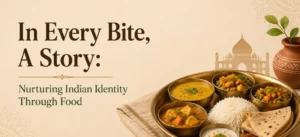
In Every Bite, A Story: Nurturing Indian Identity Through Food
There’s a moment many Indian mothers living abroad will quietly recognise.
You are in the kitchen, the crackle of mustard seeds dancing in hot oil, curry leaves releasing their earthy fragrance into the air. The kitchen feels alive-warm, familiar, grounding. Your child walks in, opens the fridge, scans past everything you have just made and says, “Can I have pasta?” And just like that, something in you sinks. Not because of the pasta. But because of what it feels like you’re losing.
The Moment That Stays With You
A mother I worked with recently shared this with me. She mentioned her struggles with her son as he refused to take paranthas in his lunchbox and only wanting sandwiches. When she gently asked why, he shrugged and said, “It’s just easier to eat what everyone else eats.” There was no anger in his voice. Just a quiet desire to fit in. And in that moment, she didn’t just feel rejected. She felt something deeper, like a small thread connecting her child to her world had loosened.
The Quiet Fear Beneath It All
In my work with Indian families here in Australia, this is more common than we admit. It’s not really about food. It’s about identity, belonging. The fear that what matters to us may not matter to them. And so we try harder. Cook more. Explain more. Sometimes even push more. But here’s what I’ve learned: Children don’t disconnect from culture overnight. They drift when it feels distant, unfamiliar, or forced.
A World Full of Choices… and One That Still Matters
Our children are growing up in a world overflowing with options. School lunches that look nothing like ours. Weekend meals shaped by café culture. Indian food available everywhere-from restaurants to ready-made packets. They are exposed to variety in a way we never were.
And while that’s a beautiful thing, it also means this: What is occasional becomes novelty. What is consistent becomes identity. Restaurant meals may excite them. Store-bought food may comfort them. But home-cooked food-made regularly, without occasion-is what quietly shapes them.
What Home-Cooked Food Really Holds
When you cook at home, you’re not just feeding your child. You’re passing something through your hands. The instinct of your mother. The rhythm of your upbringing. The unspoken care that says, “I made this for you.”
It’s in the way spices are layered without measuring. In the way you adjust taste without thinking. In the way food is offered-not just served. That depth doesn’t come from convenience. It comes from connection.
The Kitchen Isn’t About Perfection-It’s About Presence
It’s easy to feel like you have to do it “right.” Perfect recipes. Traditional meals. Consistency without fail. But what children remember isn’t perfection. It’s presence. Let them stand beside you. Let them stir, spill, taste, and question. Let them make something that looks nothing like what it’s supposed to be and still celebrate it.
Because in those moments, something far more important than cooking is happening. They are being included. And inclusion builds belonging.
When They Pull Away
There will be phases when they resist. They will prefer something else. They will compare and question. This is where many parents feel the urge to tighten control. But here’s the shift that matters:
Children don’t reject culture. They reject the pressure attached to it.
The more we insist, the more they distance. The more we stay calm, consistent, and open, the more space they have to return.
Between Two Worlds
At school, your child is learning how to fit in. They may feel different. They may choose what feels easier. They may slowly adapt to their surroundings.
And then they come home. To the smell of something cooking. To flavours that don’t need explanation. To a space where they don’t have to adjust themselves. That’s what your food becomes. Not just nourishment. But grounding. A quiet message: You belong here too.
The Moment It Comes Back
And then, often when you least expect it, something shifts. They take an extra serving.
They linger at the table. They ask, casually, “How did you make this?”
And years later, maybe when they’re living on their own, you’ll get the message:
“Hey… what’s that recipe again?” And in that moment, you realise, nothing was lost. It was simply taking root in its own time.
More Than Just Food
In a world where Indian food is easily available everywhere, it’s easy to assume culture will remain. But culture doesn’t live in availability. It lives in repetition. In shared moments. In the quiet consistency of what we offer, day after day.
Because in every bite, of something you’ve made, in your way, there is a story. And one day, your child won’t just remember the taste. They’ll remember the feeling of coming home to it.
And that feeling, that sense of being held, known, and rooted, is what they will carry forward as their culture.
