Chanting, conversation and calm: HCA mental health program brings Brisbane community together
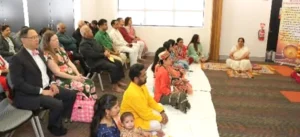
Hindu Council of Australia’s Queensland chapter combined Vishnu Sahasranamam chanting, expert talks and Reiki in a free community morning at Coopers Plains. BRISBANE, QLD: A free community program organised by the Hindu Council of Australia (HCA) Queensland chapter brought people together on Sunday 13 September for conversations about emotional wellbeing, spirituality, relaxation and social connection.
Titled Chanting for Mental Health – Vishnu Sahasranamam, the morning was held at Coopers Plains Library as part of HCA’s Hindu Spiritual Care activities. It was open to people of all backgrounds and levels of experience, and no prior knowledge of chanting or meditation was needed.
A quiet start
The program opened with a recitation of the Vishnu Sahasranamam, the Sanskrit hymn of the thousand names of Lord Vishnu, led by Sudha ji and the HCA devotional team. The session gave attendees a period of quiet reflection before the discussions began.
Professional perspectives
Psychiatrist Dr Sanjeev Ranjan, a visiting medical specialist at Pine Rivers Private Hospital, shared his professional view on mental health and wellbeing.
Dr Noel Kanagaraj, a philosopher, psychologist, author and motivational speaker, spoke about personal development, purpose and approaches to living a meaningful life.
A Reiki session led by Chaya Tiwari followed, giving attendees a chance to relax. The morning ended with food and refreshments, so people could talk informally.
Many paths to wellbeing, one room
By bringing together medical expertise, personal growth, spiritual practice, relaxation and time to socialise, the HCA program gave attendees several ways into the conversation about wellbeing. Holding it in a familiar community setting made these topics easier to approach.
Supporting a wider conversation on mental health
Mental health remains a significant issue across Queensland and Australia, and community organisations are increasingly seen as playing a role alongside clinical services in reaching people who might not otherwise engage with the topic. Programs like this one give multicultural communities a familiar, culturally grounded setting in which to talk about wellbeing, reduce stigma and connect people to further support if needed.
This work sits within HCA’s broader Spiritual Care program, which brings emotional and mental wellbeing support into community settings nationally. It reflects HCA’s wider mission to build a strong, cohesive Hindu community that lives in harmony with the broader Australian society, and its longstanding commitment to community welfare through initiatives such as its Benevolent Fund and Karma Kitchen.
An HCA Queensland representative said the program reflected values at the heart of the organisation’s approach to community wellbeing.
The Timeless Radiance of Diwali—From Ancient Roots to the Heart of Subcontinental Culture
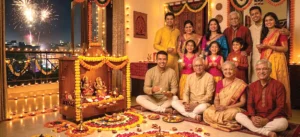
As the October breezes sweep across Australia and spring blossoms into full view, millions of homes across our nation begin to glow with a quiet, expectant warmth. For the Indian diaspora and the wider South Asian community, October signals the arrival of Deepavali—the Festival of Lights.As Publishers of the Australian Indian Times, serving readers across every state and territory of our adopted home, we often find ourselves reflecting on the profound journey of this sacred festival.
To understand why Diwali holds such an enduring grip on our collective soul and why it radiates so brightly in suburbs from Brisbane to Perth, we must journey back thousands of years into the spiritual tapestry and living traditions of India.
The Ancient Roots: The Genesis of Deepavali
The word Deepavali traces its lineage to the ancient Sanskrit language: dīpa meaning “lamp” or “light,” and āvalī meaning “row” or “series”. Together, they form a simple yet powerful phrase: a row of clay lamps.
Historians and scholars trace Diwali’s origins back to ancient agrarian India, where it began as a major post-summer harvest festival. In agrarian society, the end of the harvest brought abundance, gratitude, and a period of rest before winter. Farmers would light small earthenware oil lamps (diyas) to express thankfulness to the Earth and invoke blessings for the coming season. Over centuries, these seasonal celebrations intertwined with sacred texts, spiritual philosophy, and royal histories, becoming the multi-layered festival we cherish today.
Diwali is unique because no single mythology or scripture defines it; rather, it is a grand confluence of sacred stories across the subcontinent:
• The Epic Return of Lord Ram: In North India, Diwali marks the triumphant homecoming of Lord Ram, his wife Sita, and brother Lakshman to the kingdom of Ayodhya after 14 years of exile and the defeat of the demon king Ravan. According to the Ramayan, on that moonless night (Amavasya), the citizens of Ayodhya illuminated every corner of the city with thousands of clay lamps to guide their beloved Prince home through the dark—a tradition that lives on today.
• The Victory over Narakasur: In Southern India, the primary lore focuses on Lord Krishna and his consort Satyabhama defeating the tyrannical demon Narakasur, liberating 16,000 captive women and restoring peace to the cosmos. This triumph is celebrated as Naraka Chaturdashi.
• The Emergence of Goddess Lakshmi: In the Puranic traditions, the central day of Diwali commemorates the churning of the cosmic ocean (Samudra Manthan) by the Gods and Demons, from which Goddess Lakshmi, the deity of wealth, fortune, and spiritual purity emerged to bring prosperity to the universe.
• Plurality Across Faiths: The light of Diwali shines far beyond Hinduism. For Jains, Diwali marks Mahavira Nirvana Divas, the day Lord Mahavira attained final liberation (moksha) at Pavapuri in 527 BCE. For Sikhs, it is celebrated as Bandi Chhor Divas (“Day of Liberation”), commemorating the day Guru Hargobind Ji freed himself and 52 Hindu kings from the Gwalior Fort in 1619, arriving at the Golden Temple in Amritsar amidst thousands of lit oil lamps.
The Five Days of Festivity: How India Celebrates
Across India’s 28 states and 8 union territories, Diwali is not merely a single-day event; it is a five-day spiritual and social symphony, with each day carrying distinct rituals and meanings:
Day 1: Dhanteras (The Day of Fortune)
The festival commences with Dhanteras (Dhan meaning wealth, Teras referring to the 13th day of the lunar fortnight). Homes are meticulously cleaned and scrubbed to welcome divine energy. Families throng the markets to purchase new brass or silver utensils, gold jewellery, or coin charms—symbolizing incoming prosperity and good fortune. Earthenware lamps are lit outside doorways in the evening to ward off untimely adversity.
Day 2: Naraka Chaturdashi / Choti Diwali
Known as “Little Diwali,” this day focuses on physical and spiritual purification. In Southern India, families rise before dawn for Abhyanga Snan, anointing the body with aromatic oils and herbal pastes before bathing, simulating a ritual cleansing in the holy River Ganges. Intricate, colourful rangoli patterns made of rice flour, powdered dyes, and flower petals are drawn at the entrances of homes to invite positivity.
Day 3: Lakshmi Puja (The Main Day of Lights)
The crescendo of the festival occurs on the dark moon night of Amavasya. Homes, temples, streets, and commercial markets across India transform into seas of shimmering light. Families gather in pristine traditional attire to perform Lakshmi Puja, offering flowers, fruits, and traditional sweets (mithai) to Goddess Lakshmi and Lord Ganesha. Firecrackers light up the night sky, symbolizing the joyful expression of humanity’s inner light driving out fear and darkness.
Day 4: Govardhan Puja / Annakut / Padwa
Celebrating unity and environmental gratitude, the fourth day commemorates Lord Krishna lifting the Govardhan Mountain to shelter villagers from torrential rains. In Gujarat and Western India, this day marks the start of the New Year (Bestu Varas), where business owners close old ledgers and open new accounting books (Chopda Pujan). Temples prepare Annakut (“mountains of food”), displaying hundreds of vegetarian dishes in gratitude for nature’s bounty.
Day 5: Bhai Dooj / Bhau-Beej
The festival concludes by honouring the sacred bond between siblings. Sisters apply a ceremonial tilak to their brothers’ foreheads, praying for their long life and well-being, while brothers offer gifts and promises of lifelong protection—a warm, intimate finale to days of public grandeur.
Regional Splendour: One Nation, Many Expressions
What makes Diwali truly majestic in India is its regional diversity:
• In West Bengal and Eastern India, the night is dedicated to Kali Puja, honouring Mother Kali, the divine mother who destroys ignorance and evil forces.
• In Varanasi, along the sacred ghats of the Ganges, thousands of brass lamps float on the river waters, culminating two weeks later in Dev Deepavali the Diwali of the Gods.
• In Gujarat, sweet shops prepare tonnes of ghari and kaju katli, and families visit relatives to exchange the traditional greeting, “Nutanvarshabhinandan.”
From the Banks of the Ganges to the Shores of Australia
As we look out across Australia today, it is breathtaking to observe how this ancient legacy has travelled across oceans to take root here under the Southern Cross.
When our community lights a diya on a verandah in Brisbane, Melbourne, Sydney, or Perth, we are not merely preserving a cultural custom—we are continuing a multi-millennial human tradition. We are passing down to our children the age-old lesson of Tamaso ma jyotir gamaya: “From darkness, lead me to light; from ignorance, lead me to truth.”
May this Diwali illuminate your homes with health, happiness, peace, and prosperity. On behalf of the entire editorial team at Australian Indian Times, we wish you and your loved ones a joyful, safe, and blessed Deepavali!
Illuminating Australia: The Nation-Wide Countdown to Diwali
As spring reaches its peak across Australia, an undeniable, vibrant warmth spreads through our cities and regional towns. From the harborside promenades of Sydney and the cultural laneways of Melbourne to the sun-drenched parks of Brisbane, Perth’s foreshore, Adelaide’s squares, and the tranquil settings of Canberra, Hobart, and Darwin, Indian Australians are preparing to welcome Diwali.
More than a key marker on our spiritual calendar, Diwali in Australia has transformed into a national tapestry of light, unity, and shared human values. It stands as a powerful testament to how a thriving diaspora preserves its deep heritage while weaving itself into the modern identity of contemporary Australia.
A Coast-to-Coast Canvas of Celebration
Throughout October and leading into the auspicious days of early November, Australia transforms under the glow of thousands of diyas, architectural projections, and fireworks displays. The 2026 festival calendar reflects a community that is geographically expansive, culturally rich, and deeply connected to civic life across every state and territory.
5 October The Grand Diwali at Eat Street Northshore (Brisbane, QLD) Riverfront lights, live performances, and multicultural food markets
24 October Diwali & Moon Festival in the West (Melbourne, VIC) Cross-cultural lantern celebrations in Williams Landing
25 October NSW Parliament & Harbour Illumination (Sydney, NSW) Civic light installations and state Diwali reception
31 October Deepavali at Sandown Racecourse & Mt Gravatt (VIC / QLD) Major interstate mega-melas featuring artisan stalls and fireworks
1 November Regional Sparkle: Burnie & Goldfields (TAS / WA) Community light showcases uniting regional multicultural networks
8 November Main Diwali / Lakshmi Puja (Nationwide) Traditional home lamp-lightings, temple pujas, and family gatherings
From landmark civic events at Fed Square in Melbourne and Parramatta Park in Sydney to major gatherings in Perth and Brisbane, public spaces across Australia host thousands of multicultural visitors. State parliament houses light up in gold and saffron, symbolising the high level of civic recognition given to the contributions of Indian Australians.
The Art of Assimilation: Two Cultures, One Shared Light
To appreciate Diwali in Australia is to look beyond public spectacles and observe how the holiday unfolds in suburban neighbourhoods nationwide. Assimilation does not require giving up one’s heritage; rather, it is the thoughtful blending of cultural traditions into the everyday Australian story.
Across the country, the Indian Australian community demonstrates this seamless connection:
• Suburban Neighbourhood Spirit: In suburban streets from Blacktown in Sydney and Tarneit in Melbourne to Point Cook, Chermside in Brisbane, and Harrisdale in Perth, strings of warm fairy lights adorn classic brick homes alongside native flora. Families open their doors to neighbours of Anglo, East Asian, European, and Pasifika backgrounds, sharing boxes of fresh mithai and explaining the meaning behind colourful rangoli designs drawn on front porches.
• Corporate and Institutional Embracement: Major Australian employers, hospitals, universities, and federal government departments now host annual Diwali celebrations. These events go beyond simple morning teas—they foster genuine cross-cultural understanding, where non-Indian colleagues learn about the stories of the Ramayana, join in traditional attire, and celebrate shared values of light over darkness.
• Youth as Cultural Bridges: Second- and third-generation Indian Australians are expanding what it means to be multicultural. Through university associations, youth forums, and dance companies, young people act as active ambassadors. They fuse classical arts with contemporary Australian street dance, organize charity food drives for local shelter organizations, and ensure the spiritual meaning of Diwali translates meaningfully to the broader public.
Economic Dynamism and Local Commerce
The national buildup to Diwali brings a substantial economic boost to small businesses across the country. Local Indian entrepreneurs—from fashion designers in Sydney’s Little India precincts to sweet manufacturers in Melbourne, event planners in Perth, and regional artisans—experience their busiest season of the year.
Multicultural grocery outlets become bustling hives of activity as families purchase brass diyas, incense, decorative hangings, and fresh flowers. Meanwhile, local caterers and food vendors introduce diverse regional subcontinental cuisines to wider Australian audiences at weekend night markets. This vibrant commercial exchange demonstrates how cultural heritage actively supports local economic vitality.
Reflections on Unity, Hope, and Belonging
At its core, Diwali delivers a timeless message: Tamaso ma jyotir gamaya—“Lead me from darkness to light.” In a world navigating complex societal challenges, the festival’s universal themes of renewal, integrity, and optimism offer inspiration to all Australians, regardless of cultural background.
The success of the Indian diaspora across Australia lies in its commitment to contributing to the nation’s progress—in healthcare, technology, education, business, and civic leadership—while holding firm to traditions that provide identity and purpose. When an Australian family attends a Diwali festival, paints a clay lamp, or joins in a Gujarati Garba circle, barriers dissolve.
As oil lamps are lit across the nation this season, they illuminate more than just verandahs and temple steps. They light up an inclusive, modern Australia—a country where ancient heritage is embraced under the Southern Cross, and where light truly belongs to everyone.
‘Lagna Panchami’ brings Marathi theatre to Brisbane in its first international show
Brisbane’s Marathi community had plenty to laugh about on Sunday evening as Lagna Panchami, one of the latest Marathi theatrical productions featuring popular actors Swapnil Joshi and Amruta Khanvilkar, made its first international stop in Brisbane as part of its proposed world tour.
The show, organised in Brisbane by C&G Entertainment, was held on Sunday, 2 August at the Star Theatre, Wynnum State High School. The Brisbane performance was a sold-out, house-full event, giving the production an encouraging start to its international journey.
For the audience, however, the evening was about more than simply watching a popular Marathi play.
Lagna Panchami takes a familiar subject, marriage, and looks at the many personalities, expectations, misunderstandings and moments that emerge once two people begin sharing a life together. Presented with plenty of humour and everyday situations, the story found an easy connection with the Brisbane audience.
There was laughter throughout the performance, with many of the situations on stage striking a familiar chord with couples and families in the audience.
For Brisbane’s Marathi-speaking community, having a production of this scale and calibre on the local stage was particularly special.
“Living in Brisbane, we don’t often get an opportunity to watch a Marathi play of this scale with such a wonderful cast. For those two hours, it genuinely felt like we had brought a little bit of Maharashtra to Brisbane,” said Pradnya, who attended the performance.
For younger Marathi Australians, the experience offered a different connection to the language and culture.
“I grew up in Australia, so watching Marathi theatre here was a different experience for me. I understood the humour and the cultural references, but it also made me appreciate something that my parents grew up with,” said Chinmayi.
The evening became even more memorable after the curtain call, when the cast took time to interact with the Brisbane audience. Fans had the opportunity to meet Swapnil Joshi and Amruta Khanvilkar, take photographs with the actors and share their appreciation for the performance.
For many in the audience, the opportunity to see familiar faces from Marathi cinema and television perform live on stage, followed by a personal interaction with the artists, added another dimension to the evening.
The production brings together an experienced creative and performing team, with Swapnil Joshi and Amruta Khanvilkar leading the cast alongside Madhugandha Kulkarni who has also written the play herseld and of course the versatile Sunil Abhyankar. For Khanvilkar, Lagna Panchami also marks an important step into Marathi theatre.
The successful Brisbane show also highlights the growing appetite for Marathi cultural and entertainment events in Queensland.
Brisbane’s Indian community has grown significantly over the years, and so has the demand for events that bring audiences closer to the languages, traditions and performing arts they grew up with. For the Marathi community in particular, live theatre provides something that digital entertainment cannot quite replicate: sitting together in a theatre, sharing the same jokes, recognising the same cultural references and experiencing the performance collectively.
For C&G Entertainment, bringing Lagna Panchami to Brisbane represented another significant milestone in what has already been a busy and rewarding year of bringing quality Marathi and Indian entertainment to Queensland.
Throughout 2026, C&G Entertainment has worked to steadily broaden the range and scale of cultural experiences available to Brisbane audiences. Its calendar has included acclaimed Marathi theatre productions such as Kutumb Kirrtan, the devotional musical experience Abhangwari featuring internationally acclaimed vocalist Mahesh Kale, Marathi cinema screenings, and now Lagna Panchami — with each event offering audiences a different connection to Maharashtra’s rich artistic and cultural traditions.
Community coverage of Abhangwari also recognised C&G Entertainment’s growing contribution to Brisbane’s cultural landscape through its program of theatre, comedy and musical performances.
The organisation’s focus has been not simply on staging events, but on helping create a sustainable platform in Brisbane for high-quality Marathi theatre, music, cinema and performing arts, while encouraging leading artists and production houses from India to increasingly view Brisbane as an important destination alongside Australia’s larger traditional touring markets.
The sold-out response to Lagna Panchami was therefore particularly encouraging. Having Brisbane chosen as the production’s first international performance outside India, and then welcoming the team with a full house, demonstrated both the enthusiasm of the local Marathi community and Brisbane’s growing potential as a destination for major Marathi productions.
C&G Entertainment is already looking to continue that momentum. Its next presentation, Sambhavami Yuge Yuge, is scheduled for 4 September at the Queensland Multicultural Centre — a Bharatanatyam-based Dance Drama exploring the timeless philosophy and teachings of Lord Krishna through dance, music and theatrical storytelling.
For C&G Entertainment, the broader ambition remains simple: to keep bringing diverse, professionally presented and culturally meaningful entertainment to Brisbane, while giving the local community more opportunities to experience the artists, stories and traditions of India live on a Brisbane stage.
The success of the show, particularly its sold-out Brisbane performance and enthusiastic audience response, could also signal a growing opportunity for more major Marathi productions and artists to include Brisbane in their international touring plans.
As the audience left the Star Theatre, the evening had clearly delivered what good theatre is meant to do: make people laugh, connect with a story and, for a few hours, feel a little closer to home.
For Brisbane’s Marathi community, Lagna Panchami was not just a night at the theatre. It was a little piece of Maharashtra arriving on an international stage, and Brisbane was proud to give it a full house.
Reason why the world has no peace today is because many nations and most individuals deny the supremacy of a moral order, in their inter-personal,inter-communal and international relationships. The number of such individuals and nations is increasing day-by-day who think that wickedness, cunningness, vice is better than virtue and violence is better than non-violence.
There are whole societies or nations that think that man is merely an animal, hankering after material progress and comforts. They believe that man is satisfied merely by sense-gratification, and that he is an animal that Iives from sensation to sensation! They refuse to accept the evident, namely that man has a conscience and that he has higher aspirations, such as the aspiration for peace, calmness and bliss.
Even a most degraded person also has an inner aspiration for solace, satisfaction and peace. However, they fail to realise that peace, contentment, and bliss are not the qualities of bodily cells; they are the qualities of conscient self in its state of moral greatness.
Because of their materialistic thinking and attitude, scholars have given to society what is called the materialistic interpretation of history. This view of man and history has been popularised and publicised by historians, economists and social scientists. The result is that the modern man does not believe in the supremacy of the moral law. Man has, therefore, ceased to apply human values to the problems he faces in day-to-day life.
Take, for example, the problem of nuclear weapons. There have been many agitations and conferences to bring about disarmament. In the talks for disarmament or in the negotiations for reduction of nuclear weapons, the only quality brought to bear is the fear of a way and the resulting annihilation.
The talks are vitiated and they do not lead to actual disarmament because no moral values are brought to bear on the problem. Thus, it can be easily said that lack of the sense of moral responsibility is, in fact, the most sinister aspect of modern civilization. In fact, the whole modern thinking of man is characterised by lack of moral responsibility.
A psychiatrist, today, would explain that a person committed a murder because he had developed a complex after his father had beaten him with a stick when he was a small boy! So, the responsibility is of the father who had been cruel to his son! In many other forms, the attitude that ‘I am not responsible’, runs through every aspect of modern life. This has undermined the moral quality of life.
So, if we now want world peace, the real effort lies in giving man a sense of moral responsibility. Let man realise that, with all his human limitations, he can, in this life, conquer attachment, sex-lust, greed, anger and pride which are the causes of all kinds of peace lessness. And he should think that it is his moral responsibility to eliminate these because these cause peace lessness not only to him but to others as well.
Today we see people killing people in the name of Religion, but has any religion ever taught its followers to kill innocent people? The chronicles of mankind or of various civilizations or nations bear witness to the truth that property worth inestimable and incalculable amount, and millions of men have been lost in the slaughterhouse of intolerance during the last 2000 years or so because of intolerance that ensued from a hurt ego, an unfulfilled selfish motives or narrow-mindedness that could not stand the existence of different views, different life-styles, different cultures and different self-interests.
Can anyone calculate or imagine how many families lost their peace and harmony and how many cities and civilizations were ruined because of intolerance? If only this virtue, called Tolerance, had been sustained—all or many other virtues also would have survived, for, when tolerance is lost, man loses his patience, self-control, spirit of non-violence, etc.
Therefore it is not too late in the day, for, if even now those who are mercilessly killing innocent people begin to observe this virtue, which is greater than valour and all weapons of war put together, mankind can be saved from the scourge of wars, bloody ethnic strife, communal riots and conflict on the basis of difference in religious beliefs and can be saved from extinction through a nuclear catastrophe.
Each chapter of the Gita ends with “Om tatsatiti shreemad bhagavadgitasu upansitsu, Brahmvidyayam yogshastre Shree Krishna Arjun samvade, title and chapter number” emphasising that the Bhagavad Gita which is the discourse between Shree Krishna and Arjun is an Upanishad, the science of Brahm and the scripture of Yog.
Philosophical Opinion
The word Upanishad has been translated in many ways. According to conventional Indian scholars, Upanishad means setting ignorance to rest by revealing the knowledge of Brahm, the supreme spirit. Adi Shankaracharya relates Upanishad to Atmavidya, that is the knowledge of the self and to Brahmavidya, which is the knowledge of the Brahm.
Some Western scholars have translated the term Upanishad as ‘secret doctrine’, ‘mystic meaning’ and ‘hidden connection’. Others interpret it “to sit down near” or “sitting at the feet of a teacher,” implying the transmission of profound wisdom from a guru to an eager student.
Upanishads are also called Vedant, meaning the end of the Ved, because they represent the final and deepest wisdom of Vedic thoughts. There are over 200 known Upanishads of various lengths. They delve into the spiritual core of human existence and the universe, exploring relationships between the two concepts, Atama the self and Brahm the supreme. The Gita appropriately fits into the category of Upanishad.
Brahmavidya is the pursuit of Brahm and self-realization. It encompasses both theoretical understanding through study of scriptures or Gyan and practical self-realisation through meditation and yog. The ultimate aim of this pursuit is Moksha, liberation, which is freedom from suffering and the cycle of rebirth. Scholars and practitioners define Brahmavidya as any dedicated quest for absolute truth and everlasting knowledge, applicable across diverse spiritual traditions.
Yog is one of the six major schools of Hindu philosophy, others being Sankhya, Nyay, Vaisheshik, Mimamsa and Vedant. It focusses on achieving union with the divine by following certain prescribed approaches.
The traditional yog philosophy is credited to sage Patanjali, who composed the book Yog Sutras. He states that yog is restraining the mind from wandering around. The Yog Sutras identify eight limbs of yog which are known as Yam comprising nonviolence, truthfulness, non-stealing, continence and absence of greed; Niyam comprising purity, contentment, self-discipline, self-study and devotion; Asan (postures); Pranayam (breathing exercises); Pratyahar (detachment); Dharan (concentration); Dhyan (meditation); and Samadi (pure consciousness). These limbs help the practitioners achieve Moksha and union of their soul with the supreme. This approach is also called Astang or eight-limbed yog.
Sankhya is one of the oldest schools of Hindu philosophy, founded by the sage Kapil. According to Sankhya, all of existence is divided into two ultimate and independent realities.
They are:
1) Purush or consciousness which is the spiritual essence, pure awareness, and the eternal witness. Purush is inactive and devoid of any qualities or attributes.
2) Prakriti or matter/nature which is primal, unconscious source of the physical and psychological universe. Prakriti is active and constantly changing.
Sage Kapil noted twenty-five philosophical principles from the analytical breakdown of the cosmos, hence the name Sankhya, which translates to enumeration or counting.
Prakriti evolves into the physical world through the interplay of three primary qualities namely Sattva, Rajas and Tamas. Prakriti and Purusha through their interaction produce other elements, including the intellect (Mahat), the ego (Ahamkara), the mind, five senses, and the five gross elements (earth, water, fire, air, and space).
In the Gita, elements of Sankhya have been discussed in the form of Sankhya yog as well as purush, prakriti and gunas.
Elements of Nyay, Vaisheshik and Uttar Mimamsa have been also been briefly discussed in the Gita at various instances.
The Gita synthesises various philosophical as well as practical concepts which have been relevant to the seekers of truth throughout its long history. In addition to the vast topics of Atma and Brahm, it highlights various types of yog that lead to liberation.
Yog in Gita
The Bhagavad Gita stresses on the yog. Ordinarily, the yog is understood to be the practice of physical exercise by performing various postures of the body, to aid well-being of mind and body. The yog in the Gita transcends this level and provides guidance on how to become broadly accomplished in one’s life and beyond. The term yog has many meanings in the Gita. It denotes a union, a path or a discipline which leads to a state of integration with the object of one’s interest.
The Sankhya yog (path of Sankhya); the Gyan yog (path of knowledge), the Karma yog (path of action), the Dhyan yog (path of meditation), the Bhakti yog (path of devotion), the Sannyas yog (path of renunciation) and others are examined. These are the different
routes to attain perfection in life and union with the Brahm after death.
Elements of Patanjali’s Astang yog such as concentration, meditation, samadhi have been discussed in some chapters. Patanjali Yog Sutras define yog with ‘yog chitavriti nirodhah’, which is translated as ‘yog is restraining fluctuation of the mind’. Whereas Gita defines yog in BG 2:48 as ‘samatvam yog uchyate’, conferring tranquillity of mind to be yog. In BG 2:50 it states ‘yogah karmashu kaushalam’ that is yog is skill in action.
Sankhya Yog
In chapter 2 of the Gita, Sankhya yog provides the distinction between the eternal unchanging soul and the transient physical body. It is anticipated that understanding this concept will influence believers to overcome grief and subsequently perform their duties with peace and detachment.
Sankhya yog encompasses a number of core elements that include Vivek or discernment, the immortality of the soul, equanimity and duty, and the path to liberation.
Gyan Yog
It is the path of intellectual inquiry, discrimination, and self-analysis aimed at recognising the self and its ultimate unity with the Brahm. It operates on the premise that the embodied self is inherently divine but is clouded by ignorance and ego.
By using wisdom and arduous introspection, a practitioner learns to detach from material desires and distinguish between truth and illusion. This topic has been discussed in several chapters of the Gita. For example, BG 2:11-30 delves into separation of the embodied self (soul) from the body and on self-enquiry.
Chapter 4 is dedicated to wisdom and spiritual knowledge. The virtues of Gyan are praised in many verses. In BG 4:38, Gyan is described as the ultimate purifier that can be used to destroy the illusion of ignorance. In Chapter 7, the focus is on knowledge of the absolute truth and the realisation of divine presence in all things. In BG 18:20-22, qualities of knowledge classified as sattvik, rajasi and tamasi are detailed.
Karma Yog
The core philosophy of the Bhagavad Gita, is the path of selfless action. It encourages one to perform one’s prescribed duty, but remain wholly detached from the results of the action. By working with integrity and without craving rewards, one should avoid karmic bondage and move towards inner peace.
In BG 2:47, it is stated, “Your right is to your action alone and never to its fruits at any time. Fruits of action should never be your motive, neither let your attachment be to inaction.”
BG 3:5 – “No one can remain still, even for a moment without performing action. Everyone is forced to perform action against one’s will by the impulses born of innate nature.”
BG 3:30 – “Submitting all actions to me, with your mind fixed on the indwelling self, and becoming free from any thought of gain or sense of ownership, shake off your lethargy and fight.” Work should be treated as a form of sacrifice and surrendered to the divine.
Dhyan Yog
It is a spiritual discipline focused on achieving self-realization, inner stillness, and mastery over the mind. It is explained in detail in chapter 6 of the Bhagavad Gita, Atma Sanyam Yog. Dhyan requires controlled breathing, balanced living, and an unwavering concentration on the supreme.
It is the practical discipline of training the mind to transcend fluctuations and rest in the self. The Gita instructs that through balanced living, mental discipline, and steady contemplation, one can achieve spiritual liberation.
Arjun confesses that controlling the mind is difficult as it is restless, blustery, powerful and obstinate. Subduing it is as difficult as controlling the wind (BG 6:33-34). Krishna explains that mastery requires two key pillars: consistent and sincere practice over time, and detachment from the distractions of worldly attractions and sense gratification.
The practice involves gently but firmly withdrawing the flickering mind from worldly attachments and returning its focus entirely on the self. By doing this repeatedly and systematically, the mind eventually achieves a state of deep, serene, and unbroken concentration.
Meditation succeeds when supported by a balanced lifestyle. The Gita advises against extremes – neither eating too much nor starving, and neither sleeping too much nor sleep deprivation.
Dhyana is also one of the limbs of the Patanjali Yog Sutra. It focuses on deep contemplation, single-pointed concentration, and transcending the mind to achieve inner harmony and oneness with the self.
Bhakti Yog
It is the spiritual path of loving devotion and surrender to God. Lord Krishna emphasizes it as the most direct and accessible way to obtain spiritual liberation. Chapter 12 of the Bhagavad Gita focuses on the subject of worshipping a personal deity and the Nirgun Brahm (formless Absolute). The Gita states that the devotion to a personal form is much easier and more natural for human beings.
In BG12:8-11, a step-by-step approach to attaining the Supreme is offered, that includes:
• Concentrating the mind and intellect entirely on God.
• If one is unable to do so, then practicing Abhyas yog is advised, namely constant remembrance of the divine through devotion.
• If that is also difficult, then one is guided to perform all daily works selflessly for God.
• If one cannot even accomplish that, surrender of the fruits of actions and seeking inner peace is advised.
In BG 12:13-20, ideal characteristics of a Bhakti Yogi are outlined as follows:
• Equanimity in both happiness and distress.
• Compassion, humility, and being free from ego and attachment.
• Freedom from malice and the ability to forgive easily.
Sannyas Yog
The Bhagavad Gita primarily refers to Gyan Karma Sannyas Yog (the yog of renunciation of action in knowledge) in chapter 4; Karma Sannyas Yog (the yog of renunciation of action) in chapter 5; and Moksh Sannyas Yog (the yog of liberation through renunciation) in
chapter 18.
Sannyas is generally understood as the formal renunciation of all worldly duties and desires. It is also known as the fourth stage of one’s life, the other three being
1) Brahmacharya or stage of learning,
2) Grihastha or householder stage and
3) Vanaprastha stage, which is transition from the householder to Sannyas.
In the Gita, Sannyas yog bridges the gap between formal ascetic renunciation and selfless action. It reveals that true renunciation is detaching oneself from the fruits of one’s work rather than abandoning action itself.
Karma yog is the execution of righteous duty without attachment to the outcome. The Gita synthesises both and asserts that Karma yog (selfless action) is practically superior and safer than outward Sannyas, and ultimately, they both lead to the same spiritual goal.
Chapter 4 of the Gita focuses on the yoga of knowledge and the renunciation of actions in knowledge. It explains how true understanding burns away the reactions of all actions, making one free from material bondage.
Chapter 5 of the Gita addresses Arjun’s confusion regarding the better path – renouncing work entirely or performing work selflessly. Krishna concludes that a true Sannyasi (renouncer) is one who neither hates nor desires the fruits of their actions, merging both paths into one.
Chapter 18 of the Gita clarifies the distinction between Sannyas (renunciation of desire-driven action) and Tyag (relinquishment of attachment to the results of action). It emphasizes that one must never abandon their essential duties like charity, austerity, and sacrifice, but to perform them with detachment.
Finally, Krishna addresses Arjun by saying “fix your mind on me, be devoted to me, sacrifice to me, bow down to me. In this way you will come to me. I promise you, for you are truly dear to me.”
Basava Samiti Asia Pacific Marks another Big Month of Culture and Innovation
The volunteer-led charity celebrated India’s 80th Independence Day across three cities, participated in Stripe Tour Event in Sydney, while preparing to refresh its website next month. Celebrating Culture Across Three Cities on India’s 80th Independence Day
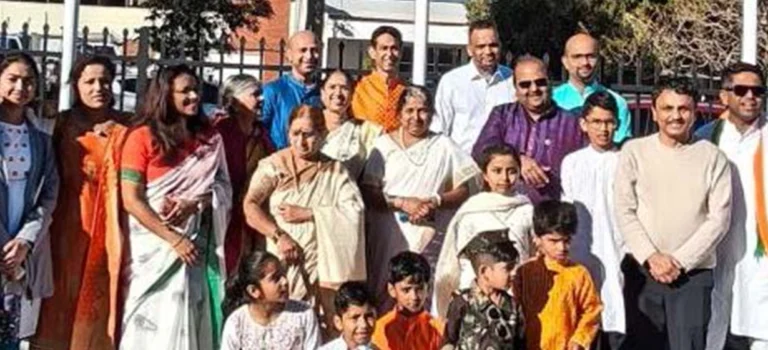
The charity’s Independence Day events drew families, children, young people and community leaders in all three major cities, celebrating Australia’s multicultural character alongside the richness of Indian heritage through music, performance and community participation. It is building bridges between generations and communities, while promoting values of equality, dignity, service and responsible citizenship associated with the teachings of Guru Basava.
In Brisbane, Mrs. Girija Karekal, Executive Director along with other community members and government officials attended the magnificent celebration at The Star Hotel which was hosted by the Consul General of India in Brisbane on the 16th Aug 2026. The BSAPAC Brisbane team also participated in the Independence Day Parade hosted by the GOPIO at the Roma Street Parklands on the 15th Aug 2026.
Maria Luqman, Head of Marketing, introduced the services of Basava Samiti Asia Pacific (BASPAC), with former Australian cricket captain Shane Watson and other cricket personalities during the 80th Indian Independence Day celebrations in Sydney.
BSAPAC Management Committee under the leadership of Mr. Vinay Moogi Community leaders hosted by the Indian Society of Western Australia, at the ICC on Saturday August 15th at 9am for the flag raising marking the completion of India’s 79th Independence Day.
In the Tech Sector – Stripe Tour 2026
In Sydney, BSAPAC also discussed the challenges of Not for Profit charities and required advancements in relation to the payment platforms at the Darling Harbour, Sydney during the Stripe Tour 2026. The event brought together leaders in technology, artificial intelligence, digital transformation, fintech and business, giving BSAPAC officers a chance to connect beyond the community sector.
The Stripe Tour event carried particular significance given its own foundations are heavily digital: BSAPAC officers already voluntarily contribute professional skills across technology, education, communications, finance, marketing, design and community development. BSAPAC is a demonstration of how community impact is strengthened when professional skill and experience are connected to social cause, Guru Basava philosophy being reflected in its Learn2Grow initiatives, which delivers ethical training program in technology and workplace skills.
A Volunteer Model Built on Shared Values
Underpinning both the celebrations and the sponsorship is a growing base of volunteers contributing their time and professional expertise to a shared cause. BSAPAC describes its model as volunteer-driven, technology-enabled and task-based, letting people contribute according to their own skills and availability, summed up in its motto, “Engage. Educate. Empower. Enlighten.” It traces its philosophy to two principles associated with Guru Basava: Kāyaka, the dignity and value of meaningful work, and Dāsōha, the sharing of one’s abilities and resources for the benefit of others.
Next Month: A New Website BSAPAC’s next milestone arrives next month with the launch of a refreshed website intended to make its work more visible to the public. The site will feature volunteer success stories, community initiatives, educational programs, cultural activities, professional development opportunities and charitable projects, it aims to offer greater transparency about how a technology-enabled volunteer charity can operate across geographical boundaries while staying connected to local communities.
BSAPAC is committed to creating opportunities for people to participate, learn, contribute and make a difference, with more programs, community engagement and collaboration planned in the months ahead.
Visit Basava Samiti Asia Pacific
Sadhguru: A very large part of the Indian population worships Rama, but if you look at the situations in his life, and the way life happened to him, it seems like a continuous series of disasters. He loses the kingdom that is rightfully his and ends up in the forest. Then his wife gets kidnapped and he has to fight a brutal war even though he does not want to. Then when he brings his wife back, he has to suffer very uncharitable comments about her from everybody around. So he takes his wife, who was very dear to him and is pregnant with two children, and leaves her in the forest. Then he unknowingly ends up in a battle against his own children and then finally loses his wife. His life was a continuous disaster. With all that, why do so many people worship Rama?
The significance of Rama is not in the situations he faced in his life. The significance of Rama is with how much gracefulness he conducted himself through this series of disasters that occurred to him. Never once was he seen angry or cursing someone or freaking out. He conducted everything gracefully.
So people seeking liberation and a graceful life sought Rama because they understood and had the wisdom to see that external situations can go wrong at any moment. Even with lots of management, external situations can still go wrong. You may have everything organized, but if a cyclone hits you, it can take away your home and everything. “Oh it will not happen to me,” is a foolish way to live. “Even if it happens, I will go through it gracefully,” is a wise way to live. People sought Rama, because they saw this phenomenal wisdom. It is not the question of how much you have, what you did, what happened or what did not happen. Whatever happened, how did you conduct yourself?
Does this mean to say we should not manage our life properly? No, we manage what is around us well because it is good for everybody. If the situation is well-managed it need not necessarily make me feel wonderful. I will feel wonderful only when I can conduct myself gracefully through every situation. But you manage the situation because you are concerned about everybody’s wellbeing.
Rama tried to manage the situations in his life, but he could not always do that. He lived in difficult times and things went out of control, but the important thing is that he always conducted himself gracefully. This is the fundamental essence of becoming spiritual. If you want the right kind of ambience for your being to flower into a beautiful fragrant flower, you must constantly create an atmosphere of grace.
Ranked amongst the fifty most influential people in India, Sadhguru is a Yogi, mystic, visionary and a New York Times bestselling author. Sadhguru has been conferred the Padma Vibhushan by the Government of India in 2017, the highest annual civilian award, accorded for exceptional and distinguished service. He is also the founder of the Conscious Planet – Save Soil movement, which has touched over 4.1 billion people, and the Miracle of Mind app, which aims to empower 3 billion people with tools for mental wellbeing.
What Is In a Name? “Indo Fijians” and the Making of Race
The Human Thread with Sabrina Iqbal Khan
Exploring humanity, storytelling, and the social issues impacting our communities.
What is in a name? Ask ten “Indo Fijians” how they identify and the answers rarely match: Fijian, Indian, Pacific Islander, South Asian, or simply Indian in Fiji. None of these answers are wrong. What is worth asking is where the label came from.
“Indo Fijian” grew out of the machinery of British indenture. From 1879, over sixty thousand labourers were shipped from India to work Fiji’s sugar plantations under the girmit system, a word drawn from the English “agreement” that workers could barely read before they signed it. Many were stripped of freedom of movement and legal standing for years, housed in cramped lines and paid little. Colonial administrators then sorted iTaukei, Indian and European populations into separate legal categories, deciding who could own land, vote or belong.
That inherited system still echoes today, not only in memory but also in politics: the ethnic categories drawn up under empire have resurfaced again and again in Fiji’s constitutional debates and coups. New Zealand’s recent move to classify Fijian Indians as “Asian” rather than “Pacific” has denied many access to support their neighbours receive, a reminder that naming is never mere semantics. It is about dignity and it is about rights.
This got me thinking about race itself, a word we use daily yet one with no settled scientific definition. In 1950, UNESCO called race “less a biological fact than a social myth.” Geneticist Richard Lewontin later found that most human genetic variation exists within so called racial groups, not between them, a finding echoed decades later when the Human Genome Project confirmed that any two people share the overwhelming majority of their genetic code.
The American Association of Biological Anthropologists confirmed in 2019 that humans are not divided into fixed biological clusters. Scholars of International Relations now trace much of “race” to the colonial expansion of the seventeenth century, a tool built to govern and extract, not a fact of biology. Empires needed categories to decide who could be taxed, indentured, or ruled, and race supplied a convenient, false certainty.
None of this erases real history or lived difference. Communities carry genuine memory, language, and inherited hardship, and that deserves respect, not dismissal. But the boxes themselves were built by policy, not nature. The Universal Declaration of Human Rights reminds us that all people are born free and equal in dignity and rights, and later international law extended that promise into a direct prohibition on racial discrimination. If a category was invented to govern people, it can be reimagined to include them instead, on their own terms.
“Indo Fijians” did not choose their name, but they have chosen, again and again, to build community through language, faith, memory and resilience. Perhaps the lesson for the rest of us is this: differences are real, but the boxes we file them into were built, not born. When we see people as they define themselves, rather than as history classified them, we lay the very bridges this column is named for. The strongest communities are not those without problems, but those willing to face them together.
ABOUT THE WRITER:
Sabrina Iqbal Khan is an international award-winning filmmaker, producer and actress, a barrister to the High Court of Fiji and admitted to the Supreme Court of Victoria, 2007. She is a recipient of a Fijian Medal of Honour for community service, domestic violence awareness and poverty alleviation, and the winner of the 2025 New South Wales Human Rights Medal. Her first film, Seema, received recognition in the United States of America, where a national day was declared in honour of the film.
Sabrina has also been published in the field of cross-cultural dialogue, including developing a dialogue theory recognised by the American Center for Dialogue. With heritage connected to North West India, Bengal, Afghanistan and the wider Girmit diaspora experience, she writes on humanity, storytelling, rights, and the social justice issues impacting our communities.
Sir Albo, as I like to call him, has another crazy, stupid idea. He has somehow concluded that your superfund balance is not, erm, actually yours. He can’t say that of course so he decided to use, as politician’s do, a fancy word which only a few will understand.
Anyway, according to Sir Albo our superfund balances are a ‘national asset.’
And that to me is scary because it could have some serious consequences to your superfund balances.
As an advisor, who advises business owners on how to navigate taxes, money and business the constant ‘ideas’, law changes and tinkering is getting wearisome. It is scaring the hell out of people too.
A while back I was in Fiji, and a raft of new legislations came through changing the budget because the original budget was designed on a scrap piece of paper. This resulted in my inbox blowing up with clients asking what this all meant.
Then I decided to have the weekend off to relax and recuperate when Sir Albo decided $4.5 trillion dollars of our money should maybe not be our money but a ‘national asset.’ This also resulted in manic and panic phone calls, and this resulted in my wife not being a fan of Sir Albo – which come to think of it is not necessarily a bad thing.
Anyway, you know the Government is a bit messed up when people call or message in a panic.
And that is what we have. A nation whose citizens are under pressure and uncertain. An uncertain population is not confident. And a lack of confidence is not a good place for a country to be because history has shown this stops a country growing.
So, for those of you who think Sir Albo is going to raid and take their Superfund balances away from to pay for whatever you think our governments should not pay for, that is not what he is saying.
His actual words are “There is a real potential to see these funds as a national asset that can be used more appropriately and get better returns as well, not just for individuals and for retirees, but for the nation.”
In my words he is saying:
‘I have spent so much money that I had to borrow and that borrowing is ballooned so big that sooner or later everyone will realise I was the idiot that put the nation’s wealth at risk.
So, I have idea. There is $4.5 trillion dollars in Superfunds. Why don’t I ask Superfunds to invest in Government projects and give Superfunds a percentage return we make on those projects and that way Australia as a country does not need to borrow more. Isn’t that a fantastic, brilliant idea?’’
Err…. No. It’s a stupid idea.
Here’s why.
Australian governments (Labour or Liberal) can’t organise a drinks party at a brewery. If they tried this is what would happen:
– They would book a school hall (because they think that will do as a brewery)
– Organise it to start at 12pm and end at 2pm (not realising that midday is not a time for drinking and most people will be at work anyway).
– Overpay for the food and drinks (not realising no-one is going to turn up)
– Then realise that you can’t serve alcohol in a school because it is illegal.
See what I mean?
There’s more.
The problem is that Australia is looking at what has happened in China and the Middle East and think they can replicate that here. They can’t. That is because we think short term and they think long term.
We all think that the EV revolution started about 10-15 years ago. Nope. The Chinese government started and invested in EV companies going back to 2001. Even today there are about 150 companies in China making EVs and the Chinese government are still investing in them. And they will make a killing (money wise) from all of us.
When you invest it is always about the long term. For Australian Governments its always about the short term. The two don’t mix.
And that is why I think this idiotic idea is a disaster for your Superfund balances. Our government cannot budget for anything. Remember NBN? It was supposed to cost $40Bn. We ended up paying $70bn. We also had a French Submarine Program. That was to generate $4bn income. It actually generated …… $0. Nil. Nothing. Zilch.
If this happens in China someone gets shot. When it happens in Australia someone get a gold plated pension.
I have been reminded that Superfunds need to act in the best interests of their members so they will not do what the government asks them. I know that but that does not stop the Superfund industry advisors making a killing from those same members in fees and charges. What are chances they are going to say no to a government handout that promises a new yacht?
This is what I know.
Many have Self-Managed Superfunds. They don’t get charged a fee unless they want to pay it. And I get to decide how their money is managed and what they are prepared to invest in.
The investments are usually a bit boring. There will some individual shares, property, ETF’s and index funds diversified across different sectors and geographical areas. They don’t pay for anyone’s private jet, and they will never invest in a useless government project. Ever.
It’s their money and Sir Albo can keep his grubby hands off it.
But what if you don’t have a SMSF? Keep an eye on your fund and see what they are doing. If you think their eyes are sparkling because Sir Albo may have promised them a new private jet, it may be time to move away. Also check how well your superfund is performing against others. In other words be vigilant. If you aren’t, don’t complain when you find out you invested in a wind farm where there is no wind.


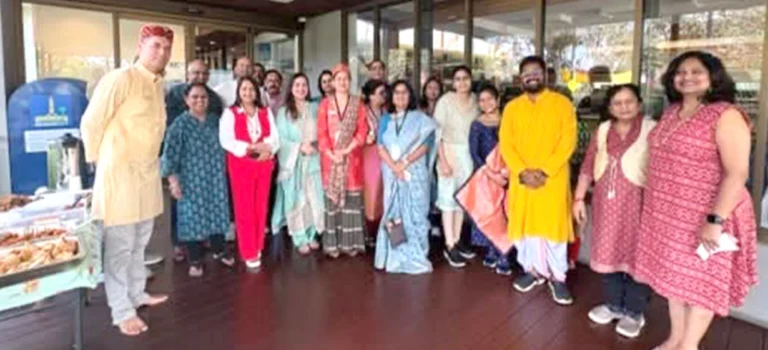
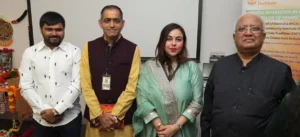 Hindu Council of Australia’s Queensland chapter combined Vishnu Sahasranamam chanting, expert talks and Reiki in a free community morning at Coopers Plains. BRISBANE, QLD: A free community program organised by the Hindu Council of Australia (HCA) Queensland chapter brought people together on Sunday 13 September for conversations about emotional wellbeing, spirituality, relaxation and social connection.
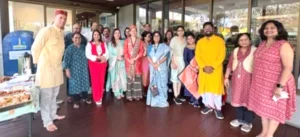 Titled Chanting for Mental Health – Vishnu Sahasranamam, the morning was held at Coopers Plains Library as part of HCA’s Hindu Spiritual Care activities. It was open to people of all backgrounds and levels of experience, and no prior knowledge of chanting or meditation was needed.
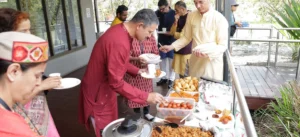 Psychiatrist Dr Sanjeev Ranjan, a visiting medical specialist at Pine Rivers Private Hospital, shared his professional view on mental health and wellbeing.
 Mental health remains a significant issue across Queensland and Australia, and community organisations are increasingly seen as playing a role alongside clinical services in reaching people who might not otherwise engage with the topic. Programs like this one give multicultural communities a familiar, culturally grounded setting in which to talk about wellbeing, reduce stigma and connect people to further support if needed.



 Reason why the world has no peace today is because many nations and most individuals deny the supremacy of a moral order, in their inter-personal,inter-communal and international relationships. The number of such individuals and nations is increasing day-by-day who think that wickedness, cunningness, vice is better than virtue and violence is better than non-violence.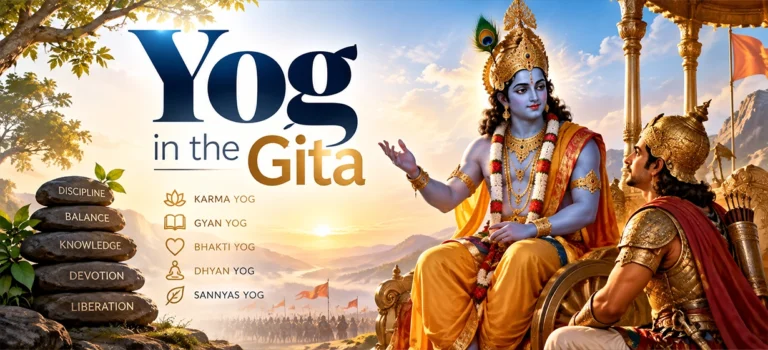

 The volunteer-led charity celebrated India’s 80th Independence Day across three cities, participated in Stripe Tour Event in Sydney, while preparing to refresh its website next month. Celebrating Culture Across Three Cities on India’s 80th Independence Day
 In Brisbane, Mrs. Girija Karekal, Executive Director along with other community members and government officials attended the magnificent celebration at The Star Hotel which was hosted by the Consul General of India in Brisbane on the 16th Aug 2026. The BSAPAC Brisbane team also participated in the Independence Day Parade hosted by the GOPIO at the Roma Street Parklands on the 15th Aug 2026.
 Maria Luqman, Head of Marketing, introduced the services of Basava Samiti Asia Pacific (BASPAC), with former Australian cricket captain Shane Watson and other cricket personalities during the 80th Indian Independence Day celebrations in Sydney.
 In Sydney, BSAPAC also discussed the challenges of Not for Profit charities and required advancements in relation to the payment platforms at the Darling Harbour, Sydney during the Stripe Tour 2026. The event brought together leaders in technology, artificial intelligence, digital transformation, fintech and business, giving BSAPAC officers a chance to connect beyond the community sector.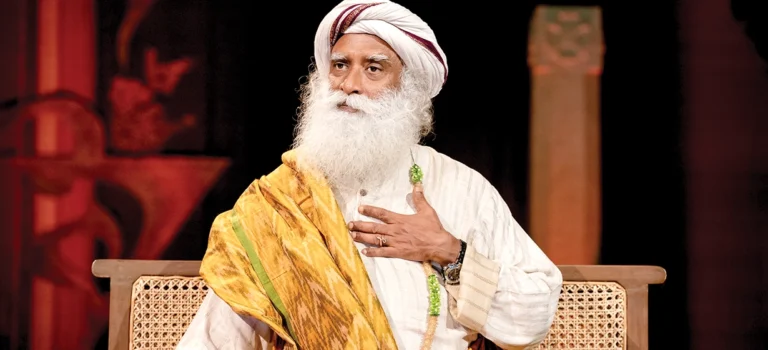


 What is in a name? Ask ten “Indo Fijians” how they identify and the answers rarely match: Fijian, Indian, Pacific Islander, South Asian, or simply Indian in Fiji. None of these answers are wrong. What is worth asking is where the label came from.