Dear reader, it is with much joy that we bring you the word of God. We all have limitations, faults, and even weaknesses for which we can feel sorry. Often, we wish we had more of this gift or extra resources, another qualification so that we could do great things. But the good news is that God can use us despite our limitations. In the bible (Luke 1), we read that when the angel announced to Mary that she was going to have a baby, who was to be named Jesus, Mary was afraid and said, “How can this be? I am not even married?”. Finally, Mary said, “Let it be to me according to your word.”
We know we are meant to do great things, but like Mary, we often look at what we don’t have and get stuck. When we look at our limited resources, education, and connections, it is easy to give up on our dreams.
But you must realize that God made you good, and all things, including your strengths and weaknesses, are working for you. Like Mary, you have to agree with what God says about you. And, He can do anything through you. The scriptures tell us nothing is too complicated for God. He is not limited by time, lack, or the enemy.
When God called Moses (Exodus 3) to bring the Hebrew people out of slavery in Egypt into the promised land of Israel, he felt incapable of taking on the responsibility. He looked at his weaknesses, failures, resources, and connections and said to God, “Who am I that I should go to Egypt?” Again, he said, “What if the people don’t believe me?” Finally, he said, “But I can’t even speak well; who will listen to me?”
Here are 3 things we can learn from God’s encounter with Moses.
1. Your weakness may be your limitation, but it is not God’s limitation. When Moses said he was not qualified to lead the Hebrew people out of Egypt, God said, “I will be with you.” God does not ask you to do something on your strength but, through His strength. All He asks for is your obedience.
2. If you didn’t get a gift or missed out on something, then you don’t need it. Moses said, “I cannot speak too well,” God told him not to be disappointed but to take his brother Aaron with him; he surely could speak well.
3. If you needed that gift, God would have given it to you in the first place. God asked Moses what he had with him. Moses replied, “A rod.” God said, “I will use you with what you have.” Moses depended on God and he led the people out of Egypt with a rod in his hand.
Friends, that is how God works with you. Your limitations are God’s opportunity to do great things through you. And I believe all this is possible through a relationship with Jesus Christ.
Beyond reporting Media as a force for national unity
By SHAILENDRA BAHADUR SINGH
THIS opinion piece is an updated version of the writer’s presentation at the Dialogue Fiji and Fiji Human Rights and Anti-Discrimination Commission panel discussion in Suva on March 21. The event was held to mark the International Day for the Elimination of Racial Discrimination. The article explores the complex relationship between media narratives, ethnicity, and social cohesion in Fiji, around the following three key questions:
1. How have media shaped narratives on ethnicity and what is the impact on social cohesion?
2. What is journalism’s role in promoting an inclusive society?
3. What strategies would you recommend for a racially harmonious Fiji?
How have media shaped narratives around ethnicity and what is the impact on social cohesion?
Questions about how media have shaped narratives around ethnicity and its impact on social cohesion would need a proper study for a definitive answer. Since no such recent studies exist, we can, at best, make some calculated observations.
For a start, media see themselves as a “mirror of society”. Media would argue that they do not shape narratives, but that their reporting simply reflects society as it stands—including its values, issues, and realities.
Therefore, if Fiji is an ethnically divided society, the news will reflect that. Conversely, if Fiji is a model of harmony, that’s what the news should show. If the media portray anything other than this, they are arguably not reflecting reality as it exists.
But claiming that media just mirror society could be downplaying or underestimating their role. Some argue that beyond simply reflecting society, media also function as a magnifying glass: firstly, because media can amplify or exaggerate situations, and secondly because media’s job isn’t just to reflect society, but also question it, challenge its norms, and push boundaries.
Relevant to this is the fact that media are often drawn to conflict and to powerful individuals—elements which are deemed more newsworthy. This explains why politicians often get the lion’s share of news coverage.
Consequently, how politicians handle race and ethnicity can shape news narratives. For example, the Minister for Defence and Veteran’s Affairs Pio Tikoduadua has frequently spoken out strongly in favour of minority rights, national unity and the rule of law.
But what about the other national leaders? What are they saying in Parliament? Are they promoting unity or are they fueling division? These are crucial questions because much of the media narrative on ethnicity can be shaped by what our leaders say.
Another question then is, do media narratives reflect society as media claim? Or do media preference elite viewpoints, given that politicians dominate news coverage?
What is journalism’s role in promoting an inclusive society?
This is the very question I addressed in my PhD thesis entitled “Rethinking journalism for supporting social cohesion and democracy: Case study of media performance in Fiji” (2014). Based on a review of the literature, I found that historically, media, at times, misrepresented certain issues, which did not help inclusiveness.
These included sensitive topics like land use and population trends, which fostered mistrust. During colonial times, this manipulation was part of deliberate divide-and-rule strategies to drive a wedge between communities. Today, we have a term for such tactics: “disinformation”, which is the intentional spread of false or misleading information to manipulate public perception.
The spread of disinformation didn’t stop completely after Fiji’s independence. For example, during the height of land disputes in 2000, a Fiji Daily Post editorial claimed that landowners would rather see land idle and overgrown, than leased out for economic gain. This was just the editorial writer’s opinion, with no interviews conducted with landowners to seek their views.
In contrast, a study published in the same year did interview landowners. It found many of them wanted to farm their land for profit, and willing to lease surplass land for the right rental, rather than leave it idle. So, this was a clear case of media misrepresentation—based not on facts, but rather a figment of the editorial writer’s imagination.
The problem is that the public is more likely to read newspapers, rather than academic research, meaning that more people would have been exposed to the editorial than to the study.
The lesson here is simple: journalism’s first rule is to be ethical and professional, not condescending, or taking shortcuts. Especially on sensitive issues, the media must be both alert and responsible.
They should educate themselves on key national debates like land, demography, the constitution, and electoral systems.
Which brings us back to the claim that media just reflect reality. As mentioned before, that argument diminishes media’s responsibility.
Media shouldn’t merely mirror society. They should apply a magnifying glass to it by, among other things, interrogating political rhetoric rather than repeating it uncritically under the guise of reporting the facts. Especially concerning issues of race and ethnicity, as they significantly impact national stability, economic development and quality of life in Fiji.
What strategies would you recommend for a racially harmonious Fiji?
It is surprising that until recently, Fiji has never had a proper social cohesion strategy despite the obvious need for one. Without social cohesion, there’s no real development because whatever progress we make is destroyed by upheavals—military and civilian—with ethnic tensions being a key underlying cause.
However, social cohesion is not just the government’s job. It’s everyone’s responsibility. Every organisation and every sector should get behind it. And it starts at home. A lot of the prejudices that we observe today are learnt at home.
What we need is a coordinated national awareness campaign, with media, the education sector and civil society working together.
Moreover, research in this area is lacking. What are our three universities doing about it? Globally, conflict prevention and peacebuilding are major fields of study—to what extent are our universities supporting this effort?
In addition, Fiji must look beyond its borders for inspiration. Countries like Singapore and Malaysia have invested heavily in reducing economic disparities and building a common national identity—with reasonable success.
Mauritius is another multiethnic country from which Fiji could learn. In the 1970s, Mauritius and Fiji had similar per capita GDPs but by 2023, Mauritius’s GDP had doubled compared with Fiji’s, making it twice as wealthy.
While the contexts are different, could Mauritius’s success hold any lessons for Fiji? We will never know unless we regularly engage with Mauritius in a broader way.
Conclusion
In summary, media can shape social cohesion—for better or worse. Their impact depends on whether they report professionally and ethically. Media must make it their business to better understand sensitive national issues and challenge divisive political narratives.
Furthermore, Fiji must look beyond its borders for ideas and inspiration.
And finally, an inclusive society isn’t just the government’s responsibility but a national effort. However, the government must take the lead and set an example.
Dr SHAILENDRA BAHADUR SINGH is an associate professor and head of the journalism program at The University of the South Pacific in Fiji. He has written widely on Pacific media, politics and development. The views in this article are his own and do not necessarily reflect the position of The University of the South Pacific.
Indian American Dr. Shabana Parvez receives prestigious Paul Harris Fellow Award along with Jim Swann & Sue Welch
Indian American Dr. Shabana Parvez is the first Indian origin President of the Rotary Club of Arlington Highlands
Arlington, TX – April 16, 2025 – The Rotary Club of Arlington Highlands proudly celebrated its 9th anniversary with a memorable Signature Event spotlighting service, leadership, and community transformation. The celebration included a symbolic cake-cutting ceremony to honor the club’s chartering on April 13, 2016, marking nearly a decade of impactful service and global fellowship.
A highlight of the evening was the presentation of the Paul Harris Fellow Award—one of Rotary International’s most prestigious honors. This year’s distinguished recipients included Dr. Shabana Parvez, Indian-American physician, entrepreneur, and current President of the Rotary Club of Arlington Highlands, along with Jim Swann and Sue Welch, who were recognized for their outstanding contributions as Rotarians of the Year—the club’s highest internal distinction. Their Paul Harris Fellowships were generously sponsored by Past President Paul Brodie and President Nominee Becky Gerro, who each sponsor two Paul Harris Fellows annually to support and celebrate service excellence within the club.
Indian American Dr. Shabana Parvez is the first Indian origin President of the Rotary Club of Arlington Highlands Also honored were returning Paul Harris Fellows Becky Gerro, Paul Brodie, and Barbara Brodie, with Barbara receiving an additional distinction—the Blue Sapphire Pin—signifying an elevated level of contribution to The Rotary Foundation.
The evening took on global significance as Dr. Tausif Malik, Indian-American entrepreneur and founder of RiseBack—the world’s first affordable and inclusive EdTech platform—announced the official registration of RiseBack’s Global Headquarters in Arlington, Texas. In recognition of his pioneering work in democratizing access to higher education, Dr. Malik was inducted as an Honorary Rotarian.
Serving as the event’s Chief Guest and Keynote Speaker, Arlington Mayor Jim Ross delivered an inspiring address celebrating the city’s rich diversity, rapid economic development, and rising status as “The Dream City of America.” He warmly welcomed RiseBack’s HQ, emphasizing Arlington’s commitment to innovation and education.
Another milestone highlighted during the celebration was the “Start Here, Go Anywhere” Initiative—a transformative collaboration between the Rotary Club and RiseBack. Already launched earlier this year, the initiative was showcased through a compelling video presentation by Club President Dr. Shabana Parvez, offering attendees a firsthand look at its growing impact.
As the Rotary Club of Arlington Highlands embarks on its 10th year of service, the anniversary event reaffirmed its commitment to local and global impact through innovation, inclusion, and empowerment.
About the Rotary Club of Arlington Highlands:
Rebuilt in 2020 by a group of passionate individuals dedicated to service, the Rotary Club of Arlington Highlands is one of the most diverse in Rotary International. Members include business leaders and community advocates serving on local boards such as the Greater Arlington Chamber of Commerce, River Legacy Foundation, and Longhorn Council. The club proudly supports initiatives including the River Legacy Foundation, Dental Health Arlington, Johns Elementary, Bowie High School, Barnett Junior High, and the Dan Dipert Career and Technical Center.
Alex Kain leads a new wave of purpose-driven entrepreneurs in search of ways to do good
FROM high-growth tech ventures to deeply personal reinvention, Melbourne-based entrepreneur Alex Kain is charting a new course, one grounded in empathy, values and meaningful impact. With the upcoming release of his debut book The Philosophy this June, Kain is calling on fellow business leaders and changemakers to challenge conventional definitions of success and embrace a new mission: to lift others while lifting themselves.
After building a thriving software business, navigating betrayal and loss and emerging stronger, Kain’s journey reflects a deeper realisation, that real happiness isn’t about personal wins, it’s about helping others win too even if it involves incremental elements of improvement over time. The result is a vastly enhanced world for everyone.
“There’s a new kind of entrepreneur emerging. We’ve built businesses, chased the dream, ticked the boxes but something’s still missing. That ‘something’ is meaning. It’s contribution. It’s impact,” Kain said. “It’s not just donating a percentage of profits. It goes much deeper!”
“I am certainly experiencing a desire to do more and help more through my lived situations and challenges. This is something I have been feeling for a long time which has culminated in me actually writing a book supported by other initiatives that will create a movement of good based on the individual efforts of many to deliver collective and enduring change.
“Sounds philosophical and it is. I feel that if we all as a society made some simple changes to the way we do things, we could improve life and the world for so many.”
Kain’s philosophy is just that, he has called his thinking The Philosophy and has outlined his rationale and methodology in his upcoming book. He asks the big questions to some of society’s most challenging issues and offers a way forward.
Rebuilding from the inside out: The Philosophy
At the heart of The Philosophy is a bold yet practical proposition: the problems society faces today, poverty, division, violence, disconnection – are symptoms. The real cause is a lack of core human values: respect, empathy and gratitude.
Kain, who made a name for himself optimising complex systems and processes for companies through his business, believes the same analytical thinking can be applied to society itself. The Philosophy challenges us to stop fixing symptoms and start redesigning the system beginning with ourselves.
“We need a shift in mindset,” Kain said.
“We keep treating issues like homelessness or domestic violence as isolated. But they all stem from the same place; how we see ourselves and each other. That’s why I believe re-educating our society around values is the key to lasting change.”
The book outlines a vision for transformation including an enhanced education system, one where students are taught not just mathematics and science, but how to become kind, resilient and self- aware human beings. It’s an unflinching, honest and hopeful manifesto for a better future, one led by everyday people who choose to do good.
A voice for the underserved, the overlooked and the curious
Kain represents a growing number of people who’ve started with little, worked hard, succeeded and are now searching for something deeper. He speaks directly to those who feel disillusioned by politics, disconnected from traditional causes, or simply stuck in a world that doesn’t reflect their values.
“I don’t come with letters after my name. I’m just a regular guy who’s been through it, seen it and wants to change it. I’ve failed, I’ve succeeded and I’ve learned a lot along the way, most importantly, that helping others is where true fulfillment lies,” he said. His lived experience including the loss of a business through betrayal and his recovery from it brings authenticity and vulnerability to The Philosophy. It’s not about preaching, it’s about connecting. Pre-launch momentum and the movement ahead set for release in June, The Philosophy will be accompanied by an online platform to connect like- minded thinkers, seekers and change agents. Kain’s vision is to build a grassroots movement, one driven by conversation, collaboration and a shared belief that we can be better, together.
“The book is just the beginning,” he said.
“I want the book to start real conversations; ones that we have been too afraid to have. Let’s redesign the world by redesigning ourselves first.” Kain’s approach blends strategic systems thinking with human insight, humour and humility. As the founder of several strategic optimisation businesses, he’s long been focused on streamlining organisational processes. Now, he’s applying that same mindset to life, leadership and legacy.
“The next era of success isn’t about how far we rise, but how many people we bring with us,” he said.
About Alex Kain
Alex Kain is a Melbourne-based entrepreneur, systems thinker and founder of The Philosophy, a social movement and soon-to-be-published book encouraging a new way of thinking about success, happiness, and collective responsibility. After building several technology businesses over the years, Alex turned his attention to society itself, applying his expertise in systems optimisation to the deeper issues facing humanity. Through The Philosophy, Alex is inspiring business leaders, changemakers and everyday people to lead with empathy, gratitude and purpose and to focus not only on rising, but on lifting others as they go.
To learn more, visit: www.thephilosophy.net
A Prayer Meeting & Vigil by the Indian Diaspora at Mahatma Gandhi’s statue at Roma Parklands on 29th April
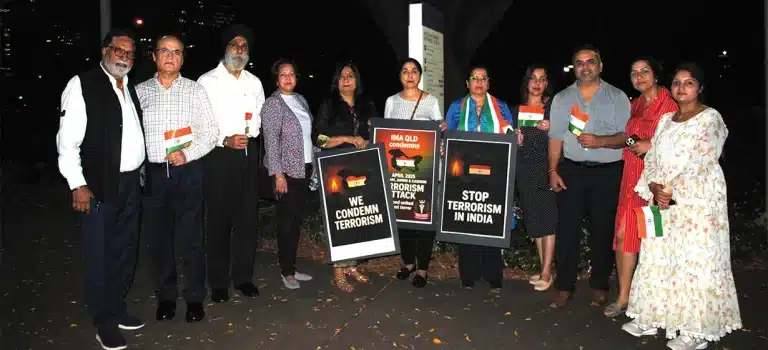
THIS gathering served as an expression of grief for those lost in massacre of innocent 27 tourists in Pahalgam, UT of Kashmir in India on 22nd April 2025 .
Nearly 75 members from the Indian diaspora gathered for a solemn prayer meeting, where they bowed their heads and observed a minute of silence,
Pushpinder Oberoi, a respected community leader from the Gold Coast, voiced his deep anguish over the tragic killing of innocent people in Pahalgam.
Yousuf AliKhan, a renowned singer based in Brisbane, condemned the heinous actions of the terrorists with heartfelt conviction. The gathering also saw representation from BAPS Queensland, led by Jaynesh Brambhatt and his team.
The Indian Medical Association was represented by Dr. Kothari, Dr. Sudhar, Dr. Gandhi, and Dr. Fernandez.
Their presence symbolized the unity and shared sorrow across different sectors of the community. During the event, the gathering strongly urged the Government of India to take action and ensure justice for the victims, demonstrating their collective commitment to advocating for accountability and peace.
They extended their appreciation to the Consulate General of India in Brisbane and its staff for their empathy and their promise to convey the sentiments of the diaspora to Prime Minister Modi through appropriate channels. To mark the occasion, 27 lamps were lit in remembrance of those who lost their lives. These lamps were respectfully placed in front of the statue of Mahatma Gandhi, reinforcing the symbolic importance of peace and non-violence in the face of tragedy.
The gathering concluded with the singing of the Indian national anthem, an emotional and unifying moment that encapsulated the shared grief & condemnation from all the attendees.
The Federation of Indian Communities of Queensland Makes History in ANZAC Day Parade and Commemoration
The Federation of Indian Communities of Queensland (FICQ), proudly supported by the India-Australia War Memorial Organisation, made its first-ever appearance in the official Brisbane ANZAC Day Parade. This milestone event marked a powerful gesture of unity and respect by the Indian-Australian community in honouring the ANZAC spirit.
FICQ also hosted a historic ANZAC Day Commemoration Dinner in collaboration with the Consulate General of India, Brisbane. The evening paid tribute to the valour and sacrifice of ANZAC soldiers and highlighted the often-overlooked contributions of Indian soldiers, particularly during World War I in Gallipoli.
Dignitaries including Hon. Fiona Simpson MP, Shadow Minister Charis Mullen MP, Senator Paul Scarr, Representative for Lord Mayor Councillor Andrew Wines, Councillor Vicky Howard, Captain Geetika Punia, joined community leaders at the event, where FICQ President Dr Preethi Suraj stated:” FICQ Inc. has been at the forefront of working with the Indian diaspora and community organisations for over 27 years and today marks another important milestone in that journey. This event not only honours the ANZAC legacy but brings to light the shared sacrifices of Indian soldiers. It’s a proud and humbling moment for our community.”
The dinner also observed a moment of silence for the victims of the Pahalgam terror attack in India on 22 April 2025.
FICQ remains committed to raising awareness of the historic ties between India and Australia through future initiatives, information sessions, and collaborations with veterans and community organizations.
GOPIO International Convention 2025 Opens in Brisbane
Brisbane, April 28, 2025—The much-anticipated GOPIO International Convention 2025 was opened successfully at the Brisbane Marriott, bringing together community leaders, dignitaries, and delegates from around the world. The event, convened by Umesh Chandra OAM, began at 6:00 p.m. with a seamless registration process managed by Priya Jaganathan and Irene Bayldon for the welcome reception night
Following registration, attendees enjoyed networking over drinks, courtesy of Marriott staff, at 6:30 pm. The evening officially opened at 7:00 pm when Zain Chama called the convention to order, followed by a respectful Welcome to Country to honour the Indigenous custodians of the land.
Umesh Chandra, the convenor, delivered an inspiring Welcome Speech for the Opening Night of the GOPIO International Convention on 28 March 2025. In his address, he expressed gratitude for the gathering, paid homage to the traditional custodians, and welcomed distinguished guests, including GOPIO International Chairperson Dr. Thomas Abraham, President Prakash Shah, and A/Inspector Andrew Dixon of the Queensland Police Service.
Umesh Chandra praised the efforts of the organising team and volunteers, emphasising the importance of collaboration and community unity. He also acknowledged the generous sponsors who supported the event and expressed excitement for the upcoming discussions, learning, and celebration.
Following the heartfelt speech, the program proceeded with welcoming remarks by Zain Chama, who set a warm tone for the evening. This was succeeded by the addresses of leadership by Thomas Abraham and Prakash Shah, who highlighted the organisation’s achievements and future vision.
A notable highlight was Prakash Shah’s presentation of a special award to Shaheen Mazeed of SABINSA at 7:20 p.m., recognising her significant contributions to the community. Shaheen Mazeed responded graciously, expressing her sincere appreciation.
The Tapori Squad then performed an energetic dance at 7:30 p.m., adding vibrancy to the evening’s proceedings. The formal program concluded with Kewal Kanda delivering the vote of thanks at 7:40 p.m., acknowledging all who contributed to the convention’s success.
Guests enjoyed a sumptuous buffet dinner served by Marriott staff at 7:45 p.m., which provided ample opportunity for networking and camaraderie. The festivities wrapped up with the opening of the dance floor at 8:30 p.m., inviting attendees to celebrate and connect further.
Overall, the GOPIO International Convention 2025 was hailed as a resounding success, fostering a spirit of unity, collaboration, and cultural exchange among the Indian diaspora community in Australia and beyond.
The legacy of struggle and sacrifice shaped who I am today — and it must never be forgotten.
By Jitendra Deo, Chief Executive Officer JD Group Australia
I was born in Fiji, and I am a fourth-generation descendant of a Girmitya. It is a heritage I wear with pride. To some, this may sound like a historical footnote — but to me, it is the foundation of my identity, values, and purpose in life.
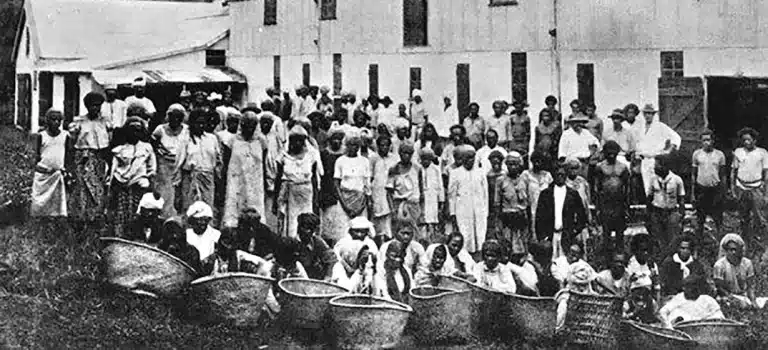
The word “Girmitya” refers to the tens of thousands of Indian indentured labourers brought to Fiji between 1879 and 1916 under British colonial rule. These men and women, lured by promises of fair wages and opportunity, signed agreements — or girmits — that led them to the distant sugar plantations of the Pacific. What they found instead was back-breaking labour, harsh living conditions, and separation from everything they knew.
My ancestors were among them. They came with little, suffered much, and received less than what was promised. But they endured. They built communities, kept their traditions alive, and through resilience and hard work, laid the foundation for future generations. Their spirit lives in every Indo-Fijian family today — mine included.
Growing up in Fiji, I was surrounded by stories of my great-grandparents: stories of 4 a.m. mornings in the cane fields, of food shared among neighbours, of prayers offered in makeshift shrines, and of laughter that persisted even when life was hard. These weren’t just stories of hardship — they were stories of dignity and survival.
It is from them that I learned the meaning of perseverance. Their struggles gave me perspective; their sacrifices gave me strength. Today, as a business owner and community leader in Australia, I see their legacy in every opportunity I’ve had — and in the values I pass on to my two sons Ravneel and Soneel.
In recent years, I’ve felt a growing responsibility to ensure that the Girmitya story is remembered — not just as history, but as an ongoing legacy. Through the Deo Family Charitable Foundation, and the Fiji Girmit Foundation Australia, we’ve been hosting Girmit Remembrance Day for the past four years here in Australia. These annual events bring together descendants, scholars, artists, and youth to reflect on and celebrate the Girmitya experience.
In 2023, we launched the Fiji Girmit Legacy Awards, which recognize individuals who are preserving and promoting Girmit history and values in contemporary society. Over 20 remarkable community members have been honoured so far, representing fields such as culture, education, social justice, and leadership. Their stories inspire us — and ensure that the flame our ancestors lit continues to burn bright.
Yet, I believe we must go further. As our elders pass on, their memories risk being lost unless we act to document them. We need to invest in education, oral history projects, school curriculums, and digital archives that capture the full story of the Girmityas. We need our children to understand that the freedoms and opportunities they enjoy today were paid for by people who had none.
The Girmitya story is not one of victimhood. It is a story of resistance through survival. It is a story of culture maintained against the odds, of languages that crossed oceans, and of values — hard work, humility, and family — that remain central to who we are.
Being a descendant of a Girmitya is not just a matter of genealogy. It is a call to action. It reminds us to honour our past by building a stronger, more united future — rooted in the values our ancestors lived by.
As we approach yet another Girmit Remembrance Day, let us not simply remember — let us recommit. To education, to unity, and to honouring those who came before us by carrying their legacy forward.
I am proud of where I come from. I am proud to be a Girmitya descendant. And I will continue to work to ensure that pride is shared, celebrated, and passed on.
Celebrating Mothers, Confronting Violence, and Building Stronger Communities This May
I want to start this month’s article by wishing a very Happy Mother’s Day to all the incredible mums and mother-like figures in our community. Mother’s Day 2025, falling on Sunday, May 12, is a special time to honour the women who nurture, guide, and inspire us.
But for me and others, May is also a time of reflection—a moment to think about how we can extend that care and strength into our wider communities, creating spaces that are safer, more respectful, and supportive for everyone. May is also Domestic and Family Violence Prevention Month. This year’s theme, “Take positive action today to build a safer Queensland,” really resonates with me and many others. I believe change starts with each of us. Whether we’re coaching sport, teaching, running a business, or simply looking out for a neighbour, we all play a part in creating inclusive and safe communities. There’s no excuse for domestic or family violence—and no excuse to be a bystander.
I was especially moved by a recent conversation with a reader of Brisbane India Times—a Fijian-Indian community leader—who raised a powerful concern. She asked why there’s so little data on how domestic and family violence impacts multicultural, Indian, and First Nations communities. Her question was simple but important: “How can we address an issue if we don’t know how widespread it is?” She also pointed out that many women, men and youth affected by domestic and family violence are homeless or at risk of homelessness.
As I explored her concerns, I discovered that while some state-based data exists, detailed national statistics—especially from the Australian Bureau of Statistics—are hard to find or simply not reported. Maybe it’s time to rethink how we collect and share this information. Perhaps we need to include more specific questions in our national census or push for targeted public research. Good data is key to creating culturally appropriate and effective support services.
On a brighter note, many of you have asked for updates on recent community events—and there’s been so much to celebrate! In April, I was one of many volunteers at Brisbane’s Holi Festival at the Mount Gravatt Showgrounds. It was a vibrant burst of colour, culture, and unity. Thousands came together to celebrate, followed by a beautiful thank you dinner. I want to send heartfelt thanks to President Manish Saini and the incredible Bondita and Mithun Chakraborty from Sargam Music Academy and their team for making the entire event unforgettable. It was also so much fun catching up and throwing colour with community favourites JD and Shanjeshni Deo—always a joy to be around.
Speaking of people who inspire me, I want to publicly thank and acknowledge someone I truly admire—community leader Aprit Singh. Aprit is not only a dear friend but a passionate advocate who’s been volunteering since 2015. He’s left a lasting mark on Queensland’s multicultural space. Just in the past year, he’s helped deliver GOPIO’s most successful Gala Dinner, led an inspiring Women’s Council event, coordinated Gandhi Jayanti, hosted a youth picnic, and created an unforgettable musical performance at India Day Fair. His dedication is inspiring, and I’m so happy to share that India Day Fair 2025 will be held on Sunday, August 17 at the beautiful Roma Street Parklands. I can’t wait to volunteer again and see you all there!
Another highlight for me this month was attending a fundraising Masquerade dinner in memory of the late Dr. Coung Bui. I was warmly welcomed by my friend Kheu Oanh Do, President of the Vietnamese Senior Citizens and Vietnamese in Australia – QLD Chapter. Kheu Oanh is a true trailblazer—the first Vietnamese woman to run for the seat of Inala—and her leadership continues to inspire across generations. Spending the evening with her and community advocate JD reminded me again how powerful it is when good people come together.
As one chapter closes, another begins. I’m thrilled to share that I’ve recently stepped into a new role as Public Relations Officer for Queensland Multicultural Council Inc. This opportunity allows me to keep doing what I love—amplifying diverse voices and building stronger cultural connections. A big thank you to Usha and team for your warm welcome and support. As a young person in the community, I’m genuinely excited for what’s ahead.
A lot of readers have also asked me about the environment—and it’s something I’ve been learning more about firsthand… through bees! While I’ve been studying and working towards my dream of becoming a doctor, I also took on a buzzing new challenge: beekeeping. Bees do so much more than make honey—they’re vital for pollination, our ecosystems, and our food supply. What began as a hobby has grown into a mission.
Special thanks to Kylie Gates for letting me run an info stall at her Easter Movie Night, and to Danny Blair from Aussie Home Loans Forest Lake and residents, who—alongside so many in the community—has been incredibly supportive. I’ve been learning how to protect wild bee populations, avoid harmful pesticides, plant bee-friendly flowers, and help restore natural habitats. If you’re curious, want to learn more, or even try some local honey—feel free to reach out to me at 0424 404 303!
Thank you to everyone who reached out and shared the issues that matter most to you. I look forward to next month’s article, where I’ll continue raising the voices and stories that make our community stronger.
Girmit: The Untold Story of the Indentured Labourers
Girmit, a term that resonates with deep historical significance, refers to the period when thousands of Indians were sent to Fiji, Trinidad, Guyana, and other British colonies as indentured labourers between the 19th and early 20th centuries. It is a story of struggle, resilience, and survival, as these labourers, often referred to as “Girmitiyas,” overcame brutal working conditions to forge new lives in foreign lands. While the history of Girmit has often been overlooked, it remains a vital chapter in the story of migration, colonization, and the shaping of the modern diaspora.
The Origins of Girmit
The story of Girmit begins in the 1830s, after the abolition of slavery in the British Empire. Following the end of slavery, plantation owners in the Caribbean and Pacific Islands found it increasingly difficult to find cheap labour for their sugar, cotton, and cocoa plantations. In response, the British Empire turned to a system of indentured labour, recruiting workers from British-controlled India to replace the enslaved Africans.
This system, known as “Girmit,” was a contract labour arrangement that promised workers a fixed wage, accommodation, and food in exchange for a set number of years of labour, typically five years or more. The term “Girmit” itself is derived from the English word “agreement” (though it was later corrupted into “Girmit”), reflecting the contracts that workers were forced to sign before embarking on their journey.
Between 1879 and 1916, over 60,000 Indian labourers were brought to Fiji alone, while hundreds of thousands more were sent to places like Trinidad, British Guiana, and Mauritius. These labourers came from various regions of India, including Uttar Pradesh, Bihar, and Tamil Nadu, bringing with them a diversity of languages, customs, and traditions.
Life on the Plantations
For many of the indentured workers, the reality of their new lives was far from what they had been promised. The journey from India to the British colonies was long, arduous, and dangerous. Many labourers died during the voyage due to poor conditions aboard overcrowded ships, with inadequate food and water, and rampant disease.
Upon arrival, the workers were subjected to gruelling and often dehumanizing conditions on the plantations. They were expected to work long hours—often up to 12 hours a day—in harsh and unforgiving environments. They were paid low wages and lived in cramped, unsanitary quarters. The work itself was physically demanding, and workers were often subjected to harsh punishments for minor infractions.
The indentured workers were bound by strict contracts that restricted their movement, making it difficult for them to leave the plantations or seek better opportunities. In many cases, they were not allowed to own land, marry, or engage in social activities outside the confines of the plantations. These restrictions, along with the constant threat of deportation, created an atmosphere of fear and subjugation.
Despite these challenges, the Girmitiyas demonstrated extraordinary resilience. They built communities, maintained their cultural and religious practices, and developed strong social networks to support one another. Over time, many Girmitiyas managed to buy land and establish their own farms, creating new opportunities for themselves and their families.
Cultural and Social Impact
The Girmitiyas, though initially brought to work under harsh conditions, were not passive victims. Over time, they created a rich cultural heritage that continues to thrive in the Indian diaspora today. The Girmit experience brought together people from diverse regions of India, and this fusion of languages, customs, and traditions contributed to the development of a unique cultural identity.
Religion played an important role in the lives of the Girmitiyas. Hinduism, Islam, and Sikhism provided spiritual solace in a foreign land, and temples, mosques, and gurdwaras became centres of community life. Festivals such as Diwali, Holi, Eid, and Vaisakhi, which are still widely celebrated today in countries with a significant Indo-Fijian or Indo-Caribbean population, were ways to preserve cultural heritage and strengthen bonds within the community.
Music and dance also became key components of cultural preservation. Folk songs, dholak music, and traditional dances were passed down through generations, and these art forms continue to flourish in contemporary celebrations. The introduction of the Indian classical dance forms, along with Fijian and Caribbean influences, resulted in the creation of hybrid artistic expressions that tell the stories of the Girmitiyas’ struggles and triumphs.
The language spoken by the Girmitiyas, known as “Girmit Hindi,” became a unique dialect that blended Hindi, Bhojpuri, Fijian, and other regional languages, reflecting the diverse backgrounds of the indentured labourers. Today, Girmit Hindi remains an important language in the Indian diaspora, particularly in Fiji and the Caribbean.
The End of the Indenture System
The indenture system, which lasted for several decades, was eventually abolished due to growing criticism from humanitarian groups and the labour movements. The system was seen as a form of modern-day slavery, and widespread reports of abuse and exploitation led to its gradual demise.
In Fiji, the system was officially ended in 1916. By then, many Girmitiyas had established themselves in the country, and their descendants continued to play a significant role in the socio-economic development of the nation. The abolition of indentured labour marked a turning point in the lives of these workers, but it did not erase the scars of the past. The struggle for civil rights and equal treatment continued for generations to come.
The Legacy of Girmit
The legacy of the Girmitiyas is one of resilience, perseverance, and cultural survival. Though they were initially brought to foreign lands as labourers, the Girmitiyas managed to create new lives for themselves and contribute to the development of the societies they had been forced to join.
In Fiji, for example, the Indo-Fijian community has played a vital role in agriculture, commerce, and politics. The descendants of the Girmitiyas now hold prominent positions in various sectors of Fijian society, and their cultural contributions are celebrated as an integral part of the nation’s heritage.
Similarly, in the Caribbean, Girmitiyas and their descendants contributed to the growth of the sugar industry and were pivotal in shaping the cultural landscape of the region. The impact of Girmit can be seen in the music, cuisine, and social practices that characterize the Indo-Caribbean communities today.
In recent years, the history of Girmit has received increased attention, particularly with the establishment of Girmit Remembrance Day on May 14, which honours the contributions and sacrifices of the indentured labourers. This day serves as a reminder of the hardships endured by the Girmitiyas, as well as their strength and determination in overcoming adversity.
Conclusion
The story of Girmit is one of hardship, sacrifice, and triumph. It is a testament to the resilience of a people who, despite being forcibly displaced and subjected to inhumane conditions, managed to carve out new identities, communities, and legacies in faraway lands. The Girmitiyas’ contributions to the societies they helped build continue to be felt today, and their story is one that deserves recognition, remembrance, and respect.
As we look back on the history of Girmit, it is important to honours the experiences of those who lived through it, and to ensure that their legacy is preserved for future generations. The Girmit story is not just a chapter of history; it is a living testament to the strength of the human spirit and the enduring power of culture, community, and survival.




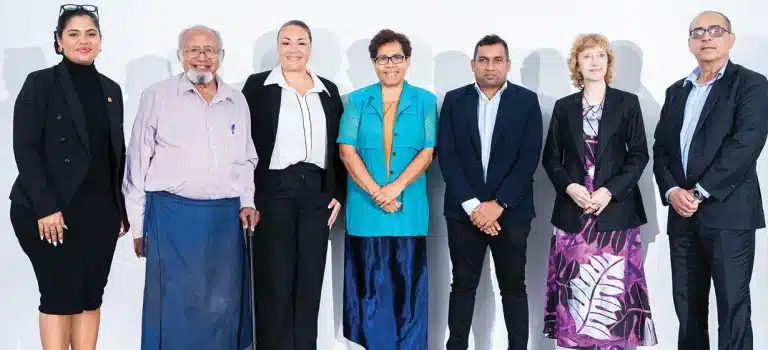
 THIS opinion piece is an updated version of the writer’s presentation at the Dialogue Fiji and Fiji Human Rights and Anti-Discrimination Commission panel discussion in Suva on March 21. The event was held to mark the International Day for the Elimination of Racial Discrimination. The article explores the complex relationship between media narratives, ethnicity, and social cohesion in Fiji, around the following three key questions:
 Consequently, how politicians handle race and ethnicity can shape news narratives. For example, the Minister for Defence and Veteran’s Affairs Pio Tikoduadua has frequently spoken out strongly in favour of minority rights, national unity and the rule of law.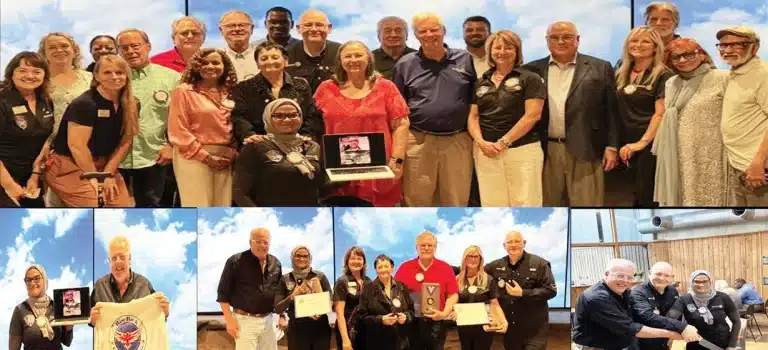





 THIS gathering served as an expression of grief for those lost in massacre of innocent 27 tourists in Pahalgam, UT of Kashmir in India on 22nd April 2025 .
 The gathering also saw representation from BAPS Queensland, led by Jaynesh Brambhatt and his team.
 During the event, the gathering strongly urged the Government of India to take action and ensure justice for the victims, demonstrating their collective commitment to advocating for accountability and peace.
 To mark the occasion, 27 lamps were lit in remembrance of those who lost their lives. These lamps were respectfully placed in front of the statue of Mahatma Gandhi, reinforcing the symbolic importance of peace and non-violence in the face of tragedy.

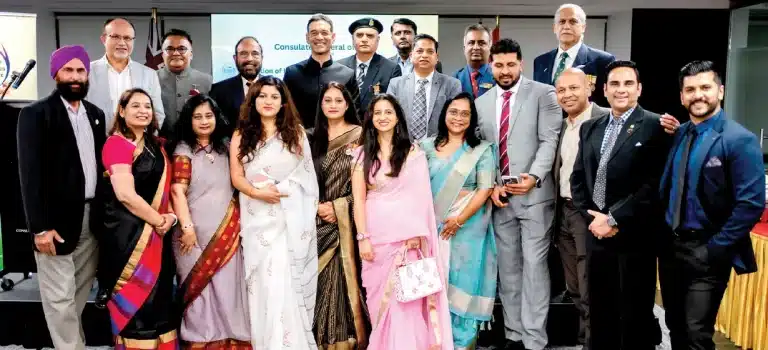
 The Federation of Indian Communities of Queensland (FICQ), proudly supported by the India-Australia War Memorial Organisation, made its first-ever appearance in the official Brisbane ANZAC Day Parade. This milestone event marked a powerful gesture of unity and respect by the Indian-Australian community in honouring the ANZAC spirit.
 FICQ also hosted a historic ANZAC Day Commemoration Dinner in collaboration with the Consulate General of India, Brisbane. The evening paid tribute to the valour and sacrifice of ANZAC soldiers and highlighted the often-overlooked contributions of Indian soldiers, particularly during World War I in Gallipoli.
 Dignitaries including Hon. Fiona Simpson MP, Shadow Minister Charis Mullen MP, Senator Paul Scarr, Representative for Lord Mayor Councillor Andrew Wines, Councillor Vicky Howard, Captain Geetika Punia, joined community leaders at the event, where FICQ President Dr Preethi Suraj stated:” FICQ Inc. has been at the forefront of working with the Indian diaspora and community organisations for over 27 years and today marks another important milestone in that journey. This event not only honours the ANZAC legacy but brings to light the shared sacrifices of Indian soldiers. It’s a proud and humbling moment for our community.”
 The dinner also observed a moment of silence for the victims of the Pahalgam terror attack in India on 22 April 2025.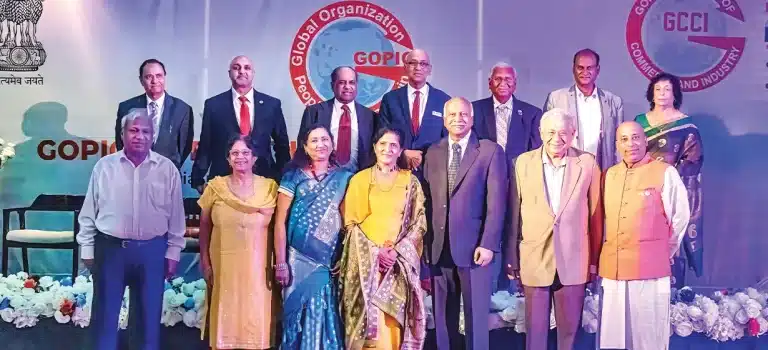
 Brisbane, April 28, 2025—The much-anticipated GOPIO International Convention 2025 was opened successfully at the Brisbane Marriott, bringing together community leaders, dignitaries, and delegates from around the world. The event, convened by Umesh Chandra OAM, began at 6:00 p.m. with a seamless registration process managed by Priya Jaganathan and Irene Bayldon for the welcome reception night
 Umesh Chandra, the convenor, delivered an inspiring Welcome Speech for the Opening Night of the GOPIO International Convention on 28 March 2025. In his address, he expressed gratitude for the gathering, paid homage to the traditional custodians, and welcomed distinguished guests, including GOPIO International Chairperson Dr. Thomas Abraham, President Prakash Shah, and A/Inspector Andrew Dixon of the Queensland Police Service.
 Following the heartfelt speech, the program proceeded with welcoming remarks by Zain Chama, who set a warm tone for the evening. This was succeeded by the addresses of leadership by Thomas Abraham and Prakash Shah, who highlighted the organisation’s achievements and future vision.
 The Tapori Squad then performed an energetic dance at 7:30 p.m., adding vibrancy to the evening’s proceedings. The formal program concluded with Kewal Kanda delivering the vote of thanks at 7:40 p.m., acknowledging all who contributed to the convention’s success.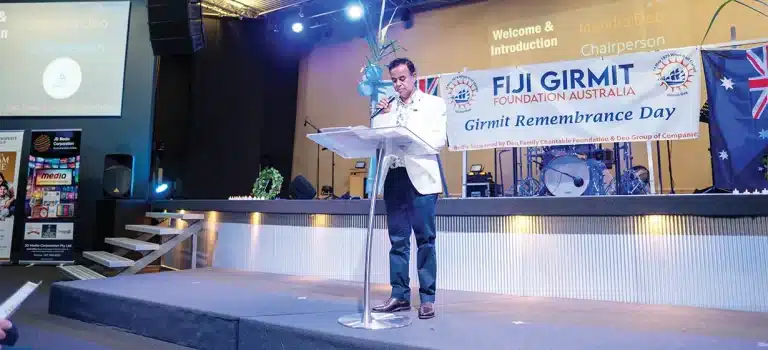

 I want to start this month’s article by wishing a very Happy Mother’s Day to all the incredible mums and mother-like figures in our community. Mother’s Day 2025, falling on Sunday, May 12, is a special time to honour the women who nurture, guide, and inspire us.
 I was especially moved by a recent conversation with a reader of Brisbane India Times—a Fijian-Indian community leader—who raised a powerful concern. She asked why there’s so little data on how domestic and family violence impacts multicultural, Indian, and First Nations communities. Her question was simple but important: “How can we address an issue if we don’t know how widespread it is?” She also pointed out that many women, men and youth affected by domestic and family violence are homeless or at risk of homelessness.
 As I explored her concerns, I discovered that while some state-based data exists, detailed national statistics—especially from the Australian Bureau of Statistics—are hard to find or simply not reported. Maybe it’s time to rethink how we collect and share this information. Perhaps we need to include more specific questions in our national census or push for targeted public research. Good data is key to creating culturally appropriate and effective support services.
 On a brighter note, many of you have asked for updates on recent community events—and there’s been so much to celebrate! In April, I was one of many volunteers at Brisbane’s Holi Festival at the Mount Gravatt Showgrounds. It was a vibrant burst of colour, culture, and unity. Thousands came together to celebrate, followed by a beautiful thank you dinner. I want to send heartfelt thanks to President Manish Saini and the incredible Bondita and Mithun Chakraborty from Sargam Music Academy and their team for making the entire event unforgettable. It was also so much fun catching up and throwing colour with community favourites JD and Shanjeshni Deo—always a joy to be around.
 Speaking of people who inspire me, I want to publicly thank and acknowledge someone I truly admire—community leader Aprit Singh. Aprit is not only a dear friend but a passionate advocate who’s been volunteering since 2015. He’s left a lasting mark on Queensland’s multicultural space. Just in the past year, he’s helped deliver GOPIO’s most successful Gala Dinner, led an inspiring Women’s Council event, coordinated Gandhi Jayanti, hosted a youth picnic, and created an unforgettable musical performance at India Day Fair. His dedication is inspiring, and I’m so happy to share that India Day Fair 2025 will be held on Sunday, August 17 at the beautiful Roma Street Parklands. I can’t wait to volunteer again and see you all there!
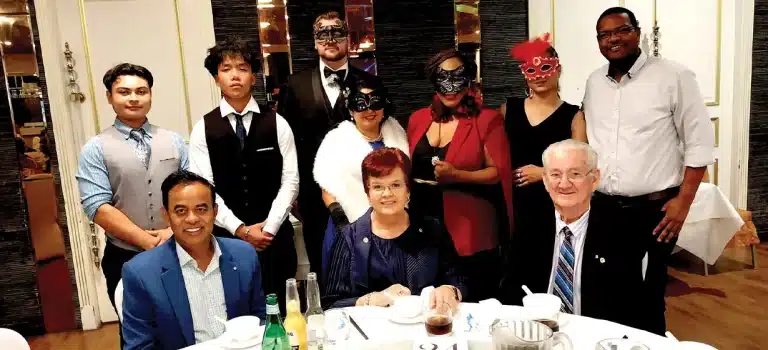
 Another highlight for me this month was attending a fundraising Masquerade dinner in memory of the late Dr. Coung Bui. I was warmly welcomed by my friend Kheu Oanh Do, President of the Vietnamese Senior Citizens and Vietnamese in Australia – QLD Chapter. Kheu Oanh is a true trailblazer—the first Vietnamese woman to run for the seat of Inala—and her leadership continues to inspire across generations. Spending the evening with her and community advocate JD reminded me again how powerful it is when good people come together.
 As one chapter closes, another begins. I’m thrilled to share that I’ve recently stepped into a new role as Public Relations Officer for Queensland Multicultural Council Inc. This opportunity allows me to keep doing what I love—amplifying diverse voices and building stronger cultural connections. A big thank you to Usha and team for your warm welcome and support. As a young person in the community, I’m genuinely excited for what’s ahead.
 A lot of readers have also asked me about the environment—and it’s something I’ve been learning more about firsthand… through bees! While I’ve been studying and working towards my dream of becoming a doctor, I also took on a buzzing new challenge: beekeeping. Bees do so much more than make honey—they’re vital for pollination, our ecosystems, and our food supply. What began as a hobby has grown into a mission.