
Natural Remedies to Get Rid of Frizzy Hair….By Nimisha Modi

Living with frizz can be one of the most frustrating things on the planet, especially when you have curly hair. You put in so much effort to make your hair look perfect before you walk out of the house. Only 2 minutes later you catch your reflection in a shop’s window, and all you can see is a bird’s nest where your hair used to be. It’s not an uncommon place to be and a whole lot of us, including me, have been there.

Many of us brush it off, blaming it on natural texture, but that shouldn’t be the case. Frizz is a result of a lacking hair care regimen, and that’s why a little extra attention is all it takes to tackle the problem head on. This doesn’t mean that you have to spend money on expensive products and salon treatments, all you need is a little insight on what is causing your hair to frizz up, and a few ingredients from your kitchen to deal with the problem.

In short – dryness and damage. Your hair is constantly thirsty and when its hydration requirements are not met, the cuticles (the outermost part of your hair shaft which is made up of dead cells that keep your hair healthy and protected) rise to let moisture in. The excess moisture from the atmosphere causes your hair to swell up and, you’ve got it right, frizz. Constant dehydration leads to damage, leaving your hair frizzy and lifeless.

How to Treat Frizzy Hair?

Frizz is a cry for nourishment and moisture. There are many things you can do to tame it, starting off with ensuring that you are eating right and drinking enough water. Once you have those two things down, you need to treat your hair to some good old-fashioned TLC with regular oiling and hair masks. Below I a list of natural remedies you can use to treat your frizz.

  1. Almond Oil and Egg

1/4 cup almond oil

1 raw egg

Combine the almond oil and egg until you get a smooth mixture. Optionally you can just whisk the egg and apply it to your hair.

Section your hair and start applying the mixture to your scalp and through the length of your hair.

Wait for 40 minutes and then rinse your hair as usual.

Use a good shampoo and conditioner, preferably one without sulphates. Apply this once a week.

Almond oil acts as an emollient. The egg repairs damage in the hair shaft with its high protein content. This is considered to be one of the best remedies for frizz.


  1. Avocado Mask

1 ripe avocado

1 cup yogurt

Cut the avocado and remove the pit.

Mash the avocado and the yogurt to get a smooth, creamy paste.

Apply it to your hair and let it sit for 40-45 minutes.

Wash thoroughly with shampoo and follow it up with your conditioner.

Apply this mask once or twice every week.

Using an avocado-based hair mask is an inexpensive but effective remedy to control frizz. It contains vitamins B and E which nourish the hair and repair damage. Yogurt cleans and deep conditions your hair.


  1. Coconut Oil and Vitamin E

1-part vitamin E oil

4 parts organic cold-pressed coconut oil

Mix both the oils and pour it into an air-tight container to be stored.

Take 2-3 tablespoons of the oil depending on the length of your hair.

Apply it all on your scalp and through the length of your hair.

Wash your hair after about 40 minutes.

Apply this oil once or twice a week.

Vitamin E helps fight free radicals and prevents hair damage. Coconut oil has penetrative properties that deep condition your hair.


  1. Mayonnaise

1/4 cup mayonnaise

1/3 cup pure almond oil

1-2 eggs (depending on the length of your hair)

Mix the mayonnaise, almond oil, and eggs to form a smooth paste.

Generously coat your hair and scalp with the mixture and then cover it with a hot towel or a shower cap.

Shampoo thoroughly and follow up with conditioner.

You can use this hair mask up to two times a week.

The mask works amazingly well to provide shine, nourishment, and strength. It adds an extra layer of moisture, which helps in controlling frizzy hair effectively. In fact, this is one of the best hair masks for dry and frizzy hair.


  1. Banana

1 ripe banana

2 teaspoons honey

1/3 cup coconut oil/almond oil

Mash the banana until there are no lumps and to it add the honey and oil to form a smooth paste.

Apply the mixture all over your scalp and hair, and leave it on for 20-25 minutes.

Rinse thoroughly with shampoo and conditioner.

Use this mask once a week for hair that is extremely frizzy

Benefits

Bananas are great for hair conditioning, especially when it is combined with honey which is a well-known humectant. A banana mask for hair is just the kind of attention your hair deserves.


  1. Beer

1 pint of beer

Decarbonate your beer by pouring it into a bowl. Let it sit overnight until it goes flat.

Wash your hair with shampoo and then pour the beer through your hair while massaging your scalp.

Rinse the beer out with cold water.

Repeat this once in two weeks.

Beer restores moisture and nourishes your hair. It is also used as a cleansing rinse that removes build-up. This helps keep your cuticles healthy.


  1. Lemon and Honey

2 tablespoons lemon juice

2 tablespoons honey

1 cup water

Combine all the ingredients and pour it through freshly washed hair.

Massage your scalp for a couple of minutes and then let the mixture sit for an additional 10 minutes.

Rinse with lukewarm water and shampoo.

Use this hair mask once every two weeks. Ensure that you use other conditioning hair masks during the rest of the week.

The mask removes dirt and grime from the hair shaft which improves cuticle health, reducing frizz. The rich vitamin C content also helps boost hair growth. The bleaching agents can give you some natural and subtle highlights.


  1. Honey

2 tablespoons honey

2 cups warm water

Dilute the honey with water and pour it through your hair.

Once your hair is saturated with the mixture, let it sit for 30 minutes.

Shampoo and condition.

While honey is an excellent conditioner, it also lightens your hair. If you do not want your hair to be lightened it would be wise not to use this mask more than once a week. If you want subtle highlights, use the mask twice a week.

This is a simple solution that isn’t too time-consuming. Like I mentioned before, honey is an excellent humectant which means that it does a great job at sealing moisture in your hair. It makes your hair stronger, smoother, and shinier.


  1. Honey and Yogurt

2-3 tablespoons yogurt

1 tablespoon honey

What You Have To Do

Mix the honey and yogurt in a bowl.

Apply the mixture on your scalp and hair. Leave it on for 30 minutes.

Wash with cold water.

Do this once a week to restore moisture and maintain your hair.

Yogurt is an effective deep conditioner and honey helps in retaining moisture (8). It also acts as an emollient and makes hair smoother and shinier.


  1. Apple Cider Vinegar

2 tablespoons apple cider vinegar

2 cups water


Mix the Apple cider vinegar in cool water and set it aside in a jug.

Wash your hair with shampoo and then rinse your hair with the diluted ACV.

Let it sit in your hair for a few minutes and then finish with conditioner.

Repeat this treatment once every week.

Apple cider vinegar helps in balancing the pH level of your hair and closes any open cuticles, making your hair more adept at holding moisture. It also removes the build-up of dirt and grease, adding shine to your hair.


  1. Aloe Vera

1/4 cup aloe vera gel

1/4 cup carrier oil

Combine the Aloe gel with a carrier oil of your choice.

Apply the mixture to your scalp and through the length of your hair.

Leave it in for 20-30 minutes and then wash off with shampoo and condition.

You can use this mask up to twice a week.

Aloe vera is one of the best ingredients for moisturizing (8). In combination with a carrier oil, it forms a protective layer over your cuticle that minimizes moisture loss, giving you hair that is soft, smooth, and shiny.


  1. Coconut Milk

2-3 tablespoons coconut milk (depending on the length of your hair)

A bowl for heating

Heat the coconut milk until it is warm.

Apply it to your hair and let it sit for 30 minutes

Shampoo and condition.

You can use coconut milk for your hair up to twice a week.

Coconut oil is a perfect light protein treatment to repair damaged hair. It moisturizes while nourishing your hair, making it smooth, strong and shiny.


  1. Hot Oil Massage

Hot oil massages are one of the best ways to treat frizzy hair. Oils nourish and moisturize your hair, keeping it healthy and frizz-free. There are many different oils, each carrying their unique properties. You can choose what oils to use depending on what suits your hair best. Below is a list of oils and how they help control frizz.


  1. Argan Oil for Frizzy Hair

Argan oil is rich in unsaturated fatty acids that help treat and repair damage (9). It also helps prevent splitting and makes your hair smooth and more manageable.


  1. Coconut Oil for Frizzy Hair

Coconut oil is one of the most penetrative hair oils (5). It contains chains of fatty acids that nourish your hair from the inside, making it stronger and healthier.


  1. Almond Oil for Frizzy Hair

Almond oil is rich in vitamin E which contains antioxidant properties. Antioxidants combat the free radicals which cause damage to your hair, keeping it healthy. It is also an emollient which helps keep moisture locked in your hair shaft.


  1. Jojoba Oil for Frizzy Hair

Jojoba oil is perfect for those who have combination hair which is oily at the roots and dry at the tips. The oil mimics the natural oils produced by your scalp, reducing the amount of oil produced, while moisturizing and providing nourishment to the tips of your hair.


  1. Olive Oil for Frizzy Hair

Olive oil is a natural conditioner that leaves your hair feeling silky and smooth (9). It is light and so does not weigh your hair down while keeping it moisturized. It also tackles issues like dandruff and improves scalp health.

There are many different oils and blends you can use for your hair. You can also make your own blend of oils from the list above or other oils of your choice. Give yourself a relaxing hot oil massage by following steps below.


2-3 tablespoons of a carrier oil/ oil blend


Method

Pour the oil into a bowl and heat it by placing it in a larger bowl filled with hot water.

Massage the warm oil into your scalp and through your hair. Massage your scalp for a good 10-15 minutes.

Dip a towel in hot water and wrap your hair with it. This will create a warm environment that will allow for maximum penetration.

Leave the oil on your hair for 30 minutes

Shampoo and condition.

Give yourself a hot oil massage twice a week for best results.

Warm oil penetrates through the hair shafts and follicles, conditioning and nourishing them. It also forms a protective layer around your cuticles which locks moisture in. It restores lustre to your hair and smoothers the cuticles, preventing frizz.


  1. Vitamins for Frizzy Hair

Internal care is just as important as external when it comes to hair health. Consuming the right amounts of protein, vitamins, and minerals are vital for healthy hair growth. Vitamins A, B-complex, C, and E are essential. Making sure that your hair grows out healthy is the only way to ensure its long-term health.


Frizzy Hair Hacks

  1. A Good Haircut

A good haircut is the best way to control frizzy hair. Get your curls trimmed every two months to get rid of split ends. Maintain a hairstyle that isn’t too short because it’s easier for humidity to get through shorter hair. Cutting off the damaged hair will make your hair look healthier and lustrous. You can also ask your hair stylist to thin your hair out, in case it is too thick.


  1. Shampoo And Conditioner

Look for labels that say “moisturizing,” or “hydrating.” Use a gentle shampoo that is free of sulfates. Use a hydrating conditioner and apply it from the mid-lengths to the tips of your hair. Leave it in your hair for a few minutes before you rinse it out.


  1. Anti-Frizz Products

Using a leave-in conditioner or hair serum can make a huge difference in how much your hair frizzes up as you go about your day. There are several frizz control products available in the market, specially designed for curly hair.


What To Avoid?

Never wash your hair with hot water. Heat causes the cuticles to rise, making it frizz up. Always use water that is either cool or lukewarm.

Go easy with the heat styling tools. Heat causes damage, and if your hair is already frizzy, it is best avoided.

Cotton pillow cases are a big no-no. They soak up the moisture from your hair while you sleep. Counter this by investing in some satin pillow covers.

Do not shampoo more than thrice a week.

Do not towel dry your hair. The friction from it causes the cuticles to rise and makes your hair rough and prone to breakage.

There you have it—the guide to keep your hair tame as you go about your day. With the right care, you won’t have any more shop-window horror stories.


Hepatitis C – a silent disease. Do you have it?

Hepatitis C is a disease that affects the liver. Many people with untreated hepatitis C will develop cirrhosis (scarring of the liver) and liver cancer. In Australia about 12% of hepatitis C infections are among people born overseas.

Many people with hepatitis C don’t show symptoms, and also most migrants do not need a hepatitis C test before coming to Australia (except people who want to work or study to be a doctor, nurse, dentist and paramedic in Australia). Therefore, many migrants may have the infection and not know about it. The World Health Organisation states that globally an estimated 71 million people are living with chronic hepatitis C but only 19% know they have it. (https://www.who.int/news-room/fact-sheets/detail/hepatitis-c).

Hepatitis C in the general Australian population is mainly caused through the sharing of equipment for taking intravenous drugs. However, many people born overseas in Australia were infected with hepatitis C due to blood transfusions, unsterile medical (including traditional medical) practices, and treatments such as, dental procedures, acupuncture, blood-letting, cupping. Additionally, body modification and beautification e.g., minor surgical procedures, tattooing, piercings etc may also increase the risk of becoming infected. This is particularly the case where equipment may be re-used between people, or not appropriately sterilised. Sharing of toothbrushes, razors, nail clippers can also spread the infection.

Cleaning is not enough to kill the virus. Tiny amounts of blood (not able to be seen) infected with the virus, can cause another person to become infected if it enters their blood.

As people with hepatitis C normally don’t show any symptoms, the only way to find out is to have a specific test. GPs can order the test for you and they can also generally prescribe a short course of medication that can CURE the infection if you have hepatitis C.  This can greatly reduce or stop you from developing liver cirrhosis or liver cancer.

If you were born overseas and you don’t know if you have ever been tested for hepatitis C you should ask your GP to check, it is a simple blood test.

Contact us

ECCQ’s Hepatitis, HIV/AIDS and Sexual Health Program can provide free Hepatitis, HIV/AIDS and STIs information, resources and support in different languages:

Website: eccq.com.au/bbv

Phone: 07 3844 9166

Email: [email protected]

You can also contact our staff directly who speaks your language:

Staff Name Language we speak Phone Email
Angeline French, Kirundi, Kinyarwanda, English 0481 838 692 [email protected]
Christine Acholi, Juba Arabic, Swahili, English 0479 036 383 [email protected]
Daniel Dinka, Arabic, Juba Arabic, English 0479 062 234 [email protected]
Evelyn Burmese, English 0481 827 751 [email protected]
Iqbal Dari, English 0419 468 859 [email protected]
Lazaro Swahili, Kirundi, English 0479 153 742 [email protected]
Samantha Chinese, English 0479 130 997 [email protected]
Tam Vietnamese, English 0428 223 052 [email protected]


If you live in Cairns, you can also contact:

HIV, Viral Hepatitis, Sexual Health Coordinator

Cairns Sexual Health Service

381 Sheridan St, Cairns North, QLD, 4870

Phone: 07 4226 4760

Wrapped in White Against Domestic Violence: 

Wrapped in White Against Domestic Violence: 

Friday 20th November 2020, White Ribbon Queensland urges every household to tie a white ribbon on their letterbox to raise awareness against domestic violence.

With 1 in 3 Australian women at risk of being a victim of domestic violence in their lifetime, the White Ribbon campaign aims to visibly raise awareness of this operant conditioning within our society.

According to Chiu-Hing Chan, Chair, White Ribbon Queensland, “the statistics surrounding domestic violence in the home tripled during COVID.

“We know that events on their own are not enough – we need communities to mobilise for change,” said Chiu-Hing Chan, Chair of White Ribbon Queensland, “The purpose of White Ribbon Day this year is to not only speak about the change that is needed, but to get involved in creating it.

It saddens me to say that on average 52 women die from domestic and family violence each year, and that number increases every year.”

“By tying a White Ribbon around your letterbox, you encourage everyone in your community to become involved and demonstrate their stance against domestic violence whilst creating an opportunity to have that important conversation,” continued Mr Chan.

White Ribbon Queensland encourages everyone to decorate their letterboxes with white ribbons, white balloons, white lights, white teddy bears, white flowers, streamers or bed sheets to raise awareness and conversations surrounding Domestic Violence.

White Ribbon Day aims to raise awareness of domestic violence, promote respectful relationships and creating a community free of violence and abuse. Community by Community, workplace by workplace, White Ribbon Australia seeks to generate an ongoing message against gendered violence and eliminate men’s violence against women.

  • END –

For more information or to arrange an interview

please contact Lisa Miller 0416 173293, [email protected]

 Wrapped in White Against Domestic Violence


Friday 20th November 2020, White Ribbon Queensland urges every household to tie a white ribbon on their letterbox to raise awareness against domestic violence.

With 1 in 3 Australian women at risk of being a victim of domestic violence in their lifetime, the White Ribbon campaign aims to visibly raise awareness of this operant conditioning within our society.

According to Chiu-Hing Chan, Chair, White Ribbon Queensland, “the statistics surrounding domestic violence in the home tripled during COVID.

“We know that events on their own are not enough – we need communities to mobilise for change,” said Chiu-Hing Chan, Chair of White Ribbon Queensland, “The purpose of White Ribbon Day this year is to not only speak about the change that is needed, but to get involved in creating it.

It saddens me to say that on average 52 women die from domestic and family violence each year, and that number increases every year.”

“By tying a White Ribbon around your letterbox, you encourage everyone in your community to become involved and demonstrate their stance against domestic violence whilst creating an opportunity to have that important conversation,” continued Mr Chan.

White Ribbon Queensland encourages everyone to decorate their letterboxes with white ribbons, white balloons, white lights, white teddy bears, white flowers, streamers or bed sheets to raise awareness and conversations surrounding Domestic Violence.

White Ribbon Day aims to raise awareness of domestic violence, promote respectful relationships and creating a community free of violence and abuse. Community by Community, workplace by workplace, White Ribbon Australia seeks to generate an ongoing message against gendered violence and eliminate men’s violence against women.

Do you know how many people might have hepatitis B or C in Australia and Queensland?

The recent Viral Hepatitis Mapping Project National Report 2018-19 published 2020 provides information about the number of people diagnosed with hepatitis B and hepatitis C and where they live in Australia. This report is produced by the World Health Organisation with the Doherty Institute for infection and Immunity and the Australasian Society for HIV, Viral Hepatitis and Sexual Medicine (ASHM), with funding provided by the Australian Government.

Chronic Hepatitis B in Australia:

  • In 2018 it was estimated that 226,566 people were living with hepatitis B.
  • Over 72,000 people or nearly 32% of people with the infection do not know that they have it. This maybe because many people with chronic hepatitis do not show any signs or symptoms for the infection and thus don’t get blood tests to check.
  • Only 22% of those diagnosed (154,291 people) are having regular monitoring of their infection. In fact, all people with chronic hepatitis B should have check-ups at least once a year.
  • People born in Asian countries (both North and South) make up over 40% of the people who have hepatitis B in Australia.

Chronic hepatitis B in Queensland:

  • Many people with hepatitis B in Queensland have not been tested or are not having regular care. Nearly 30% of people do not know they have the infection.
  • Only 17% are having regular care with their doctor for their liver disease.
  • In the Brisbane South region only 29% and the Brisbane North region only 12.9% of people diagnosed. Other regions are lower.

Chronic hepatitis C in Australia:

  • At the end of 2018 it was estimated 130,089 people have the infection and have not been treated.
  • In Australia the treatment for hepatitis C is not expensive and can cure the virus (no more hepatitis C). Many GPs can treat hepatitis C.
  • Nearly 75% of people diagnosed are between the ages of 30 and 60 years of age.
  • It is estimated about 12% of people with hepatitis C in Australia were born overseas. (Hepatitis Australia, 2017)

Chronic hepatitis C in Queensland:

Only 35% of people with chronic hepatitis C have had treatment.

Testing for hepatitis B and C is easy. Just ask your doctor for the specific blood tests hepatitis B and C if you don’t know if you have been checked in the past. Not everyone is tested for hepatitis B or hepatitis C before they come to live in Australia

Regular monitoring for hepatitis B is very important to ensure any possible damage to the liver by hepatitis B virus can be identified early. Regular monitoring includes blood tests and ultrasounds, at least every 6-12 months depending on the person’s age and where they were born, and Fibroscan every two years if needed. Not all people require medication for the hepatitis B virus and only regular monitoring can tell if you and when a person might need it.

You can access the full report here https://ashm.org.au/programs/Viral-Hepatitis-Mapping-Project/

Contact us

ECCQ’s Hepatitis, HIV/AIDS and Sexual Health Program can provide free Hepatitis, HIV/AIDS and STIs information, resources and support in different languages:

Website: eccq.com.au/bbv

Phone: 07 3844 9166

Email: [email protected]

You can also contact our staff directly who speaks your language:

Staff Name Language we speak Phone Email
Angeline French, Kirundi, Kinyarwanda, English 0481 838 692 [email protected]
Christine Acholi, Juba Arabic, Swahili, English 0479 036 383 [email protected]
Daniel Dinka, Arabic, Juba Arabic, English 0479 062 234 [email protected]
Evelyn Burmese, English 0481 827 751 [email protected]
Iqbal Dari, English 0419 468 859 [email protected]
Lazaro Swahili, Kirundi, English 0479 153 742 [email protected]
Samantha Chinese, English 0479 130 997 [email protected]
Tam Vietnamese, English 0428 223 052 [email protected]


If you live in Cairns, you can also contact:

HIV, Viral Hepatitis, Sexual Health Coordinator

Cairns Sexual Health Service

381 Sheridan St, Cairns North, QLD, 4870

Phone: 07 4226 4760


HELP FOR FINANCES AND MENTAL HEALTH

Help for finances and mental health

Coronavirus has brought with it many challenges. These have affected both our financial health and our mental health and wellbeing. You may be experiencing problems sleeping, mood changes, low energy levels or having issues in your relationships.  During times like this, it is important to know where you can get help.HELP FOR FINANCES AND MENTAL HEALTH

Support services

With big changes to your lifestyle it’s normal to feel worried, anxious or stressed. It can help to speak with family and friends, or connect with a health professional. There are a range of services to help people feeling anxious or overwhelmed, including:

Head to Health

For information, advice, and a wide range of support services visit www.headtohealth.gov.au.

Lifeline 

For help and tips on looking after your mental health during the pandemic visit www.lifeline.org.au or call 13 11 14.

Beyond Blue

Beyond blue has a dedicated Coronavirus support service you can use by calling
1800 512 348. You can also visit www.coronavirus.beyondblue.org.au

Kids helpline

Provides free services for children and young people. For more information visit www.kidshelpline.com.au or call 1800 551 800.

Headspace

You can visit www.headspace.org.au for youth support services.

MensLine Australia

MensLine provides free support and counselling services for men. Call 1300 789 978 or visit www.mensline.org.au for more information.

If you or someone you know is in crisis and needs help now, please call 000.

Financial Support

The Australian Government is providing financial help to people, businesses and sole traders affected by Coronavirus.

This is available through Services Australia and includes income support and support for households. Find out more about these services by visiting www.servicesaustralia.gov.au/covid19 or calling 131 202.

The Australian Taxation Office provides help including early release of superannuation funds and minimum drawdown rate options for retirees. Help is also available for eligible businesses, including boosting cash flow and JobKeeper payments. You can find out more about these at www.ato.gov.au/coronavirus.

You can also get free, independent and private advice from a financial adviser. You can access this by contacting the National Debt Helpline on 1800 007 007.

Translating and Interpreting Service

If you are a non-English speaker you can contact the Translating and Interpreting Service on 131 450.

They will connect you to an interpreter in your language. They will then ask you the name and phone number of the organisation you need to contact.

Stay on the line while the operator connects you and the interpreter through to the organisation.

More information

It is important to get information from official sources. Visit www.australia.gov.au for the latest advice, and links to each state and territory. You should also think about downloading the COVIDSafe app to help keep your family, friends and community safe.

COVIDSafe APP

Here’s what you need to know about the new COVIDSafe app:

Almost 5 million Australians have already downloaded the COVIDSafe app. All Australians with a mobile phone are encouraged to get the app and help slow the spread of coronavirus and support the easing of restrictions.

What is the COVIDSafe app?The COVIDSafe app is a new public health tool to help slow the spread of coronavirus in Australia. It will help keep Australians safe by speeding up the process of notifying people who have been in contact with someone with coronavirus. The app is in addition to practising good hygiene and physical distancing as well as the increased testing of the population.
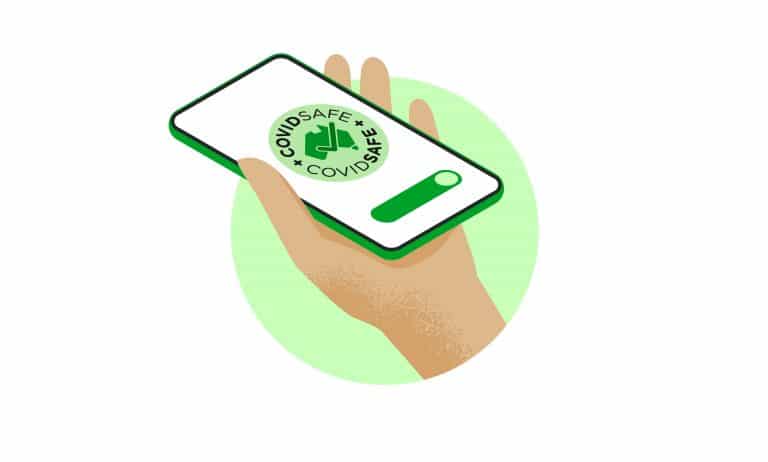
The app operates in the background on your phone as you go about your day. It uses Bluetooth to find other phones with the COVIDSafe app and records the date, time, distance and duration of contact. The app does not record your location. The app notes the device you have been within 1.5 metres of for 15 minutes or more.

This information is encrypted and stored in the app on your phone. Not even you can access it.

Contact information is only stored in the app for 21 days and after this time is automatically deleted. This period allows for the maximum 14-day incubation period of the virus, and the time it takes to confirm a positive test result.

How do I set up the app?

You can download it from app stores on Android and iOS. The app is free and downloading it is voluntary.

After downloading, you register by entering a name, phone number, postcode and age range.

When COVID-19 is no longer a risk, you will be prompted to delete the COVIDSafe app from your phone. This will delete all information stored in the app. 

How does COVIDSafe help protect the community?

If you are diagnosed with COVID-19, state and territory health officials will ask you for information about everyone you have been in contact with recently. If you have downloaded the app, you can choose to give the health officials access to the information on the app (which would have recorded who you had been in close contact with). This will enable the health officials to contact those people more quickly and prevent the spread of the virus.

Who will use the information?

Only the public health officials in your state or territory will have access to this information, and only so they can contact and let you know:

  • what to look out for
  • whether you need to quarantine
  • how, when and where to get tested, and
  • how you can protect yourself and your family and friends.

More information about COVID-19
It is important to stay informed through official sources. Visit australia.gov.au, call the National Coronavirus Helpline on 1800 020 080 or the translating and interpreting service on 131 450.

HELP STOP THE SPREAD

Australia’s response
Australia will be fighting the coronavirus (COVID-19) pandemic for at least another six months. We are in this for the long haul. The measures the Australian Government has implemented have reduced infections and are saving lives.

The Australian Government wants to help you stay up to date with the latest information.

Stay home
The positive and cooperative way communities are following social distancing requirements has helped reduce the number of new cases. Coronavirus spreads from person to person, usually by sneeze, cough or touch. By staying at least 1.5m from other people we give the virus nowhere to go – each one of us is helping stop the spread.

If we stop social distancing too soon, we will get new outbreaks. Infection rates are falling, but they haven’t stopped. Only leaving the house for essential activities, such as food shopping, medical care, exercise or work and education, protects you and others.

Religious activities
Our faith and religious beliefs are even more important at this time – but coronavirus means we’ve had to change the way we observe them. For now we need to practise our faith at home, on our own or with family who live with us. All religious services are now via streaming or broadcasting online, with strict social distancing in place for the people delivering the service. Bans remain for people attending services.

Advice and support
You don’t have to leave your home to see a doctor, psychologist or midwife. You can receive advice over the phone or online. Telehealth is covered by Medicare. Contact your health care professional about this service. You can also arrange to get medication delivered to your home by your pharmacist.

The restrictions are making some people more stressed, uncertain and exposed to the potential for domestic violence. Family and domestic violence shelters are essential services and remain open. If you are experiencing domestic violence, contact 1800RESPECT, MensLine on 1300 78 99 78 or Kids Helpline 1800 55 1800.

International students, tourists and working holiday visa holders
Australia has welcomed international students, tourists and working holiday visa holders. Many have chosen to return to their home countries in recent months. As the coronavirus pandemic continues, visitor visa holders and international students who cannot support themselves, should consider returning home so they can access the supports available in their home countries.

Visa holders and backpackers can help in the coronavirus crisis in industries like health, aged and disability care, agriculture and food processing. The Government has lifted restrictions on international nursing students so they’re able to work more hours and extended hours for international students working at supermarkets.

More information
As the spread of the coronavirus continues, it is important to stay informed through official sources. Stay up to date via australia.gov.au, call the National Coronavirus Helpline on 1800 020 080 or the translating and interpreting service on 131 450. There is also a free Australian Government app – search for ‘Coronavirus Australia’ on the Apple store or Google Play.