Bhartiya Samaj Hosts Successful “Health & Wellbeing for Senior Migrants” Workshop at APSQ Hall
Bhartiya Samaj, a prominent community organisation, hosted a groundbreaking “Health & Wellbeing for Senior Migrants” workshop at APSQ (Arya Pratinidhi Sabha of Queensland) Hall on March 3, 2024. Tailored for senior migrants, the event aimed to provide crucial insights into their health and wellbeing.
The workshop featured an engaging session with distinguished medical professionals as keynote speakers. Notable guests included Councillor Angela Owen, President of FICQ Mr Anoop Nannuru, and renowned doctors such as Dr Tarun Sehgal (Psychiatrist), Dr Raji Parangad (Audiologist), Dr Suhasini Singh (Cardiologist), Dr Rajesh Jawajiwar (General Physician), Dr Thuy Nguyen (Optometrist), and Dr Ram Mohan (ECCQ – Board Director, President of MCCQ & Advisory Board Member of Bhartiya Samaj).
With over 150 attendees, the Q&A segment provided a platform for the audience to interact with the experts, creating an informative and inclusive atmosphere.
In addition to the workshop, the event showcased a Curtain Raiser for Bhartiya Samaj’s next Mega Event, the “Empowering Migrants – Expo,” scheduled for August 4, 2024, at Brisbane City Hall. Distinguished guests, keynote speakers, and over 30 community organisation leaders previewed the upcoming Expo, set to be a monumental event in Queensland.
The “Empowering Migrants – Expo” aims to build an inclusive and thriving multicultural Australia. The event will feature educational pop-ups, cultural dance performances, migrants’ achievement awards, and various inter-community engagements. Beyond cultural integration, the Expo will provide essential information on educational pathways and job employment for migrant community members.
Bhartiya Samaj expresses gratitude to APSQ for hosting the workshop and looks forward to continued collaboration for future impactful events.
For more information, please contact: Mrs Manshu Sharma Public Relations Officer Bhartiya Samaj Media Relations Email: [email protected] Phone: 0415 684 027
About Bhartiya Samaj:
Bhartiya Samaj is a not for profit, non-political and non-religious charity incorporated in June 2022 in Australia. Our objective is to contribute to building a more inclusive Australia by undertaking activities that establish unity in the diversity amongst the migrants through; empowering with knowledge; building confident identities; and facilitating interactions with the larger community. Since 1995, the Bhartiya Samaj Charitable Trust has been actively helping the South Asian community in New Zealand and trying to improve the varied communities.
Bhartiya Samaj is a leading community organisation committed to fostering cultural integration and supporting the welfare of migrants in Australia. Through various initiatives, Bhartiya Samaj aims to create a vibrant and inclusive community for individuals of diverse backgrounds.
Asharam Bapu remains an influential spiritual guru, despite facing legal issues in supposedly fake cases
The content of this article is based on the life of H.H. Sant Shri Asharamji Bapu. Swami Vivekananda addressed the Parliament of the World’s Religions in Chicago in September 1893. A hundred years after him, Pujya Bapu Ji addressed the same Parliament in September 1993 and the whole parliament reverberated with the chanting of Hari Om. Both of these world-renowned spiritual leaders addressed the audience for much longer period than the given time and the audience were absorbed in listening to them.
To save the youth who are being ruined due to the lustful festivals like valentine’s day, in 2007 Pujya Bapu ji-initiated celebrations of Matri-Pitri Pujan Diwas (Parents worship day) on 14th February. Pujya Bapu ji felt that, due to the blind imitation of Western culture there has been a steep rise in the incidences of alcoholism, suicide, and other immoral activities, especially among the youth during the last week of December. To rescue the youth from this debauchery and denigration, Pujya Bapu ji came up with the idea of worshipping a sacred Tulsi plant (holy basil). So, with a view to awaken the cultural pride of the India and to save the countrymen from mental slavery, in 2014, he initiated celebration of Tulsi pujan on 25th December. Pujya Bapu Ji has always emphasized the necessity to follow rich Indian culture and always said that it is only the Indian culture and Sanatana dharma which can give the world happiness & peace.
Dear readers, India is a tapestry woven from many religious threads, where a rich variety of faiths coexist. The enduring influence of gurus and spiritual leaders on society, has been a longstanding phenomenon in Indian history. The spiritual landscape of India is vast and vibrant, with a multitude of gurus and spiritual leaders providing wisdom to individuals from all walks of life. Sadguru, for instance, has gained popularity among the educated and affluent segments of society, albeit facing challenges of regional and linguistic barriers. However, amidst these revered gurus, the case of Asharamji Bapu stands out, as he currently serves imprisonment while maintaining his innocence in a case deemed false by him. In this edition we are talking about the charismatic influence of Sant Asharamji Bapu.
Saint Shri Asaram Bapuji is in Jodhpur jail for the last 10 years and is challenging the decision of the sessions court in the presumed fake rape case in the High Court. Despite his incarceration, Asharamji Bapu’s social work and spiritual teachings continue to resonate deeply with a large segment of society, demonstrating his enduring connection with the masses. The increase in philanthropic activities managed by Shri Yoga Vedanta Sewa Samiti, an organisation founded by Asharamji Bapu, is very impressive and has continued to thrive. The network of his 400 plus ashrams, 1600 samitis,17000 plus Bal Sanskar Kendra and 40 plus Gurukuls continue to operate at full capacity maintaining robust plans to provide benefit to a wider section of society. Bapu has set a very strong mission for the welfare of humanity and all the followers are working dedicatedly. The complete network of ashram is at forefront in doing social welfare activities. Despite all the things going around, many new ashrams are built and news samitis are coming up to expand and strengthen the ashram’s social network.
It’s noteworthy that Asaramji Bapu’s influence and activities initiated by him transcend boundaries of cast, religion, and belief. The complete humankind finds solace in his teachings. His teachings offer a sense of calm, understanding, or guidance that many people find helpful in navigating life’s challenges. The starting of festivals like Parents’ Worship Day is a boon for the whole humanity. Bapu perceived that in the absence of proper awareness, the modern youth is being misled by the false hope of enjoyment. Ignoring the passion and importance of parents, the kids are behaving parents in a very unacceptable manner.
Under the guise of enjoyment and modernization, the youth are being exposed to obscenity and cultural degradation. This resulted in leading them to ignore and forget their cultural values and blindly adopting western culture. Contrary to promote the happiness and cultural prosperity, festivals like Valentine’s Day are contributing to many social and cultural challenges. This festival promotes lustful ambience resulting in increase in teenage pregnancies, depression, suicides, and cultural degradation. Compassion and family bonding are vanishing and being replaced by hatred and fake attitudes. The gap between the parents and kids is widening resulting in sending more and more parents to the old-age homes. Bapu’s aim was clear to protect the youth by instilling cultural values, strengthening parent-child relationship. His main goal is the welfare of society, irrespective of caste, creed, religion, or sect. Initiated in 2007, the celebration of Parents-Worship Day has now become a global trend leading to mass celebrations in schools, colleges, temples, halls and in parks. Many states in India have declared to celebrate Parents’’ Worship Day on 14th February.
The popularity of Bapu can be seen dominating on social media platforms. The fact is evident from the coverage of Bapu’s social welfare activities by many you tube channels, social activists, and social media influencers. The hashtag #AsharamjiBapuQuotes can be seen regularly trending. Many news channels lately have been seen featuring Bapu’s public welfare activities. Bapu was featured in national news for his dominance on the hearts of public. Zee 24 broadcast in its news bulletin how people are worshipping Bapu’s photos on the stages in large gatherings. Many religious and social organisations are coming forward to garner support for Asharamji Bapu. More and more religious gurus are telling people about the propaganda launched by the many media houses against Bapu. Sant Kaushik ji Maharaj recently dedicated his birthday celebrations on 26th March 2024 to Asharamji Bapu. He convened a summit of many other esteemed spiritual gurus and has brought together a host of spiritual minds to address and work on the task of release of Bapu who has been framed in false charges. The congregation was attended by nearly 10, 000 people and emphasizing the urgent need of Bapu’s release, Maharaj ji said that a task force needs to be formed urgently to start working on this project. Talking about the sufferings of great men like Mahavira Swami, Swami Dayanandaji, Swami Vivekanandaji and the likes, Kaushik ji Maharaj said, “look at the suffering of these great men, how much sufferings they have gone through? Could we be misled by someone? Bapu ji was and will remain a great man.” Concluding his speech, he said all the humanity will be indebted to Bapuji for the things he has done.
Bapu has perfectly presented the truth of the ancient scriptures relevant to modern society. He has reformed the lives of countless children, youths and poor tribals. Not only this, but even drunkards are also reformed. The lives of millions of people have been transformed by virtue of his satsang. Bapu’s love and concern for society is so deep that he brings joy to all while bearing afflictions himself for the last 5 decades. General public is getting connected to Bapu’s social welfare activities. Many people who were never initiated by him, visit ashrams to take benefit of satsang (spiritual discourse), bhajan, kirtan etc and express their hearty desire to take mantra initiation from Bapu.
Even as things change rapidly in India these days, the way politics and religion mix are still a big part of what makes Indian society progressing. The connection between how the country is run and the spiritual beliefs has always been important, and that’s still true today. In Indian history, the impact of spiritual gurus on social structures and shaping communities, has been a persistent force for millennia. People have been looking to spiritual leaders for guidance for ages.
To achieve true and all-round progress, the government must recognize the importance of social cohesion, echoing the spirit of ‘sabka saath, sabka vikas’ which emphasizes inclusive care and development for all. Recently in March 2024, thousands of followers of Asharamji Bapu held silent protests in all parts of India demanding the release and very fundamental right of medical treatment. Such mass silent protests and sudden surge in popularity and implementation of social welfare programs initiated by Bapu, are strong testaments to the unwavering trust and faith of not only Bapu’s followers but the common public as well. It is worth noting that with a large following of nearly 50 million devotees, Bapu’s influence over the masses cannot be underestimated, potentially impacting the outcomes of upcoming elections in India. Building trust and fostering collaboration requires acknowledging the voices and beliefs of the people. Dismissing their sentiments can lead to resistance when choices are presented to these people.
To listen Vedic/knowledge stories or to listen 24X7 live divine Satsang, please search “Mangalmay live” on google, visit http://www.ashram.org/live or search “THE SBM STUDIO” on you tube. By the Divine Inspiration of Bapu Ji, the weekly sessions of Bal Sanskar and yoga are held in Brisbane and in Sydney. These sessions are aimed for the character, mental, intellectual and spiritual development of the kids. Please read more about our Vedic culture in the next issue of “The Brisbane Indian Times.”
For more info about Bal Sanskar and yoga sessions, to get a free copy of monthly spiritual magazine Rishi-Prasad in your mailbox in Australia or to get free online subscription of Rishi -Prasad, please contact by email at [email protected] or by WhatsApp/phone to Shri Yoga Vedanta Sewa Samiti Au & NZ Inc. at +61 426 834 434 & +61 405 277 802
Mahashivratri – Great Night of Shiva – Gayatri Mandir, Boondall
By Dharmesh Prasad Mahadevya Namah
Mahashivratri at Gayatri Mandir was celebrated over three days from 7th Mar to 9th Mar, two days of program was conducted by Pujanye Pundit Sanat Pandey and the final day was conducted by Pujanye Pundit Bharat Solanki.
Pt Sanat Pandey expounded Shiva Katha and spoke about Maan aur Anthakarn ki shudi, to read or gain knowledge just by reading the Shastra is just merely an intellectual exercise without enhancing a change in one’s character, Gyan/knowledge requires purification of the heart. Here, Anthakarn refers to the inner medium of mind and intellect, to embark on the journey of spirituality one must work upon himself/herself to cultivate the virtues, habits, behaviours, and attitudes that purify one’s life and illuminate it with divine light of knowledge.
Mahashivratri was celebrated with great fervour, blissful rendition of shiva bhajan. On the final day, Shiv Abhishek was performed by devotees led by Pt Bharat Solanki, he explained the significance of Abhishek, it is an ancient Hindu practise of pouring water, milk, yoghurt, honey and ghee over the shiva Linga to honour Shiva and attain his blessings. Shiva Linga reminds us that Shiva is the source of creation, protection and destruction(dissolves) the universe, Shiva is omnipresent, omniscient and omnipotent.
Mahashivratri is celebration of many qualities and deeds of Shiva, there are many different schools of thought and approach. On a profound level, there are two aspects in this universe, Shiva and Shav. Shiv is consciousness/Chetna and Shav is corpse-dead body. Shiva pervades all living entity, micro and macro, Shiva is shakti/energy. On the Great Night of Shiva planet earth is aligned in such a way that celestial energy enhances each human being based on their personality, disposition, and temperament.
From a tantric Marg it is divine wedding, mythical union of Shiva and Parvati, essentially Parvati is seated in muladhar chakra and on the great night she travels upward transcending the chakras to unite with her beloved – Shiva whose seat is the crown chakra – sahasrara, the union symbolizes the harmonious balance of opposites, where Shiva, the ascetic and destroyer, finds completeness and companionship in Parvati, the embodiment of divine grace and love.
Management of Hindu Society of Qld takes this opportunity to thank all the Mandali’s for their sewa and look forward for their continued support in future programs.
Annual General Meeting was held at Gayatri Mandir on 26th November 2023, new incoming Management Committee led by President Mr Anit Ram were elected. President elect was away overseas, in his absence, Pt Sanat Pandey acknowledged and praised the previous President Dr Jai Ram for all is hard work and dedicated service to the Society and wished him well in his future endeavours.
The President has promised to continue the hard work and see the completion of the New Mandir project. Devotees will be updated on the new project and a public forum will take place to discuss the next stage of the project.
The following members were elected unopposed in the Management Committee for the year 2023/24 President – Mr Anit Ram Secretary Mrs Nirmala Shandil Treasurer – Mr Rajneel Raj Vice Presidents/PRO – Mrs Neelima Chand Vice President – Mr Om Deo Mishra Committee Members Ms Manju – Assistant Secretary Brijesh Singh – Assistant Treasurer Shalend Shandil – Assistant Treasurer Mrs Nirla Pandey – Events Coordinator Ms Reena Prasad – Assistant PRO Pt Sanat Pandey – Fundraising Leader
It is heartening to see Bal Vikash has started for the year, we had 15 students last year, however a few of the students are now in high school and we wish them all the best. Bal Vikash teacher Mrs Nirmala Shandil is continuing to provide sewa and she has vowed to carry on in the capacity as long as she can, that is a welcome gesture by the Management Committee and the parents.
It is also worthy to note and HSQ Management committee would like extend our great appreciation to one of our devotees Mr Rajnil Prasad who has helped HSQ to set up a CRM/Database, this has gone live from 15th Mar. Lot of work was involved to clean and update devotees’ data, past and present Committee members concerted effort made it possible. According to Mr Rajnil Prasad, “CRM/Database is essential tool in the modern world, it gives immediate visibility and access to our customers/devotees, the system is able to do AI, marketing, emails, domain hosting, Social Media and even live streaming”. In the coming months HSQ will be collecting/updating data in the CRM so that it become a central hub to send communication quicker and cheaper.
Hindu Society of Queensland has completed CRM/ database project, many devotees have moved and have new details as such we are updating membership details like mobile phone numbers, email address etc. This would assist us to communicate better and update members on latest developments at the mandir, please contact Secretary Mrs Nirmala Shandil on 0466 436 964 or Vice President/PRO Mrs Neelima Chand on 0405 409 156 or alternatively email us at [email protected]. Many Thanks for your support.
Upcoming Events Somwar Shiva Pooja every Monday: 6.30pm to 8.30pm Ramayan Recital every Tuesday: 7.00pm to 8.30pm
9 April to 17 April – Ram Naumi
Sundarkand and Triodashi is held every month at the mandir, for details and sponsorship please kindly visit our website and Facebook page. Regular updates will be sent to all devotees via Facebook and SMS.
Stay Connected with Hindu Society of Queensland Website www.hindusocietyqld.org.au Facebook: Hindu Society of Qld and email us on [email protected] Phone: (07) 38653164 Address: 178 Lyndhurst Rd, Boondall QLD
Jitendra Deo JP (Qual), passionately called JD, a first-generation Australian Migrant and proud descendant of the Indian Indentured labor scheme of the 1800’s. His firm belief in service to humanity inspired him to passionately serve in various organizations. His entrepreneurial skills and spiritual practices underpin his passion.
Jitendra is no stranger to the Australian Indian Diaspora and community at large. He as founder of the Deo Family Charitable Foundation is the regular host and corporate sponsor of numerous Public and benevolent community events including sole sponsor of the Fiji Independence Day Celebrations and Girmit Anniversary events, Fiji Brisbane Seven a-side, Sanatan Soccer to name a few.
A Director of 8 Companies, now including the JD Media the parent Company of Brisbane Indian Times and other cross-media entities.
Jitendra is no stranger either to cross-media sphere he has been a valued contributor and corporate advertiser to both regional and National Broadcasters and readership.
Jitendra, like many of you, is a humble person and not one to skite around with his long academic, business, community work and philanthropist CV.
Though fair to share with you readers at this juncture that Jitendra is a very religious person and carries an aura of unique entrepreneurship and creativity and commands a lot of respect from his business peers, Indian community and multicultural society in Queensland.
The Deo family group of Companies has placed the Deo family in good stead financially. Some with similar financial achievement would retreat away from the mainstream rigmarole of life and lock themselves in their good living and financial security rightly so enjoying the fruits of their hard work.
Not so for this vegetable and cane farmers son for the hunger pangs and near poverty does not haunt him anymore. These life experiences have been the mainstay of his motivation along life’s journey for him and the family to keep investing and believing in people.
Stay with us as we build this cross-media service under JD’s leadership to be a worthy contributor of news, information and entertainment.
—————————–
Shanjeshni DeoManaging Editor
Shanjeshni, the much-loved matriarch of the Deo family has stepped into this role with equal vigour as her husband Jitendra passionately has.
Shanjeshni has over the years amassed wide ranging first-hand life experiences from then a migrant humble young wife and mother and since climbing every rung of the commercial ladder to now literally in control of the JD group of Companies.
A trusted early childhood educator committed to holistic educational program design in this fragile field. Over the years ably transitioning to be proficient in research and data management, Corporate Finance planning and Business negotiations. She is very mindful of the male dominated ruthless and highly competitive National and Global Business spheres in Real Estate, Land Development, Green Power electrification planning and project management. Now in the Cross-Media field as supervising Editor and Executive.
All these challenges and responsibilities she takes on gracefully in her strides and like her husband Jitendra, her firm belief in service to humanity inspired her to passionately serve various organizations where her matriarchal feminine touch and deep spiritual knowledge and practices underpin her passion.
Devine providence – “everything happens for a reason, both the big things and the small things” as Shanjeshni in retrospect reminiscences her childhood days. She used to stand amazed by the magic of humble family transistor Radio beaming out her beautiful tunes and programs. She treasures those Radio experiences as her companion in those young days. Years later across the Pacific here in Brisbane she became a regular host of a segment in a Brisbane Hindi Radio Station while her Husband Jitendra a contributor writer to the Brisbane Indian Times.
For the last few years Shanjeshni, Jitendra, and the sons have hosted and solely finance multicultural events and dinner through their Family Foundation. All events beamed on Radio Broadcast and social media under Shanjeshni’s watchful eyes.
With the added academic brilliance of their 2 sons with their intergenerational thought, the family regularly engages in thought provoking conversation at the dinner and breakfast table on varied topics. Dissected with solemn reverence or with exuberance, depended on the nature of the topic, are headings like their faith, the evidence or lack thereof of portable Hindu culture in the new millennium across time, socio-political pathways, geography and multiracial society. Other topics like family and corporate Finance, Effects of Global Climate Change, even aeronautic doubt of man landing on the moon.
Shanjeshni is confident that with the selected contributors to the editorials now Brisbane Indian Times now enjoys, of course endearing tight-knit Deo family counsel, you the readers are assured of services of a very robust editorial team at Brisbane Indian Times.
——————————-
Deo young men – Ravneel Deo and Soneel Deo
Together, both the Deo young men, the apples of the parents’ eyes have stuck like glue as trusted ally to the parents Commercial and Benevolent family journey.
Ravneel Deo and Soneel Deo, Electrical Engineer/ Electrical Contractor and Property developer/Real Estate Professional respectively are alumni of the prestigious Queensland University of Technology, Brisbane, Australia.
Both are Directors of the Deo Family Charitable Foundation and key organisers of the Foundations cultural and anniversary events.
For their age, in comparison to many post-modern young Indians in Western Democracies, Ravneel and Soneel are very deeply religious taking pride in our Indian cultural activities specially music and are trained in varied musical instruments and are accomplished singers of bhajans and Hindi songs
To their credit, and brings pride of gratitude to their parents, both young men are very well versed with Vedic religion and know Sansakrit Havan Mantra and rituals.
Ravneel and Soneel brings these wealth of life experiences into the Editorial team as second generation Australian Indians, proud descendants of Girmityas living in the post-modern era in a Western Democracy.
Their combine youthful exuberance will obviously assist keep the Brisbane Indian Times on the pulse of society and uphold this tabloid as the only Newspaper that talks.
Their invaluable editorial contributions will definitely brings generational balance to the Brisbane Indian Times and other cross media entities.
Sadhguru: Devotion means taking your emotion to its highest pitch. It is held as the highest form of emotion because it is the least entangling – it is liberating. But if you have your own agendas, don’t waste your time on devotion because you cannot be a devotee.
Devotees are very beautiful people within themselves, but as far as the world is concerned, they are usually insane and unreasonable. Mirabai, Akka Mahadevi – these were very insane people; you would not be able to live with them. Once they are gone, you can worship them, but when they were here, nobody could understand what the hell was happening with them. For example, Mirabai saw herself as Krishna’s wife. She was always going into such states that it was like Krishna was with her – she danced with him, she loved and kissed him – she was so deeply involved. If you were her husband, are you going to appreciate her devotion? No. You will go insane with your own problems. Devotees are like that. They don’t belong to the logical dimension of life.
I am not saying devotion is completely absent in you. You have emotions, so there is naturally a certain amount of devotion. But if you want to fit into family and social situations and still pursue spirituality, you cannot choose just devotion as the path because you still want life to happen the way you want it. So you need to explore other ways.
You can also attain to the ultimate through your intelligence, through your physical action, or by transforming your inner energies. Every human being is a combination of these four – body, mind, emotion and energy. No human being is just one of these. It is best if there is a combination of these four so that you can still evolve without disturbing external realities. The compromise is that you go slowly.
If you are not bothered about what happens to your husband or wife or your corporate world or anything – if you just want to grow – only then devotion is a way to attain. It is one of the quickest ways. Devotion and family life, devotion and corporate world, devotion and anything will not go. Devotion means, everything else has to dissolve. That is why if you talk devotion, it is just deception. At some moments when your experience raises to a certain pitch, a moment of devotion may happen to you. Just wait for that moment. It is very wonderful. But don’t try to pursue devotion as your policy because there is a very deep deception in it.
Ranked amongst the fifty most influential people in India, Sadhguru is a yogi, mystic, visionary and a New York Times bestselling author Sadhguru has been conferred the Padma Vibhushan by the Government of India in 2017, the highest annual civilian award, accorded for exceptional and distinguished service.
Another glorious morning looking towards the Coral Sea – from the Crystalbrook Riley, Esplanade, in Cairns. Photo: Rama Gaind
Queensland is always calling because there’s so much to see and do there. It is heartening to learn of the concerted efforts undertaken by Tourism and Events Queensland (TEQ) to attract visitors from across the country, and to helping operators recover following recent weather events.
Private tour guide, Natalie Jones, ensured our travel experiences were unique from scenic, staying in plush hotels, partaking of delectable food and wine tastings to exciting land adventures and exhilarating on-water tour or two!
The ‘Unmissable Holiday Deals’ campaign launched in Australia and New Zealand ended last month and was designed to get travellers booking a trip, with more than 500 deals on offer across the state. As well, there are trade and aviation partnership campaigns with Air New Zealand, Helloworld, House of Travel, Bonza, Luxury Escapes, My Queensland, Webjet and Jetstar to support the campaign. Competition is ongoing for great deals.
North Queensland recovery activity continues with the ‘It’s tropical holiday season’ and ‘Tropical Dollars’ campaigns having launched to promote the Cairns & Great Barrier Reef region.
Glide just metres above the rainforest canopy in one of Skyrail Rainforest Cableway’s comfortable gondola cabins and see the spectacular Barron Gorge in its free-flowing glory. Photo: Rama Gaind.
Marketing activities to promote Townsville and the Whitsundays have also got underway to help attract visitors back following recent climate impacts. Tour operators are relieved to realise that high value tourism sites are looking as fabulous as ever. In Port Douglas, day trips have recommenced to Opal Reef, while team members continue work on the critical coral nurture program in between showing off their underwater spectacle. Another neighbouring operator has reinstated tours filling some boats with curious reef trippers while also turning into a “floating ferry” service transferring travellers between Cairns and Port Douglas for a super scenic journey.
In Cairns, operators have reinstated their reef tour schedules, while approximately 90 minutes south of Cairns operators are back to taking intrepid snorkellers to beautiful Beaver Cay, where pink, purple and mauve soft corals pop.
Mark Olsen of Tourism Tropical North Queensland has some reassuring news. “While certain areas are grappling with the aftermath, Cairns is ready to receive tourists and provide a warm welcome to those seeking an unforgettable holiday experience.”
Tourism in Cairns & Great Barrier Reef has bounced back with operators in the tropics urging travellers not to cancel their getaways and simply “turning up” for a north Queensland holiday. Visitors can help “immensely” to boost the region’s rebound efforts.
Take to the skies for a bird’s-eye view of the tropics. Nature lovers know that after rain the region comes to life with stunning greenery and breathtaking waterfalls. We once again soared above an ancient canopy and saw the spectacular Barron Gorge in its free-flowing glory on the Skyrail Rainforest Cableway.
The Kuranda Scenic Railway is the original scenic rail journey to Kuranda. This spectacular experience travels over bridges and through tunnels hand-made by north Queensland’s pioneers over 120 years ago. Traversing the World Heritage-listed rainforest of the Barron Gorge National Park, it is considered one of the world’s great railway journeys.
Explore Kuranda, the village in the rainforest, just 25 kilometres northwest of Cairns, a charming mix of unusual surprises, colourful characters and natural beauty, perched at the top of a rainforest clad mountain. Kuranda is also home to the world’s first Cassowary Art Trail. If you are interested in wildlife, you can’t go past Birdworld Kuranda which is home to over 350 birds. Next door is Kuranda Koala Gardens, one of the few places you can cuddle a koala.
Staying at the Crystalbrook Riley in the heart of Cairns was sensational. It’s a hotel full of little luxuries, from faultless service to an outdoor swimming pool that overlooks the Coral Sea … and the Pacific Ocean is in the distance.
An ultimate great escape!
The baton has changed hands at the helm of leadership in the only Newspaper that talks. The Brisbane Indian Times has been the hallmark of a beloved community Newspaper highlighting real issues for real people in a real world. In a courteous and gentlemen arrangement, outgoing Publisher and widely respected and renowned community champion Mr. Umesh Chandra OAM and his family gracefully handed over the reins to Mr. Jitendra Deo and his family.
Mr. Chandra and Mr. Deo and their respective families are no strangers to each other. Both, first generation Australian Indian migrants with eternal mutual bonds as descendants of indentured workers the then British Empire colonial era shipped from beloved motherland India to a land unknown and unfamiliar to their honorable forebears.
Migrating first to Australia in the 1980’s Umesh and Usha with then young family from humble beginnings while building a Real Estate and other Businesses did not shun aware from their social responsibility to the multicultural diverse community, they now call home.
Hence the birth of the now widely read Brisbane Indian Times and later the inauguration of Australia Indian Radio becoming vehicles to express their commitment complimenting their inherent engagement in varied community event and functions.
This exemplary community dedication resulted in the Australia Government’s citation and worthy recognition in bestowing the prestigious OAM to Umesh Chandra, a testament to Umesh’s and of his family unprecedented achievements in service to the Australian multi-cultural community.
These are the proud foundation laid by Mr. Chandra and now the opportunity for Mr. Jitendra Deo and family to build upon and to propel these “Indian” issues in the national and international arena must be maintained, more so with passion and vigor.
To even suggest that the charismatic Mr. Chandra will be taking a back-seat role in news and feature aspects of the “new” Brisbane Indian Times would be unthinkable, like fish out of water. The traditional and faithful readers and supporters are assured that Mr. Chandra will be around for a while in this transition period.
The people’s voice: your voice on issues that matter to you must still be heard and reverberate into to the ears of the Powers that be in municipal, State, National and Global Leaders. We are a “Forth Estate”!!
Mr. Jitendra Deo has bravely taken on the baton as the Publisher and CEO of The Brisbane Indian Times. The soft-spoken former High School Teacher and now successful Electrical contractor and Property Developer and Philanthropist, in paying tribute to Mr. Chandra said “As a businessman and community leader myself, I have been observing Umesh and Usha’s community spirit and dedication for a while now and I learned immensely from their entrepreneurship as first-generation Migrants and their renown services to the community.
Mr. Jitendra added, “I hardly make wrong calculations in my work in the highly charged field as an electrical contractor or Developer, in fact I hardly do, if it means putting my name on any venture. Which I now have the honor to take on the baton and through God’s grace fill this shoe as Publisher of The Brisbane Indian Times.
I thank Umesh ji for laying a solid foundation as a pioneer in Indian cross-media in Australia.
“I am at peace that The Brisbane Indian Times is in the good hands of the Deo family” Mr. Umesh reminisced in contentment.
Put on your readers seat belt as The Brisbane Indian Times sours into new heights with Mr. Jitendra Deo on the helm of leadership as Publisher and CEO supported by a dynamic Editorial team and contributors headed by the Managing Editor Mrs. Shanjeshni Deo.
Change of Guards at Queensland Multicultural Council Inc
On 8th February, Queensland Multicultural Council Inc. held its AGM at the Social Policy Group premises in Gotha Street Fortitude Valley. Outgoing president Janeth Deen OAM requested Umesh Chandra OAM (trustee and Founder member) to conduct the proceedings of the AGM.
Following the regular business of the AGM, the returning officer, Lisa Ward of ECCQ, conducted the elections. The following officers were duly installed after the swearing-in ceremony: – President, Mok Sandhu – Vice President, Gail Ker OAM – Secretary, Sasha Marin – Assistant Secretary, Irene Bayldon – Treasurer, Pradip Gorasia – Assistant Treasurer, Hernandez Nayda – Committee Member, Usha Chandra – Committee Member, Janeth Deen OAM
SANT NIRANKARI MISSION ACTIVELY PARTICIPATES IN CLEAN UP AUSTRALIA
More than 21 million Aussies have participated in Clean Up Australia activities and events over the past three decades.
Over that time, Clean Up Australia has evolved to provide practical solutions to help all Australians live more sustainably every day of the year and emerged as one of the country’s most recognised, credible, and trusted environmental charities.
Today, their focus is as much on preventing rubbish from entering our environment as it is on removing what has already accumulated.
What was started over thirty years ago by an “average Australian” who had a simple idea to make a difference in his backyard has become the nation’s largest community-based environmental event.
Of course, Australia’s environmental challenges can’t be solved in just one day, so Clean Up Australia works with the community, government, and businesses to provide practical solutions to help us all live more sustainably every day of the year.
One such local organisation is the Sant Nirankari group. This progressive group is making a difference. Around one hundred-plus people gathered for this cleanup drive together. Everyone was quite energetic and optimistic & came with full enthusiasm for this noble cause.
Thanksgiving is not good enough for all the support from the Local Council, Brisbane Indian Times, Australian Indian Radio & other local community people.
Clean Up Australia inspires and mobilises communities to improve and conserve our environment, eliminate litter and end waste.
Mata Sudiksha Ji, the current spiritual leader of the Sant Nirankari Mission, heads the mission. She is the daughter of Baba Hardev Singh and was declared the sixth Satguru in 2018.
She continues the work of her predecessors and emphasises the importance of spiritual awareness, social harmony, and
selfless service. She will be in Brisbane on the
9th of April. The general public is invited to her discourse at Sunpac on the 9th of April.
In the new year, we welcomed a new governing committee at Gayatri Mandir, led by President Anit Ram and a team of 12 members. The committee members’ expertise, deep knowledge and commitment have been seen through three successful events this year. Once again, the Moreton Bay Ramayan Mandali set the tone for a prosperous year with Hanuman Chalisa Recital. We are thankful to Pravind Prakash and his team for their ongoing support. The committee has vowed to ensure that all the events and programs continue with similar enthusiasm and vigour. The Hindu Society of Queensland celebrated its anniversary on 26 January of its establishment and community accomplishment. The committee members (past and present), devotees and volunteers honoured the occasion with their presence. The event commenced with a Pooja led by Pundit Sanat Pandeyji and a havan sponsored by community members. Punditji also sheds some light on Gayatri Mandir’s 30-plus-year journey. Our newly elected president, Anit Ram, delivered a special message to the community outlining our Bracken Ridge Project Development and our vision for the years ahead. Gayatri Mandir resonated with chants and praises of “Jai Shree Ram” as hundreds of devotees arrived for the darshan of Shree Ram Lalla live telecast. The public mood was a smooth blend of devotion and festive fervour. Thousands of diyas were lit, and the atmosphere was like embracing Diwali-Once more. We thank The Hindu Swayam Sevak Sangh Qld Vibhag for their inspiration and organisation.
We thank everyone who has been part of this journey and look forward to your ongoing support. As we enter a new year with several celebrations at Gayatri Mandir, please note that all upcoming celebration details are available on our Facebook Page. We humbly request that you bless us with your presence on all our auspicious celebrations. For All bookings and enquiries, please visit our website or contact Nirla Pandey ( Events Organiser). Please visit our website, www.hindusocietyqld.org.au; our email address is [email protected]. We have feedback and a Contact Us page; feel free to provide feedback, and we will gladly oblige!
Upcoming Events
Shiv Chalisa every Monday: 6.30 pm to 8.30 pm
Ramayan Recital every Tuesday: 7.00 pm to 8.30 pm
7 March to 9 March: Mahashivratri
23 March – Sundarkand programs begin at 6.30 pm followed by Prasad and Mahaprasad
26 March: Holi
9 April to 17 April: Ram Naumi
Sundarkand and Trayodashi are held monthly at the mandir; for details and sponsorship, please visit our website and Facebook page. Regular updates will be sent to all devotees via Facebook and SMS messages.





 With over 150 attendees, the Q&A segment provided a platform for the audience to interact with the experts, creating an informative and inclusive atmosphere.
 The “Empowering Migrants – Expo” aims to build an inclusive and thriving multicultural Australia. The event will feature educational pop-ups, cultural dance performances, migrants’ achievement awards, and various inter-community engagements. Beyond cultural integration, the Expo will provide essential information on educational pathways and job employment for migrant community members.
 The content of this article is based on the life of H.H. Sant Shri Asharamji Bapu. Swami Vivekananda addressed the Parliament of the World’s Religions in Chicago in September 1893. A hundred years after him, Pujya Bapu Ji addressed the same Parliament in September 1993 and the whole parliament reverberated with the chanting of Hari Om. Both of these world-renowned spiritual leaders addressed the audience for much longer period than the given time and the audience were absorbed in listening to them.
 Dear readers, India is a tapestry woven from many religious threads, where a rich variety of faiths coexist. The enduring influence of gurus and spiritual leaders on society, has been a longstanding phenomenon in Indian history. The spiritual landscape of India is vast and vibrant, with a multitude of gurus and spiritual leaders providing wisdom to individuals from all walks of life. Sadguru, for instance, has gained popularity among the educated and affluent segments of society, albeit facing challenges of regional and linguistic barriers. However, amidst these revered gurus, the case of Asharamji Bapu stands out, as he currently serves imprisonment while maintaining his innocence in a case deemed false by him. In this edition we are talking about the charismatic influence of Sant Asharamji Bapu.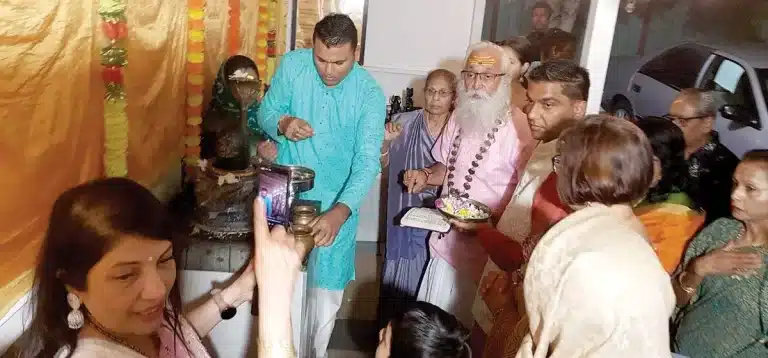

 Mahashivratri was celebrated with great fervour, blissful rendition of shiva bhajan. On the final day, Shiv Abhishek was performed by devotees led by Pt Bharat Solanki, he explained the significance of Abhishek, it is an ancient Hindu practise of pouring water, milk, yoghurt, honey and ghee over the shiva Linga to honour Shiva and attain his blessings. Shiva Linga reminds us that Shiva is the source of creation, protection and destruction(dissolves) the universe, Shiva is omnipresent, omniscient and omnipotent.

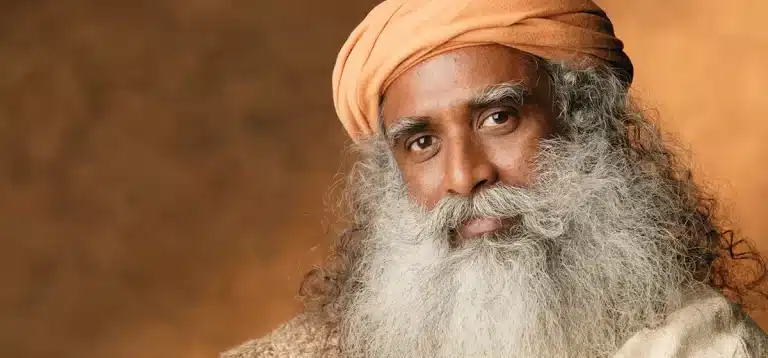
 Sadhguru: Devotion means taking your emotion to its highest pitch. It is held as the highest form of emotion because it is the least entangling – it is liberating. But if you have your own agendas, don’t waste your time on devotion because you cannot be a devotee.









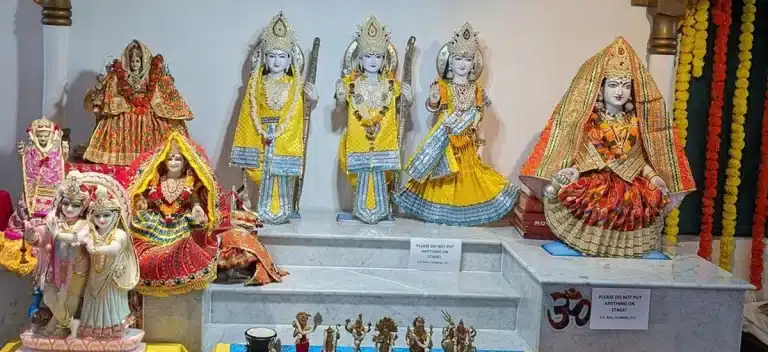
 In the new year, we welcomed a new governing committee at Gayatri Mandir, led by President Anit Ram and a team of 12 members. The committee members’ expertise, deep knowledge and commitment have been seen through three successful events this year. Once again, the Moreton Bay Ramayan Mandali set the tone for a prosperous year with Hanuman Chalisa Recital. We are thankful to Pravind Prakash and his team for their ongoing support. The committee has vowed to ensure that all the events and programs continue with similar enthusiasm and vigour.
 The Hindu Society of Queensland celebrated its anniversary on 26 January of its establishment and community accomplishment. The committee members (past and present), devotees and volunteers honoured the occasion with their presence. The event commenced with a Pooja led by Pundit Sanat Pandeyji and a havan sponsored by community members. Punditji also sheds some light on Gayatri Mandir’s 30-plus-year journey. Our newly elected president, Anit Ram, delivered a special message to the community outlining our Bracken Ridge Project Development and our vision for the years ahead.
 Gayatri Mandir resonated with chants and praises of “Jai Shree Ram” as hundreds of devotees arrived for the darshan of Shree Ram Lalla live telecast. The public mood was a smooth blend of devotion and festive fervour. Thousands of diyas were lit, and the atmosphere was like embracing Diwali-Once more. We thank The Hindu Swayam Sevak Sangh Qld Vibhag for their inspiration and organisation.
 For All bookings and enquiries, please visit our website or contact Nirla Pandey ( Events Organiser). Please visit our website,