

Nineteen of Fiji’s 44 Water Sources Now Critical as Drought Deepens
More than 24,000 people are living with intermittent supply or water carting as a very strong El Niño grips the country.
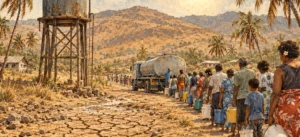
Fiji’s water security is deteriorating week by week as a severe El Niño drought tightens its grip on the country, with almost half of the Water Authority of Fiji’s operational sources now classified as critical. In a ministerial statement to Parliament on the El Niño outlook, the Minister for Infrastructure, Ro Filipe Tuisawau, revealed that 19 of the authority’s 44 operational water sources were in the critical category as of 1 November, up from just seven on 15 September.
The decline has been rapid. In the space of seven weeks, the number of sources at normal levels fell from 31 to 18, while those approaching critical rose to seven. In the Western Division, September delivered just 10.5 millimetres of rain, and October rainfall ranged from zero to six millimetres. In the Northern Division, rainfall between July and September was around 36 per cent of the long-term average.
The human cost is already visible. Around 24,600 people across Fiji are affected by intermittent supply or are relying on water carting: 18,798 in the Western Region, 3,510 in the Northern Region and 2,276 in the Central Eastern Region.
“The great majority of the Water Authority’s customers continue to receive supply,” Tuisawau told Parliament. “But the margin is thin, and it is narrowing every week the rain stays away.”
The forecast offers little comfort. The Fiji Meteorological Service says there is a very high chance of very dry conditions between October and December, and expects El Niño to remain very strong into early 2027.
Prime Minister Sitiveni Rabuka has acknowledged the scale of the drought as the government battles worsening water shortages, and the effects are reaching into daily life well beyond the tap. In Suva, Diwali fireworks have been restricted to the hours between 5pm and midnight, a small but telling sign of a nation on alert.
For rural and maritime communities, and for the sugarcane belts of the west where generations of Indo-Fijian families farm, prolonged dry spells carry a heavier weight: withered crops, stressed livestock and the slow erosion of incomes that depend on the seasons.
Water carting operations are now a lifeline for thousands, and authorities are urging households to store water responsibly, repair leaks promptly and treat every saved litre as valuable.
The Water Authority is monitoring 16 water sources in the Northern Region, 13 in the Western Region and 15 in the Central Eastern Region as the dry season deepens.
The broader warning is the one Fiji has carried into every climate forum: a nation of more than 300 islands, with communities scattered across low-lying coastlines, lives closer to the edge of water insecurity than its postcard image suggests.
El Niño events have always been part of life in the Pacific. What is changing is their severity, and the speed with which a dry spell becomes a national emergency.
For now, the water trucks keep rolling, the sky stays stubbornly clear, and 24,600 Fijians count every drop, hoping the rains return before the thin margin Tuisawau spoke of disappears altogether.
