

When Australian Regulators Answer to Foreign Parliaments
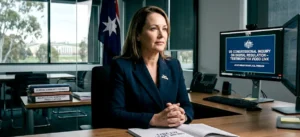
There are moments when a seemingly technical detail exposes a much deeper fault line in government. The demand that Australia’s e-Safety Commissioner, Julie Inman Grant, appear before a United States House committee is one such moment. It received passing attention and no domestic analysis despite the serious constitutional issues it creates. The Office of the e-Safety Commissioner is an agency of the Australian Government. The Commissioner’s functions are set out in the Online Safety Act 2021, including promoting the online safety of children. To that end, the Commissioner has the power to do all things necessary or convenient to be done for the performance of that and other functions. In addition, the Minister for Communications may issue directions to the Commissioner regarding his or her performance of the functions and exercise of powers.
Ordinarily, the congressional demand would not have been served in Australia. The US Congress has no jurisdiction to compel foreign officials to appear before it. Sovereign immunity, territorial limits and constitutional design all point in the same direction: Australia’s regulators answer to Australian ministers and, ultimately, the Australian Parliament.
But this case is different. The current e-Safety Commissioner is a dual Australian and US citizen.This single fact not only alters the legal landscape entirely but strikes at the core of national sovereignty and national security. While the US Congress is unable to compel Australia or Australians, it can compel one of its own citizens. Committee chairman Jim Jordan stated in his demand “that Congress has broad authority to gather information from U.S. persons”. Citing the US Supreme Court, Mr Jordan continued that “courts have routinely found that U.S. citizens living abroad are within the jurisdiction of the U.S. government and can be compelled to provide testimony”.
All acts and accountability of the Commissioner under the Act, are done in his or her official capacity as Commissioner, not in his or her personal capacity. Settled Australian law declares this to be the case.
The statutory powers are exercised by virtue of office, not by virtue of or reference to the identity of the holder.In the case of Ms Grant, the mechanism of accountability is no longer institutional; it is personal. And in that shift lies a profound constitutional problem.
While Australia is a nation of immigrants (seven prime ministers were born outside Australia), by appointing a foreign citizen to exercise Australian sovereign power, the Commonwealth has inadvertently imported foreign parliamentary oversight into its own executive branch. Ms Grant is not merely a regulator enforcing Australian law; she is also a person clearly capable of at least being pursued, if not being subpoenaed, examined and sanctioned by a foreign legislature. Accountability is no longer vertically aligned within Australia’s constitutional system. It is pulled sideways, into another.
This is not a question of loyalty or good faith. It is a question of structure. Accountability is not neutral. It always belongs somewhere. When an Australian official can be compelled to answer to a foreign parliament, Australian sovereignty is no longer complete, even if nothing improper is said or done. The possibility of a dual-citizen ASIO director-general is no longer a hypothetical. The current Victorian Police Commissioner, after all, is a New Zealand citizen.
The implications are serious. Senior regulators hold sensitive information, shape enforcement priorities, and operate in domains that intersect with national security, global technology markets, and intelligence-adjacent policy spaces. The risk is not espionage.
It is lawful pressure — exerted through hearings, questioning, reputational leverage, and the implicit threat of legal or political sanction under foreign law. There is also the question of institutional appearance: is the senior civil servant enforcing their statute with an even hand, or acting under the invisible thumb of or perceived fear of repercussions from a foreign power?
Australia is not unfamiliar with concerns about divided allegiance. In 2017-18, the High Court spectacularly disqualified members of Parliament who held dual citizenship. Yet no equivalent disqualification applies to senior executive appointments wielding vast regulatory power. That anomaly should tremendously trouble us. If divided allegiance is unacceptable in the legislature, why is it ignored in the highest levels of the civil service?
The issue is larger than this Commissioner, and larger than relations with the United States. The purpose of Mr Jordan’s demand is irrelevant. His argument that Ms Grant is “willing and able to return to the United States when it suits [her]” is manifestly frivolous. Instead, attention should urgently be fastened upon how modern states exercise sovereignty in an era of migration, transnational citizenship, global talent and borderless regulation. Appointments of dual citizens to the upper civil service now carry constitutional consequences. It must be arrested.
—Nilay B. Patel is a lawyer based in Melbourne
