

Fiji’s Leadership Takes 20% Pay Cut Amidst Economic Headwinds
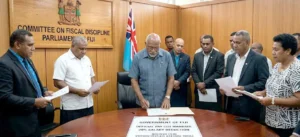
In a bold move that has resonated across the Pacific and through the halls of the Fijian diaspora in Australia, Prime Minister Sitiveni Rabuka has announced a significant austerity measure: a 20% salary reduction for all Government Ministers and Members of Parliament. This decisive “lead by example” approach comes as Fiji navigates a complex economic landscape defined by global inflationary pressures and the high costs of post-cyclone reconstruction.
A Mandate for Fiscal Discipline
The pay cut is the centrepiece of a broader, more aggressive austerity package aimed at stabilizing the national budget. Prime Minister Rabuka, speaking from Suva, emphasized that the burden of economic recovery should not fall solely on the shoulders of the taxpayers. “If we are to ask our civil servants and our citizens to be prudent, the leadership must be the first to tighten its belt,” the Prime Minister stated.
Beyond the immediate salary reductions, the government has implemented a strict freeze on new civil service hiring and an absolute ban on non-essential overseas travel for government officials. This shift marks a departure from previous administrative styles, signalling a new era of fiscal transparency and restraint in the “Blue Pacific.”
Strategic Reallocation of Resources
The savings generated from these cuts are not merely symbolic. The government intends to redirect these funds into two critical areas: frontline disaster recovery following Tropical Cyclone Vaianu and the strengthening of Fiji’s social safety nets.
With global fuel prices remaining volatile and shipping costs impacting the price of basic goods, the austerity measures are designed to provide the government with the “fiscal breathing room” needed to intervene in the market and subsidize essential commodities. For the average Fijian family, this top-down sacrifice is a welcome sign of accountability.
The View from the Diaspora
For the Indian Fijian community in Australia, the news has sparked intensive discussion. Many in the diaspora, particularly in the business-heavy corridors of Sydney and Brisbane, view the move as a necessary step to restore investor confidence. A leaner, more disciplined government is often seen as a prerequisite for the kind of economic stability that encourages foreign direct investment and remittances.
Community leaders in Australia have noted that this move mirrors some of the broader global trends in governance, where transparency and “servant leadership” are becoming the benchmark for success. As Fiji continues its recovery, the diaspora remains a vital partner, and the government’s commitment to fiscal responsibility is likely to strengthen those bilateral ties.
A New Chapter in Pacific Governance
As Fiji moves forward, the success of this austerity package will be closely monitored by regional neighbours and international financial institutions alike. By choosing to reduce their own pay checks, the Rabuka administration has sent a powerful message: that the “Bula Spirit” is not just about hospitality, but about mutual sacrifice and shared resilience.
This development stands as a reminder of the evolving political maturity in the region.
Fiji is proving that even in the face of significant economic headwinds, a clear vision and a commitment to leading by example can pave the way for a more stable and prosperous future.
