
LATEST ARTICLES

Brisbane Comes Alive with Colours and Culture at Basava Jayanthi 2025

Brisbane Comes Alive with Colours and Culture at Basava Jayanthi 2025

RCBI Delivers on Promise: 5 Dialysis Machines to Ba Kidney Dialysis Centre (BKDC) in Lautoka awaiting installationBrisbane, Australia – 23 May 2025: The vibrant multicultural city of Brisbane witnessed a heartwarming celebration of Basava Jayanthi 2025, hosted by Basava Samiti of Asia Pacific (BSAPAC). The annual event commemorates the birth anniversary of Guru Basava, the 12th-century social reformer and spiritual visionary who pioneered inclusive social practices and ethical living, centuries ahead of his time.

Held at a packed venue in Coopers Plains, the celebration showcased a spectacular blend of devotion, knowledge, and community spirit. It was a multicultural confluence of the community dressed in traditional attire, children and adults alike participated in a lively procession of Vachana recitations, songs, and interactive discussions—highlighting the adoption of Guru Basava’s values that centre on equality, compassion, and rational thought.

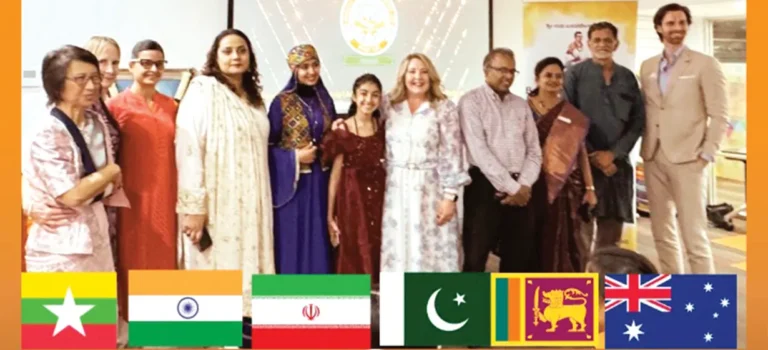
RCBI Delivers on Promise: 5 Dialysis Machines to Ba Kidney Dialysis Centre (BKDC) in Lautoka awaiting installationThe program opened by lighting the lamp followed by the key note address was delivered by Mrs Karen Lay-Brew, the Board Member of Energy Queensland, Strategic Advisor to Australian Government. Karen migrated with family at the age of 11 from Mynamar provided an inspiring speech of the hardships of migrants and their journey to success, happiness and peace while navigating through the value system of life. Her speech was inspirational and touched the hearts of young and old.

Mrs. Margie Nightingale, Member of Inala, graced the audience and was impressed to see the community unity threaded with the values. Her encouraging best wishes meant to a lot to the growing community and the charity.

The key highlight of the discussion was the interactive introspection from the audience representing different ethnicities in the community namely, Sri Lanka, multi cultural diaspora of India, Pakistan, Iran, Burma, local Australians sharing their journey of life and the adoption of values. The Distinguished speakers, including local leaders and community scholars, praised BSAPAC’s commitment to Engage, Educate, Empower, and Enlighten across the Asia Pacific. / Guru Basava vegetarian, non-alcoholic community meal (Anna Dasoha), symbolising Basava’s vision of social equality through shared values.

The event also honored young children for their beautiful singing from the Sargam Academy of Music. We thank Mr. Mithun Chakraborthy and Mrs. Bonita Chakraborthy for presenting the wonderful music to the audience. Mr. Linden May, Ex-Board Director of the Charity awarded all the children with the medals for their fantastic participation.

RCBI Delivers on Promise: 5 Dialysis Machines to Ba Kidney Dialysis Centre (BKDC) in Lautoka awaiting installationOther notable programs included the Australian national anthem via the violin, presentation of the Guru Basava Dashboard Idol – a spiritually uplifting artefact designed for the car, symbolising values of truth, work, and devotion, ideal for daily travel inspiration by the 12 year old Master Hanish Banavar. BSAPAC will promote these dashboard idols that can be used in the cars via their shopping carts.

Mrs. Soniya Sharma, from the ANZ Bank Mt Ommaney also spoke to the team regarding the offering of the Home Loan Introductory Program.

Other notable organisers were Mrs. Girija Karekal, Executive Director; Mr. Stephen Hodgson, CEO, Mrs. Nivedita H E lead coordinator of Brisbane Chapter. BSAPAC offers gratitude for all the volunteers and children who made this an intimate evening and strengthened the values through multicultural confluence. “Guru Basava’s message is more relevant today than ever. His vision of a just society is what drives our charity’s work in over eight locations across Australia and New Zealand.”

Basava Jayanthi 2025 in Brisbane stood not only as a celebration of history but also a call to action for unity, service, and purposeful living in our contemporary world.
Learn more at https://basavasamitiapac.org
Follow us: #BasavaJayanthi #BSAPAC #GuruBasava #STEMWithValues #EngageEducate
EmpowerEnlighten
 

Becoming Available to Grace

Becoming Available to Grace

Question: Sometimes or in some places, I find it is very easy to access or feel Grace. At other times, it is quite difficult to be connected. How do I always stay connected to Grace?
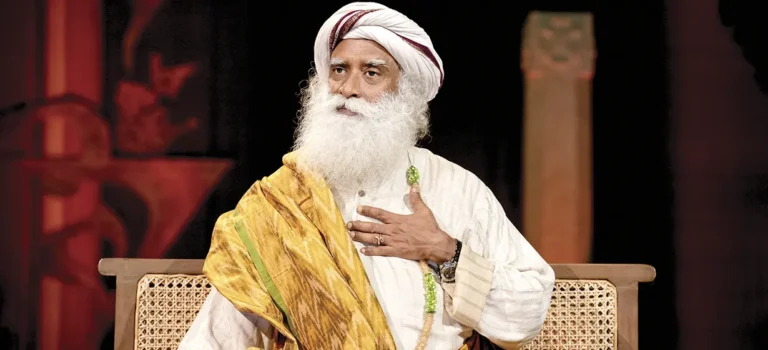
Sadhguru: Grace is not something that you have to think about or talk about. You can be unconscious of Grace only if you are too full of yourself. When we say Grace, we are looking at that which is the basis of everything because you do not know how this solar system is held in place.

You do not know how the whole universe is held in place. You do not even know how you happened. You don’t really know how so many cells are staying together and making your life happen. If you knew, you would be able to create life right now. When there is so much that you do not know and everything is still happening great, it is obviously not an accident.

Whatever is making all this happen, we call that energy or force as Grace. How do you make yourself available to this. If you have a stuffy nose, the flower means nothing to you. If you are blind, light means nothing to you. If you are insensitive, nothing means anything to you. So it is a question of becoming sensitive.

Most people are ego-sensitive, they are not life sensitive. With a lot people, you have to be cautious about what to say and not say because they are horribly ego-sensitive. When the situations around them are up, they go up. When the situations around them go down, they go down. They have created an illusion of falling and rising within themselves. This is a very bad game. You must be disillusioned soon.

If you are truly, absolutely disillusioned, you will always be available to Grace. If you have no illusions of your own, you will wonder about everything. How can you not wonder about everything? How can you not wonder about your very existence? If you have no conclusions in your mind about anything, you will be soaked in Grace. Even now you are soaked in Grace, but you cannot enjoy it unless you are conscious. Grace is still working for you, but you cannot fully benefit from it unless you are conscious.

It is a medically established fact that if two people eat the same food, both of them will not get the same nourishment. It depends on your ability to draw sustenance from that. Similarly, all of us are in Grace, but it is a question of developing the capability to draw sustenance from that, so that this life becomes an expression of that Grace.
Unfortunately, people take in fantastic things into themselves, turn it into nasty nonsense and let it out. But look at the tree: you give it filth and it gives out fragrance. If you learn the way of the tree, you will exude Grace.

Ranked amongst the fifty most influential people in India, Sadhguru is a Yogi, mystic, visionary and a New York Times bestselling author. Sadhguru has been conferred the Padma Vibhushan by the Government of India in 2017, the highest annual civilian award, accorded for exceptional and distinguished service. He is also the founder of the world’s largest people’s movement, Conscious Planet – Save Soil, which has touched over 4 billion people.

Honouring the Pillars of Our Community: International Women’s Day with the Indian Senior Citizens Association

Honouring the Pillars of Our Community: International Women’s Day with the Indian Senior Citizens Association

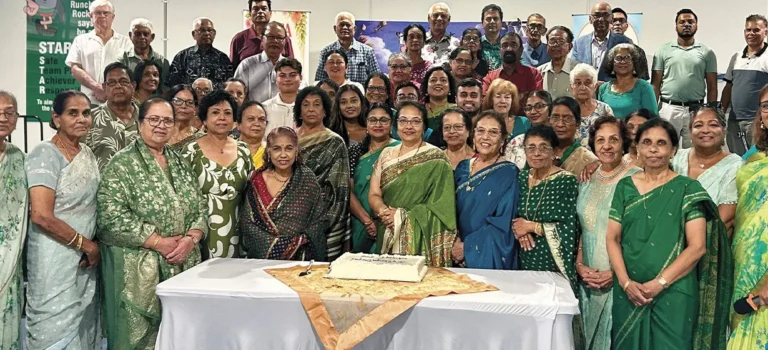
The spirit of resilience and the warmth of community were on full display as the Indian Senior Citizens Association (ISCA) gathered to celebrate International Women’s Day. In a room filled with the wisdom of our elders and the energy of a new generation, the event served as a powerful reminder that the journey of women’s empowerment is a baton passed from one era to the next.
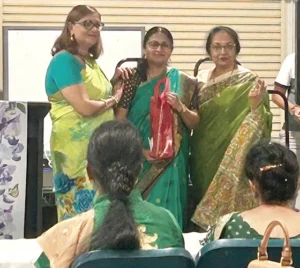
The celebration was graced by the presence of James Martin MP, Member for Stretton, who acknowledged the vital role Indian Australian women play in the social and economic fabric of his electorate. However, it was the stirring keynote address by Chief Guest Shanjeshni Deo that truly captured the heart of the occasion.

A Voice of Inspiration: Shanjeshni Deo’s Address

Shanjeshni Deo delivered a speech that was as much a tribute to the past as it was a call to action for the future. Drawing on the theme of “Inspire Inclusion,” she spoke passionately about the “invisible labour” of the women in the room, the mothers and grandmothers who migrated to Australia, often sacrificing their own professional dreams to ensure their children had every opportunity.
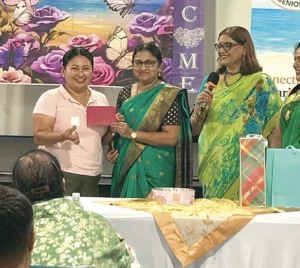
“Empowerment isn’t just about the titles we hold in the boardroom,” Shanjeshni remarked. “It is about the courage to lead within our families, the strength to preserve our culture in a new land, and the wisdom to know that our voices matter.” Her words resonated deeply with the seniors; many of whom were the silent architects of the thriving Indian community we see today in Queensland. She challenged the audience to continue mentoring younger women, ensuring that the confidence found in our heritage becomes a shield against the challenges of modern life.

The True Meaning of Women’s Empowerment

Women’s empowerment, particularly within the South Asian diaspora, is a multifaceted journey. It begins with education and economic independence, but it matures through cultural agency. For the Indian Senior Citizens Association, empowerment is reflected in the way women have taken the lead in preserving the “Sanatan” values of Sewa (service) and Shakti (strength).
True empowerment means creating an environment where a woman’s worth is not defined by her proximity to others, but by her own inherent dignity. It is seen in:
• The Power of Voice: Breaking the silences of previous generations to advocate for health, safety, and equality.
• Economic Contribution: From the Girmitiyas women who worked the fields to today’s professionals, women have always been the financial backbone of our progress.
• Leadership in Faith: As seen in our Sanatan, Swaminarayan, and Brahma Kumari centres, women are increasingly the custodians of spiritual wisdom and community governance.

As James Martin MP noted during the event, the strength of a community is measured by how it treats its women. By honouring our senior citizens on International Women’s Day, we aren’t just looking back at history, we are honouring the foundations upon which every “noble citizen” of our future is built.


GOOD PARENTING

GOOD PARENTING

by Pastor Suresh Dass Joseph
[email protected]

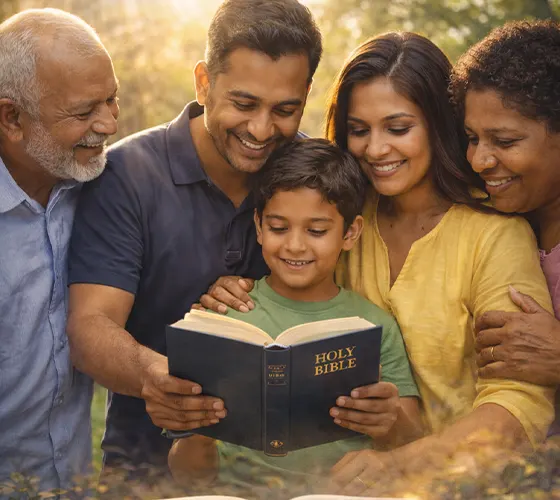
Dear reader, it is with great joy that we bring you the word of God. Today, I want to speak to parents, single parents, grandparents, guardians, mentors, spiritual parents, and anyone who wishes to become a parent. Because parenting is not easy. Then we have other people, the social media, the culture, telling parents how to raise a child, but not everyone is pointing the parents to God’s way of raising a child. The world mostly wants to produce children who are only successful and popular. But God brings up children who are prepared and saved. And God has given parents tools to do so.


Think of a compass. It does not tell you about the obstacles, storms, and the distance of a journey, but it does tell us the clear direction of your target. In the same sense, every parent needs a compass. Not some celebrity advice, social-media advice, but the word of God as a compass.

In the bible, we read (Luke 15) about the son who left home for the city, and lost all that was in his possession. While working on the farm, caring for swine, he remembered his father. Coming to his senses, he thought, ‘How many of my father’s hired workers have more than enough food to eat, but here am I, dying from hunger.
I shall get up and go to my father, and I shall say to him, “Father, I have sinned against heaven and against you. “

Here are 3 lessons we can learn about raising children from this parable as told by Jesus.

1. The world raises children to be liked, but God raises children to be led.
Often the world says, “let the children do what they like, or don’t correct them too much, or else you may hurt their feelings”. But God’s word reminds us that the rod and the rebuke give wisdom, and a child left to himself brings shame to their parents. It doesn’t say you should be abusive, but it does say, as a parent, to be present and purposeful in raising them because correction is not hatred. And what the world calls “trauma,” the bible says, it is training. Correction is love with a backbone and not a wishbone. Again, the scripture says, “whom the Lord loves, He chastens.”

So if God disciplines His children whom He loves, then how much more are we to raise ours with correction. And just like a compass, discipline is not rejection, but direction! When the son in the parable came to his senses, he remembered his father, and he knew how to get back home. He had the compass. And sadly, sometimes our children do drift away, even to a point where it looks like an impossible situation. But hang on. Stay in faith, for God is about to speak to that child. And remember, when God speaks, hearts change, and children come back home.

2. Godly parenting is not about control; it’s about covenant.
Some parents feel it’s their job to control a child. Those rigid rules, enforcements, and excessive power do not change the child’s heart. It only changes behaviour temporarily. But a parent under a covenant says, “I will cover you, I will pray for you, I will speak life over you, I will guide you back to God.” The bible says, “Direct your children onto the right path, and when they are older, they will not leave it.

You don’t raise children by pressure; you raise them through your prayers and by your presence. It’s not just correction, but also connection. For the children may forget all the lectures, but they will remember your example of love and affection, and being present for them.

3. Always trust God to have the final say over your children. In this parable, when the son left home with his possessions, I can imagine the pain of the Father. Thoughts may have come to his mind, “Where did I go wrong? Why is he rebellious? Why is he far from God?” And sometimes, like him, it is easy to carry the guilt that your children are nowhere near where you want them to be. The world may have influenced them. Friends may have misled them, but the good news is that God is still the author of their lives. His word says, “The Lord shall teach all your children. That means God can reach them. He can restore them and bring them home.

As parents, I encourage you to keep praying for your children. Always speak life over them. “You are chosen. You are loved. You are more than your mistakes.” These are words that can shape their identity and future. Set some Godly boundaries. Saying “no” is not cruel because sometimes your “no” is the reason they survive.

The good news is that God’s grace is always available to you as you go about raising, praying, and believing for that child.
God bless you
Ps Suresh Dass Joseph
[email protected]

Strong Between Two Worlds  Redefining success, identity and wellbeing in modern migrant life.

Strong Between Two Worlds  Redefining success, identity and wellbeing in modern migrant life.

By Rinchaal Patel,

Mindset and Relationship Coach,

YOLO Academy

When we talk about achievements on International Women’s Day, this is often measured by visible milestones like leadership appointments, entrepreneurial success, community recognition. Yet for many millennial desi women living in Australia, strength and achievement are expressed less through headlines and more through daily resilience.
The resilience is often found in reinvention, responsibility, and the ongoing negotiation between ambition and obligation.

Over the past two decades, Australia has seen significant migration from India, including a large cohort of millennial women who arrived as students, skilled professionals, partners, or new brides. Many have since established careers and families, contributing meaningfully to Australia’s economic and cultural landscape.
But behind professional progress lies a more complex emotional reality.
Reinventing Life from the Ground Up

For many desi women, arrival in Australia meant accelerated independence and adaptation. This was not just a practical adjustment but also a psychological one, and played a vital role in reinventing their identities.

Whether as a professional, they required local accreditation for their skills to be recognised or working mums, they changed their field of work for school hours friendly work environment or being at home to support the needs of their growing families, the resilience of desi women has been tested time and time again. This has required them to stretch themselves and be self-reliant.

Those who migrated for higher education or skilled employment often carried additional pressure to succeed, both for personal ambition and family expectations.
Yet alongside these challenges was determination. Many desi women entered sectors such as healthcare, IT, education, finance, and small business with clear objectives — financial independence, career progression, and long-term stability.
The Invisible Emotional Load

Professional achievement, however, has not erased emotional strain.
What is sometimes referred to as the “second shift”, domestic and emotional labour undertaken after paid work hours. For desi women in Australia, this burden can feel intensified by cultural expectations around caregiving, home-cooked meals, and community involvement. They are forever chasing the work-life balance that is frequently promoted in Australian workplaces, yet can somehow be elusive in our cultures.

Women speak of a persistent internal checklist: Am I doing enough at work? Am I present enough at home? Am I staying connected enough with family in India?
Technology may have reduced physical distance but not emotional responsibility. Regular video calls maintain closeness with parents and relatives yet also underscore absence from family milestones and ageing loved ones. The result is a sense of divided presence, belonging fully to neither place at any one time.
The Persistence of Guilt

A recurring theme in conversations with millennial desi women is guilt. Guilt for long work hours. Guilt for relying on childcare. Guilt for not pursuing career growth more aggressively. Guilt for wanting time alone. Guilt for not earning an income.

Much of this stems from cultural narratives equating sacrifice with virtue. Many women were raised to prioritise family needs above personal wellbeing. Rest was something earned after responsibilities were fulfilled, and responsibilities rarely felt complete.
In Australia’s more individualistic context, messages around self-care and boundary-setting are prominent. Yet adopting these practices can generate tension. Choosing personal time may feel like abandoning inherited expectations.

This tension contributes to stress and, in some cases, quiet burnout.
Mental Health and Evolving Conversations

Encouragingly, attitudes toward mental health are shifting within the community.
Desi women are increasingly open to counselling, peer support groups, and wellness practices. Multicultural health services report growing engagement from South Asian women seeking support for anxiety, work stress, and adjustment challenges.
Wellbeing strategies vary. Some draw on familiar cultural practices such as yoga and meditation. Others prioritise gym memberships, walking groups, or creative outlets. Informal networks: WhatsApp groups, community gatherings, professional circles, often serve as safe spaces for honest conversations about overwhelm.

Where previous generations may have normalised silent endurance, many millennials are reframing strength as the willingness to seek help.

Redefining Success and Balance

Rather than pursuing a rigid definition of balance, many women are adopting a more fluid approach. Flexible work arrangements, hybrid roles, and more direct conversations with partners about equitable domestic responsibilities are becoming increasingly common. Within households, subtle but significant shifts are occurring.

Children in migrant Indian families today are observing mothers who pursue careers while also prioritising mental health and setting boundaries. This modelling has long-term implications, shaping how the next generation understands gender roles and emotional wellbeing.

A Broader Reflection

International Women’s Day provides an opportunity not only to celebrate visible accomplishments but also to acknowledge layered realities.
Millennial desi women in Australia are professionals, caregivers, entrepreneurs, and community contributors. They are also individuals navigating complex identities across two cultures.

Their strength lies not simply in endurance, but in adaptation, in balancing heritage with independence, ambition with wellbeing, and responsibility with self-definition.
As Australia marks International Women’s Day, their stories serve as a reminder that empowerment is not a fixed achievement. It is an ongoing process, shaped by migration, motherhood, career, culture, and personal growth.

And for many millennial desi women, that journey continues- resilient, reflective, and increasingly self-directed.


A Kaleidoscope of Unity Celebrating Holi in Australia

A Kaleidoscope of Unity Celebrating Holi in Australia

In Australia, the arrival of March marks a shift in the air, not toward the spring of the Northern Hemisphere, but toward a vibrant autumnal celebration of Holi, the Hindu Festival of Colours. What was once a niche community gathering has evolved into a cornerstone of Australia’s multicultural calendar, embraced by people of all backgrounds. From the iconic shores of Darling Harbour to the suburban backyards of Brisbane, Holi in Australia is a powerful symbol of “Unity in Diversity.”
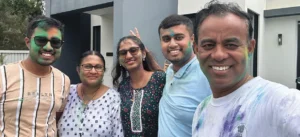
The Spirit of the Southside

While massive public festivals like the Brisbane Festival of Colour draw thousands to the city’s parks, the heart of Holi remains in the intimate, grassroots celebrations that keep ancient traditions alive. A shining example of this is the annual gathering hosted by Mr. Adrian and Roshni Naidu in Brisbane’s south.
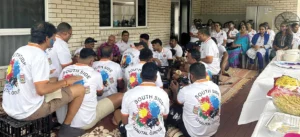
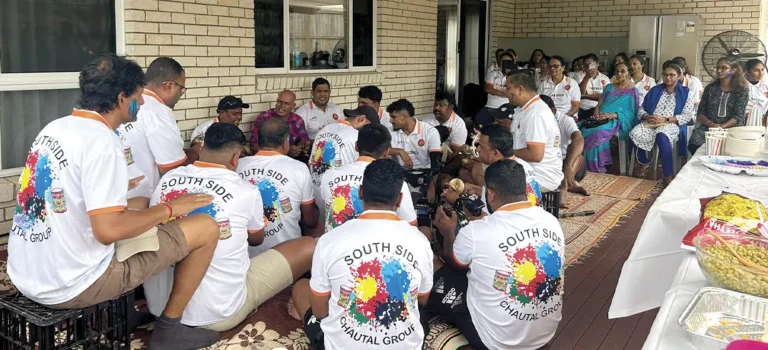
Their home becomes a sanctuary for the Southside Chautal Group, a dedicated mandali that preserves the rare and rhythmic art of Chautal and Faag singing. These traditional folk songs, rooted in the rural landscapes of Uttar Pradesh and Bihar and carried to the Pacific by the Girmitiyas, find a new resonance on Australian soil.

At the Naidus’ residence, the air is thick with more than just gulal (coloured powder); it vibrates with the sound of the dholak (drum) and the clash of manjira (cymbals). The Southside Chautal Group leads the gathered families in high-energy, competitive singing that narrates the playful antics of Lord Krishna and Radha. This isn’t just a party; it is a cultural transmission, where the younger generation watches their elders reclaim a heritage of joy and resilience.


A Modern Australian Tradition
The beauty of such private celebrations is the seamless blend of the old and the new. Between the spirited rounds of singing, guests enjoy a fusion of traditional treats like gujiya and bara and sweets.

As Prime Minister Anthony Albanese recently noted, Holi has been “heartily embraced” as part of the modern Australian story. Whether it is through the grand scale of the Swaminarayan festivals, the community kitchens of the Gurudwaras, or the rhythmic folk songs at Adrian and Roshni Naidu’s home, Holi in Australia serves as a vibrant reminder that our traditions are the threads that weave us into the fabric of this great nation.

Elchi: Redefining Indian Fine Dining in Melbourne’s CBD

Elchi: Redefining Indian Fine Dining in Melbourne’s CBD

In the heart of Melbourne’s CBD, where cultures intersect and celebrations unfold beneath the glow of city lights, Elchi is quietly redefining what Indian fine dining looks and feels like.
At its helm is Manpreet Sekhon, a chef whose journey has not been shaped by a single dramatic moment, but by what she describes as a gradual calling a steady pull toward elevating Indian cuisine onto a refined, contemporary stage.

Yet my introduction to Manpreet Sekhon did not begin within the walls of her restaurant. It began at a book launch an evening layered with conversation, curiosity and spirited debate. Amidst the energy of the room, her presence stood out. There was warmth in her smile, humility in her manner, and an effortless ease in conversation that immediately drew me in.

That evening, I discovered the woman many affectionately call Melbourne’s own “curry queen.”
Before long, our paths crossed again this time as I stepped into the intimate, candlelit elegance of Elchi itself to have a chat about her culinary journey.

1. What defining moment made you realise it was time to open a restaurant like Elchi in Melbourne’s CBD?

“There wasn’t just one moment,” Sekhon reflects. “After opening Eastern Spice and later Masti, I felt I had more to say through food.”
Indian cuisine could be elegant, layered and experiential not only comforting but refined.
Melbourne CBD, she explains, felt like the right stage. “It’s where cultures meet. Where people celebrate milestones. Where romance happens.” From that vision, Elchi was born a space where Indian food stands proudly in a fine-dining setting, experienced in a completely new way.

2. How do you strike the balance between authenticity and innovation on your menu?

“For me, authenticity isn’t about copying tradition, it’s about respecting its soul. I grew up with these flavours. I understand their depth, their emotion. That foundation never changes. Innovation comes in how we present it, how we refine it, and how we surprise guests. Maybe it’s a modern plating style, maybe it’s a contemporary cocktail pairing, or a lighter technique that enhances the spices instead of overpowering them. The goal is never to reinvent Indian cuisine, it’s to elevate it while staying true to its heart.”

3. How intentional were you about designing the overall guest experience beyond what’s served on the plate?

Food, Sekhon insists, is only part of memory-making.
“Dining, to me, is theatre. The plate is the star, but the setting is the stage.”
From lighting and music to the subtle scent of spices in the air, Elchi was designed to feel intimate but not intimidating, luxurious yet welcoming.
4. Was romance always part of your vision, and how has it shaped the culture and standards you uphold here?

“Romance was always part of that vision a space for anniversaries, proposals and Valentine’s evenings. Service is paced, never rushed. The team is trained to read the table to know when to engage and when to quietly step back.”

Manpreet sees food as sensory storytelling. “Indian cuisine is naturally romantic. It’s layered, slow-cooked, deeply aromatic. It invites sharing. It invites conversation.”
“At Elchi, dinner becomes more than a candlelight meal. Thoughtfully curated tasting menus, cocktails that surprise, moments designed to be remembered long after the night ends is part of the experience.”

5. What inspired the decision to welcome guests aged 12 and above, and how has it shaped the atmosphere?

To preserve that tranquil, elevated atmosphere, Elchi welcomes guests aged 12 and above. A decision Sekhon describes as clarity of concept rather than exclusion.
“It’s about protecting the experience. Guests come here knowing they’re stepping into something calm, refined and intimate. And what we’ve created is beautiful. People relax, linger and truly connect.”

As our time together ended, we lingered over a beautifully brewed chai from the Elchi kitchen. In that quiet moment, something softened within me. The warmth of the spices, the intimacy of the space it all felt cinematic. I found myself thinking, almost instinctively, that one day this would be the place I would return to for a truly heartfelt evening with someone special.

For those visiting Melbourne be sure to add to your itinerary and mention this article:https://www.elchirestaurant.com.au/

Knowing You Will Still Be OK

Knowing You Will Still Be OK

Life has a quiet way of reminding us that nothing remains exactly the same. Sometimes the shift is gentle. Other times it arrives like a sudden turn in the road we did not expect.
Life throws many curve balls. The question is not whether change will come as it always does. The deeper question is this, what does your sense of security truly depend upon?
Is it the freedom to be yourself within a relationship, or the invisible tie that slowly asks you to lose parts of who you are just to keep something intact?

True connection does not require the loss of self. In fact, the healthiest relationships are those where two whole people walk beside one another, not where one disappears so the other can remain.

The Fragility of Life

When we are young, life often feels endless. We imagine the people around us will always be there, that the rhythms of our days will continue unchanged.
Yet as we grow older, a deeper awareness begins to settle in. Life is inherently fragile. No person, no moment, no experience stays forever.
This realisation can feel confronting at first. But it can also be profoundly awakening.

Life truly is short.

Fortunate are those who walk beside us a little longer on this path. And those who cannot stay still leave their imprint in quieter ways. Sometimes they walk in the shadows of our memory, supporting us in whispers we can still feel when we pause long enough to listen.

When the Heart Begins to Close

There are moments in life where something inside us begins to harden.
Perhaps a disappointment, a betrayal, or a loss that felt too heavy to carry at the time. Slowly the heart becomes guarded, the mind begins to avoid what hurts, and what once flowed naturally becomes blocked like a heavy rock sitting in the middle of a river.
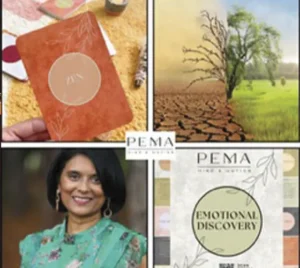
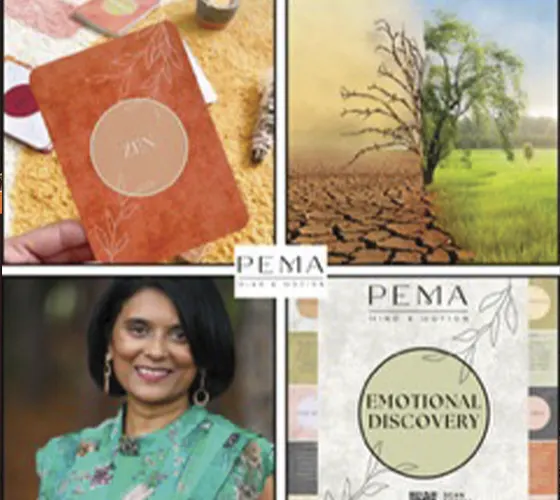
In the PEMA Mind and Motion philosophy, these moments are not signs of weakness. They are signs that the emotional system is trying to protect itself.

Yet protection can quietly turn into isolation if we are not careful.
Because when the heart closes completely, the very experiences that could heal us connection, love, laughter, all struggle to find their way in.

A Vedic Lens on Impermanence

Ancient Vedic teachings speak openly about the impermanent nature of life. Rather than resisting it, they invite us to see impermanence as a teacher.
The Bhagavad Gita expresses this wisdom simply:
“As a person sheds worn-out garments and wears new ones, so the Self discards old forms and enters new ones.”

The Bhagavad Gita 2.22

From this perspective, change is not a loss of life’s meaning. It is the movement through which life renews itself.
Understanding this does not remove sadness or grief. But it allows us to hold them alongside gratitude for what has been.

A Gentle Reminder

Within the emotional discovery with the research informed Mind and Motion Cards, the Change card often appears when someone is standing at an emotional crossroads.
It does not tell us what decision to make. Instead, it offers reassurance that even when life shifts in ways we did not plan, something essential within us remains steady.
The deeper message of this card is simple yet powerful:
Knowing that if life changes, you will still be OK.

Sometimes the most healing realisation is recognising that our strength does not come from controlling every outcome. It comes from trusting our ability to meet whatever life brings.

The Gift of the Present Moment

Time waits for no one. This truth can feel confronting, but it can also become the greatest invitation of all, to fully appreciate what exists right now.
Enjoy the conversations, the shared meals, the laughter, the quiet companionship of simply sitting beside someone you care about. These are the moments that quietly become the memories we carry forward.

Tomorrow sometimes never comes.

Holding onto regret can quietly drain the life from the present. The heart becomes heavy, and energy that could be used for connection gets trapped in the past.
But when open hearts meet open hearts, something remarkable happens. Life feels lighter, authentic and real.

Conclusion

Change is inevitable. Relationships evolve, seasons shift, and people move through different chapters of life.
But the deeper truth remains, we are more resilient than we often realise.
When we allow ourselves to stay open to life, to connection, to the present moment we discover that even through change, something meaningful continues to grow.
And perhaps that is the quiet wisdom life offers us again and again:
Nothing lasts forever.
So love well.
Speak kindly.
And be fully present while the moment is here.
Explore Further

The Mind and Motion Cards offer guided reflections like this to support your personal growth journey. These tools are designed to complement, not replace, professional support.

For more resources or to purchase the deck, please visit
https://www.monicapema.com/mindandmotiondeck
Monica Pema | Integrated Wellness Expert
MSc. Psychology

“From Passion to Purpose in All Walks of Life”
This article is intended for self-reflection and general education only. It is not a substitute for professional medical, mental health, or psychological care.

A Simple Health Step, A Brighter Future: The Power of “Give to Gain”

A Simple Health Step, A Brighter Future: The Power of “Give to Gain”

The 8th of March is International Women’s Day, a well-recognised day to celebrate the lives of women around the world. The ECCQ Love Health Program joins communities across Queensland in honouring the strength, resilience, and leadership of all women.
This year’s International Women’s Day theme is “Give to Gain.” It reminds us that a small action taken today can create long-lasting benefits for the future. This year’s theme is particularly relevant to health: caring for your health is one of the most valuable investments you can make—for yourself and for your family’s wellbeing.


Taking a proactive approach to your health can make a real difference. One simple but important step is having a routine check-up for key health conditions. Some health conditions do not cause obvious symptoms at first but can have serious long-term effects if left undetected, unmanaged and untreated such as chronic hepatitis B, chronic hepatitis C, HIV, and syphilis.
By giving a little time for a hepatitis blood test, you gain:
• Peace of mind
• Early access to effective monitoring and treatment if needed
• The ability to protect yourself and those you care about

Understanding the Facts

Hepatitis B and Hepatitis C
• Hepatitis B can be prevented through vaccination. For people living with chronic hepatitis B, it is a manageable condition like other chronic diseases needing regular medical care and monitoring.
• Hepatitis C can be cured. Simple treatments taken over a few months can completely clear the virus.

HIV and Syphilis
• HIV is now a manageable long-term condition. With early testing and effective treatment, people can live long and healthy lives. Treatment also prevents HIV from being passed on to others.
• Syphilis is increasing in Australia. While it is a serious infection, it is easily cured with antibiotics when detected early. Without treatment, it can cause severe health complications.

Give Protection, Gain a Healthy Start: For Expectant MothersPregnancy is a time of special care. Getting tested is one of the most important gifts you can give your baby.
• Hepatitis B: Babies can be fully protected by effective, essential vaccination at birth, and again at 2, 4, and 6 months. If a mother has hepatitis B, additional steps during and after the birth can prevent transmission to the baby. It is important to get the baby tested for hepatitis B 3 months after completing all the vaccination doses.
• Hepatitis C: Knowing your status allows for appropriate care planning. Treatment for hepatitis C can be started after birth.
• HIV: With effective treatment during pregnancy, the risk of passing HIV to a baby is very low.
• Syphilis: Testing and treatment during pregnancy are crucial to prevent serious harm to both mother and baby.

This International Women’s Day, Make the Choice
GIVE yourself the gift of knowledge—talk to your doctor about a simple blood test. You can also contact our program for free rapid hepatitis B and C testing.
GAIN empowerment, protection and health for yourself and your family.
Caring for yourself and your loved ones is the ultimate gain.
Get checked. Stay healthy.

For more information in your language, visit:
www.eccq.com.au/bbv

Or contact our friendly Love Health Program team:
Email: [email protected]
Phone: (07) 3844 9166

Faith, Service and Courage: A Young Leader’s Message to the Community

Faith, Service and Courage: A Young Leader’s Message to the Community

By Xavier Hernandez

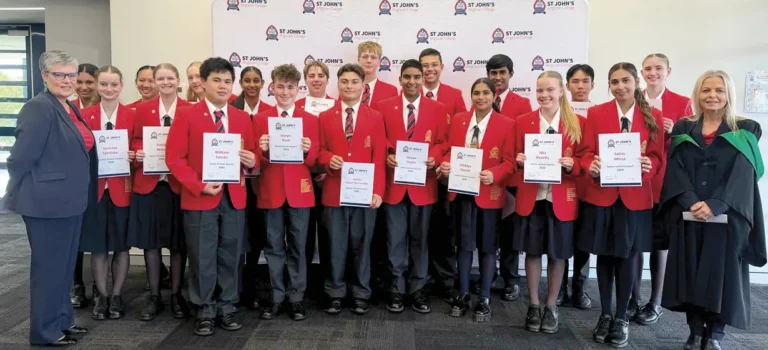
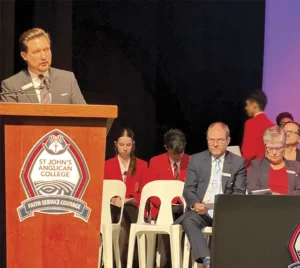
I am delighted to begin this edition of the Brisbane Indian Times by sincerely thanking our readers for supporting this wonderful publication and for encouraging young contributors such as myself. I am proud to share that I have been selected as a Senior School Council member for 2026 at St John’s Anglican College, it is a true privilege to serve alongside my peers and other outstanding student leaders and to give back to a school community that has given so much to me.
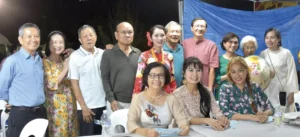
Our College motto — Faith, Service and Courage — guides everything we do, encouraging us to be faith-led, service-oriented and courageous in our actions. I would like to acknowledge our Principal, Mrs Maria McIvor, along with Mrs Robern Hinchliffe (Deputy Head of College – Pastoral Care), Mr Andrew Landroth (Deputy Principal – Curriculum and Innovation), and Mr Braydon Giles (Head of Middle School & acting Head of Senior School). Their leadership and dedication strengthen not only our school, but also the wider community. I am also deeply grateful to the broader community, including the Deo family and many others, who continue to support and encourage me.
This month is particularly significant as we prepare to commemorate ANZAC Day 2026, marking 111 years since Australian and New Zealand troops first landed at Gallipoli. ANZAC Day falls on Saturday, 25 April 2026. I will be attending the local Forest Lake service, and I warmly encourage readers to attend a service in their area. ANZAC Day provides us with an important opportunity to honour the courage and sacrifice of the Australian and New Zealand Army Corps, established in 1914, and to recognise the significant contributions of Indian and British soldiers who served alongside them. Approximately 16,000 Indian troops fought in the Gallipoli campaign, with around 1,600 losing their lives. Their bravery and sacrifice must always be remembered.

As part of my commitment to keeping our community informed about international developments, I read an article published on 1 March 2026 by journalist Joseph Olbrycht-Palmer in NewsWire, reporting that Ayatollah Ali Khamenei was reportedly killed in joint airstrikes carried out by Israel and the United States. Iranian state media confirmed his death, while the Islamic Revolutionary Guard Corps warned of an imminent “devastating offensive.”

In Australia, opponents of the regime gathered in Canberra, Sydney and Melbourne. Prime Minister Anthony Albanese stated that his passing would not be mourned. While a ceasefire is currently in place, the situation remains fluid. Australians requiring consular assistance can contact the Consular Emergency Centre on +61 2 6261 3305 (overseas) or 1300 555 135 (within Australia).
Closer to home, I recently had the privilege of speaking with community champion Sonya, a Home and Investment Lending Specialist with ANZ Browns Plains. I was inspired by her passion for helping families achieve home ownership, during our catch-up she mentioned, “Many people give up after one ‘no’ sometimes they just need someone to look deeper. I love being that person for my community, I genuinely want to help more families feel confident about home ownership.”
She shared a moving story about assisting a client whose loan application had previously been declined. By carefully reassessing the situation and guiding her through the process, Sonya secured approval just in time. When she delivered the good news, her client was overwhelmed with gratitude. Moments like this remind me that leadership is grounded in compassion, persistence and genuine care.

I also enjoyed hearing about her recent travels to Delhi and her continued support of community events. With International Women’s Day approaching, I extend my heartfelt gratitude to all women — especially those whose efforts often go unrecognised — for the extraordinary difference they make every day.

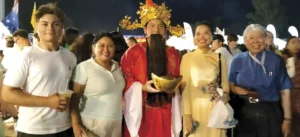
I would also like to acknowledge the Vietnamese Community in Australia – Queensland Chapter President Khue Oanh Do and her team for hosting a memorable Tet Festival celebration at CJ Greenfield, Forest Lake and I would like to wish Khue Oanh a happy birthday. It was a pleasure to volunteer and support fundraising efforts by Vietnam Grace Church for important local causes. Community spirit like this truly strengthens us all.

There are also several wonderful upcoming local events I encourage readers to support:
• Walk for Breast Cancer – Forest Lake 2026
Hosted by Lions Club of Inala President Kylie Gates
Sunday, 8 March 2026
8:00am
The Esplanade, Forest Lake
• Social Smash Cricket Program – Wolston Park Cricket Club
Hosted at CJ Greenfield, Forest Lake
Every Sunday from 8 March to 29 March 2026
Ages 10–14: 3:00pm – 4:00pm
Ages 15+ to Adult: 4:00pm – 5:00pm
Cost: $40 for four weeks (+ Cricket Australia insurance)

These events promote health, connection and participation for people of all ages, and they are excellent examples of community engagement in action.

As always, thank you for your continued support and for the positive feedback I receive about my contributions. It is an honour to bring you both international updates and local community news. If you would like to share your story in a future edition, please feel free to reach out.

Recognising International Women’s Day Honouring the Strength That Sustains the World

Recognising International Women’s Day Honoring the Strength That Sustains the World

In our life we are all in contact with women, in fact our first contact was the minute we entered the womb. With this my mind you can say that women give life. Life is so precious that we need to value each moment we have. To value we need to utilize each moment to bring positivity, happiness, love and more peace in today’s world where people have forgotten the value of their lives.

International Women’s Day is not just a date on the calendar. It is a reminder. A reminder to recognise the contribution of women in our homes, workplaces, and communities. A reminder to appreciate their resilience, patience, and strength. And perhaps most importantly, a reminder to reflect on how we can become better human beings ourselves.
The importance of women in our lives cannot be overstated. Without their encouragement, sacrifice, and quiet determination, society would struggle to hold itself together. As the well-known saying goes, “Behind every successful man there is a woman.” In truth, behind every thriving family, organisation, and community, there are women who support, guide, and uplift.

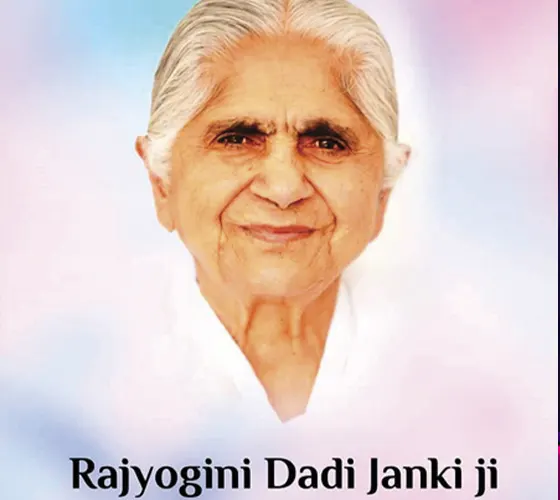
One such inspirational figure was Dadi Janki, the former administrative head of the Brahma Kumaris. Known worldwide for her spiritual wisdom and clarity, Dadi Janki led countless individuals from confusion to clarity, from despair to hope. Her presence was known to transform the atmosphere of a room. She lived not for personal recognition, but to sustain and uplift others.

Dadi Janki often spoke of a future filled with hope. Despite being deeply aware of the selfishness and conflict affecting human relationships today, she remained unwaveringly optimistic. “In the winter, we foresee the spring,” she would say. Her vision was of a world where human potential is realised, where people give freely, and where peace becomes natural rather than rare.

In her view, such a future is possible. But it requires a change in consciousness. It requires us to rethink how we relate to one another.
On this International Women’s Day, it is worth reflecting on four qualities Dadi Janki believed were essential for healthy relationships and a healthier world:

Interdependency

True relationships are built on give-and-give, not take-and-take. Interdependency means that everyone contributes. Each person adds value. In contrast, co-dependent relationships often lead to imbalance and disappointment. When we shift from “What can I get?” to “What can I give?” harmony grows.

Flexibility

Healthy boundaries protect us, but they should not become rigid walls. When our values are strong, we can remain flexible in our responses. Flexibility allows understanding. It creates space for dialogue rather than conflict.

Caring

Real caring is not control. It is not interference. True care gives others room to grow. It allows them to make choices, even mistakes, and learn from them. Mistakes do not define us; they refine us. Genuine care supports without suffocating.

Self-Esteem

When we live in ego, we take things personally. We react quickly. We defend an image shaped by society and expectation. But when we reflect deeply and ask, “Who am I, truly?” we begin to discover inner peace, love, and wisdom. From this place of self-respect, our responses become calmer and more compassionate.

Women across the world demonstrate these qualities every day. They balance responsibility with empathy. They nurture while leading. They tolerate while teaching. They sacrifice while strengthening others.
International Women’s Day is an opportunity not only to celebrate women but also to learn from them. To recognise that their strength is not loud, yet it is powerful. Not always visible, yet deeply transformative.

As we honour the women in our lives, may we also commit to embodying the qualities they so often reflect patience, courage, flexibility, and love.
When we do that, we do more than celebrate a day. We help build the future they have always quietly worked towards.

Brahma Kumaris Shailer Park provide free Raja Yoga Meditation, Positive Thinking and Anger Management Courses. Please contact us on 0414685144 or [email protected] for further information. https://brahmakumaris.org.au and find out the events happening close to your location.
Om Shanthi