

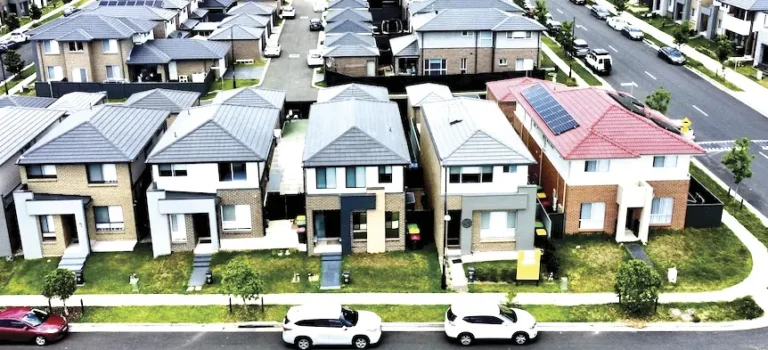
Rate Cuts and Real Estate: Will Australia’s Housing Market Keep Booming?
 Australia’s real estate market is once again in the spotlight, as interest rate cuts by the Reserve Bank of Australia (RBA) have sparked renewed growth across capital cities and regional areas. The question now confronting economists, policymakers, and homeowners alike: how long can this surge last?
The RBA has delivered three consecutive rate cuts in 2025, lowering the cash rate from 4.35% in January to 3.60% by August. According to Governor Michele Bullock, the bank’s actions are in response to cooling inflation and signs of slowing economic activity, though the central bank remains cautious about future moves.
“We are seeing the early effects of easing monetary policy, but we’re not declaring victory over inflation yet,” Bullock said during the August monetary policy meeting (Reserve Bank of Australia, 2025).
A Booming Property Market
These rate cuts have had a swift and profound impact on the property market. CoreLogic’s national Home Value Index rose 1.2% in August alone, with annual growth now surpassing 8.5% across major markets (CoreLogic, August 2025). Sydney continues to lead the pack, with median house prices nearing $1.6 million, while Brisbane and Adelaide are posting record gains.
“Rate cuts are fuelling buyer confidence and unlocking pent-up demand,” said Domain Chief of Research Dr. Nicola Powell. “Investors are returning, and first-home buyers are rushing to take advantage of favourable borrowing conditions” (Domain, 2025).
In Queensland, the Gold Coast has seen its median house price jump to $1.32 million, surpassing even Brisbane’s $936,000 average. Townsville saw the most significant regional growth, up 17.6% year-on-year (Courier-Mail, 3 Sept 2025).
What’s Driving the Surge?
The real estate rebound is underpinned by a combination of factors:
1. Lower Mortgage Costs: A borrower with a $700,000 mortgage is now saving approximately $92 per month compared to January, thanks to the rate cuts (ABC News, 2 Sept 2025). For many buyers, this translates to increased borrowing capacity and improved affordability—at least on paper.
2. Tight Supply Conditions: Australia continues to face a chronic housing shortage. The National Housing Finance and Investment Corporation (NHFIC) estimates a deficit of over 175,000 homes by 2027, driven by high immigration and lagging construction starts (NHFIC, 2025).
3. Government Incentives: New federal and state initiatives targeting first-home buyers—such as the expanded Home Guarantee Scheme and low-deposit options—have boosted demand in the under-$1 million price bracket (The Australian, 1 Sept 2025).
4. Investor Return: After a brief retreat during the 2023–24 rate hiking cycle, investors are back. Rental yields remain high in most capital cities, with vacancy rates under 1% in parts of Melbourne and Perth (SQM Research, August 2025).
Can It Continue?
While the current rally is well-supported, experts warn that several risk factors could stall the market’s momentum.
Dr. Shane Oliver, Chief Economist at AMP Capital, believes the pace of growth may slow by mid-2026.
“Rate cuts have certainly reignited the housing market, but if affordability continues to deteriorate, we could see the RBA slow its easing cycle or implement macroprudential measures to prevent overheating,” Oliver said in a recent research note (AMP Capital, 2025).
Indeed, housing affordability remains a persistent concern. According to the ANZ-CoreLogic Housing Affordability Report, the portion of income required to service a new mortgage in Sydney is now over 50%, significantly above the long-term average (CoreLogic, July 2025).
Moreover, wage growth remains tepid. While inflation has eased, real incomes have not kept pace with rising property prices, putting pressure on younger and lower-income buyers.
“It’s a paradox: lower interest rates are meant to improve affordability, but when prices surge, the benefit is largely wiped out,” noted Professor Peter Tulip of the Centre for Independent Studies (CIS, 2025).
Regional Outlook: A Mixed Picture
While capital cities are booming, some experts believe the next growth phase may tilt towards regional areas—particularly those offering lifestyle benefits and better affordability.
Inland NSW towns like Orange and Dubbo, as well as coastal regions of WA and South Australia, have seen renewed interest from remote workers and retirees. However, growth remains uneven.
“We’re seeing a divergence between high-growth nodes and stagnant areas where economic fundamentals are weaker,” said Nerida Conisbee, Chief Economist at Ray White (Ray White Research, August 2025).
RBA’s Next Move
The RBA has remained deliberately non-committal about future rate decisions. Market analysts expect one or two more cuts before the end of 2025, depending on inflation and global economic conditions.
Yet, as GDP growth rebounds—up 0.6% in Q2 2025—and consumer spending remains resilient, some are questioning whether further easing is necessary (Reuters, 3 Sept 2025).
“The RBA may find itself in a tricky spot—too much stimulus could inflate another housing bubble,” warned former RBA board member Warwick McKibbin in an interview with the AFR (Australian Financial Review, 2 Sept 2025).
Finally, the RBA’s rate cuts have undoubtedly sparked a renewed property boom, offering opportunities and challenges in equal measure. While price growth may continue into 2026, concerns around affordability, supply shortages, and economic inequality will shape the market’s long-term trajectory.
For now, buyers and sellers are riding the wave. But as always in Australian real estate, the tide could shift with little warning.
(Sources: Reserve Bank of Australia, August 2025 Monetary Policy Statement, CoreLogic Home Value Index – August 2025, Domain Property Insights, 2025, Courier-Mail, 3 September 2025, NHFIC State of the Housing Market Report, 2025, ABC News, 2 September 2025, AMP Capital Research, August 2025, ANZ-CoreLogic Housing Affordability Report, July 2025, CIS, Housing Analysis 2025, Ray White Research Bulletin, August 2025, Reuters, 3 September 2025, Australian Financial Review, 2 September 2025, The Australian, 1 September 2025)





 In a remarkable nationwide movement, the Government of India’s “Har Ghar Tiranga” campaign has ignited a surge of patriotic fervor across the country, encouraging citizens to hoist the Indian national flag, the Tiranga, at their homes between August 13 and 15, 2025. This initiative, part of the broader Azadi Ka Amrit Mahotsav celebrations commemorating 75 years of India’s independence, has seen enthusiastic participation from urban centres to remote villages, symbolizing unity and pride in the nation’s journey.
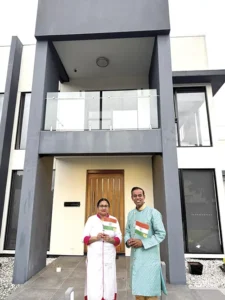 Launched by the Ministry of Culture and the Ministry of Home Affairs, the “Har Ghar Tiranga” (meaning “Tricolor in Every Home”) campaign is designed to foster a deeper connection between citizens and the national flag. It aims to encourage widespread flag hoisting and generate awareness about the flag’s significance, particularly among younger generations.
 Reports indicate that over 20 crore households have participated nationwide, making it one of the largest patriotic drives in recent history (The Hindu, Aug. 30, 2025).
 In addition to the general public, government offices, public transport vehicles, and landmarks were decorated with Tirangas. Iconic monuments like the Red Fort and India Gate displayed spectacular flag displays during this period, drawing large crowds and media attention (Times of India, Aug. 2025).
 While the campaign has been largely successful, officials remind citizens to observe flag code protocols. The government has released detailed guidelines on the proper handling, hoisting, and disposal of the flag to ensure respect and dignity (Ministry of Home Affairs, Govt. of India).
 August 2025. https://pib.gov.in/, The Hindu. “Har Ghar Tiranga Initiative: A Massive Patriotic Drive.” August 30, 2025, Times of India. “Har Ghar Tiranga Campaign: See Flag Hoisting and Celebrations.” August 2025, The Indian Express. “Opinion: Har Ghar Tiranga and Renewed Patriotism.” September 1, 2025)
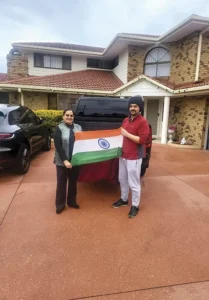

 It has been wonderful connecting with so many Brisbane Indian Times readers and community members at recent events. Hearing your stories, celebrating your volunteer work, and understanding the issues that matter most is important to me and the team. Your encouragement and positive feedback about how much you enjoy reading the Australian Indian Times is appreciated. With spring just around the corner, I’m pleased to share some of these moments with you in this article.
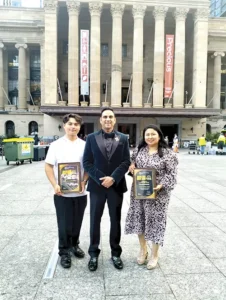 I was equally thrilled to see my mentor and family friend, JD Deo, and his family recognised by Premier David Crisafulli at Parliament House alongside other community champions. They have guided countless people, broken many barriers and supported many, including myself. Leadership is not just about personal achievement; it’s about lifting others along the way.
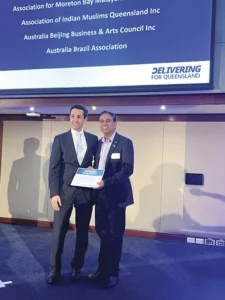 As we approach the International Day of Charity on 7th September, I encourage everyone to give back in whatever way they can. Every contribution, no matter the size, makes a difference. This September, I will be volunteering with the Lions Club of Inala, cooking sausages on bread to support our local community. It is also important to acknowledge the efforts of the Crisafulli Government in strengthening protections for vulnerable Queenslanders, including on-the-spot 12-month domestic violence protection orders and child safety reforms known as Daniel’s Laws. Raising awareness of these changes is vital, as they aim to protect our most vulnerable. Many readers have expressed appreciation for these practical measures, and I wanted to highlight them in this month’s article.



 Throughout my work as your local Member of Parliament, I notice the need for more State Government investment in Badminton and Table Tennis for our community. Whilst other, more well-established sports receive significant government support, badminton and table tennis don’t.
 With significant population growth from international regions where badminton and table tennis are traditionally popular, my community is uniquely positioned to become a powerhouse for these sports. We should have more investment in these sports to make our community healthier, happier and stronger.
 Queensland and a 69% increase for table tennis over the last five years. We have young players who are ready and willing. We need to support and nurture this talent to continue Australia’s excellence in enabling community sports and professional athletes.
 A Smart Investment in Health, Culture, and Opportunity
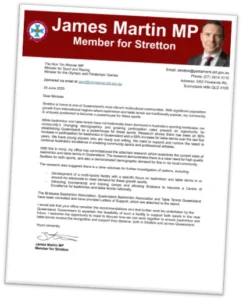 This is about building community and giving kids a chance to shine.
 We’re not just asking for investment, we’re building a stronger community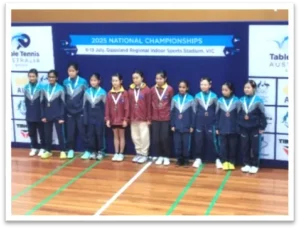




 Brisbane, QLD — Under bright winter skies and the warmth of island spirit, the Queensland Fiji Football Association (QFFA) hosted its annual Q Battle of the Giants 2025 tournament with finals day on Sunday, June 29, at the Acacia Ridge Soccer Club — a day that brought together football, food, and the fierce pride of Fiji’s beloved districts.
 “It’s more than just a tournament,” said Esala Masi, Vice President of QFFA and Fiji Soccer legend . “It’s about identity, about watching our colours fly high and teaching our kids what community and culture really mean.”







 All those gathered were spell-bound, captivated by the mesmerizing beauty of the glistening marble murti of Mother Bhuvaneshwari Devi. In this form she is indeed Maha Tripurasundari, the loveliest, Tripuramohini, the enchantress, and Tiruparapalini, the protector of the three worlds. Following the completion of the Sthapana ceremony, Devi Puja was performed by devotees worshipping Bhuvaneshwari Devi was with flower$, fruits and naivedyam.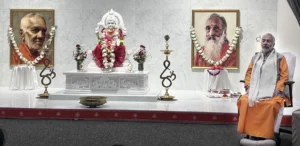
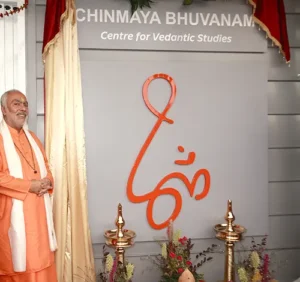 With the completion of the Sthaphana of Goddess Bhuvaneshwari, Pujya Swamiji said that the Divine Mother is now present in Chinmaya Bhuvanam endowed with all love and all power to bestow upon all seekers, the knowledge of all sciences and the greatest of all sciences, the science of Knowledge of the Self. Pujya Swamiji said that Goddess Bhuvaneshwari with Her blessing hands represented Her ever readiness to remove all our fears and bestow boons. She also held an Ankush (goad) and a Pasha (rope) in her hands to signify that She is the devotee’s saviour to rescue them from the ocean of transmigration, the ocean of change and uncertainty. The Ankush (goad) signified that She is the all-powerful Mother who reins in our haughtiness and ego. Just as our own mother is the controller of our home, the Divine Mother holds the Ankush (goad) in her hand to guide and lead us in the right path. Pujya Swamiji concluded by invoking Goddess Bhuvaneshwari Devi and the Guru Parampara to always bless, guide and uplift everyone from the world of sorrow, change and uncertainty and guide us to our inherent nature of Sat Chit Ananda – infinite, eternal and blissful Self. The morning’s program concluded with special Aarati songs for Goddess Bhuvaneshwari and Chinmaya Bhuvanam composed by Guruji Swami Tejomayanandaji.