

Liquid Gold: The Heart of Fiji-Indian Cooking

Liquid Gold: The Heart of Fiji-Indian Cooking

By Roshika Chand
When I think of the foods that shaped my earliest memories of Fiji, I don’t just remember taste, I remember sound, warmth, and aroma. The gentle sizzle in the pot. The smell that made my mouth water before I even sat at the table. Ultimately, the golden ghee.
For Fiji Indians like me, ghee isn’t just an ingredient. It’s culture, comfort, and heritage, a golden thread woven through our curries, savouries, and sweet dishes. I only spent a few years in Fiji before moving to Australia, but the memories stamped on my soul live mostly in favour and I mean Fijian favour.
Especially the roti, my fua or bua/phua (dad’s sister), would make, brushed with her homemade ghee, straight from the cows in her paddock. A dollop on dhal taka, a smear on hot roti, or spooned lovingly into a bubbling pot.
In our kitchens, ghee isn’t just fuel, it’s a favour magnifer and a cultural anchor. It gives curries and dals that golden sheen and rounded richness oil alone can’t match. It’s comfort food in its purest form, whether you were sick, celebrating, or simply hungry after school. A spoon of ghee meant warmth and care.
Many families even added a little ghee to a baby’s first meals, believing it nourished growing bodies and gave strength. The staple dishes included the famous kichadi, a simple, comforting dish of rice and lentils cooked together. Each home with their own unique recipe, but guess what was a must ingredient? Yes, the golden ghee. This wasn’t about trends or nutritional labels, it was about heart, hearth, and heritage.
Back in the 1980s, like many families who migrated to lands far and beyond, mine moved through the islands, like Tonga and the Cook Islands, before eventually landing in Australia. During that time, many Fiji-Indian families migrated in search of stability, education, and opportunity, particularly as political uncertainty and economic shifts reshaped life in Fiji.
Melbourne became home to a growing Fiji-Indian community, while Sydney emerged as the largest hub for Fijians in Australia, hardworking, deeply family-oriented, carrying culture in their kitchens long before it was spoken about publicly.
Australia is home in every practical sense. But Fiji lives somewhere deeper set in my heart, carried in memory, favour, and tradition. Food became the bridge between the two. Through ghee, through roti, through shared meals, home was never entirely lost.
Some foods feed the body, others feed identity. For me, ghee has always done both, a meal with ghee brought connection.
Perhaps some truths don’t live in studies at all. Maybe, they live in memories, in family kitchens, shared meals, and the quiet comfort of food that reminds you exactly where you come from.
Therefore, I am sharing my Nani’s Benmati’s Golden Ghee Lentil Recipe – she is the strong woman I dedicate this article to. I hope this meal brings you much joy and good health as it does to me.
Ingredients
• 1 cup mung dhal (soaked overnight, then drained)
• 2 tablespoons ghee (or more, to taste)
• 1 medium onion, finely sliced
• 3–4 cloves garlic, crushed (ginger optional)
• Fresh chilli, chopped (to taste)
• ½ teaspoon turmeric and cumin
• Salt, to taste
• Water (enough to cook the dhal)
Method
1. Heat the ghee in a pot over medium heat until melted and fragrant.
2. Add onions and sauté gently until soft and lightly golden.
3. Stir in the crushed garlic and chilli, cooking for about 30 seconds until aromatic.
4. Add turmeric, cumin and salt, mixing well.
5. Add the soaked mung dhal and stir to coat the grains in ghee and spices.
6. Pour in enough water to cover the dhal by about 2-3 cm.
7. Bring to a gentle boil, then reduce heat and let it simmer uncovered, stirring occasionally.
8. Cook until the mung dhal is soft, creamy, and fully cooked (about 25-35 minutes).
9. Adjust salt if needed. For extra comfort, finish with a small spoon of ghee on top before serving.

How to Serve
• With hot bhatt (rice) and extra ghee
• With roti, torn and dipped
• On its own, simple and nourishing
Enjoy
Andhra Association Sankranthi Celebrations Conclude with Grand Success

Andhra Association Sankranthi Celebrations Conclude with Grand Success

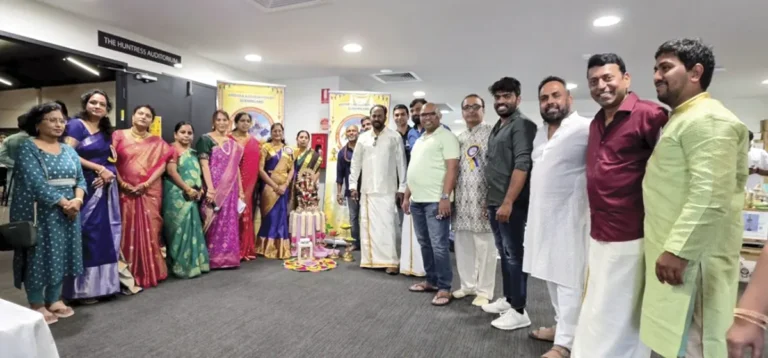
Andhra Association Sankranthi Celebrations Conclude with Grand Success bBrisbane: The Andhra Association celebrated the traditional festival of Sankranthi with grand success, bringing together the Telugu community for a vibrant event that beautifully showcased the rich cultural heritage of Andhra Pradesh. The celebrations commenced with a traditional lamp-lighting ceremony, led by Mrs Sudha Sankar, AAQ Spiritual Coordinator, setting an auspicious tone for the event.


The programme featured a wide range of traditional activities enjoyed by people of all age groups. Colourful kite flying added excitement to the festivities, while the Rangoli competition highlighted creativity and artistic talent among participants.
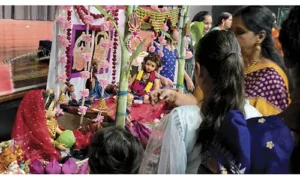
Children played a central role in the celebrations through the traditional Bogipallu (blessing ceremony), during which elders showered blessings upon young children, creating a joyful and heart-warming atmosphere. Another major attraction was the Bommala Pelli (dolls’ marriage), which brought age-old customs to life and delighted both children and adults alike.
A special highlight of the event was the Gobbiamma celebrations, where women sang traditional folk songs and danced in circles around the Gobbiamma, recreating the authentic village ambience of Sankranthi. The cultural programme was further enriched by a couples’ ramp walk, during which participants proudly showcased traditional Indian and Andhra attire.
Adding to the cultural authenticity of the celebrations, live roosters, symbolising Andhra tradition, were displayed and became a popular attraction, with children especially enjoying the opportunity to take photographs with them.
The event witnessed enthusiastic participation from families, youth, women, and children, reflecting the strong unity and cultural pride of the Andhra community. The celebrations concluded on a memorable note, with over 760 attendees enjoying a traditional Andhra lunch, which received widespread appreciation for its authentic flavours and warm hospitality.
The event also drew attendees from Brisbane, Gold Coast, Sunshine Coast, and Toowoomba, highlighting the growing reach and unity of the Andhra community across Queensland.
The Andhra Association expressed heartfelt gratitude to all volunteers, organisers, and sponsors whose dedication and teamwork ensured the smooth and successful execution of the event. Association representatives emphasised that such celebrations play a vital role in preserving cultural traditions and strengthening community bonds among the Telugu diaspora in Australia.
The Sankranthi celebrations ended with joy, togetherness, and cherished memories, reinforcing pride in Andhra culture and heritage.

Give More to your Kids …. And Less to the Taxman

Give More to your Kids …. And Less to the Taxman

BY Hitesh Mohanlal
If you want to work less, earn more and build wealth the chances are you are going to need more than an accountant who does year-end tax returns and financials.
I am going to go out on a limb here. And no doubt the accounting industry and accountants in general are going to go loopy and mad at me and I am sure death treats will be coming my way because that is the way the world works now.
That’s because I think most business owners are getting shafted by accountants and so called ‘business advisors.’ Ok to those who want me to word it nicely I will say there is a lot of disservice provided to business owners by accountants.
Half the problem is, as always, Government. Yes, I admit this is a bit of a copout, but it’s true. They have made tax rules and regulations so complex that we accountants do nothing else except tax compliance. Most accountants are super busy and there is one on almost every street corner so you would expect that all these super productive hours are being spent on advising businesses on how to make more money, work less and build wealth.
Err….. no There is so much time needed and money made from dealing with tax matters why deal with stuff that really matters? Besides accountants must sell advisory (because business owners are not forced to buy it) which is hard whereas tax compliance is an easy sell. Every business owner knows they must do BAS and tax returns otherwise the ATO will knock their door down and put their head on a spike.
What we really need in Australia is less tax regulation. This then means accountants fee incomes go down which means they panic because expensive school fees cannot get paid. Fancy handbags and those Christian Louboutin shoes become a bit hard to justify too.
And that means they must spend more time on the things that matter to most business owners.
In the last few weeks, I have had several instances where tax work, compliance or tax advise has been provided to the detriment to what the client wants. And to me that is a problem.
In fact, a couple of months back I was presenting at a medical conference and one of the things that came up was lack of education provided by accountants and advisors.
So, what should we accountants be talking to you about?
Well, for starters, I am finding I am having more discussions about children, succession planning and how to transfer businesses or assets to the next generation.
Indians and those from the subcontinent are generally quite good with money. And because we have been careful with our money we, other Baby Boomers and Gen X will pass on a record $3.5 trillion to our children in the next 20 years in what has become known as the “great wealth transfer”.
So, if you are worried about how your kids are going to survive because they cannot afford a house stop worrying – they will be able to buy a home – it’s just going to be later than they think and it will be done with money they did not earn or generate.
The problem? Well, if they do it the wrong way then the ATO is going to want a chunk. Then you have the issue of what happens when your kids actually get hold of your money. Will they use it in way you would approve?
From discussion I have had clients and their children, I am not convinced they will use it the way we would like. Baby Boomers and Gen X came from a generation of hard work and stiff upper life. Mental health did not exist. Life balance did not exist. Starvation was a given. We knew the world was unfair and accepted it. The generation below see life a different way and that means money (especially yours) and how it is spent will be different.
Now many of you know I am lover of cars. But I brought those through my hard work. I am pretty convinced that when my youngest inherits my money the first thing he will do is buy a Ferrari, Aston Martin and Lamborghini and he will probably do it before my body has gone cold. See what I mean?
So how do you transfer assets, businesses and inheritance to the next generation without either the ATO getting a hold of it or your kids blowing it?
The first thing you will need a good estate plan. Yes, that means we must talk about death. Trust me. You will not die early just because you talk about it so have the chat with your accountant or legal advisor. You want to set up your estate plan with trusts so your kids can’t blow it and others such as ex-spouses can’t access it either.
But what if you want to transfer assets whilst you are alive? That is a bit more complex because it depends on what the existing ownership is and each case is different.
What I will tell you is that you need to have the chat with your advisors. And if all they want to talk about is your tax returns, then they are doing you a disservice and the long term will mean more taxes and pain. And that means you must move to someone else. Or be happy knowing your hard-earned money will be wasted on taxes and blown on a Ferrari, Aston Martin or Lamborghini.

Celebrated Harmony , identity and community of two Great Nations India and Australia by coming together Indian Republic day and Australia Day at Springfield Lakes Ipswich

Celebrated Harmony , identity and community of two Great Nations India and Australia by coming together Indian Republic day and Australia Day at Springfield Lakes Ipswich

Indian Republic day and Australia Day at Springfield Lakes Ipswich c

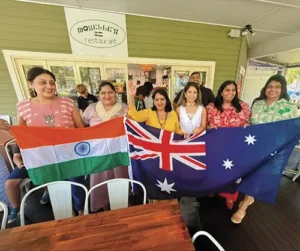
Greater Springfield Lakes came alive with colours, culture, and community spirit as residents gathered to celebrate India’s Republic Day and Australia Day together at Moselles Café.
The event was organised by community leaders Neetu Singh Suhag ( President Haryavi welfare Association In Australia Inc ) and Ritika Ahir bringing people from diverse backgrounds under one roof to honour the values of unity, freedom, and multicultural harmony shared by both nations.

Indian Republic day and Australia Day at Springfield Lakes Ipswich a

Indian Republic day and Australia Day at Springfield Lakes Ipswich dThe celebration was graced by Paul Tully and Pye Augustine Councillors from the Ipswich region, and former MP Leoni, who joined the community in acknowledging the significance of both national days and the strength of cultural connection in Australia’s growing multicultural landscape.

Many community members attended, making the event vibrant and heartfelt. Guests shared stories, laughter, and food while reflecting on the journeys that connect India and Australia. The gathering served as a powerful reminder that diversity is a strength and that community spaces can foster cultural bridges with warmth and respect.
The organisers expressed gratitude to everyone who attended and contributed to making the celebration memorable, inclusive, and meaningful.


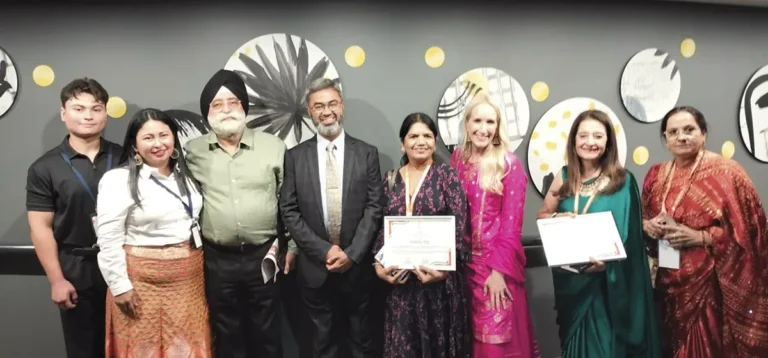
CBS Global Case Competition 2025

CBS Global Case Competition 2025

Siddesh KarekalDetails
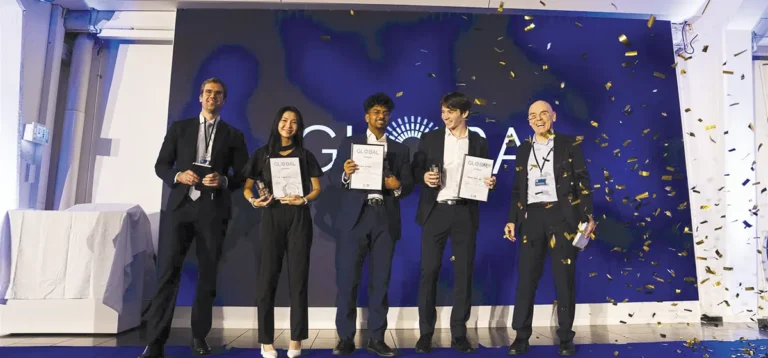
Under intense time pressure, Siddesh and his team developed a strategic response to European Energy’s 2026–2028 expansion, with a strong focus on long-term value creation. They were given just 24 hours to analyse the problem and deliver their presentation. Case company partner: European Energy Denmark
Topic: European Energy Optimisation

CBS Global Case Competition 2025 bThen
Competing against teams from 91 countries, Siddesh advanced triumphantly to the semi-finals. The final contenders included the Netherlands, Canada, and Australia (Brisbane) — a remarkable achievement that reflects exceptional dedication, resilience, and world-class talent.
The organisers arranged all flights, accommodation, and sightseeing, enabling the team to focus fully on their performance. The journey, however, required swift coordination and commitment: permissions had to be secured from universities and government authorities, as Siddesh is an international scholarship holder, and the team had to pack and depart amidst ongoing university final examinations.**

CBS Global Case Competition 2025 cLastly
True South Consulting, presented their case and were declared as the winners. the winners bring glory home! their first win for the University of Queensland.
Siddesh is currently pursuing a Bachelor of Advanced Finance and Economics at the University of Queensland, where he is a Stavros Niarchos Foundation Scholar and a member of the Liveris Academy for Innovation and Leadership. He is also the 2025 New Colombo Scholar (Singapore). He studied as an exchange student at National University of Singapore being one of the 35 students nominated through this scholarship program across Australia.

Winners
Siddesh Karekal, NSU, Singapore Nicholas Egan, NSU, Singapore Joy Yin, UQ, Australia
True South Consulting, Brisbane, Australia University of Queensland
LinkedIn
CCC Global Case Competition 2025 – YouTube https://www.casecompetition.com/global/

Celebrating Community in Brisbane: Holi, Women’s Voices, and Shared Values

Celebrating Community in Brisbane:
Holi, Women’s Voices, and Shared Values

Celebrating Community in Brisbane a

By Xavier Hernandez

As our Brisbane Indian community comes together to celebrate the joy and colour of Holi while also recognising International Women’s Day, I find myself reflecting on gratitude, resilience, and the true meaning of community. I want to begin by acknowledging every woman and female caregiver for the vital role they play in our lives. I was raised by a single mum, and I have seen firsthand the strength, sacrifice, and determination it takes to hold a family, and often a community, together. Her tireless efforts to ensure those around her lived joyful, peaceful, and loving lives continue to inspire me to this day. Every woman has a unique journey, and every story matters, particularly within our Indian diaspora, where women continue to shape communities and pave the way for future generations.
This month, I had the privilege of spending time with some truly remarkable women, including Shanjeshni Deo, who has been the heart and backbone of many community projects. She is a smart businesswoman who deeply values her family, and her unwavering commitment has supported and guided young people like myself, helping us believe in our potential and in what is possible when community comes first. Special mention to Tere Sa know as Khieu Oanh President of VCA-Qld Chapter and Vietnamese Seniors Citizens for hosting a fun filled Australia Day event that I was delighted to attend. I also had the pleasure of sitting down with Madhu Khanna, an unsung hero whose quiet dedication deserves recognition in the lead-up to International Women’s Day. Listening to her speak about her passion for the arts, her work displayed across Logan, her contributions through Logan Libraries, and her efforts to preserve language within our community was deeply inspiring. Madhu may be softly spoken, but her kindness, volunteer work, and lasting impact shine through everything she does, and I truly admire how she and her husband work together to build stronger and more united communities.

Celebrating Community in Brisbane d
Community is also strengthened through the spaces where we gather, and I would like to extend a special thank you to Chatoria Café and Indian Street Food for providing a welcoming place where I could enjoy dishes from North India, South India, and many other regions. With its beautiful atmosphere, particularly in the lead-up to Holi, and its outstanding customer service, it is a reminder of why supporting local community businesses is so important, especially as many families are feeling the pressure of rising living costs and the prospect of higher interest rates.
In recent months, I have noticed a growing desire for stronger representation of women, particularly those from Indian and multicultural backgrounds, in local, state, and federal government. Communities across Springfield, Inala, Oxley, and throughout Queensland are calling for leaders who genuinely reflect their diversity, and with the federal election approaching, I remain hopeful that more women will step forward to represent our voices and lived experiences.
This month I also attended the Mustangs Rugby Football Club meet and greet, and I encourage everyone to come along to their next event. It was wonderful to see how inclusive and welcoming the club is, and I was especially pleased to learn that the Mustangs have now started a women’s team alongside their men’s and youth teams. This is a fantastic opportunity for people of all skill levels to get involved, improve their physical fitness, and just as importantly, support their mental health through teamwork and connection. The Mustangs are currently seeking senior men and women players and welcome anyone interested to attend training sessions held every Tuesday and Wednesday from 6:30pm to 9:30pm at 60 College Avenue, Forest Lake, QLD 4078, and more information can be found through mustangsrfc.com.au or by contacting [email protected].

Celebrating Community in Brisbane b
This month has also prompted important conversations about safety, social cohesion, and our shared values. Following the tragic Bondi terror attack, Australia has introduced what are being described as “hate laws” expanding the definition of hate groups, increasing penalties for hate crimes, and granting authorities greater powers to act against those who incite violence or communal hatred. While many believe strong action against extremism is necessary to protect people and communities, it is equally important that such laws are applied carefully and fairly. Many have raised concerns that the legislation was developed and passed through Parliament rapidly, with limited scrutiny and without broad community consultation. I would genuinely like to hear from you, our readers, about what these changes mean to you, as some have shared fears about speaking openly or asking questions out of concern they may be punished. This is particularly relevant as debates continue around is the government now taking to much control over what can be see, said and herd. For example: tighter legislation governing online content and youth access, freedom of expression, how hate is defined versus factual discussion, and whether alternative viewpoints are being censored in public spaces such as cinemas. These are complex issues, and they are conversations worth having together as a community. At a recent event, a participant asked, where is the word “freedom to choose” in all of this.
Many readers also tell me how much they value staying informed about both local and international news, and this month I was saddened to learn of reports of a Nipah virus outbreak in India, with Australian authorities monitoring the situation closely. While there are currently no confirmed cases outside India, it serves as a timely reminder to remain informed and follow official health advice when travelling. Closer to home, the possibility of further interest rate hikes remains a major concern, and with inflation proving stubborn, many households are feeling anxious about what lies ahead, highlighting just how important compassion, understanding, and community support are during uncertain times. As your yearly bill is predicted to rise by $1000.00 in T.V reports. Please reach out if you need any community support.
Despite the challenges, there is still so much to celebrate, and Brisbane is once again preparing for the most colourful day of the year with the Festival of Colour, Holi 2026. This vibrant celebration is proudly brought to the community by Sargam Music Academy and managed by Platinum Events Services Gold Coast. The festival will take place at the Mount Gravatt Showground on Saturday, 28 February 2026, from 10am to 4pm, with tickets starting from just five dollars, and I encourage everyone to come along, celebrate culture, colour, and connection, and as always, if you see me out and about in the community, please say hello, because I truly value hearing from you. Please stop to have a chat when I’m out and about in the community. Look forward to seeing you at Holi.

The Brisbane Resilience: Navigating the Property Market Amidst Rising Interest Rates

The Brisbane Resilience: Navigating the Property Market Amidst Rising Interest Rates

For years, the Brisbane property market was the “quiet achiever” of the Australian East Coast. However, the post-pandemic era transformed the River City into a powerhouse of capital growth. As we move through 2026, the landscape has shifted. The primary headwind is no longer a lack of demand, but the relentless pressure of rising interest rates and their impact on borrowing capacity.

The Interest Rate Reality Check
The Reserve Bank of Australia (RBA) has utilized rate hikes as a blunt instrument to curb inflation. For Brisbane homeowners and prospective buyers, this has led to a significant “repricing” of the market. When interest rates rise, the serviceability floor climbs, meaning a family that could previously borrow $800,000 might now only be cleared for $650,000.
However, Brisbane’s reaction to these hikes has been distinct from Sydney and Melbourne. While the southern capitals often see sharp corrections, Brisbane has displayed a stubborn resilience. This is largely due to three factors:
1. Relative Affordability: Even with price growth, Brisbane remains more accessible than Sydney.
2. Low Inventory: There simply aren’t enough houses on the market to meet demand.
3. Interstate Migration: Queensland continues to attract residents moving north for lifestyle and lower debt-to-income ratios.

Supply Constraints: The Floor Under the Market
The “Brisbane Advantage” is currently underpinned by a chronic supply shortage. Development has slowed due to high construction costs and labour shortages. This creates a paradox: while high interest rates should technically push prices down by lowering demand, the lack of available stock is pushing them back up.
For investors, this has translated into a rental crisis. Vacancy rates in many Brisbane suburbs are hovering below 1%. While high interest rates make mortgages more expensive, the surging weekly rents are helping many landlords offset those costs.

Suburb Spotlights and Shifting Demographics
We are seeing a “flight to quality” and a “flight to value.”
• Inner-City Resilience: Blue-chip suburbs like New Farm and Paddington remain insulated as high-net-worth buyers are less sensitive to rate fluctuations.
• The Middle Ring: This is where the “mortgage belt” resides. Suburbs like Calamvale, Sunnybank, and Carindale are seeing a shift toward more cautious bidding.
• Infrastructure-Led Growth: With the 2032 Olympics on the horizon, areas identified for infrastructure upgrades—such as the Woolloongabba precinct and the northern corridor continue to see speculative interest despite the cost of debt

The “Wait and See” Strategy
Many buyers have moved to the sidelines, adopting a “wait and see” approach. They are waiting for the “neutral” rate—the point where the RBA stops hiking and holds steady. Once the market perceives that rates have peaked, we likely see a release of “pent-up demand.”

Strategic Advice for the Current Climate
1. Focus on Cash Flow: With higher rates, capital growth shouldn’t be your only metric. Look for properties with high rental yields to help service the debt.
2. Buffer for the “Squeeze”: If you are a homeowner, ensure you have an offset account or redraw facility. Simplicity and conservative budgeting are key.
3. Long-term Horizon: Real estate in Brisbane is currently a long-game. The 2032 Olympics provide a ten-year runway that most other Australian cities don’t have.

Conclusion
The Brisbane property market in 2026 is a tale of two forces: the downward pressure of the RBA’s monetary policy and the upward pressure of Queensland’s fundamental growth drivers. While the era of “easy money” and 20% year-on-year gains has paused, the market is far from a collapse. It is maturing.
For the community leaders and families building their lives in the Sunshine State, the focus has shifted from “how much can I flip this for?” to “how can I secure a stable home in a growing city?” Brisbane remains one of the most compelling property stories in Australia, provided you have the patience to weather the interest rate cycle.

Success Without Burnout: Why Extreme Drive Needs Extreme Balance

Success Without Burnout: Why Extreme Drive Needs Extreme Balance

We live in a world that quietly worships extremes.
Extreme productivity. Extreme discipline. Extreme hustle.
And while drive has its place, unchecked intensity is not the same as success. In fact, it is often the fastest route to burnout, disconnection, and a body that eventually says, enough.
The Xtreme card speaks directly to this tension. It reminds us that when we push too far in one direction, something else must compensate. Balance is not a luxury, it is a biological and psychological requirement. Without it, success becomes brittle, impressive on the outside and unsustainable underneath.
Burnout is rarely sudden. It creeps in quietly. First as fatigue that sleep doesn’t fix, then as irritability, brain fog, loss of joy, or a body that starts whispering through tension, pain, or illness. Many high achievers dismiss these signs, believing rest is something earned later. But the body does not work on delayed reward systems, it works in real time.
Modern psychology supports this. Chronic stress keeps the nervous system in a prolonged state of activation, cortisol remains elevated, recovery pathways are suppressed. Over time, this impacts cognition, emotional regulation, immunity, and motivation. What looks like discipline from the outside can be, internally, a nervous system stuck in survival mode.
From a holistic lens, extremes create imbalance not just mentally, but physically and energetically. When effort outweighs restoration, output eventually declines. Nature shows us this clearly. There is no constant growth season, even the most fertile land requires fallow periods, the nervous system is no different.
The Xtreme card does not argue against ambition. It asks for intelligent ambition, the kind that understands rhythm. The kind that knows when to push and when to pause and be still. Balance does not mean doing less, it means doing what supports longevity.
One of the biggest myths in achievement culture is that rest equals weakness. In reality, recovery is where integration happens. Muscles strengthen during rest, not during exertion. Learning consolidates during those pauses and emotional resilience is built when the system feels safe enough to reset.
High performers often pride themselves on overriding their body. But the body does keep score. Ignoring its signals may feel powerful in the short term, but it erodes trust within. Eventually, motivation collapses, not because discipline is lacking, but because the system is exhausted. Success without burnout requires a reframe. Balance is not passive, it is active regulation. It is knowing when to apply pressure and when to release it and it is choosing consistency over intensity spikes that lead to crashes.
From a Vedic perspective, balance is tied to dharma, right action aligned with one’s nature. Excessive striving without grounding pulls a person away from coherence. Traditions point to the middle path not as mediocrity, but as mastery. In practical terms, this means designing success in a way the body can sustain. Building recovery into schedules rather than treating it as an afterthought. Listening to subtle signals instead of waiting for breakdowns. Asking a different question: Can I maintain this pace for five years, not five weeks?
The Xtreme card invites reflection on where imbalance currently lives. Work without play, giving without receiving, output without nourishment, control without softness. These imbalances often masquerade as dedication yet quietly drain vitality.
True success feels grounded. There is focus without tension, momentum without panic and purpose without self-abandonment. When balance is present, the nervous system supports clarity rather than resisting it.
From a PEMA Mind and Motion perspective, success is not measured by how much you can endure, but by how well your mind and body work together to sustain clarity, purpose, and momentum over time, because balanced systems create better outcomes, personally and professionally.

Explore Further
The Mind and Motion Cards offer guided reflections like this to support your personal growth journey. These tools are designed to complement, not replace, professional support.
For more resources or to purchase the deck, please visit:
https://www.monicapema.com/mindandmotiondeck
Monica Pema | Integrated Wellness Expert
MSc. Psychology
From Passion to Purpose in All Walks of Life
This article is intended for self-reflection and general education only. It is not a substitute for professional medical, mental health, or psychological care.

Street appeal that works for your investment

Street appeal that works for your investment

It’s the time of year when we pay more attention to the front of our neighbours’ homes than at any other time. Flashing lights, inflatable Santas and festive Christmas displays have us admiring facades for streets on end. While the home itself may not be the focus at this time of year, it certainly highlights just how important a property’s first street impression can be.
It takes as little as 20 seconds for someone to form an opinion of a property, the exterior appearance can have an immediate emotional impact on their perception of the overall property.
For rental properties, maintaining a well-kept, easy-maintenance property is key consideration for tenants. In addition, highlighting certain features of the property is a great way to maximise street appeal.
If a façade refresh is on the cards for your investment property in 2026, here are some tips to consider:

Front gardens:
Think easy maintenance and evergreens. Not every tenant has a green thumb, and you don’t want the entry gardens to become an extra burden that is neglected during a tenancy. Take note of other properties in the area – what grows well and looks great? Making the garden as self-sufficient as possible will help it look its best year-round.

Driveways:
Consider safety and practicality. You may not need to make many (if any) changes, sometimes just a good high-pressure clean is all that is required. If the driveway is gravel or stone, ensure it isn’t risk of washing away.

Front doors:
Do you want your front door to stand out? The door style may determine whether a bold colour choice is suitable. A bright front door isn’t to everyone’s taste, so consider the message your colour choice sends as you enter the home.

More on front doors:
While it might not seem like an important detail, the right door hardware can help create the intended feel when entering the home. Consider the age and overall style of the property, and if updates are needed, ensure they remain consistence with the home’s existing aesthetic.

Focal point:
Every home has a focal point, be it the front door, garden, entry steps or even a piece of furniture near the entrance. Whatever it may be, enhance it by ensuring it’s well presented and visually appealing.

Don’t forget the mail:
Finally, consider the condition of the letterbox. If possible, keep it to a style that compliments the house. It doesn’t need to be fancy, but it should be practical. An old, rickety letterbox doesn’t create a great impression for any property.
Remember, you don’t need to spend a lot to improve an already well-maintained home. Keeping the front of your property tidy, low maintenance and clean will go a long way in creating positive first impressions and encouraging long-term tenant care.
Credit: REMAX Australia

Investing in property ownership


Sandy Deo

REMAX Landmark 
0400920238
07 3189 6535
2/3 Curban Street Underwood
[email protected]

Why get regular check-ups for chronic hepatitis B- if there are no symptoms?

Why get regular check-ups for chronic hepatitis B- if there are no symptoms?

Whilst hepatitis B currently does not have an absolute cure there is much research being done to hopefully have a cure soon. Meanwhile any person living with chronic hepatitis B which is defined as blood test showing the following:
• Hepatitis B Surface Antigen (HbsAg) – positive or detected
All people living with chronic hepatitis B need regular monitoring to ensure they do not develop complications such as liver damage (fibrosis), cirrhosis or liver cancer. Unfortunately, these can develop without a person feeling unwell and if left unchecked can be very difficult, and sometimes unable, to be treated.
Chronic hepatitis B like other chronic conditions can be managed well through:
• Liver function tests: a blood test to check the function of the liver – if tests show changes then treatment (including medications for some people) can help the liver to return to its normal functions. These tests are recommended every 6 months for most people living with chronic hepatitis B.
• Viral load tests (or DNA tests): a blood test to check for how much virus is in the blood. This test should be done every 12 months for any person not already on treatment.
• Assessment of fibrosis/cirrhosis – this can be done with a Fibroscan (available free from the Love Health Program at ECCQ through funding from Queensland Health for any person born overseas living with chronic hepatitis B or hepatitis C). This is recommended every 12 months for any person not already on treatment. If a Fibroscan is not available where the person lives then the doctor/nurse practitioner providing care may refer the person for a special type of ultrasound called shear wave elastography or may use another modality such as APRI (an equation using blood test results) to check for fibrosis.
• Abdominal Ultrasound – these check for any cancers and other changes in the liver such as increased size (may indicate early damage through inflammation of the liver – the person doing the test will also check the spleen as changes can indicate early changes in the blood flow caused by changes in the liver). This test is recommended every 6 months as part of Liver Cancer Surveillance for people living with chronic hepatitis B:
• African men and women aged over 20 years
• Asian, Maori and Pacific Islander men aged over 40 years and women over 50 years
• Anyone with liver cirrhosis
• Anyone with a family history of liver cancer, or has had liver cancer and are no longer HBsAg positive
• Aboriginal and Torres Strait Islander people over 50 years
• Anyone with a co-infection of hepatitis D
• People from other multicultural communities who may be at risk.
Other ways to protect your liver health include a healthy varied diet – avoiding processed, fried, salty foods and sugary foods and drinks: regular exercise -recommendations include 30 minutes of brisk walking a day; reducing or avoiding alcohol and not smoking/vaping.

For more information, please visit our webpage at www.eccq.com.au/bbv or call one of our team members who can assist you in your preferred language.
Remember no cure- does not mean that you cannot liver a full and healthy life living with chronic hepatitis B.