The most common hepatitis in Australia are hepatitis A, hepatitis B and hepatitis C.
Food and water can be contaminated by the hepatitis A virus, and if consumed can cause a person to become infected with the virus. The hepatitis A virus is spread through faeces (poo). The person with hepatitis A can spread hepatitis A if their hands are not washed properly when preparing food or drink.
If a person becomes infected with hepatitis A it is usually a short-term illness (acute) and the person will get immunity (will not get the infection again). You can be vaccinated against hepatitis A if you have never had the infection. Before you have a vaccine you should have a hepatitis A test at your GP to find out if you need the vaccine.
We should always wash our hands after going to the toilet and before we handle, prepare or eat food.
Hepatitis B and hepatitis C are mainly spread through blood contact. You cannot get hepatitis B or hepatitis C from sharing food or:
• Plates and cups, chopsticks or cutlery.
• Shaking hands, hugging and kissing.
• Sneezing
• Using public toilets or swimming pools.
• Breastfeeding
• Mosquito bites.
Blood to blood contact can occur with even the tiniest amount of infected blood, from a person infected with hepatitis B or Hepatitis C, including:
• The use of unsterile medical equipment, including tattooing equipment etc
• Blood and blood product transfusions performed overseas
• Sharing personal hygiene items e.g. razors, toothbrushes.
• Cultural practices and traditional treatments including scarification and acupuncture.
• Sharing injecting drug equipment.
• During birth from mother to baby if the mother has hepatitis B, much less common for Hepatitis C.
• Sexual contact if one of the partners has hepatitis B, therefore you should use condoms or have the hepatitis B vaccination if not immune.
A simple blood test will tell you if you have hepatitis A, B or C, or if you have immunity for Hepatitis A or B.
• Any person who has the hepatitis B infection needs regular monitoring.
• Most people who have the hepatitis C infection can be cured.
If you have hepatitis B or hepatitis C, and have not seen your GP about these infections, you should make an appointment with your GP as soon as possible.
If you would like any further information please see our website www.eccq.com.au/bbv or contact our Program on 07 3844 9166
Trinidad and Tobago: Little India of the Caribbean?
“Fiji: Little India of the Pacific”, is a book written about 82 years ago in 1942 by Irish Born Hawaiian Professor John Wesley Coulter.
Probably no relation to the Rev John Wesley the founder of the Global Methodist Church, the dominant Christian denomination in Fiji.
Had the late learned Professor was around in this contemporary era he would be forgiven if he label Trinidad and Tobago: Little India of the Caribbean. Why not, as the major population at 37.8% are of Indian descent, majority of their forebears were brought to the Caribbean as indentured labour on the mid 1880’s.
Trinidad and Tobago, officially Republic of Trinidad and Tobago, Island country, West Indies. The islands of Trinidad and Tobago—the two southernmost links in the Antilles island chain—lie northeast of Venezuela and northwest of Guyana. Area: 1,980 sq mi (5,128 sq km).
Population: (2024 est.) 1,368,000. Capital: Port of Spain. The people are mainly of South Asian or African ancestry. Language: English (official).
Religions: Christianity (Protestant, Roman Catholic), Hinduism, Islam. Currency: Trinidad and Tobago dollar. The islands are mostly flat or rolling, with narrow belts of mountainous highlands and luxuriant rain forests.
The Caroni Swamp, an important bird sanctuary on Trinidad, supports flamingo, egret, and scarlet ibis populations.
The country has large reserves of petroleum and natural gas, as well as one of the world’s largest supplies of natural asphalt.
Other industries include agriculture, fishing, and tourism. Chief crops include sugarcane, citrus fruits, cocoa, and coffee. It is a republic with two legislative houses; its head of state is the president, and the head of government is the prime minister.
When Christopher Columbus visited Trinidad in 1498, it was inhabited mostly by Arawak Indians, though there were probably some Carib speakers as well; Caribs inhabited Tobago.
The islands were settled by the Spanish in the 16th century. In the 17th–18th centuries African slaves were imported for plantation labour to replace the original Indian population, which had been decimated by the impact of slavery and diseases introduced by the Europeans.
Holi Festival celebration in Trinidad Tabago. Source picture: World Normands
Trinidad was surrendered to the British in 1797. The British attempted to settle Tobago in 1721, but the French captured the island in 1781 and transformed it into a sugar-producing colony. The British acquired it in 1802. After slavery ended in the islands (1834–38), immigrants from India were brought in to work the plantations.
Trinidad and Tobago were administratively combined in 1889. Granted limited self-government in 1925, the islands became an independent state within the Commonwealth in 1962 and a republic in 1976. There occurred some political unrest and in 1990 a failed Muslim-fundamentalist coup against the government.
Data and summary source: https://www.britannica.com/place/Trinidad-and-Tobago/People
Some Indian Trinbagonians who helped transform Trinidad and Tobago.
1.Adrien Cola Rienzi (Krishna Deonarine Tiwari, 1905-1972)
2.Dr Rudranath Capildeo (1920-1970)
3.Samuel Selvon (1923-1994)
4.Vidiadhar Surajprasad Naipaul
5.Noor Mohamed Hassanali (1918-2006)
6.Drupati Ramgoonai
7.Dr Anna Mahase
8.Kamla Persad-Bissessar
Former Brisbane resident leads the War against drug in Fiji since 2018
Drug Free Fiji Advocate Ms Kalesi Volatabu
Ms Kalesi Volatabu is the Founder of Volatabu Group – Drug Free World – Fiji. She has paternal links to Tailevu & Lau and maternal links to Kadavu & Ra, and she was born in Fiji, before she left for Australia in 1987 and has she lived in Australia for over 30 years.
In the last 20+ years she worked in various states in Australia as a public servant across the judicial system; in Correctional, Police, and the Attorney Generals Departments.
Her most recent work in Australia was the Executive Director at a Drug and Alcohol Rehabilitation and Education Centre for 12 months, before returning to Fiji in 2018 to help her people, especially in education against the ruthless varied adverse effect drugs to individual ,family ,society and beloved country as a whole.
Her arrival in 2018 was timely in spearheading Drug Awareness Campaigns across the nation, from the Urban to Rural and Maritime areas in Fiji…and, extending her assistance and support to Tonga, Samoa and other Pacific Island nations.
Present day unprecedented surge of drug use and abuse according to Fiji Police.
Six hundred and forty-one (641) drug related offences have been recorded during the first four months of 2024.
The month of February recorded the highest number of cases with189, followed by January with 169, March 160 and 123 for the month of April.
The Acting Commissioner of Police Juki Fong Chew said of the 641 cases, 505 were associated with marijuana while 136 were for methamphetamine, cocaine and heroin.
The prevalent drug offences were for Unlawful Possession of Illicit Drugs recording 594 cases during the four-month reporting period, 44 for Unlawful cultivation of illicit drugs, 2 cases of Unlawful importation and exportation and 1 case of unlawful transfer and supply of illicit drugs.
The Acting Commissioner said concerted efforts on the war on drugs is reflected in the number of cases recorded in all five policing districts.
“The Western Division recorded 271 cases, 151 in the North, 128 in the Southern Division, 58 in the Eastern Division and 33 in the Central Division”.
“We are sharing more detailed statistics so that people are aware of what is happening in their communities and assist law enforcement with the sharing of information”.
In the Southern Division, Lami, Valelevu, Nasinu, Nabua, Samabula, Raiwaqa, Navua and Kadavu recorded cases.
In the Western Division, Lautoka, Nadi, Namaka, Sigatoka, Ba, Vatukoula, Rakiraki, Nalawa, Sabeto, Tavua, Keiyasi and border recorded cases.
In the Eastern Division, cases were reported in Nausori, Nakasi, Korovou, Levuka and Vunidawa.
In the Northern Division, cases were recorded in Savusavu, Labasa, Tukavesi, Taveuni, Nabouwalu, Seaqaqa, while in the Central Division cases were mostly in the greater Suva area.
The Acting Commissioner said the cases are also reflective of policing efforts in detecting the cases and charging those involved.
He adds of concern are repeat offenders, and through community policing efforts Police are working with stakeholders to break the vicious cycle.
The Acting Commissioner is calling for more collaboration to address the growing number of young people involved.
“During the four-month reporting period, 14 of those charged were juveniles, 397 aged between 18 to 35 years, a concerning figure, noting that these are considered to be our future leaders”.
The Acting Commissioner reaffirmed the organization’s commitment in the war on drugs.
“We do not shy away from the fact that perception wise, our efforts are being compromised by the involvement of police officers, and I want to reaffirm our commitment to changing that negative perception for the sake of gaining the trust and support of our communities”.
“It’s not too late as some are labelling current efforts made in curbing the illicit trade. There is strength in numbers, hence our request for community and stakeholder support. Together we can achieve a great deal in protecting our children and our beloved Fiji from the devastating impacts of illicit drugs”, the Acting Commissioner said. https://www.facebook.com/drugfreefiji
Please support the DRUG FREE FIJI campaign by our former Brisbane resident.
They work is self-funded at present, please support our efforts by donating any amount to help us, help our beloved country: https://gofund.me/fdfaf977
Or talk to Kalisi:
Kalesi T Volatabu
Drug Free World Fiji
Ph: +679 907 4068 (Viber/ WhatsApp)
Em: [email protected] https://www.unodc.org/roseap/uploads/documents/Publications/2024/Synthetic_Drugs_in_East_and_Southeast_Asia_2024.pdf
We are a provider of services to the community that focusses on bringing food to the table, offering support of a pastoral nature, and holistic development to those in need.
Our mainstay is to be a support for the community through the selfless giving to those in need. We understand poverty, destitution, need and hunger.
Services
A4 provides free food, valued at between $250 to $300 for a nominal handling fee of $40 which is readily and appreciated by families.
A4 was originally started by a family who came out from Africa and who survived through the challenges faced by many new migrants. A4 has become an oasis of hope in this area. The vision that A4 has, which is to touch the lives of those who live on the wayside of society, people coming from other countries, struggling with and going through cultural shock. A4 feels that there is more to give, than to simply live in Australia and enjoy what this country has to offer. A4 has worked tirelessly for the past 17 years to enact and live this vision, to constantly be in a state of selfless giving back to the community. It is important for A4, in the first instance, to make sure that the basic human need of alleviating hunger is met for the community.
We believe in: Accountability
A4 remains compliant in its adherence to every state and federal requirement for charitable organisations.
Caring
We believe in the sanctity and value of human life. Every human life is precious and needs to be valued and nurtured, which can become difficult if people are hungry. So, A4’s contribution to the community is to help to reduce hunger. We care for each other and for those in need. We care about adapting to the changes in society – as those changes impact the community.
Community
A4 is a non-discriminatory, all-inclusive organisation providing services to everyone in the community, based on the concept of the Judio-Christian principle of “as you have done it for the least of these people, you have done it unto me”.
Services
A4 provides free food, valued at between $250 to $300 for a nominal handling fee of $40 which is readily and appreciated by families.
The food pack generally resolves to provide for all meals of breakfast, lunch and dinner. Often, additionally including something for the children. Products are healthy, fresh and wholesome. Food packs always include meat or fish products, to ensure a main dinner meal for a family.
Integrity
From its inception up to now (which is 18 years), A4 has not wavered in its determination to continue to offer services to and feeding the community. A4 started with nothing and can now say that they are feeding about 4000 families. Despite the many challenges, A4 wishes that they can do more. To continue to grow and keep moving forward, A4 is therefore exploring all levels of Government grants to move its operation to a higher level now and in future.
320, Rithcie Road, Pallara, Telephone: 0403645246
Federal Senator Paul Scarr congratulates our own “International Media Mogul”, Jitendra Deo
The Queensland Senator is no stranger to the Multicultural Communities as he graciously frequents respective diaspora community events.
Our Senator friend is an unmistakable father and elderly figure across our multicultural Queensland and beyond and has over the years garnered a lot of respect from community leaders.
A very timely suggestion he made during the Girmit Celebration Speech in the Girmit and Deo Family Foundations event of May 18th, 2024 that “our students in High School should learn more of our Pacific History” noting the over 60 thousand indentured laborers from far away India brought sparingly to Fiji, in the Pacific from 1879 to 1916 .
Senator Scarr passionately and rightly reminisced that “I wonder how proud your ancestors must be to see everything you have achieved. To see everything their descendants have achieved is absolutely spectacular, it is just incredible.”
Many Pacific Community leaders and even us here at your Brisbane Indian Times like to believe that Senator Scarr is our Pacific Man and Multicultural advocate within the echelons of power in Canberra. Even before he entered the Australia Upper House of Parliament and appointed Shadow Assistant Minister for Multicultural Engagement, our friend Senator Paul Scarr has numerous professional and personal firsthand experiences within the Pacific and multicultural communities.
Unlike many sitting Australian Parliamentarian who only visit the Pacific for a few days holiday, Senator Scarr, however for a period lived and worked in the Pacific as a Senior Associate of a major Law Firm with offices in Australia and PNG.
In edifying our beloved budding “International Media Mogul” Jitendra was not just a pleasantry comment of a speaker of the event but Senator Scarr echoing the spirit of his purpose and intent of one of the reason he wanted to be a people’s representative in the Australian Senate when he passionately declared in his maiden speech in Senate on September 10th 2019 that “ One of the driving reasons I sought election to this place was to make it easier, not harder, for Australians to pursue opportunity and create wealth through their own initiative, their own enterprise and their own spirit”
Senator Scarr is, indeed, an endeared friend of us migrants who on few occasions feels our rights are at time intentionally or inadvertently trample upon. To his credit in the same maiden speech, he added shamelessly that “I will always be a fierce defender of the right of the individual to express their views, to hear other people’s opinions and to be sovereign over their own beliefs, thoughts and conscience.”
In concluding one of the best maiden speeches ever delivered by a new member of Parliament the all-inclusive words of wisdom and hope of a true widely respected community elder and father figure to diaspora communities in the multicultural Australia that graciously asserts that “We are all Australians now.”
The Deo family of Brisbane, Queensland, proprietors of the JD Media Corporation, are grateful we Queenslanders can be represented in the Australian Federal Senate by our dear friend, Senator Paul Scarr.
Please read below Senator Scarr full speech at the Girmit Celebration 2024:
Good evening, everyone.
What a wonderful delight to be here with you.
Can I acknowledge the traditional owners and pay my respect to past, present and emerging, and Jitendra to your family and everyone involved in the organisation of this event.
Congratulations, Congratulations to Jitendra and family.
Thank you very much.
I just want to share three reflections with you today.
The first, the over sixty thousand who came from India to Fiji between 1879 and 1916, I wonder how proud your ancestors must be to see everything you have achieved. To see everything their descendants have achieved is absolutely spectacular, it is just incredible.
It has not just been as we heard, have just been the contribution of Fiji, but all the other countries where the diaspora has moved to, including Australia, to have made a wonderful contribution.
I should also say, I acknowledge James as the MP for Stretton and Jon who was here as Mayor of Logan. Cr Frazier and my good friend Pinky Singh, candidate for Mansfield.
I am lucky I do not have to be precocial, I am a Senator for the whole of Queensland, the whole of Queensland, does not matter if you are in Logan, Stretton, in Mansfield or wherever you are, I am your representative. Which makes things easier.
So, congratulations to everyone who received an award earlier today.
The second thought I want to share with you is I think our students in High School should learn more of our Pacific History, right?
There is not enough history of the Pacific taught to children in high school, and I think we should learn more of our Pacific History because it is absolutely fascinating, and this is one of the chapters in the History of Pacific. So, I want to share that thought with you.
Lastly, in relation to our “International Media Mogul”, Jitendra, Congratulations! Multicultural media is just so important in terms of keeping people together, keeping the Diaspora together, informed, pursing issue of key importance to relevant diasporas and I am sure Jitendra, you and your family will just do wonderful job in terms of impetus in sowing this.
Is Britian ready to elect her first non-caucasian Prime Minister?
Source: Sky
Will Hon Rishi Sunak be pushed aside by the Tory MPs to make way for whoever is in the running to replace him?
After all Sunak become Prime Minister of the Britain not by vote of British public nor British Parliament but by 2 Tory MP’s pulling out of the race where he stood unopposed.
As the dust settled from the votes, even arch-Sunak critic Suella Braverman said that “changing leader now won’t work”.
Prime Minister Rishi Sunak & Akshata Murty Lead The Coronation Procession.
But pressure remains on the prime minister from within his party as they remain roughly 20 points adrift of Labour in the national polling.
Tory MPs could get rid of the PM and – if they are successful – who would likely be in the running to replace him.
The process of removing a Tory leader is governed by the 1922 Committee – also known as the ’22 – a group of backbench Tory MPs.
If a Conservative MP wants a new leader, they write to the head of the ’22 saying they have no confidence in the incumbent.
Should the Tory MPs vote to unseat Mr Sunak, majority say they have no confidence in him (50% +1) a leadership contest is triggered.
Mr Sunak would be barred from standing in the subsequent contest.
However, if the leader wins a vote of no confidence, they are then immune from a further such challenge for a year.
Boris Johnson also survived a confidence vote of Tory MPs in June 2022, but emerged from the ordeal weakened as a significant number of Conservatives (148, 41%) voted against him.
He announced his resignation a little more than a month later.
Are there any other circumstances in which the PM could go?
Another way Mr Sunak could be ousted is if the so-called “men in grey suits” tell him to step aside and he heeds their advice.
This is when senior Conservative MPs – like Sir Graham – tell the party leader they do not have the support of the party, and should step aside to save the ignominy of the above votes.
Of course, Mr Sunak could decide himself that the game is up and opt to jump before he is potentially pushed, but this is unlikely.
The exact rules for the contest would be set out by the ’22 after it is triggered.
Nominations for candidates would likely open quickly, with prospective leaders needing the support of a certain number of colleagues to stand.
Once nominations have closed, there would then be rounds of voting among Tory MPs for their preferred new leader. The worst-performing candidate in each ballot would be eliminated, until just two remain.
This pair would then compete for the votes of Conservative Party members, slugging it out to become party leader and prime minister.
This is what happened in the summer of 2022, when Rishi Sunak and Liz Truss were left as the last two candidates in the race to succeed Mr Johnson.
Under our parliamentary system, the prime minister is leader of the largest party in the Commons.
If the Tories decide to get rid of Sunak and replace him, there is no legal obligation upon the party or the new leader to seek a fresh mandate from the electorate straight away.
Who is likely to be in the running to succeed Sunak if he goes?
Source: ET
Article partly sourced from: Sky News
Welcoming Xavier Hernandez to the Brisbane Indian Times Family
Xavier Hernandez needs no formal introduction as he is a regular attendee, volunteer, supporter of the Indian community, Multicultural and broader community. He a tireless volunteer for the community and when his not volunteering for the community he loves to raise funds for important causes.
Xavier will be completing the 48Km Kokoda Track challenge this along with several other members of this Saint John Anglican College school cohort. Participants arrive on 13 July at the Gold Coast Hinterland within 16hrs approx. From an early age Xavier has seen the importance of giving back.
“I decided to participate in the 48Km walk which raises money for the Kokoda youth Foundation as I was lucky enough to meet and learn more about the recipients last year”
The Kokoda Youth Foundation is an Australian Charity that runs free youth programs for kinds in the local community, empowering disadvantaged, and disengaged youth with tools to realise their full potential.
I was able to raise just over $2000.00 and ranked in the top 2 last year thanks to the generosity of the community. Doubling his goal in a short period of time.
I encourage anyone who is able or willing to donate to visit my site at https://www.kokodachallenge.com/fundraisers/XavierDavis-Hernandez25670/kokodachallenge-gold-coast-48km-school-2024?fbclid=IwZXh0bgNhZW0CMTAAAR18glMVqRVV0pFII7L3PN-nw5ZzCR9BCEuYKOEtQh0gjJSW7Gc5ctPToAA_aem_AWfxnofB_cuM0lsq0QYhxm3xlGeO01kNzHD32tS2GTwnaab51-EZGPeqBSyiT62LYwYCeDw74ZxIYXR8hHzezCii .
He might only be 14 years old, however, he doesn’t let his age or busy schedule stop him for taking on new challenges. He co-ordinating monthly Indian Times community surveys. These surveys will help the Indian Times team report on articles that are important to you.
Please make time to complete his survey by going to this link : https://us17.list-manage.com/survey?u=e2a27a9d91a2076e4df41b4e0&id=416e73cf10&e=*|UNIQID|* or scanning the barcode.
Diya of hope lit 145 years ago burns on in our hearts
Diya of hope lit 145 years ago burns on in our hearts
For few years now, pre and post global pandemic the Fiji Girmit Foundation Australia has hosted the Anniversary celebrations in Queensland, Australia.
The Engine room however to bring this event to reality was the generous sponsorship of Deo Family Charitable Foundation and Deo Group of Companies.
Fair to note the numerous patriotic interests generated with the proud descendants of the Girmit forebears. A Girmit legacy that has warmed the hearts of the Indian Community globally even Indian descendants of later Indian migrants.
The Girmit phenomenon, though shameful and ruthless the sad history it records, has now become a respected and revered global brand of human survival and modern day exemplary and noticeable global achievements of her descendants in all continents and territories across the globe.
The Fiji Girmit Foundation Australia and her sponsors eternally treasures the Girmit phenomenon. Hence, with all honourable intent and purposes have gone above the rhetoric severally mimicked in intermitted post and periodic blog in social media, now decided to up the ante in not only celebrating anniversaries of Girmit era but duly recognising exceptional professional and civic achievements of nominated Girmit descendants. On May 18th, 2024, was the second time these awards were deservingly presented to Girmit descendants from Fiji, now residents of Queensland.
It was fitting therefore for the Chairman of the Fiji Girmit Foundation Australia, Jitendra Deo in a passionate speech expounded on the essence of Girmit and both Foundation’s vision and mission to keep Diya of hope lit 145 years ago burning in our hearts. This is the Chairman, Jitendra Deo’s Speech and in observance of Indigenous Australian protocol and rightly so recognised his fellow dignitaries and community leaders.
Greetings and Good Evening,
As Chairperson of the Deo Family Foundation and the Fiji Girmit Foundation Australia I extend our warmest greetings to everyone present here – Bula Vinaka, Namaste, Salaam.
As is customary, I begin by acknowledging the Traditional Custodians of this land, past, present, and emerging. Our deepest respects to their Elders.
A very warm welcome to our esteemed guests:
His Worship, Cr JON RAVEN Mayor of Logan City
JAMES MARTIN Member for Stretton
PAUL SCARR Senator for QLD
Cr TIM FRAZER – Councillor for Division 7, Logan City Council.
LEWIS LEE OAM – Chairman Australians of Chinese Heritage War Memorial Committee at Sunnybank RSL
ALAN CHEN – President of Universal Education and Multicultural Exchange Association.
JANE WANG – Secretary of Universal Education and Multicultural Exchange Association
LILA PRATAP – President of Damini Women’s Association
MIKE HARRIS – President of Australian American Association Brisbane
NAYDA HERNANDEZ – Secretary Queensland Multicultural and Wolston Park Cricket Club Secretary
Ms JUHEE PARK President of Southside Migration Association
Ms PINKY SINGH Candidate for Mansfield
RAJ PRASAD – Treasurer Indian Senior Citizens Association
ROSHINI SHARMA – President of Ekta Women’s group and Deputy Principal at Calamvale Community College
TERESA POKOJ – Treasurer of Australian American Association Brisbane
JITENDRA PRASAD – Charter president, past District Governor, and current District 9620 membership director.
Mr Ali with his wife Khursheed at the Girmit Nite Celebration
SHOBNA BALI – PRO of Indian Senior Citizens Association
Many others, I may be unable to mention all of you, I am so grateful and thank you all for your continued support for a most worthy course of public interest.
This month of May, and into June, a few countries around the world who were recipients of the thousands of Girmit workers from Indian in the 1800s, will commemorate Girmit day. Fiji will be joined by Jamaica, Saint Lucia, Trinidad and Tobago, Saint Vincent, Grenadines and Suriname and others.
According to Girmit.org a comprehensive website on Girmit information and data composed by our dear sister Vanita Kumar, that over 2 million Indians were shipped to these Colonies around the globe in the mid-1800s to 1916. This website affirms that 60,500 were shipped to the Fiji Islands.
Ladies and gentlemen, please, I beg each of you to travel back with me in time to the early 1800 and attempt picture our Girmit forebearers long torturous open ocean journey with a very bleak promises for personal prosperity to hang on to. Landing in a land foreign in every way; foreign in language, political, religious and traditional culture, and even culinary preference.
Traumatised, tired and malnourished were our forebearers’ bodies and minds, still swaying in the rhythm of the open sea journey, over many weeks. A journey they were promised will just be around the corner for a few hours or few days.
From these fear and uncertainty, our forebears resolved the only way to steady their lives on firm life-foundation in a foreign land was through hard work, Indian perseverance gracefully weathering the ruthless colonial storms and challenges as semi-slaves.
How could we, the new millennium Girmitya descendants even consider chucking this proud legacy to the back burners of life?
Without them and their individual sweat and blood sacrifice, we most definitely would not have reached the plateau of prosperity, democracy and have a claim to our respective autonomy where we are today freely achieving what we aspire to be.
My wife Shanjeshni, I and our two handsome sons Ravneel and Soneel, with all honourable intent and purpose did engrave in the Constitution of our family foundation the vision and mission to advance the culture and identity of the Indian community in Australia , providing information on the history of the Girmitya to members and the general public through events and activities bringing in positive difference in the lives of people, empowering individuals and communities to achieve their full potential and lead fulfilling lives.
This is such a momentous event, and today, as you individually bless us with your attendance to celebrate the Australia Girmit foundation fourth Girmit anniversary celebrations, indeed humbles us as a family. In fact, most of the credit must be afforded to most or all of you who have been with us since our inaugural event in 2021.
Even the ruthless pandemic era did not dampen all our resolve to still meet in May and commemorate such worthy sacrifice that altered the globe’s economic, political, social landscape then, now and for ever.
Their dreams were not in vain at all for they were people of faith. While crossing the wide-open ocean they yearned and cried in prayer to the God and gods they worship. Majority were Hindus, some Muslim and very few Christians.
Standing on the deck of those Girmit sailing ships watching the night skies with glittering stars during those open sea journey, our forebearers must have in deep prayer yearned for home, motherland India. At the end of a back-breaking labour of the 7 days working week must have been draining in all sense of the word. Night would have been spent thinking and wishing for better tomorrows for them and later their toddlers innocently enjoying the humble mud floor hut or overcrowded barracks.
Ladies and gentlemen, from the cloudy dust of uncertainty and tyranny our people rose with dignity, rose from near slavery to liberty. Over the decades, out of the loins of Girmityas, were born the remnants of the blessings of our forebears, producing leaders and pioneers in many fields, even as Prime Ministers.
We have indeed come a long way as a people grouping. We the proud Girmityas descendant will continue to sail on in whatever through God’s providence will bring our way.
Later in tonight’s program our Chief Guest, His Worship Councillor Jon Raven, Mayor of Logan City, has been invited to inaugurate the Global Indian TV. This online TV channel is part of the JD Media Group’s tripartite cross-media group with the Australian Indian Radio and tabloid, Brisbane Indian Times.
To conclude, as I mentioned many of life events are through God’s providence, as this time last year we would have laughed it off if someone taunted that in 12 months’ time, we would be blessed owners of these 3 cross-media entities.
Would have been less stressful to comfortably stay in our Real Estate and Electrical Business and return home every day and enjoy each other’s company.
However, the sweat and blood sacrifice of our forebears Girmityas and the platform of courage and firm foundations of life they built should not and must not be chucked away to the back burners of life.
The Fiji Girmit Foundation Australia, Deo Family Charitable Foundation, and the JD Media cross-media group will climb any mountain, cross any valley and sail any seas or whatever it takes to keep the Girmit legacy alive!
That is our lifetime commitment, and we thank each of you who would take that journey with us. Vinaka Vakalevu, Dhanyavaad.
—————————————————————————-
Mrs Raj Kumari Pratap Raj Kumari worked in the CWM hospital for 25 years. She spent 5 years in general nursing and another 20 as the sister in charge of the Eye Department, famously being known as Sister Raj in Fiji. To achieve her ambition to be a nurse and help people, she had to leave her home in Nausori and go to the Western side of Fiji to study. During her years studying, she was part of the girls guide. She went to the villages of Fiji and assisted in looking after the elderly. She showered them and cleaned their wounds, with the limited resources they had. As a nurse she helped people not only those on mainland Fiji but also those on the outer islands.
Mr Rup Narain Rup Narain, hailing from humble beginnings, dedicated himself to advancing rural communities. Serving as an advisory councilor from 1972 to 1998 in Fiji, he tackled community issues and advocated for vital infrastructure like a bridge for village access. Recognized for his service, he received the BEM medal from the Queen in 1991 and a medal from the Fiji Government for his educational and social leadership. As a Head Master, he uplifted various schools, including rural ones. He volunteered on multiple boards, including the hospital and drainage boards, demonstrating compassion and dedication without seeking personal gain, leaving a lasting impact on the communities he served.
Mrs Kushla Sahai Kushla Sahai’s teaching journey began in Fiji in 1965, where she infused culture and language education through festivals and cultural events. Beyond teaching, she engaged in community activities, mentoring girls as a Girls Guides leader and managing a netball team in Raki Raki District. Upon moving to Brisbane, she became a teacher aide at Logan Reserve State School, introducing Indian culture and fundraising. Over a decade, she taught Hindi at Rochedale High School, while serving as Ekta Women’s Group president for 15 years. Despite challenges as a migrant, she seamlessly integrated Indian language into the Australian environment, juggling a full-time job, raising three children, and fulfilling family duties.
Mr Sadhu Prasad Sadhu Prasad, born in Korotari Labasa in 1937, began his career as a licensed teacher in 1954 before joining the family business in 1955. He established Nabouwalu Supermarket in Vanua Levu in 1960. A key figure in soccer, he served in various capacities in the Labasa Soccer Association from 1960 to 1984, earning the title “Father of Soccer” in the north. He contributed significantly to Fiji Football Association, organising the Girmit tournament in 1979. In Labasa Jaycee’s organisation, he served as president for 15 years and initiated various community projects. Migrating to Brisbane in 2000, he remained active in community organisation’s, earning recognition for his voluntary service, including a Paul Harris Fellow Award in 2007. He is also a life member of the Fiji Senior Citizens Association.
Mr Krishna Datt Mishra Krishna Datt Mishra is a retired Superintendent of Police. He migrated to Melbourne in early 1990’s. He worked for AMP as an insurance representative where he gained immense success and respect within our communities.
During retirement he was the President of Shree Sanatan Dharam Sabha of Victoria for a few years, however continued as a valuable board member serving the community. He relocated to Brisbane in 2004 and has been as active member within the Indian Seniors. Age is just a number when it comes to Krishna’s hobbies especially enjoying staying active and updated with sports globally since he was the Manager for Ba Soccer Club in Ba, Fiji in the 70’s.
Mr Rajendra Prasad Rajendra Prasad, a dedicated school manager, enhanced learning environments at Korovuto Primary and High school in Fiji. His efforts in infrastructure development improved transportation, easing access to schools, hospitals, and towns. Establishing a postal agency in Nacovi facilitated communication for local residents. In Brisbane, he pioneered the Indian Senior Citizen Association and supported the Ekta Women’s Group. As president, he prioritised social, emotional, and mental health support for Indian seniors, fostering connections through local bowls clubs. Amid challenges including legal intricacies and health issues, he navigated language barriers, demonstrating resilience in his commitment to community service and welfare.
Mr Karan Singh Karan Singh, a Fiji School of Medicine graduate, served as Chief Pharmacist at Colonial War Memorial Hospital (CWM) in Suva from 1981. Prior to this, he worked at various hospitals in Fiji. Upon migrating to Australia in 1988, he contributed to Royal Prince Alfred Hospital, Sydney, and later Queensland Health in Brisbane until retirement. Notably, during Fiji’s 1st coup, he provided essential medical support, being on call day and night, marked with a Red Cross sign. Despite family concerns, he prioritised patient care, symbolised by his blue-armband and ambulance journeys, demonstrating dedication to public health and humanitarian service.
Mr Ahmad Hussain Ahmad Hussain, along with his brothers, established Tebara Meat Company in Fiji before migrating to Australia in 1986. He played a significant role in the establishment and leadership of mosques in both countries. Serving as a police officer in Fiji for five years, he later became the first president of Darra Islamic Society Mosque in Brisbane, a position he held for a decade. During his tenure, he acquired a new site for the mosque in Oxley. Beyond presidency, he remained actively engaged in fostering community spirit, promoting dialogue among religious groups, and nurturing a welcoming environment at the mosque, epitomizing his dedication to spiritual and social welfare.
Mr Sangeet M. Chand Sangeet boasts 51 years of medical service, including 30 at PA Hospital, 20 in Fiji, and 1 in New Zealand. Amidst the pandemic at 68, he continued working, demonstrating exceptional dedication beyond retirement age. Passionate about his Girmit ancestry, he organised numerous Girmit events and the first Girmit soccer in QLD, revitalising the Fiji Indian community post-coup. He co-founded the Brisbane BA Sports and Social Club, served as vice president, and helped establish the QLD Fiji Football Association. Sangeet’s cultural contributions extend to Hindu and Sanatan associations, charity work, pastoral care, and advocacy for cultural leave, making him worthy of national recognition.
Dr Raghwa Sharma Associate Professor Raghwa Sharma, based in Sydney, is a chief Gynaecological Pathologist at Westmead Hospital, specializing in Cytopathology, Sarcoma, and Melanoma diagnostics. With over 15 years of experience, he supervises registrars and has served as acting Director for over 3 years. He’s a vital member of the Research Advisory Committee for ANZGOG and chairs the RCPA Pathology Outreach Educational Committee. Dr. Sharma is instrumental in postgraduate pathology training in South Pacific Island countries and serves as an examiner for FRANZCR. Beyond medicine, he delves into holistic studies, including Vedic, Hindu, and yogic knowledge, advocating for integrative medicine and sharing spiritual insights.
On May 18, 2024, will forever be remembered as the inauguration day of the Global Indian TV channel by His Worship Cr Jon Raven, Mayor of Logan City. Pictured here, during the ribbon cutting ceremony with Mayor Jon Raven are the Directors of the Deo Group of Companies led by the Chairman Mr. Jitendra Deo, Mrs. Shanjeshni Deo, sons Ravneel Deo and Soneel Deo with the convenor of the inauguration ceremony, Mr. Lewis Lee OAM.
A major feature of your Global Indian TV will be well selected Hindi Movies sourced not only from Bollywood productions but from other Indian Diaspora production houses globally.
Nothing mythical but mere coincidence that historically on May 18, 1912, the first Hindi film “Shree Pundalik” was released at the Coronation Cinematograph, Girgaum, Mumbai. Now Indian movies number in the hundreds and thousands. Affected by the pandemic the numbers dropped to 564 releases in 2020 and now at 1,796 new releases in 2023!
You heard of the “Smiling Buddha”? Well, glad you asked. On May 18, 1974, under Prime Minister Indira Gandhi, India detonated its first atomic bomb named the Smiling Buddha. Keep reading your Brisbane Indian Times so you will not miss some nuggets of news like this.
But please do remember May 18, 2024, as the day your Global Indian TV was majestically inaugurated with fanfare witnessed by dignitaries present; the Federal Senator Paul Scarr, Queensland State Parliamentarian MP James Martin, Cr Tim Frazer and other distinguished guests and a global audience of the Global Indian TV channel.
The orbiting globe of the Global Indian TV logo underpins the very essence of the global reach of your Television Channel, streaming far and wide into our homes.
Let us pause and admire this fascinating ability to view Television of high-definition image now available on a device in the palm of your hand. Admirable indeed, the journey of the invention of Television went through many hands from every corner of the globe over the century since 1884, around the time our Girmit forebears were hoodwinked into taking the journey away from motherland India.
The arrival of Television around the second Industrial revolution era profoundly altered the world as media consumers habit undergoes a significant shift.
It amazes us how the pioneer inventors discovered in amazement the basic four key technologies that had to be developed before any form of television could become a possibility. A device to change light into an electric current, change the electric current back into light, a scanning device to break the image up into small elements, and an electronic amplifier to increase weak signals to a usable level.
From these basic and very important discoveries stemmed the development of ideas towards a successful television system.
The Television journey has taken us from Mechanical television, sometimes known as mechanical scan television (CRT), to Electronic Television that uses electronic signals to produce images on a video screen and transmits images and sounds by means of radio waves, microwaves, or infrared rays.
The Digital era heralds in the Digital television using digital technology and receiving television signals via terrestrial, satellite, or cable networks.
In comes the new millennium with Smart television, integrated Internet, and interactive Web features, such as apps, streaming media, and Web browsing. Smart TVs allow users to stream content from the Internet and the use of social networking services.
Enjoying Global Indian TV on a handheld device beaming wirelessly from a mega server would have been the envy of the first BBC broadcast during the Coronation of King George VI in May 1937. How is this for starters, when eight miles of television cable weighing several tons was laid around central London, providing the link for live coverage of the procession was recognized as a record with over 10,000 in TV audience watching the coronation.
In May last year, in the late King George VI grandson King Charles III coronation an average of 18.8 million people tuned in to watch in the UK. That is not yet considering the syndicated recipient TV stations in countries like Australia, NZ, Canada, US etc.
Thank you, to the inventors and pioneers of this gift to humanity.
Now for you, the reader, to enjoy, not through cumbersome tons of cable to reach you, but easily accessible by simply click on the Global Indian TV App on Google drive or App Store.
Stay connected with your Global Indian TV, 24/7. We sure enjoy your company, as you will enjoy ours.
In the world of natural remedies for hair care, guava leaves stand out as a hidden gem. While guava fruit is celebrated for its delicious taste and numerous health benefits, its leaves often go unnoticed, especially when it comes to hair care. However, the truth is that guava leaves are packed with nutrients and compounds that can work wonders for your hair, particularly in promoting thickness and strength. Let’s delve into the secret benefits of guava leaves for achieving luscious, thick locks.
Table of Contents • The Nutrient Powerhouse: What’s in Guava Leaves? • Vitamin C • Antioxidants • Essential Oils • Guava Leaves: The Key to Thicker Hair • Stimulates Hair Growth • Strengthens Hair Roots • Prevents Hair Loss • Conditions the Scalp • Adds Shine and Luster • How to Use Guava Leaves for Hair Thickness • Guava Leaf Infusion • Guava Leaf Hair Mask • Guava Leaf Oil • Final Thoughts
THE NUTRIENT POWERHOUSE: WHAT’S IN GUAVA LEAVES?
Before we get into the benefits, it’s essential to understand what makes guava leaves so special. These leaves are rich in vitamins, antioxidants, and other nutrients that are crucial for hair health. Some of the key components include:
VITAMIN C
Guava leaves are loaded with vitamin C, known for its antioxidant properties. This vitamin helps protect the hair follicles from damage caused by free radicals, thereby promoting healthier and stronger hair.
ANTIOXIDANTS
Apart from vitamin C, guava leaves contain various antioxidants such as flavonoids and tannins. These compounds protect the hair from oxidative stress and damage, which can lead to thinning and breakage.
ESSENTIAL OILS
Guava leaves also contain essential oils that have antimicrobial properties. This helps in keeping the scalp clean and free from infections, ensuring optimal conditions for hair growth.
Now that we know what guava leaves have to offer let’s explore the incredible benefits, they can provide for achieving thicker hair.
STIMULATES HAIR GROWTH
One of the most significant benefits of using guava leaves is their ability to stimulate hair growth. The nutrients present in the leaves nourish the follicles, promoting faster and healthier hair growth. Regular use can result in thicker and longer locks that are full of vitality.
STRENGTHENS HAIR ROOTS
Weak hair roots are often the culprit behind hair thinning and breakage. Guava leaves contain compounds that strengthen the hair roots, making them less prone to damage. Stronger roots mean less hair fall and increased thickness over time.
PREVENTS HAIR LOSS
Hair loss is a common concern for many individuals, and guava leaves offer a natural solution. The antioxidants in these leaves help in combating free radicals that can weaken the hair follicles. By protecting the follicles, guava leaves reduce hair fall and promote thicker hair growth.
CONDITIONS THE SCALP
A healthy scalp is essential for optimal hair growth, and guava leaves excel in this aspect as well. The essential oils present in the leaves moisturize the scalp, preventing dryness and itchiness. A well-hydrated scalp promotes the growth of thick and strong hair.
ADDS SHINE AND LUSTER
Who doesn’t want shiny, luscious locks? Guava leaves can help you achieve just that. Regular use of guava leaf extract or infusion can add a natural shine to your hair, making it look healthy and vibrant.
HOW TO USE GUAVA LEAVES FOR HAIR THICKNESS
Now that you’re aware of the incredible benefits of guava leaves for hair, you might be wondering how to incorporate them into your hair care routine. Here are a few simple methods:
GUAVA LEAF INFUSION
1. Boil a handful of guava leaves in water for about 20 minutes.
2. Let the mixture cool down and strain the leaves.
3. Use the guava leaf-infused water as a final rinse after shampooing.
4. Leave it on for a few minutes before rinsing with plain water.
GUAVA LEAF HAIR MASK
1. Grind fresh guava leaves into a fine paste.
2. Mix the paste with a bit of water to make a smooth mask.
3. Apply the mask to your scalp and hair, focusing on the roots.
4. Leave it on for 30 minutes to an hour before washing it off with a mild shampoo.
GUAVA LEAF OIL
1. Crush a handful of guava leaves and mix them with coconut oil.
2. Heat the mixture on low flame for a few minutes.
3. Let it cool and strain out the leaves.
4. Massage the guava leaf-infused oil into your scalp and hair.
5. Leave it on overnight for best results, then wash it off with shampoo.



 The most common hepatitis in Australia are hepatitis A, hepatitis B and hepatitis C.

 Why not, as the major population at 37.8% are of Indian descent, majority of their forebears were brought to the Caribbean as indentured labour on the mid 1880’s.



 We are a provider of services to the community that focusses on bringing food to the table, offering support of a pastoral nature, and holistic development to those in need.





 Xavier Hernandez needs no formal introduction as he is a regular attendee, volunteer, supporter of the Indian community, Multicultural and broader community. He a tireless volunteer for the community and when his not volunteering for the community he loves to raise funds for important causes.
 From an early age Xavier has seen the importance of giving back.

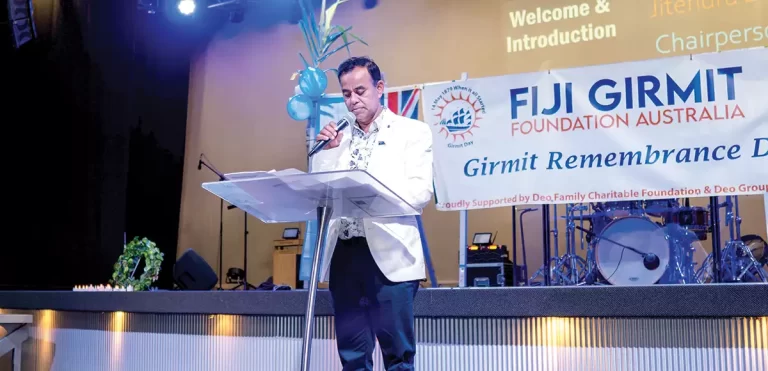


 The Fiji Girmit Foundation Australia and her sponsors eternally treasures the Girmit phenomenon. Hence, with all honourable intent and purposes have gone above the rhetoric severally mimicked in intermitted post and periodic blog in social media, now decided to up the ante in not only celebrating anniversaries of Girmit era but duly recognising exceptional professional and civic achievements of nominated Girmit descendants.
 On May 18th, 2024, was the second time these awards were deservingly presented to Girmit descendants from Fiji, now residents of Queensland.
 This is the Chairman, Jitendra Deo’s Speech and in observance of Indigenous Australian protocol and rightly so recognised his fellow dignitaries and community leaders.

 Raj Kumari worked in the CWM hospital for 25 years. She spent 5 years in general nursing and another 20 as the sister in charge of the Eye Department, famously being known as Sister Raj in Fiji. To achieve her ambition to be a nurse and help people, she had to leave her home in Nausori and go to the Western side of Fiji to study. During her years studying, she was part of the girls guide. She went to the villages of Fiji and assisted in looking after the elderly. She showered them and cleaned their wounds, with the limited resources they had. As a nurse she helped people not only those on mainland Fiji but also those on the outer islands.
 Rup Narain, hailing from humble beginnings, dedicated himself to advancing rural communities. Serving as an advisory councilor from 1972 to 1998 in Fiji, he tackled community issues and advocated for vital infrastructure like a bridge for village access. Recognized for his service, he received the BEM medal from the Queen in 1991 and a medal from the Fiji Government for his educational and social leadership. As a Head Master, he uplifted various schools, including rural ones. He volunteered on multiple boards, including the hospital and drainage boards, demonstrating compassion and dedication without seeking personal gain, leaving a lasting impact on the communities he served.
 Kushla Sahai’s teaching journey began in Fiji in 1965, where she infused culture and language education through festivals and cultural events. Beyond teaching, she engaged in community activities, mentoring girls as a Girls Guides leader and managing a netball team in Raki Raki District. Upon moving to Brisbane, she became a teacher aide at Logan Reserve State School, introducing Indian culture and fundraising. Over a decade, she taught Hindi at Rochedale High School, while serving as Ekta Women’s Group president for 15 years. Despite challenges as a migrant, she seamlessly integrated Indian language into the Australian environment, juggling a full-time job, raising three children, and fulfilling family duties.
 Sadhu Prasad, born in Korotari Labasa in 1937, began his career as a licensed teacher in 1954 before joining the family business in 1955. He established Nabouwalu Supermarket in Vanua Levu in 1960. A key figure in soccer, he served in various capacities in the Labasa Soccer Association from 1960 to 1984, earning the title “Father of Soccer” in the north. He contributed significantly to Fiji Football Association, organising the Girmit tournament in 1979. In Labasa Jaycee’s organisation, he served as president for 15 years and initiated various community projects. Migrating to Brisbane in 2000, he remained active in community organisation’s, earning recognition for his voluntary service, including a Paul Harris Fellow Award in 2007. He is also a life member of the Fiji Senior Citizens Association.
 Krishna Datt Mishra is a retired Superintendent of Police. He migrated to Melbourne in early 1990’s. He worked for AMP as an insurance representative where he gained immense success and respect within our communities.
 Rajendra Prasad, a dedicated school manager, enhanced learning environments at Korovuto Primary and High school in Fiji. His efforts in infrastructure development improved transportation, easing access to schools, hospitals, and towns. Establishing a postal agency in Nacovi facilitated communication for local residents. In Brisbane, he pioneered the Indian Senior Citizen Association and supported the Ekta Women’s Group. As president, he prioritised social, emotional, and mental health support for Indian seniors, fostering connections through local bowls clubs. Amid challenges including legal intricacies and health issues, he navigated language barriers, demonstrating resilience in his commitment to community service and welfare.
 Karan Singh, a Fiji School of Medicine graduate, served as Chief Pharmacist at Colonial War Memorial Hospital (CWM) in Suva from 1981. Prior to this, he worked at various hospitals in Fiji. Upon migrating to Australia in 1988, he contributed to Royal Prince Alfred Hospital, Sydney, and later Queensland Health in Brisbane until retirement. Notably, during Fiji’s 1st coup, he provided essential medical support, being on call day and night, marked with a Red Cross sign. Despite family concerns, he prioritised patient care, symbolised by his blue-armband and ambulance journeys, demonstrating dedication to public health and humanitarian service.
 Ahmad Hussain, along with his brothers, established Tebara Meat Company in Fiji before migrating to Australia in 1986. He played a significant role in the establishment and leadership of mosques in both countries. Serving as a police officer in Fiji for five years, he later became the first president of Darra Islamic Society Mosque in Brisbane, a position he held for a decade. During his tenure, he acquired a new site for the mosque in Oxley. Beyond presidency, he remained actively engaged in fostering community spirit, promoting dialogue among religious groups, and nurturing a welcoming environment at the mosque, epitomizing his dedication to spiritual and social welfare.
 Sangeet boasts 51 years of medical service, including 30 at PA Hospital, 20 in Fiji, and 1 in New Zealand. Amidst the pandemic at 68, he continued working, demonstrating exceptional dedication beyond retirement age. Passionate about his Girmit ancestry, he organised numerous Girmit events and the first Girmit soccer in QLD, revitalising the Fiji Indian community post-coup. He co-founded the Brisbane BA Sports and Social Club, served as vice president, and helped establish the QLD Fiji Football Association. Sangeet’s cultural contributions extend to Hindu and Sanatan associations, charity work, pastoral care, and advocacy for cultural leave, making him worthy of national recognition.
 Associate Professor Raghwa Sharma, based in Sydney, is a chief Gynaecological Pathologist at Westmead Hospital, specializing in Cytopathology, Sarcoma, and Melanoma diagnostics. With over 15 years of experience, he supervises registrars and has served as acting Director for over 3 years. He’s a vital member of the Research Advisory Committee for ANZGOG and chairs the RCPA Pathology Outreach Educational Committee. Dr. Sharma is instrumental in postgraduate pathology training in South Pacific Island countries and serves as an examiner for FRANZCR. Beyond medicine, he delves into holistic studies, including Vedic, Hindu, and yogic knowledge, advocating for integrative medicine and sharing spiritual insights.


 THE NUTRIENT POWERHOUSE: WHAT’S IN GUAVA LEAVES?
 GUAVA LEAF INFUSION