
Closed Season for Open Government

Closed Season for Open Government

In Yes Minister, Bernard Woolley once triggered a bureaucratic firestorm with his innocent query: “why shouldn’t the public know more about what’s going on?” — and his insistence that “surely the citizens of a democracy have a right to know.” Sir Humphrey Appleby, ever the maestro of obfuscation, dismissed him at once: “No. They have a right to be ignorant. Knowledge only means complicity and guilt. Ignorance has a certain dignity.”
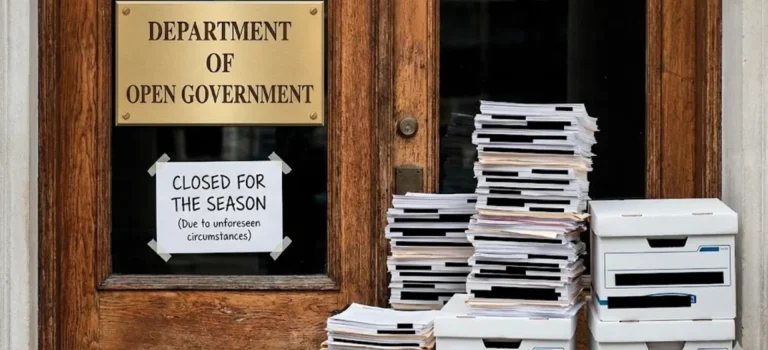
From there, the hierarchy weighed in. Sir Arnold Robinson, the mandarin’s mandarin, coolly observed: “if people don’t know what you’re doing, they don’t know what you’re doing wrong.” And in another episode, when Minister James Hacker queried his party’s commitment to open government, Sir Arnold dryly announced: “this seems to be the closed season for open government.”
It was meant as satire, of course—but as with all good satire, it struck close to the truth. Decades later, across continents and political systems, the same irony endures: governments the world over continue to treat transparency not as a duty but as a danger.
Freedom of information (FOI) laws were designed to reverse that instinct—to tilt the scales from darkness toward daylight. The stated purpose and scope of the Freedom of Information Act 1982 (Cth) is “to give to members of the public rights of access to official documents of the Government of the Commonwealth and of its agencies”. Then follows lofty objectives such as Parliament’s intent to “promote Australia’s representative democracy by contributing towards…increasing scrutiny, discussion, comment and review of the Government’s activities”.
Yet despite their promise, they remain riddled with exemptions, delays and quiet obstruction.
This tension between accountability and control is not new. Since the first FOI law emerged in Sweden in 1776, and spread through Westminster-style democracies, parliaments have wrestled with how to reconcile accountability with control. The pattern has been remarkably consistent: lofty declarations of openness, followed by the slow reassertion of secrecy through process, protocol, and the catch-all phrases — “exemptions” and “public interest exemptions” in the case of Australia.
At its heart, the debate reveals an enduring flaw in how modern government understands itself. Ministers and officials often see information as their property, to be guarded, rationed, and sometimes withheld for the good of the public. Yet the truth is quite the opposite. The business of government, though carried out in the name of the Crown, is conducted on behalf of the people. It is their money, their consent and their trust that sustain the system.
In legal terms, the relationship is more agency than autocracy. The governors are the agents; the governed, oddly, the principals. And just as any principal in a commercial milieu is entitled to know how their agent conducts their affairs, so too should citizens expect to see what is done in their name. That is not a radical proposition—it is the essence of representative democracy.
Yet, somewhere along the way, the principle became blurred. Freedom of information has too often been treated as a nuisance for administrators, or worse, a threat to ministerial control. In practice, many agencies respond to requests with the reflexes of a litigant: defensive, procedural and intent on minimising disclosure. The result is an elaborate game of hide and seek—one that tests the patience of journalists, researchers and citizens alike.
Of course, there must be statutory carve-outs to openness, at least in the name of national security, personal privacy or safety and the like. Accounting for these necessary concessions, when every corner of public administration is fenced off by one exemption or another, the cumulative effect is opacity masquerading as prudence. It becomes, once again, a closed season on open government.
Periodically, the urge to recalibrate the balance between accountability and control prompts a flurry of promised reforms—each heralded as a new dawn—only for the light to fade as institutions quietly revert to the comforts of opacity.
In Attorney-General v Patrick, a 2024 Federal Court case, Attorney-General Mark Dreyfus sought to refuse access to a document because the question whether a document is an “official document of a Minister” is to be determined both at the time the request for access is made and at the time that a decision is made whether to grant access to the document. As such, the document was no longer an ‘official document of the Minister’ because the Minister had changed several times and there was a change in government since the request for access was made. The full Federal Court ruled that the “time for assessing whether a document is an “official document of a Minister” is the time the request for access is made (and only that time).” The Attorney-General’s argument demonstrates how an FOI request can be derailed simply because ministers change, or elections intervene.
In Victoria, the Ministerial Code of Conduct was updated in 2023 to require Ministers to “publish summaries from their diaries on a quarterly basis”. Only three of the state’s 22 ministers have complied.
Historical overseas trends are no different. In 2001, US President Bush signed an executive order allowing either the White House or former presidents to veto release of their presidential papers. In 2005, the New Zealand Ombudsman stated that “some Ministers’ offices remain unwilling or unable to meet official information requests in a timely fashion. Sometimes reasons for withholding information…seem to relate more to political or administrative convenience than to legitimate withholding grounds under the [Official Information Act].”
Then there are daring efforts to limit openness. Current Australian legislative proposals seek to extend the time for agencies to make FOI decisions, prohibit anonymous requests and broadening of the scope of the cabinet documents exemption, among others. A former public service commissioner castigated these reforms as going in “exactly the opposite direction” to the openness pursued by former Cabinet Secretary Senator John Faulkner in 2009.
In the end, these cycles are not failures of process but symptoms of a deeper truth: governments tolerate openness only in theory and will always find reasons—however artfully expressed—why too much sunlight is a danger rather than a democratic necessity.

Nilay B. Patel is a lawyer based in Melbourne.
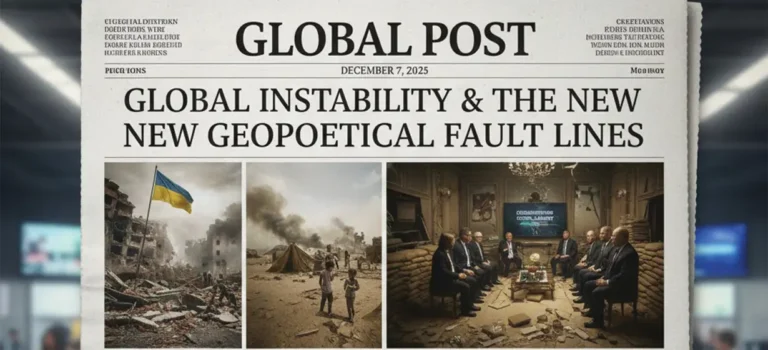
Global Instability and the New Geopolitical Fault Lines

Global Instability and the New Geopolitical Fault Lines

As the year winds down, the world finds itself in a state of deepening fragmentation, marked by conflicts that refuse to abate and an increasingly complex web of diplomatic and economic pressures. The age of unipolar certainty is definitively over, replaced by a precarious multi-polar environment where alliances are fluid and the threat of escalation is constant.

The Unrelenting Wars: Ukraine and Sudan
The conflicts in Ukraine and Sudan continue to define the human cost of this new disorder. In Eastern Europe, despite ongoing, yet unproductive, diplomatic talks (such as those recently held in Miami), Russia has unleashed massive, coordinated drone and missile attacks, showcasing a commitment to a protracted war of attrition.
The conflict remains a geopolitical stalemate, leaving Europe to grapple with its security future amidst internal disagreements, notably regarding the controversial proposal to use frozen Russian assets to fund Ukraine’s war effort. Belgium and others are reportedly pushing back against aggressive seizure plans, highlighting fissures in Western unity.\
Meanwhile, the civil war in Sudan has deteriorated into an unprecedented humanitarian crisis. Reports, substantiated by satellite images, depict cities turned into “slaughterhouses” by massacres carried out by the Rapid Support Forces (RSF). The recent tragedy of a drone attack on a nursery, killing dozens of children, underscores the conflict’s brutal disregard for civilian life. Ceasefire efforts continue to falter, even as the U.S. considers broader sanctions against both the Sudanese army and the RSF.

Middle East on a Knife Edge
In the Middle East, the delicate ceasefire in Gaza remains at a “critical moment,” according to mediators like Qatar. While the immediate hostilities have been paused, the region is consumed by the humanitarian catastrophe and the political vacuum. The focus has shifted to the long-term status of the territory, with the deployment of an international force and the complete withdrawal of Israeli troops being crucial demands for moving to the next phase of a peace deal. The instability is contagious, with other regional tensions, including those between Israel and Lebanon, requiring constant diplomatic intervention to prevent broader conflagration.

The Rise of Strategic Autonomy
A defining feature of the current global landscape is the rise of strategic autonomy among key nations. The recent visit of Russian President Vladimir Putin to India, a key U.S. strategic partner, perfectly illustrates this. Despite Western pressure to isolate Moscow, India is preserving its deep defence and energy ties with Russia. This is not defiance but pragmatism: securing uninterrupted oil shipments and military technology while simultaneously balancing relationships with the U.S. and its allies. Foreign Minister Jaishankar termed the India-Russia relationship as one of the “steadiest” globally, signalling a clear intent to navigate a multi-polar world on its own terms.

Global Economy: Tariffs, Uncertainty, and the Gold Rush
The global economy is struggling under the weight of heightened policy uncertainty and rising trade barriers, factors that are now cited as the biggest disruption risk by executives worldwide.
• Trade Slowdown: Global growth forecasts for 2025 have been significantly downgraded, with global GDP growth expected to be the slowest of any decade since the 1960s. The initial surge in global trade earlier this year, driven by companies front-loading orders in anticipation of new tariffs, is expected to fade as those tariffs take effect, suggesting a potential reversal in trade momentum.
• The Gold Standard of Fear: The year 2025 saw gold experience an exceptional year, hitting over 50 new record highs and delivering a return of over 60%. This performance is directly attributed by the World Gold Council to the “heightened” geopolitical and geoeconomic environment, with investors viewing the precious metal as a crucial hedge against global risk and uncertainty.
• AI and the Corporate Scramble: The silent but profound technological race for Artificial General Intelligence (AGI) is driving massive corporate shifts. The colossal acquisition of Warner Bros. studios by Netflix, valued at over $72 billion, is just one example of media and tech giants consolidating control over content and distribution, fundamentally reshaping industry structures through the lens of future AI-powered dominance.
The Migration and Integrity Crackdown
Closer to home, Australia is pushing forward with its Migration Strategy, which focuses heavily on integrity. Recent changes have tightened the screws on the international student market to prevent misuse of the visa system, replacing the GTE with the stricter Genuine Student (GS) requirement and hiking the minimum financial capacity needed to obtain a visa.
Simultaneously, the new Skills in Demand (SID) visa replaces the old TSS, offering different pathways based on salary tiers, aiming to ensure temporary migration genuinely addresses high-value skill shortages in the economy.
As global volatility persists, the central question for policymakers worldwide remains how to transition from managing continuous crises to establishing a durable, stable framework for a newly multi-polar world.

Global Tides: Collaboration Fights Fragmentation in the Pursuit of Financial Security

Global Tides: Collaboration Fights Fragmentation in the Pursuit of Financial Security

Jitendra Deo
Chief Executive Officer
JD Group Australia

The world is currently being shaped by two powerful, opposing forces: a relentless, technological drive toward hyper-collaboration and a resurgent, politically charged wave of geopolitical fragmentation.
While innovation is forging unprecedented layers of financial security, the foundations of the global economic order are simultaneously under threat.
The most profound shift lies in the accelerating integration of financial systems, largely powered by technology. Collaboration in finance is no longer a choice; it is a necessity for competition.
• FinTech Partnerships: Traditional banks are rapidly forging strategic partnerships with FinTech firms to offer seamless, real-time, cross-border payment services. This is exemplified by the need to upgrade archaic correspondent banking networks to agile payment ecosystems, allowing quicker settlements and better customer experiences globally. The new collaborative model orchestrates end-to-end financial experiences, not just isolated services.
• AI for Resilience: The adoption of Artificial Intelligence (AI) has dramatically increased in finance, moving from early trials to core strategies. Collaboration on AI-driven platforms helps finance teams refine strategic planning, enhance forecasting, and most crucially, bolster data security and privacy to protect customer assets across borders. This shared technological infrastructure strengthens the overall operational resilience of the system.
• The Global Safety Net: The established Global Financial Safety Net (GFSN), comprising national reserves, the International Monetary Fund (IMF), Regional Financial Arrangements (RFAs) like the European Stability Mechanism, and central bank swap lines, continues to evolve. Its capacity has grown significantly to around 20% of world GDP, serving as a critical global insurance mechanism against balance of payments crises. This multilateral effort is a testament to the enduring, albeit sometimes strained, commitment to shared financial stability.
In direct conflict with this technological convergence is a political trend of fracturing—a reversal of decades of increasing integration that poses a direct threat to long-term financial security.
• Splintering of Capital Flows: Geopolitical tensions are visibly reducing cross-border portfolio and bank allocations. Countries with dissimilar foreign policy outlooks (as proxied by UN voting patterns) see bilateral investment reduced significantly. This “friend-shoring” or “bloc-formation” in investment allocation limits international risk diversification, making emerging and developing economies particularly vulnerable to sudden capital flow reversals and higher borrowing costs.
• Weaponization of Finance: The use of financial sanctions has triggered a strategic shift by nations seeking to shield themselves from such measures. This is manifesting in a structural move away from dollar-dominated reserves, with central banks systematically increasing their holdings of physical gold to levels not seen in decades. This search for assets offering protection against sanctions risk and currency debasement reflects deep-seated concerns about the stability of the current multipolar financial landscape.
• Trade and Regulatory Divergence: The imposition of tariffs and non-tariff trade restrictions, coupled with the divergence of national regulatory frameworks, adds friction and cost to global commerce. Fragmentation can lead to an estimated reduction in global GDP and a rise in inflation, ultimately impacting the purchasing power and financial health of the average citizen worldwide.
As a global community, the world is shaping up not as a fully unified body, but as one committed to pragmatic, focused collaboration to mitigate the damage of fragmentation.
The G20 remains the primary forum for driving this cooperation. Recent summits have focused on highly specific, crucial issues:
• Disaster Risk Reduction (DRR) and Climate Resilience: Leaders have committed to scaling up ex-ante financing and integrating risk reduction principles into national financial planning, recognizing climate risk as a systemic financial threat.
• Debt Reform and Global Governance: Efforts are underway to improve transparency in debt restructuring and reform global governance to better reflect the new economic realities, particularly by elevating the voice of the Global South.
The world is thus in a race: a race between the efficiency and resilience offered by digital collaboration and the instability and cost imposed by political fragmentation.
Financial security in the coming decade will depend on whether leaders can set aside nationalist impulses to strengthen the cooperative mechanisms such as the GFSN, the G20 dialogue, and international regulatory alignment that underpin half a century of global prosperity.
The stability of our markets, and the wealth of our citizens, hangs in the balance.

The New World Disorder: From Shifting Alliances to the Race for AI Supremacy

The New World Disorder: From Shifting Alliances to the Race for AI Supremacy

The year 2025 closes with the global landscape arguably more fractured and unpredictable than at any point since the Cold War’s end. The comfortable assumptions of the last three decades of globalisation as an irresistible force, of Western-led institutional stability, and of a clear unipolar hierarchy have been profoundly challenged.
From the prolonged shadow wars in Eastern Europe and the Middle East to the accelerating technological arms race, the defining characteristic of this new era is disorder, driven by a shifting geopolitical tectonic plate.

The New Diplomatic Chessboard
One of the most telling barometers of this re-alignment is the visible strain on historic alliances and the strengthening of non-aligned or ‘transactional’ partnerships. The recent high-profile visit of Russian President Vladimir Putin to India, despite intense pressure from Western capitals to isolate Moscow, underscores this reality.
While the White House urges New Delhi to diversify its energy and defence procurement away from Russia, the deep-seated, decades-long Indo-Russian strategic ties, particularly in defence technology and stable energy supply have proven resilient. For nations like India, the diplomatic tightrope walk is not just about balancing great powers; it is a pragmatic necessity of securing national interests in a world where every superpower offers something vital but demands a price.
Conversely, the internal cohesion of the West is facing unprecedented tests. The ongoing military and diplomatic support for Ukraine remains a central pillar of NATO and EU policy, yet fissures are emerging.
Lingering disputes over the use of frozen Russian sovereign assets with some European nations pushing back against aggressive seizure plans highlight the deep divisions over the economic and legal playbook for this conflict.
Furthermore, the rising wave of populism across Europe, often advocating for a more insular, ‘America First’ style foreign policy, threatens to further erode institutional unity.
The recent signals from the U.S. administration, warning of potential ‘civilizational erasure’ in Europe and questioning the reliability of allies, inject a profound uncertainty into the future of trans-Atlantic security. The age of unipolar diplomacy, observers argue, is conclusively over, giving way to a multi-polar, multi-vector reality.
Meanwhile, the flashpoints of conflict continue to burn, driving humanitarian crises and regional instability. The war in Ukraine has evolved into a grinding, attritional contest, punctuated by massive, coordinated drone and missile attacks targeting civilian and energy infrastructure. Diplomatic overtures, such as the peace talks recently held in Miami, have yielded little tangible progress, with Russia showing no willingness to commit to a peace plan that does not secure its current territorial gains. The frontlines of this conflict are mirrored by a dangerous diplomatic stalemate, leaving the world bracing for another harsh winter of protracted fighting.
In the Middle East, the fragile ceasefire agreements and ongoing negotiations in Gaza remain at a “critical moment,” according to key mediators. Even with the cessation of major hostilities, the sheer scale of the humanitarian catastrophe—compounded by the emergence of quasi-anarchy and a struggle for post-conflict control—means a return to ‘normal’ life is an illusion for millions. Simultaneously, the region sees heightened tensions elsewhere, with Israel and Lebanon engaging in rare talks aimed at de-escalation, a stark reminder of the ever-present risk of regional contagion.
Africa, too, is gripped by internal turmoil that often escapes front-page global coverage.
In Sudan, the conflict between rival military factions continues its devastating course. Satellite images have painted a harrowing picture of cities turned into ‘slaughterhouses’ by RSF massacres, and the shocking toll of a recent drone attack on a nursery, killing dozens of children, underscores the conflict’s brutal cost. Despite efforts by the U.S. to impose wider sanctions, the humanitarian situation across the country continues to spiral out of control.
The most crucial long-term battle is not being fought with missiles, but with silicon and code. The race for Artificial General Intelligence (AGI) is no longer an abstract future concept; it is the central strategic competition of the present. Recent studies, such as those from Anthropic, suggest that AI could potentially double U.S. productivity growth, making supremacy in this field a direct determinant of future economic and military power.
This technological contest is fundamentally reshaping global economics. We are seeing major, unprecedented corporate manoeuvres, such as the colossal Netflix acquisition of Warner Bros. studios, a deal valued at over $72 billion. These mergers reflect a scramble by tech and media giants to control the content and distribution channels of the future, all of which will be increasingly powered by sophisticated AI algorithms.
Beyond corporate strategy, the financial system itself is under stress. The global surge in copper prices, driven by the clean energy transition, has led to a major increase in crime, dubbed the ‘great global copper swindle’ as the metal becomes a more attractive target for organized criminals. Furthermore, as key global economies, including Pakistan, struggle with debt crises and inflation, the International Monetary Fund (IMF) and other lenders are walking a tightrope, attempting to prevent outright collapse while demanding reforms that often inflict short-term pain on populations.
The cumulative effect of these overlapping crises and tectonic shifts is a pervasive sense of uncertainty. Domestic issues, from tightening immigration controls in Australia and the U.S. to the controversial moves to ban social media for minors in places like Australia, reflect a widespread political desire to reassert control over rapidly changing external forces.
Ultimately, the defining story of 2025 is the transition, a painful, messy, and unpredictable process away from a post-Cold War world order towards a new, yet-to-be-defined multi-polar system.
The coming year will likely demand more pragmatic diplomacy, more robust international cooperation on existential threats like climate change and pandemics, and a renewed focus on the humanitarian consequences of perpetual conflict. The challenge for global leadership is not merely to react to the disorder, but to actively shape a pathway toward a stable future where great power competition does not eclipse the welfare of ordinary citizens.

Individual Achievers (2025 Award Winners)

Individual Achievers (2025 Award Winners)

Several Indian-Queenslanders have been recognized for their excellence in business and community service:
Taaj Kumar: The co-founder of GM Coffee (a Brisbane-based business) was named the “Nick Xynias Multicultural Young Business Person of the Year” at the Lord Mayor’s Multicultural Business Awards in November 2025. He was recognized for his entrepreneurial drive and fostering cross-cultural collaboration.
Dr. Chanchal Kurup: She won the “Outstanding Contribution by a New Queenslander” award at the Multicultural Queensland Awards 2025. Dr. Kurup is a researcher and educator advocating for Internationally Qualified Nurses (IQNs), helping them integrate into the Queensland healthcare system.

Cyclone Ditwah: Current Status and Impact

Cyclone Ditwah: Current Status and Impact

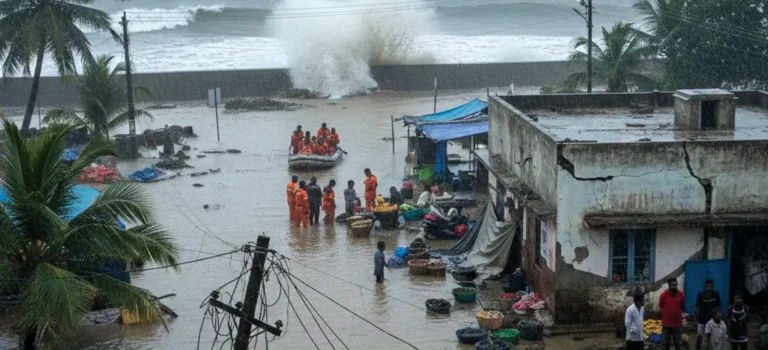
Weakened but Still Active: Cyclone Ditwah has weakened into a deep depression. It is very likely to continue moving nearly northwards, parallel to the North Tamil Nadu-Puducherry coasts, and weaken further into a depression around this morning.
Rainfall and Alerts: The system is still bringing significant heavy to very heavy rainfall to coastal areas of Tamil Nadu, Puducherry, and adjoining South Andhra Pradesh.
Red Alerts were in place for several coastal districts, including Cuddalore, Nagapattinam, and Mayiladuthurai.
Orange Alerts were issued for other districts, including Chennai, Kancheepuram, Tiruvallur, and Pudukkottai, for heavy to very heavy rain.
Impact on India:
Tragically, at least three people have died in rain-related incidents in Tamil Nadu (due to wall collapses and electrocution).
Severe weather has caused waterlogging in low-lying areas, including parts of Thoothukudi.
Authorities have deployed NDRF (National Disaster Response Force) and SDRF teams to vulnerable districts.
Schools remain closed in Puducherry and several Tamil Nadu districts as a precautionary measure.

Economy: Strong Growth & Rate Cuts

Economy: Strong Growth & Rate Cuts

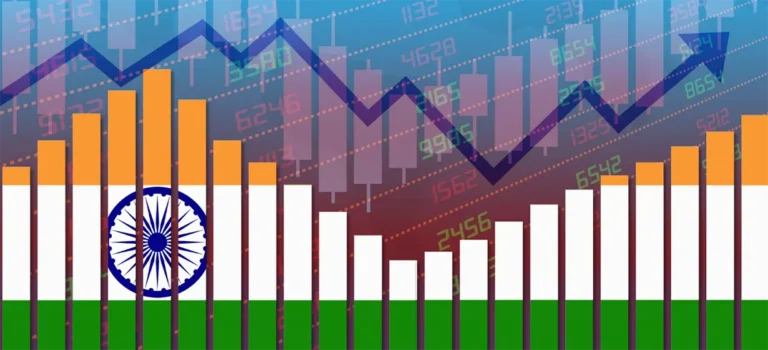
GDP Surge: The Indian economy grew by 8.2% in the July-September quarter (Q2), making it the fastest expansion in six quarters. This growth was driven by a strong manufacturing comeback and robust services activity.
RBI Rate Cut: In a move to further boost growth, the Reserve Bank of India (RBI) has cut the repo rate by 25 basis points to 5.25%.
Future Outlook: The Chief Economic Advisor (CEA) has raised the GDP forecast for FY26 to 7.3%, predicting the economy will top the $4 trillion mark next fiscal year.

Shahana Goswami and Sabrina Khan Shine at Asia Pacific Screen Awards

Shahana Goswami and Sabrina Khan Shine at Asia Pacific Screen Awards

Shahana Goswami and Sabrina Khan were notable attendees at the Asia Pacific Screen Awards held on the Gold Coast, Australia on November 27th. Shahana Goswami, born in New Delhi, is a talented actress known for her roles in various films, including her breakthrough performance as Debbie in Abhishek Kapoor’s “Rock On,” which earned her several awards, including the Filmfare Best Actress (Critics) award. British born Sabrina Khan of mixed heritage including India is a highly acclaimed film director, producer, and actress who acted in “Mercy Box,” directed “Tonya,” and “Seema,” and whose films have won her international acclaim. She is also an international human rights lawyer and the recipient of the 2025 New South Wales Human Rights Medal.

India’s Financial Sector: Navigating Digital Headwinds and Regulatory Shifts

India’s Financial Sector: Navigating Digital Headwinds and Regulatory Shifts

The Indian financial sector is currently at an inflection point, driven by a powerful confluence of technological disruption, proactive regulatory intervention, and a shifting macroeconomic landscape. Far from being a quiet corner of the economy, finance in India today is a dynamic arena where traditional banks, agile FinTechs, and massive government schemes are all vying for space. Understanding the current trends—from the RBI’s surgical approach to Non-Banking Financial Companies (NBFCs) to the unstoppable force of digital payments—is key to grasping the trajectory of the world’s fifth-largest economy.
At the heart of the Indian financial system is the Reserve Bank of India (RBI), which is skilfully balancing the need to spur economic growth with the necessity of maintaining financial stability.
On the growth front, the recent decision to cut the repo rate—the rate at which commercial banks borrow from the central bank—by 25 basis points has injected a renewed sense of optimism. This move is a growth-supportive signal, aimed at lowering the cost of capital in the long term. If fully transmitted by banks, this easing is expected to provide a crucial stimulus to housing, vehicle, and corporate lending, boosting aggregate demand.
However, this supportive monetary policy is juxtaposed against a significant tightening of regulatory screws, particularly for NBFCs. The RBI has expressed concern over the rapid, and sometimes reckless, growth of unsecured lending, prompting an increase in risk weights and capital provisioning requirements for certain loan categories.
This move is not punitive but rather preemptive. It differentiates between prudently managed, secured lenders and those who have chased high growth at the expense of sound risk management. The resulting pressure on capitalization has forced several smaller NBFCs to consolidate or pivot their strategy, steering the sector towards a more stable, secured-lending model and ultimately reducing systemic risk. It is a necessary friction that prioritizes long-term financial health over short-term exuberance.
If the RBI is the central stabilizing force, the Unified Payments Interface (UPI) is the central revolutionary force. India’s digital payment ecosystem continues to break global records, fundamentally altering how commerce is conducted. UPI transactions have maintained exponential growth, penetrating deeper into rural and semi-urban markets and acting as a primary vehicle for financial inclusion.
The current trend is the deepening of this technology. Banks and FinTech companies are now leveraging UPI’s success by integrating Artificial Intelligence (AI) and Machine Learning (ML) tools to enhance the user experience. These technologies are not just about chatbots; they are powering sophisticated fraud detection systems, optimizing credit scoring for thin-file customers, and enabling hyper-personalized financial products, moving India towards a truly intelligent and inclusive financial system.
Furthermore, the government’s commitment to expanding access is evident in the rise of the Financial Inclusion Index (FI-Index), which measures access, usage, and quality of financial services. Driven by initiatives like the Pradhan Mantri Jan Dhan Yojana (PMJDY), which has brought hundreds of millions into the formal banking system, the financial sector is witnessing a structural shift where credit and banking services are no longer the exclusive domain of major metropolitan areas.
On the macroeconomic front, the financial sector is grappling with the pressures of global instability. The Indian Rupee (INR) has faced persistent weakness against the US Dollar, a challenge driven by factors including sustained capital outflows by Foreign Portfolio Investors (FPIs) in response to higher US interest rates and persistent demand for the dollar to service import bills. While the RBI has intervened strategically to manage volatility, the INR’s depreciation remains a key variable influencing corporate balance sheets and the cost of foreign debt.
Despite these external headwinds, the fundamental health of the domestic banking sector remains robust. Decisive action taken years ago to tackle the mountain of bad loans has paid off. The Non-Performing Asset (NPA) ratio continues its downward trajectory, while the Capital Adequacy Ratio (CAR) remains well above international minimums. This improved resilience means Indian banks are better positioned today to manage economic shocks and sustain credit growth.
Finally, the Indian finance sector is exhibiting both maturity and momentum. The digital revolution is democratizing access, while the central bank is ensuring the structural integrity of the players. The immediate future will be defined by the careful execution of new technologies within the framework of tightened regulation, promising a financial system that is not only vast but also fundamentally sound and ready to support India’s ambition of becoming a major global economic power.

Traveling overseas? What vaccinations do you need before you go?

Traveling overseas? What vaccinations do you need before you go?

Are you heading overseas to see family, friends, or holiday? Make sure you are protected against infections that we don’t have here in Australia.
In 2025, Queensland Health has seen a number of travellers returning from overseas with vaccine preventable infections such as measles, typhoid fever, and hepatitis A.
“Getting vaccinated is the best thing you can do to prevent these very nasty infections” said Dr Bhakti Vasant public health doctor from Queensland Health.
“Many people heading home to see family or friends don’t know that they might not be protected or don’t see a doctor before they go” Dr Vasant said.

Measles
Measles is an extremely infectious disease that is spread through coughing, sneezing, or breathing.
Fever, rash, sore and watering eyes are other symptoms. In some cases, measles can cause inflammation of the brain, blindness, pneumonia, and even death.
As there is no specific treatment for measles, vaccination is the best line of defence. If you are unsure if you are immune to measles, check with your doctor to see if you are eligible for a free measles vaccine.
Measles | Health and wellbeing | Queensland Government (www.qld.gov.au)

Typhoid
Another vaccine preventable disease is the gut infection, typhoid fever.
Typhoid causes fevers, headaches, belly pains, constipation, or diarrhoea, but can occasionally cause severe disease and death if left untreated.
Antibiotics can treat typhoid but there has been an increase in the numbers of antibiotic resistant cases around the world – particularly in the Indian Subcontinent.
You can prevent typhoid when travelling overseas by getting vaccinated every 3 years, regularly washing your hands and making sure the water and food you consume is safe and clean.
Typhoid and paratyphoid fever | Health and wellbeing | Queensland Government (www.qld.gov.au)

Hepatitis A
Like typhoid, hepatitis A is also spread by unsafe water, food or not washing hands, and it can be prevented through vaccination.
The hepatitis A infection commonly causes body aches, pains, stomach upset and inflammation of the liver.
Liver inflammation can lead to yellow skin, eyes and dark urine which is known as jaundice.
Two doses of a hepatitis A vaccine will give you lifelong protection.
Hepatitis A | Health and wellbeing | Queensland Government (www.qld.gov.au)

Before you go
If you are planning on travelling overseas, make sure you see your doctor 6-8 weeks before and ask which vaccines you need. If you’re looking for more information visit the Smart traveller website.
Vaccinations and preventative health | Smartraveller