FASCA BNE Promotes Cultural Exchange at Lunar New Year Celebration
To celebrate the Lunar New Year, the FASCA BNE Chapter actively participated in the
“Lunar New Year Rooftop Party and Fireworks Show” held on the evening of 28 February 2026 at Sunnybank Plaza in Brisbane’s southside. The event brought together nearly a thousand community members from diverse cultural backgrounds to welcome the Year of the Horse in a vibrant and festive atmosphere.
Distinguished guests included Director Hsu Chun-Yung(Jone Hsu) of the Queensland Taiwan Centre, advisors Ms. Yang Shu-Chu(Susan Yang) and Mr. Lin Chi-Ping(Edward Lin), along with approximately 50 FASCA members and their families, who joined the celebration alongside the broader community.
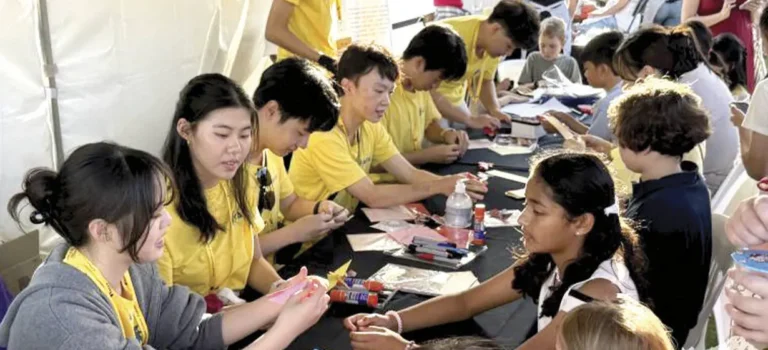
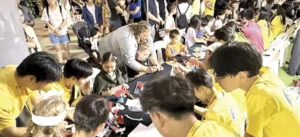
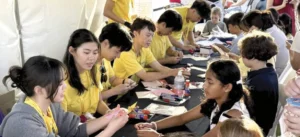
The origami workshop under the guidance of advisors, students demonstrated and assisted visitors in creating origami figures representing the twelve zodiac animals. Through engaging, hands-on activities, participants of all ages and cultural backgrounds experienced the beauty of traditional origami art while learning about the symbolic meanings of the zodiac in Taiwanese culture, representing good fortune and blessings.
The booth attracted a steady stream of visitors and lively interaction throughout the evening. In addition to leading the workshop, FASCA members visited other cultural stalls and engaged with diverse community groups, reflecting a spirit of multicultural inclusion and exchange.
During the event, Director Hsu commended the students for confidently promoting culture on the front line and for actively connecting with the community. He encouraged them to continue sharing their enthusiasm and to help more people appreciate the richness and diversity of Taiwanese culture.
The evening featured a wide range of attractions, including Asian food and cultural stalls, traditional lion and dragon dance performances, family-friendly interactive games, and prize giveaways. A highlight of the night was the spectacular rooftop drone and fireworks show, where drones formed traditional zodiac patterns in the sky—perfectly complementing FASCA’s cultural theme and drawing admiration from attendees.
Through this Lunar New Year celebration, FASCA youth not only strengthened their teamwork skills but also deepened their engagement with the local community. Their efforts helped more Australians gain a deeper understanding of the cultural significance of the Lunar New Year.
Looking ahead, FASCA BNE will continue its mission to promote Taiwanese culture and foster international cultural exchange, ushering in a new year filled with hope and vitality.
It has been rightly said that we are what we eat, because the kind of food that we eat has a direct impact on how we think and therefore it’s crucial to what we become finally. Recent studies made by modern medical science have suggested that the human body is not naturally designed to digest and assimilate non-vegetarian food. That is why today most of the medical practitioners recommend a healthy vegetarian diet to their patients who are suffering from lifestyle disorders. Along with scientific studies, individual research made all over the world have also clearly pointed out that when an animal is killed for meat, it experiences fear, anxiety and pain.
Its hormonal secretions are then passed on to its consumers. Such a diet is therefore unhealthy both for the body and the mind. In many religions also, non-vegetarian diet is strictly forbidden not just because it causes pain and suffering to other living creatures but also because it is the source of vicious thoughts and attitudes to its consumers.
In other words, non-vegetarian food is a gateway to non-vegetarian lifestyle, a way of living where vices dwell comfortably. One must understand that human cruelty towards animals is nothing but a way of inviting cruelty on to self. Also, the current trend of mass consumption of flesh by human beings highlights the way we look at other living beings and our desire to subjugate them. It also represents our desire to tame nature to our will and to exploit it for our gains, thereby suggesting a belief system that justifies violence in the name of need and necessity.
It is so ironic that the largely meat-eating developed countries of the world have stringent laws when it comes to treating a pet and it is ensured that if the pet is hurt, the owner can even be imprisoned. However, in these very countries, millions of animals are killed every day for food and yet no one goes to jail. Isn’t it surprising that so many animal lovers continue to be non-vegetarians because they are unable to connect with the cruelty that goes behind, in the making of such food.
Even more surprising was a weird recommendation to find humane methods of animal slaughter made by some so-called animal sympathizers. But the contention here is what can be more inhuman than nourishing an animal to kill it one day. It is a breach of morality by all standards. What is more cruel than subjecting generations of animals to a life of stifling captivity that only leads them to a merciless end?
And what is more cruel than killing animals in front of each other. While one is bleeding to death, the other watches in horror and waits for its turn. It is a great pity that even sympathetic humans are left with such little kindness that all they can think of is designing a better way to kill.
It’s high time that all of us should ask ourselves a question: why does our conscience need a rational argument, sanctioned by a research institute in the west, to realize that killing other living creatures is a form of cruelty? Why do we need facts and figures to understand that cruelty can never be a bringer of any form of health – be it mind, body or the environment & bring peace and harmony in the world.
Can’t we realize that a heart that heaves no sigh at the sight of violence cannot be a source of compassion for other fellow men. So how do we expect people who do not nurture the feeling of kindness for other living beings to nurture feelings of brotherhood and forgiveness for their own community.
Aren’t we just walking on one path while seeking another’s destination? Just give it a thought and then decide whether to Kill or Heal. Learn to live above self when life is precious to all. Let there be the right to live for all & not just Human Right, then only world peace will descend.
SMSF Property Lending in Australia: What to Know Before You Apply
By Roshika Chand -Heirs & Legacy Co
Many Australians work hard for decades, contribute to Super throughout their working lives, and trust it will quietly build in the background. At some point, many begin asking deeper questions: Could my Super be working differently? Do I have more options than I realise? Is property something my Super may be able to invest in? For some individuals, a Self-Managed Super Fund (SMSF) may offer a more hands-on approach to managing retirement savings. Depending on personal circumstances, an SMSF can invest in a range of assets, including property, subject to superannuation laws, fund rules and lender requirements.
Where borrowing is involved, the process is often more specialised than a standard home loan, which is why understanding the basics early can be valuable.
What Is an SMSF?
An SMSF is a private super fund managed by its trustees and regulated by the Australian Taxation Office.
Put simply, it means members take a more active role in managing their super.
That responsibility can include:
• maintaining compliance obligations
• keeping records
• ensuring the fund is run for retirement purposes
• following an investment strategy
• working with accountants, advisers and other professionals where needed
For some, that level of control is appealing. For others, a traditional super fund may remain more suitable.
Can an SMSF Borrow to Buy Property?
In some circumstances, yes.
An SMSF may be able to borrow to purchase an investment property through a structure commonly known as a Limited Recourse Borrowing Arrangement (LRBA).
This area is more specialised than regular lending, and lender policies can vary significantly. Not every lender offers SMSF loans, and requirements may differ depending on the borrower profile, property type and fund structure.
Is There a Minimum Balance Required?
There is no fixed ATO minimum balance required to establish an SMSF. Generally, most lenders require balances of $150,000 plus.
However, practical considerations often include:
• the fund balance
• accounting and audit costs
• legal setup costs
• loan costs (if borrowing)
• available cash buffers
• long-term plans for the fund
Some professionals may suggest higher balances depending on individual circumstances. This is best discussed with qualified advisers.
Four Important Facts About SMSF Property Lending
1. Not All Lenders Assess the Same Way
SMSF lending is a niche space. Deposit requirements, servicing methods and acceptable security properties can differ from lender to lender.
2. Property Rules Apply
There are restrictions around how SMSF-owned property can be used. For example, residential property is generally subject to rules involving members and related parties.
Professional legal and accounting guidance is important here.
3. Costs Extend Beyond the Property Price
Alongside normal purchase costs, SMSF borrowing may also involve:
• legal documentation
• trust setup costs
• lender fees
• accounting and audit fees
• ongoing administration expenses
4. The Right Property Is Only One Part of the Picture
Cash flow inside the fund, contribution strategy, rental income, vacancy risk and long-term goals can all be relevant.
Some borrowers explore properties with stronger income potential, such as dual-income dwellings on one title, subject to lender policy and legal suitability.
It highlights an important point: the property itself is only one part of the broader decision.
Why Some Clients Use a Mortgage Broker
A mortgage broker can help navigate the lending side of the process and save time comparing lender options.
This may include:
• identifying lenders active in SMSF lending
• explaining policy in clear language
• outlining likely documentation requirements
• coordinating with accountants or solicitors
• comparing available loan options
• guiding the process from enquiry through to settlement
With over 10 years of banking experience at the Big 4, including working closely with lending policy and credit processes, I support clients with clarity, care and a step-by-step approach.
I believe lending should feel informed, structured and personal not confusing or transactional.
Before You Proceed
Many people choose to speak with relevant professionals about:
• whether an SMSF suits their circumstances
• tax implications
• trustee responsibilities
• retirement planning considerations
• estate planning
• risks and borrowing costs
Final Word
SMSF property lending can offer opportunities for some borrowers, but it also comes with responsibilities and complexity.
Understanding the rules, costs and lending requirements early can help you ask better questions and make informed decisions.
This article contains general information only and does not consider your objectives, financial situation or needs. It is not financial, tax, legal or credit advice. You should seek independent professional advice before making decisions regarding superannuation or property purchases.
If you would like to understand the lending process or explore available SMSF loan pathways, contact Roshika at Heirs & Legacy Co.
English and Hindi spoken.
www.heirsandlegacyco.com.au
Book an appointment or call to chat further.
Structure Lending. Build Wealth. Design Legacy.
Dear reader, it is with much joy that we bring you the word of God. In today’s fast-paced world, it’s easy to feel overwhelmed. Between work, family responsibilities, and constant distractions, many people are searching for peace—but often in the wrong places. The Bible gently reminds us where true peace is found. In John 14:27, Jesus says:
“Peace I leave with you; my peace I give you. I do not give to you as the world gives. Do not let your hearts be troubled and do not be afraid.”
This verse highlights an important truth: the peace Jesus offers is different from what the world provides. It is not dependent on circumstances, success, or comfort. Instead, it is a deep, steady calm that comes from trusting God.
Another powerful reminder is found in Philippians 4:6-7:
“Do not be anxious about anything, but in every situation, by prayer and petition, with thanksgiving, present your requests to God. And the peace of God… will guard your hearts and your minds in Christ Jesus.”
This passage teaches us a practical step: bring our worries to God in prayer. Rather than carrying stress alone, we are invited to hand it over to Him.
Here are 3 lessons we can learn about true peace.
1. True peace doesn’t come from a perfect life, but from trusting God in imperfect situations. This is beautifully illustrated in the story of Jesus Calms the Storm (Mark 4:35–41). While the disciples panicked in the middle of a violent storm, Jesus was asleep in the boat. Even in chaos, He was at peace. When they woke Him, He calmed the storm with a word. The storm didn’t disappear because the disciples were in control—it calmed because Jesus was present. Likewise, our peace comes not from controlling life, but from trusting the One who does.
2. Prayer is not just a ritual—it’s a powerful way to release anxiety.
This is clearly seen in the life of Hannah (1 Samuel 1:9–18). Hannah was deeply distressed because she could not have children. Instead of bottling up her pain, she poured out her heart to God in prayer. After praying, Scripture notes that “her face was no longer downcast.”
Her situation didn’t immediately change—but her heart did. Prayer shifted her burden onto God, bringing emotional relief and renewed hope.
3. Gratitude shifts our focus from what we lack to what God has already provided.
This is powerfully demonstrated in the story of the Feeding of the 5000 (Matthew 14:13–21). Faced with a huge crowd and very little food, Jesus didn’t focus on scarcity. Instead, He gave thanks for the small amount available—and God multiplied it to feed thousands. Gratitude precedes provision. When we thank God for what we have, it changes our perspective and opens the door for God to work in ways we may not expect.
Finally, these stories remind us that God meets us in real-life situations—storms, sorrow, and scarcity. Through trust, prayer, and gratitude, we experience His peace more deeply, right where we are. Peace isn’t something we have to chase—it’s something we can receive.
THE QUALITY OF YOUR LIFE DEPENDS ON HOW WELL YOU MANAGE YOUR BODY, MIND AND EMOTION, YOUR SITUATIONS, YOUR LIFE IN GENERAL AND THE WORLD. IF YOU LOOK AT HOW MANY MOMENTS OF HAPPINESS YOU EXPERIENCED EVERY DAY WHEN YOU WERE FIVE YEARS OF AGE, AND HOW MANY MOMENTS YOU EXPERIENCE TODAY, IS THAT NUMBER MOVING UP OR DOWN? FOR MOST PEOPLE, IT GOES DOWN WITH AGE. THAT MEANS YOU ARE A BAD MANAGER. BECAUSE, AFTER ALL, EVERYTHING YOU DO IN YOUR LIFE IS IN PURSUIT OF HAPPINESS.
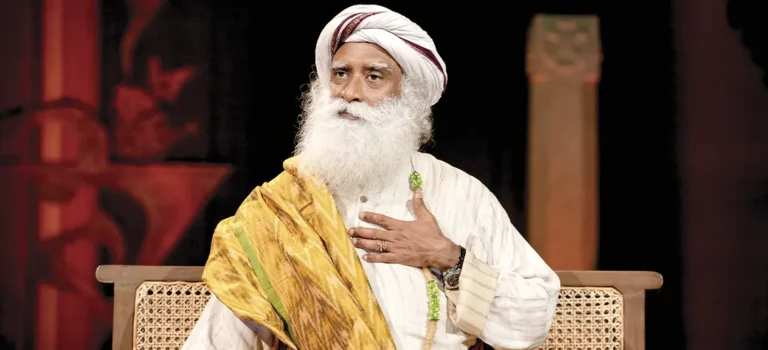
Sadhguru: Generally, we think of management only in terms of economic situations, not life as a whole. But fundamentally, life is management. The quality of your life depends on how well you manage your body, mind and emotion, your situations, your life in general and the world. If you look at how many moments of happiness you experienced every day when you were five years of age, and how many moments you experience today, is that number moving up or down? For most people, it goes down with age.
That means you are a bad manager. Because, after all, everything you do in your life is in pursuit of happiness. You educate yourself, you pursue careers, you build families or you run after your ambitions, you do so many things because you believe fulfilling those things will bring you happiness. After doing all that, if happiness is going down instead of multiplying, that means you are a bad manager of yourself.
If anyone who does not know how to manage his own body, mind, emotions and energies is managing situations around him, he is only managing them by accident not by intent. When you manage situations by accident, you are a potential calamity. Anxiety becomes a natural part of your life.
Fundamentally, management means we want to decide the course of our destiny. You want to have a certain kind of situation, both inward and outward. Today, in the process of managing a situation, we are destroying human beings.
This kind of management is no good. After all, the basic intent of every management is human wellbeing. If management is for human wellbeing, it is not only about producing something or making profit. People should rise to their full potential, not just in terms of work, but as human beings. If people work together, they should be able to rise to the peak of their love, peace and compassion within themselves.
If this kind of management has to happen, where you and the people around you rise to their peak, then you have to spend a certain amount of time in focusing on your inner management. If this does not happen, you will only manage situations by accident.
Ranked amongst the fifty most influential people in India, Sadhguru is a Yogi, mystic, visionary and a New York Times bestselling author.
Sadhguru has been conferred the Padma Vibhushan by the Government of India in 2017, the highest annual civilian award, accorded for exceptional and distinguished service. He is also the founder of the world’s largest people’s movement, Conscious Planet– Save Soil, which has touched over 4 billion people.
Australia–Taiwan Relations Forum 2026 Highlights Shared Responsibility for Indo-Pacific Security and Stability
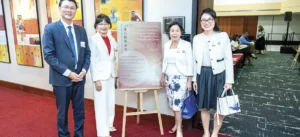
The Australia–Taiwan Relations Forum 2026, hosted by the Australia Taiwan Culture Foundation Ltd. (ATCF), was held on 17 April at the Queensland Parliament House. Under the theme “Shared Responsibility: Security, Resilience, and Regional Stability — Perspectives from Australia and Taiwan,” the forum brought together leaders from government, academia, and industry to engage in in-depth discussions on the evolving Indo-Pacific landscape and Australia–Taiwan cooperation. The event was met with strong interest and active participation.
The forum took place against the backdrop of the Australian Government’s announcement of a record AUD 425 billion defence investment over the next decade, aimed at responding to an increasingly complex regional security environment and potential threats from neighbouring hostile actors. This development underscored the urgency and relevance of the forum’s discussions, with participants recognising that safeguarding regional stability is a shared responsibility among democratic partners.
The event opened with welcome remarks by Ms Phyllis Lo, President of ATCF, followed by a recorded message from The Hon Jon Krause MP, Deputy Speaker of the Queensland Parliament, expressing strong support for the forum. In his opening address, Director-General William Fan of the Taipei Economic and Cultural Office in Brisbane emphasised the shared democratic values between Australia and Taiwan and their joint responsibility for regional stability.
He called for greater international inclusion of Taiwan, urging support for its participation in the World Health Organization (WHO), and highlighted the critical link between peace in the Taiwan Strait and global supply chain security. He also noted Taiwan’s leading position in the global semiconductor industry and the potential for its accession to the Comprehensive and Progressive Agreement for Trans-Pacific Partnership (CPTPP) to strengthen economic resilience across the Indo-Pacific.
The keynote address was delivered by Major General (Ret’d) Michael Ryan AM, who provided a strategic assessment of the evolving Indo-Pacific security environment. Drawing on his concept of “Confronting Complacency,” he warned that prolonged periods of relative stability can lead to underestimation of risk and delayed preparedness.
He emphasised the importance of proactive risk recognition, adaptive capability development, and closer cooperation among like-minded partners to enhance regional resilience. The forum’s panel discussion was moderated by Professor Caitlin Byrne AM FAIIA, Pro Vice Chancellor (Business) at Griffith University. Panellists included Michael Ryan, The Hon Shayne Neumann MP, Chair of the Joint Standing Committee on Foreign Affairs, Defence and Trade, and Mr Warwick Penrose, CEO of EPE Group.
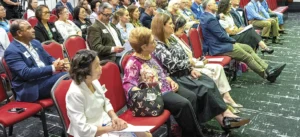
The discussion addressed a range of issues including regional security architecture, supply chain resilience, democratic cooperation, and the future trajectory of Australia–Taiwan relations. The forum attracted strong participation from diplomats and consular representatives, elected officials from federal, state, and local governments, think tank experts, academics, multicultural community representatives, and Taiwanese community leaders from Brisbane and Sydney.
The Q&A session was highly engaged, with participants actively contributing questions and perspectives. Discussions extended to Taiwan’s participation in the WHO and its bid to join the CPTPP. Due to time constraints, the session concluded despite continued interest, reflecting the high level of engagement. The forum was convened and facilitated throughout by Mr Edward Lin, CEO of ATCF.
ATCF will continue to advance high-level dialogue platforms to deepen Australia–Taiwan cooperation across security, economic, and cultural domains, contributing to peace and stability in the Indo-Pacific region.
Daivasur-Sampad-Vibhag Yog – The Yog of the Distinction between the Divine and Devilish Endowments
Shree Bhagavan Krishna said:
1. Fearlessness, purity of being, perseverance in the yog of knowledge, charity, self-restraint, sacrifice, study of sacred texts or introspection, austerity and uprightness;
2. Nonviolence, truth, absence of anger, relinquishment, serenity, aversion to fault-finding, compassion to living beings, freedom from covetousness, gentleness, modesty and absence of fickleness;
3. Vigour, forgiveness, fortitude, cleanliness, freedom from malice and excessive pride; O Bharat Arjun, these are the endowments of those who are born with a divine nature.
4. Pompousness, arrogance, vanity, anger, harshness and ignorance are the traits of those born with devilish nature, O Parth Arjun.
5. It is thought that the divine endowments lead to deliverance and the devilish to bondage. O Pandav Arjun, do not grieve. You are born with divine endowments.
6. There are two types of created being in this world, the divine and the devilish. The divine has been explained at length. Now hear from me O Parth Arjun, about the devilish.
7. The devilish people do not know about the method of engagement in action nor about the way of withdrawal from it. Neither cleanliness, nor proper conduct nor truth is found in them.
8. They declare that the world is unreal, without a basis and without a God, not created in regular causal sequence. How else? But by the union of sexes caused by desire and nothing else.
9. Holding this view, these people of lost souls, weak intelligence, and vile and cruel action come into existence as enemies bent on the destruction of the world.
10. Taking refuge in insatiable desires, filled with hypocrisy, pride and arrogance, and holding false notions due to their delusion, they act with unclean intentions.
11. Clinging to immeasurable worries that would only end with their death, and firmly convinced that the gratification of desires is the highest goal;
12. Bound by a hundred snares of hope, given over to lust and anger, they seek to amass wealth by unjust means for gratification of their desires.
13. This has been acquired by me today. I shall attain this wish. It is mine and this wealth also shall be mine.
14. This enemy has been slain by me and others too I shall slay. I am the lord; I am the enjoyer. I am successful, mighty and happy.
15. I am wealthy and high-born. Who else is equal to me? I shall perform a sacrifice. I shall give charity and I shall rejoice. Thus, they are deluded by ignorance.
16. Confused by numerous thoughts, enveloped in a net of delusion, and addicted to the gratification of desires, they fall down into a filthy hell.
17. Self-conceited, stubborn, filled with pride and arrogance of wealth, they perform sacrifices only in name with ostentation and without regard to rules.
18. Given to egotism, force, pride, desire and anger, these malicious people despise me in their own as well as in others’ bodies.
19. I constantly hurl these cruel haters, the worst of human beings, into demonic wombs in the vicious cycle of rebirth.
20. Fallen into the demonical wombs in birth after birth, these deluded beings do not attain me, O Kaunteya Arjun. From there they sink further down to lower state.
21. Desire, anger and greed are the three gates leading to this hell. They are destructive to the self and hence one should abandon these three.
22. O Kaunteya Arjun, those who are released from these three gates to darkness and do what is the best for their self, attain the supreme goal.
23. The one who acts under the impulse of desire, casting aside the injunction of the scripture, does not attain accomplishment, nor happiness nor the supreme goal.
24. Therefore, let the scripture be your authority for determining what is to be done and what is not to be done. Knowing the prescribed scriptural injunction, you should perform your prescribed duty here in this world.
Thus ends the sixteenth chapter, entitled Daivasur-Sampad-Vibhag Yog – The Yog of the Distinction between the Divine and Devilish Endowments containing the discourse between Shree Krishna and Arjun in the Upanishad called the Bhagavad Gita, the science of Brahm, the scripture of Yog.
Bhagavad Gita Chapter 17
Shraddha-Tray-Vibhag Yog – The Yog of the Distinction of the Three Kinds of Faith
Arjun said:
1. O Krishna, what is the position of those who forsake the injunctions of scriptures but perform sacrifices with faith? Is it sattva, rajas, or tamas?
Shree Bhagavan Krishna said:
2. The faith of embodied beings is of three kinds, known as sattviki, rajasi and tamasi, all born of their inherent nature. Now hear about them.
3. O Bharat Arjun, faith of all humans takes the form of their essential nature. Humans are made of their faith. What their faith is, that verily they are.
4. The sattvik people worship the gods and the rajasi ones venerate yakshas and demons. The tamasi people worship ghosts and other hordes of nature spirits.
5. Those who are filled with deceit and arrogance, and impelled by the force of desire and passion, perform atrocious austerities, which are not prescribed by the scriptures.
6. They mindlessly torture a host of elements within their body and also me residing in the body. Know these to be demoniac in their resolve.
7. Even the food which is dear to all is of three kinds. So are the sacrifices, austerities and gifts. Hear now the distinction between them.
8. The foods that promote life, virtue, strength, health, happiness and satiety, and which are juicy, smooth, nourishing and agreeable are dear to the sattvik people.
9. The foods that are bitter, sour, salty, excessively hot, pungent, harsh and burning are desired by the rajasi people. Such foods cause pain, grief and disease.
10. The foods, which are stale, tasteless, putrid and left over, rejected and not fit for offering in sacrifice, are dear to the tamasi people.
11. The sacrifice, which is performed according to the prescribed procedure by those who do not desire any reward from it and believe it to be their duty, is sattvik.
12. But the sacrifice that is performed with an expectation of reward or for the purpose of ostentation, O Baharat-shrestha Arjun, know that to be rajasi.
13. The sacrifice which is not in conformity with the prescribed procedure, in which food is not distributed, sacred hymns are not chanted, fees to presiding priests are not paid and which is devoid of faith, is regarded as tamasi.
14. Worship of the gods, the twice-born, teachers and the wise; cleanliness, uprightness, continence and non-violence, these are called austerities of the body.
15. The utterance of words that do not cause distress, which is truthful, pleasant and beneficial, and practice in the recitation of sacred texts, these are called austerities of speech.
16. Peace of mind, gentleness, silence, self-restraint, purity of being, these are called austerities of the mind.
17. This threefold austerity practiced with the utmost faith by steadfast people without any expectation of reward is regarded as sattvik.
18. Austerity which is practiced with arrogance in order to gain honour, respect and reverence is declared to be rajasi in this world. It is unstable and transient.
19. Austerity which is practiced with foolish obsession by means of self-torture or with the aim of causing injury to others is declared to be tamasi.
20. The gift which is given as a matter of duty to a worthy person who has not performed a prior favour, and at the proper place and time, is held to be sattvik.
21. The gift which is given grudgingly with the aim of receiving a favour in return or with the expectation of future gain, is remembered as rajasi.
22. The gift which is given at the wrong place and time, to an unworthy person without paying respect or with contempt is declared to be tamasi.
23. “Om Tat Sat” this is considered to be the threefold designation of Brahm. By this the Brahmins, the Veds and the sacrifices were ordained in ancient times.
24. Therefore, the exponents of Brahm always start the acts of sacrifice, gift and austerity by uttering the syllable ‘Om’ in the beginning as prescribed in the scriptures.
25. Those who desire liberation, perform various kinds of sacrifice, austerity and acts of giving without desiring fruits of their action with the utterance of syllable ‘Tat’.
26. The term ‘Sat’ is employed in the sense of reality and goodness. O Parth Arjun, the word ‘Sat’ is also used for praiseworthy action.
27. Steadfastness in sacrifice, austerity and giving charity is also called ‘Sat’, and actions relating to these are likewise proclaimed as ‘Sat’.
28. Whatever oblation is offered, whatever austerity is performed, whatever rite is observed, O Parth Arjun, without faith, is called ‘Asat’. It counts for nothing in the hereafter or here in this world.
Thus ends the seventeenth chapter, entitled Shraddha-Tray-Vibhag Yog – The Yog of the Distinction of the Three Kinds of Faith containing the discourse between Shree Krishna and Arjun in the Upanishad called the Bhagavad Gita, the science of Brahm, the scripture of Yog.
Harmony Week Celebration Unites Brisbane Community
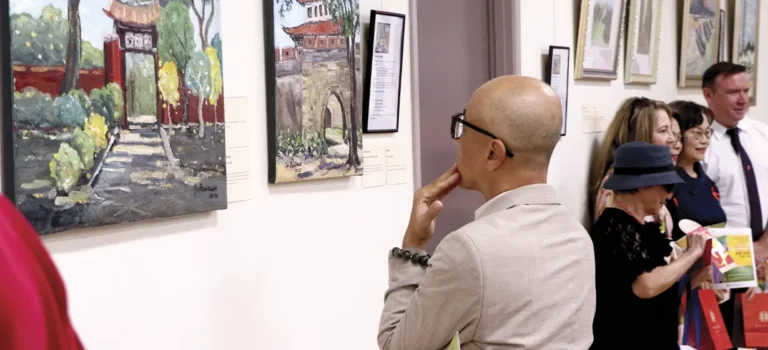
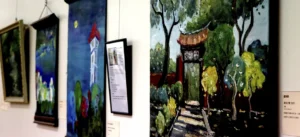
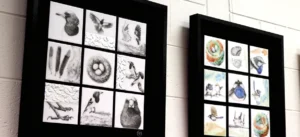
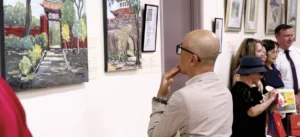
BRISBANE, 21 March 2026 — A vibrant celebration of cultural diversity and community connection took place in Brisbane as the 2026 WAMCI Harmony Week Celebration and the opening of the “Australia—Taiwan: Art in Harmony”—Exhibition brought together people from a wide range of cultural backgrounds.
Hosted by World Arts & Multi-Culture Inc. (WAMCI) at the Queensland Taiwan Centre, the event highlighted the core values of Harmony Week —respect, inclusion, and belonging — through the universal language of art.
The exhibition features a diverse group of artists, including Australian First Nations artist Aunty Peggy Tidyman and Taiwanese artists Lu Wan-Ching, Chen Ya-Ping, Tsai Shu-Chen and Chen Chiu-Yen, alongside Brisbane-based artists of diverse cultural backgrounds such as Yumiko Kigoshi (Japan), Dr Renata Buziak (Poland), and Andrea Moser (Germany). Their works reflect a rich tapestry of cultural identity, heritage, and shared human experience.
WAMCI President Susan Yang emphasised the role of art in building connections across communities. “Art allows us to connect beyond language and cultural differences. It fosters understanding and brings people together,” she said.
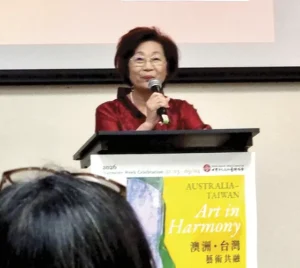
A highlight of the program was the keynote address by Ms Yiu Wen-Mei, Chairperson of the Tainan Art Museum, who shared valuable insights into the global art landscape and the evolving role of art in connecting cultures. The celebration was attended by a broad cross-section of the community, including government representatives, multicultural leaders, and members of various cultural organisations “reflecting Brisbane’s diversity and strong community spirit.
In addition to the formal proceedings, guests enjoyed artist-led tours, artwork presentations, and a live portrait sketch session, creating opportunities for meaningful engagement between artists and the public. The organisers also expressed their sincere appreciation to their valued sponsors and supporters, including the Brisbane Lord Mayor’s Community Fund, Councillor Steven Huang, the Overseas Community Affairs Council (Taiwan), and Members of Parliament James Martin MP, Leanne Enoch MP, Peter Russo MP and Margie Nightingale MP. Appreciation was also extended to Liming Group, Taiwan Business Bank (Brisbane Branch), and Mega ICBC Bank (Brisbane) for their generous sponsorship support.
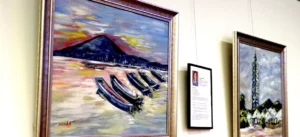
The “Australia—Taiwan: Art in Harmony” exhibition is now open to the public, inviting visitors from all backgrounds to experience how art can connect cultures and strengthen community bonds.
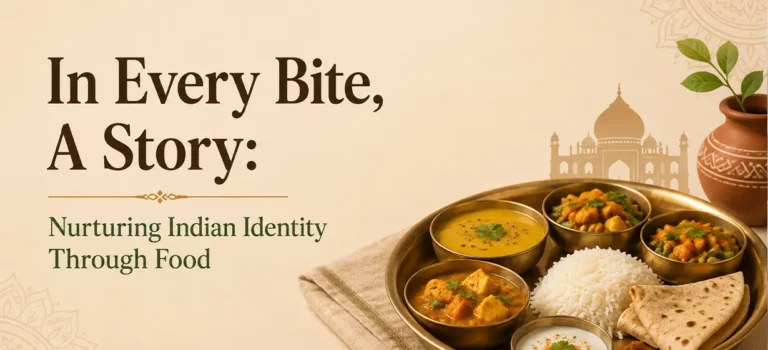
In Every Bite, A Story: Nurturing Indian Identity Through Food
There’s a moment many Indian mothers living abroad will quietly recognise.
You are in the kitchen, the crackle of mustard seeds dancing in hot oil, curry leaves releasing their earthy fragrance into the air. The kitchen feels alive-warm, familiar, grounding. Your child walks in, opens the fridge, scans past everything you have just made and says, “Can I have pasta?” And just like that, something in you sinks. Not because of the pasta. But because of what it feels like you’re losing.
The Moment That Stays With You
A mother I worked with recently shared this with me. She mentioned her struggles with her son as he refused to take paranthas in his lunchbox and only wanting sandwiches. When she gently asked why, he shrugged and said, “It’s just easier to eat what everyone else eats.” There was no anger in his voice. Just a quiet desire to fit in. And in that moment, she didn’t just feel rejected. She felt something deeper, like a small thread connecting her child to her world had loosened.
The Quiet Fear Beneath It All
In my work with Indian families here in Australia, this is more common than we admit. It’s not really about food. It’s about identity, belonging. The fear that what matters to us may not matter to them. And so we try harder. Cook more. Explain more. Sometimes even push more. But here’s what I’ve learned: Children don’t disconnect from culture overnight. They drift when it feels distant, unfamiliar, or forced.
A World Full of Choices… and One That Still Matters
Our children are growing up in a world overflowing with options. School lunches that look nothing like ours. Weekend meals shaped by café culture. Indian food available everywhere-from restaurants to ready-made packets. They are exposed to variety in a way we never were.
And while that’s a beautiful thing, it also means this: What is occasional becomes novelty. What is consistent becomes identity. Restaurant meals may excite them. Store-bought food may comfort them. But home-cooked food-made regularly, without occasion-is what quietly shapes them.
What Home-Cooked Food Really Holds
When you cook at home, you’re not just feeding your child. You’re passing something through your hands. The instinct of your mother. The rhythm of your upbringing. The unspoken care that says, “I made this for you.”
It’s in the way spices are layered without measuring. In the way you adjust taste without thinking. In the way food is offered-not just served. That depth doesn’t come from convenience. It comes from connection.
The Kitchen Isn’t About Perfection-It’s About Presence
It’s easy to feel like you have to do it “right.” Perfect recipes. Traditional meals. Consistency without fail. But what children remember isn’t perfection. It’s presence. Let them stand beside you. Let them stir, spill, taste, and question. Let them make something that looks nothing like what it’s supposed to be and still celebrate it.
Because in those moments, something far more important than cooking is happening. They are being included. And inclusion builds belonging.
When They Pull Away
There will be phases when they resist. They will prefer something else. They will compare and question. This is where many parents feel the urge to tighten control. But here’s the shift that matters:
Children don’t reject culture. They reject the pressure attached to it.
The more we insist, the more they distance. The more we stay calm, consistent, and open, the more space they have to return.
Between Two Worlds
At school, your child is learning how to fit in. They may feel different. They may choose what feels easier. They may slowly adapt to their surroundings.
And then they come home. To the smell of something cooking. To flavours that don’t need explanation. To a space where they don’t have to adjust themselves. That’s what your food becomes. Not just nourishment. But grounding. A quiet message: You belong here too.
The Moment It Comes Back
And then, often when you least expect it, something shifts. They take an extra serving.
They linger at the table. They ask, casually, “How did you make this?”
And years later, maybe when they’re living on their own, you’ll get the message:
“Hey… what’s that recipe again?” And in that moment, you realise, nothing was lost. It was simply taking root in its own time.
More Than Just Food
In a world where Indian food is easily available everywhere, it’s easy to assume culture will remain. But culture doesn’t live in availability. It lives in repetition. In shared moments. In the quiet consistency of what we offer, day after day.
Because in every bite, of something you’ve made, in your way, there is a story. And one day, your child won’t just remember the taste. They’ll remember the feeling of coming home to it.
And that feeling, that sense of being held, known, and rooted, is what they will carry forward as their culture.
Anish John Appointed Honorary Justice in Queensland
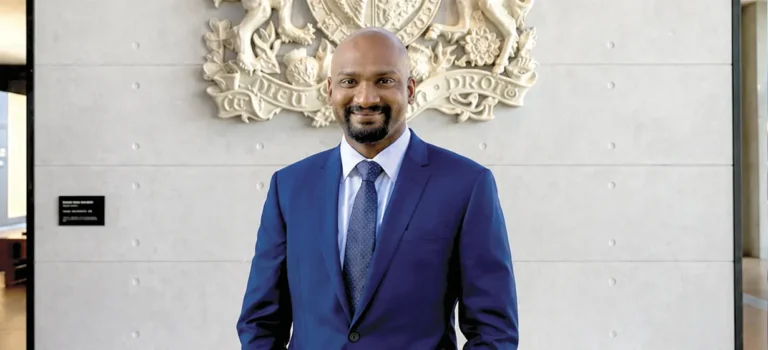
Australia, Brisbane: In a proud and inspiring moment for the Indian diaspora in Queensland, Mr. Anish John has been officially appointed as Honorary Justice in Australia as Justice of the Peace in Queensland. The appointment was conferred by Her Excellency Jeannette Young, representing His Majesty King Charles III, recognising Mr. John’s longstanding commitment to community service and leadership.
A resident of Australia for over 15 years, Mr. John has established himself as a respected leader within Australia’s multicultural landscape. He currently serves as the Chief Executive Officer of Windsor Health, where he has played a key role in delivering community-focused healthcare and support services.
Mr. John’s appointment as a JP reflects his deep and sustained involvement in community development, cultural engagement, and service-oriented leadership. Over the years, he has held several significant positions across multicultural and faith-based organisations. His contributions include serving as Secretary of the Mernda & Doreen Multicultural Association, Secretary of the Mernda Diwali Celebrations, President of the Laurimar Multicultural Association, and Secretary of the Mar Thoma Church in Melbourne. Through these roles, he has been instrumental in promoting inclusivity, cultural harmony, and community cohesion.
Widely respected for his integrity, humility, and dedication, Mr. John has consistently demonstrated a strong commitment to uplifting diverse communities and fostering meaningful connections among people from different cultural backgrounds.
Community leaders have warmly welcomed the recognition, describing it as a well-deserved honour and a testament to his years of selfless service. They noted that his appointment brings pride not only to his family but also to the broader Indian and multicultural communities across Australia.
Mr. John is supported by his wife, Mrs. Teena John, and together they are blessed with three children—Emma, Charlotte, and Alexander—who remain a constant source of inspiration and strength in his journey.
As a Justice of the Peace, Mr. John will now serve the public in an official capacity by witnessing statutory declarations and affidavits, certifying copies of documents, and performing other authorised legal functions. His new role will further strengthen grassroots-level public service and accessibility to essential legal processes within the community.
This achievement stands as a shining example of how dedication to community service and cultural engagement can lead to meaningful recognition and opportunities to serve society at a higher level.
—Biju Joseph Phone: 0401 972 923 Northern Gold Coast Multicultural Association





 Many Australians work hard for decades, contribute to Super throughout their working lives, and trust it will quietly build in the background. At some point, many begin asking deeper questions:

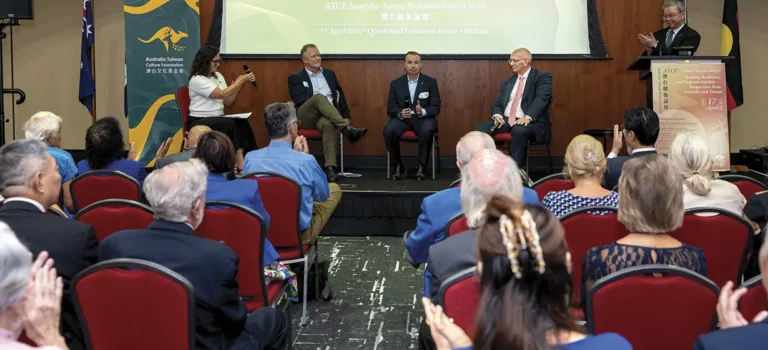
 The Australia–Taiwan Relations Forum 2026, hosted by the Australia Taiwan Culture Foundation Ltd. (ATCF), was held on 17 April at the Queensland Parliament House. Under the theme “Shared Responsibility: Security, Resilience, and Regional Stability — Perspectives from Australia and Taiwan,” the forum brought together leaders from government, academia, and industry to engage in in-depth discussions on the evolving Indo-Pacific landscape and Australia–Taiwan cooperation. The event was met with strong interest and active participation.
 The forum took place against the backdrop of the Australian Government’s announcement of a record AUD 425 billion defence investment over the next decade, aimed at responding to an increasingly complex regional security environment and potential threats from neighbouring hostile actors. This development underscored the urgency and relevance of the forum’s discussions, with participants recognising that safeguarding regional stability is a shared responsibility among democratic partners.
 The event opened with welcome remarks by Ms Phyllis Lo, President of ATCF, followed by a recorded message from The Hon Jon Krause MP, Deputy Speaker of the Queensland Parliament, expressing strong support for the forum. In his opening address, Director-General William Fan of the Taipei Economic and Cultural Office in Brisbane emphasised the shared democratic values between Australia and Taiwan and their joint responsibility for regional stability.
 He called for greater international inclusion of Taiwan, urging support for its participation in the World Health Organization (WHO), and highlighted the critical link between peace in the Taiwan Strait and global supply chain security. He also noted Taiwan’s leading position in the global semiconductor industry and the potential for its accession to the Comprehensive and Progressive Agreement for Trans-Pacific Partnership (CPTPP) to strengthen economic resilience across the Indo-Pacific.
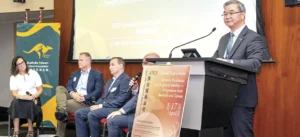 The keynote address was delivered by Major General (Ret’d) Michael Ryan AM, who provided a strategic assessment of the evolving Indo-Pacific security environment. Drawing on his concept of “Confronting Complacency,” he warned that prolonged periods of relative stability can lead to underestimation of risk and delayed preparedness.
 He emphasised the importance of proactive risk recognition, adaptive capability development, and closer cooperation among like-minded partners to enhance regional resilience. The forum’s panel discussion was moderated by Professor Caitlin Byrne AM FAIIA, Pro Vice Chancellor (Business) at Griffith University. Panellists included Michael Ryan, The Hon Shayne Neumann MP, Chair of the Joint Standing Committee on Foreign Affairs, Defence and Trade, and Mr Warwick Penrose, CEO of EPE Group.
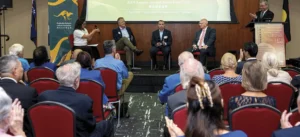 The discussion addressed a range of issues including regional security architecture, supply chain resilience, democratic cooperation, and the future trajectory of Australia–Taiwan relations. The forum attracted strong participation from diplomats and consular representatives, elected officials from federal, state, and local governments, think tank experts, academics, multicultural community representatives, and Taiwanese community leaders from Brisbane and Sydney.
 The Q&A session was highly engaged, with participants actively contributing questions and perspectives. Discussions extended to Taiwan’s participation in the WHO and its bid to join the CPTPP. Due to time constraints, the session concluded despite continued interest, reflecting the high level of engagement. The forum was convened and facilitated throughout by Mr Edward Lin, CEO of ATCF.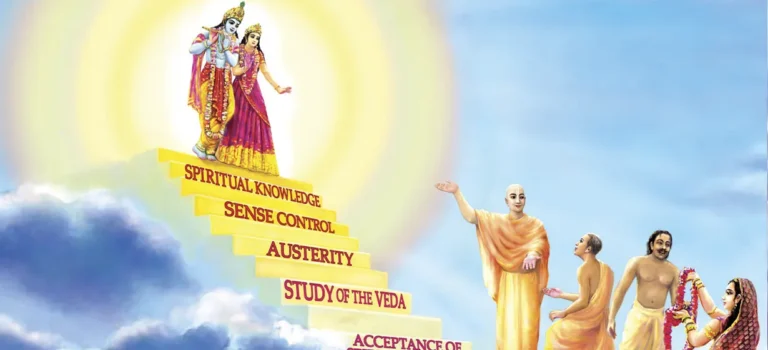

 BRISBANE, 21 March 2026 — A vibrant celebration of cultural diversity and community connection took place in Brisbane as the 2026 WAMCI Harmony Week Celebration and the opening of the “Australia—Taiwan: Art in Harmony”—Exhibition brought together people from a wide range of cultural backgrounds.
 Hosted by World Arts & Multi-Culture Inc. (WAMCI) at the Queensland Taiwan Centre, the event highlighted the core values of Harmony Week —respect, inclusion, and belonging — through the universal language of art.
 The exhibition features a diverse group of artists, including Australian First Nations artist Aunty Peggy Tidyman and Taiwanese artists Lu Wan-Ching, Chen Ya-Ping, Tsai Shu-Chen and Chen Chiu-Yen, alongside Brisbane-based artists of diverse cultural backgrounds such as Yumiko Kigoshi (Japan), Dr Renata Buziak (Poland), and Andrea Moser (Germany). Their works reflect a rich tapestry of cultural identity, heritage, and shared human experience.
 A highlight of the program was the keynote address by Ms Yiu Wen-Mei, Chairperson of the Tainan Art Museum, who shared valuable insights into the global art landscape and the evolving role of art in connecting cultures. The celebration was attended by a broad cross-section of the community, including government representatives, multicultural leaders, and members of various cultural organisations “reflecting Brisbane’s diversity and strong community spirit.
 In addition to the formal proceedings, guests enjoyed artist-led tours, artwork presentations, and a live portrait sketch session, creating opportunities for meaningful engagement between artists and the public. The organisers also expressed their sincere appreciation to their valued sponsors and supporters, including the Brisbane Lord Mayor’s Community Fund, Councillor Steven Huang, the Overseas Community Affairs Council (Taiwan), and Members of Parliament James Martin MP, Leanne Enoch MP, Peter Russo MP and Margie Nightingale MP. Appreciation was also extended to Liming Group, Taiwan Business Bank (Brisbane Branch), and Mega ICBC Bank (Brisbane) for their generous sponsorship support.
 The “Australia—Taiwan: Art in Harmony” exhibition is now open to the public, inviting visitors from all backgrounds to experience how art can connect cultures and strengthen community bonds.