


Soul Consciousness

Soul consciousness is a spiritual perspective that encourages individuals to understand themselves as more than physical beings. Rather than identifying solely with the body, social roles, or material possessions, this view emphasizes the self as a soul characterized by peace, love, purity, and inner stability. This article explores the meaning of soul consciousness, its contrast with body consciousness, the role of meditation in cultivating spiritual awareness, and the practical effects of this shift on personal well-being and relationships. It also considers the challenges involved in sustaining soul consciousness in daily life and outlines practical methods for integrating this awareness into one’s routine. By examining soul consciousness as both a philosophical and lived experience, the discussion highlights its potential to promote inner harmony, emotional balance, and compassionate social interaction.
Questions of identity have occupied philosophical and spiritual traditions for centuries. Human beings often define themselves through visible and external markers such as the body, occupation, status, possessions, and social roles. Yet many spiritual teachings suggest that this outward identity does not fully capture the essence of who we are. Within this framework, soul consciousness offers a deeper understanding of the self by proposing that human beings are fundamentally souls inhabiting physical bodies.
This perspective has significant implications. It changes how individuals understand their thoughts, emotions, relationships, and purpose in life. When identity is rooted only in the body, life often becomes dominated by comparison, insecurity, attachment, and ego. In contrast, when identity is grounded in the soul, a person may experience greater peace, clarity, and emotional resilience. Soul consciousness therefore represents not only a spiritual idea but also a practical orientation toward living.
The Meaning of Soul Consciousness
Soul consciousness begins with the recognition that the true self is not the physical body but the inner spiritual being. In spiritual philosophy, the soul is often understood as the source of awareness, thought, feeling, and character. It is associated with the original qualities of peace, love, purity, wisdom, and bliss. To live in soul consciousness means to remain aware of this spiritual identity and to express these qualities in thought and action.
This view stands in contrast to body consciousness, in which a person identifies primarily with appearance, possessions, labels, and worldly roles. Body consciousness often gives rise to negative emotional states such as anger, greed, fear, jealousy, and pride. These states emerge because the individual seeks worth and fulfillment through external conditions, which are unstable by nature. Soul consciousness, by contrast, directs attention inward and encourages a sense of completeness that is not dependent on external approval or material success.
From Body Consciousness to Soul Consciousness
The movement from body consciousness to soul consciousness is rarely sudden. It is usually a gradual process shaped by self-reflection, discipline, and spiritual practice. Most people spend much of their lives identifying with what they do, what they own, and how they are perceived by others. As a result, reactions are often shaped by habit, desire, and ego-based thinking.
The shift toward soul consciousness begins when an individual starts questioning this limited identity. Through repeated reflection, one begins to observe thoughts and actions more carefully. This observation creates a distance between the self and its conditioned patterns. Over time, a person may become less reactive, less attached to praise or criticism, and more rooted in inner values.
This transformation is not merely conceptual. It requires continuous practice. It involves replacing learned habits of body-based identification with a renewed awareness of the self as a spiritual being. In this sense, soul consciousness is both an awakening and a discipline.
The Role of Meditation
Meditation plays a central role in developing soul consciousness. It provides the mental space necessary to withdraw attention from external distractions and reconnect with the inner self. Among the methods associated with this process, Raja yoga meditation is especially significant. This practice encourages the individual to visualize the self as a point of spiritual light and to cultivate a conscious connection with the Supreme Soul, understood as the ultimate source of peace, wisdom, and purity.
Through meditation, the practitioner gradually weakens identification with the body and strengthens awareness of spiritual identity. This repeated internal focus helps cleanse the mind of negative impressions and habitual responses. It also supports emotional regulation by creating a stable inner centre from which thoughts and actions can emerge more consciously.
Meditation, in this context, is not an escape from life. Rather, it is a method for engaging with life more clearly. It enables individuals to act with greater calmness, dignity, and compassion even amid everyday pressures.
Effects on Personal Well-Being
One of the most immediate benefits of soul consciousness is inner peace. When people identify themselves as souls rather than bodies, they are less disturbed by temporary situations, external judgment, or material fluctuations. Their sense of worth no longer depends entirely on circumstances. This creates emotional steadiness and helps reduce anxiety, frustration, and insecurity.
Soul consciousness can also improve emotional health. Body consciousness often intensifies emotional turbulence because it is tied to desire, control, and expectation. Soul consciousness encourages detachment in a positive sense, not indifference, but freedom from overdependence on outcomes. This leads to greater clarity of mind and a more balanced emotional life.
In addition, the practice of soul consciousness can deepen one’s sense of purpose. Life is no longer viewed only as a pursuit of achievement or acquisition. Instead, it becomes a journey of self-realization, moral growth, and spiritual contribution.
Effects on Relationships and Society
The practice of soul consciousness extends beyond personal transformation. It also influences how people relate to others. When individuals see others primarily through bodily categories such as gender, status, race, age, or profession, relationships may become shaped by judgment, comparison, and conflict. Soul consciousness reduces the dominance of these external distinctions by emphasizing a shared spiritual identity.
This perspective encourages respect, empathy, and compassion. It becomes easier to respond to others with patience when one sees them as souls carrying their own experiences, struggles, and inner worth. Such a view can strengthen families, communities, and workplaces by promoting understanding rather than division.
On a broader level, soul consciousness supports the idea of universal human connectedness. It challenges narrow identification and encourages a more inclusive outlook. In this way, it has the potential to contribute to social harmony and ethical living.
Practical Ways to Cultivate Soul Consciousness
Although soul consciousness is a profound spiritual state, it can be developed through simple daily practices. The first and most important is regular meditation, especially at the beginning and end of the day. These moments help establish and reinforce awareness of the self as a soul.
Self-reflection is also essential. Individuals can ask themselves whether their reactions are arising from ego, attachment, or fear, or from peace, dignity, and understanding. This kind of honest internal observation gradually changes one’s mental habits.
Positive affirmations can further support the process. Statements such as “I am a peaceful soul” or “I am a being of light and love” help redirect identity toward the spiritual self. Spiritual study also plays a valuable role by deepening understanding and strengthening conviction.
Finally, soul consciousness must be practiced in action. It is revealed not only in meditation but also in how one speaks, responds, forgives, and serves. Everyday interactions provide the true test of whether spiritual awareness is becoming part of one’s character.
Challenges in Sustaining Soul Consciousness
Despite its benefits, soul consciousness can be difficult to maintain. One major challenge is the influence of deeply rooted impressions, often referred to in spiritual traditions as sanskars. These impressions shape behaviour and emotional responses and may pull the individual back into body consciousness. Reactions such as anger, possessiveness, or ego often arise automatically because they have been reinforced over time.
External influences also present challenges. Modern life often promotes competition, speed, comparison, and material success. These pressures make it easy to forget one’s spiritual identity. As a result, maintaining soul consciousness requires deliberate effort and consistency.
Supportive environments can help. Spiritual communities, uplifting reading, reflective silence, and regular meditation all strengthen the inner resolve needed to sustain this awareness. Equally important is self-compassion. Progress on the spiritual path is gradual, and setbacks should be approached with patience rather than self-criticism.
Conclusion
Soul consciousness offers a meaningful framework for understanding identity, well-being, and human relationships. By shifting awareness from the body to the soul, individuals may experience greater peace, emotional balance, and clarity of purpose. This transformation is not purely theoretical. It becomes real through meditation, reflection, disciplined practice, and conscious action.
As a way of life, soul consciousness encourages people to move beyond ego-driven patterns and to express their original qualities of love, purity, and wisdom. It supports healthier relationships and contributes to a more compassionate social world. While the journey requires persistence, its value lies in the gradual awakening of the self to its deeper nature.
In this sense, soul consciousness is both a personal path and a universal invitation. It calls individuals to rediscover who they are beneath appearances and to live from that truth with greater awareness and integrity.
Brahma Kumaris Shailer Park provide free Raja Yoga Meditation, Positive Thinking and Anger Management Courses.
Please contact us on 0414685144 or [email protected] for further information. https://brahmakumaris.org.au and find out the events happening close to your location.
Om Shanthi.


 AUGUSTINE HEIGHTS, QLD – 19 April 2026 – The Federation of Indian Communities of Queensland (FICQ) proudly marked a historic milestone with the foundation stone laying ceremony of the “House of India” Community and Cultural Centre at Augustine Heights in Greater Springfield. The ceremony brought together community leaders, elected representatives, faith leaders, and members of the wider multicultural community to celebrate the official launch of this landmark project.
 The event commenced with a formal welcome and Acknowledgement of Country, followed by an address from FICQ President, Dr Preethi Suraj, who outlined the vision and journey behind the House of India project—a long-awaited multicultural hub that will serve as a centre for connection, celebration, learning, and community cohesion.
 A special highlight of the ceremony was the multifaith blessings, where faith leaders offered prayers and sacred soil blessings, symbolising unity, peace, and shared prosperity across cultures and communities.
 They were joined by state member the Hon. Hermann Vorster MP, and opposition leaders the Hon. Cameron Dick MP and the Hon. Charis Mullen MP, Ms Margie Nightingale MP alongside Ipswich Mayor Teresa Harding, Councillor Pye Augustine, and other dignitaries.
 During the ceremony, Julian Hill MP highlighted the Australian Government’s commitment to multicultural infrastructure, noting the $5.5 million funding support secured for the project. He acknowledged the instrumental role of Shayne Neumann MP in championing this significant investment in community development. The ceremony also featured the official unveiling of the foundation stone, symbolising the beginning of construction and the realisation of a long-held vision for the Indian Australian community in Queensland.
 The House of India will serve as a vibrant multicultural hub—bringing together arts, culture, education, and community services under one roof. It is envisioned as a space that not only celebrates Indian heritage but also fosters intercultural dialogue and inclusion across Queensland’s diverse communities. The event concluded with a vote of thanks by Mrs Parul Mehta, Treasurer of FICQ, followed by community networking and media interactions.


 At times, a rental property may sit listed longer than expected. While vacancy rates remain low, this does not necessarily mean all properties are being rented quickly.

 Labour Day is a celebration for the hard work of people in Queensland and honouring those in the past for their efforts to promote fair working arrangements. Whilst we celebrate the hard work done by all we should also make sure we take care of our health and ensure we take steps to ensure our ongoing good health.
 • Hepatitis A – especially if we are travelling to countries where there is an increased risk of infection.

 Wishing everyone a very Happy Mother’s Day. This month, we celebrate not only mothers, but also grandmothers, aunties, carers, and all those who have embraced the role of a mother through love, sacrifice, and unwavering support. My own mother, a single parent, arrived in Australia unable to speak English. Through determination, resilience, and kindness, she provided for our family and taught me the importance of helping others, doing what is right, and viewing challenges as opportunities while embracing our faith.
 I would also like to acknowledge remarkable women including Sandy Deo, Usha Chandra, Khue Oan Do, Mandeep, my grandmother, and the many women across our community who quietly go above and beyond each day, sharing kindness, compassion, and strength.
 Mental health is a topic that I care deeply about, particularly when it comes to young people. Like many families, I know individuals who have struggled with self-harm and suicidal thoughts. These conversations are not always easy, but they are necessary, and they can save lives. If you are able to support Cr St Ledger and his team in their important work, I encourage you to reach out.This is an issue that matters greatly to our readers. Many have asked me to cover mental health, especially as young people navigate the growing challenges of social media and artificial intelligence. Please enjoy my interview with Councillor Nathan St Ledger, who is helping break down barriers in this space. He spoke openly and honestly in the hope of helping others. Over the coming months, I will be sharing more from this important conversation.
 Xavier: Are you able to tell readers more about mental health?
 At the time, I was running youth programs, and we wanted to strengthen the mental health component of that work. We invited Evan to get involved, and the partnership grew from there. I have always loved what A Chance for Change stands for.
 Xavier: Are you able to share your views about social media?



 As the excitement builds, the RF Fashion Show 2026 journey is unfolding into something truly extraordinary. With the highly anticipated show set to take place on 6th June at the stunning Hanworth House, the vision of Ravishing Fashionistas is now coming to life in powerful and inspiring ways.
 We are proud to share that our first official model rehearsal has been successfully completed, marking a major milestone in this year’s journey.
 Following the rehearsal, the official promo shoot captured the essence of RF Fashion Show 2026.With carefully curated styling, bold creative direction, and a strong sense of identity, the shoot reflected everything RF stands for — diversity, empowerment, and fearless self-expression.These visuals are now shaping the narrative of the show, offering audiences a first glimpse into the energy, beauty, and impact that awaits on the runway.
 Behind the scenes, preparations are moving at full pace. Designers, models, and the production team are working together to create a show that goes beyond fashion — one that tells real stories and celebrates individuality in all its forms.


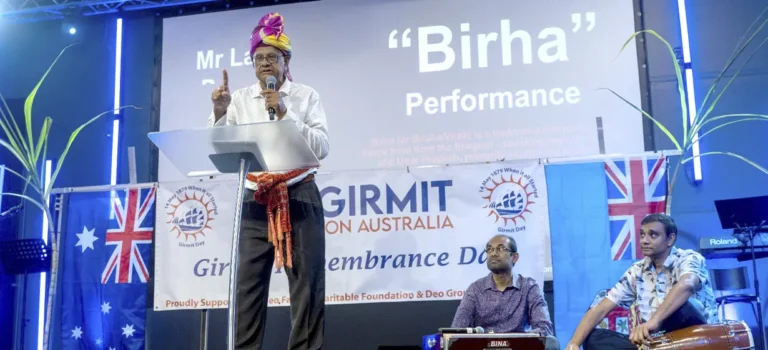
 In the quiet moments of reflection, I often think back to the stories whispered by our elders, stories of a vast, churning ocean, of the unknown horizons of Fiji, and of a word that would come to define an entire people: Girmit. It was a phonetic corruption of the word “Agreement,” but for the 60,000 souls who made that journey between 1879 and 1916, it was much more than a legal contract. It was a testament to survival, a blueprint for resilience, and the birth of a global diaspora that now calls Australia home.
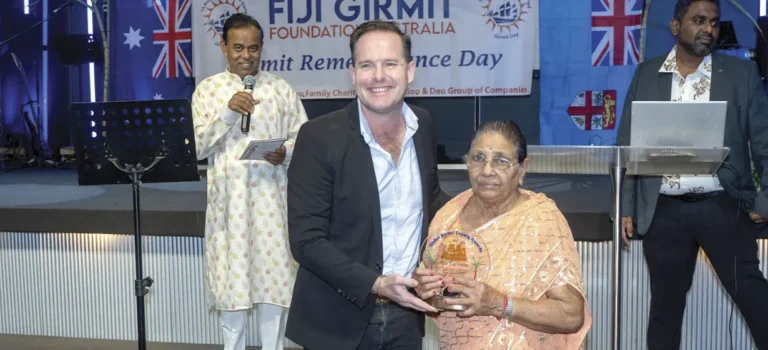
 History is often written in ink, but for the descendants of the Girmitiyas, it is written in sweat, salt water, and an unbreakable spirit. As we observe Girmit Remembrance Day, we are called not only to look back at the arduous journeys across the Kala Pani (black waters) but to look forward at the vibrant community that has blossomed from those initial seeds of hardship. In Brisbane, this flame of remembrance is kept alive with vigor by the Deo Family Charitable Foundation, whose dedication ensures that the story of the indentured labourers remains a cornerstone of our local cultural fabric.
 In the heart of Brisbane, the Deo Family Charitable Foundation has become a vital bridge between the past and the present. Their focus on Girmit Remembrance Day is not merely about an annual ceremony; it is about the preservation of identity. For many younger Indo-Fijians born in Australia, the stories of the plantations can feel like distant echoes. The Foundation works tirelessly to amplify those echoes into a clear, proud voice.

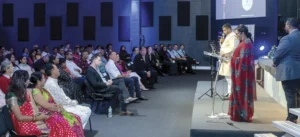 The word Girmit is a linguistic corruption of the English word “agreement.” Between 1879 and 1916, approximately 60,000 Indians were transported to Fiji under this system of indentured labour. This era, known as the Girmit years, fundamentally reshaped the demographic, cultural, and political landscape of the South Pacific, leaving behind a legacy defined by profound suffering and an even more profound triumph of the human spirit.
 Following the abolition of slavery in the British Empire in 1833, colonial plantation economies faced a massive labour shortage. The British solution was the Indentured Labour System. In Fiji, the first Governor, Sir Arthur Gordon, sought to develop a sugar industry without disrupting the traditional Fijian way of life or exploiting the indigenous population. His solution was to import labour from India.
 The journey to Fiji was the first of many traumas. Packed into ships like the Leonidas (the first to arrive in 1879), the labourers were stripped of their social identities. On these vessels, caste hierarchies began to dissolve out of necessity. High-caste Brahmins and Dalits ate, slept, and lived side-by-side.This forced proximity birthed a new bond: Jahajibhai (Brotherhood of the Ship). These relationships often became stronger than blood ties, providing a crucial support network for the hardships that awaited them in the cane fields.
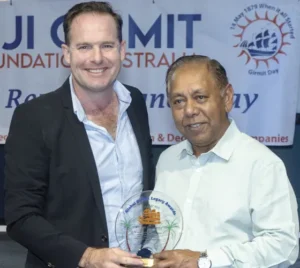 Upon arrival, the Girmityas (those under agreement) were assigned to various plantations, mostly run by the Colonial Sugar Refining Company (CSR). The conditions were so brutal that the labourers frequently referred to the plantations as Narak, the Hindi word for hell.
 The workday was governed by the “task.” A task was a set amount of labour like hoeing, weeding, or cutting cane and that a worker had to complete to earn their daily wage. If the task was deemed incomplete or unsatisfactory by the sirdars (overseers), the labourer was not paid, yet they could still be prosecuted for “refusal to work.”
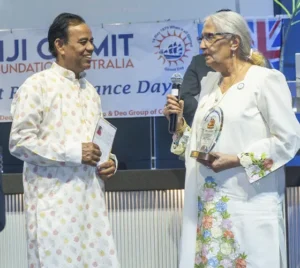 Despite the systematic attempt to strip them of their dignity, the Girmityas held tenaciously to their culture. In the coolie lines at night, away from the eyes of the overseers, they gathered to sing bhajans (hymns), recite the Ramayana, and celebrate festivals like Holi and Diwali.Because the recruits came from various regions, speaking Awadhi, Bhojpuri, Magahi, and Tamil, a new language emerged to bridge the gap. Fiji Hindi became the lingua franca of the plantations. It was a simplified, robust dialect that incorporated English and Fijian loanwords, serving as a linguistic testament to the adaptation and survival of the Girmityas.
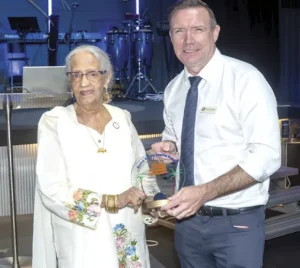 The indentured labour system was eventually abolished in 1916, influenced by the rising Indian nationalist movement led by figures like Mahatma Gandhi and C.F. Andrews, who visited Fiji and reported on the “shameful” conditions of the women. By 1920, all indentured contracts had expired.
 The Girmit era created a permanent Indo-Fijian population that eventually became nearly half of the nation’s total population. This demographic shift laid the groundwork for the complex political history of Fiji. The struggle for “Common Roll” voting and equal rights became the hallmark of Indo-Fijian politics throughout the 20th century.The memory of Girmit remains a sensitive and powerful touchstone. It is a story of being “uprooted and transplanted.” While the initial years were defined by colonial exploitation, the long-term result was the creation of a vibrant, hardworking community that has contributed immensely to Fiji’s economy, particularly through the sugar industry, commerce, and the professions.