

Joy Is Not a Reward It’s a Choice We Forget to Make

Let’s be honest, life does not move in straight lines. It rises, it falls, it surprises us, and at times, it asks more than we feel ready to give. No one is immune to this rhythm. Not the most disciplined, not the most self-aware, not even those who appear to have mastered it all.
And yet, within that unpredictability, there remains one constant: your response is still yours.
We often treat joy as something conditional. Something that arrives after the work is done, after the stress is resolved, after life settles into something more manageable. But if you look closely, that moment rarely arrives in the way we expect.
Joy, in truth, is not a reward. It is a decision, one that is often available far earlier than we allow.
This is where many people quietly disconnect from themselves.
We have become highly practised at identifying what is wrong. We analyse stress, anticipate problems, and prepare for discomfort. But when something feels good when there is ease, lightness, or even a brief moment of contentment, we hesitate, we question it and we move past it too quickly.
There is an unspoken belief that we must earn our joy.
From a psychological perspective, this hesitation comes at a cost. Research from Martin Seligman and the field of positive psychology shows that emotions such as joy, gratitude, and calm are not just “nice to have” they actively expand cognitive flexibility, improve decision-making, and strengthen resilience.
In simple terms, joy helps you handle life better. But beyond theory, the body already knows this.
When you allow yourself to feel even a small moment of ease, the nervous system shifts. Breath deepens, muscles soften, perception widens. You are no longer operating from contraction, but from space.
And space changes everything.
So how do you choose joy, especially when life does not feel particularly joyful?
Not by forcing positivity. Not by denying what is real.
But by widening your awareness.
Instead of asking, “How do I feel better?” A question that often creates pressure, ask something far more accessible:
“What, in this moment, feels okay?”
Not perfect or ideal, just okay.
It could be the feeling of your feet on the ground. A moment of stillness between thoughts. A conversation that feels slightly easier than expected. These are not insignificant details, they are entry points.
The nervous system does not require grand gestures to recalibrate. It responds to what is present and acknowledged.
When you begin to notice these moments, something shifts. You move from waiting for joy to recognising that it has been quietly available all along.
This is the turning point.
In my work with emotional processing and structured reflection tools, particularly through frameworks like the Mind and Motion approach, we see this consistently. When individuals are given language to identify what they are feeling, without judgement or urgency to fix it, the body often moves naturally towards resolution.
And within that resolution, there is often an unexpected emergence of lightness.
Not because life has changed but because the internal state has.
A Vedic Lens | Joy as Your Natural State
Ancient Vedic philosophy offers a perspective that feels both simple and profound: joy is not something you create, it is something you uncover.
The state referred to as ānanda describes a deep, inherent bliss that exists beyond external circumstance. It is not dependent on outcomes, achievements, or control. It is considered the natural essence of being.
As written in the Taittiriya Upanishad:
“From bliss all beings are born, by bliss they are sustained, and into bliss they return.”
This insight reframes the entire conversation.
If joy is foundational, then the question is no longer “How do I find it?” but rather,
“What is getting in the way?”
More often than not, the barriers are familiar, mental noise, physical tension, and the habit of postponing ease until conditions feel right.
Yet when you pause, breathe, and allow yourself to be present, even briefly those layers begin to soften.
And what remains is not something new, but something remembered.
Returning to Choice
Life will continue to move in cycles. There will be moments that challenge you, stretch you, and at times, unsettle you.
But within all of that, there is always a quieter layer available.
Choosing joy is not about ignoring difficulty. It is about meeting life with a nervous system that is not entirely consumed by it. It is about allowing space for something softer to exist alongside what is hard.
And that choice, while simple, is powerful.
Not because it changes the external world immediately but because it changes how you move within it.
Joy, then, is not something distant or reserved for better days.
It is something you can return to again and again through awareness, permission, and the willingness to feel what is already there.
Explore Further
The Mind and Motion Cards offer guided reflections like this to support your personal growth journey. These tools are designed to complement, not replace, professional support.
Available in English and Neutral Spanish. For more resources or to purchase the deck, please visit https://www.monicapema.com/mindandmotiondeck
Monica Pema | Integrated Wellness Expert
MSc. Psychology
“From Passion to Purpose in All Walks of Life”
This article is intended for self-reflection and general education only. It is not a substitute for professional medical, mental health, or psychological care.



 Medicare Urgent Care Clinics (UCCs) provide quick, convenient medical care for a wide range of health problems, ones that are not a life-threatening emergency.
 If pregnant, clinics may also offer opportunistic syphilis testing, which helps protect both the mother and the baby.
 I’m delighted to begin this April edition of the Australian Indian Times by acknowledging a significant date in our calendar, 111 years since Australian and New Zealand troops first landed during the Gallipoli campaign. ANZAC Day offers us a time to reflect on the sacrifices made by soldiers and animals who served with courage and dedication.
 This year, I will be marching and attending the Forest Lake RSL Sub Branch ceremony at the Lake Parklands in Forest Lake. I still recall attending this service when I was around four years old, which makes it especially meaningful to return and take part alongside my school friends and community leaders. I encourage you to attend a local service or simply place a candle at dawn and pay your respects from home. For more information, please contact your local RSL.
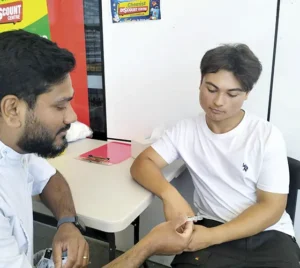 This is a significant day in our national calendar. The Australian and New Zealand Army Corps was established in 1914 in Egypt, bringing together the Australian Imperial Force and the New Zealand Expeditionary Force. The name “ANZAC” has become a lasting symbol of mateship, resilience, and sacrifice. It is also important to recognise the contributions of Indian and British soldiers who fought alongside the ANZACs. Around 16,000 Indian troops served in the Gallipoli campaign, with approximately 1,600 losing their lives. Their bravery remains an important part of our shared history.A highlight from last month was participating in the Cancer Council fundraiser coordinated by Kylie Gates. A heartfelt thank you to Mandeep Kaur, Vice President of GOPIO Brisbane, for taking part in the walk. I’m also grateful to readers of the Australian Indian Times as one participant shared that they discovered the event through this column.
 Originally from South India, Will has lived and worked across the world—from Dubai to regional Australia—before settling locally. Fluent in multiple languages, he has created a welcoming pharmacy environment that reflects the diversity of our community. His approach is simple yet powerful: a smile, genuine care, and a commitment to building one-on-one relationships. I was honoured to join him as he celebrated his first year anniversary in business, marked by community education, a family-friendly petting zoo, and plans for future events.
 I’ve been incredibly encouraged by the positive feedback from readers. This is why I also want to highlight a growing local and international concern—the rising cost of fuel. Reports, including coverage from multiple news outlets and everyday observations across our communities, suggest that fuel supply pressures could lead to increased costs when buying groceries or dining out, impacting households and farmers alike. Increased transport costs inevitably flow through to everyday expenses, placing added pressure on families.
 During these times, I encourage everyone to explore practical ways to ease financial pressure—whether it’s checking eligibility for community transport support (Council cabs), considering carpooling, looking into electric vehicles and salary sacrificing, or even growing your own vegetables at home. Personally, I’ve started walking more, gardening, and sharing produce with neighbours. These small steps not only help financially but also strengthen community connections. Now more than ever, compassion and mateship are what define us as Australians.
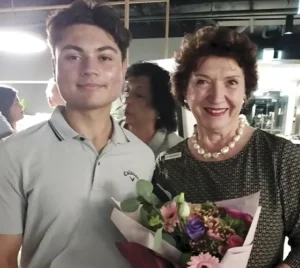
 Please also take care of your mental health. I’ve recently joined the Wolston Park Cricket Club social cricket sessions—just $10 a game, open to all ages and abilities. It’s a fantastic way to unwind, stay active, and connect with others. In a world full of pressures, it’s important to pause and remember what truly matters—our families, friends, and community. I also had the pleasure of attending the 2026 City of Logan People’s Excellence Awards, where I caught up with Cr Nathan St Ledger and Cr Scott Bannan, both of whom are passionate about youth mental health and its importance.
 A special mention also goes to community champions and organisations supporting International Women’s Day celebrations, including ISCA, led by Roshni Sharma, and the many volunteers who made these events so meaningful. These are the groups that strengthen our multicultural community and provide support for both the mind and soul.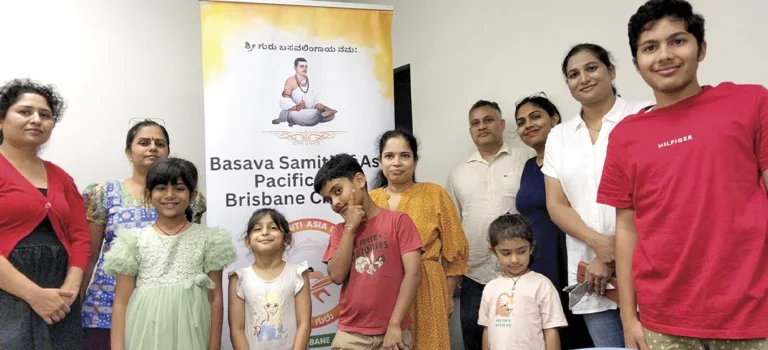
 An engaging gathering at Mt Ommaney Library highlights values-based living, intergenerational learning and community connection Brisbane, 21 March 2026 — The Connect @ Mahamane gathering, held at Mt Ommaney Library, brought together community members for an evening of interactive learning, cultural reflection and meaningful connection. The event showcased how values-based initiatives can strengthen communities while empowering individuals across all age groups.
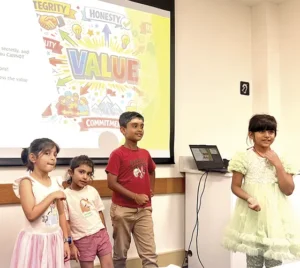 One of the most engaging segments of the evening was the interactive activity “Act the Value”, where participants expressed values through short role-plays. This was followed by “Guess the Value”, where attendees identified values from real-life scenarios, sparking thoughtful discussions and collaborative learning.