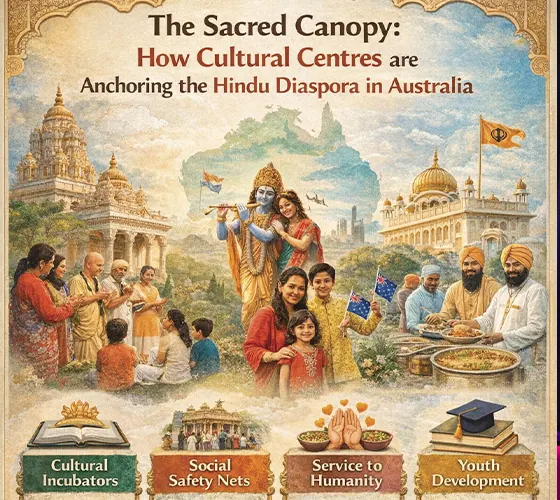
The Sacred Canopy: How Cultural Centres are Anchoring the Hindu Diaspora in Australia
by Jitendra Deo Chief Executive Officer JD Group Australia
In the quiet suburbs of Logan, across the sprawling reaches of Western Sydney, and through the tranquil hills of Victoria, a transformation is occurring. It is not merely a shift in demographics, but a grounding of spirit. As the Hindu community in Australia grows, the emergence of dedicated cultural and spiritual centres—like the recently realized Sanatan Cultural Centre in Berrinba—has become the vital “third space” between the home and the secular world. These centres are the anchors of our identity, ensuring that the ancient wisdom of the East flourishes within the modern framework of the West.
A Tapestry of Faith: The Multi-Faceted Indian Diaspora
The beauty of the Indian presence in Australia lies in its diversity and the shared commitment to Sewa (selfless service). While the Sanatan Association provides a home for the traditional Vedic and Indo-Fijian heritage, it is part of a broader, vibrant ecosystem of spiritual organizations that have found fertile ground in Australian soil.
Institutions like ISKCON (Hare Rama Hare Krishna) have long been beacons of Bhakti Yoga in Australia. From their iconic temples to their famous “Crossways” restaurants, they have introduced the philosophy of devotion to the wider Australian public. Similarly, the BAPS Swaminarayan Sanstha has redefined the Australian skyline with magnificent mandirs that serve as masterpieces of traditional architecture and hubs for youth development, emphasizing disciplined living and family values.
The Brahma Kumaris offer a different but equally vital sanctuary, providing world-class meditation centres that focus on “Raja Yoga” and inner reflection. Their presence emphasizes the universal appeal of Indian philosophy—peace, purity, and self-sovereignty—providing a sanctuary for those seeking mental clarity in a fast-paced society.
Crucially, our Gurudwaras stand as the ultimate symbols of equality and humanitarianism. The Sikh community’s commitment to Langar (community kitchen) has made Gurudwaras across Australia, from Brisbane to Perth, essential pillars of social welfare, feeding the hungry and welcoming all regardless of religion or background.
From Temples to Community Hubs
The modern cultural centre in Australia serves a purpose far beyond the ritualistic. It is a holistic hub designed to address the challenges of the 21st century. At the Sanatan Cultural Centre, the vision is clear: to be a place where the ancient heritage of the Ramayan meets the contemporary needs of a diaspora.
These centres act as:
• Cultural Incubators: Where the next generation learns that their identity is a source of strength, not a barrier to integration.
• Social Safety Nets: Providing a sense of belonging for new migrants who may feel isolated in a new country.
• Service to Humanity: Whether it is the free meals at a Gurudwara or the cultural programs at the Sanatan Centre, these spaces transform spiritual energy into social action.
Nurturing Noble Citizens
Perhaps the most critical role of these centres is the development of our youth. In an era of digital distraction, the cultural centre provides a grounding force. By teaching the values of Dharma (duty), Satya (truth), and Seva (service), these diverse organizations are not just creating “religious” people, they are nurturing noble citizens.
These are young Australians who move through the world with a moral compass, contributing to the nation’s economy and social fabric while remaining deeply rooted in their heritage.
From the chanting of Hare Krishna to the silent meditation of the Brahma Kumaris, the grand arches of the Swaminarayan Mandirs, and the open doors of the Gurudwaras, our culture is safe. It is our collective duty to keep these fires burning for the generations yet to come.
Australian High Commissioner’s Reflect on 20 Years of Australia-India Relationship in Rare Exchange
Current and former Australian High Commissioners to India have shared rare insights into the achievements and challenges of their tenure, in a first-of-its-kind panel reflecting on a defining two decades of the Australia-India bilateral relationship.
The Australia India Institute’s ‘Two Decades of Australia-India Relations: Reflections from High Commissioner’s Past and Present’, featuring current Australian High Commissioner to India, His Excellency Philip Green OAM (2023 – present) and former Australian High Commissioner’s to India, Mr Patrick Suckling (2013-2016) and Mr John McCarthy AO (2004 – 2009), took place today at the Melbourne Global Centre – Delhi.
In a panel discussion moderated by Australia India Institute CEO, the Honorable Lisa Singh, High Commissioner’s reflected on their tenure, exploring key areas including strengthened education ties, economic cooperation, cultural exchange, a bolstered defence relationship and other broader areas of bilateral interest.
The panel comes as the Australia India relationship continues to make steadfast progress in the face of geopolitical uncertainty – within the last 12 months new defence dialogues have promoted a safer Indo-Pacific, significant advancements have been made in collaborating on the technology needed for the clean energy transition, and our education and skills relationship continues to grow from strength to strength.
Australia India Institute CEO Lisa Singh said today’s panel event marked a period of significant growth in the Australia India relationship.
“The Australia India relationship has well and truly moved beyond the traditional ‘three C’s’- Cricket, Commonwealth, and Curry, with this esteemed panel event reflecting on the evolution of our collaboration across two transformative decades.
“Since its inception in 2008, the Australia India Institute has been at the forefront of this growth as Australia’s leading research and policy centre dedicated to promoting the Australia-India relationship and its cooperation in the Indo-Pacific region.”
Australian High Commissioner to India His Excellency Philip Green OAM said India and Australia have never been closer.
“When I reflect on the trajectory of the Australia-India relationship, what strikes me most is the sheer pace of change. In Australia’s history, we have never seen such a rapid ramp up in a major power relationship. “Our partnership will continue to broaden and deepen, so that we are fully integrated strategic, economic, and cultural partners, collaborating across all domains. I’m confident that at our next stocktake in five years, we will see a relationship that is delivering on its immense potential.”
Hold onto your seats — Hudsons Circus is back with a brand-new show that will blow your mind and steal your heart. This isn’t just a circus. It’s a two-hour adrenaline-charged celebration of wonder, talent, and jaw-dropping spectacle. From the four corners of the globe, our international artists bring you gravity-defying stunts, dazzling acrobatics, and edge-of-your-seat entertainment. Experience the magic of beautifully presented animals, cared for with love and respect, performing in harmony with their trainers in a show that celebrates tradition and innovation.
Crafted by Hudsons Circus’ visionary creative team, this year’s show blends theatrical flair, immersive lighting, and heart-pounding music to create an unforgettable experience.
2 HOURS OF PURE MAGIC, From the first beat to the final bow, you’ll be breathless, amazed, and begging for more.
BOOKINGS NOW OPEN
Don’t miss your chance to witness the circus reimagined. Perfect for families, thrill-seekers, and anyone who believes in the power of live entertainment.
Orion Springfield Central
www.hudsonscircus.com.au
The Electric Revolution Within Reach: MG4 EV Urban Set for April Arrival
As we move further into 2026, the Australian automotive landscape is undergoing a silent but swift transformation. For years, the conversation around Electric Vehicles (EVs) was dominated by luxury price tags and high-end tech. However, as the “Year of the Fire Horse” charges forward, a new contender is set to make the electric dream a reality for thousands of Australian Indian families.
MG Motor Australia has officially confirmed that the MG4 EV Urban will arrive in showrooms this April, positioning itself as a cornerstone of affordable, sustainable transport.
Redefining Value for the Modern Family
For many in our community, the decision to switch to an EV has always been a balance of environmental responsibility and fiscal reality. With the 3.8% inflation rate and the rising “time-price” of living, every dollar counts. The MG4 EV Urban arrives at a critical moment, expected to challenge the price floor of the market currently occupied by the BYD Dolphin.
Unlike the existing rear-wheel-drive MG4 models, the “Urban” is a fresh, front-wheel-drive hatchback built on the new E3 platform. It is designed specifically for city dwellers—the professionals commuting from the outer suburbs of Melbourne or the families navigating the busy school runs in Brisbane’s Sunnybank. By simplifying the drivetrain to front-wheel drive, MG has been able to “sharpen the pen” on pricing, with industry experts predicting a starting price potentially under $33,000.
Performance Meets Practicality
Don’t let the “Urban” tag fool you into thinking it lacks substance. The vehicle will be offered with two distinct battery options to suit different lifestyles:
• 43kWh LFP Battery: Offering a range of approximately 325km, perfect for those whose daily routine stays within the metropolitan area.
• 54kWh LFP Battery: Extending the range to over 400km, providing that extra peace of mind for weekend trips to the coast or visiting extended family across the city.
One of the standout features for the Australian Indian community will be the interior. Despite its budget-friendly positioning, the MG4 EV Urban borrows its sophisticated cabin design from the MG S5 SUV. It features a streamlined dashboard with a 12.8-inch touchscreen and a 7.0-inch digital cluster, ensuring that the driver stays connected to navigation and family calls with ease.
The “Safe” Choice
Safety is often the primary concern for our community leaders who frequently emphasize the well-being of our elders and youth. The MG4 EV Urban comes equipped with a 5-star ANCAP safety rating and the “MG Pilot” suite, which includes autonomous emergency braking, lane-keep assist, and adaptive cruise control. Furthermore, the use of Lithium Iron Phosphate (LFP) battery technology means the car can be charged to 100% daily without the degradation issues seen in older EV chemistries and it is backed by MG’s industry-leading 10-year warranty.
A Future-Proof Investment
As the federal government continues to review EV tax exemptions and FBT benefits, choosing an affordable entry point like the MG4 EV Urban is a savvy move. It represents more than just a car; it is a hedge against rising fuel costs and a commitment to the cleaner Australia our children will inherit.
Whether you are a student looking for your first car or a family looking to add a second, more economical vehicle to the driveway, the MG4 EV Urban is a sign that the electric revolution is finally inclusive.
The World’s Weirdest Businesses Reveal Where Consumer Demand Is Heading
As entrepreneurs and buyers look beyond traditional cafés, retail and service models, a growing number of unconventional businesses around the world are thriving, not because they are novel, but because they solve modern problems.
From paid companionship to emotional release spaces, these “weird” business concepts reflect deeper shifts in consumer behaviour around loneliness, burnout, time scarcity and experience-led spending — trends Australian and US buyers are increasingly paying attention to.
According to Mary Tamvakologos, Director of Operations at AnyBusiness, the rise of these models highlights how value is being redefined in the business-for-sale market.
“Buyers are no longer just asking what a business sells, they’re asking why it exists and whether it aligns with how people live now,” Mary Tamvakologos says. “Some of the fastest-growing concepts globally are built around emotional needs, convenience and experience, not physical products.”
Trend Table: The Weirdest Business Models — and What They Reveal
Business Concept Where It Operates What It Offers Consumer Insight Behind It
Professional Cuddling Services Japan, UK, US Paid platonic cuddling with trained practitioners Reflects loneliness and emotional wellbeing gaps
Rent-A-Friend Services Japan Companionship for events, outings, conversation Social stress and desire for connection
Crying Cafés / Emotional Rooms Japan, South Korea Safe spaces to cry with curated support Stress accumulation and emotional release demand
Death Cafés UK, Europe, Japan Open conversations about death over tea Cultural shift in attitudes to mortality
Goat Yoga Studios USA, Europe Yoga with goats to add fun and stress relief Wellness culture meets entertainment
Luxury Dog Hotels Global Five-star hospitality for pets Pet humanisation and premium spending
Professional Queueing Services UK, Japan Paid queue stand-ins for high-demand drops Time scarcity and convenience prioritisation
Fake Wedding Guest Agencies China Hire guests to boost event appearance Social status performance and ceremonial pressure
Why “Weird” Businesses Are Becoming Serious Opportunities
While these models may appear niche, Tamvakologos says they mirror trends already influencing business demand in Australia and the United States.
“We’re seeing growing interest in experiential, lifestyle-driven and service-based businesses — particularly those that tap into wellness, companionship, pet care and convenience,” she explains. “What looks unconventional today often becomes tomorrow’s mainstream category.”
Key forces driving demand include:
• Emotional outsourcing — paying for connection, relief or support
• Time scarcity — convenience as a premium commodity
• Experience-first spending — services people feel, not just use
What This Means for Buyers
For prospective buyers, the takeaway is not to replicate novelty for novelty’s sake, but to understand the consumer insight behind it.
“Successful buyers are the ones who recognise why these ideas work,” Mary Tamvakologos, Director of Operations at Anybusiness adds. “When a business aligns with real behavioural shifts, it becomes far more resilient — even if the concept initially seems unconventional.”
As buyers increasingly search for businesses that reflect modern lifestyles rather than legacy formats, platforms like AnyBusiness.com.au are seeing broader interest across non-traditional sectors.
The Double-Edged Sword: Inflation and the Cost-of-Living Crisis in 2026
As the sun rises over the Brisbane skyline, the morning air carries more than just the humidity of March; it carries a palpable sense of anxiety shared across kitchen tables from Sunnybank to Strathfield. For the Australian Indian community, a demographic that prides itself on fiscal prudence and long-term planning, the latest economic data from the Australian Bureau of Statistics (ABS) is a sobering reminder that the “lucky country” is currently navigating a very difficult financial chapter.
The headline figure remains stubborn: national inflation is stuck at 3.8%. While this is a far cry from the post-pandemic peaks, it remains stubbornly above the Reserve Bank of Australia’s (RBA) comfort zone of 2–3%. For a community that has significantly invested in small businesses, local education, and property, this “inflationary plateau” is more than just a statistic, it is a direct threat to the Australian dream.
Housing: The Growing Divide
The most piercing data point in the recent CPI release is the cost of housing, which has surged by 6.8% annually. This is particularly poignant for our community. Whether it is the young professional striving to enter the market or the multi-generational family managing a mounting mortgage, the “roof over our heads” is becoming increasingly unaffordable.
Senator Paul Scarr, a long-standing friend of the Indian diaspora and the Queensland Deputy Manager of Opposition Business, recently highlighted this struggle in the Senate. He noted that even those with steady jobs are finding themselves at the limits of their endurance. “They know that the price of everything is going up and their ability to pay is not,” he remarked, pointing to a “trillion-dollar debt bomb” those risks burdening the next generation. For many in the Indian community, who view homeownership as the bedrock of stability, these words ring true.
The “Time-Price” of Education
For Indian families, education is non-negotiable. However, the “time-price” of schooling and university is now outpacing wage growth. While the median full-time income has risen to roughly $90,000, the cost of international student fees, starting at $20,000 for undergraduates, and the rising cost of local private schooling mean that families are working longer hours for the same educational outcomes.
The government’s recent reforms to the student loan (HELP) repayment system have offered some relief, raising the repayment threshold to $67,000, but for those funding education through loans or savings, the erosion of purchasing power is undeniable.
A Community Under Pressure
As we look toward the upcoming Holi Festival and Harmony Week celebrations later this month, there is a renewed focus on “Grains of Connection.” While the cost of a standard grocery basket has risen (with electricity prices up a staggering 32.2% as rebates expire), the community is finding ways to support one another through shared meals and collective advocacy.
Will Interest Rates Rise Again?
The question on every homeowner’s mind is: “What will the RBA do next?” The next board meeting is scheduled for March 17. Current market expectations suggest a 22% chance of a rate hike to 4.10%. While many economists expect a “hold,” the risk remains that if inflation does not begin to trend downward sharply, the RBA may be forced to pull the trigger once more.
The Path Forward
Despite the gloom of the ASX sell-off and the stubborn CPI figures, the Australian Indian community remains one of the most resilient. We are a community of planners.
The “Year of the Fire Horse” is traditionally associated with rapid changes and high energy. It is a fitting metaphor for the current Australian economy. We are in a period of transition where the old rules of “buy and hold” are being challenged by “budget and adapt.”
As we navigate these turbulent waters, let us remember the words often echoed in our community centres: stability comes not just from what we earn, but from the strength of the community we build.
A Monument to Faith and Fortitude: The Sanatan Cultural Centre Rises in Queensland
History is rarely made in a vacuum. It is forged in the fires of sacrifice and tempered by the passage of time. For the Indo-Fijian community in Queensland, history reached a crowning milestone this month with the realization of the Sanatan Cultural Centre at 550 Wembley Road, Berrinba. This is not merely an architectural achievement; it is a sacred bridge connecting the arduous journey of our Girmitiyas forefathers 150 years ago to the vibrant, multicultural landscape of modern Australia.
The Echoes of the Girmitiyas
To understand the significance of this Centre, one must look back to the late 19th century. Our forefathers set foot on the islands of Fiji with little more than their resilience. They endured systemic hardship, yet they clung to Sanatan Dharam with a tenacity that defined their existence. They preserved our rituals, our language, and our values under the most challenging conditions imaginable, fuelled by a singular hope: that their descendants would one day flourish without losing their soul.
Today, as we stand on the grounds of the Sanatan Cultural Centre, we see the realization of that dream. What was once a prayer whispered in the cane fields of Fiji has become a resounding anthem of success in the city of Logan.
A Journey of Governance and Vision
The institutional journey began in 1995. Under the humble and diligent stewardship of the Ramayan Mandalis, the Sanatan Association was formally incorporated. For nearly two decades, these Mandalis were the bedrock of the community. However, leadership requires the courage to evolve.
On October 18, 2013, a historic and unanimous decision was made to pass the reins from the Mandalis to the wider Sanatani community of Brisbane. This shift toward individual membership and a newly adopted constitution was a masterstroke of vision. By enshrining fair elections, good governance, and robust checks and balances, the Association didn’t just build a facility—it built a sustainable, democratic institution that mirrors the values of the Australian society we call home.
Grit, Sweat, and the “Shed” Days
The path to Berrinba was paved with the “can-do” spirit that defines our community. Before the grandeur of the current site, there was the humble reality of Runcorn State Heights School, where monthly cultural programs kept the community tethered to its roots. There was the makeshift hall in a carpet warehouse for Ram Navami, and the legendary weeks spent by volunteers transforming Mr. Vijendra Rai’s shed in Belmont into a functional space for worship.
These weren’t just logistics; they were tests of faith. Every hour spent by a volunteer with a hammer or a broom was a down payment on the future.
The Miracle at 550 Wembley Road
The acquisition of the land on June 23, 2017, remains a defining moment in the history of the Australian Indian diaspora. Having raised $400,000 for a deposit on the $1 million property, the community faced a formidable “Goliath”: the banking sector. Financial institutions were hesitant to lend to a non-profit without a commercial revenue stream.
The bank’s alternative a syndicate of personal guarantors would have compromised the very essence of the project. The leadership stood firm: the land must belong to the Sanatan community, not a select few. Through unwavering community belief and grassroots fundraising, the obstacle was cleared. For the first time, the community walked onto this land as absolute owners.
A Hub for the Future: Building Noble Citizens
The Sanatan Cultural Centre is now poised to become the beating heart of the Hindu community in Queensland. But its mission extends far beyond the religious. This is a holistic hub designed to address the challenges of the 21st century.
• Cultural Preservation: It serves as a living classroom where our youth can learn the nuances of their heritage, ensuring the legacy of the Girmitiyas remains vibrant.
• Youth Empowerment: Through structured cultural programs and community engagement, the Centre is dedicated to nurturing our future generations into noble citizens.
• A Home for All: It is a sanctuary for every family who believed that Sanatan needed a home, a place where faith provides the compass for navigating life in a modern world.
A Legacy Secured
This achievement belongs to the volunteers who gave their time, the families who gave their support, and the leaders who navigated the complexities of law and finance with integrity.
As the Australian Indian Times celebrates this milestone, we recognize that the Sanatan Cultural Centre is more than a building; it is a promise kept. It is a testament to the fact that when we work together with a clear vision and an unwavering belief in our identity, we can make the “impossible” happen. The flame lit by our forefathers 150 years ago now burns brighter than ever in the heart of Queensland.
Sanatan Cultural Centre Inaugurated: A Dream Realised for Queensland Community
It gives me great pleasure to convey our sincere thanks and appreciation to you all for putting your faith in Sanatan Qld. This is a moment of reflection and immense pride for the entire Sanatan community of Qld, as we inaugrate the Sanatan Culture Centre.
L&G going back in time, some 150 years ago our forefathers, the great Girmitias of Fiji set their foot on the Islands of Fiji. They endured hardship with resilience and sacrifice. Despite going through perhaps the most challenging times of their lifetime, they did not only prevail but preserved Sanatan Dharam with a hope that their future generations will carry on their legacy.
Today is the realisation of that dream for the Sanatan community of Qld—one shaped by faith, sacrifice and an unwavering belief in who we are as a community.
This moment belongs to every volunteer who gave their time and carried that hope forward with action, every family who gave their support, and every individual who believed that Sanatan needed a home—and that together, we can make it happen.
Sanatan’s journey began in 1995.Under the stewardship of the Ramayan Mandalis, the Sanatan Association was formally incorporated.
The strength of the Association in its early years came from this strong Mandali foundation. However, as time progressed, it became clear that this structure also placed limitations on broader community involvement. After a lengthy period of reflection, consultation, and review, a historic decision was made.
On 18th October 2013, the then stakeholders of the Association, the Mandalis unanimously agreed to pass the reins of the Association to the wider Sanatani community of Brisbane, allowing for individual membership. This decision marked a defining moment in our history and laid the foundation for the organisation as it stands today.
With this transition came a clear, concise, and ambitious vision, articulated through a newly adopted constitution. This vision was shared with the wider community through flyers, conversations, and through our regular cultural programs. The committee worked hand in hand with the community to build belief in that vision and to clearly outline the path forward.
Other measures that were enshrined in the new constitution which has today provided the cornerstone for the development of this organization included fair election of office bearers, advocating good governance, and other checks and balances to protect shared values. Over time, further refinements have been made, each strengthening the organisation and reinforcing its direction.
With vision came purpose and a determination to deliver. We knew the journey ahead would not be easy—but the destination was firmly within our sight.
Without delay, we set the wheels in motion.
We began by hosting monthly cultural programmes at Runcorn State Heights School. We then created a makeshift hall in the warehouse of 3SA Carpets to hold a Ram Navami program.
Later, an opportunity arose to use Vijendra Rai’s shed at Belmont. Volunteers stepped up and spent weeks transforming the facility suitable for purpose. Our efforts were rewarded, as we successfully hosted several programs there—each one bringing us closer to our destiny.
Then came a moment that will forever live in our memory.
June 23rd, 2017 marked a defining moment in Sanatan’s history—when our community walked onto this land @ 550 Wembley Road, Berrinba in the city of Logan as owners for the very first time.
By then, we had raised approximately $400K for the deposit. With the land cost of $1M we approached the bank for the balance of $600K but the banks declined to lend directly to a non-profit organisation with no regular income stream to service the debt. The only other option the bank gave us was through personal guarantees but that would have meant that the land would have been owned by the syndicate of guarantors.
With no other option available, a consortium, led by our now VP, Divendra Prasad was formed by a group of 11 members who actively supported the cause. Had we missed that opportunity back then, our organisation would have faced severe headwinds to progress much further in subsequent years given that land values have appreciated significantly since then. This achievement was a powerful testament to unity, trust, and shared belief.
The very next day, work began.
Thick shrubs were cleared. Mowers and brush cutters were visible everywhere.
The building at the back of the property was completely revamped. As the community participation grew, the Meditation Hut was added later due to space constraints.
In less than two months from settlement, we held our first cultural programme on this land—the Krishna Ashtami celebrations. And with the exception of COVID lockdowns, we have proudly celebrated almost every major event in the Hindu calendar here since.
As we continued on this journey, we actively promoted Sanatan’s vision to the wider community. We didn’t just speak about it—we walked the talk.
We acknowledge and thanked those who came forward with much-needed financial support—not only in the present, but for the past contributions as well. As community interest grew, so too did our determination to deliver. We received our long awaited DGR accreditation in January 2024 which added further momentum to the donations flowing in. Thanks to Dr Narendra Singh for your guidance and advise throughout that process.
In a groundbreaking ceremony, the 1st brick for the Culture Centre was laid on 28th August 2023. The project coordinator, Narendra Ji will be sharing more insights into the construction activities that span over 2 ½ years.
L&G having given the honour to serve as the Treasurer of this great organization for over a decade, I would like to share some headline numbers to reflect on the financial journey behind what you see today.
1st graph shows steady growth in income in the early years, as you would expect there was a significant acceleration in the later years as the project took shape.
The 2nd graph shows the makeup of the Income. Let me break it down for you. So the total amount received from donations ($1000 or more) was $2,566K or 75% of our total collections. Approximately $300K (9%) came from membership fee and a similar amount of $300K came through food sponsorship. The remaining $250K (7%) predominantly from arti collections makes up the total collections of $3.5M.
The Cultural precinct which includes the operational works, was completed at a cost of just under $2.5M. This was only possible due to the construction works done on an owner-builder basis by a dedicated Sanatan team—predominantly including the EMC members, led by Pt Anant Sharma together with the project team under the joint leadership of VPs Narendra Singh and Divendra Prasad & Secretary Rajendra Prasad, who alongside an extrordinary group of volunteers took ownership of this project and delivered it for the Sanatan community of Brisbane in the most cost-effective way. Had the project been outsourced the cost would have in the vicinity of $6M-$7M.
To put this into perspective
The total cost of $2.5M for the Cultural Prescient includes $500K for the operations works and $2M for the Cultural Hall with the associated amenities.
For the Cultural Hall itself we had received a Quote for $4.5M pre Covid-19.
As we all know the prices have increased significantly post Covid which means that the cost of outsourcing building works would have been in the vicinity of $5.5M to $6M. If we add another $1M for outsourcing Ops works we are looking at the total cost of $6.5M. As per the LCC rates notice the land is valued at $4M which takes the total Sanatan property valuation to over $10M.
I think that’s a remarkable achievement in a short span of only 12 ½ years and deserves a big round of applause to thank yourself for your part in getting here.
The path was not always smooth.
As expected with a project of this scale, views differed at times—but intentions never did. There was always one shared motive: the interest of Sanatan.
Today, as we celebrate this important milestone by inaugration of the Sanatan Cultural Centre—we affirm our identity.
This Centre provides a platform to our children and grandchildren to uphold our culture, our traditions and our values with pride. As we conclude the construction phase, an important chapter in the Association’s history, we also acknowledge that the future will belong to those who embrace this opportunity and get their children on board. Make no mistake Sanatan Dharam has & will prevail (tha, hai aur hamesa rahayga), what will matter is whether we are part of that journey.
Thank you… Jai Sanatan
Birendra Singh – Treasurer & Program Co-Ordinator 21st February 2026
“Taiwan Imagery Exhibition 2026” Opens at Queensland Taiwan Centre
Art and Cultural Experiences Showcase the Many Faces of Taiwan
The “Taiwan Imagery Exhibition 2026”, part of the Taiwan Culture Festival, officially opened on 17 January at the Queensland Taiwan Centre, drawing guests from government, diplomatic circles and Brisbane’s diverse multicultural communities to celebrate Taiwanese art and culture.
The opening ceremony was hosted by World Arts & Multi-Culture Inc. (WAMCI), with Edward Lin serving as Master of Ceremonies. The event commenced with a Welcome to Country conducted by Aboriginal Elder Peggy Tidyman, acknowledging the Traditional Custodians of the land.
In her welcome address, WAMCI President Susan Yang highlighted the power of art as a bridge between cultures, expressing hope that the exhibition would further strengthen cultural understanding and exchange between Taiwan and Australia.
Distinguished guests who addressed the audience included William Fan, Director of the Taipei Economic and Cultural Office in Brisbane; James Martin MP, Queensland State Member of Parliament and Deputy Chair of the Parliamentary Friends of Taiwan; Logan City Mayor Jon Raven; Cr Kim Marx, Councillor for Runcorn Ward representing the Lord Mayor of Brisbane; and Jone Hsu, Director of the Queensland Taiwan Centre. Speakers unanimously acknowledged the important role of arts and culture in promoting multicultural harmony and international connection.
The exhibition features work by Taiwanese artists Ya-Chun Su, Mandy Chen, Melody Chen, Claire Lai, Cheng-Fang Lin, and Wesley Lin. Their artworks explore themes ranging from Taiwan’s natural landscapes and iconic blue magpie to everyday life, personal memory and contemporary perspectives, offering audiences a rich and diverse visual narrative of Taiwan.
In addition to visual artworks, the exhibition incorporates displays of traditional Taiwanese cultural elements and Indigenous-inspired creative crafts, allowing visitors to engage with Taiwan’s culture through art, lifestyle and craftsmanship.
During the ceremony, certificates of appreciation were presented to participating artists, followed by an artist-led guided tour, providing guests with deeper insight into the creative processes and cultural stories behind the artworks.
The organisers gratefully acknowledge the support of the Queensland Government, the Overseas Community Affairs Council, Taiwan, and Experience Sunnybank, whose contributions made the exhibition possible.
The “Taiwan Imagery Exhibition 2026” is open to the public until 3 February at the Queensland Taiwan Centre. Community members are warmly invited to attend and experience this vibrant celebration of Taiwanese art, culture and creativity.
The atmosphere at VOCO Brisbane was one of reverence and shared purpose. The proceedings began with the traditional lighting of the lamp and a soulful rendition of Saraswati Vandana. In a moving tribute to history, the delegates joined in a collective singing of Vande Mataram, celebrating the 150th anniversary of the song that once unified a nation and now unites a global diaspora.
The event was graced by high-level dignitaries, including:
• Neena Malhotra, Secretary (South), Ministry of External Affairs, India.
• Gopal Baglay, High Commissioner of India to Australia.
• Neetu Bhagotia, Consul General of India in Brisbane.
• Consul General Bhagotia welcomed the delegates, describing the gathering as a “living bridge” between cultures. She emphasized that for the diaspora in the Pacific, Hindi is not just a language of the past but a vibrant tool for future connection.
The Three Pillars of Progress
Secretary Neena Malhotra set the tone for the day by identifying three strategic priorities for the Pacific region:
1. Preservation: Ensuring the linguistic heritage is passed to the next generation.
2. Outreach: Utilizing modern technology and education to expand Hindi’s reach.
3. Collaboration: Creating a unified network between institutions in Australia, New Zealand, and Fiji.
She famously quoted poet Harivansh Rai Bachchan, reminding the audience that “the destination can be reached even by wandering; only those who never leave home are truly lost,” encouraging the diaspora to confidently carry their language into their new homes.
Deep-Dive: Four Thematic Sessions
The core of the conference consisted of four panel discussions that addressed the practical challenges and triumphs of the language.
1. The Role of Diaspora Institutions
Representatives from Fiji shared moving stories of how Hindi survived the indentured labour era, evolving into “Fiji Hindi” while maintaining its classical roots.
2. Education and the Youth Gap
A major focus was the “Education Gap.” Educators from New Zealand and Australia discussed the need for better resources and certified teachers to help children of the diaspora learn Hindi in a way that feels relevant to their lives in the West.
3. Technology and Artificial Intelligence
Following the theme of the 12th World Hindi Conference, the Brisbane event explored how AI can be used to archive traditional knowledge and provide interactive learning tools for students.
4. Regional Perspectives
Panellists highlighted that the “Pacific Voice” is unique. Unlike Hindi spoken in Delhi, Pacific Hindi is flavoured by the local environment, creating a transnational version of the language that is inclusive and evolving.
Civilizational Continuity
The valedictory address was delivered by Swami Sanyuktanand, President of the Fiji Seva Ashram Association and a Pravasi Bharatiya Samman recipient. His speech focused on the spiritual and civilizational continuity that language provides. He reminded the audience that while borders might change, the “collective voice” of Hindi remains a constant source of strength.
The evening concluded with a Gala Dinner, where the community’s literary contributors were honoured. The event was described by attendees as a “spectacular success,” reinforcing the bond between the Pacific nations and their Indian heritage.
The Brisbane Legacy
The January 16 event has left a legacy. It didn’t just celebrate a language; it created a roadmap. From the corridors of the Consulate in Milton to the classrooms of New Zealand and the sugar-belt towns of Fiji, the “collective voice” found in Brisbane is now louder and more unified than ever before.
As the community looks toward the 2026 elections in Fiji and continued growth in Australia, the strength found in their mother tongue remains the bedrock of their success.


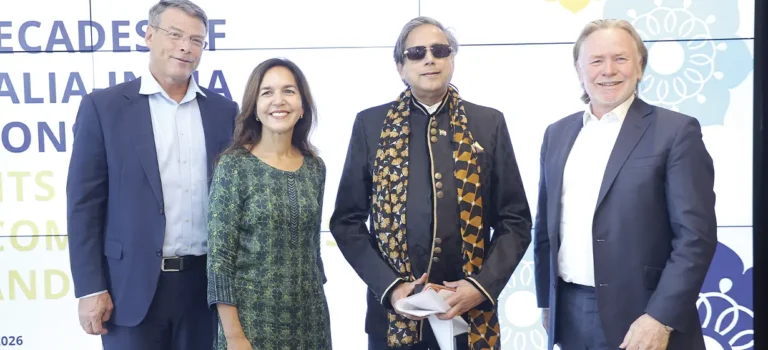
 Current and former Australian High Commissioners to India have shared rare insights into the achievements and challenges of their tenure, in a first-of-its-kind panel reflecting on a defining two decades of the Australia-India bilateral relationship.
 In a panel discussion moderated by Australia India Institute CEO, the Honorable Lisa Singh, High Commissioner’s reflected on their tenure, exploring key areas including strengthened education ties, economic cooperation, cultural exchange, a bolstered defence relationship and other broader areas of bilateral interest.
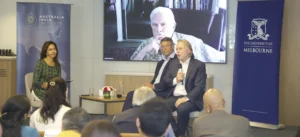 Australia India Institute CEO Lisa Singh said today’s panel event marked a period of significant growth in the Australia India relationship.
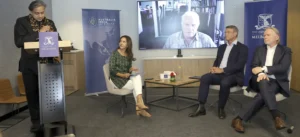 “When I reflect on the trajectory of the Australia-India relationship, what strikes me most is the sheer pace of change. In Australia’s history, we have never seen such a rapid ramp up in a major power relationship. “Our partnership will continue to broaden and deepen, so that we are fully integrated strategic, economic, and cultural partners, collaborating across all domains. I’m confident that at our next stocktake in five years, we will see a relationship that is delivering on its immense potential.”


 Hold onto your seats — Hudsons Circus is back with a brand-new show that will blow your mind and steal your heart. This isn’t just a circus. It’s a two-hour adrenaline-charged celebration of wonder, talent, and jaw-dropping spectacle. From the four corners of the globe, our international artists bring you gravity-defying stunts, dazzling acrobatics, and edge-of-your-seat entertainment. Experience the magic of beautifully presented animals, cared for with love and respect, performing in harmony with their trainers in a show that celebrates tradition and innovation.





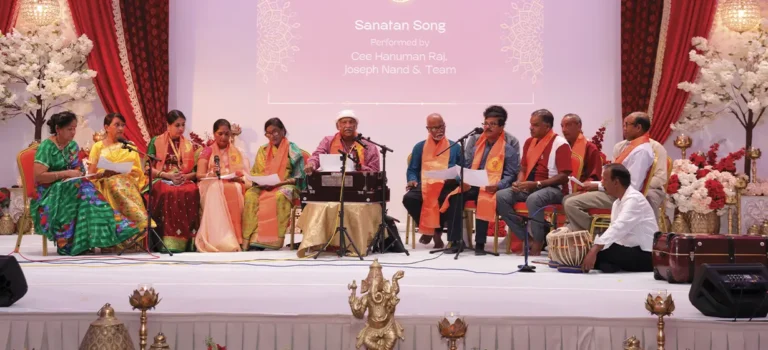
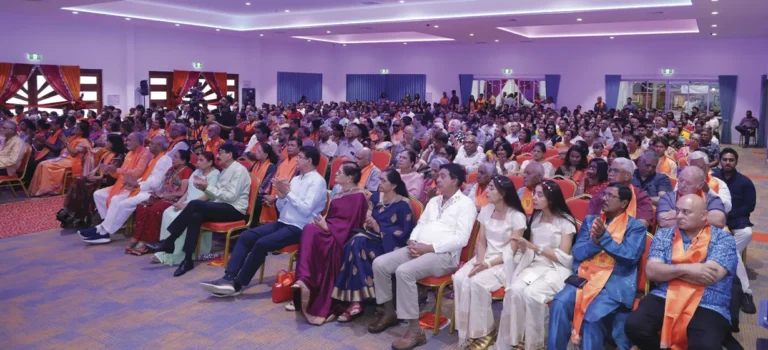
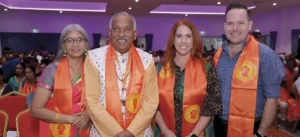 It gives me great pleasure to convey our sincere thanks and appreciation to you all for putting your faith in Sanatan Qld. This is a moment of reflection and immense pride for the entire Sanatan community of Qld, as we inaugrate the Sanatan Culture Centre.
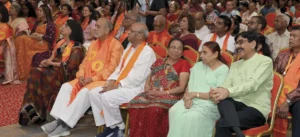 Today is the realisation of that dream for the Sanatan community of Qld—one shaped by faith, sacrifice and an unwavering belief in who we are as a community.
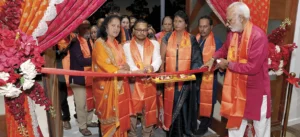 On 18th October 2013, the then stakeholders of the Association, the Mandalis unanimously agreed to pass the reins of the Association to the wider Sanatani community of Brisbane, allowing for individual membership. This decision marked a defining moment in our history and laid the foundation for the organisation as it stands today.
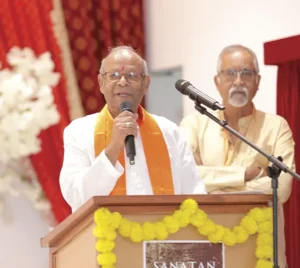 Other measures that were enshrined in the new constitution which has today provided the cornerstone for the development of this organization included fair election of office bearers, advocating good governance, and other checks and balances to protect shared values. Over time, further refinements have been made, each strengthening the organisation and reinforcing its direction.
 Later, an opportunity arose to use Vijendra Rai’s shed at Belmont. Volunteers stepped up and spent weeks transforming the facility suitable for purpose. Our efforts were rewarded, as we successfully hosted several programs there—each one bringing us closer to our destiny.
 By then, we had raised approximately $400K for the deposit. With the land cost of $1M we approached the bank for the balance of $600K but the banks declined to lend directly to a non-profit organisation with no regular income stream to service the debt. The only other option the bank gave us was through personal guarantees but that would have meant that the land would have been owned by the syndicate of guarantors.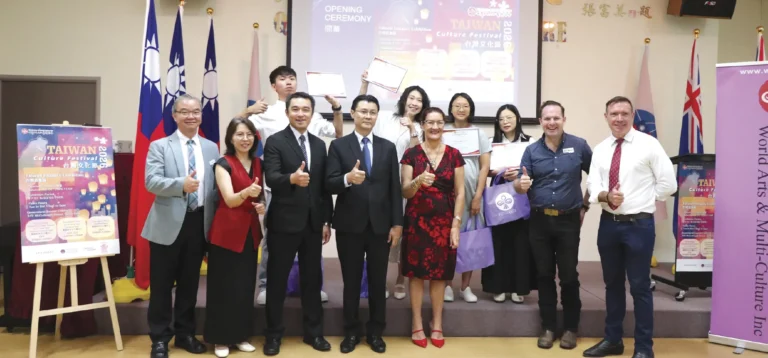
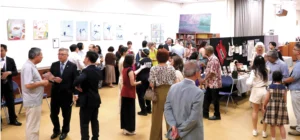
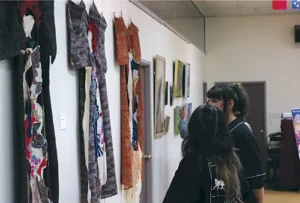 The “Taiwan Imagery Exhibition 2026”, part of the Taiwan Culture Festival, officially opened on 17 January at the Queensland Taiwan Centre, drawing guests from government, diplomatic circles and Brisbane’s diverse multicultural communities to celebrate Taiwanese art and culture.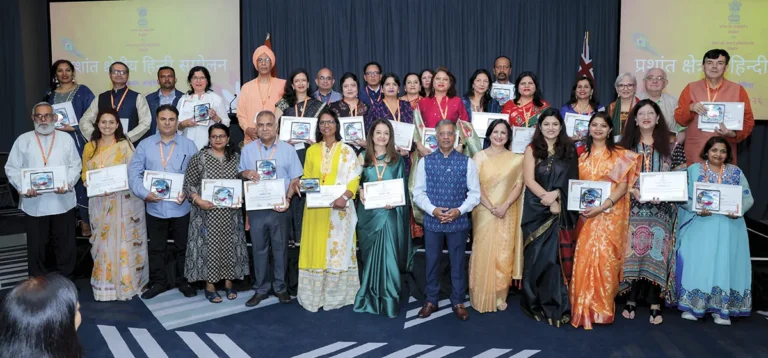
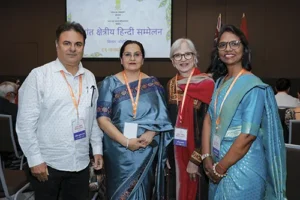 The atmosphere at VOCO Brisbane was one of reverence and shared purpose. The proceedings began with the traditional lighting of the lamp and a soulful rendition of Saraswati Vandana. In a moving tribute to history, the delegates joined in a collective singing of Vande Mataram, celebrating the 150th anniversary of the song that once unified a nation and now unites a global diaspora.