Maha Kumbh as interplay of science & spirituality, says Indian sustainability leader
Vineet Mittal, Chairman of Avaada Group, a leading player in India’s renewable energy landscape attended the Maha Kumbh Mela at Prayagraj. Mittal says that he has been an ardent believer in the interplay between science and spirituality, and its relevance to modern life. Mittal is also an advocate for sustainability. Mittal highlighted India’s Legacy of Science, Spirituality, and Sustainability saying the Maha Kumbh is not just a religious gathering, but a showcase of extraordinary scientific understanding of India’s ancient rishis. Indian Rishis observed planetary alignments and cosmic rhythms thousands of years ago that influence the Earth’s energy fields and human consciousness. According to Indian historians, the Maha Kumbh is based on celestial events such as Jupiter in the zodiac sign Aquarius and the Sun transitioning into Capricorn, aligning with natural energy flows that modern science is only beginning to explore. As part of a unique initiative to promote cultural inclusivity, Avaada Group sponsored a cultural heritage trip for 1,000 individuals from underserved communities across India, offering them an opportunity to witness the grandeur of the Maha Kumbh and deepen their connection with India’s rich heritage. Mittal feels that experiences such as the Maha Kumbh at the Triveni Sangam, the confluence of three revered Hindu rivers namely Ganga, Yamuna and Sarasvati, represents unity, renewal, and harmony of people and energies. Mittal sees the Maha Kumbh representing ecological wisdom embedded in India’s traditions of preserving rivers, promoting sustainable practices, and living in harmony with nature. Mittal’s Avaada Group is a leader in the global energy transition, specializing in solar module manufacturing, renewable power generation, and the development of green hydrogen, green methanol, green ammonia, and sustainable aviation fuel projects. Avaada Energy, the group’s renewable power generation arm, aims to achieve a capacity of 11 GWp by 2026. The group has attracted substantial international investment, including a $1.3 billion commitment in early 2023, with $1 billion from Brookfield’s Energy Transition Fund and $300 million from GPSC, a subsidiary of Thailand’s PTT Group.
Connecting our younger generation to the wider community
Jitendra Deo Chief Executive Officer JD Group Australia
The Indian diaspora is one of the largest and most vibrant communities worldwide. With a history of migration stretching back centuries, millions of Indians have settled across the globe, creating rich, diverse, and multifaceted communities. Today, the younger generation of the Indian diaspora faces the dual challenge of maintaining cultural ties with their roots while also integrating into their host societies. As this generation becomes more active in public life, they have a unique opportunity to foster relationships that go beyond ethnic or cultural lines, ultimately contributing to a more inclusive and harmonious society.
Embrace Multiculturalism
One of the most effective ways to connect with the wider community is by embracing multiculturalism. The younger generation of the Indian diaspora should take pride in their heritage while also celebrating the cultures around them. Multiculturalism is an essential aspect of many countries today, particularly in nations like Australia, the United States, Canada, and the UK. These societies thrive on the blending of diverse traditions, languages, and perspectives.
The younger diaspora generation can contribute to this vibrant cultural exchange by actively participating in local events, festivals, and activities that promote diversity. Whether it’s through collaborating with community organizations, attending multicultural festivals, or celebrating national holidays of different cultures, Indian youth can foster an environment of mutual respect and appreciation for all cultures.
For example, during events such as Diwali or Holi, young Indians can extend invitations to friends from different cultural backgrounds to join in the celebrations. In doing so, they not only share their own traditions but also promote understanding and tolerance. Similarly, they can participate in or even host activities around celebrations from other cultures.
Pursue Education and Career Opportunities that Promote Inclusivity
Education and career paths are some of the most effective ways the younger generation can connect with the wider community. By choosing fields that emphasize diversity and inclusivity, such as social work, education, healthcare, and politics, young members of the Indian diaspora can positively impact society.
In education, young Indian diaspora members can work with peers from various backgrounds to address issues related to social justice, inequality, and community development. Universities and schools often provide platforms for organizing multicultural events or initiatives that promote diversity. By participating in such programs, young Indians can create spaces where people of all backgrounds can learn from one another and understand the value of their cultural contributions.
In the workforce, younger generations can choose careers in leadership roles where they can shape policies that promote inclusivity. In the workplace, they can advocate for programs that celebrate cultural diversity and create spaces for people of all backgrounds to feel valued and respected. As role models and community leaders, young Indians can encourage fellow professionals to engage in cross-cultural learning and dialogue, breaking down barriers and building trust between different cultural groups.
Volunteer for Community Engagement and Social Causes
Volunteering is a powerful tool for connecting with the wider community. It offers a practical and effective way for the younger Indian diaspora generation to actively contribute to society, demonstrate compassion, and build relationships with people from diverse backgrounds. Whether it’s through charity events, social initiatives, or environmental projects, volunteering provides a shared purpose that transcends cultural differences.
By getting involved in community-driven causes such as food banks, health drives, or education programs for underprivileged children, young Indian diaspora members can build bridges and demonstrate their commitment to the greater good. Volunteering helps break stereotypes and foster genuine connections with people who may not have had exposure to Indian culture or traditions.
Furthermore, when Indian youth are seen contributing to causes that benefit everyone, they not only gain respect within the broader community but also become ambassadors of goodwill, showing that they care about the welfare of others irrespective of their backgrounds.
Leverage Social Media for Positive Engagement
The digital age provides unparalleled opportunities for young people to connect with people globally. Social media platforms like Instagram, Twitter, LinkedIn and Facebook can be used to promote cross-cultural understanding, challenge stereotypes, and share personal experiences.
For the younger generation of the Indian diaspora, social media can serve as a powerful tool to amplify their voices and showcase the richness of their culture to a global audience.
By creating content that highlights cultural heritage, addressing important social issues, and celebrating diversity, young Indians can help foster an environment of inclusivity. Additionally, these platforms provide a space to engage in meaningful discussions about the challenges and triumphs of growing up as a member of the Indian diaspora, connecting with others who may have similar experiences.
Through online collaborations, live streams, and webinars, young Indian diaspora members can form communities that foster dialogue, cooperation, and mutual respect across cultural lines. Influencers and content creators from the Indian diaspora can collaborate with individuals from other cultural communities, creating a more united and connected digital world.
Build Relationships through Sports and Hobbies
Sports and shared hobbies are an excellent avenue for the younger generation of the Indian diaspora to connect with the wider community. Whether it’s playing cricket with a group of local friends, joining a soccer team, or participating in artistic pursuits like dance or music, engaging in common activities helps build friendships that transcend cultural boundaries.
Sports have the power to unite people from all backgrounds. The younger Indian diaspora generation can use this to their advantage by forming sports clubs or joining local leagues that include participants from a range of ethnic backgrounds. Cricket, which is immensely popular in India, can serve as an ideal way to connect with people from the wider community who may not be familiar with the sport.
Similarly, hobbies like cooking, arts, and crafts provide opportunities to introduce others to aspects of Indian culture in an informal, enjoyable way. Community centres or local cafes can host cultural cooking classes, art exhibitions, or music nights, where individuals from different backgrounds can come together to appreciate and share their unique traditions.
Engage in Interfaith and Intercultural Dialogues
One of the most significant ways to foster strong relationships with the wider community is by engaging in interfaith and intercultural dialogues. Many young members of the Indian diaspora have a strong sense of spirituality and faith, whether it be through Hinduism, Sikhism, Islam, Christianity, or other belief systems. By participating in interfaith dialogues, they can help dispel misconceptions, promote respect for different religions, and learn from others’ experiences.
Engaging in conversations about religion, philosophy, and spirituality in an open and respectful manner can lead to greater understanding and tolerance among people of all faiths.
Participating in or hosting interfaith events, attending workshops on cultural awareness, and collaborating with religious institutions from different communities can foster peace and unity.
Additionally, young Indian diaspora members can be active in local government initiatives or community programs aimed at promoting unity and resolving conflicts arising from cultural misunderstandings.
The younger generation of the Indian diaspora is in a unique position to not only maintain a connection with their cultural roots but also to help shape a more inclusive and harmonious future. By embracing multiculturalism, participating in community activities, pursuing careers that promote inclusivity, volunteering, leveraging social media for positive engagement, and building relationships through shared activities, young Indians can bridge gaps between cultures and foster stronger ties with the wider community.
As they take on leadership roles in society, this generation can pave the way for future generations to live in a world where mutual respect, understanding, and collaboration define the cultural landscape. The Indian diaspora’s younger generation is the key to nurturing a society that celebrates diversity and promotes unity, ensuring that cultures do not just coexist but thrive together.
Moreton Volunteer Awards Hosted by Graham Perrett MP Federal Member for Moreton
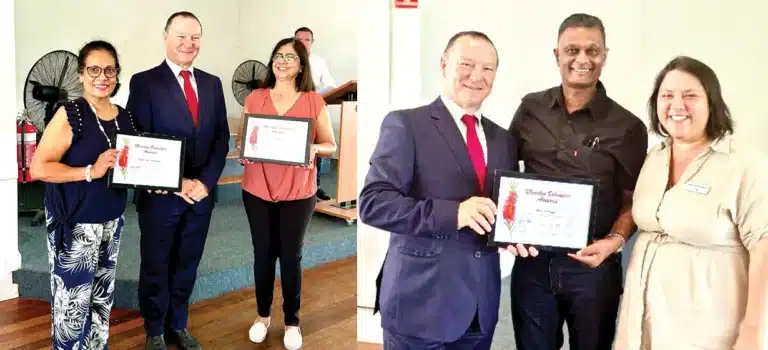
Moreton Volunteer Awards were held on Saturday 1 February. The awards were bestowed to members of community in recognition for the outstanding voluntary contributions to the community in the Federal Electorate of Moreton.
Some of our diaspora members were awarded as well.
Mr Praveen Lal with Graham Perrett
Praveen Lal
Queensland Fiji Football Association. Praveen has volunteered for many years with different football clubs and held variety of executive positions. He has also coordinated cultural and religious festivals and developed initiatives to bring the community together.
Mrs Bimla Wati Narayan
Bimla Wati Narayan
Damini Women’s Association. Bimla has volunteered with the association for eight years. She is the most senior member, and her dedication, commitment and leadership style are admirable.
Kirti Raniga (Far Right)with Graham Perrett and Lila Pratap
Kirti Raniga
Damini Women’s Association. Kirti is a visionary member of Damini Women’s Association of Qld Inc. She works hard to ensure projects are completed in time. Her dedication and enthusiasm directly benefit the community.
Rohani Prasad with James Martin MP
Rohani Prasad
Indian Senior Citizens Association. Rohani has volunteered tirelessly as a planner for GOPIO Qld India Day Fair and Secretary of the Indian Senior Citizen Association for five years. She mentors single mothers and supports people in crisis.
Celebrating Women, Community, and Leadership: A Month of Reflection and Action
Happy Holi and International Women’s Day! A heartfelt thank you to every woman and female caregiver for the important work you do. As someone raised by a single mum, I’ve seen firsthand how difficult life can be for so many in our community. She has worked tirelessly to ensure that I, and others around us, lead joyful, peaceful, and loving lives. I’m incredibly proud of her and all the women who make such a positive impact. Every woman has a unique journey, and every story is important and should be shared. We’re so fortunate to have so many intelligent, caring, and hardworking women from the Indian diaspora and all over the world, shaping our communities and paving the way for future generations.
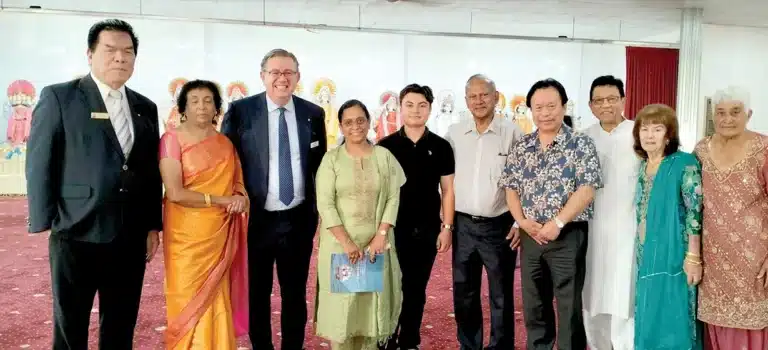
This month, I had the privilege of spending time with some very special women in both my personal life and the community. I want to begin by acknowledging Shanjeshni Deo, who has been the heart and backbone of so many community projects. Her efforts have supported young people like me in reaching our full potential. I was an honour to join the Deo family at the Federation of Indian Communities of Queensland (FICQ) Australia Day Celebration in Sunnybank. A special thank you to FICQ President Dr. Preethi Suraj, who made history as the first female president in the organization’s 26-year history. Her leadership and dedication to uniting, supporting, and inspiring the next generation of female leaders is truly remarkable.
I’m also lucky that Dr. Suraj lives in my neighbourhood. Recently, many people have expressed the desire for more representation from women, particularly those from Indian and multicultural backgrounds, in local, state, and federal government positions. There’s a growing call for leaders who reflect the diversity of communities in areas like Springfield, Inala, Oxley, and throughout Queensland. With the Federal Election approaching, many of us are hopeful to see more women from Indian and culturally diverse backgrounds stepping up to represent us. I loved the Hon. Shayne Neumann speech about the importance about cultural diversity, leadership and building relationships with India and Australia. My years of knowing the Honourable Federal Member for Ipswich, he has always supporting member of the Indian community and attended important event that promote preserving our mother language. He was very supportive of an Indian Candidate in Ipswich early last year. Neetu made history as the first female of Indian heritage to nominate for council. She is proud of her faith, her brown skin, her ability to speak more than one language and most of all her Indian heritage. For many, it’s a proud moment to see women like Neetu be the change the people want to see. She was not successful on this occasion, however, she has made her community proud and with her determination I hope to call her councillor one day, I wish her all the best.
It was also a pleasure to attend the 8th Anniversary Celebration of Shree Vishnu Maya Mandir, hosted by Usha Chandra and her husband Umesh Chandra. The event was truly special thanks to MC Umesh Chandra and the team of volunteers who worked hard to bring it all together. Many local leaders and elected officials attended, including Mayor Jon Raven, who spoke about the importance of unity and supporting multiculturalism. Senator Paul Scarr, affectionately known as the “People’s Senator, Logan Senator, and Multicultural Senator” also delivered a powerful speech on the value of supporting and uniting our community. His commitment to helping those in need—regardless of ethnicity, background, or location—is truly inspiring. I was honoured to volunteer at the Lions Club of Inala Citizenship Ceremony, where Senator Scarr personally presented certificates of appreciation to volunteers like me. His generosity has now donated to our Lions Club Backpack Project, which will help more children start school on equal footing and gives a child who needs a smile a much needed backpack.
The hot topic this month, is the upcoming federal election. I encourage everyone to read up on the policies and decisions that will affect you. Take the time to talk to candidates, ask them about their values, and find out what they’ve delivered for the community or individuals. While party politics can often dominate the conversation, remember that individual leaders can truly make a difference. This election will have a direct impact on young people, seniors, and families, so be sure your vote reflects your priorities. Please reach out if you would like to learn more. The surveys found that international relations, government decision, and economics is important. Next month, I will be focusing more on issues, like NDIS, Education, Migration, Health, international relations, the reserve bank and rise of interest rates and food (GDP) etc. Recently many people have been concerned about the rising cost of passports, changes made to immigration policies, and cost of living increasing, and workplace rights changes and taxs, and environment, and Domestic and Family Violence. Please reach out if there is a particular topic you are interested in.
This month, let’s continue celebrating the spirit of community by attending the Festival of Colours in Brisbane, hosted by Platinum Events Services Gold Coast on March 8, 2025. A big thank you to President Manish for ensuring we can come together and celebrate Holi—the Festival of Colours—which symbolizes love, the arrival of spring, and the triumph of good over evil.
Afterward, I invite you to join the Deo family at their International Women’s Day event at the Beenleigh Events Centre. For more details, feel free to reach out to the Australian Indian Times team or check out their Facebook page.
Next month, I’m excited to resume my community surveys. If you have any suggestions or feedback, please don’t hesitate to reach out. I’m truly grateful to everyone who continues to encourage me to write these columns. It means so much to know that I can make a difference in the community I love and consider family.
Be sure to say, hi next time you see me out and about in the community.
FICQ Hosts Grand Celebration of India-Australia Day 2025
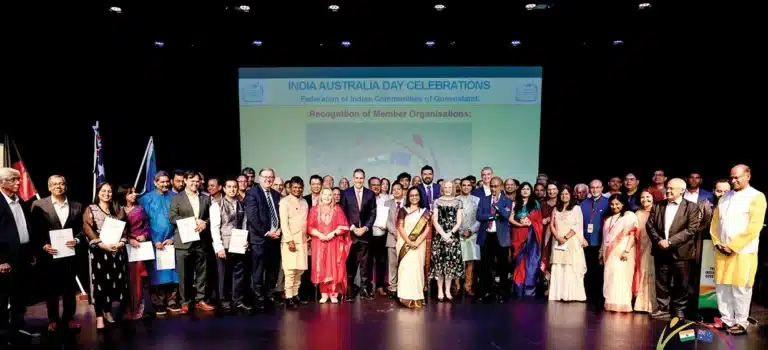
The Federation of Indian Communities of Queensland (FICQ) proudly hosted the India-Australia Day celebration on Sunday, 26th January 2025, at SunPAC, Sunnybank. This annual event brought together members of the Indian-Australian community, dignitaries, and friends of India to celebrate the shared values and vibrant ties between the two nations.
The Master of Ceremonies for the event were Mr Zain Chams and Mr Siddharth Nagpurkar, who were exceptional in managing the event all through the evening. The event began with acknowledging the rich heritage and custodianship of the land by Ms Taletha Wright-Morgan. This was followed by the Australian and Indian national anthems, symbolizing the unity and mutual respect between the two democracies.
FICQ President, Dr Preethi Suraj addressed the gathering, stating, “Today, we celebrate not only the bond between India and Australia but also the values that unite us: democracy, multiculturalism, and a commitment to building inclusive communities. This day is a testament to the shared history and the promising future we envision together.”
During the event, FICQ proudly announced two major upcoming initiatives of 2025 for its members: the establishment of a Toastmasters International Club under the FICQ banner to promote public speaking and leadership skills, and the launch of the Unity Cup, a multicultural soccer tournament aimed at fostering camaraderie and celebrating diversity through sports.
A highlight of the evening was the keynote address delivered by Chief Guest of Honour, her excellency Honourable Dr. Jeannette Young AC PSM, Governor of Queensland who commended the Indian diaspora for its contributions to Queensland’s cultural, economic, and social fabric. This was followed by speeches by other distinguished guests – Mrs Neetu Bhagotia, Indian Consul General in Brisbane; Representing Premier – The Hon. Mr Hermann Vorster MP, Assistant Minister for Multicultural affairs and International students’ attraction; The Hon. Jim Chalmers, Treasurer and Federal Member for Rankin; The Hon. Mr Milton Dick MP, Speaker of the House of Representatives; Dr Maha Sinnathamby, Chairman, Springfield City Group and Patron FICQ; The Hon. Mr Shayne Neumann MP Federal Member for Blair; Senator Paul Scarr, Shadow Assistant Minister for Multicultural Engagement and Senator for Queensland; Ms Charis Mullen MP, Shadow Minister for Public Works, Shadow Minister for Multicultural Affairs and State Member for Jordan who commended the Indian diaspora for its contributions to Queensland’s cultural, economic, and social fabric. Their inspiring words emphasized the enduring partnership between India and Australia and the importance of diversity in fostering harmony and progress.
The program featured a vibrant cultural showcase, including traditional Indian dances, musical performances, and contemporary fusion acts that highlighted the blend of heritage and modernity in Indian culture. Community groups and talented individuals across Queensland came together to present a dazzling array of performances.
In addition to the cultural program, the celebration recognized FICQ’s member organizations for their outstanding contributions to strengthening India diaspora in Queensland. Certificates were presented to acknowledge their efforts in working together with FICQ.
Attendees enjoyed a sumptuous Indian dinner. The event served as a platform for fostering connections and creating lasting memories for everyone present. FICQ extends its gratitude to the sponsors, volunteers, and community organizations whose support and dedication made the India-Australia Day celebration a grand success.
As we commemorate this special day, FICQ reaffirms its commitment to promoting multicultural harmony and strengthening the bridge between India and Australia. Together, we look forward to many more opportunities to celebrate and grow as one vibrant community.
Australia Day and Indian Republic Day Celebrating Shared Values and Strengthening Bilateral Ties
January 26th marks an important day for both Australia and India, albeit for different reasons. In Australia, it is celebrated as Australia Day, a day to commemorate the arrival of the First Fleet at Port Jackson in 1788, marking the beginning of British colonization. On the other hand, in India, January 26th is celebrated as Republic Day, a day that honours the adoption of the Indian Constitution in 1950, marking the country’s transition to a republic. While these two national days commemorate distinct historical events, they also provide a platform to reflect on the deepening ties between the two nations and their shared values.
Australia Day is celebrating National Identity. Australia Day has evolved from a day of British colonization to one of national reflection. While it initially celebrated the arrival of the First Fleet, it has become a broader celebration of Australian culture, diversity, and achievements. For many Australians, this day is marked by festivities, parades, barbecues, and fireworks. It’s a day that showcases the country’s diverse population, including Indigenous Australians, immigrants, and citizens from all walks of life.
However, Australia Day is also a contentious day for many Indigenous Australians, as it represents the beginning of colonization, which led to dispossession, displacement, and the marginalization of Indigenous cultures. For some, January 26th is observed as a “Day of Mourning” or “Invasion Day,” where protests and reflections are held on the impact of British colonization on Aboriginal and Torres Strait Islander peoples.
The debate over how to commemorate Australia Day has sparked ongoing conversations about reconciliation, justice, and the need to acknowledge the history of Australia’s First Nations peoples. Calls for changing the date or establishing a more inclusive national holiday are part of a broader conversation about how Australia can reconcile its colonial past and move toward a more unified future.
Indian Republic Day is honouring Sovereignty and Democracy. Indian Republic Day, celebrated on January 26th, marks the day in 1950 when India adopted its Constitution and became a republic. While India gained independence from British rule in 1947, the adoption of its Constitution formalized its transition to a democratic republic. The day is celebrated with great enthusiasm across the country, with a grand parade in the capital, New Delhi, showcasing India’s military prowess, cultural diversity, and technological advancements. The Republic Day parade is one of the most anticipated events of the year, drawing millions of viewers.
Republic Day is not just a celebration of India’s sovereignty; it is a reminder of the values of democracy, justice, and equality embedded in the Indian Constitution. The Preamble of the Indian Constitution outlines the country’s commitment to securing justice for all its citizens, irrespective of their background, and promoting a society built on equality, liberty, and fraternity.
These values resonate not only within India but also with countries across the world, including Australia. Strengthening India-Australia RelationsIndia and Australia share a long-standing relationship, built on mutual respect, shared values, and a commitment to democracy. The ties between the two nations date back to the colonial era, but in recent years, the relationship has grown stronger due to economic, strategic, and cultural factors. Both countries are democracies, with a shared commitment to the principles of freedom, equality, and human rights. These common values provide a solid foundation for a strong and growing partnership.
In terms of trade, India is Australia’s fifth-largest trading partner, with bilateral trade valued at over $30 billion. Australia exports a wide range of goods and services to India, including minerals, agricultural products, and education services. India, on the other hand, is a key market for Australian exports, particularly in the areas of education, resources, and agriculture.
The economic relationship between the two countries has the potential to grow even further, particularly in sectors like technology, renewable energy, and infrastructure.
Australia and India also have a strong defence and security relationship. Both countries are committed to a rules-based international order and have worked closely together in forums such as the Quad (Quadrilateral Security Dialogue), which also includes the United States and Japan. The Quad aims to promote a free, open, and inclusive Indo-Pacific region, ensuring peace and stability in the face of rising geopolitical challenges.
Moreover, Australia and India share a strong cultural connection, bolstered by the Indian diaspora in Australia. Over 900,000 people of Indian origin live in Australia, making it one of the fastest-growing communities in the country. This vibrant community plays a crucial role in enhancing cultural ties between the two nations, with Indian festivals such as Diwali and Holi being celebrated widely across Australia. Additionally, the growing interest in Indian cinema, particularly Bollywood, has further deepened the cultural connection.
Strengthening the Bond Between India and Australia.
1. Enhancing People-to-People Ties: One of the most significant ways to strengthen India-Australia relations is by fostering deeper people-to-people connections. Encouraging greater cultural exchange, tourism, and academic collaboration will enable both nations to learn from each other’s experiences and perspectives. Programs like student exchanges, internships, and collaborative research initiatives can promote mutual understanding and strengthen ties in various fields, including education, science, and technology.
2. Increasing Trade and Investment: While trade between India and Australia has grown in recent years, there is still immense potential to be unlocked. By facilitating greater investment, particularly in emerging sectors such as clean energy, technology, and infrastructure, both countries can bolster their economic relationship. Trade agreements such as the India-Australia Comprehensive Economic Cooperation Agreement (CECA) can be expanded and refined to open new opportunities for businesses and entrepreneurs.
3. Strengthening Defence and Security Cooperation: Both India and Australia share common concerns about regional security, particularly in the Indo-Pacific. Enhancing defence cooperation through joint exercises, intelligence sharing, and strategic dialogues can strengthen the partnership between the two countries. The Quad provides a platform for India and Australia to work together with like-minded democracies to ensure peace and stability in the region.
4. Promoting Environmental Cooperation: With both countries facing significant environmental challenges, particularly in relation to climate change, there is an opportunity to collaborate on sustainable development and environmental protection. Joint research initiatives on renewable energy, water conservation, and climate resilience could serve as a powerful tool for strengthening ties and addressing global challenges.
5. Celebrating Shared Values: Both Australia Day and Indian Republic Day are celebrations of democracy, freedom, and unity in diversity. These shared values can be used as a basis for further collaboration, with both nations working together to promote democratic ideals and human rights on the global stage. By commemorating these values through joint events, dialogues, and partnerships, Australia and India can deepen their cultural and diplomatic bonds. While Australia Day and Indian Republic Day commemorate different historical events, they provide an opportunity to reflect on the shared values that bind these two nations together. By enhancing people-to-people ties, increasing trade and investment, strengthening defence cooperation, promoting environmental collaboration, and celebrating their shared commitment to democracy, Australia and India can continue to build a lasting and meaningful partnership. The bond between these two nations has the potential to grow even stronger in the coming years, benefiting both countries and contributing to peace, stability, and prosperity in the Indo-Pacific region.
LifeGA is investing in women, investing in the future
In 2021, it was clear to Life Global Australia’s Founding Directors that the best way to enact LifeGA’s mission to change lives, was to change the lives of women. Around the world, the effectiveness of making women the focus of any social improvement strategy was well established. Fifteen years earlier in 2006, when the Nobel Peace Prize acknowledged the work of the Grameen Bank, the Nobel Foundation said the bank’s experience was that lending to women “ensured the best security for the bank and the greatest beneficial effect for the borrowers’ families.” According to the bank’s founder, Muhammad Yunus, “Women want to build up something for the future with their money.” When Project Life set up its Women’s Empowerment Centre, they knew that focusing on women would bring security and stability not only to families, but to whole communities. LifeGA’s decision to support the Women’s Empowerment Programme has resonated with many donors, including businesswoman, Ms Bina Gorasia.
“I come from a culture in which women often lack opportunities,” Ms Gorasia said. “The Women’s Empowerment Programme enables them to transform their lives.”
One such life transformed is that of Reshma Khan. Reshma is from an extremely poor family. Her husband’s work as a driver earns very little, so Reshma worked as a housemaid as well as caring for their two children. She was exhausted and despairing when she first heard of the Women’s Empowerment Programme.
“I received training in beauty parlour practice. Project Life allowed me to dream of starting a beauty parlour and making my home financially strong.”
Reshma is now a successful businesswoman operating Angel Beauty Parlour from her home, and giving classes herself.
“Now I live with dignity. I can provide better education for my children.”
Reshma is one of 12,000 women who have completed the Women’s Empowerment Programme. Project Life relies on social workers to identify women between the ages of 18 and 45 who are living below the poverty line (BPL). BPL status is issued if the family earns less than INR6000 per month, or INR72000 per year. These women are invited to complete a 12-week vocational training course.
“Now I am earning INR240000 per annum,” Reshma said. “Before the training, I had no employment opportunities, but training helped me develop my skills and secure a livelihood.” “Our aim is to make women self-sufficient,” according to Project Life’s Joint Executive Trustee and CEO, Ms. Meetal Koticha Shah. As well as vocational training, all participants receive self-defence training to improve their personal safety; gender equality training to educate them about their rights and enhance self-confidence; and banking, budgeting and finance training so they can independently operate a bank account, balance their finances and prepare the family budget.
“We are proud of the exceptional success rate of this programme”, Ms Shah said. “Of the 12000 women who have graduated from the course, 85% are still earning money using the skills they learned.” Project Life helps ensure their success after training by providing free, trade-specific equipment to help women start earning. “We also provide market linkage to connect these women with traders. Further, our counsellors are always helpful whenever necessary.”
LifeGA’s Founding Director and Chairperson, Dr Dipti McGowan, is mindful of the strength of trainees in the Women’s Empowerment Programme. Participants are usually from impoverished areas, or are widows struggling to support their families.
“Many of the women are travelling further than they have ever gone before and into a city which they have never seen before,” Dr McGowan said. “That would take great courage.”
Programme graduate, Usha Prajapati, travelled 12 kilometres to the training centre each day from the slum area of Ahmedabad in Gujarat state. Though it was difficult to make the trip daily for 12 weeks, as she is the sole parent of two children, Usha knew she was securing a livelihood.
“Now I am earning INR150000 per annum through stitching work,” Usha said. “My life has completely transformed. I am a proud breadwinner for my family, successfully managing my children’s education and living with newfound self-confidence.”
LifeGA is now focused on achieving the target of empowering 20,000 women like Reshma and Usha.
“LifeGA’s contribution will help Project Life achieve their goal of training and empowering more than 20,000 women in the near future, and ultimately touching the lives of 100,000 women in years to come,” Dr McGowan said.
“Women’s empowerment is not merely about helping women; it is about building a more robust, stable and powerful society.”
The Reason for the Season: The Significance of God’s Plan and A Rescue Mission
From the very beginning, God announced His plan to rescue humanity from the grip of sin and Satan. This rescue mission was foretold in prophetic promises, revealing His love and commitment to restore His creation.
Isaiah 7:14 prophesied, “Behold, the virgin shall conceive and bear a Son and shall call His name Immanuel.” Centuries later, this promise was fulfilled when Jesus was born in Bethlehem. Isaiah 53 further unveils His role as the Lamb of God who would bear the sins of the world: “He was wounded for our transgressions, He was bruised for our iniquities; the chastisement for our peace was upon Him, and by His stripes, we are healed.”
But why did we need saving? The Bible explains sin as falling short of God’s standard (Romans 3:23). It is turning away from the Creator to trust in ourselves or false gods to solve our problems. Sin separates us from God, just as a dirty child must first be washed before being embraced. Similarly, God must cleanse our hearts and minds from the stain of sin to restore our relationship with Him.
Paul writes in Romans 3:10, “There is none righteous, no, not one.” None of us can earn salvation through good works, because even our best efforts are tainted by selfishness. As Jesus said in John 3:19, “Light has come into the world, but men loved darkness rather than light.” Like darkness cannot produce light, sinful humanity cannot create peace with God by our own strength.
The good news is that God doesn’t leave us in our brokenness. A repentant and humble heart opens the door for His cleansing and transformation. “If we confess our sins, He is faithful and just to forgive us our sins and to cleanse us from all unrighteousness” (1 John 1:9). God is always willing, always waiting, to wash us clean and give us a new beginning.
Jeremiah 29:11 reminds us of God’s heart: “For I know the plans I have for you… plans for peace and not for evil, to give you a future and a hope.” Imagine starting the new year, 2025, with divine peace and joy—joy that is eternal and born out of God’s love.
Pause for a moment and reflect on the past year. How many times has God shown up in your life? How many miracles has He done? How often has He tried to reveal Himself, but you were too busy or believed your own wisdom was enough?
The truth is, it’s not about our efforts. God is patient, loving, and waiting for you to turn to Him with all your heart. He desires a personal, one-on-one relationship with you. Jesus promises in John 8:32, “You shall know the truth, and the truth shall make you free.”
This Christmas can be the beginning of a purpose-driven life in 2025. All God asks is for us to repent—turning away from our independence and self-reliance—and seek Him. Like the prodigal son, He is ready to welcome you back, cleanse your heart, and restore your life.
As Revelation 21:5 declares, “Behold, I make all things new.” Let this season be a fresh start for you, filled with God’s hope, joy, and purpose.
God bless you and your journey toward a brighter, God-centered 2025. —Ravi Vastrad
All things ‘R’ possible…
My heartfelt gratitude to everyone who has supported me over the past six months as President of this special club. Rotary holds a unique place in my heart, as I grew up watching my father, a dedicated Rotarian, engage in various projects. His example led me to follow in his footsteps, and today, I’m proud that my son, Dhru Lodhia, has also stepped into a leadership role as the President of the Rotaract Club of Brisbane International, the youth wing of our club.
The months have flown by, but the work accomplished by our dynamic club has been nothing short of remarkable. It’s a great time to reflect on some of the key projects we’ve been working on, both recently and since the charter of the Rotary Club of Brisbane International (RCBI).
Since our club’s charter, 10,500 meal packs have been served to our friends on the streets of Woodridge, Brisbane City, and Logan. These include:
Monthly feeding of the homeless: Approximately 100 meals are prepared at a Rotarian’s home and served at Roma St Parklands.
136 brand new wheelchairs have been sent to Fiji in partnership with the Rotary Club of Suva.
A library and various school resources have been sent to Papua New Guinea.
Five brand new air-conditioning units were installed in a local Kingston Special Flexi School for disadvantaged children.
Installation of a dental chair and computer was assisted for a project in Nepal.
$50,000 raised to rebuild roofs on homes destroyed by a cyclone in Fiji.
This year, we’ve continued that legacy through:
Masquerade Gala Fundraiser: Our successful event was made possible thanks to our sponsors, attendees, and supporters.
Monthly Food Drives: Partnering with Mission Possible Volunteers and Merciful Servants, we’ve distributed care packs, blankets, and beanies to those in need. The Rotaract Club of Brisbane International has been an active part of every distribution.
Donation of Dialysis Machines: Four dialysis machines, complete with osmosis systems, are being donated to the Ba Dialysis Centre.
Christmas Food Hampers: We’ve distributed 80 hampers to families in need, bringing them some holiday joy.
Support for Ba Special School: School resources, including wheelchairs and walkers, are being sent to the Ba Special School.
As we continue our humanitarian work, I am grateful for the businesses and individuals who have supported us for the past eight years. Your contributions have been vital to the success of our projects and the lives we’ve touched.
The Rotary wheel keeps turning, and I look forward to your continued love and support in the months ahead. Wishing you all a Merry Christmas and a joyful, prosperous New Year.
New Year, Renewed Focus: Tackling Hepatitis in Our Communities
While we have made good progress in 2024 toward improving hepatitis B and hepatitis C outcomes in Queensland, significant challenges remain in achieving our 2030 goals. As we enter 2025, we want to address the key gaps that require focused efforts:
1. More than 30% of people living with hepatitis B have not been diagnosed
2. Nearly 80% of people living with chronic hepatitis B do not regularly monitor their liver condition as recommended.
3. In Queensland 22,889 people living with hepatitis C have received curative treatment between 2016 and October 2023.
4. However, an estimated 74000 people in Australia are still living with hepatitis C, with Queensland having 2105 new notifications of hepatitis C infection in 2023
Hepatitis B.
Whilst not all people living with chronic hepatitis B need treatment, but ALL people living with chronic hepatitis B need regular liver health checks. These checks include blood tests (including hepatitis B DNA every 12 months), liver ultrasounds every six months (for certain groups), and fibrosis assessments (such as Fibroscan every12 months).
Hepatitis C
The Australian Government continues to subsidise the highly effective treatments, which can be prescribed by a GP or a nurse practitioner with special training. To find out if you have hepatitis C all you need is a simple specific blood test. Just ask your health provider.
How can ECCQ help reach these targets?
We offer free information, education and resources about hepatitis in multiple languages for diverse communities. If needed, we can support you to access services.
In addition, we can offer (for a limited time) free Rapid Point of Care Testing (POCT) involving a finger-prick tests for:
• Hepatitis C antibodies – a detectable result will indicate you have been exposed to the hepatitis C virus – confirmatory testing is needed with a GP or nurse practitioner to then determine if you have current infection and if treatment is needed.
• Hepatitis B surface antigen testing – a detectable result means you may have chronic hepatitis B – further confirmatory testing and follow up is required by your GP or nurse practitioner.
This is a time-limited research project supported by the Kirby Institute and funded by the Australian Government Department of Health. It is free for all people living in Queensland, regardless their visa or Medicare status. The results are confidential. To find more please contact [email protected].
Let’s make 2025 the year, to find those people who may be infected and don’t know it, to get diagnosed and get the care they need, and help eliminate hepatitis.
Remember our personal health is our most valuable asset. We need to ensure we take care of ourselves physically, mentally and emotionally, taking time to seek out the care that we need.
To find more information about hepatitis B and hepatitis C please either visit our webpage at eccq.com.au/bbv where you can find information in your language or contact us at the Love Health Program at ECCQ on 3844 9166 or email [email protected].
We would like to take this opportunity to thank all community members who have supported us throughout the year. We look forward to your continued support in 2025 and beyond!
If you are living in Cairns, you can contact Damian Garozzo-Vaglio at Cairns Sexual Health Services by calling 4226 4760 or emailing [email protected].




 Vineet Mittal, Chairman of Avaada Group, a leading player in India’s renewable energy landscape attended the Maha Kumbh Mela at Prayagraj. Mittal says that he has been an ardent believer in the interplay between science and spirituality, and its relevance to modern life. Mittal is also an advocate for sustainability. Mittal highlighted India’s Legacy of Science, Spirituality, and Sustainability saying the Maha Kumbh is not just a religious gathering, but a showcase of extraordinary scientific understanding of India’s ancient rishis. Indian Rishis observed planetary alignments and cosmic rhythms thousands of years ago that influence the Earth’s energy fields and human consciousness. According to Indian historians, the Maha Kumbh is based on celestial events such as Jupiter in the zodiac sign Aquarius and the Sun transitioning into Capricorn, aligning with natural energy flows that modern science is only beginning to explore. As part of a unique initiative to promote cultural inclusivity, Avaada Group sponsored a cultural heritage trip for 1,000 individuals from underserved communities across India, offering them an opportunity to witness the grandeur of the Maha Kumbh and deepen their connection with India’s rich heritage. Mittal feels that experiences such as the Maha Kumbh at the Triveni Sangam, the confluence of three revered Hindu rivers namely Ganga, Yamuna and Sarasvati, represents unity, renewal, and harmony of people and energies. Mittal sees the Maha Kumbh representing ecological wisdom embedded in India’s traditions of preserving rivers, promoting sustainable practices, and living in harmony with nature. Mittal’s Avaada Group is a leader in the global energy transition, specializing in solar module manufacturing, renewable power generation, and the development of green hydrogen, green methanol, green ammonia, and sustainable aviation fuel projects. Avaada Energy, the group’s renewable power generation arm, aims to achieve a capacity of 11 GWp by 2026. The group has attracted substantial international investment, including a $1.3 billion commitment in early 2023, with $1 billion from Brookfield’s Energy Transition Fund and $300 million from GPSC, a subsidiary of Thailand’s PTT Group.







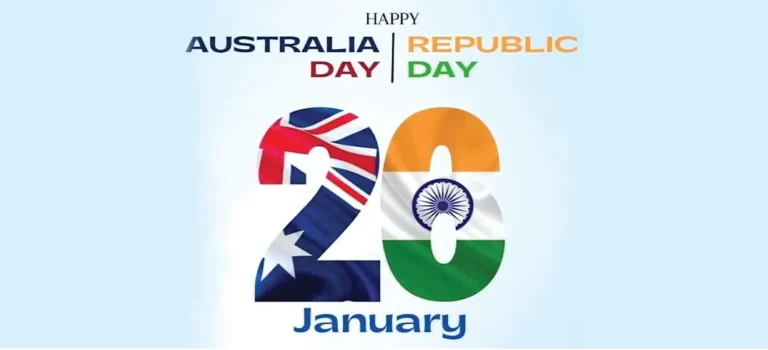
 January 26th marks an important day for both Australia and India, albeit for different reasons. In Australia, it is celebrated as Australia Day, a day to commemorate the arrival of the First Fleet at Port Jackson in 1788, marking the beginning of British colonization. On the other hand, in India, January 26th is celebrated as Republic Day, a day that honours the adoption of the Indian Constitution in 1950, marking the country’s transition to a republic. While these two national days commemorate distinct historical events, they also provide a platform to reflect on the deepening ties between the two nations and their shared values.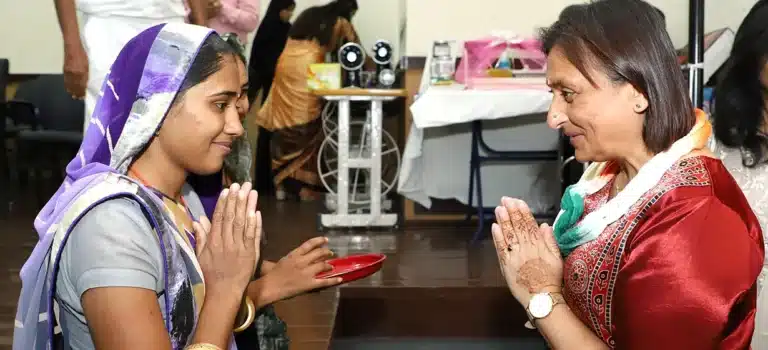

 In 2021, it was clear to Life Global Australia’s Founding Directors that the best way to enact LifeGA’s mission to change lives, was to change the lives of women. Around the world, the effectiveness of making women the focus of any social improvement strategy was well established. Fifteen years earlier in 2006, when the Nobel Peace Prize acknowledged the work of the Grameen Bank, the Nobel Foundation said the bank’s experience was that lending to women “ensured the best security for the bank and the greatest beneficial effect for the borrowers’ families.” According to the bank’s founder, Muhammad Yunus, “Women want to build up something for the future with their money.” When Project Life set up its Women’s Empowerment Centre, they knew that focusing on women would bring security and stability not only to families, but to whole communities.
 LifeGA’s decision to support the Women’s Empowerment Programme has resonated with many donors, including businesswoman, Ms Bina Gorasia.
 Reshma is from an extremely poor family. Her husband’s work as a driver earns very little, so Reshma worked as a housemaid as well as caring for their two children. She was exhausted and despairing when she first heard of the Women’s Empowerment Programme.




 My heartfelt gratitude to everyone who has supported me over the past six months as President of this special club. Rotary holds a unique place in my heart, as I grew up watching my father, a dedicated Rotarian, engage in various projects. His example led me to follow in his footsteps, and today, I’m proud that my son, Dhru Lodhia, has also stepped into a leadership role as the President of the Rotaract Club of Brisbane International, the youth wing of our club.
 Since our club’s charter, 10,500 meal packs have been served to our friends on the streets of Woodridge, Brisbane City, and Logan. These include: