

The power of education

The power of education

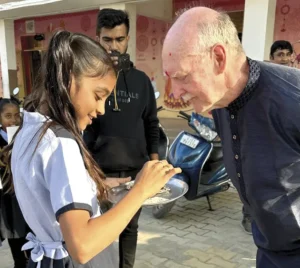
The power of educationNelson Mandela said education is the most powerful weapon you can use to change the world. Life Global Australia was founded largely because Chairperson Dr Dipti McGowan witnessed that weapon in use.
Dr McGowan’s family was originally from Gujarat and, on a visit to her family’s ancestral village, she saw the effects of the transformation of a school by Project Life. At this school, the children had been getting a part-time education as there were not enough classrooms, so lessons were conducted in shifts. Temperatures in summer were 40 degrees and more, and rain came into the rooms during monsoons. This situation was not unusual in a region devastated by an earthquake in 2000.

Dr McGowan’s father decided to donate the funds necessary for Project Life to build a new school in Mulchand. A year later, Dr McGowan attended the opening that led to LifeGA’s foundation, and its ongoing partnership with Project Life.
“I was extremely impressed by the big picture view with which Project Life approached its work. It is always looking to improve lives by giving people autonomy and creating lasting change,” Dr McGowan said.

The power of educationEducation is one of the basic rights of every child, according to the United Nations. The UN Convention on the Rights of the Child recognises that education can mean lifting a vulnerable child and their family out of poverty. UNICEF states that for many children around the world, going to school can be the only opportunity to receive nutritious food and clean water, or a young girl’s only chance to break down gender barriers.

Dr McGowan saw that school buildings often did not meet the needs of the students.
“The lack of separate toilets for girls, for example, meant that they did not attend school consistently, and young girls were being withdrawn to help with working on farms and at home.”

Dr McGowan was particularly aware of this issue as her own mother was withdrawn from school after completing Grade 3 to help at home with younger siblings. Consequently, she made it a priority to ensure the education of her daughter, giving Dr McGowan the opportunity to carve out a successful career based on her studies, and experience firsthand the benefit education can bring to an individual, family, extended family and community.

The power of educationThe UN Convention on the Rights of the Child particularly stipulates the encouragement of regular attendance at schools and the reduction of drop-out rates.
Amisha was a student at Mulchand when Dr McGowan attended the opening ceremony. Her life changed when the new school was built.

“We suffered severely with dark and unlit classrooms, especially in monsoon with water everywhere,” Amisha said.

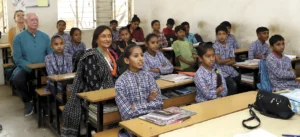
The new school was constructed as a modern facility with spacious, naturally lit, well-ventilated classrooms. Mulchand is now a “Smart School” in which technology is embedded in the curriculum and pedagogy, thus increasing communication, student engagement, and learning outcomes. As a result, the school has been able to educate thousands of students from poor families.

Amisha is now studying for a degree in Commerce, and is confident her education at Mulchand will ensure her family’s financial security.

“I knew we needed to encourage young children to remain in education by providing a good environment for study,” Dr McGowan said. “They then have a chance to explore and prosper, and both students and the community can develop.”

The power of educationDr McGowan has now attended the opening of several schools, and has spoken to staff about the effect of school transformations on their working lives. They told her that with safe, solid school rooms and buildings, schooling is no longer interrupted by weather.
“We can now actually complete the curriculum,” one teacher said. “We can focus on teaching, and pedagogy, what we all got into teaching to do. We can also run clubs and extracurricular activities with the donors providing sports and music equipment. In essence, we can practise our craft, do curriculum differentiation and help students reach their potential, whether it is in academics, sports or the arts.”

By 2023, Project Life had rebuilt 108 schools. The schools won international excellence grants for rural and regional schools in developing countries such as India.
LifeGA is proud of its success in supporting women’s empowerment (see https://www.gofundme.com/f/international-womens-day-25-empower-women-today) and health programmes in India, but bolstering primary education in rural communities is probably the most ambitious project.

“LifeGA aims to build five state-of-the-art schools in some of the poorest areas of India, and has already received donations to support that goal,” Dr McGowan said.

LifeGA wants to use the powerful weapon of education to support, sustain and enrich people’s lives.
www.lifeglobal.org.au

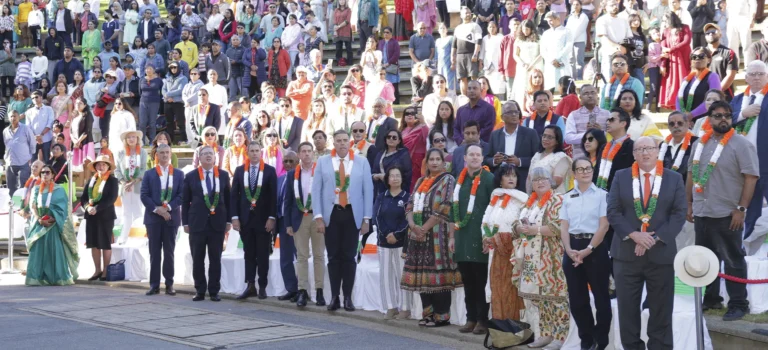
Brisbane Comes Alive with Colours and Culture at Basava Jayanthi 2025

Brisbane Comes Alive with Colours and Culture at Basava Jayanthi 2025

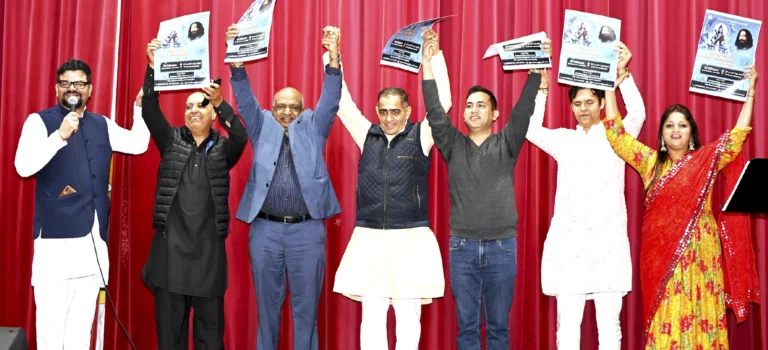
RCBI Delivers on Promise: 5 Dialysis Machines to Ba Kidney Dialysis Centre (BKDC) in Lautoka awaiting installationBrisbane, Australia – 23 May 2025: The vibrant multicultural city of Brisbane witnessed a heartwarming celebration of Basava Jayanthi 2025, hosted by Basava Samiti of Asia Pacific (BSAPAC). The annual event commemorates the birth anniversary of Guru Basava, the 12th-century social reformer and spiritual visionary who pioneered inclusive social practices and ethical living, centuries ahead of his time.

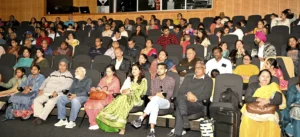
Held at a packed venue in Coopers Plains, the celebration showcased a spectacular blend of devotion, knowledge, and community spirit. It was a multicultural confluence of the community dressed in traditional attire, children and adults alike participated in a lively procession of Vachana recitations, songs, and interactive discussions—highlighting the adoption of Guru Basava’s values that centre on equality, compassion, and rational thought.

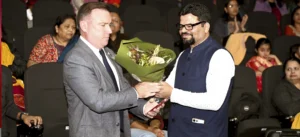
RCBI Delivers on Promise: 5 Dialysis Machines to Ba Kidney Dialysis Centre (BKDC) in Lautoka awaiting installationThe program opened by lighting the lamp followed by the key note address was delivered by Mrs Karen Lay-Brew, the Board Member of Energy Queensland, Strategic Advisor to Australian Government. Karen migrated with family at the age of 11 from Mynamar provided an inspiring speech of the hardships of migrants and their journey to success, happiness and peace while navigating through the value system of life. Her speech was inspirational and touched the hearts of young and old.

Mrs. Margie Nightingale, Member of Inala, graced the audience and was impressed to see the community unity threaded with the values. Her encouraging best wishes meant to a lot to the growing community and the charity.

The key highlight of the discussion was the interactive introspection from the audience representing different ethnicities in the community namely, Sri Lanka, multi cultural diaspora of India, Pakistan, Iran, Burma, local Australians sharing their journey of life and the adoption of values. The Distinguished speakers, including local leaders and community scholars, praised BSAPAC’s commitment to Engage, Educate, Empower, and Enlighten across the Asia Pacific. / Guru Basava vegetarian, non-alcoholic community meal (Anna Dasoha), symbolising Basava’s vision of social equality through shared values.

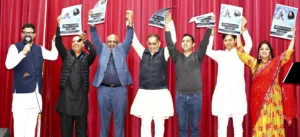
The event also honored young children for their beautiful singing from the Sargam Academy of Music. We thank Mr. Mithun Chakraborthy and Mrs. Bonita Chakraborthy for presenting the wonderful music to the audience. Mr. Linden May, Ex-Board Director of the Charity awarded all the children with the medals for their fantastic participation.

RCBI Delivers on Promise: 5 Dialysis Machines to Ba Kidney Dialysis Centre (BKDC) in Lautoka awaiting installationOther notable programs included the Australian national anthem via the violin, presentation of the Guru Basava Dashboard Idol – a spiritually uplifting artefact designed for the car, symbolising values of truth, work, and devotion, ideal for daily travel inspiration by the 12 year old Master Hanish Banavar. BSAPAC will promote these dashboard idols that can be used in the cars via their shopping carts.

Mrs. Soniya Sharma, from the ANZ Bank Mt Ommaney also spoke to the team regarding the offering of the Home Loan Introductory Program.

Other notable organisers were Mrs. Girija Karekal, Executive Director; Mr. Stephen Hodgson, CEO, Mrs. Nivedita H E lead coordinator of Brisbane Chapter. BSAPAC offers gratitude for all the volunteers and children who made this an intimate evening and strengthened the values through multicultural confluence. “Guru Basava’s message is more relevant today than ever. His vision of a just society is what drives our charity’s work in over eight locations across Australia and New Zealand.”

Basava Jayanthi 2025 in Brisbane stood not only as a celebration of history but also a call to action for unity, service, and purposeful living in our contemporary world.
Learn more at https://basavasamitiapac.org
Follow us: #BasavaJayanthi #BSAPAC #GuruBasava #STEMWithValues #EngageEducate
EmpowerEnlighten


The 2025 GOPIO Gold Coast Annual Gala Dinner

The 2025 GOPIO Gold Coast Annual Gala Dinner

The 2025 GOPIO Gold Coast Annual Gala DinnerThe 2025 GOPIO Gold Coast Annual Gala Dinner was held with great success, bringing together community members, leaders, and supporters for an evening of celebration, culture, and connection. The event was marked by vibrant music, delicious food, and a warm atmosphere that truly reflected the spirit of unity and multiculturalism.

The 2025 GOPIO Gold Coast Annual Gala DinnerThe musical performances throughout the evening created a lively and engaging ambiance, with guests taking to the dance floor and enjoying every moment.
The night was filled with friendship, and inspiring conversations, as attendees from all walks of life came together to support the ongoing work of GOPIO Gold Coast in community engagement, advocacy, and cultural promotion.

We would like to thank the Guest of Honor, Queensland Shadow Minister for Multicultural Affairs and Public Works, MP Charis Mullen and Experience Gold Coast Director of Education Jennine Tax

The 2025 GOPIO Gold Coast Annual Gala DinnerWe extend our heartfelt thanks to our generous sponsors, whose support made this evening possible. Platinum Sponsors (Nextweb & ACE One). Your commitment to our vision and continued partnership is deeply valued.

Silver Sponsors, (Mortgage Assistance, Business 2 Sell, Global Grocery & Spices and MP Angie Bell. Thank you for your vital contribution and encouragement of our efforts.
Your support enables us to host events like this that strengthen our community bonds and help us continue to make a positive impact.

The 2025 GOPIO Gold Coast Annual Gala DinnerWe look forward to welcoming everyone again to our future events and extend our gratitude to all those who joined us to making this Gala Dinner a memorable occasion.
GOPIO Gold Coast was represented by Pradip Gorasia (President), Mokhtiar Singh (Vice President and Gala Dinner Coordinator), Preetham Krishna ( 2nd Vice-President), Madhuri Soni (Secretary), Paddy Krishnan (Joint Secretary), Jessy Kaurah(Treasurer), and Varsha Badhe (Asst. Treasurer)

Dreamscape 2025: A Legendary Celebration of India’s Independence Day in Brisbane

Dreamscape 2025: A Legendary Celebration of India’s Independence Day in Brisbane

Dreamscape 2025: A Legendary Celebration of India’s Independence Day in Brisbane

Brisbane, QLD – August 16, 2025: In a spectacular tribute to India’s Independence Day, the Queensland Kannadigas Cultural & Sports Society Inc. is proud to present Dreamscape – an unforgettable evening of music, culture, and unity on Saturday, 16 August 2025 at the Life Centre Auditorium, Salisbury, Brisbane.

Themed “Let’s Celebrate India’s Independence Day with Legends”, this event promises to enthral the audience with world-class performances by legendary artists, including Stephen Devassy, the internationally acclaimed keyboard maestro, and Rajesh Vaidhya, the virtuoso veena player known for his electrifying stage presence. They will be joined by an ensemble of talented musicians—Prithvi (bass guitar), Kuberan (drums), and Praveen (tabla)—bringing together classical roots and contemporary rhythms in a musical fusion unlike any other.

With doors opening at 5:30 PM for a 6:00 PM start, Dreamscape is not just a concert—it is a celebration of cultural pride, freedom, and artistic brilliance. It is expected to draw hundreds from across Queensland’s vibrant Indian and multicultural communities.

Organized by the Queensland Kannadigas Cultural & Sports Society Inc., the event highlights the organization’s continued commitment to promoting Indian arts and heritage in Australia, creating bridges of cultural exchange, and honouring the spirit of independence and unity.

Event Details:
• Date: Saturday, 16 August 2025
• Time: 5:30 PM (for 6:00 PM start)
• Venue: Life Centre Auditorium, 63 Fairlie Terrace, Salisbury QLD 4107
For ticketing, sponsorship, and more information, please contact:
• Preetham Krishna: 0402 537 209

Don’t miss this legendary celebration of music, freedom, and cultural pride. Join us for Dreamscape 2025!

GOPIO Gold Coast Yoga Event 2025

GOPIO Gold Coast Yoga Event 2025

GOPIO Gold Coast Yoga Event 2025The GOPIO Gold Coast celebrated the 2025 International Day of Yoga on the 14th of June. The theme for the 2025 International Day of Yoga is “Yoga for One Earth, One Health”. In keeping with this theme, GOPIO-GC hosted four different styles of Yoga practices.

Ranjitha Shenoy, who runs the Yoga and Wellness by Ranju school, started off with classical Hatha Yoga. Her gentle and yet effective Asanas helped everyone stretch their bodies gently on a cold morning. This was followed by Shekher Arya’s session on SOMA Breathwork. Shekher, who runs Amavi retreats, focused on a specific form of Pranayama to create a sense of happiness. The third session was conducted by Leela Avva and Aoi Okoch from the Heartfulness Institute. They focused on chair yoga, which helped those who were not comfortable sitting on the floor for too long, and silent deep meditation.

GOPIO Gold Coast Yoga Event 2025This session helped people relax their mind and body at their own pace. The final session was conducted by Sharma Slavic who runs various sound-based healing events in South East Queensland. Her use of the crystal sound bowls and the harp, further calmed everyone.

GOPIO Gold Coast Yoga Event 2025There were close to 50 participants all of whom found the sessions very engaging. The entire program lasted close to two hours although it felt that it was over in a jiffy. GOPIO-GC thanks all the instructors and the participants for making the event a great success. The event was supported by the Consul General of India, Brisbane and Experience Gold Coast.
Thanks to our presenters and supporters.

GOPIO Gold Coast was represented by Pradip Gorasia (President), Preetham Krishna (2nd Vice-President), Paddy Krishnan (Joint Secretary and Coordinator of the event), Madhuri Soni (Secretary) and Varsha Badhe (Asst. Treasurer)

A Guru Mixes the Right Cocktail

A Guru Mixes the Right Cocktail

A Guru Mixes the Right Cocktail

Sadhguru: There is a wonderful story in the yogic lore. One day, a gnana yogi, a bhakti yogi, a karma yogi, and a kriya yogi were walking together in a forest. Usually these four people can never be together, because a gnana yogi has total disdain for every other yoga. An intellectual person, a thinking person has complete disdain for everybody else. A bhakti yogi, full of emotion and love, thinks all this gnana, karma and kriya yoga is just a waste of time. Just love God and it will happen. The karma yogi thinks everybody is lazy and that they have all kinds of fancy philosophies. What needs to be done is work. One must work, work and work. The kriya yogi just laughs at everything. The whole existence is energy. If you don’t transform your energy, whether you long for God or anything else, nothing is going to happen.

So, usually they cannot be together, but today they were walking together. Then it started to rain heavily. They started running, looking for shelter, and they found an ancient temple which just had a roof and no walls. In the center of this structure, there was a linga. These four people went inside the temple for shelter. The storm became more and more furious and it started raining in torrents. The fury of the storm was getting into the temple so they went closer and closer to the linga. There was no other way to be because it was just blasting them from all sides. Then it became so furious and there was no other place, so the only way they could get some protection was for all four to hug the linga. Suddenly, they felt something enormous happening. A huge presence, a fifth presence was there. All of them said, “Why now? For so many years we have pursued You and nothing happened. Why now?” Then Shiva said, “At last the four of you got together. I have been waiting for this to happen for a long time.”

Without addressing the four basic ingredients of body, mind, emotion and energy out of which all your present experiences are rooted, one cannot move ahead on the spiritual path. Right now, the only things that are in your experience are your body, your mind, and your emotions. You know them to some extent, and you can infer that if these three things have to happen the way they are happening, there must be an energy that makes them happen. Without energy, all this cannot be happening. For example, a microphone amplifies sound. Even if you don’t know anything about the microphone, you can infer that there is a source that powers it.

So these are the only four realities in your life: body, mind, emotion, and energy. Whatever you wish to do with yourself, it must be on these four levels because you can only start a journey from where you are right now. If you use your emotions and try to reach the ultimate, we call this bhakti yoga, the path of devotion. If you use your intelligence and try to reach the ultimate, we call this gnana yoga, the path of intelligence. If you use your body or physical action to reach the ultimate, we call this karma yoga, the path of action. If you transform your energies and try to reach the ultimate, we call this kriya yoga, that means internal action.

These are the only four ways you can work with yourself.

In one person the heart may be dominant, in another person the head may be dominant, in yet another person the hands may be dominant, but everyone is a combination of these four, so you need a process that is a combination of these four. And only if it is mixed in the right way for you, it works best. What we give for another person, may not work well for you. Only when it is mixed in the right proportion it works for you. That is why on the spiritual path there is so much stress on a live Guru. He mixes the right cocktail for you, otherwise there is no punch.

Raising Children with Roots and Wings

Raising Children with Roots and Wings

Practical Steps for instilling strong values for the desi millennial parents

Raising Children with Roots and Wings

Many of us made the bold decision to leave behind everything familiar – our families, our friends, even our favourite street food spots – to start a new life in Australia. We came here with dreams tucked into suitcases, driven by the hope of building a better, safer, more prosperous future for ourselves and our families.
But along with opportunity comes responsibility. As migrant parents raising children in a culture different to our own, we often carry the invisible but significant burden of instilling the values that will help our children not only survive but also thrive in a multicultural society like Australia. How do we raise children who are resilient, respectful, and culturally rooted?
The challenge is real. We want our kids to succeed in a world that celebrates independence and self-expression, without losing the respect for family, culture, and community that defines our upbringing. We want them to be strong enough to face life’s challenges, but soft enough to be kind. We want them to have roots that ground them and wings that allow them to fly.
This is not just about preserving culture or discipline. It is about raising conscious, compassionate, and confident human beings who can walk in two worlds – proud of their heritage and prepared for the future.
Here are some practical, everyday steps we, as desi millennial parents, can take to instil these values in our children:
1. Respect Begins at Home – It’s a Two-Way Street
“Respect your elders” was drilled into us from childhood, but how many of us truly felt respected as kids? Many of us grew in households where we felt invisible to our elders. The first lesson in teaching respect is practising it ourselves. Children who are treated with respect grow up understanding how to respect others – including themselves.
This means listening when they speak, validating their feelings, and allowing age-appropriate choices. Correct them when needed, but do so with dignity, not with humiliation or fear. How we treat our partners, elders, and even strangers in their presence teaches them far more than lectures ever will.
Respect does not mean giving in to every demand. It means setting clear boundaries with kindness and ensuring children understand that their opinions matter, even when the final decision rests with us.
2. Model Resilience Through Your Own Life
Resilience is one of the greatest gifts we can give our children. It is not about making them tough by dismissing their feelings. It is about showing them that setbacks, failures, and challenges are not the end.
Our migrant journeys are filled with resilience – adjusting to a new country, finding jobs, building community, navigating racism, and overcoming loneliness. Instead of hiding these struggles, share age-appropriate versions with your kids.
Let them see that you have faced hard times and kept going. When they struggle – whether it is with schoolwork, friendships, or sports – avoid rescuing them immediately. Coach them through the problem, ask questions like, “What do you think you can try next?”, and praise their efforts, not just the outcome.
Children who see their parents overcome challenges grow up believing they can do the same.
3. Make Gratitude a Family Ritual
Gratitude doesn’t happen by accident. It is cultivated through small, daily practices.
Many migrant parents hope their children appreciate the sacrifices made for them, but constant reminders often backfire. Instead, build a family culture of gratitude:
share one thing you are grateful for at bedtime, involve kids in volunteering or community service, encourage thank-you notes for gifts or acts of kindness, highlight life’s small blessings – a sunny day, a shared meal, a good laugh.
When gratitude becomes a habit, children naturally develop humility and a sense of abundance.
4. Build Emotional Awareness Through Everyday Conversations
Many of us were taught to suppress emotions in the name of strength. But true resilience requires emotional awareness.
Teach your children to name and express their feelings. When they are upset, instead of dismissing it with “Stop crying,” say, “It is okay to be sad. Do you want to talk about it?”
Model emotional expression yourself. Share when you are feeling stressed, tired, or proud. This normalises emotions and teaches children that feelings are not weaknesses to hide but signals to understand.
Emotionally aware kids cope better with stress, build stronger relationships, and navigate life’s challenges with greater ease.
5. Celebrate Your Culture with Joy, Not Obligation
Our children are growing up in a multicultural society. They will question, compare, and at times resist aspects of their heritage and that is normal. Our role is to make culture a source of pride, not pressure.
Celebrate Indian festivals with excitement. Cook traditional meals together. Share stories about your childhood. Teach your native language through songs, games, dances and casual conversation – not just formal lessons.
At the same time, respect their Australian identity. Encourage them to explore, make friends from diverse backgrounds, and find their own balance.
Culture thrives when it is offered with love, not imposed with guilt.
6. Encourage Problem-Solving and Independence
It is tempting to shield our kids from struggle, but resilience grows when they face age-appropriate challenges.
Give them opportunities to solve their own problems: struggling with homework? Guide them, don’t complete it for them; conflicts with friends? Listen, but let them navigate social dynamics.
When children learn they can overcome obstacles, their confidence and independence soar.
7. Create a Safe Emotional Home
No matter how strong or independent we want our kids to be, they need to know they can always come home to safety, love, and acceptance.
When they mess up, be the parent they can turn to, not the one they fear. Correct them with firmness but without breaking their spirit. Celebrate their successes, big or small. Listen when they struggle. Offer comfort without conditions.
A child who feels safe at home becomes resilient in the world.
The Journey Forward
Raising children between cultures is both a privilege and a challenge. We can give our kids the best of both worlds: the values, traditions, and strength of our Indian heritage, and the freedom, independence, and diversity of Australian society.
It requires patience, self-awareness, and constant reflection.
In doing so, we honour the sacrifices of our parents, the dreams that brought us here, and the bright futures of the next generation.
Let’s raise kids who know who they are, where they come from, and most importantly, who have the strength to shape where they’re going.

Yamma Yamma Returns – A Bollywood Comedy Spectacle Hits Brisbane!

Yamma Yamma Returns – A Bollywood Comedy Spectacle Hits Brisbane!

Yamma Yamma Returns – A Bollywood Comedy Spectacle Hits Brisbane

Get ready, Brisbane! After a string of sold-out productions, Australian Indian Theatre is back with its latest laugh riot – Yamma Yamma Returns, playing Saturday 26th July at Calamvale Community College.
This all-new musical comedy takes audiences on a wild ride through time, where Yamraaj (yes, the god of death!) must fix a divine mix-up with a search of true love. Expect crazy twists, killer dance numbers, and a tribute to every era of Bollywood—all packed into one night of hilarious mayhem.
Known for shows like Bhasamasur, Junction ki chudail, Salaam-e-Ishq, Shakuntala, and Shri Raam Leela, Australian Indian Theatre has built a reputation for blending Indian storytelling with modern Aussie flair. With packed houses and a growing fan base, we’re not just making theatre—we’re creating a movement.
Don’t miss the most outrageous theatrical party of the year. Tickets on Eventbrite now!

Where Law Meets Business

Where Law Meets Business

Where Law Meets Business

‘Stop, porridge pot, stop’. At least the little girl had the magic words to stop the porridge pot from producing and overflowing porridge. This is a reference, of course, to the fairytale story, The Magic Porridge Pot.
In reality, we have overflows of another kind and things have gone terribly wrong and we don’t have the magic words to make it stop.
To begin, it was a Harvard Law School professor who articulated a set of principles about the morality of law including:
• that laws must be publicly known and accessible so individuals and businesses can understand and comply with them—the principle of promulgation;
• that every letter of the law should be simple and clearly stated. It should be written in a way that it is easily understood. It should not require high level skill or higher education for a law to be understood—the principle of clarity;
• that the law should not be fleeting but relatively steady through time so that individuals and businesses can adjust their behaviour accordingly—the principle of stability.
If we embrace these three principles as benchmarks, we have lost our ways.
The principle of promulgation: that laws (which includes regulations, rules, rulings and determinations) must be publicly known and accessible.
Yet in practice, they’re anything but that. Laws are not announced on television or sent with your electricity bill. They are scattered across obscure government websites, nested within complex legislation, and buried deep in court databases—hardly in plain sight.
We come to the principle of clarity: that the law should be simple and clearly stated. This hardly needs to be said that this is no longer the case. As the then Justice Steven Rares of the Federal Court said, in reference to the Income Tax Assessment Act, the Competition and Consumer Act and the Corporations Act the ‘business community of this country cannot be expected to deal with legislation of this unnecessary detail. The cost of trying to understand the discordant patchwork of wish list amendments that have been welded onto a simple body of an original Act must be truly mind boggling. Do we really need a telephone book-size statute to regulate corporations?’
So much for the principle of clarity.
Finally, we come to the principle of stability: that the law should not be fleeting but relatively steady. Legislation is churned out so frequently and in such piecemeal fashion that even lawyers might struggle to stay current. Pity the entrepreneur.
Yet too often, these principles—benchmarks—are cast aside in favour of quick fixes—laws shaped less by thoughtful design and more by panic, politics or the desperate need to be seen to do something—anything—no matter the cost.
But these principles are not academic because when these principles are cast aside or ignored, which is happening too often, two things happen and have happened and will continue to happen. First, Justice Rares’ phrase, ‘legislative porridge’, captures one result: a mix of legislative measures stirred together in haste. Laws shaped more by panic, politics or the desperate need to be seen to do something—anything—no matter the cost. But this lacks the structure and substance that you and your business needs. Spurred by successive crises and regulatory failures (for example, the Optus outage, PwC tax leaks, consumer difficulty in accessing consumer guarantee remedies, Robodebt Scheme, underpayment of wages, poor airline performance, enforcement of restraint of trade clauses, children being harmed online), the legislative engine has been working at a relentless pace.
Second, the outcome may best be described as what the author calls ‘corporate pudding’—a term that captures three recurring characteristics of corporate non-compliance that should be apparent to both businesses and informed observers: (1) the nature of the noncompliance and failures demonstrate a striking disregard for fundamental principles or requirements of the law; (2) businesses repeating its own previous noncompliance, indicating a failure to learn from past mistakes; and (3) businesses committing the same or similar breaches that were committed by their competitors, indicating a disengagement from, or disregard of, the legal and regulatory developments around them.
But here is the more intriguing point: corporate noncompliance often triggers the very reactive lawmaking that creates the legislative porridge in the first place. It raises a worthy question: does ‘legislative porridge’ cause ‘corporate pudding’, or does ‘corporate pudding’ cause ‘legislative porridge’ or are they, in fact, mutually reinforcing—each a cause and a consequence of the other?
If this all sounds like a legal porridge bowl tipped sideways, that is because it often is. To help make sense of it, the author of this article is the author of a new book called Bridging Business and the Law in Australia. It was published by LexisNexis on 5 June 2025. And that is precisely the point of the book: to serve as a navigational guide through the thickets of modern Australian business law.
It spans 40 chapters organised into nine parts. The chapters appear in the order that events are destined to arise for a business. The book not only presents the law in an accessible way, it goes further—offering practical tips, red flags to watch for, highlighting common traps and how to avoid them, presenting lesser-known free tools that can make a real difference to businesses and including real-world scenarios. This book fills a gap in Australian legal and business literature not previously addressed.
With about 2.5 million businesses in Australia, many without lawyers or easy access to professional legal advice, the legal system’s growing complexity can be daunting. This book provides a margin of safety for them.
—Nilay B. Patel is a lawyer based in Melbourne.

When You’re Hard on Yourself: The Hidden Invitation to Grow

When You’re Hard on Yourself: The Hidden Invitation to Grow

The Hidden Invitation to Grow

There’s a moment, quiet but sharp, that many of us know well.
You forget something. Miss a deadline. React poorly.
And before anyone else says a word, your own voice turns on you:
“You should’ve done better.”
“What’s wrong with you?”
“Why can’t you ever get it right?”
That voice, your inner critic, is something most people experience. It cuts deep, lingers long, and rarely offers compassion. But could it also carry a hidden grace?
One of the Mind and Motion Cards, Flaws offers a gentle prompt:
“Being hard on yourself can limit growth, but it may also reflect a deeper care for who you are becoming.”
Let’s sit with that.

The Habit of Harshness
Being hard on yourself often masquerades as self-improvement. It insists it’s making you stronger, sharper, more disciplined. But often, it contracts the heart. It limits movement, physically, emotionally, mentally.
From a Vedic lens, the mind is both guide and saboteur. As shared in the Bhagavad Gita:
“For one who has conquered the mind, the mind is the best of friends; but for one who has failed to do so, the mind will remain the greatest enemy.” (Gita 6.6)
When self-talk becomes harsh, it may not foster learning, it can freeze growth. Rather than guide us forward, it may keep us circling past mistakes. And yet, this harshness usually emerges from a protective place, a shield against disappointment, rejection, or failure.
It’s not about weakness. It’s about survival.
But survival is not the same as living.

The Motion of Becoming
Here’s where a subtle shift happens, what limits us may also reveal what matters to us. Beneath self-judgment lies care. We don’t criticise what we don’t value.
If you’re hard on yourself, perhaps it means you care deeply, about your impact, your growth, your values.
The Mind and Motion Card – Flaws encourages curiosity, not condemnation:
“What is this voice protecting?”
“What might it sound like if translated into care?”
From here, we may begin to respond, not with punishment, but with presence.
Like breath returning us to the body, gentleness returns us to movement.

Softness as Strength
If the aim is to grow, not just succeed, but evolve, then kindness must be part of that journey.
Stumbles are part of motion. Awareness, not fear, shapes who we become.
A Reflection Practice
Next time your inner voice tightens its grip, consider this reflective practice, inspired by the Mind and Motion approach:
1. Pause. Take a breath.
2. Acknowledge the voice: “I hear you.”
3. Ask: “What am I afraid will happen if I don’t push myself like this?”
4. Listen with compassion, not correction.
5. Respond: “There may be another way to grow, one that includes care.”
Let that land. Let it move you.
Being hard on yourself isn’t necessarily a flaw, it may be a sign that you’re aware of your own potential. But if you stay caught in the cycle of harshness, you may miss the deeper invitation: To grow, with awareness, with care, and with motion.
So, the next time you hear “You should’ve done better,”
Pause. Breathe.
And whisper back:
“I’m already becoming.”
Explore Further
The Mind and Motion Cards offer guided reflections like this to support your personal growth journey. These tools are designed to complement, not replace, professional support.
For more resources or to purchase the deck, please visit www.monicapema.com/blog

Monica Pema | Integrated Wellness Expert
MSc. Psychology | Dip. Holistic Kinesiology
“From Passion to Purpose in All Walks of Life”
This article is intended for self-reflection and general education only. It is not a substitute for professional medical, mental health, or psychological care.