

Australia–Taiwan Relations Forum 2026 Highlights Shared Responsibility for Indo-Pacific Security and Stability
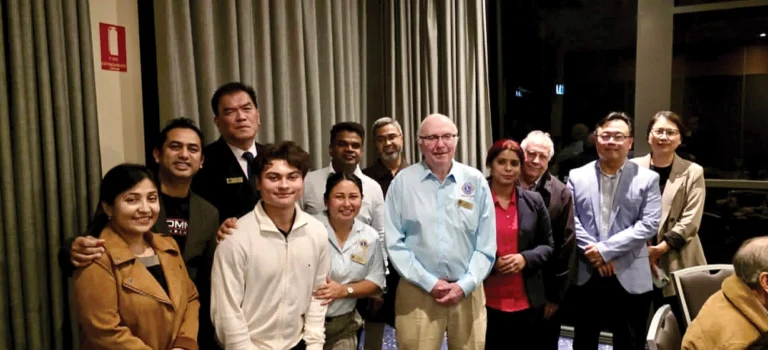
The Australia–Taiwan Relations Forum 2026, hosted by the Australia Taiwan Culture Foundation Ltd. (ATCF), was held on 17 April at the Queensland Parliament House. Under the theme “Shared Responsibility: Security, Resilience, and Regional Stability — Perspectives from Australia and Taiwan,” the forum brought together leaders from government, academia, and industry to engage in in-depth discussions on the evolving Indo-Pacific landscape and Australia–Taiwan cooperation. The event was met with strong interest and active participation.
The forum took place against the backdrop of the Australian Government’s announcement of a record AUD 425 billion defence investment over the next decade, aimed at responding to an increasingly complex regional security environment and potential threats from neighbouring hostile actors. This development underscored the urgency and relevance of the forum’s discussions, with participants recognising that safeguarding regional stability is a shared responsibility among democratic partners.
The event opened with welcome remarks by Ms Phyllis Lo, President of ATCF, followed by a recorded message from The Hon Jon Krause MP, Deputy Speaker of the Queensland Parliament, expressing strong support for the forum. In his opening address, Director-General William Fan of the Taipei Economic and Cultural Office in Brisbane emphasised the shared democratic values between Australia and Taiwan and their joint responsibility for regional stability.
He called for greater international inclusion of Taiwan, urging support for its participation in the World Health Organization (WHO), and highlighted the critical link between peace in the Taiwan Strait and global supply chain security. He also noted Taiwan’s leading position in the global semiconductor industry and the potential for its accession to the Comprehensive and Progressive Agreement for Trans-Pacific Partnership (CPTPP) to strengthen economic resilience across the Indo-Pacific.
The keynote address was delivered by Major General (Ret’d) Michael Ryan AM, who provided a strategic assessment of the evolving Indo-Pacific security environment. Drawing on his concept of “Confronting Complacency,” he warned that prolonged periods of relative stability can lead to underestimation of risk and delayed preparedness.
He emphasised the importance of proactive risk recognition, adaptive capability development, and closer cooperation among like-minded partners to enhance regional resilience. The forum’s panel discussion was moderated by Professor Caitlin Byrne AM FAIIA, Pro Vice Chancellor (Business) at Griffith University. Panellists included Michael Ryan, The Hon Shayne Neumann MP, Chair of the Joint Standing Committee on Foreign Affairs, Defence and Trade, and Mr Warwick Penrose, CEO of EPE Group.
The discussion addressed a range of issues including regional security architecture, supply chain resilience, democratic cooperation, and the future trajectory of Australia–Taiwan relations. The forum attracted strong participation from diplomats and consular representatives, elected officials from federal, state, and local governments, think tank experts, academics, multicultural community representatives, and Taiwanese community leaders from Brisbane and Sydney.
The Q&A session was highly engaged, with participants actively contributing questions and perspectives. Discussions extended to Taiwan’s participation in the WHO and its bid to join the CPTPP. Due to time constraints, the session concluded despite continued interest, reflecting the high level of engagement. The forum was convened and facilitated throughout by Mr Edward Lin, CEO of ATCF.
ATCF will continue to advance high-level dialogue platforms to deepen Australia–Taiwan cooperation across security, economic, and cultural domains, contributing to peace and stability in the Indo-Pacific region.
Daivasur-Sampad-Vibhag Yog – The Yog of the Distinction between the Divine and Devilish Endowments
Shree Bhagavan Krishna said:
1. Fearlessness, purity of being, perseverance in the yog of knowledge, charity, self-restraint, sacrifice, study of sacred texts or introspection, austerity and uprightness;
2. Nonviolence, truth, absence of anger, relinquishment, serenity, aversion to fault-finding, compassion to living beings, freedom from covetousness, gentleness, modesty and absence of fickleness;
3. Vigour, forgiveness, fortitude, cleanliness, freedom from malice and excessive pride; O Bharat Arjun, these are the endowments of those who are born with a divine nature.
4. Pompousness, arrogance, vanity, anger, harshness and ignorance are the traits of those born with devilish nature, O Parth Arjun.
5. It is thought that the divine endowments lead to deliverance and the devilish to bondage. O Pandav Arjun, do not grieve. You are born with divine endowments.
6. There are two types of created being in this world, the divine and the devilish. The divine has been explained at length. Now hear from me O Parth Arjun, about the devilish.
7. The devilish people do not know about the method of engagement in action nor about the way of withdrawal from it. Neither cleanliness, nor proper conduct nor truth is found in them.
8. They declare that the world is unreal, without a basis and without a God, not created in regular causal sequence. How else? But by the union of sexes caused by desire and nothing else.
9. Holding this view, these people of lost souls, weak intelligence, and vile and cruel action come into existence as enemies bent on the destruction of the world.
10. Taking refuge in insatiable desires, filled with hypocrisy, pride and arrogance, and holding false notions due to their delusion, they act with unclean intentions.
11. Clinging to immeasurable worries that would only end with their death, and firmly convinced that the gratification of desires is the highest goal;
12. Bound by a hundred snares of hope, given over to lust and anger, they seek to amass wealth by unjust means for gratification of their desires.
13. This has been acquired by me today. I shall attain this wish. It is mine and this wealth also shall be mine.
14. This enemy has been slain by me and others too I shall slay. I am the lord; I am the enjoyer. I am successful, mighty and happy.
15. I am wealthy and high-born. Who else is equal to me? I shall perform a sacrifice. I shall give charity and I shall rejoice. Thus, they are deluded by ignorance.
16. Confused by numerous thoughts, enveloped in a net of delusion, and addicted to the gratification of desires, they fall down into a filthy hell.
17. Self-conceited, stubborn, filled with pride and arrogance of wealth, they perform sacrifices only in name with ostentation and without regard to rules.
18. Given to egotism, force, pride, desire and anger, these malicious people despise me in their own as well as in others’ bodies.
19. I constantly hurl these cruel haters, the worst of human beings, into demonic wombs in the vicious cycle of rebirth.
20. Fallen into the demonical wombs in birth after birth, these deluded beings do not attain me, O Kaunteya Arjun. From there they sink further down to lower state.
21. Desire, anger and greed are the three gates leading to this hell. They are destructive to the self and hence one should abandon these three.
22. O Kaunteya Arjun, those who are released from these three gates to darkness and do what is the best for their self, attain the supreme goal.
23. The one who acts under the impulse of desire, casting aside the injunction of the scripture, does not attain accomplishment, nor happiness nor the supreme goal.
24. Therefore, let the scripture be your authority for determining what is to be done and what is not to be done. Knowing the prescribed scriptural injunction, you should perform your prescribed duty here in this world.
Thus ends the sixteenth chapter, entitled Daivasur-Sampad-Vibhag Yog – The Yog of the Distinction between the Divine and Devilish Endowments containing the discourse between Shree Krishna and Arjun in the Upanishad called the Bhagavad Gita, the science of Brahm, the scripture of Yog.
Bhagavad Gita Chapter 17
Shraddha-Tray-Vibhag Yog – The Yog of the Distinction of the Three Kinds of Faith
Arjun said:
1. O Krishna, what is the position of those who forsake the injunctions of scriptures but perform sacrifices with faith? Is it sattva, rajas, or tamas?
Shree Bhagavan Krishna said:
2. The faith of embodied beings is of three kinds, known as sattviki, rajasi and tamasi, all born of their inherent nature. Now hear about them.
3. O Bharat Arjun, faith of all humans takes the form of their essential nature. Humans are made of their faith. What their faith is, that verily they are.
4. The sattvik people worship the gods and the rajasi ones venerate yakshas and demons. The tamasi people worship ghosts and other hordes of nature spirits.
5. Those who are filled with deceit and arrogance, and impelled by the force of desire and passion, perform atrocious austerities, which are not prescribed by the scriptures.
6. They mindlessly torture a host of elements within their body and also me residing in the body. Know these to be demoniac in their resolve.
7. Even the food which is dear to all is of three kinds. So are the sacrifices, austerities and gifts. Hear now the distinction between them.
8. The foods that promote life, virtue, strength, health, happiness and satiety, and which are juicy, smooth, nourishing and agreeable are dear to the sattvik people.
9. The foods that are bitter, sour, salty, excessively hot, pungent, harsh and burning are desired by the rajasi people. Such foods cause pain, grief and disease.
10. The foods, which are stale, tasteless, putrid and left over, rejected and not fit for offering in sacrifice, are dear to the tamasi people.
11. The sacrifice, which is performed according to the prescribed procedure by those who do not desire any reward from it and believe it to be their duty, is sattvik.
12. But the sacrifice that is performed with an expectation of reward or for the purpose of ostentation, O Baharat-shrestha Arjun, know that to be rajasi.
13. The sacrifice which is not in conformity with the prescribed procedure, in which food is not distributed, sacred hymns are not chanted, fees to presiding priests are not paid and which is devoid of faith, is regarded as tamasi.
14. Worship of the gods, the twice-born, teachers and the wise; cleanliness, uprightness, continence and non-violence, these are called austerities of the body.
15. The utterance of words that do not cause distress, which is truthful, pleasant and beneficial, and practice in the recitation of sacred texts, these are called austerities of speech.
16. Peace of mind, gentleness, silence, self-restraint, purity of being, these are called austerities of the mind.
17. This threefold austerity practiced with the utmost faith by steadfast people without any expectation of reward is regarded as sattvik.
18. Austerity which is practiced with arrogance in order to gain honour, respect and reverence is declared to be rajasi in this world. It is unstable and transient.
19. Austerity which is practiced with foolish obsession by means of self-torture or with the aim of causing injury to others is declared to be tamasi.
20. The gift which is given as a matter of duty to a worthy person who has not performed a prior favour, and at the proper place and time, is held to be sattvik.
21. The gift which is given grudgingly with the aim of receiving a favour in return or with the expectation of future gain, is remembered as rajasi.
22. The gift which is given at the wrong place and time, to an unworthy person without paying respect or with contempt is declared to be tamasi.
23. “Om Tat Sat” this is considered to be the threefold designation of Brahm. By this the Brahmins, the Veds and the sacrifices were ordained in ancient times.
24. Therefore, the exponents of Brahm always start the acts of sacrifice, gift and austerity by uttering the syllable ‘Om’ in the beginning as prescribed in the scriptures.
25. Those who desire liberation, perform various kinds of sacrifice, austerity and acts of giving without desiring fruits of their action with the utterance of syllable ‘Tat’.
26. The term ‘Sat’ is employed in the sense of reality and goodness. O Parth Arjun, the word ‘Sat’ is also used for praiseworthy action.
27. Steadfastness in sacrifice, austerity and giving charity is also called ‘Sat’, and actions relating to these are likewise proclaimed as ‘Sat’.
28. Whatever oblation is offered, whatever austerity is performed, whatever rite is observed, O Parth Arjun, without faith, is called ‘Asat’. It counts for nothing in the hereafter or here in this world.
Thus ends the seventeenth chapter, entitled Shraddha-Tray-Vibhag Yog – The Yog of the Distinction of the Three Kinds of Faith containing the discourse between Shree Krishna and Arjun in the Upanishad called the Bhagavad Gita, the science of Brahm, the scripture of Yog.
Harmony Week Celebration Unites Brisbane Community
BRISBANE, 21 March 2026 — A vibrant celebration of cultural diversity and community connection took place in Brisbane as the 2026 WAMCI Harmony Week Celebration and the opening of the “Australia—Taiwan: Art in Harmony”—Exhibition brought together people from a wide range of cultural backgrounds.
Hosted by World Arts & Multi-Culture Inc. (WAMCI) at the Queensland Taiwan Centre, the event highlighted the core values of Harmony Week —respect, inclusion, and belonging — through the universal language of art.
The exhibition features a diverse group of artists, including Australian First Nations artist Aunty Peggy Tidyman and Taiwanese artists Lu Wan-Ching, Chen Ya-Ping, Tsai Shu-Chen and Chen Chiu-Yen, alongside Brisbane-based artists of diverse cultural backgrounds such as Yumiko Kigoshi (Japan), Dr Renata Buziak (Poland), and Andrea Moser (Germany). Their works reflect a rich tapestry of cultural identity, heritage, and shared human experience.
WAMCI President Susan Yang emphasised the role of art in building connections across communities. “Art allows us to connect beyond language and cultural differences. It fosters understanding and brings people together,” she said.
A highlight of the program was the keynote address by Ms Yiu Wen-Mei, Chairperson of the Tainan Art Museum, who shared valuable insights into the global art landscape and the evolving role of art in connecting cultures. The celebration was attended by a broad cross-section of the community, including government representatives, multicultural leaders, and members of various cultural organisations “reflecting Brisbane’s diversity and strong community spirit.
In addition to the formal proceedings, guests enjoyed artist-led tours, artwork presentations, and a live portrait sketch session, creating opportunities for meaningful engagement between artists and the public. The organisers also expressed their sincere appreciation to their valued sponsors and supporters, including the Brisbane Lord Mayor’s Community Fund, Councillor Steven Huang, the Overseas Community Affairs Council (Taiwan), and Members of Parliament James Martin MP, Leanne Enoch MP, Peter Russo MP and Margie Nightingale MP. Appreciation was also extended to Liming Group, Taiwan Business Bank (Brisbane Branch), and Mega ICBC Bank (Brisbane) for their generous sponsorship support.
The “Australia—Taiwan: Art in Harmony” exhibition is now open to the public, inviting visitors from all backgrounds to experience how art can connect cultures and strengthen community bonds.
In Every Bite, A Story: Nurturing Indian Identity Through Food
There’s a moment many Indian mothers living abroad will quietly recognise.
You are in the kitchen, the crackle of mustard seeds dancing in hot oil, curry leaves releasing their earthy fragrance into the air. The kitchen feels alive-warm, familiar, grounding. Your child walks in, opens the fridge, scans past everything you have just made and says, “Can I have pasta?” And just like that, something in you sinks. Not because of the pasta. But because of what it feels like you’re losing.
The Moment That Stays With You
A mother I worked with recently shared this with me. She mentioned her struggles with her son as he refused to take paranthas in his lunchbox and only wanting sandwiches. When she gently asked why, he shrugged and said, “It’s just easier to eat what everyone else eats.” There was no anger in his voice. Just a quiet desire to fit in. And in that moment, she didn’t just feel rejected. She felt something deeper, like a small thread connecting her child to her world had loosened.
The Quiet Fear Beneath It All
In my work with Indian families here in Australia, this is more common than we admit. It’s not really about food. It’s about identity, belonging. The fear that what matters to us may not matter to them. And so we try harder. Cook more. Explain more. Sometimes even push more. But here’s what I’ve learned: Children don’t disconnect from culture overnight. They drift when it feels distant, unfamiliar, or forced.
A World Full of Choices… and One That Still Matters
Our children are growing up in a world overflowing with options. School lunches that look nothing like ours. Weekend meals shaped by café culture. Indian food available everywhere-from restaurants to ready-made packets. They are exposed to variety in a way we never were.
And while that’s a beautiful thing, it also means this: What is occasional becomes novelty. What is consistent becomes identity. Restaurant meals may excite them. Store-bought food may comfort them. But home-cooked food-made regularly, without occasion-is what quietly shapes them.
What Home-Cooked Food Really Holds
When you cook at home, you’re not just feeding your child. You’re passing something through your hands. The instinct of your mother. The rhythm of your upbringing. The unspoken care that says, “I made this for you.”
It’s in the way spices are layered without measuring. In the way you adjust taste without thinking. In the way food is offered-not just served. That depth doesn’t come from convenience. It comes from connection.
The Kitchen Isn’t About Perfection-It’s About Presence
It’s easy to feel like you have to do it “right.” Perfect recipes. Traditional meals. Consistency without fail. But what children remember isn’t perfection. It’s presence. Let them stand beside you. Let them stir, spill, taste, and question. Let them make something that looks nothing like what it’s supposed to be and still celebrate it.
Because in those moments, something far more important than cooking is happening. They are being included. And inclusion builds belonging.
When They Pull Away
There will be phases when they resist. They will prefer something else. They will compare and question. This is where many parents feel the urge to tighten control. But here’s the shift that matters:
Children don’t reject culture. They reject the pressure attached to it.
The more we insist, the more they distance. The more we stay calm, consistent, and open, the more space they have to return.
Between Two Worlds
At school, your child is learning how to fit in. They may feel different. They may choose what feels easier. They may slowly adapt to their surroundings.
And then they come home. To the smell of something cooking. To flavours that don’t need explanation. To a space where they don’t have to adjust themselves. That’s what your food becomes. Not just nourishment. But grounding. A quiet message: You belong here too.
The Moment It Comes Back
And then, often when you least expect it, something shifts. They take an extra serving.
They linger at the table. They ask, casually, “How did you make this?”
And years later, maybe when they’re living on their own, you’ll get the message:
“Hey… what’s that recipe again?” And in that moment, you realise, nothing was lost. It was simply taking root in its own time.
More Than Just Food
In a world where Indian food is easily available everywhere, it’s easy to assume culture will remain. But culture doesn’t live in availability. It lives in repetition. In shared moments. In the quiet consistency of what we offer, day after day.
Because in every bite, of something you’ve made, in your way, there is a story. And one day, your child won’t just remember the taste. They’ll remember the feeling of coming home to it.
And that feeling, that sense of being held, known, and rooted, is what they will carry forward as their culture.
Anish John Appointed Honorary Justice in Queensland
Australia, Brisbane: In a proud and inspiring moment for the Indian diaspora in Queensland, Mr. Anish John has been officially appointed as Honorary Justice in Australia as Justice of the Peace in Queensland. The appointment was conferred by Her Excellency Jeannette Young, representing His Majesty King Charles III, recognising Mr. John’s longstanding commitment to community service and leadership.
A resident of Australia for over 15 years, Mr. John has established himself as a respected leader within Australia’s multicultural landscape. He currently serves as the Chief Executive Officer of Windsor Health, where he has played a key role in delivering community-focused healthcare and support services.
Mr. John’s appointment as a JP reflects his deep and sustained involvement in community development, cultural engagement, and service-oriented leadership. Over the years, he has held several significant positions across multicultural and faith-based organisations. His contributions include serving as Secretary of the Mernda & Doreen Multicultural Association, Secretary of the Mernda Diwali Celebrations, President of the Laurimar Multicultural Association, and Secretary of the Mar Thoma Church in Melbourne. Through these roles, he has been instrumental in promoting inclusivity, cultural harmony, and community cohesion.
Widely respected for his integrity, humility, and dedication, Mr. John has consistently demonstrated a strong commitment to uplifting diverse communities and fostering meaningful connections among people from different cultural backgrounds.
Community leaders have warmly welcomed the recognition, describing it as a well-deserved honour and a testament to his years of selfless service. They noted that his appointment brings pride not only to his family but also to the broader Indian and multicultural communities across Australia.
Mr. John is supported by his wife, Mrs. Teena John, and together they are blessed with three children—Emma, Charlotte, and Alexander—who remain a constant source of inspiration and strength in his journey.
As a Justice of the Peace, Mr. John will now serve the public in an official capacity by witnessing statutory declarations and affidavits, certifying copies of documents, and performing other authorised legal functions. His new role will further strengthen grassroots-level public service and accessibility to essential legal processes within the community.
This achievement stands as a shining example of how dedication to community service and cultural engagement can lead to meaningful recognition and opportunities to serve society at a higher level.
—Biju Joseph Phone: 0401 972 923 Northern Gold Coast Multicultural Association
Soul consciousness is a spiritual perspective that encourages individuals to understand themselves as more than physical beings. Rather than identifying solely with the body, social roles, or material possessions, this view emphasizes the self as a soul characterized by peace, love, purity, and inner stability. This article explores the meaning of soul consciousness, its contrast with body consciousness, the role of meditation in cultivating spiritual awareness, and the practical effects of this shift on personal well-being and relationships. It also considers the challenges involved in sustaining soul consciousness in daily life and outlines practical methods for integrating this awareness into one’s routine. By examining soul consciousness as both a philosophical and lived experience, the discussion highlights its potential to promote inner harmony, emotional balance, and compassionate social interaction.
Questions of identity have occupied philosophical and spiritual traditions for centuries. Human beings often define themselves through visible and external markers such as the body, occupation, status, possessions, and social roles. Yet many spiritual teachings suggest that this outward identity does not fully capture the essence of who we are. Within this framework, soul consciousness offers a deeper understanding of the self by proposing that human beings are fundamentally souls inhabiting physical bodies.
This perspective has significant implications. It changes how individuals understand their thoughts, emotions, relationships, and purpose in life. When identity is rooted only in the body, life often becomes dominated by comparison, insecurity, attachment, and ego. In contrast, when identity is grounded in the soul, a person may experience greater peace, clarity, and emotional resilience. Soul consciousness therefore represents not only a spiritual idea but also a practical orientation toward living.
The Meaning of Soul Consciousness
Soul consciousness begins with the recognition that the true self is not the physical body but the inner spiritual being. In spiritual philosophy, the soul is often understood as the source of awareness, thought, feeling, and character. It is associated with the original qualities of peace, love, purity, wisdom, and bliss. To live in soul consciousness means to remain aware of this spiritual identity and to express these qualities in thought and action.
This view stands in contrast to body consciousness, in which a person identifies primarily with appearance, possessions, labels, and worldly roles. Body consciousness often gives rise to negative emotional states such as anger, greed, fear, jealousy, and pride. These states emerge because the individual seeks worth and fulfillment through external conditions, which are unstable by nature. Soul consciousness, by contrast, directs attention inward and encourages a sense of completeness that is not dependent on external approval or material success.
From Body Consciousness to Soul Consciousness
The movement from body consciousness to soul consciousness is rarely sudden. It is usually a gradual process shaped by self-reflection, discipline, and spiritual practice. Most people spend much of their lives identifying with what they do, what they own, and how they are perceived by others. As a result, reactions are often shaped by habit, desire, and ego-based thinking.
The shift toward soul consciousness begins when an individual starts questioning this limited identity. Through repeated reflection, one begins to observe thoughts and actions more carefully. This observation creates a distance between the self and its conditioned patterns. Over time, a person may become less reactive, less attached to praise or criticism, and more rooted in inner values.
This transformation is not merely conceptual. It requires continuous practice. It involves replacing learned habits of body-based identification with a renewed awareness of the self as a spiritual being. In this sense, soul consciousness is both an awakening and a discipline.
The Role of Meditation
Meditation plays a central role in developing soul consciousness. It provides the mental space necessary to withdraw attention from external distractions and reconnect with the inner self. Among the methods associated with this process, Raja yoga meditation is especially significant. This practice encourages the individual to visualize the self as a point of spiritual light and to cultivate a conscious connection with the Supreme Soul, understood as the ultimate source of peace, wisdom, and purity.
Through meditation, the practitioner gradually weakens identification with the body and strengthens awareness of spiritual identity. This repeated internal focus helps cleanse the mind of negative impressions and habitual responses. It also supports emotional regulation by creating a stable inner centre from which thoughts and actions can emerge more consciously.
Meditation, in this context, is not an escape from life. Rather, it is a method for engaging with life more clearly. It enables individuals to act with greater calmness, dignity, and compassion even amid everyday pressures.
Effects on Personal Well-Being
One of the most immediate benefits of soul consciousness is inner peace. When people identify themselves as souls rather than bodies, they are less disturbed by temporary situations, external judgment, or material fluctuations. Their sense of worth no longer depends entirely on circumstances. This creates emotional steadiness and helps reduce anxiety, frustration, and insecurity.
Soul consciousness can also improve emotional health. Body consciousness often intensifies emotional turbulence because it is tied to desire, control, and expectation. Soul consciousness encourages detachment in a positive sense, not indifference, but freedom from overdependence on outcomes. This leads to greater clarity of mind and a more balanced emotional life.
In addition, the practice of soul consciousness can deepen one’s sense of purpose. Life is no longer viewed only as a pursuit of achievement or acquisition. Instead, it becomes a journey of self-realization, moral growth, and spiritual contribution.
Effects on Relationships and Society
The practice of soul consciousness extends beyond personal transformation. It also influences how people relate to others. When individuals see others primarily through bodily categories such as gender, status, race, age, or profession, relationships may become shaped by judgment, comparison, and conflict. Soul consciousness reduces the dominance of these external distinctions by emphasizing a shared spiritual identity.
This perspective encourages respect, empathy, and compassion. It becomes easier to respond to others with patience when one sees them as souls carrying their own experiences, struggles, and inner worth. Such a view can strengthen families, communities, and workplaces by promoting understanding rather than division.
On a broader level, soul consciousness supports the idea of universal human connectedness. It challenges narrow identification and encourages a more inclusive outlook. In this way, it has the potential to contribute to social harmony and ethical living.
Practical Ways to Cultivate Soul Consciousness
Although soul consciousness is a profound spiritual state, it can be developed through simple daily practices. The first and most important is regular meditation, especially at the beginning and end of the day. These moments help establish and reinforce awareness of the self as a soul.
Self-reflection is also essential. Individuals can ask themselves whether their reactions are arising from ego, attachment, or fear, or from peace, dignity, and understanding. This kind of honest internal observation gradually changes one’s mental habits.
Positive affirmations can further support the process. Statements such as “I am a peaceful soul” or “I am a being of light and love” help redirect identity toward the spiritual self. Spiritual study also plays a valuable role by deepening understanding and strengthening conviction.
Finally, soul consciousness must be practiced in action. It is revealed not only in meditation but also in how one speaks, responds, forgives, and serves. Everyday interactions provide the true test of whether spiritual awareness is becoming part of one’s character.
Challenges in Sustaining Soul Consciousness
Despite its benefits, soul consciousness can be difficult to maintain. One major challenge is the influence of deeply rooted impressions, often referred to in spiritual traditions as sanskars. These impressions shape behaviour and emotional responses and may pull the individual back into body consciousness. Reactions such as anger, possessiveness, or ego often arise automatically because they have been reinforced over time.
External influences also present challenges. Modern life often promotes competition, speed, comparison, and material success. These pressures make it easy to forget one’s spiritual identity. As a result, maintaining soul consciousness requires deliberate effort and consistency.
Supportive environments can help. Spiritual communities, uplifting reading, reflective silence, and regular meditation all strengthen the inner resolve needed to sustain this awareness. Equally important is self-compassion. Progress on the spiritual path is gradual, and setbacks should be approached with patience rather than self-criticism.
Conclusion
Soul consciousness offers a meaningful framework for understanding identity, well-being, and human relationships. By shifting awareness from the body to the soul, individuals may experience greater peace, emotional balance, and clarity of purpose. This transformation is not purely theoretical. It becomes real through meditation, reflection, disciplined practice, and conscious action.
As a way of life, soul consciousness encourages people to move beyond ego-driven patterns and to express their original qualities of love, purity, and wisdom. It supports healthier relationships and contributes to a more compassionate social world. While the journey requires persistence, its value lies in the gradual awakening of the self to its deeper nature.
In this sense, soul consciousness is both a personal path and a universal invitation. It calls individuals to rediscover who they are beneath appearances and to live from that truth with greater awareness and integrity.
Brahma Kumaris Shailer Park provide free Raja Yoga Meditation, Positive Thinking and Anger Management Courses.
Please contact us on 0414685144 or [email protected] for further information. https://brahmakumaris.org.au and find out the events happening close to your location. Om Shanthi.
FICQ Lays Foundation Stone for “House of India” Hub in Greater Springfield
AUGUSTINE HEIGHTS, QLD – 19 April 2026 – The Federation of Indian Communities of Queensland (FICQ) proudly marked a historic milestone with the foundation stone laying ceremony of the “House of India” Community and Cultural Centre at Augustine Heights in Greater Springfield. The ceremony brought together community leaders, elected representatives, faith leaders, and members of the wider multicultural community to celebrate the official launch of this landmark project.
The event commenced with a formal welcome and Acknowledgement of Country, followed by an address from FICQ President, Dr Preethi Suraj, who outlined the vision and journey behind the House of India project—a long-awaited multicultural hub that will serve as a centre for connection, celebration, learning, and community cohesion.
She stated “Today marks a proud and historic moment for our community. The House of India is not just a building—it is a symbol of identity, unity, and belonging. It will be a place where generations come together to celebrate culture, build connections, and strengthen the multicultural fabric of Queensland.”
A special highlight of the ceremony was the multifaith blessings, where faith leaders offered prayers and sacred soil blessings, symbolising unity, peace, and shared prosperity across cultures and communities.
Distinguished guests included federal, state, and local government representatives who shared messages of support and recognition of the project’s significance. Federal representatives in attendance included the Hon. Julian Hill MP and the Hon. Shayne Neumann MP.
They were joined by state member the Hon. Hermann Vorster MP, and opposition leaders the Hon. Cameron Dick MP and the Hon. Charis Mullen MP, Ms Margie Nightingale MP alongside Ipswich Mayor Teresa Harding, Councillor Pye Augustine, and other dignitaries.
Also in attendance were Maha Sinnathamby, Founder of Springfield City Group, whose visionary leadership and generous support—including the provision of land—have been instrumental in bringing this project to life, along with respected community leader and Indian Consulate representative Mr Sushil Kumar Goel.
During the ceremony, Julian Hill MP highlighted the Australian Government’s commitment to multicultural infrastructure, noting the $5.5 million funding support secured for the project. He acknowledged the instrumental role of Shayne Neumann MP in championing this significant investment in community development. The ceremony also featured the official unveiling of the foundation stone, symbolising the beginning of construction and the realisation of a long-held vision for the Indian Australian community in Queensland.
A Vision for Community and Cultural Connection
The House of India will serve as a vibrant multicultural hub—bringing together arts, culture, education, and community services under one roof. It is envisioned as a space that not only celebrates Indian heritage but also fosters intercultural dialogue and inclusion across Queensland’s diverse communities. The event concluded with a vote of thanks by Mrs Parul Mehta, Treasurer of FICQ, followed by community networking and media interactions.
FICQ expressed its deep gratitude to all levels of government, community partners, and volunteers who have supported the project journey.
FIJI GIRMIT FOUNDATION AUSTRALIA PRESENTS THE GLOBAL GIRMIT LEGACY AWARDS 2026
14 MAY 1879 WHEN IT ALL STARTED
Proudly Hosted By Deo Family Charitable Foundation Brisbane Australia
PANEL OF JUDGES
Parma Nand J.P. (Qual.) & Chairperson
Retired Queensland Government Public Servant with more than 27 years of service.
Former Federal Government Environmental; Consultant on Environmental Matters For Norfolk Island.
Commonwealth Registered Marriage Celebrant Since 2003.
Registered Civil Partnership Notary –Queensland.
Qualified Radio Broadcaster.
Robert Raj Raaz
Former Deputy Mayor and Town Councillor of Nausori, and past President of the local Chamber of Commerce.
Held key leadership and event roles for the Islamic Society of Queensland and Southeast QLD Islamic Association.
Active member of the Humanitarian Aid & Relief Fund and former President of the Nausori Apex Club.
Shahban Ali J.P (Qual.)
Retired Primary and Secondary School Teacher
Former President Islamic Society of Queensland
Founding Member – Humanitarian Aid & Relief Fund Inc. – A Charity
Patron – South East Queensland Islamic Association
Pt. Suresh Chandra Sharma J.P. (Qual.)
Serves as a Hindu Priest providing guidance on religious rituals.
Highly active in cultural and humanitarian organizations, including Sanatan Dharam Queensland and local Ramayan Mandalis.
A retired pharmacist with over 12 years of experience in Fiji and Queensland who now operates his own driving school.
Vanita Kumar (Director DFCF -Administration)
Conducted extensive research into the Indenture period in Fiji, focusing specifically on the history and arrival of over 60,000 Girmitiyas.
Established the Girmit.org website in 2006, creating a vital online resource and archive for Indian-Fijian ancestral history.
A dedicated contracts specialist currently working full-time within the Waste and Resources Recovery sector for local government.
FIJI GIRMIT FOUNDATION AUSTRALIA 2026 RECEPEINTS
Mrs Deomati Raj
Mrs. Deomati Raj, is a quintessential first-generation matriarchal legacy builder within the Fiji-Indian diaspora. Embodying core Girmitiya values of hard work, faith, and sacrifice, she has dedicated her life to community betterment. Mrs. Raj has been instrumental in promoting spiritual growth through her active participation in Ramayan and Mandali groups. Beyond her religious devotion, she provided vital support to newly arrived migrant families, offering accommodation and guidance to ensure their successful settlement. Through her selfless service and commitment to preserving traditional customs, Mrs. Raj remains an essential, steadfast pillar of the Indo-Fijian community in Australia.
Mrs Gyan Wati Prasad
Born in 1939 with roots in Uttar Pradesh, Mrs. Gyan Wati Prasad carries a distinguished family legacy of community service. Since migrating to Brisbane in 1982, she has been a vital anchor for the Fiji-Indian diaspora. Mrs. Prasad famously opened her home to homesick students, offering traditional meals and guidance, while her trusted Family Day Care supported working migrant families. A pioneer in Brisbane’s early Ramayan gatherings, she worked quietly behind the scenes to preserve faith and culture. Her life of humble leadership, selfless devotion, and cultural preservation makes her a truly deserving recipient of this legacy honor.
Mrs Ramkali Singh
Born in 1943 with ancestral roots in Rajasthan, Mrs. Ram Kali Singh is a distinguished elder whose life bridges academic excellence and spiritual leadership. A trailblazer for her generation, she earned a BSc/BEd from Madras University and served as a dedicated educator and Head of Science in Fiji. Since migrating to Australia, Mrs. Singh has remained a vital cultural anchor. Ordained as a Panditha in 1992, she provides essential spiritual guidance through the Arya Samaj. Her diverse service as a Justice of the Peace and Marriage Celebrant further exemplifies her lifelong commitment to scholarship, leadership, and communal unity.
Mr Samsher Ali
Born in 1945 and a descendant of a Leonidas Girmitiya ancestor, Mr. Samsher Ali exemplifies the spirit of perseverance and enterprise. A skilled builder and supervisor, he contributed to major landmarks in Fiji, including Lautoka Hospital, before successfully establishing his own business in Brisbane. Mr. Ali’s community impact is profound; as a founder of the Darra Mosque and its Treasurer for 21 years, he provided the integrity and leadership necessary to establish a spiritual home for many. Through his work as a radio announcer on Radio Brisvaani, he further strengthened cultural ties, leaving an enduring legacy of service and dedication.
Mr Kamal Basha
Born in 1939 and descending from Girmitiya ancestors who arrived in the late 1890s, Mr. Kamal Basha is a distinguished leader defined by professional excellence and regional influence. A visionary in workforce development, he held senior leadership roles in Fiji, shaping national training policies and vocational education that empowered generations. His expertise extended across the Pacific, where he spearheaded strategic initiatives to improve regional opportunities. Beyond his career, Mr. Basha is widely recognized for his integrity and mentorship in community governance. His life serves as a premier example of global leadership and sustained service to the Fiji-Indian legacy.
Mrs Fawzia Zullah
Born in Suva in 1945, Mrs. Fawzia Zullah shares a historic connection to the very first Girmitiya arrivals as a descendant of a Leonidas passenger. Her life is a testament to humanitarian leadership, having served as President of the Lions Club of Suva and volunteering extensively for welfare institutions and aged care homes. Professionally, Mrs. Zullah held a senior management role with the World Health Organization (WHO), driving healthcare improvements across Fiji and the Pacific. In Australia, she continued her service by fostering social connections through the Brisbane Ladies Group, embodying a lifelong commitment to community health, culture, and compassion.
FIJI GIRMIT FOUNDATION AUSTRALIA 2025 RECEPEINTS
Mr Bir Sahai
Mr. Bir Sahai has made outstanding contributions to communities in Fiji and Queensland through education and volunteer service. Beginning as a teacher in 1967, he introduced innovative teaching methods and promoted cultural engagement in Fijian schools. In Brisbane, he supported students as a Relief Teacher for 18 years and taught Hindi to non-Indian adults. As Patron and former President of the Indian Senior Citizens Association, he has led inclusive cultural events, supported senior welfare, and advocated for public amenities. Despite personal challenges, Mr Sahai’s humility, leadership, and lifelong commitment to service have significantly enriched and empowered his community.
Mrs Kamla Govind
Mrs. Kamla Govind (Kamla Arun) has made significant contributions to communities in Fiji, New Zealand, and Australia, particularly in aged care and early childhood education. With 34 years in Fiji’s government service, including 24 years at Labasa Hospital and 10 years managing Old Peoples Homes in Labasa and Samabula, she has improved care systems, prevented elder abuse, and promoted residents’ wellbeing. Certified in aged care, childcare, and workplace safety, Mrs Govind has taught in New Zealand and Australia, and volunteered in youth education and women’s empowerment initiatives. She is a member of Ekta Women’s Group and the Senior Citizens Association and has shown dedication, compassion, and leadership in every role.
Mr Amraiya Naidu
Mr. Amraiya Naidu is a retired educator, administrator, and distinguished diplomat from Labasa. After earning a BSc from Andhra University in 1965, he began his teaching career in 1966, eventually serving as Principal at several prominent schools, including Ratu Kadavulevu School, where he achieved exceptional academic results. He rose through the ranks of the Ministry of Education to become Permanent Secretary from 1993 to 1999. Mr. Naidu then served as Fiji’s Ambassador to the UN and High Commissioner to Canada and Australia. In 2017, he was awarded the Companion of the Order of Fiji for his outstanding service to the nation.
Mr Jaleel Shah
Mr. Jaleel Shah has made meaningful contributions to communities in Ba and Nadi by supporting vulnerable families with food packs twice a year, helping ease their financial burden. His assistance has enabled recipients to repair their homes and feed their families for over two weeks. Demonstrating generosity and initiative, he donated landscaping equipment to Maigania Mosque cemetery to support its upkeep. His practical approach—providing resources to empower others—reflects his commitment to community welfare. Mr. Shah’s consistent support, compassion, and hands-on involvement exemplify the impact one individual can have through voluntary service and thoughtful contributions.
Mr Ram Sumer
Mr. Ram Sumer, a dedicated educator and community volunteer, began his career in Fiji after studying at Shri Vivekananda High School. He worked as a night shift fuel clerk and later joined Sangam SKM College in Nadi, where he introduced economics and served as vice-principal. After migrating to New Zealand in 1987, he worked as a relief teacher and also managed a café. In 1992, he moved to Queensland, where he continued teaching and worked in various jobs, including for Yellow Cabs. A life member of the Hindu Mandir Association and ISCA, Ram received the 2022 Moreton Volunteer Award and ran yoga classes for nearly a decade.
Mr Salik Ram Sharma
Mr. Salik Ram Sharma is a dedicated supporter of Sanatan Dharam, actively promoting Hindu culture and values in both Fiji and Queensland. In Fiji, he served with the Nakasi Ramayan Mandali and supported the Christopher Orphanage Home. After moving to Queensland, he contributed to the Hindu Society of Queensland through cooking, construction, and community support. He generously extended his home to host cultural celebrations, ensuring traditions continued. He has also provided childminding services for families in need and consistently encourages the younger generation to embrace and uphold Hindu rituals. His life reflects unwavering commitment to preserving Sanatan Dharam and community values.
Mr Shiu Raj
Mr. Shiu Raj began his career in Medical Services in Fiji and has been an avid sports enthusiast. A skilled golfer, he has won numerous medals and trophies, and also played soccer as a striker, participating in veterans’ soccer events in Fiji, Australia, and New Zealand. He has shown immense support for religious organizations, contributing both financially and socially. As a dynamic sportsman and a proud Girmitiya descendant, Shiu Raj has made significant contributions to his community, combining his passion for sports with his dedication to supporting cultural and religious initiatives.
Mr Lekh Ram Sukh
Mr. Lekh Ram Sukh has dedicated many years of service to the Queensland Indian Diaspora. A Justice of Peace and Marriage Celebrant, he served as President of the Hindu Society of Queensland for over 15 years and as Vice President of Sanatan Dharam for 3 years. For more than 30 years, he was the parcharak at Shree Saraswati Ramayan Mandali. Passionate about music and the Hindi language, He led numerous community events. A committed blood donor, Lekh Ram’s humanitarian efforts extend far beyond his official roles, making him a champion of service and community welfare.
Mr Surendra Prasad OAM
Mr. Surendra Prasad OAM has devoted his life to community service in both Fiji and Australia. In Fiji, he held key roles including Deputy Mayor of Lami and President of Lions Suva North. After migrating to Australia in 1987, he continued his leadership by founding Queensland’s first Hindu temple and the Federation of Indian Communities of Queensland (FICQ). Under his FICQ presidency, membership grew sixfold, and $116,000 was raised for 2011 flood victims. He organised Brisbane’s first open-air Diwali Festival and has hosted Seniors Multicultural Dinners for over 20 years. For his service, he has received numerous prestigious awards, including the OAM.
Mrs Raj Kumari Pratap
Raj Kumari worked in the CWM hospital for 25 years. She spent 5 years in general nursing and another 20 as the sister in charge of the Eye Department, famously being known as Sister Raj in Fiji. To achieve her ambition to be a nurse and help people, she had to leave her home in Nausori and go to the Western side of Fiji to study. During her years studying, she was part of the girls guide. She went to the villages of Fiji and assisted in looking after the elderly. She showered them and cleaned their wounds, with the limited resources they had. As a nurse she helped people not only those on mainland Fiji but also those on the outer islands.
Mrs Kushla Sahai
Kushla Sahai’s teaching journey began in Fiji in 1965, where she infused culture and language education through festivals and cultural events. Beyond teaching, she engaged in community activities, mentoring girls as a Girls Guides leader and managing a netball team in Raki Raki District. Upon moving to Brisbane, she became a teacher aide at Logan Reserve State School, introducing Indian culture and fundraising. Over a decade, she taught Hindi at Rochedale High School, while serving as Ekta Women’s Group president for 15 years. Despite challenges as a migrant, she seamlessly integrated Indian language into the Australian environment, juggling a full-time job, raising three children, and fulfilling family duties.
FIJI GIRMIT FOUNDATION AUSTRALIA 2024 RECEPEINTS
Mr Shahban Ali J.P.(Qual)
Mr. Shabhan Ali had a distinguished career as Vice Principal at Lautoka Muslim College and Votualevu College from 1972 to 1987. He also served as secretary in community-run schools in Fiji. In Queensland, Shabhan was a founding member of the Islamic Society of Queensland, motivating people to be responsible citizens. He is the Patron of the South East Qld Islamic Association and President of the Humanitarian Aid and Relief Fund, supporting the underprivileged. A Justice of Peace, he has also served as a former Judge for the Global Girmit Awards, an initiative of the Deo Family Charitable Foundation.
Mr Rup Narain
Rup Narain, hailing from humble beginnings, dedicated himself to advancing rural communities. Serving as an advisory councilor from 1972 to 1998 in Fiji, he tackled community issues and advocated for vital infrastructure like a bridge for village access. Recognized for his service, he received the BEM medal from the Queen in 1991 and a medal from the Fiji Government for his educational and social leadership. As a Head Master, he uplifted various schools, including rural ones. He volunteered on multiple boards, including the hospital and drainage boards, demonstrating compassion and dedication without seeking personal gain, leaving a lasting impact on the communities he served.
Mr Sadhu Prasad
Sadhu Prasad, born in Korotari Labasa in 1937, began his career as a licensed teacher in 1954 before joining the family business in 1955. He established Nabouwalu Supermarket in Vanua Levu in 1960. A key figure in soccer, he served in various capacities in the Labasa Soccer Association from 1960 to 1984, earning the title “Father of Soccer” in the north. He contributed significantly to Fiji Football Association, organising the Girmit tournament in 1979. In Labasa Jaycee’s organisation, he served as president for 15 years and initiated various community projects. Migrating to Brisbane in 2000, he remained active in community organisation’s, earning recognition for his voluntary service, including a Paul Harris Fellow Award in 2007. He is also a life member of the Fiji Senior Citizens Association.
Mr Krishna Datt Mishra
Krishna Datt Mishra is a retired Superintendent of Police. He migrated to Melbourne in early 1990’s. He worked for AMP as an insurance representative where he gained immense success and respect within our communities. During retirement he was the President of Shree Sanatan Dharam Sabha of Victoria for a few years, however continued as a valuable board member serving the community. He relocated to Brisbane in 2004 and has been as active member within the Indian Seniors. Age is just a number when it comes to Krishna’s hobbies especially enjoying staying active and updated with sports globally since he was the Manager for Ba Soccer Club in Ba, Fiji in the 70’s.
Mr Rajendra Prasad
Rajendra Prasad, a dedicated school manager, enhanced learning environments at Korovuto Primary and High school in Fiji. His efforts in infrastructure development improved transportation, easing access to schools, hospitals, and towns. Establishing a postal agency in Nacovi facilitated communication for local residents. In Brisbane, he pioneered the Indian Senior Citizen Association and supported the Ekta Women’s Group. As president, he prioritised social, emotional, and mental health support for Indian seniors, fostering connections through local bowls clubs. Amid challenges including legal intricacies and health issues, he navigated language barriers, demonstrating resilience in his commitment to community service and welfare.
Mr Karan Singh
Karan Singh, a Fiji School of Medicine graduate, served as Chief Pharmacist at Colonial War Memorial Hospital (CWM) in Suva from 1981. Prior to this, he worked at various hospitals in Fiji. Upon migrating to Australia in 1988, he contributed to Royal Prince Alfred Hospital, Sydney, and later Queensland Health in Brisbane until retirement. Notably, during Fiji’s 1st coup, he provided essential medical support, being on call day and night, marked with a Red Cross sign. Despite family concerns, he prioritised patient care, symbolised by his blue-armband and ambulance journeys, demonstrating dedication to public health and humanitarian service.
Mr Ahmad Hussain
Ahmad Hussain, along with his brothers, established Tebara Meat Company in Fiji before migrating to Australia in 1986. He played a significant role in the establishment and leadership of mosques in both countries. Serving as a police officer in Fiji for five years, he later became the first president of Darra Islamic Society Mosque in Brisbane, a position he held for a decade. During his tenure, he acquired a new site for the mosque in Oxley. Beyond presidency, he remained actively engaged in fostering community spirit, promoting dialogue among religious groups, and nurturing a welcoming environment at the mosque, epitomizing his dedication to spiritual and social welfare.
Mr Sangeet M. Chand
Sangeet boasts 51 years of medical service, including 30 at PA Hospital, 20 in Fiji, and 1 in New Zealand. Amidst the pandemic at 68, he continued working, demonstrating exceptional dedication beyond retirement age. Passionate about his Girmit ancestry, he organised numerous Girmit events and the first Girmit soccer in QLD, revitalising the Fiji Indian community post-coup. He co-founded the Brisbane BA Sports and Social Club, served as vice president, and helped establish the QLD Fiji Football Association. Sangeet’s cultural contributions extend to Hindu and Sanatan associations, charity work, pastoral care, and advocacy for cultural leave, making him worthy of national recognition.
Dr Raghwa Sharma
Associate Professor Raghwa Sharma, based in Sydney, is a chief Gynaecological Pathologist at Westmead Hospital, specializing in Cytopathology, Sarcoma, and Melanoma diagnostics. With over 15 years of experience, he supervises registrars and has served as acting Director for over 3 years. He’s a vital member of the Research Advisory Committee for ANZGOG and chairs the RCPA Pathology Outreach Educational Committee. Dr. Sharma is instrumental in postgraduate pathology training in South Pacific Island countries and serves as an examiner for FRANZCR. Beyond medicine, he delves into holistic studies, including Vedic, Hindu, and yogic knowledge, advocating for integrative medicine and sharing spiritual insights.
FIJI GIRMIT FOUNDATION AUSTRALIA 2023 RECEPEINTS
Mrs Ram Dulari
Ram Dulari was born in 1921 in Vuniyasi, Nadi, to Girmitiya parents who settled as cane farmers after completing indentured labour at CSR Company’s Lautoka sugar mill. She grew up in a large family and attended Andrews Government School for five years. She was married at 15 to a suitable husband named Ram Dulare, who was the son of another Girmitiya couple. They had a happy marriage and moved to Australia in 1983. Her husband passed away in 2010, just short of his 91st birthday, after celebrating their 75th wedding anniversary. Ram Dulari is grateful for the excellent health care provided to the elderly people by the Australian Government. She is author of two books “Meri Kahani” in 1995 and “101 year journey” in 2021. Her children, grandchildren, and great-grandchildren now reside in different parts of the world.
Mr Bach Raj
Bach Raj was born in 1930. His father’s grandparents were from Nepal, and his father was a farmer with three children. Recalling back, his father and grandparents were some of the first to Fiji coming across on the 1st or 2nd boat and spending their time in Vitandra, Labasa, Fiji. Bach Raj got married in 1946 and worked at Burns Phillips (B.P.) South Seas Limited from 1949. Working under many roles, he was promoted to Foreman in 1970 and then Service Supervisor until his retirement in 1985. B.P. recognised his work ethics and honesty with an all expense trip in 1975 to New Zealand which spurred him to migrate to Australia with his wife in 1992 and had eight children. He has served in many religious and community organisations.
Mr Shiu Shankar
Shiu Shankar was born in 1932 in Navua, and he grew up in Suva. Despite facing financial challenges and having to work from a young age, he has actively participated in community service. While in Fiji, he volunteered with charitable organisations and helped with cultural events and celebrations to promote the Fiji Indian heritage. After migrating to Brisbane, he continued serving his community by being an active member of the Fiji Indian Community, participating in cultural events, and volunteering with Fiji Senior Citizens Association. His dedication and generosity have inspired many others to make a positive difference in the lives of those around them.
Mr Ram Harak Maharaj
Ram Harak Maharaj was born in Fiji in 1934 to Ram Dutt Maharaj. His grandfather, Jagessar Maharaj, had come to Fiji from India in the early 1900s as an Indentured labourer. Ram Harak left school at the age of 12 to help his father on their sugarcane farm. He worked part-time as a carpenter and was taught by his father-in-law. Ram Harak went to New Zealand four times from 1960 to 1964 to earn money by clearing bushland. He received recognition for the second-highest yield of rice production and pioneered a drainage system in his rice fields, which impressed the Fiji Agriculture Department. From 1969 to 1995, he farmed rice and vegetables and tended to cows and horses before migrating to Australia. At the age of 89, Ram Harak still sells his produce at the Sunday market near Woodridge train station in Australia, along with his eldest son, Davendra Maharaj, and customers come from all over to buy his fresh produce.
Mrs Chandra Wati Ram
Born 30 July 1937. Chandra Wati Ram was a health worker in Muaniweni and Advisory Councillor for Muaniweni, Baulevu and Viria for 15 years, in the years 1979 to 1994. She built a Kindergarten and Police post in Muaniweni with the help of the general public and a public fundraiser when a government grant was denied in 1979 but was later supported by the government when added the health centre to her project. Her contribution towards the culture and heritage of the Fiji-Indian Diaspora has been paramount in keeping the culture alive in Brisbane. Her religious activities and cultural activities have bridged the connection to younger generations. Chandra Wati Ram and her husband Jai Ram, have been living in Brisbane, Australia, since 1994 and have been a member of Joyti Women’s Club since 1999.
Mrs Subhadra Mishra
Subhadra Mishra was born in 1933 at her grandmother’s house in Nadi. She completed her primary education in 1946 but could not attend high school due to the death of her father Pt. Mata Prasad Mishra. She did a year of provisioning (teaching) before being called up to join the nursing school. But she couldn’t join the course because there was a proposal for her marriage. In January 1955 she married Rudra Datt Mishra who went on to become a famous Police Officer in the Royal Fiji Police Force. She recorded a number of Lok Geet in Fiji with South Pacific Recording and Procera Music Shop. She currently resides in Sunnybank Hill and enjoys a productive life style at the age of 90.
Mr Siusanmugam Rao
From Solovi, Nadi now living in Ipswich Queensland, aged 85 with wife, Radhamani Rao (82 years) as a second generation Girmitiya of sugarcane and rice farms. In 1960’s-70’s he was the secretary of Mulomulo Primary School and President of Solovi TIV Sangam expanding their presence through temples and activities. He worked with Late Honourable Jai Ram Reddy on many occasions. His contribution in supporting the Fiji-Indian people in the Fijian political landscape is notably profound. He is a regular contributor on Radio Brisvaani and inspires the audience with his knowledgeable wisdom on the value of human life. He has three sons & daughter-in-laws, one daughter & son-in-law, eight grandchildren & partners and four great grandchildren.
Mr Rahim Zullah
Rahim Zullah, born in Suva, Fiji, started his music career at age 9 and is now a well-known musician in Brisbane. He has performed at numerous fundraising events for the Indian community in Fiji and Brisbane and has become a household name in Fiji through his singing on Radio Fiji, including Lok Geet. He has performed in various countries and was invited by Habitat International Centre for 7 years to perform in India. He established the Urdu teaching academy and “SA RE GA MA” School of Music in Brisbane. He won a gold medal representing Fiji in tennis at the First South Pacific Games in 1963 and was the first Honorary Consul of the Republic of Pakistan in Fiji.
Mr Abdul Jalal
Abdul Jalal was born in Lautoka, Fiji in 1934 and became an orphan at the age of seven. He moved between Suva and Nadi and received his education at Nausori Muslim School and Andrews Government School. He worked as a carpenter and eventually became a director and shareholder of Caines Janiff Limited in Suva. He also served on various public boards and was elected president of Rotary International, Suva Chapter. In 1988, he migrated to Australia and became involved in the Holland Park Islamic Society, where he was elected president. He also played a key role in the construction of a new mosque in Oxley and is currently involved in a building committee for the construction of 12 self-contained apartments.
Mr Cee Hanuman Raj
Started singing bhajans, Ramayan and Qawali from 1962 onwards. Recorded popular ghazals and light songs with Radio Fiji such as Man Teerchi, Rangde Rangde Re Rang Ranguwa. Recorded a number of bhajans with South Pacific Recording and Procera Music Shop. As of late completed eight bhajans with a professional Indian orchestra in India with Surbi Multytrack Sound Digital Studio. Composed and sang Faag as part of Indian Independence Day. Mechanical works by profession and did community work helping to build the Sangam Temple and Justice of Peace (Qualified). Pioneer member for Sangam Association, Vice President of Gayatri Bhawan and pioneer member & ex-patron of Sanatan Dharam.
Mrs Prabha Mishra
Prabha Mishra was born in Fiji in 1942, and despite her parents not believing in educating girls, she became a teacher at a kindergarten. She married Krishna Datt Mishra in 1960 and had three daughters. In 1964, she joined Burns Philip and later joined Motibhais at Nadi International Airport. Prabha was the first to introduce Chanel and Gucci perfumes to Fiji. She was also a model at Denarau Island, Nadi. In 1981, she became a radio presenter of a women’s programme called Baheno Ka Karikram at Radio Fiji, where she empowered women towards social independence and academic qualifications. She also performed as a singer and did many charity shows. Prabha moved to Wellington, Melbourne, and finally, Brisbane, where she continued her radio shows and concluded as a radio presenter in 2022.
Understanding time on market in today’s rental landscape
By Sandy Deo REMAX Landmark
At times, a rental property may sit listed longer than expected. While vacancy rates remain low, this does not necessarily mean all properties are being rented quickly.
Why, is not always clear, but for properties struggling to attract the right tenants, there may be some simple and easily adjusted factors that can be identified in a quick review of key property elements:
Digital first impressions: Tenants are actively seeking rentals, which means their first port of call is often online. If your property is poorly presented digitally, it may not get much more than a passing glance. High quality, recent photos which reflect the current condition of the home are essential.
Availability for inspections: Most tenants prefer to inspect a property prior to applying. For this reason, good photos can generate interest, however limited inspection times may be a barrier, particularly for those working full time. Being able to offer reasonable and flexible inspection times can help attract more prospective tenants.
Highlight the best features: Don’t be shy about highlighting what makes your property stand out. What makes it a great place to live? Is it within a popular school catchment area, close by to public transport, or does it offer features such as a pool, secure yard, ample storage or parking, or even energy saving inclusions? These may just be what your tenant is looking for outside of location, so be sure to showcase these where possible.
Inclusion: Are extras such as yard or pool maintenance included? Perhaps water usage is covered to a certain usage. Time- and cost-saving features can be highly appealing for tenants, so if it is something you offer be sure to communicate the benefits early in the listing.
Price: How does the property compare to similar properties locally? Look at what has recently been leased – not just advertised. If your pricing is out of sync with comparable properties, it may be beneficial to recognise where some adjustment could be made.
From time to time, it is important to review how your property is performing in the current market. Your property manager is here to help support you in achieving the best possible outcome. Securing reliable, long-term tenants can occasionally take time, but you can be confident that your property manager is working to ensure your investment performs at its best.
Labour Day is a celebration for the hard work of people in Queensland and honouring those in the past for their efforts to promote fair working arrangements. Whilst we celebrate the hard work done by all we should also make sure we take care of our health and ensure we take steps to ensure our ongoing good health.
Sometimes things can happen that we were not expecting, and therefore we need to either take precautions or seek care to protect ourselves and our loved ones.
One way we can protect our health is to be vaccinated against infections that we may encounter including:
• Hepatitis A – especially if we are travelling to countries where there is an increased risk of infection.
• Hepatitis B – can be prevented with vaccination. Many people in Australia, particularly those born overseas or living with a person living with hepatitis B can get vaccinated under the National Immunisation Program at no cost for the vaccine if they have a Medicare Card and have not been vaccinated or can show immunity against the hepatitis B virus. If you do not know if you have immunity or have not been checked for hepatitis B infection, ask your doctor for a simple blood test to check. Ask your doctor about hepatitis B or see our resource at www.eccq.com.au/hepatitis-resources
• Hepatitis C – whilst there is no vaccination available, there is a readily available cure – talk to your doctor or other health practitioner.
Screening and testing for the above conditions can be undertaken by your local doctor.
Many conditions including those discussed here do not have obvious signs or symptoms. Living with hepatitis B or C will not generally affect your ability to continue your usual work – but if you develop complications such as liver fibrosis/cirrhosis or liver cancer these may affect your ability to work or threating your life.
By all people taking time to check their health and to protect themselves from these conditions we can reduce the chance of passing them onto others; complications like liver cirrhosis and liver cancer associated with these infections; generally, improve our health and potentially that of our loved ones; and reduce any interruptions to your work life.
Taking a moment to check your health will help ensure you can keep working.
For more information, please visit our webpage at www.eccq.com.au/bbv
Or contact our friendly Love Health Program team:
Email: [email protected]
Phone: (07) 3844 9166
If you are in Cairns, you can contact the team at Cairns Sexual Health Services by calling (07) 4226 4769 or emailing [email protected].