Calgary Stampede 2026: The Greatest Outdoor Show on Earth Returns to Alberta
Calgary Alberta(AB): Stampede week from Friday 3rd July to Sunday 12th July 2026.
The Calgary Stampede is an annual rodeo, exhibition, and festival held every July in Calgary, Alberta, Canada. The ten-day event, which bills itself as “The Greatest Outdoor Show on Earth”, attracts over one million visitors per year and features one of the world’s largest rodeos, a parade, midway, stage shows, concerts, agricultural competitions, chuckwagon racing, and First Nations exhibitions. In 2008, the Calgary Stampede was inducted into the ProRodeo Hall of Fame.
City-Wide Celebrations
The festivities extend well beyond the official Stampede Park. Across the city, businesses and residents embrace the “Wild West” atmosphere by throwing hundreds of free community pancake breakfasts, dressing in western wear, and attending major live concerts.
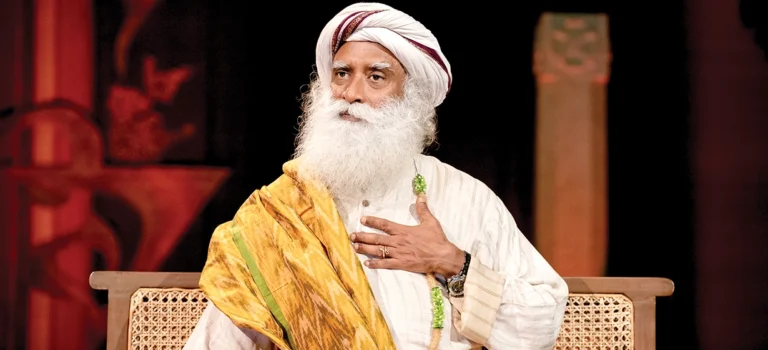
Sadhguru: Even today, with a population of 7.2 billion people, we still have enough resources on the planet if we learn to live sensibly. But that sensible living has not come in most of humanity. That mentality and attitude towards life has always been there, but the scale and our capacity to do things that has gone up phenomenally today. Even with the caveman, whoever was strongest tried to gather more. Even if the meat rotted in his cave – he did not have a refrigerator – it didn’t matter, he had to store more than others.
Once you think of economics and are in greed mode, scarcity is a big thing in your mind. Once scarcity is a big thing, saving yourself is a big thing. But you never understood that life cannot be saved, it can only be used, and whatever you use, whatever you throw out will be your quality. If you save your joy, at the end of your life no one will take account, “She saved every bit of joy in her. She’s the most joyfully dead.” They will say, “This horrible creature never even smiled in her life.” But if you dispensed your joy and love every day, people would say, “Oh she was a joyful and loving being.” If you save all of it, that will not be a quality. What you save will never be your quality. What you dispense will be your quality.
In nature, everything is trying to dispense itself to the maximum extent and to its fullest capability. Only human beings are trying to save. Because they save so much of their joy, their love and everything that is valuable to them, they have to do all kinds of activities to splurge. If human beings could just sit and be absolutely joyful, they would not be thinking of their evening wine or whisky. If every moment, they were bursting with their joy, love and ecstasy, would they be looking forward to drink, sex or anything? They would be just fine. Such thoughts would not even enter their minds.
There is no point trying to save this life. You can’t take it anywhere. You have to allow it to go into its full blossom now, here, not somewhere else. So do not try to save the fragrance of life. Those who save will stink. Those who throw it out, they will be fragrant beings.
Ranked amongst the fifty most influential people in India, Sadhguru is a Yogi, mystic, visionary and a New York Times bestselling author. Sadhguru has been conferred the Padma Vibhushan by the Government of India in 2017, the highest annual civilian award, accorded for exceptional and distinguished service. He is also the founder of the world’s largest people’s movement, Conscious Planet– Save Soil, which has touched over 4 billion people.
WE often think domestic and family violence happens somewhere else, to someone else. Yet every week, another story reminds us that violence does not recognise culture, profession, education, age or social standing. It can affect anyone, anywhere, at any time.
As communities, we have made important progress in raising awareness, but our work is far from over. Conversations around domestic and family violence must continue, not only during awareness campaigns, but every day. The more we speak openly, the more we reduce stigma, encourage understanding, and let victim-survivors know they are not alone.
Community leaders, faith leaders, cultural organisations and everyday members of our communities all have a role to play. Creating safe spaces for people to seek help, believing those who disclose abuse, and connecting them with appropriate support services can make a profound difference. Protecting those at risk is not the responsibility of one person or one organisation. It is a responsibility we all share.
One question continues to surface whenever domestic violence is discussed: “Why didn’t they just leave?” The answer is rarely simple. Many victim-survivors experience what is known as a trauma bond, a powerful emotional attachment that can develop through repeated cycles of abuse, remorse, affection and hope. This can be compounded by fear, financial dependence, concern for children, cultural expectations, isolation, or uncertainty about what comes next. Leaving is often one of the most dangerous and difficult stages of an abusive relationship, not the easiest.
My first film, Seema, explored the cycle of violence and the hidden realities many victim-survivors endure. The cycle often begins with rising tension, followed by an incident of abuse, then apologies, promises to change and a period of calm before the pattern repeats. Through storytelling, my hope has never been to judge those who remain, but to help others understand why leaving is often far more complex than it appears.
Compassion is one of the most powerful tools we possess. Rather than asking why someone stayed, perhaps we should ask how we, as families, neighbours, colleagues and communities, can better support those finding the courage to leave, rebuild and heal. Every conversation that replaces judgment with understanding has the potential to save a life.
The strongest communities are not those without problems, but those willing to face them together.
Calcutta, 13 January 1980 by Shrii Shrii Anandamurti
We have been discussing the Giitá. In order to delve into the essential import of the Giitá, it was necessary [in previous discourses] to start with an introduction. About the Giitá it has been said, Yá Bhagavatá giitá sá Giitá [“That which has been sung by Bhagaván, the Lord, is the Giitá”]. Here the question of “Krśńa” arises. We have already examined some of the meanings of “Krśńa”. Moreover, it has also been shown that all those different meanings of the term converge at one point.
However, the word has other [than etymological] meanings also. For example, the terms bhagaván and “Krśńa” are identical in meaning: they are equivalent terms. What then is the meaning of bhagaván?
Bha + Ga + Suffix
In Sanskrit there are certain words which we use in a short form but which have profound meanings. The word bhagaván has two primary meanings. One of them is bha, which means bheti bhásyate sarván lokán [“that which illumines all the strata”].
What does loka mean here? In Bengali, lok means a man, a person; when we say Ekjan lok yácche, it means “A mánuśa [person] is going.” (In Marathi also the word mánuśa occurs, while in Assamese it is mánuh.) But in Sanskrit, loka has a different connotation; it stands for “layer” or “stratum”. So the sapta [seven] loka means seven layers of manifestation. These seven layers cover the entire continuum from Brahmá to the crudest matter – Ábrahmastamba.
(Here the term “Brahma” does not stand for Brahma the Absolute, the Supreme Being. It is Brahmá which the term “Brahma” denotes here. “Brahmá” means “the Creator”. In the case of indeclinable words and adjectives the á is omitted, giving place to simple a. For example, we donʼt call a tree having many [bahu] branches [shákhá] a bahushákhá, but bahushákha. The á is dropped. Thus here the word “Brahma” is not Brahma the Absolute but Brahmá. We say Ábrahmastamba – “From Brahmá the Creator to a blade of grass,” everything is permeated by Brahma.)
Now, this Brahmá the Creator is not a separate entity. Brahma + a = “Brahmá”. A means “creator”. You are making a doll out of a lump of clay, you are creating something – the acoustic root of this very act of creation is a. When Brahma is engaged in the act of creation, the a is added to Brahma and we get “Brahmá”. In other words, when the Supreme Entity Brahma is creating anything, He is Brahmá. (Take for instance Rambabu. He is a school teacher. Rambabu and the teacher are not two different beings. When Rambabu is in school with a cane in his hand, people call him a teacher. The two are not separate beings.)
Every entity in creation, from the subtlest stage to the crudest stage, is alive. Everything is vibrant with life. But why is everything alive, what fills everything with life? It is the sheer joy of living. If there were no joy, no delight, in living, no one would have lived. They would have left this world, by one means or other. Why then are they here? Because they get joy in living here. Else they would not have stayed on. Bhásyate sarváń lokániti – “The seven lokas shine with His light,” reflect the brilliance of His effulgent being; and His glory makes everything sparkle with joy. Delighted with that luminosity, the hearts of all are dancing in joy. They want to live, to dance, to work, to see, to achieve, and to reach Parama Brahma in order to merge in Him with joy. To live like this – this very way of living – is ánanda [bliss]. The world has its being only because of this ánanda.
And if this ánanda had not been there, the world also would not have existed at all.
Na vá are patyuh kámáya patih priyo bhavati;
Átmanastu kámáya patih priyo bhavati.
Na vá are puttrasya kámáya puttrah priyo bhavati;
Átmanastu kámáy puttrah priyo bhavati.
Na vá are sarvasya kámáya sarvaḿ priyaḿ bhavati;
Átmanastu kámáya sarvaḿ priyaḿ bhavati.
“Why is my husband so dear? Because of the pleasure that he gives me. My husband is dear to me not because he is my husband as such. Why do I love my son? Because I get pleasure in loving him. My son is dear to me not because he is my son as such. And regarding the world, nothing in the world is loved for its own sake, but for the pleasure I derive from loving it.” Similarly, why do people want to live? Because they find pleasure in living, not because of any inherent attraction of the world. When they no longer find any joy in the world, then they no longer want to live. They want to leave the world. People often think, “Iʼd like to leave all this” – meaning that they are no longer finding in the world any joy in living. This is the psychology of human beings.
Thus the meaning of bha is bheti bhásyate lokán – “that which has infused the joy of living throughout the seven lokas, as a result of which everybodyʼs heart and mind has become illuminated”.
And ga means Gacchati yasmin, ágacchati yasmát [“One who comes also goes”]. Hence ga is used to denote that from which everything in the world comes, and into which everything in the world ultimately dissolves.
By conjoining bha and ga we get the word bhaga. Bhaga + the suffix matup in the first person singular form gives bhagaván.
Bhaga
Bhaga stands for six different attributes collected together – a synthesis of six attributes. One of these attributes is aeshvarya, which means “occult power”. (In Latin, if we wish to say “originating from cult”, the letter “o” is placed before “cult” as a prefix; and according to the rules of English grammar, “o” being a light vowel, the consonant coming immediately after gets doubled. In the word “requisition” we find “req”, but in the word “acquisition” we find that a “c” has been added after the “a”. In the same way, what a person gets in return for “cult”, the wealth he gets in return for cult and as a result of his devotion to ideals, is called “occult power”, which in Sanskrit is expressed by the term aeshvarya.) The presence of all the different kinds of aeshvarya in a person is indeed one of the attributes of bhaga.
The second attribute is pratápa (administration), that is, the person has shásana [capacity to rule]. Everyone obeys the person, either out of fear or out of love.
The scriptures say that everything in the universe obeys the Supreme Entity. But why do they obey? Well, there is no other way but to do so. It is out of fear of Him that the wind is blowing. If there were no such fear, the wind might think of taking a little rest. In Sanskrit, one of the names for the wind is anil. Nil means “fixed”, “static” – that which is stuck in a particular position without movement – and anil means just the opposite. The Supreme Entity has pratápa. Bhiiśáhasmád váyuh pavate – “Out of fear of Him does the wind blow” – with the feeling that its movements are constantly watched from behind by a pair of eyes. Bhiisodeti súryah – “Out of fear of Him does the sun rise on time.” Not even a slight deviation is allowed. There is no scope for thinking “Today is Sunday, let me get up a little late.” It must rise at the right time. Bhiisáhasmádagniscandrashca – “Out of fear of Him, Agni [fire-god], Indra [king of gods], Candra [moon-god], Varuńa [water-god], all are going on with their allotted duties.”
The fire-god is performing its duty of burning; else the Supreme Entity will be displeased.
The word indra has different meanings, one of which is “big”, “superior”. Another meaning is “the shál tree”. That is a kind of very tall tree. In Sanskrit the shál tree is also called indra. It grows in plenty in the district of Bankura, and there is a particular place named Indrapur or Indpur, which means “the land of big shál trees”. Similarly, big kúpas [wells] are called indrakúpa. In Prákrta, it is indra-u-a; and in old Bengali it is indar-u-a, which in modern Bengali has come to be indárá. The same word in the rural dialect of Bihar has taken the form of inárá. All these variations have come out of the orginal indrakúpa.
Another meaning of indra is “energy” – light energy, sound energy, electrical energy, etc. If we know the nature of these energies, we can put them to work. Even these energies follow a course of regularity in their duties. In fact, such regularity is obligatory or binding on them. They cannot do otherwise, because of fear of the Supreme Entity. Even death cannot go against the law. Mrtyur dhávati paiṋcamah – it must appear before one at the scheduled time. Each and everyone has to face death, as directed by the Supreme Entity Itself. That is why the Supreme Entity is called bhiisańa – “the terrible”.
Thus the first attribute of bhaga is aeshvarya, occult power, and the second is pratápa, commanding authority (in pure Bengali it is dápat and in Sanskrit pratápa).
Now we come to the third attribute – yasha. When the good qualities of a person are publicly acclaimed, that is yasha. (When those qualities are praised in rhythm, that is yashokiirtana, which should be sung not in a short and subdued way, but in a long and protracted tone, so that others may hear. Kiirtana is not something to be sung mentally.) Yasha, again, is of two types – positive and negative. If you are loud in speaking ill of others, that also is yasha, a negative yasha. So the third attribute of bhaga is this yasha, which, as we have seen, can be either positive or negative. It has been seen that whenever the Divine Entity has descended on the earth, one group of human beings has stood in its favour, while an opposite group has opposed it. Kansa was against Krśńa; Ravana was against Rama. (It is rather strange – either philosophically or politically – that the initial letter of each party is the same as the initial letter of the opposite party.)
There is a story in the Rámáyańa. Once Hanuman had managed to sneak into the private room of Ravana in the guise of a Brahmin. His plan was to steal Ravanaʼs death-dealing weapon, the mrtyuváńa. Seeing him, the ladies of Ravanaʼs family said, “O revered one, please tell us, who will win the battle being fought between Rama and Ravana?” In reply, Hanuman, while jumping to escape, said: “Well, the winnerʼs name starts with the syllable rá.” The ladies took that to mean Ravana. But the name of his opponent also began with rá. Similarly, yasha can mean either positive yasha or negative yasha. Whenever the world is at the threshold of a great ideal, such situations will occur. The entire intellectuality, the entire world opinion, will be polarized. When polarization does not take place, and all movements are centred round the equator, that should be looked at as something very common, not at all as anything of importance, but a mere cosmetic make-up. That is not gold, nor is it silver. It is simply a piece of tinsel coated with gold or silver. But when you see that polarization has become complete, you should know that something big is going to happen.
The fourth attribute is shrii. The word shrii is a combination of sha, ra and ii. Sha is the acoustic root of rajoguńa [the mutative principle]. Sha helps to make a person active, and helps the personʼs energy, intelligence and learning to become manifested. Whatever one does, one does with the help of sha, through the expression of rajoguńa. In the absence of rajoguńa, one cannot perform any action despite the potentiality one might be possessing. One will simply be an idiot of idiots – a burden on society. There are people who have intelligence, learning and energy, but who are like decrepit bulls, good for nothing. Again, there are people you will come across who are so lethargic and dilatory that they cannot accomplish even in days a piece of work that could normally be done in a few hours. They are practically worthless. They lack sha.
Next is ra, which is the acoustic root of energy. We have spoken earlier about energy. In Sanskrit, indra means energy – for example, light, sound, electricity. Where sha, that is, the rajoguńii vrtti [propensity], and ra, that is, energy, are both present, success is assured. Many may have a mind to do something, but do not have the requisite capability to do so. The desire is there, but no effective skill. Obviously, ra is absent here. Where both sha and ra are present we get shra, and adding the feminine uniiśa gives shrii. It is the legacy of India to prefix shrii to oneʼs name, because everybody wants it. Shrii means “charm” or “fascination”. You must have seen objects that instantly draw your attention. That means the particular object has an attractive force within it. There are some people who are not particularly learned or intelligent; nor are they adept at public speaking; but they are very good conversationalists. People gather round them eagerly to enjoy their pleasantries. That too is a kind of shrii. There are people who are not conversant with the intricacies of music, but they sing so melodiously that others rush to listen to them. That is the personʼs musical shrii. Hence that singer may be honoured with the title giitáshrii. One who possesses this quality of shrii, this charm, this fascinating faculty, is said to have the fourth quality of bhaga.
The fifth attribute is jiṋána. What is jiṋána? You read a book and retain in memory what is there in the book. That is not jiṋána. The real meaning of jiṋána is the subjectivization of objectivity. Today you read and tomorrow you forget. Those among you who have passed the MA examination, if asked to undergo the same examination right now, will not be successful, simply because you have forgotten everything, like food that has been digested without a trace. That indicates that that was not the real jiṋána. Real jiṋána – genuine knowledge – implies what has been learned in the past is retained even today and, when needed, can be reproduced as it was. But if there is distortion, if what was learned is not retained, that is not jiṋána. What remains permanently is the real jiṋána. Bookish knowledge, or knowledge obtained through hearsay, has no sound basis; it is constantly changing. That is not knowledge. But those elements of the information which are beneficial, and were acquired for the permanent welfare of people, are called vijiṋána [science]. Knowledge about the Supreme Entity is also called science, because that also is conducive to human well-being. That is why our scriptures have this to say about real knowledge:
Átmajiṋánaḿ vidurjiṋánaḿ jiṋánányanyáni yánitu;
Táni jiṋánávabhásáni sárasyanaeva bodhanát.
[Self-knowledge is the real knowledge – all other knowledge is a mere shadow of knowledge; and will not lead to realization of the truth.]
To know oneʼs own self, or self-knowledge, alone is true knowledge. Self-realization, that is, where the subjectivity and the objectivity coincide – there we say it is knowledge. There we have reached the pinnacle of knowledge. This is jiṋána.
The sixth attribute is vaerágya [renunciation]. Vi – rańj + ghaiṋ = virága. Rańj means “to colour”. Adding lyut́ to the root rańj we get raiṋjana [dyeing], and adding the suffix śak to rańj we get rajaka, that is, one who colours clothes with raiṋjak (rańj + ńak [dye]). Hence a rajak is one who dyes clothes. The root verb vi-rańj, on the other hand, means “to remove colour”. Thus virága is that which removes colour. And vaerágya is the abstract-noun form of virága.
Whatever things the people of this world are running after, whatever they think of or see, they focus on the colours. They see them, think of them. But what they perceive is the outer colouring of the objects. Say there is a black fruit hanging high up in the tree. Its very colour tells you it is a jám.(1) When we see the colour, we get attracted. But a being who lives in the world but is not attracted by anything of the world – whose mind is unaffected by the colours of the world – is a vaerágii; and that mental bháva [stance] is vaerágya.
Now, these six attributes combined are what is known as bhaga. And one who has this bhaga is bhagaván. Bhaga + matup = bhagaván. [This bhaga is the second of] the two meanings of bhaga, as I have explained to you.
Calcutta, 13 January 1980
Basava Samiti Asia Pacific hosts – Basava Jayanti Celebrations 2026 Uniting Communities Across Australia and beyond
Basava Samiti Asia Pacific Ltd (BSAPAC) proudly celebrated Basava Jayanti 2026 across its chapters in Brisbane, Sydney, Adelaide and Perth, bringing together hundreds of community members to honour the timeless teachings of Guru Basava.
The celebrations reflected the organisation’s commitment to promoting equality, dignity of labour (Kayaka), selfless service (Dasoha), ethical leadership and community harmony. Each chapter showcased a vibrant program of Vachana recitals, devotional music, dance, drama, children’s performances, Learn2Grow presentations, awards and inspiring keynote addresses.The events were attended by Mayors, Councillors, government representatives, multicultural leaders, sponsors, volunteers and families, highlighting the growing recognition of BSAPAC’s contribution to strengthening multicultural communities across Australia.
This year’s celebrations also recognised the outstanding achievements of volunteers, youth and community leaders whose dedication continues to advance the charity’s mission to Engage, Educate, Empower and Enlighten. Through Basava Jayanthi and other events that the charity holds across the year, they aim to create a more supportive environment within families and the wider community where everyone can experience a profound sense of growth while contributing positively to society through their actions and values, values that Basava Samiti wishes to promote.
In addition to fostering good values and actions, the charity also focuses on creating opportunities for intergenerational learning. This encourages the sharing of experiences and perspectives of all people, no matter their age, creating a stronger sense of community and ensuring that important values are passed on in meaningful ways.
Hon Mr. Ramjan Darga, Chief Advisor of BSAPAC provided an overview of the Charity’s advancement and future positioning of Guru Basava’s values and adoption. It also echoed the fabulous achievement of Mrs. Ammara Shaheer, Finalist Australian Not for Profit Technology Volunteer of the Year Award 2026 held on the 8 May 2026, at Telstra Customer Insight Centre, Melbourne. We also congratulated her recent appointment at on the large consulting firms as the Data Analyst – Associate due to the rich experience she gained via the Learn2Grow Program of BSAPAC.
Driven entirely by volunteers and supported by generous sponsors and community partners, Basava Jayanti 2026 demonstrated the growing impact of BSAPAC in preserving cultural heritage while building an inclusive, future-focused society. The celebrations once again affirmed that Guru Basava’s universal message of compassion, equality and service continues to inspire communities across generations and cultures.
Mrs. Girija Karekal founder and Executive Director is grateful to the contribution of Mrs. Nivedita H E (Brisbane Chapter), Mr. and Mrs. Tejaswi Karekal (Adelaide Chapter), Mr and Mrs. Ashok Patil (Perth Chapter), Mr. Jayaveer Prasad (Sydney Chapter), Mrs. Vijayalakshmi Boya (Event Manager) and their supportive teams across the continent. The celebration witnessed an overwhelming response from the community, with families, elders, youth, and children coming together.
Brisbane – 13 June 2026, Moorooka Community Centre
The Basava Jayanthi event, held on 13th June 2026 at in Brisbane, was an interactive & engaging community event that brought together community members and distinguished guests, including Cr Sarah Hutton, Cr Steve Griffiths, Mr Ramjan Darga, Mr Umesh Chandra & Mrs Usha Chandra, Dr April Chrzanowski who was the guest speaker during the Ask Me Series of the Learn2Grow Program, and Federation of Indian Communities Queensland, President Dr. Preeti Suraj, for an evening of learning, reflection, and celebration of the birth anniversary of Guru Basava.
Mr. Siddesh Karekal, and Mr. Saketh Manda, students from University of Queensland and Queensland Academy of Science, Mathematics and Technology anchored the program. The senior most suburban citizen Ms. Ann who turns 90 years later in the year distributed the certificates along with Cr Hutton.
The highlight of the event was featured, where attendees were asked to listen to different scenarios, reflect on their own experiences, and answer the question, “What would Guru Basava do?”. The session highlighted the teachings and philosophies associated with Guru Basava, focusing on values such as equality, compassion, and ethical living within real life scenarios that could be faced. This session encouraged meaningful dialogue and provided a deeper cultural and spiritual understanding from young and old across the community. We are grateful to the multicultural participation from different ethnicities.
Sydney Chapter – 13 June 2026, Ermington Community Centre
Cr Charles Chen, Deputy Lord Mayor | Epping Ward, and the office of Lord Mayor Cr Martin Zaiter delegate Cr Sreeni Pillamarri. Company Secretary Ms Alice Shore represented the board of directors. A wide variety of vachanas were sung by the group, several forms of Vachana Abhinaya and dances. Mrs. Nandini Chandrashekaran from the Natwar School of Arts and Dance, Ms. Sinchana Bharadwaj and several other emerging dancers performed and brightened the atmosphere. Mr. Dhayanand Modalee and Mr. Yogesh Khattar, from the Indo Australian Sanathan Society were recognised for their support to BSAPAC.
Perth Chapter – 9
May 2026, Morley
Sports and Recreation Centre
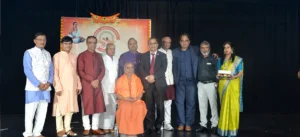
The event was further honoured by the presence of distinguished dignitaries including Consul Sri Naresh Kumar, Dr. Jags, MLA Riverton, Dr. K.B. Nagur, and Sri V.S. Teli, whose participation added great significance to the celebration. The auspicious occasion was blessed by the gracious presence of Poojya Dr. Shraddanand Swamiji, whose enlightening words on the timeless philosophy and values of Jagajyoti Basavanna inspired the gathering deeply.
It was also a privilege to have the Presidents and representatives of ISWA, WAKS and VTCS join the event, showcasing the unity, harmony, and collaborative spirit within the broader community. The event featured devotional programs, cultural performances, inspiring speeches, and community interactions that beautifully reflected Guru Basava’s teachings of equality, compassion, Kayaka, and Dasoha.
Adelaide Chapter – 16 May 2026, Eliza Hall, Prospect
These Chapters, namely the Adelade, Melbourne & Perth Chapters, celebrated Basava Jayanthi with a wide variety of participation from all over their communities in different areas; singing vachanas, dance performances, instrumental performances, and even a recitation from Shri Dr. Shradhanand Swamiji from Karnataka, India in Adelade’s Basava Jayanthi! Mr. Rajendra Pandey, Mr. Raghavendra Kulkarni, Mr. Narayana Rai, Mr. and Mrs. Ashok Patil (Perth Chapter President), Mr. and Mrs. V. S. Teli graced the occasion. The highlight of the program was the children’s drama on the integrity of tax and utilisation of Govt funds.
Every part of the Basava Jayanthi event in the different Chapters of Basava Samiti throughout Australia reflect the truly incredible interconnectedness that they have, no matter how far apart these chapters might be. As an ACNC registered Charity (2020) BSAPAC has connected and united communities following the values of Guru Basava across Australia and beyond. We look forward to bringing the communities of all Chapters of Basava Samiti within Australia more exciting events such as Basava Jayanthi in the near future!
The 105th Birth Anniversary of our beloved Baba Shrii Shrii Anandamurti ji (105th Ananda Purnima) was joyfully celebrated on 1st May 2026 at the Jagriti in Kingston, Brisbane, QLD, Australia.
The celebration began early at 5:00 a.m. with Paincajanya, followed by Prabhata Samgiita, Kirtan, meditation, and the reading of Ananda Vanii in various languages. In the afternoon, a three-hour Akhanda Kirtan was held from 3:00 p.m., accompanied by collective sadhana, Baba’s video presentation, and another Ananda Vanii reading.
The event concluded with a delicious variety of food and a special cake, shared in a spirit of love and togetherness. Everyone deeply appreciated the strong spiritual vibration and the feeling of oneness. Margiis from both Brisbane, Toowoomba and Maleny participated and joyfully enjoyed the program.
Acarya Krsnapremananda Avadhuta
Mobile +61422823341
Since the day man discovered science, it has helped him immensely in improving his life and will continue to do so in future as well. However, in spite of all the scientific developments done over the years, it has so far not been able to achieve anything in the dimension of what health is. It may sound strange, but that is the fact. Because the whole work of science has been in the dimension of what disease is, so when you question a physician about diseases, he would give you various definitions, but the moment you ask him what health is, he tries to deceive you and says that when there is no disease, then whatever remains is health. This is where science lags behind, making way for Spirituality that gives complete clarity to mankind on various issues pertaining to mental and physical health.
When an individual falls sick, the vibrations of the disease enter the soul, and that is why often the disease persists even after the body has been given the medical treatment and is cured. This persistence of the disease is there because of its vibrations which echo all the way to the innermost being of the person and for which medical science has no solution so far. It must thus be accepted that medical science will always remain incomplete without meditation and hence it will be able to cure the disease, but we will not be able to cure the patient.
Meditation is found in all cultures, religions and regions, both west and east. The standard dictionary definition is ‘thinking deeply or spiritually about a subject.’ Yet it is different from ordinary cognitive processes – being more than relaxation, concentration, contemplation or posturing. It is a technique or method of freeing one’s mind from emotions and other distractions to allow deeper insights into us and the world around us. The ultimate goal is illumination, and while this may not be fully achieved, along the way peace and relaxation, quietening of emotions, insights and perspectives may be accomplished.
It is now being widely accepted all over the world that stress or mental tension is the number one killer because it causes high blood pressure, heart diseases, asthma and many other psychosomatic diseases and even cancer if its duration or frequency is more than an individual can withstand. But it is not adequately realised even now that the modern system of medicine has no lasting remedy or real cure for it, for mental tension is generally caused not by physical fatigue but by mental factors.
If a person becomes increasingly suspicious of the motives of others, exaggerates his own importance and the things he has to do, frequently feels sad thinking that certain persons have slighted or neglected him, has too much expectations from others, has the habit of being over-critical of others, feels even small disappointments as too big, is too serious for keeping the deadlines of all his assignments and is always rushing and running to do things, or if anxiety dominates his thoughts, or he has the ambition to do more or have more than he has the ability to do or have, then no medicine can save him from Stress.
Such a person will have his anger, frustration, hatred or anxiety bottled up and would, ultimately, burst out or be weighted down. Medicines can keep these tendencies in check only for some time by affecting his consciousness or by producing, in him, a state akin to sleep, but medicines cannot free him from these tendencies or personality-traits which are the real cause of Stress. Under such conditions, the only antidote to man’s negative mental-traits or thoughts is the mental repetition of positive thoughts that acts as laser therapy at mental level.
Not only does it cure a person of negative or harmful tendencies that lead to Stress, but it implants such thoughts that generates feelings of love, peace, harmony, faith and self-respect. This meaningful repetition of positive thoughts that raises one’s consciousness and brings about a qualitative and attitudinal shift is called Meditation. It is only this and no other remedy that really works. To tell the truth, there is no medicine to cure a person of his negative personality-traits for a considerable period of time; except Meditation. That is why it is now being called future medication.
A Night of Pure Magic: Vijay Kumaran and Kavya Kumaran Mesmerize Sydney at The Liverpool Powerhouse
In a breathtaking display of artistic synergy, musical powerhouse Vijay Kumaran joined forces with the sensationally talented Kavya Kumaran last weekend to deliver a spellbinding, sold-out performance in Western Sydney.
Hosted at the spectacular Powerhouse Theatre precinct in Liverpool, the highly anticipated concert turned into a grand, unforgettable celebration of South Asian musical heritage.
From the moment the lights lowered, the venue was charged with an electric energy. The show, uniquely structured to bridge generations of musical styles, offered a masterclass in versatility, effortlessly guiding the audience from soulful classical melodies to high-octane modern blockbusters.
The evening opened by paying homage to the deep, classical roots of the subcontinent. Vijay and Kavya Kumaran captivated the audience from their very first notes, displaying immaculate vocal control and an undeniable onstage chemistry. The pristine acoustics of The Lighthouse allowed every subtle nuance of their harmonies to resonate deeply with the crowd.
The duo began with a selection of deeply moving, traditional songs that wrapped the auditorium in a warm layer of nostalgia. Seamlessly pivoting into the rich, rhythmic world of Bollywood songs, the performance quickly shifted the atmosphere from intimate contemplation to collective, soaring euphoria. Backed by a phenomenal live orchestra featuring master harmonium and percussion players, the crowd was soon clapping in unison, completely swept up in the spiritual cadence of the music.
Just as the audience was floating on classical nostalgia, the Kumaran duo completely transformed the energy of the room. The second half of the concert exploded into a vibrant, high-energy showcase of Bollywood chart-busters and contemporary South Asian anthems.
Kavya Kumaran completely commanded the stage, injecting a fresh, youthful, and magnetic dynamism that had fans instantly dancing in the aisles. Together with Vijay’s powerful, charismatic vocal delivery, the setlist became a non-stop barrage of rhythmic hits. The seamless blending of traditional instruments with modern Western beats and heavy basslines brought a stadium-like atmosphere to the Liverpool venue, proving the duo’s exceptional ability to span multiple genres effortlessly.
Beyond the technical perfection and vocal brilliance, the concert stood as a beautiful testament to the power of cultural unity. By drawing together diverse pockets of the Indian and wider South Asian diaspora under one roof, the night became more than just a musical gig—it was a vibrant assertion of identity and community pride in the heart of Liverpool.
As the final notes of a high-power encore rang out to a resounding, roaring standing ovation, attendees left The Lighthouse carrying the lingering glow of an extraordinary evening.
For Sydney’s music lovers, Vijay and Kavya Kumaran didn’t just put on a concert; they created an evening of pure, undeniable magic that will be remembered for years to come.
Dakshinamnaaya Sringeri Sri Sharada Peetam Aham Brahmaasmi Foundation
Vedanta Shravanam Program Held In Brisbane, Queensland, Australia On 4th Of May 2026
Venue: Vedanta Centre, Springfield Lakes, Brisbane
Aham Brahmaasmi Foundation, functioning under the guidance of the Ubhaya Jagadgurus of Dakshinamnaaya Sringeri Sri Sharada Peetam, was established in 2022 with a vision to propagate and disseminate the teachings enjoined in the Vedas to mankind across the globe.
The Australian programs, with the blessings of the Ubhaya Jagadgurus, were launched in November 2024. The planning for the programs is done with the guidance from Chityala family and supported by Sri Neelakantan Ji and Bala Balachandran Ji of Melbourne and Babu Mahadevan Ji of Sydney. Chityala family have been touring with the vidwans and supporting the efforts of various cities in this journey of Advaita Vedanta Shravana.
Thus far, 17 programs have been completed across Australia, at various centres, in Sydney, Melbourne, Canberra, Brisbane, Perth, Adelaide and West Melbourne. The topics covered include Advaita Vedanta Saramsa from Prakarna Granthas, Puranas and Ithihasa. Three notable, highly educated and well-trained Vidwans -Dr Vishwanath Ji, Dr Arjun Bharadwaj Ji and Dr Pushkar Pujari Ji have been delivering these sessions. The Vedanta Shravana sessions are intended to be held biannually in Australia, typically in May and November.
Programs have been well received by the Australian community and the summary of the Vedanta Shravana session held on 4 May 2026 in Brisbane is provided below.
The Astikas of Brisbane having experienced the blissful session of Vedanta Shravanam in November 2025 eagerly awaited the arrival of Vidwan Vishwanath Ji to listen to the exposition on Guru Mahima and Sadhana Panchakam and turned up in large numbers. Vidwan Vishwanath Ji spoke eloquently on the topic for 4 hours, spanned over two sessions. His knowledge of the subject and his ability to articulate it with anecdotes from our daily life made sure that the Astikas were able to appreciate and understand the import of the subject matter.
The program commenced with Guru Vandanam and an invocatory song on Goddess Sharadambal.
Providing a background for the discourse, Vidwan Viswananth Ji explained that ‘Veda’ literally meant knowledge and ‘Anta’ meant the end or conclusion and accordingly ‘Vedanta’ is the concluding portion of the Vedas, which is the Upanishads. Shravana meant listening and not merely hearing. Hearing and imbibing what is heard is listening. The Vedanta, Upanishads, lays down the path for mankind to follow that enables the seeker to reach the goal of human life, which is Selfrealisation. This path has stood the test of time and has been followed by our ancestors with proven results.
Given one’s limited life span, it would be efficient use of our time ifwe focussed on the proven path as laid out in the Upanishads. To drive home this point, Vidwan Viswanath Ji narrated the experience of Maharishi Bharadwaj who initially sought a life span of 100 years to study the Vedas and thereafter sought repeated extensions to complete the study. However, despite the multiple extensions to his life span, the Maharishi had only barely scratched the surface of the Vedas.
To listen to the Upanishads and follow the path to achieve the goal of selfrealisation, one needs to prepare oneself for this endeavour. These pre-requisites are essentially what the talks were about -Guru Mahima and Sadhana Panchakam.
While to ask who a Guru is would be a subjective question, it would be more appropriate to understand the true attributes of a Guru. In the Bhagavatam, to a question on the Guru, the answer provided is that the Atma is the Guru for the Atma. Although it may sound illogical, it would make sense if one were to break down the word Guru into Gu and Ru. ‘Gu’ means ignorance of the Self and ‘Ru’ means that which stops the ignorance from re-emerging. One who guides us to realise our own Self is indeed the Guru.
Once a true aspirant seeks the refuge of a Guru, the pathway to Self-realisation is ensured, as a result of the Guru’s Kripa. All the knots of ignorance are removed by the grace of the Guru.
The Vivekachudamani, written by Sri Shankara Bhagavatpada, states that the Guru should be a Shrotriyah ( one who is firmly established in t]:ie Vedas and Veda Dharma), Avrjinah (free from sins), Akamahatah (not driven by desires and attachment), Brahmavittamah (Knower of Brahman), Brahmani uparatah (always in state of Brahma Jnana), Shantah (calm), Nirindhana iva analah (self-illuminating), Ahetuka daya sindhuh (ocean of compassion without any reason), Anapeksah (having no demands), Banduh aanamatam sataam (a helpful friend to a true seeker).
To such a Guru, a true aspirant must approach with humility and seek of Him Moksha (liberation) from Samsara Sagara ( ocean of transmigration). To a Mumukshu (true seeker ofMoksha), the Guru and the Paramatma are the same -the essence of Advaita. A Guru guides a true aspirant through the maze of accumulated Karma to Moksha. Vidwan Vishwanth Ji gave the analogy of how the Maarjaala kishora (kittens) are taken care of by the mother cat and how Markata kishora (baby monkeys) hold on tightly to their mother to explain the true nature of the relationship that exists between a Guru and a true aspirant.
As Sri Shankara Bhagavatpada states in Bhaja Govindam lyrics, Guru chamambhuja nirhbharabhaktah samsarad achirad bhava mukthah, a true devoted aspirant who holds on to the feet of the Guru and follows His instructions is sure to be blessed with Moksha.
Concluding the discourse on Guru Mahima, Vidwan Vishwanath Ji said that Atma Vichara is only possible through the grace and guidance of a Guru.
The second session, which was on Sadhana Panchakam, commenced with Vidwan Vishwanath Ji quoting from Sri Shankara Bhadgavatpada’s Vivekachudamani to emphasise the privilege and rarity of human life and how only humans are endowed with the ability to realise their true self. That being the case, it would be unwise of one to not utilise this life-time opportunity to follow the path of self-realisation and pursue the goal of attaining Moksha, which literally means release. Keeping this in mind, the logical follow-up question would be as to how go about this quest -the ‘what’· and ‘how’ of this release and what are the ‘dos and don’ts’ involved in this. The answer to this lies in the understanding that one is bound by the shackles of Samsara and, in the process, gets trapped in the continuous cycle of birth and death. We get caught in the trappings of the mundane existence and transient pleasures to the detriment of engaging in Atma Vichara and following the path to Moksha. It is attachment to the transient pleasures that causes bondage in Samsara. Having understood this, the question arises as to what is the way out?
The pathway is provided in Upadesha Panchakam also known as Sadhana Panchakam, compiled by Sri Shankara Bhagavatpada, which lists 40 tenets of principled living that, when followed, will lead one to Moksha. This is a proven and tested manual for living and serves as a tool to enable one to establish themselves in the path of self-realisation, which will eventually lead to Moksha.
The tenets that are prescribed include studying the Vedas regularly and imbibing them in the daily life,_ performing Nitya Karma sincerely to get the proper mind set, performing all activities as a service to God to get rid of the sense of doership, not indulging in Kamya Karma and detaching oneself from the objects of pleasure. Attachment can be conquered if one is able to identify defects in the objects of pleasure, which are transient in nature.
This can enable one to progress in the path of Atma Vichara. A striking analogy would be to liking it to a farmer who is constantly on the lookout for weeds in his farm and removing them as, although the weeds may apparently look pleasing to the eye, they are detrimental to the crops. Keeping the company of the good, having an unshakeable faith in God like Prahlada, approaching a Guru who is established in Truth and following the teachings and guidance of the Guru, listening to the Upanishads and contemplating on them and taking recourse to them when confronted with conflicting thoughts further enable a spiritual aspirant to make progress in the path of Moksha.
Abandoning the ego and controlling the sense of taste, one should take necessary care of one’s body, without pampering it, and treating all food as Bhiksha. One should keep one’s tongue in check, both in matters relating to food and speech. Being content with oneself, being indifferent to the pairs of opposites (heat and cold, pain and pleasure etc) and dwelling in solitude further establishes one on the correct path. It is by following all the tenets, which are Sri Shankara Bhagavatpada’ s Upadesha as the Sadhana to be undertaken by a spiritual aspirant, that enables a true aspirant to achieve the ultimate goal of life, which is self-realization or Moksha.
The conclusion of the second session was followed by a Q&A session in which the members of the audience posed their questions and doubts to Vidwan Vishwanath Ji, who provided valuable responses.
The Vedanta Shravana program was very well received and appreciated by the audience of Brisbane.
The program concluded with a vote of thanks by the organising team thanking Vedanta Centre, Brisbane, and Swamiji Atmeshanandaji for co-hosting the Vedanta Shravana program and providing the venue for the program and accommodation for the visiting Vidwan Sri Vishwanath Ji, Aham Brahmaasmi Foundation and Dakshninamnaya Sringeri Sri Sharada Peetham for taking the lead in disseminating the teachings of Sri Sankara Bhagavatpada and making this knowledge of Vedanta available to us here in Brisbane through eminent Vidwan Vishwanath Ji, the volunteers, led by lead co-ordinator Sri Suresh Radhakrishnan Ji, who assisted with all the logistics and arrap.ged lunch for all the participants and, last but not the least, the audience who turned up in good numbers and participated in the program.
Submitted at the Holy Lotus Feet ofUbhaya Jagadgurus.
Anantharaman Shishya
Melbourne Prepares for Historic Welcome as PM Modi Arrives for Annual Leaders’ Summit
Excitement within the Australian Indian diaspora has reached a fever pitch following official confirmation from the Ministry of External Affairs (MEA) that Indian Prime Minister Narendra Modi will embark on a high-profile state visit to Australia from July 8 to 10, 2026.
As the crown jewel of a fast-moving three-nation tour spanning Indonesia, Australia, and New Zealand, this visit shifts the traditional diplomatic spotlight squarely onto Melbourne. The city will serve as the principal hub for the 3rd Australia-India Annual Leaders’ Summit, highlighting the city’s booming status as a major epicentre for the Indian-Australian community.
A High-Powered Bilateral Agenda
Hosted by Australian Prime Minister Anthony Albanese, the bilateral discussions will focus on expanding the deep Comprehensive Strategic Partnership launched between the two nations in 2020. Ahead of the high stakes talks, Prime Minister Albanese expressed his enthusiasm for the visit, stating:
“I am honoured to welcome my friend Prime Minister Modi to Australia for our Annual Leaders’ Summit. The Australia-India relationship has never been more consequential, and our partnership fosters peace, stability and prosperity in the Indo-Pacific.”
Key agenda items are set to explore emerging horizons, including critical minerals, cybersecurity, defence, supply chain resilience, and clean energy. Beyond government-to-government talks, PM Modi will call on Governor-General Sam Mostyn AC and participate in the India-Australia CEOs Forum, addressing top-tier business leaders from both nations to further catalyse economic investment.
“Melbourne Meets Modi”: Diaspora Frenzy at Marvel Stadium
While the policy discussions are vital, the emotional and cultural heartbeat of the trip is undoubtedly the massive community reception. Arranged by the Australia India Foundation, a historic community summit titled “Melbourne Meets Modi” is scheduled for Thursday, July 9, 2026, at the iconic Marvel Stadium.
With recent Australian Bureau of Statistics (ABS) data confirming that Indian-born residents have officially become the largest migrant demographic in Australia, the anticipation for this address is unprecedented. Community groups, local student associations, and cultural organizations are currently working around the clock to coordinate logistics, chartered buses, and security protocols for the tens of thousands of attendees expected to pack the stadium.
A Strong Pillar of Regional Ties
The timing of the visit is incredibly symbolic. Coming on the heels of major milestones, such as the newly signed free trade agreements in the region and growing educational partnerships, this visit underscores how heavily both nations rely on the diaspora to act as a living bridge.
For the hundreds of thousands of Indian-Australians, next week’s summit is more than a diplomatic event; it is a profound celebration of identity, achievement, and a shared democratic future in the Indo-Pacific.









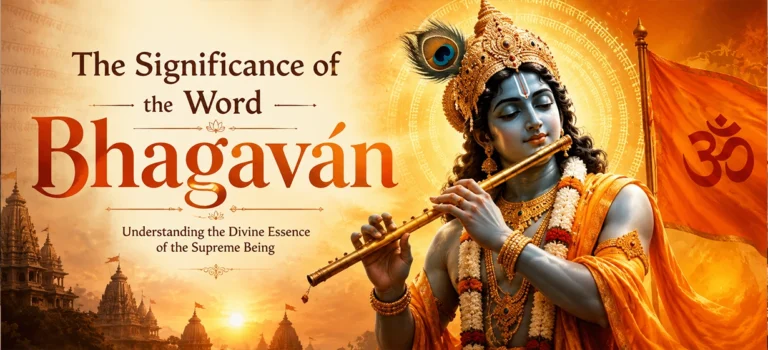
 We have been discussing the Giitá. In order to delve into the essential import of the Giitá, it was necessary [in previous discourses] to start with an introduction. About the Giitá it has been said, Yá Bhagavatá giitá sá Giitá [“That which has been sung by Bhagaván, the Lord, is the Giitá”]. Here the question of “Krśńa” arises. We have already examined some of the meanings of “Krśńa”. Moreover, it has also been shown that all those different meanings of the term converge at one point.
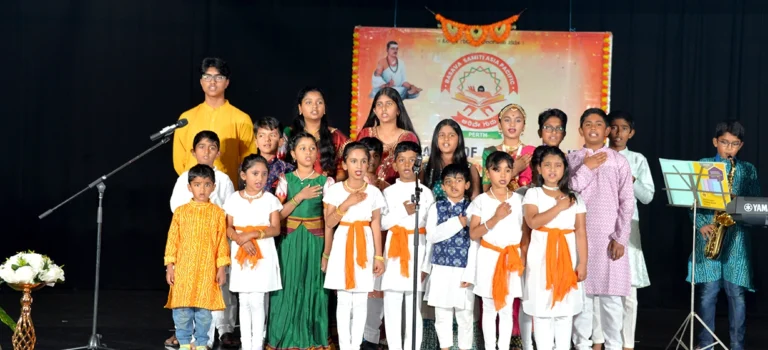
 The celebrations reflected the organisation’s commitment to promoting equality, dignity of labour (Kayaka), selfless service (Dasoha), ethical leadership and community harmony. Each chapter showcased a vibrant program of Vachana recitals, devotional music, dance, drama, children’s performances, Learn2Grow presentations, awards and inspiring keynote addresses.The events were attended by Mayors, Councillors, government representatives, multicultural leaders, sponsors, volunteers and families, highlighting the growing recognition of BSAPAC’s contribution to strengthening multicultural communities across Australia.
 The Basava Jayanthi event, held on 13th June 2026 at in Brisbane, was an interactive & engaging community event that brought together community members and distinguished guests, including Cr Sarah Hutton, Cr Steve Griffiths, Mr Ramjan Darga, Mr Umesh Chandra & Mrs Usha Chandra, Dr April Chrzanowski who was the guest speaker during the Ask Me Series of the Learn2Grow Program, and Federation of Indian Communities Queensland, President Dr. Preeti Suraj, for an evening of learning, reflection, and celebration of the birth anniversary of Guru Basava.
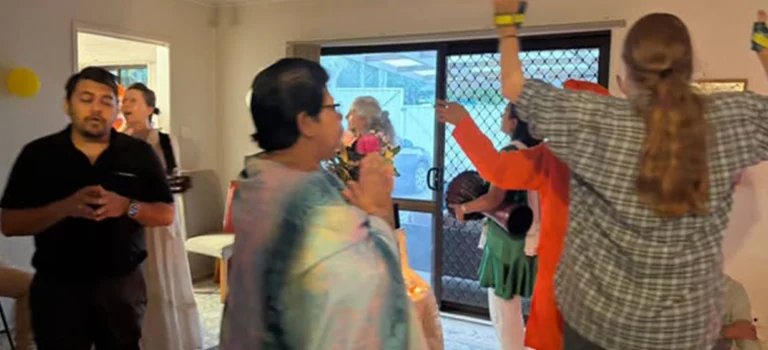
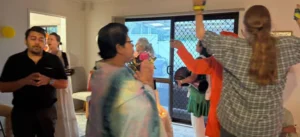
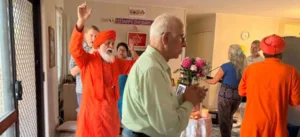
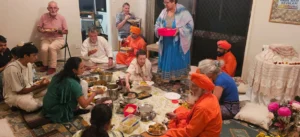 The celebration began early at 5:00 a.m. with Paincajanya, followed by Prabhata Samgiita, Kirtan, meditation, and the reading of Ananda Vanii in various languages. In the afternoon, a three-hour Akhanda Kirtan was held from 3:00 p.m., accompanied by collective sadhana, Baba’s video presentation, and another Ananda Vanii reading.
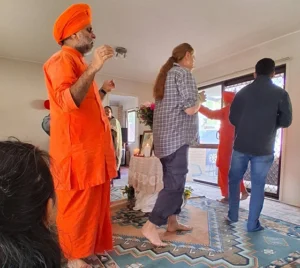 The event concluded with a delicious variety of food and a special cake, shared in a spirit of love and togetherness. Everyone deeply appreciated the strong spiritual vibration and the feeling of oneness. Margiis from both Brisbane, Toowoomba and Maleny participated and joyfully enjoyed the program.
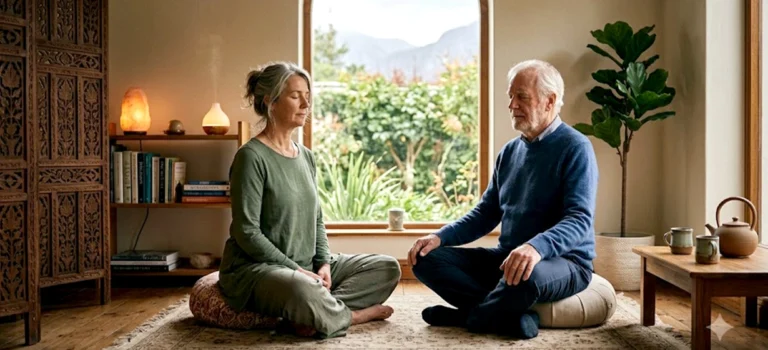
 Since the day man discovered science, it has helped him immensely in improving his life and will continue to do so in future as well. However, in spite of all the scientific developments done over the years, it has so far not been able to achieve anything in the dimension of what health is. It may sound strange, but that is the fact. Because the whole work of science has been in the dimension of what disease is, so when you question a physician about diseases, he would give you various definitions, but the moment you ask him what health is, he tries to deceive you and says that when there is no disease, then whatever remains is health. This is where science lags behind, making way for Spirituality that gives complete clarity to mankind on various issues pertaining to mental and physical health.

 In a breathtaking display of artistic synergy, musical powerhouse Vijay Kumaran joined forces with the sensationally talented Kavya Kumaran last weekend to deliver a spellbinding, sold-out performance in Western Sydney.
 The evening opened by paying homage to the deep, classical roots of the subcontinent. Vijay and Kavya Kumaran captivated the audience from their very first notes, displaying immaculate vocal control and an undeniable onstage chemistry. The pristine acoustics of The Lighthouse allowed every subtle nuance of their harmonies to resonate deeply with the crowd.
 Kavya Kumaran completely commanded the stage, injecting a fresh, youthful, and magnetic dynamism that had fans instantly dancing in the aisles. Together with Vijay’s powerful, charismatic vocal delivery, the setlist became a non-stop barrage of rhythmic hits. The seamless blending of traditional instruments with modern Western beats and heavy basslines brought a stadium-like atmosphere to the Liverpool venue, proving the duo’s exceptional ability to span multiple genres effortlessly.
 Beyond the technical perfection and vocal brilliance, the concert stood as a beautiful testament to the power of cultural unity. By drawing together diverse pockets of the Indian and wider South Asian diaspora under one roof, the night became more than just a musical gig—it was a vibrant assertion of identity and community pride in the heart of Liverpool.