


The AI Gold Rush: Gates Warns of a Digital Dot-Com Bust
The world is gripped by AI fever. From Silicon Valley boardrooms to government innovation hubs, the consensus is that Artificial Intelligence represents the next great technological frontier, a transformative force poised to reshape industries, economies, and daily life. Money is pouring into AI startups, research, and development at an unprecedented rate, fuelling a gold rush reminiscent of the early days of the internet.
Bill gates, the co-founder of Microsoft and one of technology’s most respected prognosticators has issued a stark warning: while AI’s potential is undeniable and genuinely revolutionary, a significant portion of the current investment in the sector is destined for failure. Gates suggests that for every OpenAI or Google DeepMind that captures the imagination and delivers groundbreaking results, there will be countless others that falter, burn through capital, and ultimately vanish.
Gates’s perspective is deeply rooted in experience. He lived through the dot-com bubble of the late 1990s, where exuberant speculation led to astronomical valuations for companies with little more than a website and a business plan, only to see most crash and burn. While the internet itself was profoundly transformative, most of its early commercial ventures did not survive.
“A lot of investment will fail,” Gates recently stated, drawing a direct parallel. He acknowledges that AI is “a big deal,” a “platform shift” on the scale of the graphical user interface, the internet, and mobile computing. Yet, even with such foundational shifts, only a handful of players truly dominate, while the wider ecosystem sees a high mortality rate among entrants.
This isn’t a cynical outlook but a pragmatic one. Innovation is messy. For every successful iteration, there are dozens of dead ends. The sheer volume of investment flowing into AI right now—from venture capitalists to corporate giants—is creating a crowded, intensely competitive landscape. Everyone wants a piece of the pie, convinced their unique approach to large language models, autonomous agents, or specialized AI applications will be the next big thing.
Current AI investments span a vast spectrum:
• Generative AI Startups: Companies building foundational models, or applications on top of them, for content creation, coding, and design.
• AI Infrastructure: Developing specialized chips (like NVIDIA’s GPUs), data centres, and cloud services to power AI.
• AI Integration: Firms focused on embedding AI into existing software and industry-specific solutions (e.g., AI in healthcare diagnostics, financial trading, or logistics).
• Research & Development: Pure-play research initiatives pushing the boundaries of AI capabilities.
The reasons for potential failure are multi-faceted. Gates himself pointed to the “hard problem” of general intelligence, replicating human-level reasoning across diverse tasks. Many startups are focused on narrow AI applications that might see limited adoption or be quickly superseded by more advanced, general-purpose models from tech giants.
Other factors include:
• Unsustainable Business Models: High R&D costs, intense competition driving down prices, and the difficulty of monetizing free or low-cost AI tools.
• Talent Scarcity: A fierce war for top AI researchers and engineers drives up costs and can cripple smaller firms.
• Regulatory Headwinds: The nascent and evolving regulatory landscape for AI could introduce unexpected barriers or compliance costs.
• Market Saturation: Too many companies chasing similar solutions, leading to commoditization.
• Ethical Concerns and Trust: Public mistrust or failures in AI systems could derail adoption for certain applications.
Gates predicts that the biggest beneficiaries of the AI revolution will likely be the existing tech giants – Microsoft, Google, Amazon, Apple, Meta – who have the resources, data, and distribution channels to integrate AI seamlessly into their vast ecosystems. They can afford to absorb the immense costs of AI development and will likely acquire promising smaller players, consolidating power.
This doesn’t mean smaller innovators won’t find niches, but the barrier to entry for truly foundational AI is becoming incredibly high. The startups that succeed will likely be those with truly novel approaches, deeply specialized knowledge, or exceptional execution that allows them to be acquired or grow rapidly before being outmanoeuvred.
Bill Gates’s warning serves as a crucial reality check. While the transformative power of AI is undeniable, investors, entrepreneurs, and the public must temper their enthusiasm with a healthy dose of historical perspective. The AI gold rush will undoubtedly yield immense value and create new titans, but it will also leave a trail of dashed hopes and failed ventures in its wake. The future of AI is bright, but its path will be paved with both brilliance and significant financial wreckage.(Source: CNBC’s “Squawk Box)






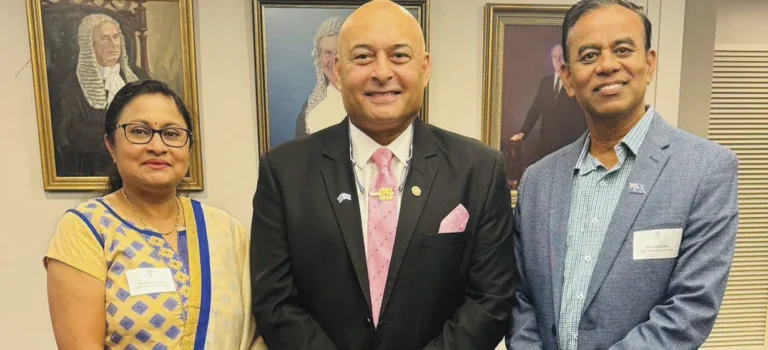
 Brisbane, September 23, 2025 – It was a moment of pride and unity as prominent members of Queensland’s Fijian diaspora gathered at the Queensland Parliament House for a special morning tea hosted by Hon. Jon Krause MP, Deputy Speaker of the Legislative Assembly and Member for Scenic Rim.
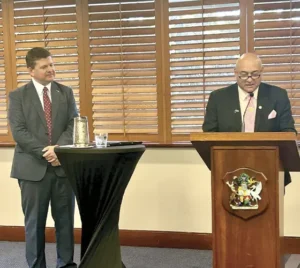 Queensland and Fiji have enjoyed a longstanding and mutually beneficial trade relationship that continues to grow in both scope and value. The strategic proximity of Queensland to the South Pacific positions it as a vital gateway for Australian engagement with Fiji and the wider Pacific region.
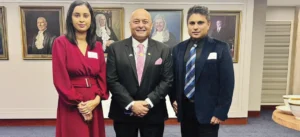 Queensland is home to one of the largest Fijian communities in Australia, whose members actively contribute to the economic, social, and cultural vitality of the state. The event was a reminder of how diaspora communities act as bridges, connecting countries and fostering goodwill, while enriching the multicultural tapestry of Queensland.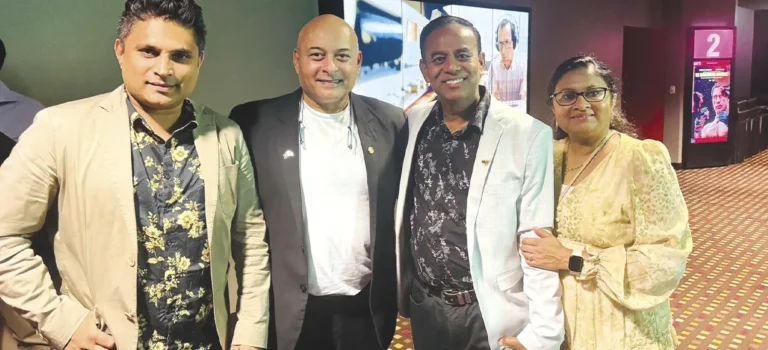
 A wave of deep emotion swept through Hoyts Sunnybank as the powerful documentary “Girmit – The Fields of Sadness” screened before a full house this past weekend.
 The event’s success was made possible through the unwavering support of community leaders and volunteers, including Adrian Naidu and Roshni Dube-Naidu, who played an instrumental role behind the scenes. Their dedication to cultural storytelling and community connection was felt in every detail of the evening. The major sponsor who supported the event in Sydney, Melbourne and Brisbane was Octane. Brisbane was supported by Rajesh Gopal form Gopal Lawyers and Rajendra Pratap.