
LifeGA is investing in women, investing in the future

 In 2021, it was clear to Life Global Australia’s Founding Directors that the best way to enact LifeGA’s mission to change lives, was to change the lives of women. Around the world, the effectiveness of making women the focus of any social improvement strategy was well established. Fifteen years earlier in 2006, when the Nobel Peace Prize acknowledged the work of the Grameen Bank, the Nobel Foundation said the bank’s experience was that lending to women “ensured the best security for the bank and the greatest beneficial effect for the borrowers’ families.” According to the bank’s founder, Muhammad Yunus, “Women want to build up something for the future with their money.” When Project Life set up its Women’s Empowerment Centre, they knew that focusing on women would bring security and stability not only to families, but to whole communities.
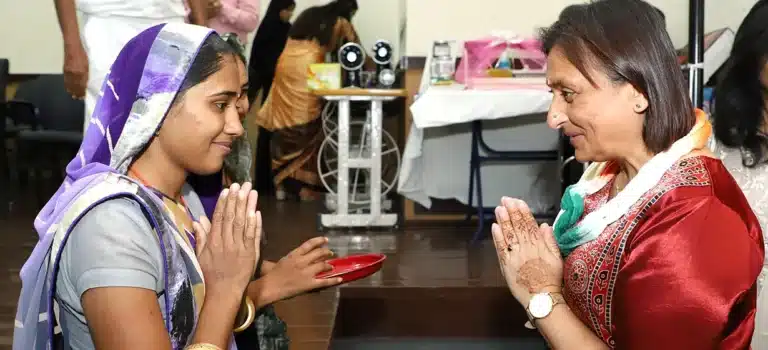
 LifeGA’s decision to support the Women’s Empowerment Programme has resonated with many donors, including businesswoman, Ms Bina Gorasia.
“I come from a culture in which women often lack opportunities,” Ms Gorasia said. “The Women’s Empowerment Programme enables them to transform their lives.”
One such life transformed is that of Reshma Khan.
 Reshma is from an extremely poor family. Her husband’s work as a driver earns very little, so Reshma worked as a housemaid as well as caring for their two children. She was exhausted and despairing when she first heard of the Women’s Empowerment Programme.
“I received training in beauty parlour practice. Project Life allowed me to dream of starting a beauty parlour and making my home financially strong.”
Reshma is now a successful businesswoman operating Angel Beauty Parlour from her home, and giving classes herself.
“Now I live with dignity. I can provide better education for my children.”
Reshma is one of 12,000 women who have completed the Women’s Empowerment Programme. Project Life relies on social workers to identify women between the ages of 18 and 45 who are living below the poverty line (BPL). BPL status is issued if the family earns less than INR6000 per month, or INR72000 per year. These women are invited to complete a 12-week vocational training course.
“Now I am earning INR240000 per annum,” Reshma said. “Before the training, I had no employment opportunities, but training helped me develop my skills and secure a livelihood.” “Our aim is to make women self-sufficient,” according to Project Life’s Joint Executive Trustee and CEO, Ms. Meetal Koticha Shah. As well as vocational training, all participants receive self-defence training to improve their personal safety; gender equality training to educate them about their rights and enhance self-confidence; and banking, budgeting and finance training so they can independently operate a bank account, balance their finances and prepare the family budget.

“We are proud of the exceptional success rate of this programme”, Ms Shah said. “Of the 12000 women who have graduated from the course, 85% are still earning money using the skills they learned.” Project Life helps ensure their success after training by providing free, trade-specific equipment to help women start earning. “We also provide market linkage to connect these women with traders. Further, our counsellors are always helpful whenever necessary.”
LifeGA’s Founding Director and Chairperson, Dr Dipti McGowan, is mindful of the strength of trainees in the Women’s Empowerment Programme. Participants are usually from impoverished areas, or are widows struggling to support their families.
“Many of the women are travelling further than they have ever gone before and into a city which they have never seen before,” Dr McGowan said. “That would take great courage.”
Programme graduate, Usha Prajapati, travelled 12 kilometres to the training centre each day from the slum area of Ahmedabad in Gujarat state. Though it was difficult to make the trip daily for 12 weeks, as she is the sole parent of two children, Usha knew she was securing a livelihood.
“Now I am earning INR150000 per annum through stitching work,” Usha said. “My life has completely transformed. I am a proud breadwinner for my family, successfully managing my children’s education and living with newfound self-confidence.”
LifeGA is now focused on achieving the target of empowering 20,000 women like Reshma and Usha.
“LifeGA’s contribution will help Project Life achieve their goal of training and empowering more than 20,000 women in the near future, and ultimately touching the lives of 100,000 women in years to come,” Dr McGowan said.
“Women’s empowerment is not merely about helping women; it is about building a more robust, stable and powerful society.”
www.lifeglobal.org.au



 My heartfelt gratitude to everyone who has supported me over the past six months as President of this special club. Rotary holds a unique place in my heart, as I grew up watching my father, a dedicated Rotarian, engage in various projects. His example led me to follow in his footsteps, and today, I’m proud that my son, Dhru Lodhia, has also stepped into a leadership role as the President of the Rotaract Club of Brisbane International, the youth wing of our club.
 Since our club’s charter, 10,500 meal packs have been served to our friends on the streets of Woodridge, Brisbane City, and Logan. These include:



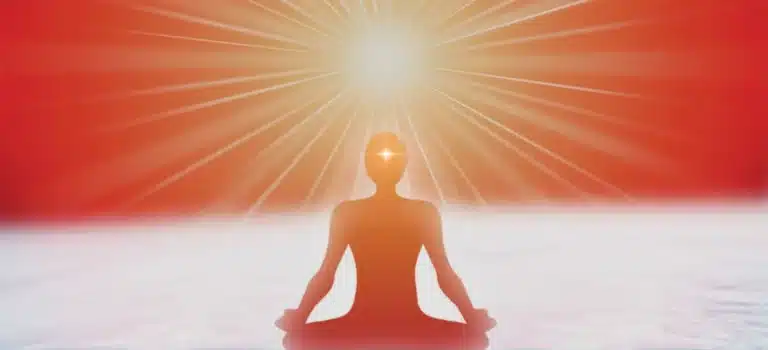
 What is Raja yoga meditation?
 The very word Veda means knowledge, derived from the root vid. Indeed, the Vedas are the fountainhead of the knowledge. Entire humanity recognizes that Rgveda is the oldest book in the library of the mankind. However, the truth is that the four Vedas (Rgveda, Yajurveda, Samaveda and Atharvaveda) were revealed to four Rsis at the dawn of the mankind on the earth. God’s Revelation of Vedas: Badaraymja, the author of Brahmasutra (also called Vedanta-Dariana) declares at the outset that God exists because Vedas exist — ilistrayonitvdt. It must be so because the most benevolent God must reveal the knowledge to the mankind once He creates the creation and His masterpiece that the man is. Pataajali, the author of Yoga Dariana declares that God is the original teacher for the mankind — sa parvesamapi guruh kalenanavacchedat. The common sense says that God’s revelation must appear at the onset of the creation so that everybody, the first generation included, benefits from the same. Any book that appears into the world after human beings have inhabited the earth for a length of time can’t claim to be God’s revelation. Also, God’s revelation of knowledge includes the knowledge of the language. So, any book that claims to be God’s revelation must appear before the knowledge of the language developed. That means that a book in Arabic can’t be God’s revelation if the Arabic language had developed before the book appeared. Similarly, a book appearing in Latin or Hebrew can not be God’s revelation if these languages had developed at the time of appearance of that book. On the same token, Gird can not be called as God’s revelation because the language of Sanskrit was very much in its developed form when Gita came into existence. Therefore, only Vedas can be God’s revelations because they only gave rise to the language that is called Sanskrit. Commensurate to the unique features of the Vedas, man’s greatest effort was focused on preserving them since his advent on the earth. He devised several methods to recite it to preserve the same without any infinitesimal change even in a letter and its pronunciation. We Indians should take extreme pride that our forefathers took utmost care to such an extent. Of course, they were guided in their zeal and effort by the belief that it is God given word which they must pass on to the future generations, come what may. There is no other book even remotely close to such a unique astounding feature that the Vedas are associated with. Both the Creation and the Vedas Show Harmony: The very next line 135.darayana wrote after the above quoted line was — tattu sanzanvayat. Vedas must be God’s revelations because all they contain tally well with the creation. For example, the earth is referred to as bhiigola, meaning the earth is round like a sphere as is indeed the case. This led the ancient people in India to know that the earth is round like a ball while, on the contrary, the people in West Asia and elsewhere I thought it to be flat like a mat. There is nothing in the Vedas that is contrary to what is seen in nature. Over and beyond what we know today, the Vedas may contain many more revelations that we might not even be aware of today. Vedas contain knowledge about both matter and spirit. The knowledge about matter is in seed form leaving ample room for man to discover further and create his own body of literature. On the other hand, knowledge pertaining to spirit is at its pinnacle that man will never be able to add anything to that body of knowledge. The Vedas will always remain relevant like the sun is. Though man has created many sources of light to dispel the darkness, He remains dependent upon the sun. The role of Vedas is like that of the sun albeit in the inner intellectual domain where man must exhibit greater perseverance to dispel the darkness of untrue knowledge, which leads to pains and agonies of much greater proportions. Let us hope that humanity will benefit from the Vedas as much as it benefits from the sun, both having been created by the most benevolent and merciful God. If man followed the path shown by the Vedas in the ancient India, the life was at its brightest zenith. When India deviated from the path of Vedas about 6000 years ago, her downfall began. Since India was the lighthouse for the entire world, it is seen that the humanity too has been in miserable condition in the last few thousand years.


 Fiji, like many other Pacific Island nations, has faced an increasing frequency of natural disasters, especially flooding, in recent years. The Christmas season in 2024 was unfortunately marked by severe flooding that impacted western division of the island nation.
 The flooding also posed significant health risks, as contaminated water increased the potential for waterborne diseases. Emergency services, local authorities, and international aid organizations quickly mobilized to provide food, medical care, and clean water to affected communities.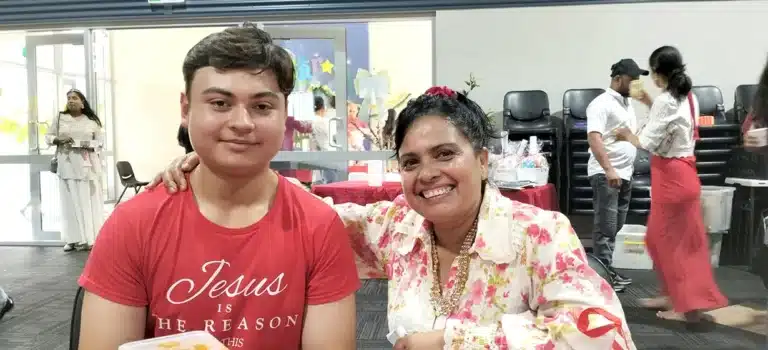


 The new year is here, and it’s time for many to celebrate the Year of the Wood Snake, beginning on January 29th, 2025, and ending on February 16th, 2026. The Year of the Wood Snake symbolizes growth, creativity, and flexibility. It’s described as a time for introspection and strategic personal development. Many believe that the Wood Snake year offers opportunities to deepen relationships, advance professional goals, and strengthen connections with nature. The Snake is the sixth animal in the 12-year cycle of the Vietnamese and Chinese zodiacs. I’d love to hear your thoughts in the coming months on how this year resonates with you. Were you born in a Year of the Snake? People born in 1941, 1953, 1965, 1977, 1989, 2001, 2013, or 2025 are Snakes. Whether you’re a Snake or not, remember to make time for walks to benefit your mental and physical well-being.

 In response to our readers’ requests, I’m delighted to share some exciting upcoming free family-friendly events. In Richlands, the Vietnamese Community in Australia – Queensland Chapter will host their annual Lunar New Year festival from January 24th to 25th, 2025, from 5:30 PM to 9:30 PM at 315 Freeman Road, Richlands. This free event welcomes people of all ages and cultures. I have volunteered at this event from a very young age, so I can assure you it’s an event not to be missed. Grace church will be doing some important fundraising, so please stop by to say hello and buy some delicious traditional Vietnamese food. They have some important goals that we need to support them meet in 2025.
 Last month, I had the pleasure of attending the Platinum Events Services Gold Coast’s Sponsors & Volunteers Appreciation Dinner, hosted by President Manish Saini and his team. Hearing from community and business leaders who are making a grassroots difference was inspiring, including our very own JD Deo. Great to hear from community and business leaders dedicated to enriching both the Indian and broader communities and learn about many upcoming Indian and multicultural events in 2025.