

Medicare Urgent Care Clinics

Medicare Urgent Care Clinics

Medicare Urgent Care Clinics

The Australian Government has set up a number of Medicare Urgent Care Clinics throughout Australia. In Queensland we have several clinics that can support you with the care of urgent conditions (that are not life threatening) if you cannot get into your usual doctor or nurse.

The ‘When to visit a Medicare Urgent Care Clinic Factsheet’ advises the following https://www.health.gov.au/find-a-medicare-ucc/resources/publications/when-to-visit-a-medicare-urgent-care-clinic (accessed 25/08/2025)

Urgent conditions they can treat include:
• Minor infections
• Minor fractures, sprains, sports injuries and neck and back pain
• Urinary Tract infections (UTIs)
• Sexually transmitted infections (STIs)
• Minor cuts
• Insect bites and rashes
• Minor eye and ear infections
• Respiratory illness
• Gastroenteritis
• Mild burns

Urgent care clinics open early and close late. You do not need an appointment, and they will bulk-bill you for the care you receive (if you have a Medicare Card). If you do not speak English well, they can also arrange an interpreter to assist you. The website has a range of translated resources https://www.health.gov.au/find-a-medicare-ucc/translated-resources
Chronic conditions or illnesses or injuries that can wait until you can see your regular doctor do not require a visit to an urgent care clinic.

For emergencies such as chest pain or tightness, breathing difficulties, uncontrollable bleeding, severe burns, poisoning, numbness or paralysis, unconscious, unresponsive or having seizures, or ongoing fever in infants can all be life threatening therefore you should call triple 000 or go to your nearest emergency department if it is safe to take the person.

In the Greater Brisbane area Medicare Urgent Care clinics are located at:
• Murrumba Downs – Murrumba Downs Medical and Dental Centre, corner Dohles Rocks Road and Goodrich Road West, Murrumba Downs – Ph: 3049 9025
• Northside – Family Doctors Kedron, 11 Brookfield Road, Kedron – Ph: 07 2100 0777
• Morayfield – Health Hub Doctors, 19-31 Dickson Road, Morayfield – Ph: 5322 4900
• South Brisbane – Level 4, 20 Cornwall St, Woolloong

abba – Ph: 3346 1315
• Oxley – Growlife Medical (in Canossa Hospital complex) 169 Seventeen Mile Rocks Road, Oxley – Ph: 3483 1501
• Goodna – Goodna Market Place, 2 Smiths Road, Goodna – Ph: 38818 6299
• Ipswich – Riverlink Medical and Dental, Ipswich Riverlink Shopping Centre, 2 The Terrace, North Ipswich – Ph: 3413 6640
• Logan – Browns Plains Medical and Dental Centre, 2-10 Grand Plaza Drive, Browns Plains Ph: 3380 0150
Remember if it is an emergency call 000. If it is a chronic condition that requires regular monitoring, see your GP or nurse.
Medicare Urgent Care Clinics

To find your nearest Medicare Urgent Care Clinic, visit health.gov.au/MedicareUCC
Currently, the Love Health Program at ECCQ is partnering with the Kirby Institute at the University of NSW to provide free rapid hepatitis B and C testing for people born overseas, as part of a large national research project aiming to improve testing and diagnosis.

If you are interested in getting a test, please contact [email protected] or scan the QR code to register for a free test. You can find more information including translated resources on hepatitis, HIV, and STIs at www.eccq.com.au/bbv.

If you are in Cairns, you can contact the team at Cairns Sexual Health Services by calling (07) 4226 4769 or emailing [email protected].

 

Navigating Investments in a Stable Rate Environment

Navigating Investments in a Stable Rate Environment

Navigating Investments in a Stable Rate Environment

The Reserve Bank of Australia’s decision to hold the official cash rate at 3.6% marks a continued pause in the rate tightening cycle, signalling a period of relative stability amid persistent but easing inflation. For investors across Australia, this provides a timely opportunity to revisit strategies, diversify portfolios, and focus on long-term wealth creation rather than short-term speculation.
While this steady rate environment suggests a neutral monetary policy stance, uncertainty remains in global markets. Inflation, though off its peak, remains sticky in some sectors; consumer confidence is mixed; and global economic pressures, including China’s slower growth, geopolitical instability, and energy supply concerns, continue to shape the broader investment landscape.
In this climate, experts are advising investors to remain vigilant, balanced, and forward-thinking.

Property Market Showing Resilience

After a turbulent few years marked by pandemic disruptions and interest rate hikes, the Australian residential property market is stabilising. Capital cities like Sydney, Brisbane, and Perth have recorded modest gains throughout 2025, buoyed by limited supply, increased immigration, and strong rental demand.

With vacancy rates remaining historically low, rental yields are climbing, making investment property attractive once again, particularly in key growth corridors and well-connected regional hubs.
Commercial property, particularly industrial and logistics assets, continues to perform steadily. However, the office sector remains under pressure due to shifting workplace trends.

In a steady rate environment, investors can benefit from more predictable mortgage repayments and improved confidence in leveraging real estate as a long-term investment.

Equities: Focus on Fundamentals

The Australian share market remains an essential part of a balanced portfolio. With the cash rate stable, high-quality, dividend-paying equities offer better risk-adjusted returns than many fixed-income alternatives, particularly with the added benefit of franking credits.
Defensive sectors such as healthcare, utilities, and consumer staples are expected to remain resilient amid subdued consumer spending, while thematic sectors, including clean energy, technology, and infrastructure, offer long-term growth potential.

In uncertain economic periods, the focus should remain on companies with strong earnings, low debt, and reliable cash flows. Index funds and exchange-traded funds (ETFs) also provide diversification for retail investors seeking exposure to broader markets without the risk of single-stock volatility.

Bonds and Fixed Income Regain Appeal

After years of negligible returns, bonds and fixed-income products are once again attractive. With interest rates no longer climbing and inflation expected to gradually moderate, fixed-income assets provide both income and potential for capital appreciation.
Government bonds, corporate bonds, and bond ETFs can offer yields above inflation and act as a hedge against equity market fluctuations. For investors seeking stability, a laddered bond portfolio, investing in bonds with staggered maturities, can help manage reinvestment risk and smooth returns over time.

Cash and Term Deposits: Safer, But Limited

Banks are now offering savings accounts and term deposits with interest rates approaching 5%, which may appeal to conservative investors or those nearing retirement. These instruments are ideal for short-term cash parking, emergency funds, or capital preservation strategies.

However, over the long term, cash returns may fail to outpace inflation. While safer, these options offer limited growth potential and should be part of a broader investment plan rather than the core of a wealth-building strategy.

Superannuation: A Tax-Efficient Investment Vehicle

Superannuation remains one of the most tax-effective ways to build retirement savings. In a steady-rate environment, Australians are encouraged to:
• Review their super fund’s asset allocation.
• Consider salary sacrificing to boost contributions.
• Take advantage of contribution caps and government co-contributions where eligible.
With long investment horizons, super funds can absorb short-term volatility and benefit from compounded growth, particularly when invested in diversified, growth-oriented portfolios.

Alternatives: For Sophisticated Investors

For those with higher risk tolerance, alternative investments, such as private equity, infrastructure, or agricultural funds, may offer diversification and non-correlated returns. However, these often come with higher fees, less liquidity, and greater complexity.
Cryptocurrency and speculative tech ventures, while popular in some circles, should be approached with caution. Regulatory changes, market volatility, and valuation risks remain high, and investors are advised to allocate only a small portion of their portfolio to such assets.

The Case for Diversification

Considering the RBA’s current position and an economic environment that is neither booming nor contracting sharply, the consensus among financial professionals is clear: diversification remains the most effective strategy.
By spreading investments across property, equities, fixed income, and cash, investors can mitigate risk while positioning themselves for long-term growth. It’s also essential to tailor strategies to individual goals, time horizons, and risk profiles.

Looking Ahead

While the cash rate of 3.6% offers a reprieve from the uncertainty of rising rates, it also signals that the RBA is in a “wait and watch” mode. Investors should not become complacent but use this window to re-evaluate financial goals, refine investment plans, and focus on fundamentals.

As history has shown, those who remain patient, disciplined, and diversified are best placed to ride out volatility and capture opportunities as markets evolve.

(This article provides general information only and does not constitute personal financial advice. Readers should seek independent financial advice before making investment decisions.)

Maintaining good relationship with your tenants

Maintaining good relationship with your tenants

Maintaining good relationship with your tenants

While tenants may come and go, when you find a tenant who genuinely cares for your property as if it were their own, they’re worth their weight in gold.
In a competitive rental market where there’s high demand for quality homes, building and maintaining strong relationships with reliable tenants, with the support of your property manager, can be the difference between a vacant property and long-term stability.
Fostering good relationships with your tenants can only enhance the way in which properties are managed with the help of property managers, creating an efficient and positive rental experience.

It is important that from the start of a new tenancy, expectations surrounding the processing of communication between tenants, owners and property managers is made clear. As a landlord, you may prefer that all tenant communication is directed through your property manager, or you might be open to certain types of direct contact.
Whatever your preference, it’s crucial that tenants understand who to contact and how, for clarity of future communication.

Following that, how you communicate with your tenants or property manager is just as important. Whether over the phone or email, responding to enquiries in a timely, friendly and clear manner makes a difference. If you’re unsure or uncomfortable with direct tenant communication, don’t hesitate to lean on your property manager for support – that’s what they’re there for!

Addressing maintenance issues promptly is a key part of maintaining trust. While not all maintenance requests can be actioned immediately, there are some urgent or emergency repairs that should be actioned swiftly. In any case, acknowledging the request will go a long way.

Remember, the way your property is maintained reflects on you as the property owner. If you care for your property, keeping it in good condition, your tenants are more likely to maintain that standard of care. Perhaps it’s been some time since the property has been painted, or the carpets are wearing, or the security screens need replacing; investing in your property when needed is an important part of property investment ownership.
Your relationship with your tenants and your property manager plays a vital role in the success of your property investment. A great tenant who feels respected and heard is more likely to stay longer, take care of the property and help make your investment journey smoother.

CREDIT: REMAX AUSTRALIA

Reflections for October : Community, Culture, and Mental Health

Reflections for October: Community, Culture, and Mental Health

Written by Xavier Hernandez

Reflections for October : Community, Culture, and Mental HealthWelcome to my October article for the Brisbane Indian Times. As we enter a busy month, there’s already so much happening around us. The school holidays are coming to an end, and many of us, myself included, are settling back into the school routine. Whether you’re a student planning for the year ahead or a reader getting your home ready for the approaching storm season, I’ve crafted this article based on your valuable feedback to address some important topics.
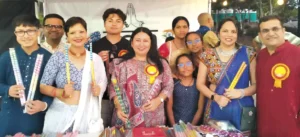
Reflections for October : Community, Culture, and Mental HealthI begin by highlighting the importance of love, peace, and hope. There has been so much tragedy in the world, and I encourage readers to welcome free and safe debate while also thinking of those less fortunate. Take, for example, the recent tragedy in southern India on September 28, where a crowd crush at a political rally tragically claimed 36 lives, including eight children. Such heartbreaking events remind us of the fragility of life and the importance of compassion. Our mental health has never been more critical.
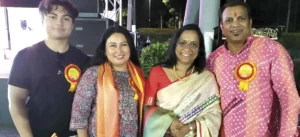
Reflections for October : Community, Culture, and Mental HealthMental Health Week is taking place from October 4–12. This week reminds us that seeking help during difficult times is a sign of strength, not weakness. I’ve witnessed firsthand how division, bullying, and negativity can deeply affect people of all ages. This month, I encourage you to focus on your mental wellbeing and practice positive thinking. Surround yourself with people who lift you up. As Dita Von Teese wisely said, “You can be the ripest, juiciest peach in the world, and there’s still going to be someone who hates peaches.” This serves as a reminder that no matter how much we try to please others, challenges will always arise. However, our mental health remains within our control.

Reflections for October : Community, Culture, and Mental HealthData shows that between 2020 and 2022, nearly a quarter of Queenslanders aged 16 to 85 experienced a mental health disorder, with anxiety being the most common. While I couldn’t find specific data on migrant communities, we know that the stresses of pre-migration trauma, combined with the challenges of settling into a new country, make mental health even more difficult to navigate. Mental health is a universal concern, and it’s vital that we continue raising awareness and ensuring that support systems are accessible to everyone who needs them.

Reflections for October : Community, Culture, and Mental HealthOctober is also Seniors Month, a time to reflect on and honour the invaluable contributions of older members of our community. If you know a senior, take a moment this month to thank them for their wisdom and guidance. Many seniors may be struggling financially, physically, and emotionally. Local councils also offer great initiatives for seniors, such as Brisbane City Council’s Council Cabs program and events. For more information, check with your local council—they may also provide resources to help prepare for the storm season.
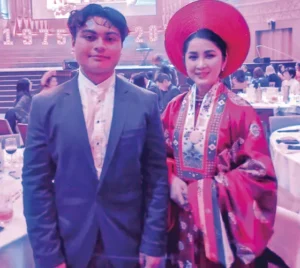
Reflections for October : Community, Culture, and Mental HealthOn a more festive note, I had the pleasure of attending and volunteering at the Greater Springfield Dandiya event at Robelle Domain Park. The energy was contagious as people of all ages, community leaders, and MPs like Hon. Shaynne Neumann attended. It was a fun night of dance, celebration, and an immersive experience in our community’s rich traditions. It was a reminder of how shared traditions can unite us, regardless of our backgrounds. A special thank you to Mukesh Dubey and the Deo family for promoting culture and breaking barriers for the multicultural communities and especially the youth. I can’t thank him enough for his kind words and how he’s inspiring the next generation of leaders with a smile.
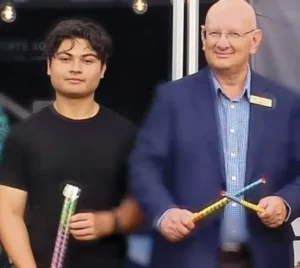
Reflections for October : Community, Culture, and Mental HealthOn October 1st, I had the privilege of speaking at the Brisbane 100: One City Together event, marking the century of Greater Brisbane’s formation. It was a moment to reflect on the rich history of our city and the diversity that makes Brisbane such a special place to call home. I also want to thank Bob Pillay for inviting me to the launch of his book Dynamic Business Principles. It was a fantastic evening of learning and networking, offering valuable insights into the aerospace and defence industries.



In addition, exciting multicultural news, I would like to congratulate Kheu Oanh Do as the incoming President of the Vietnamese Community in Australia – Queensland Chapter. Her journey to Australia was not an easy one, but now she is an inspiration to many, especially in Inala. She is a community leader who volunteers her time with the Vietnamese senior citizens, support the youth, and broader community. Now she will lead the Vietnamese community with love, compassion, and with her own leadership style still honouring the late Dr. Bui.

She has broken many barriers with having run as a Vietnamese woman candidate in the seat of Inala at the last election. A multicultural seat where there is a high population of Vietnamese residents. Feeling so many with hope and joy. She is smart, hardworking, and deeply understands the community where she lives and is deeply connected too. She is a true representation of a diverse and hardworking area. I’m proud to see someone I look up to achieve such a remarkable role.

It is wonderful that so many readers are providing me with such valuable feedback. I look forward to chatting more about our great paper with you next time I see you out and about in the community, listening to what matters to you most.


Brisbane Lights Up for Deepavali 2025: Thousands Attend City’s Biggest Festival of Lights

Brisbane Lights Up for Deepavali 2025: Thousands Attend City’s Biggest Festival of Lights

Brisbane Lights Up for Deepavali 2025: Thousands Attend City’s Biggest Festival of Lights

Brisbane,
October 6, 2025

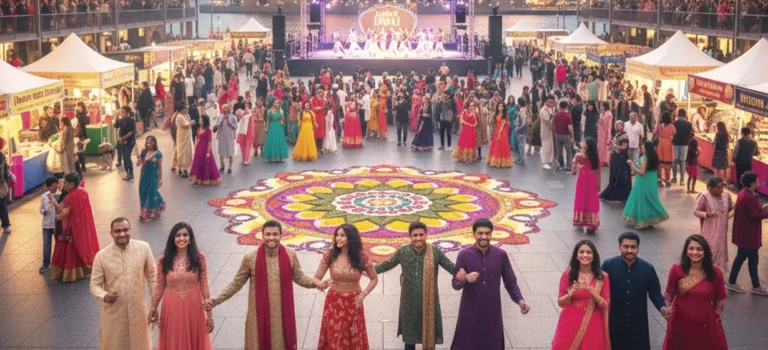
Brisbane was bathed in colour, music, and spiritual celebration on Sunday night as thousands of families came together at Rocklea Showgrounds to mark Deepavali, the Hindu Festival of Lights, in what was one of the city’s largest multicultural gatherings of the year.
Organised by the Hindu Council of Australia (Queensland Chapter), the Deepavali 2025 celebration welcomed people from all walks of life to honour the timeless message of the festival the victory of light over darkness, and good over evil.
From a grand Ganesh Pooja to a jaw-dropping fireworks finale, the five-hour event offered a vibrant mix of devotion, culture, food, and fun with free entry for all.

A Celebration of Culture and Community

The festivities began at 4:00 PM with an auspicious Ganesh Pooja, setting a spiritual tone for the evening. Local dignitaries, spiritual leaders, and community representatives took part in the ceremony, which was conducted with traditional Vedic chanting and offerings, inviting blessings for peace and prosperity.
“This is a festival that belongs to everyone,” said Deepa Subramaniam, one of the event organisers. “Deepavali is about bringing light into our lives, and this evening, we saw Brisbane shine with joy, unity, and cultural pride.”

The celebration featured a full lineup of cultural performances, including classical Indian dances, Bollywood fusion, live music, and a traditional Garba dance that had hundreds of attendees joining in. For many first-time attendees, the Garba circle was a highlight showcasing the inclusiveness and energy of Indian culture.

As the sun set, excitement built for the Ravan Dahan a symbolic burning of a 30-foot effigy of Ravana, the mythological demon king. The dramatic scene was cheered by the crowd, representing the eternal triumph of good over evil, a core message of Deepavali.
Shortly after, the sky erupted in a stunning fireworks display, illuminating the entire Rocklea Showgrounds and leaving children and adults alike in awe.

Food was another major attraction of the evening, with dozens of stalls offering authentic Indian street food from samosas and dosas to jalebis and kulfi. The aroma of spices and sweets filled the air, adding to the sensory celebration.

The event wasn’t just for the Indian diaspora it attracted people of diverse backgrounds, reflecting Brisbane’s growing multicultural fabric. Families, students, seniors, and young children mingled freely, sharing food, stories, and dance under the festival lights.
“This is my first Deepavali and I’m absolutely blown away,” said Sarah Johnson, a local Brisbane resident. “The energy, the colours, the meaning behind the traditions it’s such a beautiful way to bring people together.”

Volunteers and members of the Hindu Council of Australia – QLD Team worked tirelessly behind the scenes to manage crowds, coordinate stage performances, and support vendors ensuring a smooth, safe, and welcoming experience for all.
The organisers extended heartfelt thanks to the local council, community sponsors, volunteers, and the Queensland Police Service, who helped ensure a safe and successful event.

“This Deepavali wasn’t just a celebration,” said event coordinator Rajesh Mehta. “It was a reminder that harmony, tradition, and inclusion can co-exist beautifully. We are proud to share our culture and even prouder to see the community embrace it.”
With glowing lamps in hand and hearts full of joy, Brisbane’s diverse community left with one shared sentiment the light within us is brighter when we celebrate together.

Vikrant Massey Exclusive: Filmfare Awards 2025 Set to Dazzle in Gujarat

Vikrant Massey Exclusive: Filmfare Awards 2025 Set to Dazzle in Gujarat

Vikrant Massey Exclusive: Filmfare Awards 2025 Set to Dazzle in Gujarat

In a first-of-its-kind move, the iconic Filmfare Awards the most prestigious event in Indian cinema—will be hosted in Gujarat for its landmark 70th edition. The announcement, made in partnership with The Times Group and the Government of Gujarat, has sent ripples of excitement across Bollywood and the state’s vibrant cultural circles.
Speaking exclusively to Times Now, acclaimed actor Vikrant Massey shared his excitement and insights about this game-changing decision, calling it a “historic milestone that brings the magic of Indian cinema to new frontiers.”

The Filmfare Awards, long associated with the glamour of Mumbai, are stepping into new territory. For the first time in the award show’s seven-decade history, the celebration will be held outside of Maharashtra in Ahmedabad, Gujarat, showcasing not only the cinematic achievements of the year but also the cultural grandeur of one of India’s most dynamic states.

“This is a brilliant step forward,” said Vikrant Massey in the exclusive interview. “Gujarat has an incredible legacy its textiles, architecture, festivals, food, and of course, its people. To bring Bollywood’s biggest night here is a celebration of Indian culture in its totality.”
According to organisers, the decision to bring the 70th Filmfare Awards to Gujarat reflects a broader vision to democratise cultural celebrations, take cinema beyond its traditional bastions, and recognise emerging creative hubs across the country.
“The government of Gujarat has shown immense enthusiasm in making this happen,” said a spokesperson from The Times Group. “From infrastructure to hospitality, Gujarat is more than ready to host a night of this magnitude.”

Indeed, the move comes at a time when Gujarat is aggressively promoting itself as a cinematic destination, offering attractive subsidies for film production, building film cities, and encouraging talent from the region to participate in national and global cinema.
Beyond the glamour, the impact of hosting the Filmfare Awards in Gujarat is expected to be significant.

Tourism officials estimate that the event will draw thousands of visitors, including film stars, media, industry insiders, and fans, creating a ripple effect across hospitality, transport, retail, and cultural sectors.
“It’s not just about one night,” said Vikrant Massey. “This kind of event has the power to inspire an entire generation from young actors and writers to designers and musicians. It puts Gujarat on the cinematic map.”

Organisers have promised a night that blends Bollywood glitz with Gujarati vibrancy. Expect folk performances, local cuisine, handicraft showcases, and a stage design inspired by Gujarati motifs and architecture.
Sources close to the event planning suggest that the show will be hosted at a newly developed state-of-the-art venue, possibly in GIFT City or near the Sabarmati Riverfront, combining modernity with heritage.

“We’re not just relocating the event,” added Massey, “we’re reinventing it in a way that honours both the legacy of Filmfare and the culture of Gujarat.”
The response from the film fraternity has been overwhelmingly positive. Several actors and directors have already taken to social media to express excitement about experiencing the warmth and colours of Gujarat.
Filmmaker Karan Johar posted, “Can’t wait to walk the red carpet in Ahmedabad! A refreshing change and a celebration of our diverse culture.”
Actress Bhumi Pednekar commented, “So excited to perform in a city that feels like home! Gujarat, here we come!”

The 70th Filmfare Awards, expected to take place in February 2025, promises to be more than just a red-carpet affair. With performances from top stars, tributes to cinematic legends, and a celebration of the year’s best films, this edition will also serve as a bridge between mainstream Bollywood and India’s rich regional heritage.
As Vikrant Massey aptly put it, “It’s going to be an unforgettable night where storytelling, stardom, and culture come together on one grand stage.”
By bringing the Filmfare Awards to Gujarat, the organisers have not only made a bold move geographically, but also culturally embracing the diversity and vibrancy that defines Indian cinema. It’s a celebration that goes beyond films; it’s a tribute to the idea of India itself. (Credit: Bollywood Hungama and Times Now)

Diwali in Australia: A Festival of Light, Unity, and Cultural Harmony

Diwali in Australia: A Festival of Light, Unity, and Cultural Harmony

Diwali in Australia: A Festival of Light, Unity, and Cultural Harmony

As the nights grow warmer and the calendar turns to spring, cities across Australia come alive with colour, light, and celebration. The air is filled with the scent of sweets, the shimmer of traditional attire, and the sounds of music and laughter. It’s Diwali — the Festival of Lights — and it’s fast becoming one of Australia’s most vibrant multicultural celebrations.

Diwali, or Deepavali, is an ancient Indian festival celebrated by millions around the world. At its heart, it symbolises the triumph of light over darkness and good over evil. Rooted in Hindu tradition, it also holds significance for Sikhs, Jains and some Buddhists.

For Hindus, Diwali commemorates the return of Lord Rama to Ayodhya after defeating the demon king Ravana. Homes are illuminated with oil lamps (diyas), prayers are offered to the goddess Lakshmi for prosperity, and families come together for feasts and festivities. For Sikhs, the festival marks the release of Guru Hargovind Ji from prison, while Jains observe it as the day Lord Mahavira attained liberation.

While the religious stories may vary, the core themes are universal: hope, renewal, generosity, and the joy of togetherness.

The Indian Australian community — one of the fastest-growing ethnic groups in the country — has played a key role in bringing Diwali into the national spotlight. With over 780,000 Australians identifying as being of Indian origin (ABS, 2021), Diwali is no longer just a community celebration. It’s a national event.

In cities like Melbourne, Sydney, Brisbane, and Perth, large-scale Diwali festivals now draw crowds in the tens of thousands. From Federation Square in Melbourne to Parramatta Park in Sydney, and King George Square in Brisbane, these public events showcase everything from Bollywood dance to Indian street food, traditional music, fashion shows, and dazzling fireworks displays.

Importantly, these festivals are open to all — and increasingly attended by Australians of all backgrounds.

Lighting the Way to Multiculturalism

In a nation that prides itself on multicultural harmony, Diwali has become more than a religious holiday — it is a symbol of how cultural traditions can enrich and unite a diverse society.
Schools across Australia now include Diwali in their multicultural programs, with students learning about its history through storytelling, arts and crafts, and food. Workplaces also embrace the occasion, with many businesses hosting Diwali-themed celebrations, encouraging cultural dress, and sharing traditional Indian sweets among staff.
Australian political leaders regularly attend Diwali functions and issue official greetings. Prime Ministers, Premiers, and local MPs have spoken at community events, underscoring the festival’s significance to the social fabric of modern Australia.

From Community Halls to City Squares

In earlier decades, Diwali in Australia was largely confined to private homes or community halls. Today, it’s celebrated in public squares, temples, schools, and even Parliament House. Cultural groups, city councils, and even mainstream Australian media now take part in promoting the festivities.
What was once a diaspora tradition has become a fixture in Australia’s multicultural calendar, joining events like Lunar New Year and NAIDOC Week in celebrating the diversity that defines the nation.

Bridging Generations and Cultures

For many young Indian Australians, Diwali serves as an important link to their heritage. It offers a way to connect with their roots, even as they navigate life in a Western society.
At the same time, it’s a platform for sharing culture with peers. Young Australians from all backgrounds are now experiencing Diwali — not as spectators, but as participants. Whether through school celebrations, attending festivals, or joining in at a friend’s home, Diwali is fast becoming part of the shared cultural experience in Australia.
While the rise of Diwali is a testament to Australia’s inclusive spirit, the Indian community continues to balance the challenges of cultural preservation and assimilation. There are concerns about the festival becoming overly commercialised or losing its spiritual roots in the process of mainstream celebration.

Yet, many see this as an opportunity — a chance to educate and share deeper values behind the lights and festivities, and to encourage reflection alongside celebration.
As Australia continues to grow and diversify, Diwali offers more than just colourful celebrations — it offers a model for inclusion. It shows how a festival rooted in ancient tradition can thrive in modern society, not just by preserving culture, but by inviting others to celebrate alongside.

In a world often divided by difference, Diwali reminds us of the power of unity, generosity, and hope. It lights not just homes, but hearts — across communities, generations, and borders.


Grand Celebration of Janmashtami by DJJS in Brisbane

Grand Celebration of Janmashtami by DJJS in Brisbane

On 27th July 2025, Divya Jyoti Jagrati Sansthan (DJJS) Brisbane hosted a grand and spiritually uplifting celebration of Janmashtami at Calamvale Community College with the grace and guidance of HH Ashutosh Maharaj Ji (Head and Founder DJJS), marking the birth of Lord Krishna with devotion, knowledge, and cultural vibrance. The event beautifully highlighted the eternal relevance of Lord Krishna’s life lessons and values through captivating performances and discourses.
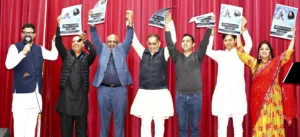
Young and selfless DJJS volunteers portrayed different aspects of Krishna’s divine plays, emphasizing the morals and teachings that continue to inspire solutions to challenges in modern-day life. Through thoughtful acts and enlightening explanations, DJJS also addressed and cleared widespread misconceptions often propagated around Lord Krishna’s life, presenting his true essence as a guide for righteous and purposeful living.
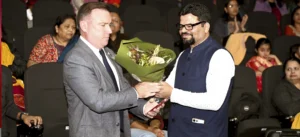
The celebration was graced by esteemed dignitaries including the Consulate General of India in Brisbane, Ms. Neetu Bhagotia, Stretton MP James Martin, along with community leaders and eminent personalities such as OAM Mr. Umesh Chandra and Mrs. Usha Chandra (GOPIO), Ms. Tanvi Goel (Founder AusIndia Travel), Mr. Rajesh Verma (President, Hindu Council of Australia), Mr. Parveen Gupta (Solicitor, RiverCity Lawyers), Mr. Mithun Chakraborty (Sargam Academy), Mr. Manish Saini (ICGC), Mr. Chandrakant Sharma, and
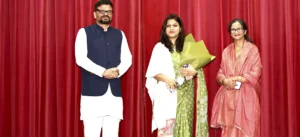
Mrs. Usha Shah. All dignitaries warmly appreciated the enlightening initiative of DJJS.


The evening concluded with a sumptuous Indian vegetarian meal, for which DJJS sincerely thanks Mr. Bhalla Ji (Bhalla Restaurant) and Mr. Daulat Singh (Punjabi Palace) for their generous support.

DJJS would also like to wholeheartedly thank all dignitaries, guests, attendees, and sponsors for their continuous support, encouragement, and for taking out valuable time to be part of this divine celebration.

Blood, Bonds and Balancing Act

Blood, Bonds and Balancing Act

Exploring Adult Sibling Relationships in the Indian-Australian population.

By Rinchaal Patel, Mindset and Relationship Coach, YOLO Academy

Introduction: The Hidden Baggage

Sibling relationship is one of the longest relationships an individual has in most cases, as their parents, partners and offspring are in their lives for a comparatively shorter span of life, yet, for most adults’ sibling relationship isn’t the first relationship that comes to mind, when we speak about adult relationships. Over time, this relationship goes through major transformations as the roles of the individuals change within the family and as they start their own families, yet, it gets given very little credit for the value it holds. It is very easy to forget sometimes that your siblings have known you your whole life and they can understand you much better than you might think.

We recently celebrated Rakshabadhan and it got me thinking what it means in today’s world. In the olden days, the sister would tie the “Rakhi” on the brother’s wrist and in return the brother promises to protect the sister or be there to protect her honour. What does that symbolise for us today? In my opinion, it means having each other’s back and being there for each other not just to protect the honour but to share stories, make memories and continue the familial bond.

As we get older, another thing that occurs between siblings is the disconnect, sometimes due to distance, sometimes due to difference in opinions and sometimes due to sibling rivalry for property/ inheritance. When we think about sibling rivalries within the desi community, there are the rivalries that we have seen in movies and on television where it ranges from being backlisted from the families to fights breaking out and family members fighting over property, all in the name of family, the “khandaan”.

However, what starts as competition for parental approval/attention during childhood can evolve into adult disputes about money, caregiving, cultural obligations, or who “sacrificed more.” These rivalries are not just personal—they are often legacies of generational trauma, passed down through families shaped by migration, hierarchy, and unspoken sacrifices.

Have you ever considered the childhood squabbles over toys or who got the bigger slice of cake end up being the rivalries that gets passed on from generation to generation. Every time one sibling was told by the parent or an older to compromise over the will of the other, leaves an imprint within them that makes them feel a range of negative emotions ranging from jealousy, to lack of self-worth. As adults we may even think that one child compromising won’t matter much, but if that is the child compromising each time, it leaves an imprint within them. Sibling rivalries don’t necessarily fade with age, sometimes they deepen impacting the bonds that once held them together.

The pressing question for today’s millennial siblings is this: Do we continue the rivalries we inherited, or do we consciously break the cycle and heal?

Trauma Passed Down in Silence

Generational trauma is not always about one dramatic event—it is about the accumulation of hardships. For many Indian migrant families in Australia, trauma stems from:
Parents who worked multiple jobs to establish financial security.
Experiences of racism, marginalisation, or homesickness.

Authoritarian parenting styles where obedience outweighed emotional expression.
Children absorbed these pressures differently. One sibling may have been encouraged to overachieve as a way of validating the family’s sacrifices. Another may have been labelled the “rebellious one,” carrying the frustrations of generational struggle. Over time, these assigned roles harden into rivalry.

The Cultural Layer of Competition- PERCEPTION

In Indian families, comparison is often woven into everyday life. Praise for one child (“Your brother is so responsible”) often feels like a critique of the other. These small but frequent remarks create long-lasting fault lines.
A 2019 Journal of Family Psychology study found that siblings who experienced perceived parental favouritism were significantly more likely to report conflict well into adulthood. In diaspora families, where parents already face the burden of survival in a new country, these patterns can feel intensified.

The Diaspora Experience
For Indian Australian millennials, rivalry often stretches beyond family walls. It plays out in cultural milestones—who married “appropriately,” who retained their language, or who is seen as more “Australian” versus more “Indian.” These identity-based comparisons add another layer of tension that siblings in monocultural contexts may not face.

Emotional Fallout
Research from Purdue University found that adults with poor sibling relationships are more likely to suffer from loneliness, depression, and lower life satisfaction. Rivalries create emotional distance, replacing trust with suspicion and leaving siblings ill-equipped to lean on each other during crises.

Family Cohesion at Risk
In Indian families, siblings often act as the glue that holds extended kinship networks together. When rivalries escalate, that glue weakens. Weddings, festivals, and caregiving responsibilities become arenas of tension instead of connection.
One Melbourne-based millennial reflected:

“When my sister and I weren’t talking, it wasn’t just us who suffered. Family gatherings were divided, parents were stressed, and cousins felt they had to pick sides. Our rivalry rippled through the entire family.”
Contd. on next Month


A Celebration of Tradition and Talent

A Celebration of Tradition and Talent

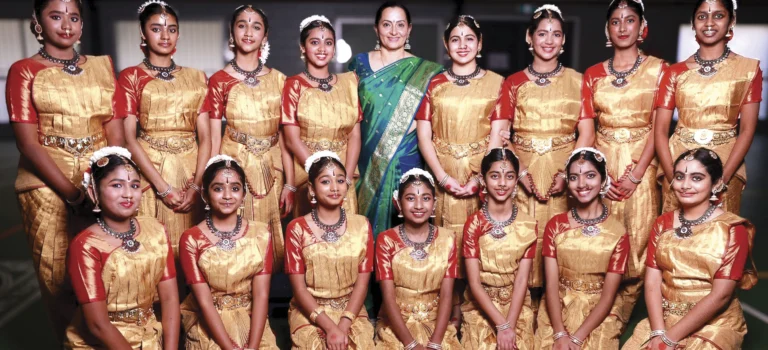
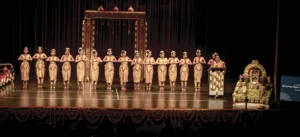
A Celebration of Tradition and TalentThe Lalithakalalaya School of Bharathanat-yam recently held its fourth Salangai Pooja – a beautiful milestone for 15 young dancers who stepped onto the stage to formally offer their art in a traditional and spiritual way.
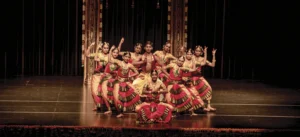
For every Bharathanatyam student, a Salangai Pooja is more than just a performance – it marks their readiness to take on deeper training and a lifelong journey in this classical dance form.

A Celebration of Tradition and TalentThis celebration was the result of 8 months of dedicated practice by the students, supported by their parents and guided by their Guru, Smt. Padmalakshmi Sriram. The stage lit up with nine graceful performances, each one showcasing the foundation of Bharathanatyam – intricate footwork, rhythm, storytelling, and beautiful group synchronisation. The dancers, dressed in vibrant costumes, moved with confidence and grace, their expressions breathing life into each piece.
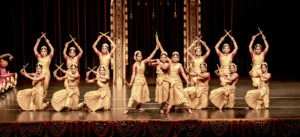
A Celebration of Tradition and TalentThe live orchestra added a magical touch to the evening with Smt. Padmalakshmi Sriram and Kum. Shivani Sriram on nattuvangam, Smt. Priyadharshini Swaninathan on vocals, Shri Harish Ravindran on mridangam, Shri Aswin Narayanan on violin, and Kum. Vindhyavasini Sureshchandra on veena. Together, they created a soulful experience for an audience of 400 people who were deeply immersed in the music, rhythm, and culture of India.
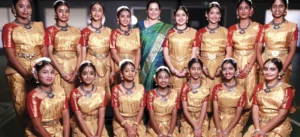
A Celebration of Tradition and TalentThe success of the evening reflected the tireless dedication of Guru Smt. Padmalakshmi Sriram, who continues to preserve and share this ancient art form beyond the borders of India. Her ability to prepare 15 young dancers for such a demanding performance is truly commendable. Her efforts were acknowledged by the Consul General of India in Brisbane, Mrs. Neetu Bhagotia, who attended the event and praised the Guru, musicians, and students for their remarkable achievement.

We congratulate these young dancers for reaching such an important milestone and wish them many more opportunities to grow in their artistic journey. May they continue to dance with the same passion, discipline, and joy that lit up the stage that evening.