
Chinmaya Mission Brisbane welcomes Devi Bhuvaneshwari

Chinmaya Mission Brisbane welcomes Devi Bhuvaneshwari

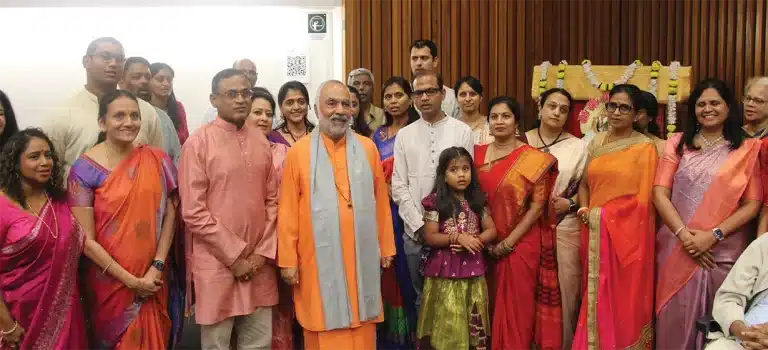
Chinmaya Mission Brisbane welcomes Devi BhuvaneshwariChinmaya Mission Brisbane hosted a spectacular festival of Vedanta talks on Devi by Global Head of the Mission, Swami Swaroopanandaji, from March 21 to 23, 2025 at the University of Queensland. Enlightening spiritual stories and knowledge about Shakti Devi were enriched with lively and colourful cultural performances by talented local artists. Pujya Swamiji’s talks marked the auspicious occasion of the naming of the Chinmaya Mission’s Brisbane ashram -Chinmaya Bhuvanam.

The presiding deity of Chinmaya Bhuvanam ashram is Devi Bhuvaneshwari Mata, Queen of the Universe. Appropriate that Mother is coming to Queensland! Pujya Swamiji’s talks on Devi -The Power Within You unfolded the glory and potency of Bhuvaneshwari as Shakti, in all her splendid forms. The talks elaborated on a melodic composition, Durga Maha Kali Stotram, that Pujya Swamiji was inspired to write during the time of COVID.

The formal inauguration of Chinmaya Bhuvanam Ashram at 8 Julie Road, Ellen Grove has been delayed by a few weeks due to Mother Nature sending a cyclone to remind us of her mighty power. She is also Durga Devi, protector of the Universe and remarkably, no lives were lost in Queensland during the wild event.

Chinmaya Mission Brisbane welcomes Devi BhuvaneshwariTo celebrate the imminent opening of the ashram and welcome Mother Bhuvaneshwari, each night before the talks, the audience was treated to cultural programs with vibrant dance and music performances in praise of Devi. Offerings included a vocal item by Dr Jyotsna Unnikrishnan accompanied by violinist Shri Praveen Paila, a flute recital by Shri Murali Ramakrishnan accompanied by Shri Guhanesh Ganesh on tabla, and beautiful devotional dances from prominent schools in Brisbane: Shraddha School of Dance, Lalitha Kalalaya Dance School, Nadananjali School of Dance. The highlight of the celebrations each night was the truly mesmerizing talk on “Devi, the Power within you” delivered by Pujya Swamiji.

Throughout, Pujya Swamiji referenced his talks to the Devi Mahatmyam, where the Divine Cosmic Mother is described as ‘anirvachaniya’, one who is beyond description and one who is inexplicable. As Maya, she is the manifested form of the infinite and the cause of the entire universe with its multitude of forms and creations. As, Prakriti, which constitutes the three gunas -Tamas, Rajas and Sattwa, Maya is depicted as three forms of the Divine Cosmic Mother, Durga, Lakshmi and Saraswati, to remove the three doshas or limitations in our personality. According to Vedanta, we are all of the nature of Satchitananda swaroopa -existence, consciousness and bliss. However, ignorance of our real nature and true self, and subsequent falling prey to the agitations of the mind is the cause of our sense of limitation and bondage.

Pujya Swamiji’s composition of Durga Maha Kali Stotram describes the Divine Mother as Maha Tripurasundari, Tripuramohini, Tripurapalini and Tripuradwamsini -the loveliest, enchantress, protector and annihilator of the three worlds. Her beauty is on display as Mother Nature. As the supreme enchantress, Mother is ever gentle, kind and protective of all creatures, but can also be at her destructive best to protect the good from evil.

The essence of Devi Shakti

Seated on the Lotus as radiant Mother Lakshmi, Devi represents the lccha (creative) Shakti in us. Seated on the lion as Mother Durga Kali, Devi represents the Kriya (energetic) Shakti in us and seated on the swan as Mother Saraswathi, Devi represents the Gnana (Knowledge) Shakti in us which liberates us from delusion and blesses us with discrimination between the real and the unreal.

The Divine Mother is indeed the illuminator of the three states of consciousness in us­Jagrat (waking), Svapna (dreaming) and Sushupti (deep sleep). A life lived abiding by virtues, contentment and caring for the well-being of all begets positivity in all states of consciousness.

Pujya Swami reminded us that we don’t have to go far in search of the Divine Mother. She is present in our own mother, who is indeed a true manifestation and embodiment of the Divine Cosmic Mother, the Supreme Shakti. Each of the attributes of the Divine Cosmic Mother can be verily seen in our own mother.

Pujya Swamiji encouraged us to recognize these attributes of the Divine Mother in our own mother. He posed the important question -do we give our own mothers the respect and care they deserve? It is to instill such respect for mother that, Pujya Gurudev, Swami Chinmayananda, commenced Matru-puja to our own mothers, as part of the Navarathri celebrations each year.

Pujya Swami Swaroopanandaji, invited the audience to keep their devotion ever fresh by visiting Goddess Bhuvaneshvari, the Divine Mother of the entire universe at the aptly named Brisbane Ashram -CHINMAYA BHUVANAM -as often as possible.
Join Chinmaya Mission Brisbane to make a positive difference in your life and to those around you! Visit our website https://www.chinmaya.com.au/pages/brisbane-centre.
Sevak Anantharaman
In Your Service
At His Feet
Nurse, living with cancer, appeals for more people to donate blood and join the stem cell registry

Nurse, living with cancer, appeals
for more people to donate blood and join the stem cell registry

Nurse, living with cancer, appeals 
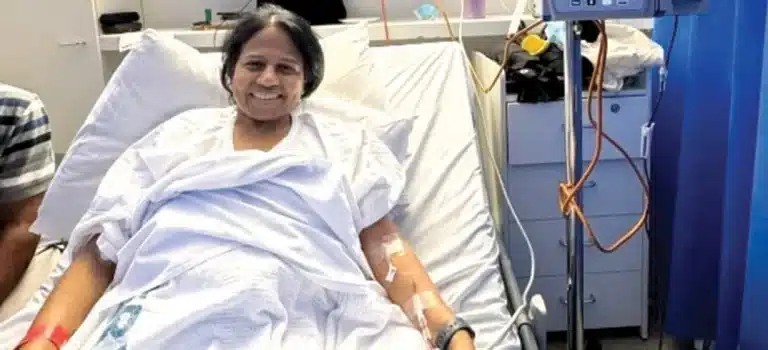
for more people to donate blood and join the stem cell registryA long-time Lifeblood nurse, recently diagnosed with leukemia, has issued a personal plea for people in her local Cranbourne community and across Australia to donate blood and join the stem cell donor registry.

Sheela Joseph, a familiar face to donors at Australian Red Cross Lifeblood’s Frankston Donor Centre, said these simple, kind acts provide hope and truly have the potential to save lives.On average, one acute leukemia patient relies on the blood donations of 18 people each month for their treatment. While a stem cell transplant is the best option for many high-risk patients.

Sheela, who has worked at Lifeblood for 11 years, said she sees the best in people when they donate blood and plasma.

“I often think about where the blood is going, whose life it will impact and the flow on effect to their loved ones,” Sheela said.
“I want to take this moment to urge people to join the stem cell donor registry at their next blood or plasma donation. The more people who are on the registry, the more patients could be given a second chance at life.”

Nurse, living with cancer, appeals 
for more people to donate blood and join the stem cell registryLifeblood’s Frankston Donor Centre team is rallying around kind-hearted Sheela.
Centre Manager Janet Brangsch said Sheela’s desire to help others continues to shine through, even in her own time of need.
“Sheela is one of nearly 20,000 people diagnosed with blood cancer in Australia each year,” Janet said.

“Seventy percent of the patients who go on to need a stem cell transplant don’t have a match within their family and rely on the stem cell donor registry. That is why it is so important to boost numbers.

“Men, aged 18-35 years old, are often the most successful blood stem cell donors. We also need to increase the ethnic diversity of the registry to reflect our multicultural community because patients are more likely to find a match with a donor from the same ethnic background.

“A larger and more diverse registry would provide more opportunities to find matches for patients in Australia.”

Donating blood stem cells is a safe and straight forward process, similar to donating plasma and takes place in a comfortable chair. If you’re identified as a match, the donation is made in hospital as an outpatient. More information here.

To join the Stem Cell Donor Registry at a Lifeblood Donor Centre, book a blood or plasma donation. A sample will be taken at the time and used to match donors to patients. Call 13 14 95, visit www.lifeblood.com.au or download the DonateBlood app to book a donation. Donors can also join the registry using a cheek swab. For more information, visit the Stem Cell Donors Australia website.

Good Friday and Resurrection Sunday: A Testament to Divine Love

Good Friday and Resurrection Sunday:
A Testament to Divine Love

Good Friday and Resurrection Sunday: 
A Testament to Divine Love

Key Scripture: But he was pierced for our transgressions, he was crushed for our iniquities; the punishment that brought us peace was on him, and by his wounds, we are healed. (Isaiah 53:4)

I have come to know the amazing grace of God. I have tasted and seen the goodness and mercy of God. In the darkest moment of my life, I encountered Yeshua (Jesus) as a living and loving God. I have come to understand the power of the Cross of Christ. This Easter, I invite you to examine the faithfulness and credibility of this truth.
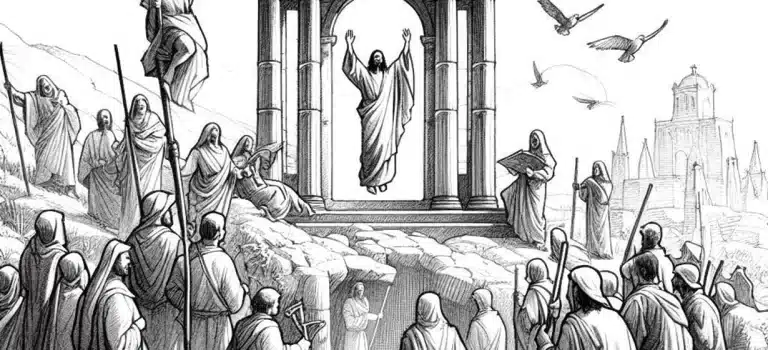
The cross and the empty tomb are profound symbols of God’s unwavering love for all humanity. They represent a narrative of sacrifice, hope, and redemption that transcends time and culture.

From the Old Testament, the prophecy in Isaiah 53:5 speaks of a suffering servant who bore our sins: “But he was pierced for our transgressions, he was crushed for our iniquities; the punishment that brought us peace was on him, and by his wounds, we are healed.” This foretells the immense love and sacrifice of Jesus Christ.

In the New Testament, John 3:16 encapsulates this love: “For God so loved the world that He gave His one and only Son, that whoever believes in Him shall not perish but have eternal life.” It highlights a divine love that calls humanity to grace and hope.

This message resonates universally. For Hindus, it echoes the timeless themes of sacrifice for dharma (righteousness) and liberation from the cycle of suffering. For Muslims, it aligns with recognising Jesus (Isa Isa) as a prophet and a symbol of God’s mercy and guidance.
On this Good Friday, reflect on the humility of the cross. On Resurrection Sunday, rejoice in the victory over death. Together, they call us to redefine success—not in worldly terms, but in eternal perspective: living with wisdom, compassion, and purpose.

I pray and hope that you will seek God the Creator as your only redeemer, the way and life. Let the Good Friday guide you to a living hope. Let the resurrection Sunday bring you a rejoicing.

Back to Fiji in March

Back to Fiji in March

Back to Fiji in March

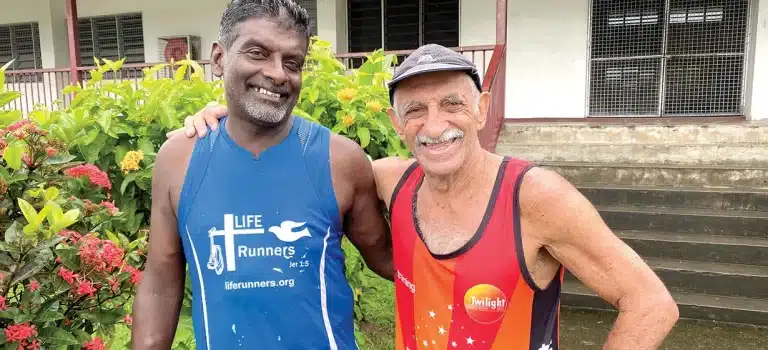
My wife Dot and I are back in friendly Nadi Fiji for two weeks where daily it is hot, humid and raining as there is a cyclone off the coast.While Dot goes with women friends to have a coffee in town, I plan to run at 8 am with my Indian friend, Vijay, aged 57, who runs most days to keep fit. This is a good habit as the older you get, it is hard to keep fit anywhere, but especially in hot Fiji.

He is busy as both a school maintenance man and the Pastor for an Indian Church that he started
We planned a 10 km run along some sugar cane farm roads but as there has been heavy overnight rain it is too hard to run through mud and big pools of water. So we ran to the airport and then back through local shop center. No one else is running as it is hot and humid though many people are walking.

A carpenter working on a house roof calls out encouragement to us
“Thanks for running you are both an inspiration.”

After leaving Nadi we travel 20 km to Lautoka to see Korean, Filipino and Norwegian friends. All of them are inspirational people as they do community work.
I also run with my Korean friend, Daesong, who along with his wife, organizes four free- dental programs each year in local villages. On their last very busy dental program, they treated 100 very grateful people a day, cleaning and extracting their teeth, taking blood pressure and giving medications.

The team commented that some of the villagers had a poor diet not being able to eat enough fresh vegetables. In fact, on these programs, volunteers come from Brisbane, Sydney, New Zealand as well as from a local Redland Bay College.

After Lautoka we took a pleasant four-hour bus trip to visit Dan and wife Va at hot, humid rainy Wainadoi, which is 20 km from Suva. Dan is the Pastor in an Indian village where they have built a church. After Sunday Church we had a great time with the congregation drinking chai and eating samosas.

Our trip has ended and now we are back in Brisbane, inspired to help in our own local community and to keep healthy, eat a good diet and exercise regularly.
Written by Peter Lane Rai, March 2025

Taiwanese Australian Art in Harmony Exhibition Concludes Successfully, Showcasing the Charm of Multicultural Art

Taiwanese Australian Art in Harmony Exhibition Concludes Successfully, Showcasing the Charm of Multicultural Art

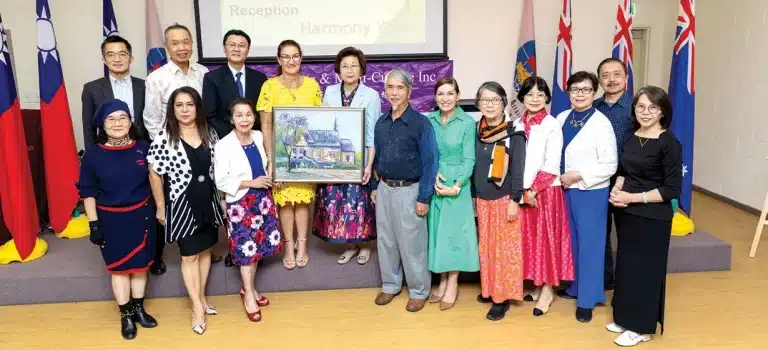
Taiwanese Australian Art in Harmony Exhibition Concludes Successfully, Showcasing the Charm of Multicultural ArtThe Taiwanese Australian Art in Harmony Exhibition, organized by the World Arts & Multi-Culture Inc. (WAMCI), concluded successfully with a reception on March 19, 2025, at the Taiwan Centre in Queensland. This exhibition brought together artists from Taiwan, Australia, and the Philippines, showcasing the beauty of cultural fusion through various artistic mediums and styles, offering Brisbane an enriching visual and spiritual feast.


Taiwanese Australian Art in Harmony Exhibition Concludes Successfully, Showcasing the Charm of Multicultural ArtArt Without Borders: A New Milestone in Cultural Exchange

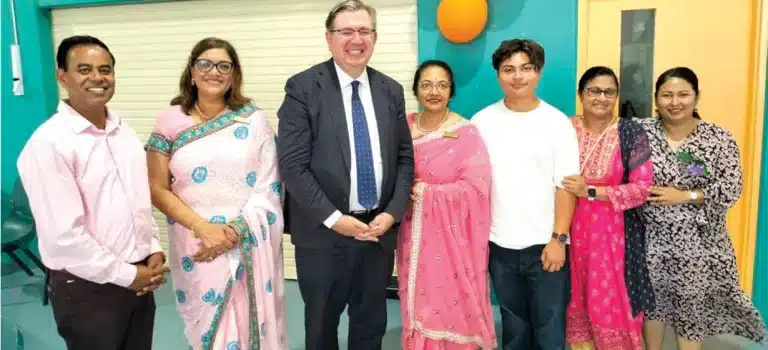
On the day of the reception, distinguished guests from the arts, politics, business, education, and multicultural communities gathered to witness this vibrant artistic and cultural exchange event.


Taiwanese Australian Art in Harmony Exhibition Concludes Successfully, Showcasing the Charm of Multicultural ArtHonoured Guests in Attendance:

Hon Leeanne Enoch MP, Shadow Minister for the Arts
James Martin MP, Queensland State Member for Stretton
Cr Kim Marx, Brisbane City Councillor Runcorn Ward
William Fan, Director-General, Taipei Economic and Cultural Office in Brisbane
Charles Ouyang , Director of the Taiwan Centre in Queensland
Several Council Members of Overseas Community Affairs Council, Taiwan and Taiwanese community leaders

Taiwanese Australian Art in Harmony Exhibition Concludes Successfully, Showcasing the Charm of Multicultural ArtMulticultural community leaders and artists from Germany, Japan, India, Fiji, Vietnam, Norway, the Philippines, and Brazil
Guests emphasized that art serves as a bridge that transcends language and cultural barriers, fostering understanding and respect among different communities. This exhibition not only highlighted the creative talents of participating artists but also deepened the connection between Taiwan and Australia’s multicultural communities.


Taiwanese Australian Art in Harmony Exhibition Concludes Successfully, Showcasing the Charm of Multicultural ArtExhibiting Artists: A Showcase of Diverse Artistic Expressions

The exhibition featured a collection of talented artists who used oil paint, watercolors paint, sketch and multi-media creativity to share their unique cultural stories:
1) Taiwanese Artists:
Hwang Buh-Ching, Hwang Wey-Jeng, Su Chih-Che, Lin Li-Hua, Chuang Tsai-Chin, Wu Chui-Chuan, Chang Chung-Fan
2) Brisbane-Based Artists:
Ivabelle Bernabe (Philippines)
April Giblin (Australia)
3) Organizing Founder:
Melody Chen, Founding President of WAMCI


Taiwanese Australian Art in Harmony Exhibition Concludes Successfully, Showcasing the Charm of Multicultural ArtThe exhibition showcased artworks spanning watercolor, oil painting, sketches, and mixed media, offering diverse cultural perspectives through various artistic styles. Attendees not only appreciated these global creations but also engaged in face-to-face conversations with the artists, gaining insight into their creative inspirations and artistic journeys.


Taiwanese Australian Art in Harmony Exhibition Concludes Successfully, Showcasing the Charm of Multicultural ArtArtistic Dialogue: Deepening Cultural Exchange

Throughout the event, art lovers, community members, and Griffith University art students attended and learned from live artist discussions. They gained valuable insights into artistic techniques influenced by different cultural backgrounds, while also experiencing the emotions and values embedded in the artworks.Additionally, several community media outlets and photographers documented this significant cultural event, ensuring that the Taiwan-Australia Art Exchange Exhibition reached a broader audience through news coverage and social media.


Taiwanese Australian Art in Harmony Exhibition Concludes Successfully, Showcasing the Charm of Multicultural Art

Art Connecting Communities: A Vision for Cultural Integration

This exhibition successfully promoted artistic and cultural exchange, enhanced the visibility of Taiwanese art in Australia, and allowed people from diverse backgrounds to find common ground through art.
The World Arts & Multi-Culture Inc. extends heartfelt gratitude to the Overseas Community Affairs Council of Taiwan, Brisbane City Council, and the Queensland Government for their generous support, which contributed to the event’s success.


Taiwanese Australian Art in Harmony Exhibition Concludes Successfully, Showcasing the Charm of Multicultural ArtMoving forward, WAMCI is committed to organizing more cultural and artistic events, fostering collaboration between Taiwan, Australia, and the global art community. Through art, we aim to build bridges across cultures and make multiculturalism shine even brighter in Australia.
(Provided by World Arts & Multi-Culture Inc.)

Community coming together and local news written by Xavier Hernandez

Community coming together and local news written by Xavier Hernandez

Community coming together and local news written by Xavier Hernandez There are moments that truly make me proud to be a young Queenslander. Over the past few weeks, I’ve witnessed firsthand the incredible spirit of our community. During ex-tropical cyclone Alfred, people from all walks of life—different backgrounds, ages, genders, and beliefs—came together to support one another. I saw neighbours listen closely to Premier David Crisafulli’s advice, prioritizing their safety and that of their loved ones. This collective effort was inspiring and reminded me of just how resilient our community is.

Community coming together and local news written by Xavier Hernandez From sandbagging and preparing homes to assisting with cleanup, countless acts of kindness unfolded across the community. Personally, I had the privilege of volunteering with my mum to deliver food to those in need and help neighbours move heavy items to safer spots in their homes. Whether it was a quick phone call to check on someone or hours spent assisting with cleanup, each act of support made a difference. I’m always happy to help or connect you with someone who can. Big shout out to organisation such as ECAQ (Eritrean Community Association in Queensland), has mobilized over 30 volunteer members to assist people seeking refuge at the Bethania Community Centre in response to Cyclone Alfred.

Community coming together and local news written by Xavier Hernandez Last month, it was wonderful to meet so many readers of the Brisbane Indian Times at the Holi event at Mount Gravatt Showgrounds. The event, organized by the Sargam Music Academy and Platinum Services, was an explosion of color, culture, and joy. As I volunteered and participated in the festivities, I was reminded of the deeper significance of Holi. The Hindu festival, also known as the Festival of Colors, celebrates the arrival of spring, love, and equality. It honors the divine love of Radha and Krishna and symbolizes the triumph of good over evil. A special thanks to President Manish Saini, his team, and the incredible Bondita and Mithun Chakraborty and all the volunteers for going above and beyond to make the event a success.

Community coming together and local news written by Xavier Hernandez Last month, many celebrated International Women’s Day (IWD). During the festivities, many women were recognized for their outstanding contributions to the community. One of the most touching moments for me was seeing my mum, Nayda Hernandez, receive the Cultural Diversity Champion Award for her years of selfless service. She has always been passionate about helping others and spreading joy, so it was incredibly heartwarming to see her efforts publicly acknowledged. A heartfelt thank you to the Deo family for their unwavering love and support to my family and the community.

Community coming together and local news written by Xavier Hernandez Happy IWD day to a lady who does the work and but a very quite achiever, Shanjeshni Deo. Their invaluable work in keeping culture alive and thriving is deeply appreciated through the deo charitable fund, good will and community service. Special acknowledgement to community champion like Rohani Prasad, Irene Tavutavu and Usha Chandra to name a few who worked tirelessly this month to celebrate the achievement of other women and women who have grown their wings, like my late aunty Kelly who paved he way for others.

I was also fortunate to attend the IWD event hosted by the Indian Senior Citizens Association and the EKTA Women’s Group. The event raised more than $800 for the cause through an auction, with notable figures like JD Deo and Senator Paul Scarr generously contributing. The solidarity and generosity on display were truly uplifting. I now understand why Senator Scarr is called “the people’s senator” and why JD Deo and family is regarded as a community champion. I also had the opportunity to reconnect with dear friends, including Helen and her daughters.

Community coming together and local news written by Xavier Hernandez Mara, a passionate young performer, showcased the incredible talent of our next generation. I’m proud that my family counts Helen and her daughters as friends, as well as Maria Brereton, a 14-year-old flutist who is seeking sponsorship to represent Australia at the Cluj International Music Competition in Romania. If you are interested in supporting Maria’s journey, you can donate via her GoFundMe page. Maria’s dedication and talent are inspiring, and I have no doubt she will make us all proud.

Focusing on local affairs, many readers have asked about the local developments that are affecting them via the survey. On March 25th, Premier David Crisafulli unveiled the plans for Brisbane’s 2032 Olympics, revealing the venues and outlining how this global sporting event is aimed at shaping a better future for generations of Queenslanders. This is an exciting milestone, and it promises to bring lasting benefits to our community.

Community coming together and local news written by Xavier Hernandez In addition, the Albanese government has committed to a significant investment in education, pledging $30 billion over the next ten years to improve childhood literacy, numeracy, and school completion rates which is supported by Queensland, Premier David Crisafulli who co-signed the agreement. The Federal budget was announced on March 25th, same day that shows a deficit of $27.6 billion, which is an improvement from previous forecasts but still a cause for concern for people and economist. It’s clear that while efforts are being made to support Australians through tax cuts and relief measures, the challenges of rising costs and financial hardship are far from over.
 

Community coming together and local news written by Xavier Hernandez

What this means for us, as a community, is that we must continue to support one another, especially the most vulnerable among us. Charities and community groups will need more resources than ever, and it’s crucial that we remain proactive in reaching out to those in need. Although there are policies aimed at assisting families, it’s uncertain what the full impact will be in the long run. I encourage anyone who is struggling to seek help—whether from local organizations, neighbours, or friends. No one should have to face hardship alone.

Lastly, I want to hear from you. Please reach out if you have topics you’d like me to write about or any feedback. Your input is always welcome.

Current Australian Politics and Its Impact on the Indian Diaspora

Current Australian Politics and Its Impact on the Indian Diaspora

Current Australian Politics and Its Impact on the Indian Diaspora Australia’s political landscape has undergone significant changes in recent years, shaped by various domestic and international events, including debates surrounding immigration, national security, economic recovery, and social equity. As a multicultural society, Australia’s policies often reflect its commitment to diversity, but they also sometimes trigger tensions that affect various communities. One of the most prominent communities in Australia today is the Indian diaspora, which has grown substantially over the past few decades.

Current Australian Politics and Its Impact on the Indian DiasporaThe Rise of the Indian Diaspora in Australia
The Indian diaspora in Australia has grown rapidly over the past 20 years, and it has become one of the fastest-growing ethnic groups in the country. The growth of this community reflects the increasing bilateral relations between Australia and India, driven by factors such as trade, education, tourism, and technology.

India is also a significant source of skilled migrants to Australia, with many young Indians coming to Australia for higher education or employment opportunities. As a result, the Indian diaspora has become a vital part of Australia’s economy, contributing to sectors such as healthcare, IT, engineering, hospitality, and retail. The community’s diversity—comprising people from different regions of India, speaking a variety of languages, and following different religious practices—adds richness to Australia’s multicultural fabric.

Immigration and Border Control

Immigration has been a central issue in Australian politics for many years, especially since the 2010s, with debates over the size and composition of migration programs. The Indian community, like many others, has been deeply impacted by policies surrounding skilled migration, family reunification, and international students.

Recent government policies, including stricter visa conditions and the emphasis on ‘Australian values,’ have created challenges for immigrants from non-Western countries. While the current Labor government under Prime Minister Anthony Albanese advocates for a more inclusive immigration policy, debates continue about the capacity of Australia’s infrastructure and housing to cope with the growing migrant population. The Indian diaspora is particularly affected by these policies, as they often seek to bring family members over or apply for skilled worker visas.

National Security and Race Relations

National security has been a significant issue in Australian politics, particularly after the rise of global terrorism and tensions in the Indo-Pacific region. The Indian community in Australia has experienced both the benefits and the challenges associated with these concerns.

In recent years, anti-terrorism legislation and policies have often been perceived as disproportionately targeting Muslim and South Asian communities. This has resulted in heightened scrutiny of individuals from the Indian subcontinent, particularly those of Sikh and Muslim faiths, which has impacted community relations. Indian students and workers have sometimes reported racial profiling and suspicion, even if they are not directly involved in any illicit activities.

On the other hand, the rise in Hindu nationalism in India and its resonance among some elements of the Indian diaspora in Australia has also contributed to tensions in the multicultural society. Political parties in Australia, particularly the conservative Liberal Party, have sometimes engaged with issues of national security that indirectly affect minority communities, such as the Indian diaspora.

Economic Policies and Employment

Australia’s economic policies also have a significant impact on the Indian diaspora. As a large section of the Indian community works in the services sector, healthcare, and technology, economic changes, such as budget cuts or changes in the minimum wage, can influence the livelihoods of many individuals.

Australia’s current Labor government has focused on creating jobs, raising wages, and implementing policies that benefit working-class people. Many members of the Indian diaspora, especially those in low-wage jobs in sectors like hospitality or healthcare, could benefit from these changes. However, issues such as the rising cost of living, housing affordability, and job insecurity have affected many migrant workers.

Social and Cultural Recognition

Social inclusion and cultural recognition are critical components of political discourse in Australia. While the Indian diaspora has been largely accepted as part of the national fabric, challenges remain in terms of integration and representation in mainstream politics. Indian Australians have sometimes felt excluded from political discussions and decision-making processes.

Representation of the Indian community in Australian politics has been gradually improving. The election of Indian-origin politicians, such as former Liberal MP Tim Wilson and current Labor Senator Mehreen Faruqi, reflects growing political engagement within the community. However, debates continue about whether the Indian diaspora’s concerns are adequately represented and whether there is enough focus on issues such as racism, access to education, and healthcare for migrants.

Racial Discrimination and Hate Crimes

Racial discrimination remains a significant issue for many members of the Indian diaspora, particularly in the wake of high-profile incidents of violence against Indian students in the past decade. Although the number of hate crimes targeting the Indian community has decreased over time, occasional attacks still occur, often fuelled by racial prejudice or cultural misunderstandings.

The political rhetoric around national security, immigration, and multiculturalism sometimes fuels anti-immigrant sentiment, which affects communities like the Indians. While the government and law enforcement agencies have made efforts to address these concerns, more proactive measures are needed to tackle racism and hate crimes comprehensively.

Education and Student Visa Policies

Education is one of the most important sectors for the Indian community in Australia, with thousands of Indian students enrolled in Australian universities every year. While Australia’s education system is highly regarded internationally, recent shifts in policies regarding student visas and work rights have created uncertainties for many Indian students.

The previous government’s stance on international students, including restrictions on post-study work visas and fee increases, caused anxiety among Indian students. However, the current Labor government has shown a more supportive stance toward international students, which has positively impacted the Indian diaspora, especially students looking for long-term career opportunities in Australia.

Healthcare and Social Services

As the Indian community grows, there is increasing demand for healthcare services that cater to diverse cultural and linguistic needs. The Australian healthcare system has made strides in addressing multiculturalism, but there are still gaps in providing culturally competent care, particularly for older members of the Indian diaspora who may not be fluent in English.

The Indian diaspora’s growing numbers also require targeted support for mental health, as issues like migration stress, family separation, and cultural adjustment can take a toll on the community. The current government has made some commitments to improving mental health services, which could be beneficial for the Indian community.

The Future of the Indian Diaspora in Australian Politics

As Australia navigates complex political, economic, and social challenges, the Indian diaspora’s role in shaping the country’s future will only continue to grow. The relationship between Australian politics and the Indian community will undoubtedly evolve as migration policies change, the economy fluctuates, and social debates around multiculturalism intensify.

The Indian diaspora in Australia faces both opportunities and challenges. Politically, it has the potential to become an influential force, particularly as more members of the community enter the political arena and advocate for their interests. At the same time, the community must continue to address issues such as racial discrimination, access to education, and integration in the broader Australian society.

In the coming years, it is likely that the Indian diaspora will continue to contribute significantly to Australia’s cultural, economic, and political landscape, but this will depend on how well the current and future Australian governments can create inclusive policies that support this growing community while ensuring that they are fully integrated into the national fabric.

1st March – Zero Discrimination Day The theme for this year is ‘We Stand Together’

1st March – Zero Discrimination Day The theme for this year is ‘We Stand Together’

1st March – Zero Discrimination Day  The theme for this year is ‘We Stand Together’

The 1st March 2025 is the eleveth year that Zero Discrimination Day has been acknowledged. This day was first celebrated by UNAIDS to recognise and raise awareness for people living with HIV/AIDS. It has now evolved with the United Nations recognising it as a day to recognise and celebrate everyone’s rights regardless of our differences.

Every person has the right to live a full and productive life, free from stigma and discrimination and with dignity. This includes any person living with a blood borne virus such HIV, hepatitis B and hepatitis C, or a person infected with a sexually transmissible infection.

Discrimination and stigma related to these health conditions are often due to fear, lack of knowledge and misunderstandings or misconceptions of how and why these conditions are transmitted.

In Queensland the highly trained team of the Love Health Program at the Ethnic Communities Council of Queensland (ECCQ) is proud to provide information, education and support for people from culturally and linguistically diverse backgrounds regarding these health conditions.

We encourage all people to ‘know their status’ and to get tested for these conditions to protect their health and wellbeing. We are pleased to be able to offer rapid finger prick testing to check for exposure to hepatitis C and for potential hepatitis B infection. This is performed confidentially, and the results are available within 30 minutes.

The butterfly is the symbol of Zero Discrimination Day, this symbolises positive transformation. Through increased knowledge and greater understanding, we can live more productive and healthy lives and stop discrimination.

For more information about our services and information about HIV, Hepatitis B and hepatitis C and sexually transmissible infections please visit our webpage www.eccq.com.au/bbv or contact us at: 3844 9166 or email [email protected]. 

If you are living in Cairns, you can contact Damian Garozzo-Vaglio at Cairns Sexual Health Services by calling 4226 4760 or emailing [email protected]. 

MORE MONEY

MORE MONEY

MORE MONEY

MORE MONEY
Pastor Suresh Dass Joseph
[email protected]

Dear reader, it is our joy to bring to you the word of God. One of the blessings from God is that we prosper and have more than enough, so it is not only us who are blessed but be a blessing to someone else. But if you have lived with a lack mindset, where you have continually struggled financially, then it is easy to form a habit of always thinking, “I will never get out of debt; I will never have enough to provide for my family.”

God has ways to increase you that you’ve never thought of. He’s not limited by your job, by your education, or by the family you were raised in. If you take the limits off him, God will bless you beyond your regular income, your salary, and what anyone in your family has seen. Proverbs 10v22 says, “The blessing of the Lord makes one rich.”

One of the ways God will increase you is when you learn to be generous with what has been given to you.

In the bible (Matthew 25v14-30), we read about a business owner traveling overseas and giving his employee one thousand dollars. This was not a wage but a gift from the owner. After a long time, the owner returned from the trip. The employee came and brought a thousand dollars more, saying, “Lord, you delivered to me one thousand dollars; look, I have gained one thousand more.”

The owner was very pleased with him and said, “Well done! You have been faithful over a few things. I will make you ruler over many things.” So, he was rewarded abundantly. In Jesus’ parable, the owner represents God, and the employee represents us.
We can learn three things from the business owner and the employee.

1. If God can get it through you, He will give it to you. When the owner gave the money as a gift, he expected the employee to release it, invest it, or be generous. Likewise, God has gifted you many talents, gifts, and finances. You will lose it when you hoard it, but when you give some of it away and be generous with it, you will get it back. As it says in the book of Luke, “Give and it shall be given back to you, good measure, pressed down, shaken together and running over shall be put into your bosom. The measure you use shall be returned to you.” The employee invested the money by releasing it. He got more back.

2. God is after your money. He does not want to take it from you, so you become poor, but on the contrary God wants to see you being blessed through your giving or generosity. In Malachi 3v10, God says, “Bring all the tithes into the storehouse, That there may be food in My house, and try Me now in this,” Says the LORD of hosts, “If I will not open for you the windows of heaven And pour out for you such blessing that there will not be room enough to receive it.” Everything in you will say, “I am going to be generous with my money when I overcome my problems and fix my finances.” But when you do your part by being generous with your money, even while you have your own struggles, then this is what is going to open the windows of heaven.

3. God has a sound financial plan for your life. If you don’t know it, you may not have discovered it yet. In the scriptures, we read that God has a good plan for your life, including your finances. The business owner gave his employee a thousand dollars. This was a surprise and came unexpectedly to him.

In the same way, God has many surprises for you. They will come to you when you are least expecting it. You didn’t see it coming. You didn’t dream that you could be so blessed. You don’t know what God has in store for you. You don’t know the promotions, the opportunities, the favour that he’s already ordained to come across your path. Psalm 35 says: “God takes pleasure in prospering you.” It brings a smile to God’s face to make things happen that amaze you.

The business owner was pleased to see his worker get so blessed. In the same way, it gives God pleasure to see you blessed, and you may not know how this can happen, but the scripture says, “God will supply all of our needs according to his riches.” It doesn’t say, “According to your job, according to your talent, if the boss likes you, if the economy’s up, if you have the right friends.” It’s not according to what you have. It’s according to what He has, and the good news is that God owns it all. He makes streets out of gold and can create them if he doesn’t have what you need. He speaks, and worlds come into existence.

And all this is possible from a relationship with God through His Son Jesus Christ. This relationship is possible when we confess our wrongs and sins, repent of them, and put our faith in Jesus Christ as our Lord and Saviour. We become children of God. We become partakers of the blessings God has for us.

God bless you


Our Confidence in Prayer

Our Confidence in Prayer

Our Confidence in Prayer

Creating Wealth Through Property Portfolios
By Pushpa Vaghela

Many people struggle with prayer, unsure of what to ask for or how to approach God. The key to effective prayer lies in aligning our requests with our divine purpose. When we pray outside of our purpose, we may experience frustration and disappointment. True confidence in prayer comes from knowing and pursuing God’s will in our lives.

Jesus demonstrated this perfectly. His prayers were always centered on fulfilling God’s purpose, not on seeking personal gain. One of His most profound prayers, recorded in John 17, reveals His understanding of His mission: to redeem those given to Him by the Father. He did not simply pray for blessings or personal desires but instead focused on completing the work set before Him. His prayer reflected His deep commitment to God’s will and His unwavering faith in its fulfillment.

When we seek God’s will in prayer, we can approach Him with confidence, knowing that our requests align with His greater plan. This is reinforced where God assures us that if we ask anything according to God’s will, He hears and grants our requests. Prayer is not about convincing God to do what we want but rather about positioning ourselves to receive what He has already planned for us.

Prayer as an Exercise of Authority

Prayer is more than just communication with God—it is a means of exercising our spiritual authority. God has given humanity dominion over the earth, and through prayer, we activate His power in our lives and communities. When we stop praying, we inadvertently hinder God’s purposes, allowing negative influences to take hold.

Jesus emphasised the necessity of persistent prayer, teaching His disciples to always pray and not give up. He entrusted them with spiritual authority, symbolised by the keys of the kingdom, empowering them to bind and loose according to God’s will. This illustrates that prayer is not passive—it is an active engagement in bringing God’s plans to fruition.

By neglecting prayer, we forfeit our role in God’s work. Though His ultimate plans will always come to pass, He seeks willing participants to collaborate with Him in shaping the world. When we pray, we invite God’s presence into our lives and circumstances, allowing Him to work through us for His glory.

Aligning Our Prayers with God’s Will

To develop confidence in prayer, we must cultivate a deeper understanding of God’s will. This requires time in His presence, studying His word, and seeking guidance through the Holy Spirit. When we align our hearts with God’s purposes, our prayers become powerful and effective.

We must also recognise that prayer is not about changing God’s mind but about transforming our own. As we submit to His will, our desires shift to reflect His priorities. We become instruments of His love, wisdom, and justice in the world.

Prayer and the Call to Action

Prayer is both a spiritual discipline and a call to action. Jesus not only prayed for God’s will to be done but also actively worked to accomplish it. Likewise, our prayers should be accompanied by faithful action. If we pray for healing, we should also offer support to the sick. If we pray for justice, we should stand against injustice. Faith without works is incomplete, and prayer without action lacks its full potential.

As leaders in faith and purpose, we must embrace prayer as a tool for transformation. Whether we are interceding for our families, communities, or global issues, we must remain steadfast in seeking God’s will. Through prayer, we gain clarity, strength, and direction, empowering us to fulfill our divine calling.

Let us commit to a life of purposeful prayer, confident that God hears us when we align our hearts with His. By doing so, we not only strengthen our relationship with Him but also become active participants in His divine plan for the world.