
Rabuka Government at Breaking Point as Legal and Corruption Crises Deepen Ahead of 2026 Polls
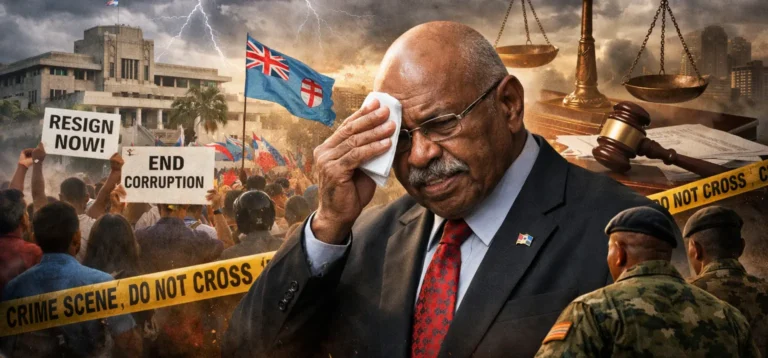
The political landscape in Fiji is currently weathering its most severe storm since the 2022 election. Prime Minister Sitiveni Rabuka’s coalition government, once hailed as a beacon of democratic restoration, is now described by analysts like Professor Steven Ratuva as reaching a “breaking point.” At the heart of this crisis is a high-stakes legal battle over the Fiji Independent Commission Against Corruption (FICAC) and a series of corruption allegations that threaten to dismantle the administration before the 2026 polls.
The Malimali Precedent
The catalyst for the current turmoil is the legal saga of Barbara Malimali, the former FICAC Commissioner. Her appointment in late 2024 was instantly controversial, as she was arrested on her first day of work following allegations of abuse of office. In May 2025, acting on the advice of a Commission of Inquiry (COI) led by Australian judge David Ashton-Lewis—which described Malimali as “universally corrupt”—PM Rabuka advised the President to revoke her appointment.
However, the Suva High Court recently ruled that this dismissal was unlawful. Justice Dane Tuiqereqere clarified that under the 2013 Constitution, the Prime Minister does not have the authority to advise the President on such removals: that power rests solely with the Judicial Services Commission (JSC).
Resignation on the Table
The ruling was a significant blow to Rabuka’s leadership. In a rare moment of vulnerability, the Prime Minister signalled that he would consider resigning if a legal appeal failed to overturn the High Court’s decision. He framed the potential move as a matter of principle, stating that if he had indeed acted outside the law, he must be held accountable.
While the Cabinet quickly circled the wagons—with Information Minister Lynda Tabuya declaring “unanimous support” and refusing to accept any resignation—the damage to the Prime Minister’s “rule of law” platform was done. The government eventually decided to drop its appeal on February 6, 2026, opting instead to allow the JSC to resolve the matter. Malimali is now seeking nearly FJ$3 million (US$1.4m) in compensation, a payout that would further strain a national budget already under scrutiny.
A Government Under Fire
Beyond the FICAC drama, the coalition is battling a “contagion” of scandals:
• The Chief Justice Controversy: Leaked reports suggest the government has been negotiating a “secret deal” with Chief Justice Salesi Temo after a COI alleged, he obstructed justice.
• Ministerial Misconduct: Minister for Youth and Sports, Jese Saukuru, was recently summoned by Rabuka following whistleblower allegations regarding the misuse of Fiji Airways travel credits for his spouse.
• FICAC Instability: The very agency meant to fight corruption is currently headless and fractured, with the ODPP recently throwing out several COI-related cases due to “insufficient evidence,” leading to public cries of political interference.
The 2026 Horizon
With the 2026 General Election window opening as early as August this year, the opposition is already leveraging these “utopian promises” gone wrong. Experts warn that the government’s focus has shifted from the cost-of-living crisis and the national drug epidemic to internal survival.
The military, led by Major General Jone Kalouniwai, has also stated it is maintaining “situational awareness” of the political instability, a haunting reminder of Fiji’s history of coups whenever the civilian government enters a state of paralysis.
For Rabuka, the path forward is narrow. He must balance the demands of his coalition partners (NFP and SODELPA) while attempting to restore the public trust that swept him into power. Whether he can steer the ship away from these legal and ethical rocks remains the defining question for Fiji this year.

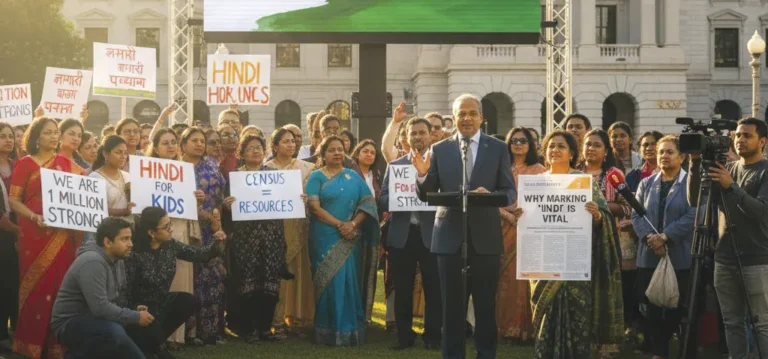

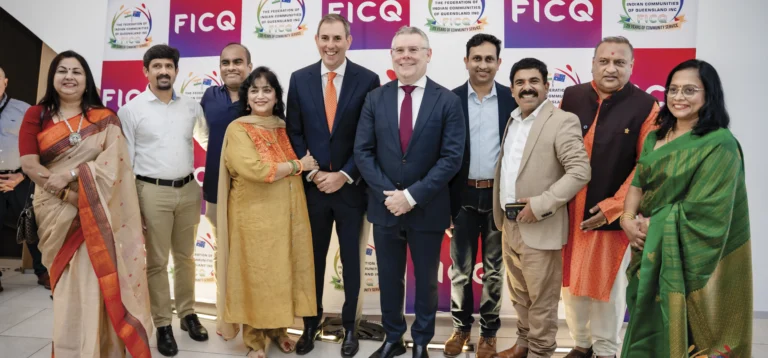

 The Federation of Indian Communities of Queensland (FICQ) proudly hosted the India–Australia Day 2026 celebration at SunPAC, Sunnybank, bringing together community members, distinguished leaders, and friends of India and Australia for an evening that honoured the enduring partnership between the two nations. The event stood as a powerful reflection of shared democratic values, cultural richness, people-to-people connections, and the strength of multicultural Australia.
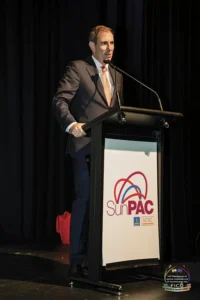 The evening commenced with a warm welcome to guests, followed by the official introduction by the Masters of Ceremonies, Mr Zain Chams and Mr Preetham Krishnan, who guided the program seamlessly throughout the celebration. Prior to the festivities, the gathering observed a minute of silence in honour of the lives lost in the tragic Bondi Beach incident, standing in solidarity with the families affected.
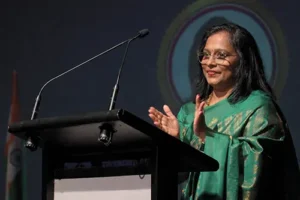 The celebration was graced by an esteemed lineup of dignitaries whose addresses underscored the depth and significance of the India–Australia relationship. Speeches were delivered by The Hon. Jim Chalmers MP, Treasurer of Australia and Federal Member for Rankin; The Hon. Milton Dick MP, Speaker of the House of Representatives; Senator the Hon. Murray Watt, Minister for the Environment and Water; The Hon. Fiona Simpson MP, Minister for Women and Women’s Economic Security, Minister for Aboriginal and Torres Strait Islander Partnerships and Minister for Multiculturalism; Mr Sushil Kumar Goel, representing the Consul General of India in Brisbane; Mr Cameron Dick MP, State Member for Woodridge; Dr Maha Sinnathamby, Patron of FICQ; Senator Paul Scarr, Senator for Queensland; Mr Shayne Neumann MP, Federal Member for Blair; and Councillor Steven Huang, representing the Lord Mayor of Brisbane. Each speaker acknowledged the invaluable contributions of the Indian diaspora to Queensland’s cultural, social, and economic landscape.