

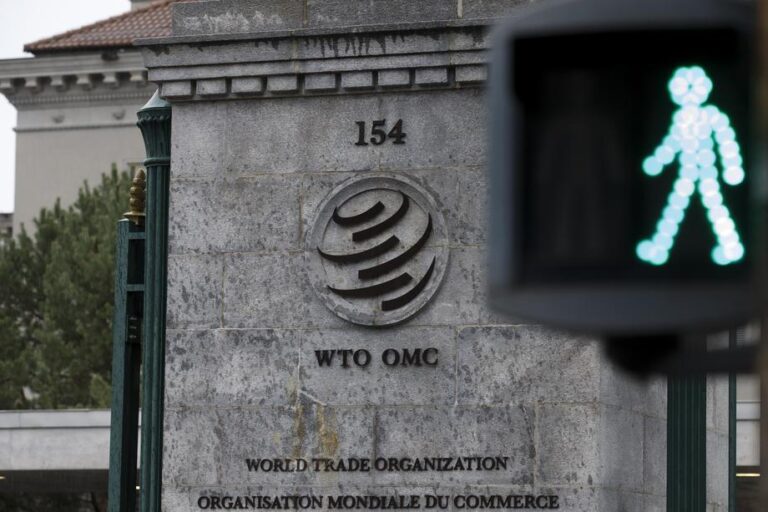
Opinion| Science has delivered, but will the WTO deliver?

A proposal by India, South Africa, and eight other countries calls on the World Trade Organisation (WTO) to exempt member countries from enforcing some patents, and other Intellectual Property (IP) rights under the organisation’s Agreement on Trade-Related Aspects of Intellectual Property Rights, known as TRIPS, for a limited period of time.

It is to ensure that IPRs do not restrict the rapid scaling-up of manufacturing of vaccines and treatments for the novel coronavirus(COVID-19). While a few members have raised concerns about the proposal, a large proportion of the WTO membership supports it. It has also received the backing of various international organisations, multilateral agencies,as well as global civil society.

Unprecedented times call for unorthodox measures. We saw this in the efficacy of strict lockdowns for a limited period, as a policy intervention, in curtailing the spread of the pandemic.


Brajendra Navnit

The International Monetary Fund (IMF), in its October 2020 edition of World Economic Outlook, states ‘…the risk of worse growth outcomes than projected remains sizable. If the virus resurges, progress on treatments and vaccines is slower than anticipated, or countries’ access to them remains unequal, economic activity could be lower than expected, with renewed social distancing and tighter lockdowns.’

The situation appears to be grimmer than predicted, as we have already lost 7% of economic output from the baseline scenario projected in 2019. It translates to a loss of more than $6trn from global GDP.

Even a 1% improvement in global GDP from the baseline scenario will add more than $800bn in global output, offsetting the loss certainly of a much lower order to a sector of economy on account of the Waiver.

Merely a signal to ensure timely and affordable access to vaccines and treatments will work as a big confidence booster for demand revival in the economy. With the emergence of successful vaccines, there appears to be some hope on the horizon.

But how will these be made accessible and affordable to the global population? The fundamental question is whether there will be enough of the Covid-19 vaccines to go around.

As things stand, even the most optimistic scenarios today cannot assure access to Covid-19 vaccines and therapeutics for the majority of the world’s population, in rich as well as poor countries, by the end of 2021.

All WTOmembers have agreed that there is an urgent need to scale-up the manufacturing capacity for vaccines and therapeutics to meet the massive global needs. The TRIPS Waiver Proposal seeks to fulfil this need, by ensuring that IP barriers do not come in the way of such scaling up of manufacturing capacity.

Why existing TRIPS Agreement flexibilities are not enough

The existing flexibilities under the TRIPS Agreement are not adequate, as these were not designed keeping pandemics in mind. Compulsory licences are issued on a country-by-country, case-by-case, and product-by-product basis, where every jurisdiction with an IP regime would have to issue separate compulsory licences, practically making collaboration among countries extremely onerous.

While we encourage the use of TRIPS flexibilities, the same are time-consuming and cumbersome to implement. Hence, only their use cannot ensure the timely access of affordable vaccines and treatments.

Similarly, we have not seen very encouraging progress on the World Health Organization’s (WHO) COVID-19-Technology Access Pool or the C-TAP initiative, which encourages voluntary contribution of IP, technology and data to support the global sharing and scale-up of the manufacturing of COVID- 19 medical products.

Voluntary Licenses, even where they exist, are shrouded in secrecy. Their terms and conditions are not transparent. Their scope is limited to specific amounts or for a limited subset of countries, thereby encouraging nationalism rather than true international collaboration.

Why the need to go beyond existing global cooperation initiatives ?

Global cooperation initiatives, such as the COVAX Mechanism and the ACT-Accelerator (ACT-A), are inadequate to meet the massive global needs of 7.8 billion people. The ACT-A initiative aims to procure 2 billion doses of vaccines by the end of next year, and distribute them fairly around the world. With a two-dose regime, however, this will only cover 1 billion people.

That means that even if ACT-A is fully financed and successful, which is not the case presently, there would not be enough vaccines for the majority of the global population

Past experience

During the initial few months of the current pandemic, we have seen that shelves were emptied by those who had access to masks, PPEs, sanitisers, gloves and other essential COVID-19 items, even without their immediate need. The same should not happen to vaccines.

Eventually, the world was able to ramp up manufacturing of COVID-19 essentials as there were no IP barriers hindering that. At present, we need the same pooling of IP rights and know-how for scaling up the manufacturing of vaccines and treatments, which unfortunately has not been forthcoming, necessitating the need for the Waiver.

It is the pandemic, an extraordinary, once in a lifetime event, that has mobilised the collaboration of multiple stakeholders. It is knowledge and skills held by scientists, researchers, public health experts, and universities, that have enabled the cross-country collaborations and enormous public funding that has facilitated the development of vaccinesin record time,rather than alone IP!

Way forward

The TRIPS waiver proposal is a targeted and proportionate response to the exceptional public health emergency that the world faces today. Such a Waiver is wellwithin the provisions of Article IX of the Marrakesh Agreement which established the WTO.

It can help in ensuring that human lives are not lost for want of a timely and affordable access to vaccines. The adoption of the Waiver will also re-establish WTO’s credibility and show that multilateral trading system continues to be relevant and can deliver in times of a crisis. Now is the time for WTO members to act and adopt the Waiver, to save lives and help in getting the economy back on the revival path quickly.

While making the vaccines available was a test of science, making them accessible and affordable is going to be a test of humanity. History should remember us for the ‘AAA rating’ i.e. for Availability, Accessibility and Affordability of COVID-19 vaccines and treatments, and not for a single ‘A rating’ for Availability only. Our future generations deserve nothing less.

By Brajendra Navnit, Ambassador and Permanent Representative of India to WTO

Legal Disclaimer:

Brisbane Indian Times provides the information “as is” without warranty of any kind. We do not accept any responsibility or liability for the accuracy, content, images, videos, licenses, completeness, legality, or reliability of the information contained in this article. If you have any complaints or copyright issues related to this article, kindly contact the provider above.
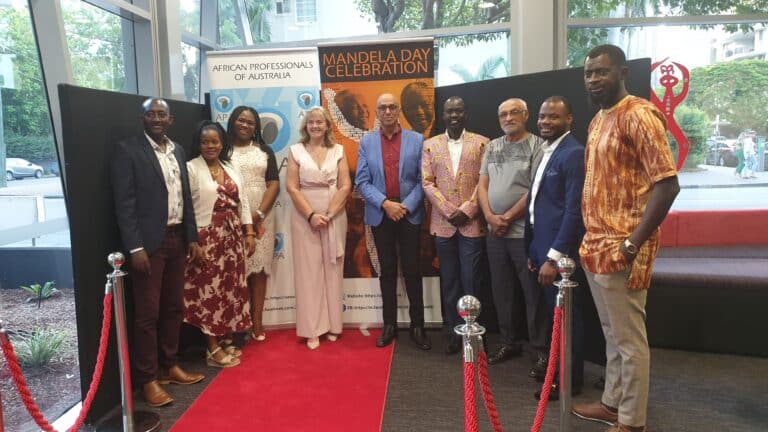
Mandela Day celebration in Brisbane by APA-Q

Nelson Mandela Day celebration 2020 was to be held on Saturday 18 July at Queensland Multicultural Centre, 102 Main St, Kangaroo Point QLD, but was postponed due to Covid 19, and celebrated on 5th Dec 2020 at the same venue. Celebrated usually on July 18, Mandela Day is an annual international event adopted by the United Nations.

The overarching objective of Mandela Day is to inspire individuals to act to help change the world for the better, and in doing so build a global movement for good. Ultimately, it seeks to empower communities everywhere. African Professionals of Australia (APA)-Queensland, partnered with Access Community Services Ltd, in hosting this event.

This event brought together the community and friends of African Professionals of Australia to celebrate Nelson Mandela’s life and legacy and reflect on how everyone can be part of a global movement, taking his life’s work into a new era and changing our world for the better.

Guests can expect a red-carpet extravaganza, ranging from music, dance, poems, international cuisine, and live entertainment.


The celebration has become a platform for Professionals, international students, researchers, industries, Governments, policy makers and other stakeholders to learn about Nelson Mandela’s life and legacy.


The event began with meet and greet a in the foyer from 5:00 Pm invited guests, the red-Carpet photo booth became very popular as many community leaders and politicians met in person after a long time.

Master of ceremonies were Ms Orode Eke-Okoro, vice president of African Professionals of Australia-Qld and Mr Pele Ramdhani, board member African Professionals of Australia-Qld

Stage shows included Pinksta & Swaussy Fire Band, poems by Ms Anisa Nandaula, The DR Congo Dance performance, Tichawona Noble Mashwa Mbira, Bolivia Marka Dance Group, The unbreakable Dance Crew. All the performances were truly a diverse blend pf music culture and people, carefully selected in honour of the Icon-madiba

Speeches included Robert Mukumbozi, president of African Professionals of Australia Ltd Queensland, Video message by Gail Kerr OAM, Lisa Ward – access services, Senator Paul Scarr – representing Prime Minister, The Hon Scott Morrison MP, Councillor Angela Owen representing Lord Mayor Adrian Schrinner, Video message by Antonio Guterres, UN Secretary General, Mr Beny Aterdit Bol, President Queensland African Community Council. The well planned and delivered event concluded with acknowledgement of sponsors, vote of thanks and the much-awaited photo session with media interviews.


The Unicorn Princess: Ektaa Bali

When I was a little girl, there were never any stories about girls who were anything other than white. There was only Princess Jasmine, and she is the ONLY Disney princess, who’s story is actually about and named after the Prince!

I never imagined that I would write middle grade (8-12 years) fantasy until my little niece, Sonakshi asked me to ‘Ektaa mausi can you please write me story about unicorns?’

And so I dropped the paranormal romance I was writing and wrote “The Unicorn Princess” instead. What started as a weird hilarious simple story about a witch with bats living up her gigantic nose turned into something so much more.

I just knew that if I was going to be a writer, it was going to be in a way that told little girls around the world, that no matter their skin colour or ethnic origin, they can be heroes and princesses too.

There is a place for other races in literature, there is a place for little Indian girls, Chinese girls, African girls, you name it inside adventure books. And NOT as the funny side kick, as the main character.

Sonakshi the Unicorn Princess is Fijian Indian, like the real Sonakshi she is based on. Not only is she from a niche minority group, her journey takes her across Australian Bushland and the Pacific Ocean to Fiji. I thought, literally every kids book I’ve ever read was set anywhere other than Australia, so why not set mine here?

Thank you Shobna Bali, Rachna Shankar and Rishta Kumar. For supporting me in the release of my first middle grade novel.

Everyone who’s read it so far has enjoyed it and my editor even claims that it’s the best book she’s ever read in that genre. I’m not sure whether to believe her or not, but it sure gave me the confidence to make this post about it!

On the surface it’s about a girl who has inherited the ability to turn into the unicorn and a witch who really wants to capture her. At it’s heart, it’s about courage, friendship and forgiveness.

It’s out today as e-book and paperback. So if you know any little girls (or boys!) ages 7+ who might be interested in a daring adventure story set in their own homeland, check it out:

On the day I made the post the novel was ranked in the top 100 in three categories on Amazon.com, including no. 2 in children’s fiction-royalty category.

It has been very well received by the community as school teachers and parents know the importance of encouraging cultural diversity in children’s fiction.

We have been featured in both the Fiji Times and Fiji Sun this weekend!

The Blurb of the book:

Sonakshi is the first Princess of Macuata Fiji, to be born as a unicorn in hundreds of years. Kept secret and hidden in her castle in the Blue Mountains Australia, she tries to come to terms with her unicorn-self. But it’s pretty difficult when she’s the only unicorn she knows!

When the powerful witch Mankini kidnaps her friend Rowen, she and her loyal companion Kieran,  know they must act before he is lost forever.

Their quest leads them across dangerous Australian Bushland and over the Pacific Ocean to Fiji where Mankini lies waiting.

But a terrible secret threatens everything Sonakshi thought she knew.

It will take skill, wit and a bit of magic to get them through to the other side.
There are mermaids, fae and kangaroos. But where there are friends, there are also foes.

Danger and deception awaits.

Things are never as they seem…

A Different Kind of Seeing….by Peter Lane Rai  

If you can read this article you can see . So you should be very grateful as,  357,000  Australians ,of whom 3,000 are children are blind or vision impaired .

Marie Younan  is  one of those Australians  and in her book “A Different Kind of Seeing.My journey she writes

  Those seeing  live in the light, while the blind  live in fog and  half alive “.

Marie knows what it is to be half alive for when she was a baby her grandmother accidentally blinded her. Born into an Assyrian Christian family in Syria in 1952 all  her life she could  only  ever see  a few vague shapes and colours. Even though she was one of 12 children , she lived a lonely, internal life with no playmates or schooling as no one ,including  herself,thought she could ever learn anything.   She said to herself “I will never read as I am blind “  fortunately her own strong faith in Christ helped her to face life’s challenges .

Marie’s childhood was so different  to the children at the Sharpe Memorial Blind School in Japura Uttar Ranchel State , India where my wife and I have stayed on numerous occasions .Here children are educated and even play cricket with a ball that has bells inside. So they “ see “ the ball  differently -with their ears !

Marie’s challenging life slowly changed when first  her parents, moved to Lebanon but,because of civil war there, were accepted as refugees in 1975 to Australia. Then, as Marie was also a refugee, was able to live in Greece  in 1976 and  accepted to Melbourne in 1978 .

Since then she has  painstakingly learnt to speak English,be literate in braille (the  language of the blind) acted as an interpreter with refugees and counsellors at Foundation House (Melbourne)  and be physically mobile using a cane . What inspiring  achievements !

What  we have to  learn from Marie is :

Problems in life can be overcome .

Be eternally greatful for your sight and health.

Being a woman does not make you weak

Having a strong faith in Christ will help in lifes challenges  .

This way we will begin to see life differrently!

Review A Different Kind of Seeing .My Journey . by Marie Younan .

Aus $24.25  Scribe Publications . Melbourne

by Peter Lane Rai

Arya Pratinidhi Sabha of Queensland Honours Umesh Chandra OAM

On Sunday 1st November Arya Pratinidhi Sabha of Queensland Inc, held a Havan Yajna Satsang in honour of Umesh Chandra OAM, it was organised to celebrate Umesh Chandra’ s recognition as on of the 2020 OAM (Order of Australia Medal).

Umesh Chandra is another Indian-origin recipient of OAM, who has been recognised for his significant contribution to the multicultural community of Queensland.

He moved to Australia in 1987. Later, he was appointed the liaison officer by the state government to protect the interests of Indian students when they were facing a spate of violent attacks in the country in 2008-09.

He was named the Citizen of the Year along with his wife, Usha Chandra, last year said the honour would inspire him to work more for the community.

“These awards give us encouragement to do more. There is so much more that we need to do for our community. We have so many aged people, there are women who need upliftment and care and of course also the students.

Vedic bhajans by Vijay Kumar followed the Havan ceremony. President Dr. Sukhvir Singh President of APSQ welcomed everyone to the function. Congratulatory speeches were delivered by Councillor Angela Owen, Ms. Janeth Deen OAM, Vice president of Queensland Multicultural Council, Ms Saswati Basu Chatterjee – Bengali community – actress and Actress.

Secretary of APSQ, Mr Hari Chand introduced Umesh Chandra OAM and highlighted some of his achievements, he said that there was just far too many to list, he said they were very proud of his achievements and all that Umesh Chandra had for the Queensland Multicultural Council. Alice Fernandes read a special message from Umesh Chandra OAM’s very close friend Dharmendra Chandra, Dharmendra has known Umesh Chandra since childhood they were in the same high school and were together in Chandigarh.

APSQ patron retired judge, Dr Devendra Pathik thanked Umesh Chandra OAM and sentenced him for lifelong community service, Umesh Chandra accepted and said, “guilty as pronounced”. Umesh Chandra Thanked APSQ for their kind gesture and said that they were the only community organisation to hold such a function in his honour.

Following the speeches Bhai Vijay Kumar sang a special song for Umesh Chandra OAM, the song was requested by Usha Chandra. Following the official program and shanti path, everyone moved out to the dining area for refreshments.

A Salute to the Spirit of the Girmitiyas

The year 2020 marks 100 years of the formal abolition of the indentured labour system in Fiji.

I had heard much about Fiji and girmitiyas when posted in Australia from the Fiji Indians living there. Dr. Satendra Nandan gave me some of his books that sparked my interest in Fiji. Many of these girmitiyas were from areas around my own paternal and maternal towns in UP. My posting to Fiji in 2010 gave me the opportunity to know more about the adopted homeland of the girmitiyas.

Launch of the publication ‘India – Fiji: Experiences to Remember’ by then President of         Fiji HE Ratu Epeli Nailatikau

The indenture system for taking Indian labour to British, French, Dutch and other European colonies from early 19th century was indeed slavery by another name, with deceit and sometimes force in recruitment and exploitation in the workplaces. The halfhearted attempts to control or reform the system failed to improve the situation of the indentured labour, leaving indelible scars on their minds and hearts.

On 14 May 1879, labour transport ship Leonidas, carrying the first batch of about 500 indentured labour from India, arrived at the port of Levuka, old capital of Fiji. Thus began the journey of over 60,000 indentured labour to the new British colony of Fiji to work at the sugar plantations. The journey traumatized most of them for life. Bodies of those unfortunate to die on the ship were thrown overboard and many jumped into the sea on the way. Most of them had no idea where they were going, were misled about wages and working conditions, as well as journey time. As willing women were difficult to find, many women were abducted from fairs and other places. Prime Minister Frank Bainimarama of Fiji noted in his address on the occasion of Girmit Day, 14 May, this year, that most of them had left their loved ones behind based on the lie that they would only spend a few months working overseas before they would return home. None of them could foresee the difficult journey and life ahead.

In subsequent years the contractors were able to persuade families too to join the indentured labourers painting a false picture of those who had already travelled to Fiji. Life in the plantations and the ‘Coolie Lines’, the living quarters of the indentured labour, was difficult,  made more miserable by the overpowering supervisors. The Colonial Sugar Refining Company was more interested in the raw sugar from Fiji, and labour welfare was far from its mind. The workers were routinely beaten up, denied food and kept in isolation. Rev CF Andrews and William Pearson, sent by the Government of India to see the condition of the girmitiyas, recorded many atrocities of the colonial masters. Shri Tota Ram Sanadhya, who came as an indentured labour, Sister Hannah Dudley, and others in Fiji had brought the plight of girmitiyas to the attention of Indian leaders. Shri Manilal Doctor was sent by Mahatma Gandhi to provide legal assistance to the Fiji Indians, and stayed there from 1912 to 1920. Shri Gopal Krishna Gokhle, Shri Madan Mohan Malaviya and other political leaders, Arya Samaj and other organisations, newspapers such as Swarajya and Leader, mounted a campaign against the indenture system. Public pressure in India and UK finally put an end to sending indentured labour from India in 1916 and the last labourers were released from the ‘Agreement’ in 1920. The remnants of the quarters of workers and supervisor can still be seen on the island of Vanua Levu.

As the girmitiyas gradually realised the possibility of their return to India even after five years of initial contract was remote due to lack of money and twists in the contract, they started to settle down in their new homeland. Denied the opportunity to send their children to the colonial schools, the girmitiyas set up their own schools, determined that their children will not face the same fate as them. From their meagre earnings, they put aside some money to support the schools and their children’s education. Their commitment and efforts to educate their children is manifested in schools and professional institutions set up by them across Fiji, managed by various diaspora associations and social organisations. The University of Fiji and a medical college is run by the Arya Pratinidhi Sabha of Fiji.  

Some of the labourers in their belongings had carried a copy of the Ramcharitmanas. The labourers tried to find solace in the recitation of the Ramcharitmanas and singing of bhajans in their long and arduous journey through the oceans, and the difficult days in the sugar plantations in Fiji. The language of the Ramcharitmans, Awadhi, became the lingua franca of the Indian immigrants from different states. Bidesia and other songs also became popular. To this day the Indo Fijians continue with the tradition of the Mandalis in Fiji as well as Australia and other countries where they later migrated.

The Girmitiyas also identified Fiji as the Ramneek Dweep (Enchanted Island) of mythology where the Kaliya Naag had landed after being subdued and banished by Lord Krishna. The rock stone diety at the Nag temple on the Vanua Levu Island has grown over threefold in about a century, necessitating raising of the temple roof several times.

After my arrival in Fiji, I gathered from people that they would like to see Ramlila by a group from India, and with the support of the Indian Council for Cultural Relations we organised visit of a group from Mathura; the first Ramlila group from India in over 130 years! They also requested for copies of Ramcharitmanas in Devanagari script as they had earlier received it in Roman script, and Indian musical instruments for their mandalis and temples, which ICCR was quick to provide.

Memories of the Syria tragedy

The tragic sinking of the Nourse Line ship Syria on the night of 11 May 1884 after striking the Nasilai Reef on its way to Suva is etched in people’s memory. This was the most serious accident in the history of transporting indentured labour to Fiji. Nearby Fiji villages mounted rescue operations next day after sighting the wreckage, and could save most of the 497 passengers and 43 crew. 56 passengers, including women and children, and 3 crew members had died. Dr William MacGregor, Chief Medical Officer and Acting Colonial Secretary later gave an emotional description of the tragedy, of people all around fainting, drowning, crying. He said the scenes haunted him like a horrid dream. A monument was erected in the memory of Syria and a park named after it in Fiji. The Government of India has also assisted in building a pathway to the place in Kiua village where some of the dead were buried, as requested by the village elders when I visited the village. The tragedy has also bonded the iTaukei people of Fiji and the descendants of the Girmitiyas.

Bharat Mata Mandir

Soon after my arrival in Fiji, I visited the northern part of Fiji’s main island of Viti Levu, the sugar districts of Nadi, Lautoka and Ba. Dr Kamal Mishra, Director of the Indian Cultural Centre, informed me about the Bharat Mata temple in Ba, perhaps the only temple dedicated to Bharat Mata outside India. The temple is looked after by the village residents and the Republic Day is the annual festive occasion at the temple. I felt the best way to begin tour of Fiji would be to begin with paying respects at the Bharat Mata temple. On the day we were to travel to the temple, a storm warning had been announced, the town was closed down and all programmes had been cancelled. I was advised to postpone the visit to the temple.

A quick consultation with my better half Dr Krishna, and with the wise and experienced Administrator Shri Praveen Bala (now a Minister in the Fiji Government), and we decided to proceed to the temple. As the storm headed towards the coast, we headed towards the storm. The rain had intensified but the villagers were waiting. Surprisingly the rains stopped soon after we reached the village. There was not even a drizzle during the one hour function at the temple. Heavy rains resumed after the function,


The legacy of the Girmitiyas

The Girmitiyas left a better future for their descendants despite their own misfortunes and difficult life.  The educational institutions set up by them which are open to all, strong attachment to the community, modernization while preserving their traditions and family values, all helped the descendants of the Girmitiyas gradually adapt to life in their adopted homeland and contribute to its economy and polity.

The diaspora in Fiji developed an Indian sub-culture that has remained intact among the Indo – Fijians migrating to other countries such as Australia, New Zealand, USA, Canada. Most Girmitiyas and their first and second generation descendants could not afford to travel to India, but they took great interest in developments in India. Several descendants of the girmitiyas, including some from Australia, tried to trace their roots in India. I had an opportunity to see a documentary based on his research by Dr. Satish Rai, who is now the Chair of the Indian Diaspora Council in Australia, at the Fiji National University’s International Film Festival. The younger generation is more aware of India, with more people traveling to the land of their ancestors, and many studying in India. Indian origin Fijians are the largest group participating in the Indian Government’s Know India Programme for diaspora children. Cricket and IPL are closely followed, with people often staying awake through the night to watch the games.

Political maneuverings in the eighties and nineties saw strains between the iTaukei and the Indo-Fijians, coups and counter coups, and migration of many Indo-Fijians to other countries. The fourth Constitution of 2013 treats all Fijians as equal, abolishing the earlier race based elections.

Hindi is one of the three official languages of Fiji. Called Fiji Hindi or Fiji Baat, it uses the Devnagari script.  Many Fiji Hindi writers and poets are well known around the world.

Remnant of the Syria ship near Nasilai Reef

A memorial to the girmitiyas was set up in Kolkata at Kidderpore on the Hooghly river in January 2011. The inscription on the plaque says that the Memorial is a celebration of the girmitiyas’ pioneering spirit, endurance, determination, and resilience, and notes that they made significant contributions to their adopted countries, yet cherished and passed on the spirit of Indianness – culture, value, traditions –  to their descendants.

Let us join in saluting the spirit of the girmitiyas,

[Vinod Kumar is a former High Commissioner of India to Fiji.]

 Natural Remedies to Get Rid of Frizzy Hair….By Nimisha Modi

Living with frizz can be one of the most frustrating things on the planet, especially when you have curly hair. You put in so much effort to make your hair look perfect before you walk out of the house. Only 2 minutes later you catch your reflection in a shop’s window, and all you can see is a bird’s nest where your hair used to be. It’s not an uncommon place to be and a whole lot of us, including me, have been there.

Many of us brush it off, blaming it on natural texture, but that shouldn’t be the case. Frizz is a result of a lacking hair care regimen, and that’s why a little extra attention is all it takes to tackle the problem head on. This doesn’t mean that you have to spend money on expensive products and salon treatments, all you need is a little insight on what is causing your hair to frizz up, and a few ingredients from your kitchen to deal with the problem.

In short – dryness and damage. Your hair is constantly thirsty and when its hydration requirements are not met, the cuticles (the outermost part of your hair shaft which is made up of dead cells that keep your hair healthy and protected) rise to let moisture in. The excess moisture from the atmosphere causes your hair to swell up and, you’ve got it right, frizz. Constant dehydration leads to damage, leaving your hair frizzy and lifeless.

How to Treat Frizzy Hair?

Frizz is a cry for nourishment and moisture. There are many things you can do to tame it, starting off with ensuring that you are eating right and drinking enough water. Once you have those two things down, you need to treat your hair to some good old-fashioned TLC with regular oiling and hair masks. Below I a list of natural remedies you can use to treat your frizz.

  1. Almond Oil and Egg

1/4 cup almond oil

1 raw egg

Combine the almond oil and egg until you get a smooth mixture. Optionally you can just whisk the egg and apply it to your hair.

Section your hair and start applying the mixture to your scalp and through the length of your hair.

Wait for 40 minutes and then rinse your hair as usual.

Use a good shampoo and conditioner, preferably one without sulphates. Apply this once a week.

Almond oil acts as an emollient. The egg repairs damage in the hair shaft with its high protein content. This is considered to be one of the best remedies for frizz.


  1. Avocado Mask

1 ripe avocado

1 cup yogurt

Cut the avocado and remove the pit.

Mash the avocado and the yogurt to get a smooth, creamy paste.

Apply it to your hair and let it sit for 40-45 minutes.

Wash thoroughly with shampoo and follow it up with your conditioner.

Apply this mask once or twice every week.

Using an avocado-based hair mask is an inexpensive but effective remedy to control frizz. It contains vitamins B and E which nourish the hair and repair damage. Yogurt cleans and deep conditions your hair.


  1. Coconut Oil and Vitamin E

1-part vitamin E oil

4 parts organic cold-pressed coconut oil

Mix both the oils and pour it into an air-tight container to be stored.

Take 2-3 tablespoons of the oil depending on the length of your hair.

Apply it all on your scalp and through the length of your hair.

Wash your hair after about 40 minutes.

Apply this oil once or twice a week.

Vitamin E helps fight free radicals and prevents hair damage. Coconut oil has penetrative properties that deep condition your hair.


  1. Mayonnaise

1/4 cup mayonnaise

1/3 cup pure almond oil

1-2 eggs (depending on the length of your hair)

Mix the mayonnaise, almond oil, and eggs to form a smooth paste.

Generously coat your hair and scalp with the mixture and then cover it with a hot towel or a shower cap.

Shampoo thoroughly and follow up with conditioner.

You can use this hair mask up to two times a week.

The mask works amazingly well to provide shine, nourishment, and strength. It adds an extra layer of moisture, which helps in controlling frizzy hair effectively. In fact, this is one of the best hair masks for dry and frizzy hair.


  1. Banana

1 ripe banana

2 teaspoons honey

1/3 cup coconut oil/almond oil

Mash the banana until there are no lumps and to it add the honey and oil to form a smooth paste.

Apply the mixture all over your scalp and hair, and leave it on for 20-25 minutes.

Rinse thoroughly with shampoo and conditioner.

Use this mask once a week for hair that is extremely frizzy

Benefits

Bananas are great for hair conditioning, especially when it is combined with honey which is a well-known humectant. A banana mask for hair is just the kind of attention your hair deserves.


  1. Beer

1 pint of beer

Decarbonate your beer by pouring it into a bowl. Let it sit overnight until it goes flat.

Wash your hair with shampoo and then pour the beer through your hair while massaging your scalp.

Rinse the beer out with cold water.

Repeat this once in two weeks.

Beer restores moisture and nourishes your hair. It is also used as a cleansing rinse that removes build-up. This helps keep your cuticles healthy.


  1. Lemon and Honey

2 tablespoons lemon juice

2 tablespoons honey

1 cup water

Combine all the ingredients and pour it through freshly washed hair.

Massage your scalp for a couple of minutes and then let the mixture sit for an additional 10 minutes.

Rinse with lukewarm water and shampoo.

Use this hair mask once every two weeks. Ensure that you use other conditioning hair masks during the rest of the week.

The mask removes dirt and grime from the hair shaft which improves cuticle health, reducing frizz. The rich vitamin C content also helps boost hair growth. The bleaching agents can give you some natural and subtle highlights.


  1. Honey

2 tablespoons honey

2 cups warm water

Dilute the honey with water and pour it through your hair.

Once your hair is saturated with the mixture, let it sit for 30 minutes.

Shampoo and condition.

While honey is an excellent conditioner, it also lightens your hair. If you do not want your hair to be lightened it would be wise not to use this mask more than once a week. If you want subtle highlights, use the mask twice a week.

This is a simple solution that isn’t too time-consuming. Like I mentioned before, honey is an excellent humectant which means that it does a great job at sealing moisture in your hair. It makes your hair stronger, smoother, and shinier.


  1. Honey and Yogurt

2-3 tablespoons yogurt

1 tablespoon honey

What You Have To Do

Mix the honey and yogurt in a bowl.

Apply the mixture on your scalp and hair. Leave it on for 30 minutes.

Wash with cold water.

Do this once a week to restore moisture and maintain your hair.

Yogurt is an effective deep conditioner and honey helps in retaining moisture (8). It also acts as an emollient and makes hair smoother and shinier.


  1. Apple Cider Vinegar

2 tablespoons apple cider vinegar

2 cups water


Mix the Apple cider vinegar in cool water and set it aside in a jug.

Wash your hair with shampoo and then rinse your hair with the diluted ACV.

Let it sit in your hair for a few minutes and then finish with conditioner.

Repeat this treatment once every week.

Apple cider vinegar helps in balancing the pH level of your hair and closes any open cuticles, making your hair more adept at holding moisture. It also removes the build-up of dirt and grease, adding shine to your hair.


  1. Aloe Vera

1/4 cup aloe vera gel

1/4 cup carrier oil

Combine the Aloe gel with a carrier oil of your choice.

Apply the mixture to your scalp and through the length of your hair.

Leave it in for 20-30 minutes and then wash off with shampoo and condition.

You can use this mask up to twice a week.

Aloe vera is one of the best ingredients for moisturizing (8). In combination with a carrier oil, it forms a protective layer over your cuticle that minimizes moisture loss, giving you hair that is soft, smooth, and shiny.


  1. Coconut Milk

2-3 tablespoons coconut milk (depending on the length of your hair)

A bowl for heating

Heat the coconut milk until it is warm.

Apply it to your hair and let it sit for 30 minutes

Shampoo and condition.

You can use coconut milk for your hair up to twice a week.

Coconut oil is a perfect light protein treatment to repair damaged hair. It moisturizes while nourishing your hair, making it smooth, strong and shiny.


  1. Hot Oil Massage

Hot oil massages are one of the best ways to treat frizzy hair. Oils nourish and moisturize your hair, keeping it healthy and frizz-free. There are many different oils, each carrying their unique properties. You can choose what oils to use depending on what suits your hair best. Below is a list of oils and how they help control frizz.


  1. Argan Oil for Frizzy Hair

Argan oil is rich in unsaturated fatty acids that help treat and repair damage (9). It also helps prevent splitting and makes your hair smooth and more manageable.


  1. Coconut Oil for Frizzy Hair

Coconut oil is one of the most penetrative hair oils (5). It contains chains of fatty acids that nourish your hair from the inside, making it stronger and healthier.


  1. Almond Oil for Frizzy Hair

Almond oil is rich in vitamin E which contains antioxidant properties. Antioxidants combat the free radicals which cause damage to your hair, keeping it healthy. It is also an emollient which helps keep moisture locked in your hair shaft.


  1. Jojoba Oil for Frizzy Hair

Jojoba oil is perfect for those who have combination hair which is oily at the roots and dry at the tips. The oil mimics the natural oils produced by your scalp, reducing the amount of oil produced, while moisturizing and providing nourishment to the tips of your hair.


  1. Olive Oil for Frizzy Hair

Olive oil is a natural conditioner that leaves your hair feeling silky and smooth (9). It is light and so does not weigh your hair down while keeping it moisturized. It also tackles issues like dandruff and improves scalp health.

There are many different oils and blends you can use for your hair. You can also make your own blend of oils from the list above or other oils of your choice. Give yourself a relaxing hot oil massage by following steps below.


2-3 tablespoons of a carrier oil/ oil blend


Method

Pour the oil into a bowl and heat it by placing it in a larger bowl filled with hot water.

Massage the warm oil into your scalp and through your hair. Massage your scalp for a good 10-15 minutes.

Dip a towel in hot water and wrap your hair with it. This will create a warm environment that will allow for maximum penetration.

Leave the oil on your hair for 30 minutes

Shampoo and condition.

Give yourself a hot oil massage twice a week for best results.

Warm oil penetrates through the hair shafts and follicles, conditioning and nourishing them. It also forms a protective layer around your cuticles which locks moisture in. It restores lustre to your hair and smoothers the cuticles, preventing frizz.


  1. Vitamins for Frizzy Hair

Internal care is just as important as external when it comes to hair health. Consuming the right amounts of protein, vitamins, and minerals are vital for healthy hair growth. Vitamins A, B-complex, C, and E are essential. Making sure that your hair grows out healthy is the only way to ensure its long-term health.


Frizzy Hair Hacks

  1. A Good Haircut

A good haircut is the best way to control frizzy hair. Get your curls trimmed every two months to get rid of split ends. Maintain a hairstyle that isn’t too short because it’s easier for humidity to get through shorter hair. Cutting off the damaged hair will make your hair look healthier and lustrous. You can also ask your hair stylist to thin your hair out, in case it is too thick.


  1. Shampoo And Conditioner

Look for labels that say “moisturizing,” or “hydrating.” Use a gentle shampoo that is free of sulfates. Use a hydrating conditioner and apply it from the mid-lengths to the tips of your hair. Leave it in your hair for a few minutes before you rinse it out.


  1. Anti-Frizz Products

Using a leave-in conditioner or hair serum can make a huge difference in how much your hair frizzes up as you go about your day. There are several frizz control products available in the market, specially designed for curly hair.


What To Avoid?

Never wash your hair with hot water. Heat causes the cuticles to rise, making it frizz up. Always use water that is either cool or lukewarm.

Go easy with the heat styling tools. Heat causes damage, and if your hair is already frizzy, it is best avoided.

Cotton pillow cases are a big no-no. They soak up the moisture from your hair while you sleep. Counter this by investing in some satin pillow covers.

Do not shampoo more than thrice a week.

Do not towel dry your hair. The friction from it causes the cuticles to rise and makes your hair rough and prone to breakage.

There you have it—the guide to keep your hair tame as you go about your day. With the right care, you won’t have any more shop-window horror stories.


Hepatitis C – a silent disease. Do you have it?

Hepatitis C is a disease that affects the liver. Many people with untreated hepatitis C will develop cirrhosis (scarring of the liver) and liver cancer. In Australia about 12% of hepatitis C infections are among people born overseas.

Many people with hepatitis C don’t show symptoms, and also most migrants do not need a hepatitis C test before coming to Australia (except people who want to work or study to be a doctor, nurse, dentist and paramedic in Australia). Therefore, many migrants may have the infection and not know about it. The World Health Organisation states that globally an estimated 71 million people are living with chronic hepatitis C but only 19% know they have it. (https://www.who.int/news-room/fact-sheets/detail/hepatitis-c).

Hepatitis C in the general Australian population is mainly caused through the sharing of equipment for taking intravenous drugs. However, many people born overseas in Australia were infected with hepatitis C due to blood transfusions, unsterile medical (including traditional medical) practices, and treatments such as, dental procedures, acupuncture, blood-letting, cupping. Additionally, body modification and beautification e.g., minor surgical procedures, tattooing, piercings etc may also increase the risk of becoming infected. This is particularly the case where equipment may be re-used between people, or not appropriately sterilised. Sharing of toothbrushes, razors, nail clippers can also spread the infection.

Cleaning is not enough to kill the virus. Tiny amounts of blood (not able to be seen) infected with the virus, can cause another person to become infected if it enters their blood.

As people with hepatitis C normally don’t show any symptoms, the only way to find out is to have a specific test. GPs can order the test for you and they can also generally prescribe a short course of medication that can CURE the infection if you have hepatitis C.  This can greatly reduce or stop you from developing liver cirrhosis or liver cancer.

If you were born overseas and you don’t know if you have ever been tested for hepatitis C you should ask your GP to check, it is a simple blood test.

Contact us

ECCQ’s Hepatitis, HIV/AIDS and Sexual Health Program can provide free Hepatitis, HIV/AIDS and STIs information, resources and support in different languages:

Website: eccq.com.au/bbv

Phone: 07 3844 9166

Email: [email protected]

You can also contact our staff directly who speaks your language:

Staff Name Language we speak Phone Email
Angeline French, Kirundi, Kinyarwanda, English 0481 838 692 [email protected]
Christine Acholi, Juba Arabic, Swahili, English 0479 036 383 [email protected]
Daniel Dinka, Arabic, Juba Arabic, English 0479 062 234 [email protected]
Evelyn Burmese, English 0481 827 751 [email protected]
Iqbal Dari, English 0419 468 859 [email protected]
Lazaro Swahili, Kirundi, English 0479 153 742 [email protected]
Samantha Chinese, English 0479 130 997 [email protected]
Tam Vietnamese, English 0428 223 052 [email protected]


If you live in Cairns, you can also contact:

HIV, Viral Hepatitis, Sexual Health Coordinator

Cairns Sexual Health Service

381 Sheridan St, Cairns North, QLD, 4870

Phone: 07 4226 4760

Wrapped in White Against Domestic Violence: 

Wrapped in White Against Domestic Violence: 

Friday 20th November 2020, White Ribbon Queensland urges every household to tie a white ribbon on their letterbox to raise awareness against domestic violence.

With 1 in 3 Australian women at risk of being a victim of domestic violence in their lifetime, the White Ribbon campaign aims to visibly raise awareness of this operant conditioning within our society.

According to Chiu-Hing Chan, Chair, White Ribbon Queensland, “the statistics surrounding domestic violence in the home tripled during COVID.

“We know that events on their own are not enough – we need communities to mobilise for change,” said Chiu-Hing Chan, Chair of White Ribbon Queensland, “The purpose of White Ribbon Day this year is to not only speak about the change that is needed, but to get involved in creating it.

It saddens me to say that on average 52 women die from domestic and family violence each year, and that number increases every year.”

“By tying a White Ribbon around your letterbox, you encourage everyone in your community to become involved and demonstrate their stance against domestic violence whilst creating an opportunity to have that important conversation,” continued Mr Chan.

White Ribbon Queensland encourages everyone to decorate their letterboxes with white ribbons, white balloons, white lights, white teddy bears, white flowers, streamers or bed sheets to raise awareness and conversations surrounding Domestic Violence.

White Ribbon Day aims to raise awareness of domestic violence, promote respectful relationships and creating a community free of violence and abuse. Community by Community, workplace by workplace, White Ribbon Australia seeks to generate an ongoing message against gendered violence and eliminate men’s violence against women.

  • END –

For more information or to arrange an interview

please contact Lisa Miller 0416 173293, [email protected]

 Wrapped in White Against Domestic Violence


Friday 20th November 2020, White Ribbon Queensland urges every household to tie a white ribbon on their letterbox to raise awareness against domestic violence.

With 1 in 3 Australian women at risk of being a victim of domestic violence in their lifetime, the White Ribbon campaign aims to visibly raise awareness of this operant conditioning within our society.

According to Chiu-Hing Chan, Chair, White Ribbon Queensland, “the statistics surrounding domestic violence in the home tripled during COVID.

“We know that events on their own are not enough – we need communities to mobilise for change,” said Chiu-Hing Chan, Chair of White Ribbon Queensland, “The purpose of White Ribbon Day this year is to not only speak about the change that is needed, but to get involved in creating it.

It saddens me to say that on average 52 women die from domestic and family violence each year, and that number increases every year.”

“By tying a White Ribbon around your letterbox, you encourage everyone in your community to become involved and demonstrate their stance against domestic violence whilst creating an opportunity to have that important conversation,” continued Mr Chan.

White Ribbon Queensland encourages everyone to decorate their letterboxes with white ribbons, white balloons, white lights, white teddy bears, white flowers, streamers or bed sheets to raise awareness and conversations surrounding Domestic Violence.

White Ribbon Day aims to raise awareness of domestic violence, promote respectful relationships and creating a community free of violence and abuse. Community by Community, workplace by workplace, White Ribbon Australia seeks to generate an ongoing message against gendered violence and eliminate men’s violence against women.