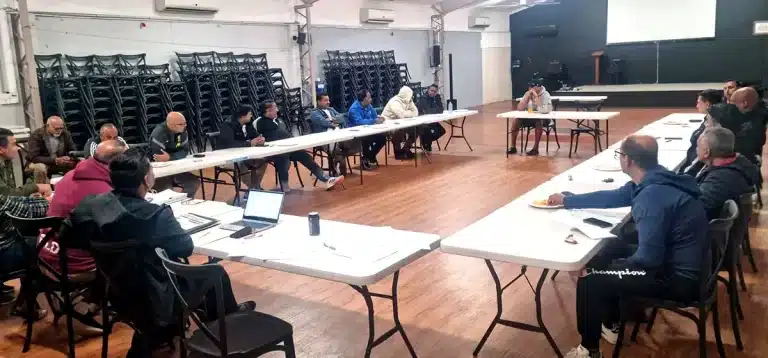
Queensland Fiji Football Association Inc held its strategic planing workshop on Sunday 16th June
A well crafted agenda of items focussed on a ‘Bolder, Bigger and a More Relevant’ QFFA was participated by 100% of the affiliated clubs, and well wishes.
Led by Master of Ceremonies Nick Maharaj, and with Treasurer Lawrence Chand facilitating the workshop dynamics, QFFA steadfastly moves towards a new horizon.
Opening Keynote address by Past President Aveen Singh certainly established the ‘tone’ of the workshop, reflecting on the past but focussing on the future as QFFA after more than 20 years since inception should now be ready to ‘ be bold’. He expressed that growth is only attainable from collective strengths of the affiliated members and stakeholders, aligning to similar goals and values. He reflected on his legacy of a strong and practical player rules which governs the basic product of QFFA, enjoying the beautiful game, Soccer and reliving our Fiji heritage. However, relevance is now becoming the fundamental issue to address.
An era of legacy, and a journey of challenges and opportunities and success was shared by 2 legends of the game, Esala Masi and Stewart Bola, and an emotional presentation that had everyone inspired.
Krishneel Maharaj shared the mental and psychological aspects of Sports, warmly received by all attendees, an area of sports that needs more focus and attention.
The attention of the workshop shifted towards strategic alliance and branding, with Arvin Datt challenging a corporate strategy and culture, with ‘Bula Lounge’ as feature of the tournaments.
Shivanjay ended the session with Branding strategies for QFFA, website and social media as integral platforms. A robust, well designed digital QFFA will create efficiency for internal operations.
The following were some of the focussed areas:
• Formation of Ref’s committee under leadership of Praveen Lal
• Relaunch of Women’s Football under astute leadership of Anjali Naiker,
• Player Strategic welfare pillar under guidance of Esala Masi, Jim Smith and Krishneel Maharaj
• A select committee for Player Rules and Eligibility Guidelines headed by Nick Maharaj, Ali Munif, Madhukar Naicker and Ray Ali.
• Financial, Governance, corporate alliance and Strategic visioning led by Lawrence Chand and Arvin Datt.
• Junior development and ‘ Finding the next Lucas/ Kewell/ Krishna under guidance Raj Oshen
• Digital transformation of QFFA to be spearheaded by Shivanjay
QFFA welcomes you to add value to the QFFA express and be part of the journey as we achieve our vision to ‘connect communities’.
Please direct your suggestions and ideas to Secretary Ray Ali on [email protected]
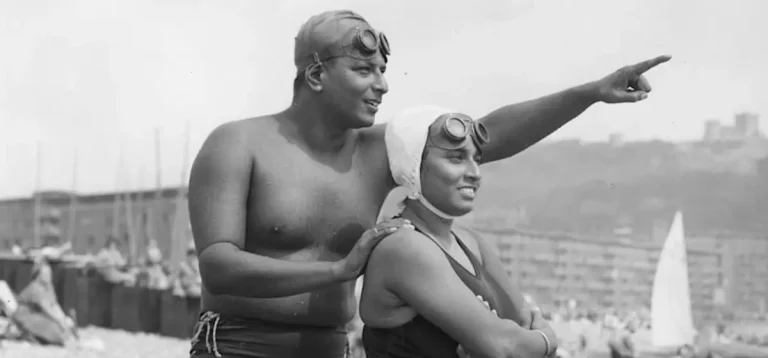
Lest we forget the Youngest Indian to compete at the Olympics – Arati Saha
Source: Getty Images
At the tender age of just 11 years and 10 months old Indian swimmer Arati Saha was qualified and participated in the 1952 Helsinki Olympics.
Only a few days after her 19th birth Arati Saha became the first Asia woman to swim cross English Channel.
Born on 24 September, 1940 in Calcutta (now Kolkata), Arati Saha was just 11 years, 10 months and 305 days old.
It is a record which still stands and looks unlikely to be broken in the foreseeable future.
Sadly, her mother past away when she was barely 2 years old. She was raised by the loving family of an uncle and he grandmother.
Saha was introduced to swimming at the age of four and won her first competition when she was five years old.
It kickstarted her swimming career and under the mentorship of Sachin Nag, an Asian Games champion and Olympian, Arati Saha soon emerged as one of the best young swimmers in India.
Arati Saha mainly swam short-distance freestyle and breaststroke events and won several competitions in her native state of West Bengal.
When Arati Saha jumped in the pool on July 26, 1952 for the women’s 200m breaststroke heats, it made her the youngest Indian Olympian.
Arati Saha swam in the third heat of the women’s 200m, along with eventual bronze-medallist Elenor Gordon of Great Britain. Gordon was seven years senior to Arati.
While Arati Saha may be the youngest Indian to compete at the Summer Games, she is better known as the first Asian woman to cross the English Channel.
Inspired by Bangladeshi swimmer Brojen Das, who was the first Asian man to swim across the English Channel in 1958, Arati Saha began training for the gruelling course. She was supported in her endeavour by Mihir Sen, the first Indian man to swim the English Channel.
Five days after turning 19, on September 29, 1959, Arati Saha made swam crossing the English Channel.
After swimming for 16 hours and 20 minutes, Arati Saha covered 42 miles and reached Sandgate, England, to successfully swim across the English Channel and etch her name in the record books.
Sadly, like her mother dying young at only 54 years old on 23 August, 1994 due to health complications.
Source: Olympic.com, hercircle.in.
10th, featuring athletes from 28 countries competing in various disciplines. Athletes across different age groups showcased their talents, including former Olympians and seasoned competitors in both male and female categories.
Participants ranged from 16 to 95 years old, representing nations such as Australia, New Zealand, Fiji Islands, Western Samoa, Cook Islands, and many others. Originating in Fiji in 1982, this biennial event has since been hosted in various Oceania locations, including Canberra, Apia, Noumea, and Auckland among others.
This year’s championship marked another significant milestone, encompassing age groups from U16 to Open grades, providing a platform for athletes across Oceania to excel.
Noteworthy among the competitors was Fiji Islands’ Prime Minister, Mr. Sitiveni Rabuka, who participated in several Masters category events and secured a Bronze medal in Shot Put.
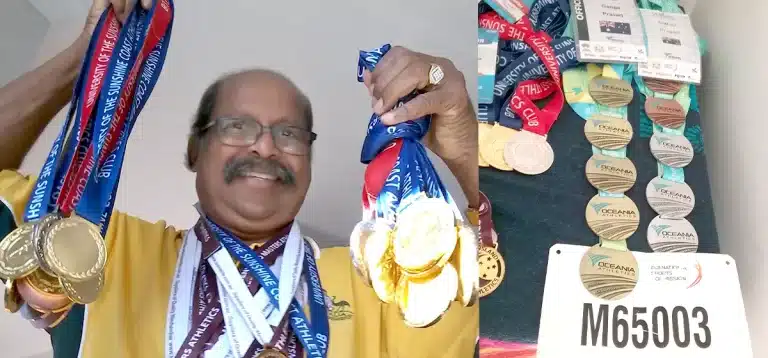
Australia emerged as the overall champions, followed by New Zealand, with Fiji Islands placing third in the Medals Tally. Ganga Prasad of Australia demonstrated exceptional performance by competing in 12 events within his age category, claiming 10 medals — 5 Gold, 3 Silver, and 2 Bronze.
The Oceania Athletics Organization Committee, headquartered in Fiji, hailed the 2024 championships as one of the best ever, underscoring the participation of all Oceania nations.
Best wishes were extended to all athletes preparing for the next championship.
Kid from Kavanagau, Nadroga, Fiji, a proud descendant of Girmityas and qualified Level 1 Rugby Union referee.
Nadi Barrister and Solicitor Elvin Dass is probably the first Indo-Fijian in the region to be a Level 1 Rugby Union referee.
Players and Coaches, in rugby world better be very very careful should they make the silly decision to question his on-field rulings. Not only is he the chief justice on the field as the “Man in the Middle with the Whistle’, but goes without saying Elvin studies the Law! That’s his fulltime Kaam!
Elvin is a resident Associate of the well-known Nadi Law firm Chetty Law & Associates.
He is proud to add that “Both my parents, Davendra Dass & Prem Kumari are proud descendants of the Girmityas.
Majority of the Fiji rugby players are native Fijians and Alvin has never been intimidated by some burly rugby players towering over him during a game he officiates in. In fact, these players afford him the respect he deserves as a referee and native of Fiji’s rugby mecca, Nadroga!. Alvin reminisced that “I grew up watching rugby and always admired the game. I was interested in being a referee in the rugby arena. I learnt most of the rules just by watching and later on reading the law book that governs international refereeing. I went further to complete the level 1 officiating programme and obtained my license to officiate.”
Alvin joined the Nadroga Rugby Referees Union and trained by very experienced referees like
1. Joe Bosoka (former Nadroga Referees President) 2. Kele Naruma (current president of Nadroga Referees) 3. Aisake Drekeni( Elite Panel Referee) 4. Sam Tuidraki and Illisoni Ratumaikoro 5. Johnson LEE (Fiji Rugby Referees Director) and Fiji Rugby Referees Association.
Alvin said that “My dream is to one day officiate at the National Level and the International level. I remember the words of Mr Joe Bosoka When I officiated for the very first time at a sevens tournament in Nadroga and Mr Bosoka announced, “this is Nadroga this is Rugby”.
No doubt, Alvin Dass is grateful to his nephew Ahaan Dass and parents for their motivation to make a distinguished career choice and sport life arbitrating in the rugby fields.
We in Australia may soon see Alvin officiating in one of our many seven tournaments or 15 a side game.
Alvin Dass, a true son of Nadroga, can be contacted in these contact details. Elvin Dass (Mr) Associate Chetty Law & Associates Level 2, Unit 6, Paper Power Complex, Navo, Nadi, Fiji Ph: 9991205/7991205/8019236
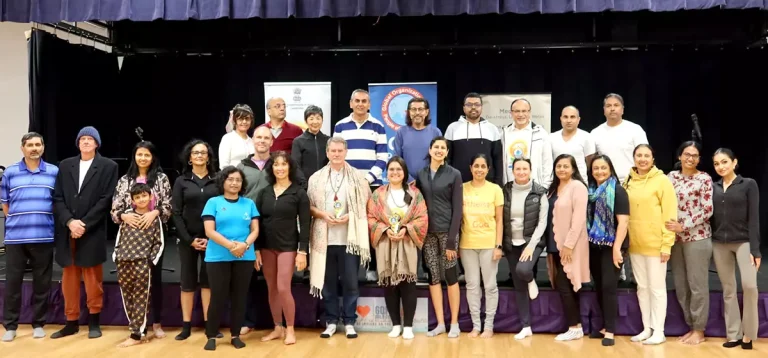
What an incredible International Yoga Day morning! Thank you to everyone who joined us and made it truly special.
A heartfelt thanks to our amazing instructors:
Radhika Sood from the Art of Living Organisation, who guided us through a sequence of transformative Asanas.
John Smith from The Heartfulness Institute, who led us in an experience of meditation which is the main basis of rejuvenation and cleansing techniques.
This event was all about coming together to celebrate International Yoga Day by revitalizing our spirits and rejuvenating our bodies. Your participation and energy made it unforgettable. Here’s to more moments of connection and wellness!
The 28th of July is World Hepatitis Day. Chronic Hepatitis is a liver condition and can lead to liver damage and liver cancer. Worldwide it is a health problem with over 300 million people living with chronic hepatitis B or hepatitis C, the two most common chronic hepatitis in the world Here in Australia, that number is nearly 300,000 people. Now it is the time to consider:
1. Getting tested. Ask your GP to check for hepatitis B and hepatitis C – a simple specific blood test.
2. Get protected – get vaccinated. If you do not have hepatitis B you can get vaccinated. Ask your GP to check your immunity first. People who had an acute hepatitis B infection in the past and cleared the virus develop immunity for life and they do not need vaccination.
3. Get regular check-ups. If you have chronic hepatitis B you will need to get your liver checked every six months – usually through blood tests and a liver ultrasound. It is also recommended to check for liver damage every 12 months– you can ask your GP for a Fibroscan. At ECCQ, we provide free Fibroscans for migrants including people who do not have a Medicare Card.
4. Get treated. Not all people living with chronic hepatitis B need treatment, but some people do – your doctor or nurse practitioner will let you know when you need it. Therefore, regular check-ups are very important.
If you have chronic hepatitis C – you can get treated and cured within 3 months– treatment is easy with minimal side effects. However, people who have successfully been cured of hepatitis C can be reinfected, therefore it is very important to avoid blood contact.
5. Get on with living. Chronic Hepatitis B or hepatitis C cannot stop you from being able to work or study or get married and have children. You can live a normal life like anyone else. Social contact such as sharing food will not transmit hepatitis B or hepatitis C. Always avoid other people’s blood.
6. Get informed. Misinformation and lack of knowledge are the roots for stigma. It’s time to eliminate stigma and discrimination against people living with hepatitis. For more information go to www.eccq.com.au/bbv
Multicultural Carnival Brings Festive Cheer to Mt Gravatt Showgrounds
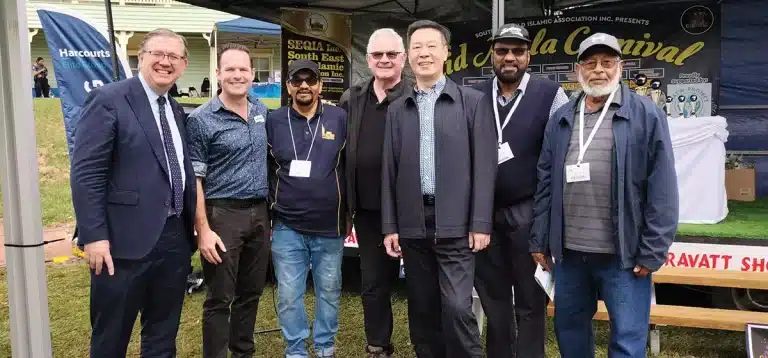
In the photo above, we have Senator Paul Scarr, Mayor of Logan, Cr. John Raven, Event Coordinator of Eid Mela Carnival, Raj Raaz (Robert), Mac Trans Rep Robert, Cr.Stephen Huang of Macregor Ward, Nasib Mohammed ( General Secretary of Rooty Hill Mosque and Shahban Ali, Patron of SEQIA)
Mt Gravatt, Saturday 25th May — The South East Qld Islamic Association’s Multicultural Carnival, Eid Mela Carnival 2024 at the Mt Gravatt Showgrounds was a vibrant and joyous event, overcoming early challenges posed by the morning rain. Despite the wet start, organizers remained determined and improvised under the circumstances, ensuring the festivities went ahead with only a slight delay.
The program, initially scheduled to commence at 10:00 AM, began at 11:30 AM with VIP guests showing commendable patience. The event started with a heartfelt Welcome to Country by Uncle Josef Kirk, beautifully complemented by a didgeridoo performance by his grandson following a Quran Tilawat by Imam Abdul Kadir Safaqui of Ormeau. The Chief Guest, Senator Paul Scarr, officially opened the carnival, followed by a convivial brunch over tea and coffee with other dignitaries. Among the dignitaries included the Mayor of Logan Cr. John Raven, Cr Stephen Huang of Macgregor Ward, Hussain Baba, Sanjeshni Deo, Shahban Ali, Nasib Mohammed, Jani King representative, Mac Trans representative Robert among many others.
SEQIA members, Nazrul Ali, Nazia Ali, Aiyub Mohammed working in the South East Qld Community Centre Food Stall
Hussain Baba led a lively food competition for the food stalls, which was warmly received and featured numerous prizes. As the day progressed, the weather improved, the sun came out, and the crowd began to grow. By 3:00 PM, the showgrounds were packed with families and children, creating a truly festive atmosphere.
The carnival featured a variety of kids’ programs and competitions, which delighted children of all ages. Generous sponsors provided many free giveaway prizes and gifts, adding to the excitement. The Hamblyn Harris Hall was bustling with activity, as ladies and girls displayed and sold clothing, jewelry, perfumes, and other artifacts. An Islamic fashion catwalk parade, held exclusively for the ladies, was a highlight, greatly enjoyed by all and boosting merchandise sales.
As evening approached, the food stalls were at peak trade, serving the large crowd that had gathered. People indulged in international street food cuisine with the smell of freshly cooked food filling the air while they all waited for the fireworks to start. Parking spaces were filled, and cars lined the nearby streets. Stage programs continued well into the night, building anticipation for the finale fireworks. The event culminated in a spectacular fireworks display which was sponsored by Mac Trans Heavy Haulage,at 8:00 PM, marking a memorable end to a day filled with multicultural celebration and community spirit.
The SEQIA extends heartfelt thanks to all participants, guests, volunteers, and sponsors for their support and contributions, which made the Multicultural Carnival a tremendous success. Special mention is made to our major sponsors, Mac Trans Heavy Haulage, Harcourt Elite Group, RWI Spray Painting, Jani King, The Greens, MATW Project and Brisbane Indian Times. We are greatly indebted to Jitendra and Sanjeshni Deo for continuing to give us the publicity through their media outlets and for being long time supporters and well wishes of Eid Mela Carnival multicultural initiative in getting the multi -ethnic communities together. We look forward to seeing everyone again next year for an even bigger and more vibrant celebration. For more information, please contact: Raj Raaz (Robert) SEQIA General Secretary/Event Coordinator Eid Mela Carnival 0402651045
A serendipitous combination of geographical circumstance, global mission and vision and ambitious administrative standards have led to the formation of a vibrant young team of volunteers driving the work of Life Global Australia.
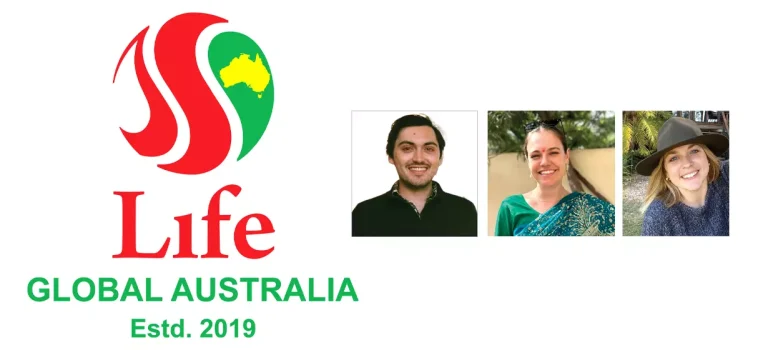
Three young professionals are at the core of LifeGA. Kieran McGowan and Rachel Thompson are founding members of the Board of Directors, and Rebecca Reeve is Director of Digital Media on the Advisory Board. While all live in the home country of LifeGA, Australia, their backgrounds and paths to service for the charity are quite different, and none fits the profile of the typical volunteer.
In Australia, most volunteers are at least in their 60s, with those in their 70s and 50s close seconds. Understandably, those not working, or working few hours, are more likely to be volunteering. So older, retired Australians typically dominate the ranks of volunteers. How, then, do three busily-employed professionals in their 20s and 30s come to dominate the 100% volunteer administration of fledgling charity, LifeGA?
At first glance, Kieran’s seems the most direct connection. His grandparents were originally from Gujarat in India and gave lifelong support to charitable organisations there.
“My grandfather has been involved with charities in India, including our partner charity, Project Life, since long before we started Life Global Australia. As a child, I had the good fortune of getting to see one of the schools built by those charities, and the joy it had brought to students, teachers, and local families.”
Rebecca Reeve also came to LifeGA with some connection to India. Before moving to Australia from England, she travelled in India and felt an instant connection with the country.
“I wanted to make a positive impact and saw joining LifeGA in July 2023 as my opportunity to be involved in something bigger. I loved learning of the impact LifeGA was making.”
For both Kieran and Rebecca, the chance to make a difference in the world was most alluring. It is also what attracted Rachel.
“What initially drew me to Life Global Australia was the profound impact it has on the lives of the less privileged,” Rachel said.
Rachel probably has the longest experience in volunteering, though all three had volunteered long before they joined LifeGA. While still at school in Singapore, Rachel participated in after-school programs for children with disabilities and was involved in many school camps.
“Notably, I had the opportunity to contribute to house-building projects in Cambodia and took part in the Schools-to-Schools program in Nepal, where we fundraised and delivered shoes to several villages.”
Kieran was in community service clubs while at school in Australia, and volunteered for Meals on Wheels. Rebecca started volunteering while attending university in the UK, working for the charity, House of Bread, in Staffordshire.
“HOB began as a university film project, but their passion rubbed off on me quickly, and I soon found myself joining for their weekly meetup, helping to prepare food bags and essentials, cooking meals and meeting and connecting with vulnerable people across Stafford.”
What clearly differentiates Kieran, Rebecca and Rachel from the typical volunteer is that they have not adopted LifeGA as a way to fill in hours of free time. Each is a busy professional working long days to shape a career in their chosen sector. Kieran has a background in software engineering which has proven useful when it comes to website-related or payments-related tasks, and has meant LifeGA has not had to pay for external contractors. This has been crucial in supporting LifeGA’s commitment that 100% of donations (excluding bank fees) will go to partner charities, which are themselves required to have less than 5% administration costs. Rebecca’s field is marketing and media, and she has improved LifeGA’s connection with its audience by increasing engagement and optimising the LifeGA digital space. Rachel has studied both Psychology and Sustainability and works in the sustainability sector. She has focused on building the Life Global Australia team. Her strength lies in identifying the right individuals, recognising the potential value of their work, inspiring them to join the cause, and bringing them all together.
“None of us could have done this without the supportive team that we’ve built,” Kieran said.
Rachel believes the team is not just a group of individuals working together. “It is a collective force driven by a shared commitment to the mission and values of Life Global Australia.” LifeGA’s mission and vision provide the strong bond within the charity’s team.
“Our primary mission is to bring about real change in the lives of those who lack the opportunities readily available to us in Australia,” Rachel said. “Opportunities we might unintentionally take for granted.”
“I think it’s important to do what is possible to make the world a fairer place for all”, Rebecca said. “It’s very easy to get absorbed in your day-to-day life, and forget about the world outside of your own.”
All three comment on the sense of purpose they have found through volunteering for LifeGA.
“I have learnt that what can be considered a small amount of money in Australia can make a huge impact overseas,” Rebecca said. “We can change lives and increase opportunities for so many.”
Rachel agrees. “Through LifeGA, we have already helped 75 women to achieve economic security, 100 units of blood to be given to needy recipients, and ensured 500 Thalassemia screening tests. Now we are on our way to building a school, raising funds classroom by classroom.”
As Kieran said, “When offered the opportunity to create more of the same kind of change, who could say no?” www.lifeglobal.org.au
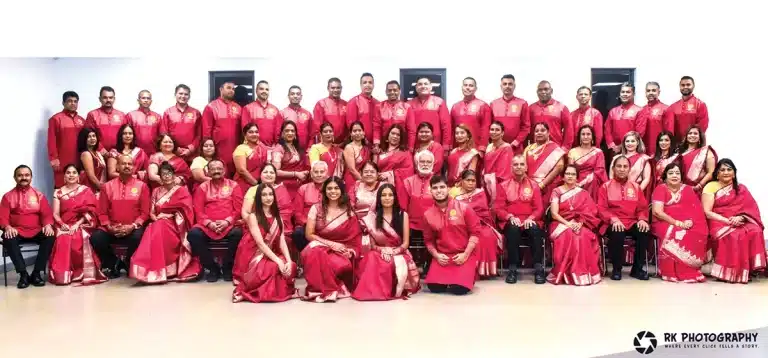
Ipswich Ramayan Mandali is a result of Pt Suresh Ji’s parents and family tradition (purwaj) in retaining of our Indian culture, religion, and language. The mandali’s foundation was laid in 1987 in East Ipswich hence the name Ipswich Ramayan Mandali. The mandali with Ramayan recitals and hindi language classes started as a family venture. With the increase of Fiji Indian migrants in the 90’s the mandali participants grew in number. Annual Ram Naumi , Krishna Janamastami and Deepawali celebrations were celebrated at house to house. Later, Hindi classes were organised in Gailes/Goodna area and for a number of years the annual Ram Naumi and Krishna Janamastami programmes were held at Salik Ram’s place.
Over the years, the mandali has provided encouragement, training and other development opportunities to its members especially the younger ones. Our youth and adults have represented us well in various activities. Apart from its regular cultural and religious activities, we have always rose to the occasion to assist people in need be it for medical, death or any other unforeseen calamities. Our mandali is also a major donor to the Queensland Sanatan Hall project. We believe in sewa and are united in our endeavours to keep promoting our Sanatan values through our mandali activities. To commemorate our 35-year journey, the mandali recently had a new uniform unveiled.
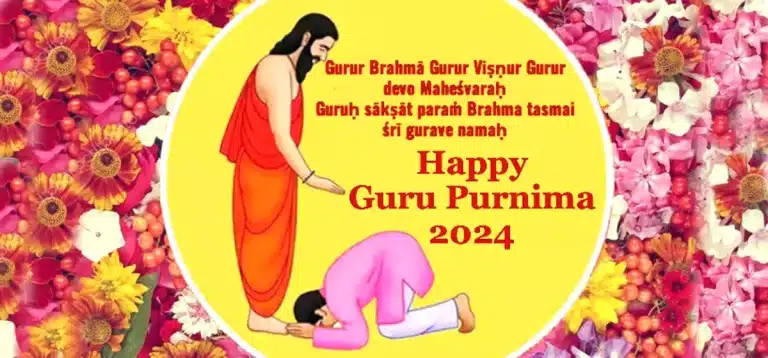
Guru Purnima or Vyasa Purnima – The festival of gratitude to Guru
The content of this article is taken from the satsang (spiritual discourse) of H.H. Sant Shri Asharamji Bapu. Swami Vivekananda addressed the Parliament of the World’s Religions in Chicago in September 1893. A hundred years after him, Pujya Bapuji addressed the same Parliament in September 1993 and the whole parliament reverberated with the chanting of Hari Om. Both of these world-renowned spiritual leaders addressed the audience for a much longer period than the given time and the audience were absorbed in listening to them.
To save the youth who are being ruined due to the lustful festivals like valentine’s day, in 2007 Pujya Bapu ji-initiated celebrations of Matri-Pitri Pujan Diwas (Parents’ worship day) on 14th February. Pujya Bapu ji felt that, due to the blind imitation of Western culture there has been a steep rise in the incidences of alcoholism, suicide, and other immoral activities, especially among the youth during the last week of December. To rescue the youth from this debauchery and denigration, Pujya Bapu ji came up with the idea of worshipping a sacred Tulsi plant (holy basil). So, with a view to awaken the cultural pride of India and to save the countrymen from mental slavery, in 2014, he initiated celebration of Tulsi Pujan on 25th December. Pujya Bapu ji has always emphasized the necessity to follow rich Indian culture and always said that it is only the Indian culture and Sanatana dharma which can give the world true happiness & peace.
Dear readers, in this article Pujya Bapu ji talks about the importance Guru Purnima. This year Guru Purnima will be celebrated on 21st July 2024. Guru Purnima, also known as Vyasa Purnima, is a significant and auspicious Hindu festival celebrated on the full moon day in the Hindu month of Ashadha (June-July). It is a day dedicated to gurus, teachers, and mentors, where disciples express their gratitude and respect towards their spiritual and academic guides. The word “Guru” in Sanskrit means “dispeller of darkness,” signifying the role of a teacher in enlightening one’s path. On Guru Purnima, devotees worship and honour their gurus by offering special prayers, performing rituals, and seeking blessings for spiritual growth and knowledge. This festival holds immense cultural and spiritual importance in Indian tradition, as it symbolizes the guru-disciple relationship and the transmission of wisdom from one generation to another. People across India and various parts of the world celebrate Guru Purnima with reverence, devotion, and a sense of gratitude towards those who have imparted knowledge and guidance in their lives.
In Indian history, there are numerous legendary examples of the guru-shishya (teacher-disciple) relationship that have had a profound impact on society and culture. Here are a few notable examples:
Lord Krishna and Arjuna: In the epic Mahabharata, Lord Krishna served as the charioteer and spiritual guide to Arjuna, imparting the teachings of the Bhagavad Gita on the battlefield of Kurukshetra. Their relationship symbolizes the importance of guidance and mentorship in times of moral dilemmas and challenges.
Gautama Buddha and Ananda: Ananda was a devoted disciple of Gautama Buddha and served as his attendant for over 25 years. Ananda not only supported Buddha in his teachings but also played a crucial role in preserving his teachings after his passing, contributing to the formation of early Buddhist scriptures.
Swami Vivekananda and Ramakrishna Paramahamsa: Swami Vivekananda, a key figure in the introduction of Indian philosophies of Vedanta and Yoga to the Western world, was deeply influenced by his guru, Ramakrishna Paramahamsa. Ramakrishna’s teachings and spiritual practices shaped Vivekananda’s outlook and mission to spread Vedanta philosophy globally. Talking about the religious merits of Guru Purnima, Pujya Bapu ji says that everyone should contemplate and reflect on the significance of Guru Purnima festival.
Sat Guru is called Vyasa. Vyasa means one who organizes and channels our scattered energy, vrittis, desires and capability. Just as the scattered sunrays are converged by a convex lens to produce heat energy, the great men who have the ability to make arrangements for channeling our scattered energy to produce the desired effect on a particular point are called ‘ Vyasa’.
Guru Purnima marks the incarnation day of Bhagavan Veda Vyasa ji. Veda Vyasa ji wrote the world’s foremost and best text on philosophy entitled ‘Brahma Sutra’. He started to write it on the full moon day in the month of Ashadh. This day also marks the conclusion of the writing of the great epic, Mahabharata. ‘Vyasa Purnima’ is celebrated in memory of the great man who performed unforgettable service to mankind in its deliverance. His memory is so pleasant, enlightening, and gracious that even Lord Krishna and Lord Rama heard and instructed respectfully, his books, scriptures and commentaries and considered them authentic. Celebrating Vyasa Purnima gives religious merit equivalent to celebrating all the Purnimas in a year. It also bestows sublime understanding! Brother! Even if you make material progress to any extent, or even get a golden city like Lanka, but if you do not get repose in the Self by eradicating desires, what is the use? Adi Shankaracharya said, “What purpose does it serve?” How miserable was the state of Ravana? Hiranyakashyapu practiced such a terrible penance and so intelligent was he that he made Hiranyapur. His name was Hiranyakashyapu. ‘Hiranya’ means ‘gold’. He constructed a city of gold. Finally, he got involved in it so deeply that he could not attain the bliss of inner Self, the omnipresent Narayana. Lord Vishnu blessed him with a son named Prahlada. In the end, Hiranyakashyapu, tired of worldly riches, was defeated and Prahlada emerged victorious. History is replete with such examples. King Nriga was born as a chameleon in his next life. He was a very renowned king. King Aja became a python in his next life. Sant Kabir ji said:
“What should we do and accumulate for this short life? Everyone is departing this life leaving his body, house, wealth and kingdom.
When you must have to leave your body, house, wealth, and kingdom, do something which will ensure that you get eternal happiness.
Highest manifestations of God
Worship of Guru means worship of God (supreme). As long as mankind’s love for true knowledge persists, Gurus will be worshipped.
As long as man does not complete his journey to attain That which enables all learning possible, man should remain an aspirant of knowledge. Even after Self- realization, Ramakrishna Paramahansa said, “So long as I live, I am a student, and I shall keep learning.”
We have attained a lot of bread winning education. But the objective of Vyasa Purnima is to learn how to trample on the head of death by filling the heart with knowledge of the Beloved. And the great men who made the realization of Vyasa Deva as their own realization are very extraordinary. They learn from fools and have the capability to teach the learned. Although they are scared of mosquitoes, they can fight lions. Though they keep nothing with them they can give everything to the person who begs from them. They may subsist on alms if required, but they have the power to make a helpless pauper a king.
Swami Vivekananda said, “Higher and nobler than all ordinary ones are another set of teachers; the Avataras of Ishvara in the world. They can transmit spirituality with a touch, even with a mere wish. The lowest and the most degraded characters become, in one second, saints at their command. They are the Teachers of all teachers, the highest manifestations of God through man. We cannot see God except through them. We cannot help worshipping them; and indeed, they are the only ones whom we are bound to worship.”
Guru Pumima embodies respect for knowledge
Vyasa Pumima, Guru Pumima is the full moon day to respect knowledge. Here knowledge does not mean worldly knowledge of iron, wood, bricks and lime but the knowledge of the Supreme Truth that governs the entire creation.
In the Mahabharata, the relationship of friendship between Lord Krishna and Arjuna is also given the name of Guru-disciple (teacher-student). In Mahabharata, many incidents of the friendship of both are recorded. Both Arjuna and Shri Krishna had genuine feelings for each other. The relationship begins with the birth of Lord Indra’s son Arjuna at the beginning of the Mahabharata. During Govardhan Leela, Lord Krishna accepts Indra’s prayer and promises that he will always help Arjuna by becoming a friend. Shri Krishna always kept this promise. The relationship of friendship between Lord Krishna and Arjuna is also given the name of Guru-disciple (teacher-student). The bond between them becomes even stronger when Arjuna marries Lord Krishna’s sister Subhadra. Lord Krishna was not only Arjuna’s friend, but he had guided Arjuna all the time.
So, in conclusion, in Hinduism, Guru Purnima is a festival that is extremely significant. You can express your gratitude to your teachers on the day of Guru Purnima. We can see that Guru Shishya Parampara continues to be followed in Indian traditional dancing and music classes. This reinforces the need for Guru Purnima observance.
Guru Purnima is a day of gratitude. On this auspicious day, we can be thankful for the knowledge and wisdom shared by our revered Gurus. However, we cannot provide anything in return that equals what our Gurus have given us. Sharing the light of knowledge with others is the only way for us to improve what we have acquired or learned from our Gurus. It is always about passing on wisdom to others and keeping it alive. For Guru Purnima, we are not celebrating an individual teacher or Guru. Here, we are trying to pay our respects to all the spiritual and academic Gurus who have helped us grow.
To listen Vedic/knowledge stories or to listen 24X7 live divine Satsang, please search “Mangalmay live” on google, visit http://www.ashram.org/live or search “THE SBM STUDIO” on you tube. By the Divine Inspiration of Bapu ji, the weekly sessions of Bal Sanskar and yoga are held in Brisbane, Melbourne and in Sydney. The kids are taught yogic mudras, yogic techniques, yogasnas and pranayamas. These yogic techniques along with jap and meditation help kids in attaining virtues like righteousness and self-restraint. To know more about His Divine Holiness Bapu ji, please watch this video: https://bit.ly/2uZvJuN .
For more info about Bal Sanskar and yoga sessions, to get a free copy of monthly spiritual magazine Rishi-Prasad in your mailbox in Australia or to get free online subscription of Rishi -Prasad, please contact by email at [email protected] or by WhatsApp/phone to Shri Yoga Vedanta Seva Samiti Australia & New Zealand at +61 426 834 434 & +61 405 277 802. Please read more about our Vedic culture in the next issue of “The Brisbane Indian Times.”






 Kid from Kavanagau, Nadroga, Fiji, a proud descendant of Girmityas and qualified Level 1 Rugby Union referee.
 Alvin reminisced that “I grew up watching rugby and always admired the game. I was interested in being a referee in the rugby arena. I learnt most of the rules just by watching and later on reading the law book that governs international refereeing. I went further to complete the level 1 officiating programme and obtained my license to officiate.”