

The Courage to Stay Calm When there is Chaos

The Courage to Stay Calm When there is Chaos

The Courage to Stay Calm When there is Chaos

Sometimes our worlds are constantly buzzing, with opinions, updates, provocations, and noise, staying calm can feel like quite a radical act. Whether it’s a partner’s sharp tone, a parent’s disapproval, a friend’s silence, or something we scroll past on social media, external stimuli are everywhere. And more often than not, we let these moments steal our peace. Remember: What’s happening around you is not as important as what’s happening within you.

External Chaos and/or Internal Collapse?

Energy is contagious. Thoughts are magnetic. What others post, how they speak, what they project, all of it can impact your nervous system, your breathing, and your thoughts. It’s easy to get swept up in the chaos of the external world. But if peace is what you seek, looking outward will only take you further away from it.

This isn’t a call to be indifferent. It’s a call to come back to yourself, again and again. Because when you focus on others, their drama, their opinions, their triggers, you abandon your own center. And when you’re not centered, you become reactive.

Yet, there is always a gap between stimulus and response. In that gap lies your power and how you use that power determines whether you stay in peace or spiral into patterns.
Triggers Are Teachers in Disguise

We all have emotional triggers. And when they’re poked, especially by the people we love inevitably the nervous system fires up, and we often respond from an old wound instead of present wisdom.

But instead of reacting blindly, ask:
• Why is this affecting me?
• What am I making this mean?
• What can I do right now to let go of this?
• What would help me feel more peaceful inside, not just temporarily, but deeply?
These questions slow your breath, quiet the inner noise, and restore you to a place of choice. Because that is what this is about: choosing how you respond when others have forgotten how to.
A Vedic Perspective: The Eye of the Storm

From a Vedic lens, the mind (manas) is a tool, not the master. Our senses constantly pull us outward, distracting us from our dharma (true path). The more we engage with the chaos, the more fragmented we become.
In the Bhagavad Gita, Lord Krishna reminds Arjuna: “Be steadfast in yoga, O Arjuna. Perform your duty and abandon all attachment to success or failure.”
In other words: Act with awareness, not attachment. Let your stillness come from within, not from the illusion that peace exists in a quiet external world. Because that world will never be fully quiet. Vedic philosophy teaches that the sattvic mind, one that is clear, balanced, and in harmony, does not seek validation or peace outside. Instead, it cultivates self-control within.

Self-control is not passive. It is powerful.It’s the courage to be still in a world addicted to reaction.
The Mind and Motion Card of Love – A Self-Care Perspective Within the Mind and Motion Deck of Discovery, the card of Love is where Self-Care acts as a gentle mirror.
It asks, “What does love look like when it’s directed inward?” “What would change if you gave yourself the peace, you’re asking others to give you?”
This card isn’t about bubble baths and candles, though those have their place. It’s about emotional hygiene.

It’s about choosing what you take on and what you let go.It’s about checking in with yourself before checking your phone.It’s about setting boundaries not to push people away, but to stay close to your own center.

Self-care, in this lens, is a daily devotion to the peace within you. It’s how you show up, not only when life is calm, but when it’s not.
The “Love” card reminds us that we are always in relationship, with ourselves. And when that relationship is strong, other people’s chaos doesn’t shake us. It may still affect us, but it doesn’t own us.
Final Words: Anchor Yourself

The world will continue to spin. People will continue to post. Loved ones will continue to trigger. But your peace is not theirs to govern.
Your job and your power is to anchor yourself.
To pause. To breathe. To ask better questions. To respond from love, not lack. To choose stillness over spiraling. Because staying calm in chaos is not avoidance. It is maturity, it is mastery and it is medicine. Every time you reflect for yourself, you create ripples that make the world just a little more peaceful not by controlling it, but by no longer needing it to change for you to be calm.

Explore Further
The Mind and Motion Cards offer guided reflections like this to support your personal growth journey. These tools are designed to complement, not replace, professional support.
For more resources or to purchase the deck, please visit
https://www.monicapema.com/mindandmotiondeck
Monica Pema | Integrated Wellness Expert
MSc. Psychology
“From Passion to Purpose in All Walks of Life”

This article is intended for self-reflection and general education only. It is not a substitute for professional medical, mental health, or psychological care.

By
Sandy Deo
REMAX Landmark 
0400920238
07 3189 6535
2/3 Curban Street Underwood
[email protected]

The Courage to Stay Calm When there is Chaos As we head into the last few months of the year, many businesses, particularly
in the trades and services sectors, enter one of their busiest periods.
Now is an ideal time to check the condition of your property’s key fixtures, such as air conditioning units that may not have been used for some time. Conducting a general inspection and addressing any issues early can help ensure everything is functioning correctly.

For many trade-related businesses, the lead up to Christmas often brings increased demand with clients seeking finalisation for works before end of year shutdown periods occur. For landlords, this can mean that unscheduled maintenance or repair work may take longer than usual to complete, depending on availability of trades in your area.

If a tenant lodges a maintenance request and your preferred transperson in unavailable within a reasonable timeframe, it is advisable to speak to your property manager. With a network of trusted, reliable and reputable trades and service providers, your property manager can help ensure necessary works are completed as efficiently as possible.

If you are already aware of upcoming repairs or maintenance, it’s recommended to discuss anticipated timeframes with relevant parties as early as possible. During peak periods, it’s not uncommon for lead times to be extended. Your property manager can support these discussions to ensure minimal disruption to tenants and clear expectations around scheduling.

In some cases, particularly for larger scale work, it may be more practical to schedule repairs or upgrades during a vacancy period to avoid tenant disruption. Additionally, considering how timing will impact the property’s readiness for leasing.

If you are planning on any work being completed over the December/January period, it’s best to check availability and scheduling with trades and contractors as early as possible.
For routine, scheduled maintenance, minimal disruption is expected. Your property manager will ensure appropriate notice is given to tenants.
CREDIT: REMAX AUSTRALIA

Know Your Status– World Hepatitis Testing Week

Know Your Status– World Hepatitis Testing Week

The World Hepatitis Alliance has announced November 17th to 21st as World Hepatitis Testing Week. (www.worldhepatitisalliance.org)
During this week we encourage all people who do not know their hepatitis B or hepatitis C status to get tested.
In Queensland the latest data to the end of 2023, estimated around 13,260 people (Queensland Health Hepatitis C Plan 2030) (68,890 nationally -Viral Hepatitis Mapping Project: Hepatitis C National Report 2023-2024) are living with hepatitis C with 9% of them still do not know their condition. Hepatitis C can be easily cured with a short course (2-3 months) of highly effective medications.
In Queensland, an estimated 35,000 people are living with chronic hepatitis B (219,800 nationally – Viral Hepatitis Mapping Project: Hepatitis B National Report 2023), and 34% of them are unaware they have the condition (Queensland Health Hepatitis B Plan 2030). Much like other chronic conditions such as high blood pressure or diabetes, chronic hepatitis B requires regular monitoring to help reduce the risk of liver cirrhosis and liver cancer. Unfortunately, there is currently no cure, but with appropriate management, liver cirrhosis and liver cancer can often be prevented if the condition is detected early enough.

Testing for hepatitis B and hepatitis C will let you know if:
• You have a current infection – this will mean you will require regular checkups for chronic hepatitis B and potential treatment. Remember, hepatitis C can be cured.
• You have been reinfected with hepatitis C. It’s important to know that people who have been cured of hepatitis C can be reinfected. Therefore, it is important to get tested again if you are exposed to other people’s blood, such as through unsterile medical, dental, or cosmetic procedures, or by sharing injecting drug equipment or personal items like toothbrushes etc.
• You are immune to hepatitis B from a past infection. Some people who are infected can clear the virus and develop lifelong protection. This means you cannot be reinfected and do not need the hepatitis B vaccination. However, it is important to know if you have ever been infected. Even though you have cleared the virus and cannot transmit it to others, having had the infection may require you to receive additional care for other conditions; for instance, some cancer treatments can reactivate the virus.
• You are NOT immune to the hepatitis B virus and therefore, it is recommended you be vaccinated to protect your health. Birth dose vaccinations have been given over the last 30 years or so – but it is still important to check as some people (a small number) do not get adequate protection.
ECCQ’s Love Health Program can help you get tested. The team is currently working with the Kirby Institute on a research project, which allows us to offer free testing for:
1. Hepatitis B surface antigen. A positive result indicates a current infection.
2. Hepatitis C antibodies. A positive result means a person has or has had hepa-titis C. A further test (an RNA PCR test) is required to confirm a current infec-tion.
These tests are very sensitive, and results are available within 30 minutes. All that is required is the completion of a brief form and a finger-prick test (like a diabetes test). If your result is positive, we will refer you to a doctor for confirmatory testing.
Our team has undertaken extensive training and will ensure that your personal information always remains confidential. In fact, your personal information is only known to the team members doing the testing and is not required by the research team or other members of the ECCQ Love Health team.
Our team is available to do testing in multiple locations – if you would like a test, you can register using the QR code below and we will contact you to discuss a venue convenient to you. We will also provide testing at the:
• Sunnybank Hall (121 Lister Street Sunnybank) on Saturday 22nd November, from 9:00am to 2:00pm. Please book using the QR code below.
• Inala Market (outside the Inala Shopping Centre) on Saturday, 29 November, from 9:30 AM to 2:00 PM. No appointment is required.
Knowing your status protects you and your family’s health.
#HepTestWeek
You can find more information including translated resources on hepatitis, HIV, and STIs at www.eccq.com.au/bbv.
If you are in Cairns, you can contact the team at Cairns Sexual Health Services by calling (07) 4226 4769 or emailing [email protected].

The Billionaire Bet: When Visionary Spending Turns into a Venture Capital Nightmare

The Billionaire Bet: When Visionary Spending Turns into a Venture Capital Nightmare

Jitendra Deo
Chief Executive Officer
JD Group Australia

The news cycles this week delivered a jarring split screen of the AI revolution. On one side, we had Bill Gates, the elder statesman of tech, issuing a sober warning: for all the excitement around AI, a “ton of investments will be dead ends,” a familiar echo of the dotcom bust. On the other, we saw Mark Zuckerberg, the current-day titan, take a painful, multi-billion-dollar hit to his personal net worth precisely because he’s ignoring that warning and placing the biggest, riskiest AI bet in corporate history.
This isn’t just about billionaire bragging rights; it’s a critical moment for the global economy. It reveals the immense tension between the audacious, long-term visions of tech leaders and the cold, hard demands of the public market.
Gates’s message, delivered in his characteristic pragmatic style, is a valuable historical corrective. He understands that a technological “platform shift”, which he rightly calls AI, always creates a frenzy. Just as the internet was genuinely transformative, but most early web companies vanished, AI will certainly change the world, yet most startups seeking capital today will likely fail.
His caution is for the investors, the venture capital firms and the institutional funds who are currently throwing money at every vaguely AI-adjacent proposal. This is the “me-too” era of the AI gold rush, where unique value propositions are scarce and capital is burned rapidly on competing to build the same basic infrastructure.
This perspective preaches prudence, specialization, and execution. It suggests that the real winners won’t be the noisy entrants but the giants who can afford the long game, or the highly specialized firms that can be profitably acquired.
While, Zuckerberg’s recent plight offers a vivid, real-time illustration of Gates’s warning, from the other side of the ledger.
Meta’s stock plunged, wiping out roughly $29 billion of Zuckerberg’s personal wealth in a single day, because the company announced its capital expenditure (CapEx) for AI infrastructure would skyrocket, potentially reaching a staggering $72 billion for 2025.
For the market, the message was simple: costs are outrunning profits. While Meta’s revenue is growing, the necessary spending to compete with Microsoft and Google in the AI arms race is so massive that it’s creating a near-term profit squeeze. Investors, preferring certain profits today over promised AI dividends tomorrow, sold off the stock.
Zuckerberg’s move is not merely an investment; it is an act of corporate desperation and courage. Having been burnt by the metaverse gamble a project similarly reviled by investors for its cost he knows he cannot afford to miss the AI platform shift. He’s betting the company on the idea that if he builds the biggest, most powerful AI engine, long-term value will inevitably follow.
The sharp divergence between the actions of the billionaires highlights the central challenge facing every company and investor today.
Gates warns against the speculative “frenzy” where capital is misallocated, pointing to the high likelihood of “dead ends.” Meanwhile, Zuckerberg is living out the cost of that frenzy, being personally penalized for committing funds in the form of massive CapEx and debt to avoid being the “dead end” company himself.
Ultimately, the market correction that brought Zuckerberg’s rank down is healthy. It forces the question: is this spending genuinely strategic, or is it merely capital being burned on an existential, fear-driven race?
The eventual winners of the AI revolution will be those who heed Gates’s underlying wisdom, that even in a gold rush, only a tiny fraction of the prospectors strike it rich, while successfully navigating the enormous, necessary costs that Zuckerberg is currently enduring.

Kerala Achieves Historic Milestone: Declared India’s First ‘Extreme Poverty-Free’ State

Kerala Achieves Historic Milestone: Declared India’s First ‘Extreme Poverty-Free’ State

Thiruvananthapuram, Kerala: In a groundbreaking achievement that redefines social welfare benchmarks, the southern Indian state of Kerala has officially declared itself ‘extreme poverty-free,’ making it the first state in the nation to reach this monumental milestone. The announcement, met with widespread commendation, signifies the culmination of decades of targeted policy implementation, robust social security systems, and community-led initiatives.
This landmark declaration sets a new standard for other Indian states and offers a powerful model for effective poverty eradication strategies.
Kerala’s journey to eradicate extreme poverty is deeply rooted in its unique socio-political landscape, characterized by:
• Robust Public Distribution System (PDS): The state has long boasted one of the most efficient PDS networks in India, ensuring food security for its most vulnerable populations.
• High Literacy Rates: Decades of investment in universal education have led to nearly 100% literacy, empowering citizens with knowledge and access to opportunities.
• Strong Healthcare Infrastructure: A robust public healthcare system ensures widespread access to medical care, reducing health-related poverty traps.
• Decentralized Governance: Kerala’s model of local self-governance has empowered local bodies to identify and address the specific needs of their communities, ensuring that welfare programs are tailored and reach the grassroots.
The state’s success has been meticulously documented, with various government agencies and NGOs working collaboratively to identify and uplift individuals and families previously categorized as living in extreme poverty.
The ‘extreme poverty-free’ status was achieved through a multi-pronged strategy that involved:
• Precise Identification: A comprehensive door-to-door survey was conducted to identify families and individuals living below the ‘extreme poverty line,’ considering multiple indicators beyond just income, such as access to food, shelter, healthcare, and education.
• Targeted Interventions: Once identified, these families were provided with tailored support packages, including guaranteed access to subsidized food, housing assistance, skill development programs, and health coverage.
• Community Participation: Local self-help groups, particularly women’s collectives like Kudumbashree, played a pivotal role in identifying beneficiaries, implementing schemes, and ensuring accountability at the local level.
State officials highlighted that the declaration is not merely statistical but reflects a tangible improvement in the quality of life for thousands of citizens who previously lacked necessities.
Kerala’s achievement comes at a time when India as a whole is making significant strides in poverty reduction, as acknowledged by various international reports. However, Kerala stands out for achieving complete eradication of its most severe form.
This milestone reinforces the idea that sustained political will, strong social sector investment, and a people-centric approach to governance can yield transformative results, even in the face of complex socio-economic challenges. The ‘Kerala Model’ is now poised to serve as an inspiration and blueprint for other states striving to achieve similar welfare targets.

(Source: The Hindu / The Indian Express)

India Makes History: ISRO Launches Heaviest Satellite, Sets New Orbit Record ‘BAHUBALI’ ROCKET TRIUMPHS:

India Makes History: ISRO Launches Heaviest Satellite, Sets New Orbit Record ‘BAHUBALI’ ROCKET TRIUMPHS:

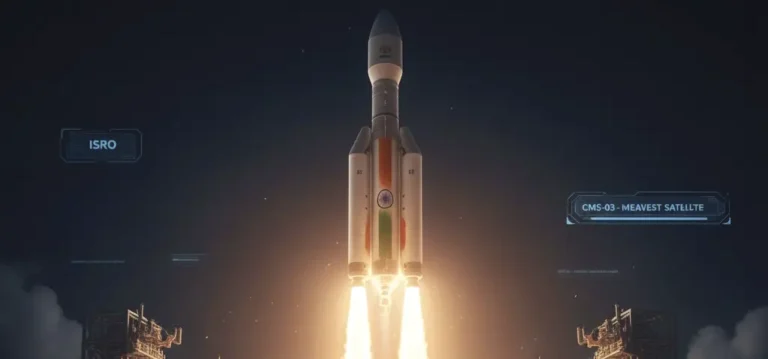
Sriharikota, India: The Indian Space Research Organisation (ISRO) achieved a spectacular new milestone earlier today, successfully launching the country’s heaviest-ever communication satellite, CMS-03, using its powerful Launch Vehicle Mark-3 (LVM3-M5), affectionately nicknamed ‘Bahubali’.
The successful mission is not just a triumph for Indian space engineering but marks a critical step toward national self-reliance in the deployment of heavy-class communication payloads, a capability previously dominated by international agencies.
The 24-hour countdown culminated in a perfect liftoff from the Satish Dhawan Space Centre in Sriharikota, propelling the massive payload into space.
• Heaviest Payload: The CMS-03 satellite weighs approximately 4,410 kg, making it the heaviest communication satellite launched from Indian soil to date.
• The LVM3 Advantage: The launch utilized the LVM3-M5 rocket, ISRO’s new heavy-lift launch vehicle. This three-stage rocket is crucial for placing spacecraft weighing up to 4,000 kg into the demanding Geosynchronous Transfer Orbit (GTO) in a cost-effective manner.
• Strategic Purpose: While CMS-03’s primary function is to boost India’s civilian communication capabilities, the successful deployment of such a heavy-class satellite is also a significant step in reinforcing the nation’s strategic and defence infrastructure.
ISRO officials confirmed that the launch vehicle performed flawlessly, successfully injecting the CMS-03 into its designated GTO, paving the way for the satellite to eventually drift to its final orbital slot and begin its operational lifespan.
This mission underscores India’s growing capability in the global space market. By achieving mastery over launching satellites of this weight class, ISRO reduces India’s dependence on foreign launch providers, translating into substantial cost savings and increased strategic autonomy.
The LVM3 program, also known as the Geosynchronous Satellite Launch Vehicle (GSLV) MkIII, is the backbone of India’s future heavy missions, including crewed spaceflights under the ambitious Gaganyaan program. The successful CMS-03 launch ensures that this vital launch vehicle platform is robust and ready for India’s next giant leaps in space exploration and defence technology. (Source: The Hindu / The Times of India)

The AI Gold Rush: Gates Warns of a Digital Dot-Com Bust

The AI Gold Rush: Gates Warns of a Digital Dot-Com Bust

The world is gripped by AI fever. From Silicon Valley boardrooms to government innovation hubs, the consensus is that Artificial Intelligence represents the next great technological frontier, a transformative force poised to reshape industries, economies, and daily life. Money is pouring into AI startups, research, and development at an unprecedented rate, fuelling a gold rush reminiscent of the early days of the internet.
Bill gates, the co-founder of Microsoft and one of technology’s most respected prognosticators has issued a stark warning: while AI’s potential is undeniable and genuinely revolutionary, a significant portion of the current investment in the sector is destined for failure. Gates suggests that for every OpenAI or Google DeepMind that captures the imagination and delivers groundbreaking results, there will be countless others that falter, burn through capital, and ultimately vanish.
Gates’s perspective is deeply rooted in experience. He lived through the dot-com bubble of the late 1990s, where exuberant speculation led to astronomical valuations for companies with little more than a website and a business plan, only to see most crash and burn. While the internet itself was profoundly transformative, most of its early commercial ventures did not survive.
“A lot of investment will fail,” Gates recently stated, drawing a direct parallel. He acknowledges that AI is “a big deal,” a “platform shift” on the scale of the graphical user interface, the internet, and mobile computing. Yet, even with such foundational shifts, only a handful of players truly dominate, while the wider ecosystem sees a high mortality rate among entrants.
This isn’t a cynical outlook but a pragmatic one. Innovation is messy. For every successful iteration, there are dozens of dead ends. The sheer volume of investment flowing into AI right now—from venture capitalists to corporate giants—is creating a crowded, intensely competitive landscape. Everyone wants a piece of the pie, convinced their unique approach to large language models, autonomous agents, or specialized AI applications will be the next big thing.

Current AI investments span a vast spectrum:
• Generative AI Startups: Companies building foundational models, or applications on top of them, for content creation, coding, and design.
• AI Infrastructure: Developing specialized chips (like NVIDIA’s GPUs), data centres, and cloud services to power AI.
• AI Integration: Firms focused on embedding AI into existing software and industry-specific solutions (e.g., AI in healthcare diagnostics, financial trading, or logistics).
• Research & Development: Pure-play research initiatives pushing the boundaries of AI capabilities.
The reasons for potential failure are multi-faceted. Gates himself pointed to the “hard problem” of general intelligence, replicating human-level reasoning across diverse tasks. Many startups are focused on narrow AI applications that might see limited adoption or be quickly superseded by more advanced, general-purpose models from tech giants.

Other factors include:
• Unsustainable Business Models: High R&D costs, intense competition driving down prices, and the difficulty of monetizing free or low-cost AI tools.
• Talent Scarcity: A fierce war for top AI researchers and engineers drives up costs and can cripple smaller firms.
• Regulatory Headwinds: The nascent and evolving regulatory landscape for AI could introduce unexpected barriers or compliance costs.
• Market Saturation: Too many companies chasing similar solutions, leading to commoditization.
• Ethical Concerns and Trust: Public mistrust or failures in AI systems could derail adoption for certain applications.
Gates predicts that the biggest beneficiaries of the AI revolution will likely be the existing tech giants – Microsoft, Google, Amazon, Apple, Meta – who have the resources, data, and distribution channels to integrate AI seamlessly into their vast ecosystems. They can afford to absorb the immense costs of AI development and will likely acquire promising smaller players, consolidating power.
This doesn’t mean smaller innovators won’t find niches, but the barrier to entry for truly foundational AI is becoming incredibly high. The startups that succeed will likely be those with truly novel approaches, deeply specialized knowledge, or exceptional execution that allows them to be acquired or grow rapidly before being outmanoeuvred.
Bill Gates’s warning serves as a crucial reality check. While the transformative power of AI is undeniable, investors, entrepreneurs, and the public must temper their enthusiasm with a healthy dose of historical perspective. The AI gold rush will undoubtedly yield immense value and create new titans, but it will also leave a trail of dashed hopes and failed ventures in its wake. The future of AI is bright, but its path will be paved with both brilliance and significant financial wreckage.(Source: CNBC’s “Squawk Box)

Zuckerberg Tumbles on Billionaire Index After $72 Billion AI Gamble, Investor Panic Triggers $29 Billion Personal Wealth Plunge

Zuckerberg Tumbles on Billionaire Index After
$72 Billion AI Gamble, Investor Panic Triggers $29 Billion Personal Wealth Plunge

Mark Zuckerberg’s ranking on the world’s elite Billionaires Indexes recently took a swift and immediate plunge, a dramatic reversal of fortune fuelled not by poor performance, but by a decision to double down on technological supremacy.

The CEO of Meta Platforms (parent of Facebook and Instagram) saw his personal wealth plummet after announcing a staggering, multi-billion-dollar commitment to building Artificial Intelligence (AI) infrastructure.

The core catalyst was the company’s third-quarter earnings report, which unveiled an aggressive future spending plan that spooked investors and underscored the high cost of competing in the AI arms race.

The primary trigger for Zuckerberg’s sudden wealth erosion was Meta’s revised outlook on Capital Expenditure (CapEx). While Meta reported strong revenue growth up 26% year-over-year—the jump was overshadowed by a sharper increase in costs, which rose 32%.

The biggest shock came from Meta’s forecast for the coming years:
• Massive AI Spending: Meta announced plans to raise its total capital expenditure for 2025 to as much as $72 billion, with a pledge for even higher spending in 2026. This money is earmarked for building vast data centres and acquiring the cutting-edge hardware needed to support its generative AI initiatives.
• Funding the Vision: Further rattling the market, the company revealed a plan for a $30 billion bond sale, one of the largest investment-grade offerings of the year, to help finance this infrastructure buildout.

To investors fixated on short-term profitability, the scale of this outlay was a clear red flag. The announcement suggested that Meta’s profits would be squeezed in the near term as Zuckerberg pursues a visionary but extremely expensive long-term goal.

The financial fallout was instantaneous and brutal. Because Mark Zuckerberg’s fortune is inextricably linked to his significant stake (approximately 13%) in Meta stock, the market’s panic translated directly to his net worth:
• Stock Plummet: Meta’s stock fell by roughly 11% in a single day, the sharpest decline since 2022.
• Ranking Drop: This single-day stock slump is estimated to have wiped out around $29.2 billion from Zuckerberg’s net worth, one of the largest one-day market-driven declines tracked by the Bloomberg Billionaires Index.
• New Position: The loss caused Zuckerberg to fall two spots to fifth place on the index, being overtaken by peers like Amazon founder Jeff Bezos and Google co-founder Larry Page, whose companies reported strong earnings in the booming AI and cloud sectors.

The sharp downturn serves as a potent reminder of the fragility of tech fortunes. Despite enjoying a period of massive wealth growth earlier in the year, Zuckerberg’s decision to prioritize aggressive AI investment over immediate shareholder returns resulted in a swift correction, confirming the market’s lack of patience for costly long-shot gambles.

Zuckerberg views this massive investment as essential for the company’s survival, positioning Meta to compete against the likes of Microsoft and Google in the next computing platform AI.

However, his visionary gamble pits him against a market demanding immediate returns.

The consensus is clear: the money is necessary to secure Meta’s future, but until the company can demonstrate a clearer path to monetizing its AI investments, the market will continue to penalize the stock.

The billionaire index ranking may be volatile, but the high stakes of the AI race are now written into Meta’s balance sheet. (Sources: Meta Platforms Third Quarter 2025 Financial Results, Bloomberg Billionaires Index Data (October 2025) and Reporting by The Times of India, The Financial Express, and Bloomberg (Late October 2025).)

An Urgent Invitation to the Frontlines

An Urgent Invitation to the Frontlines

The President delivered a personal, heartfelt invitation for Pope Leo XIV to visit Fiji and the Pacific region “at the earliest opportunity that his schedule may allow.”
This invitation is more than a diplomatic courtesy; it is a strategic request for the Pontiff to bear witness to the climate emergency on its frontlines. Fiji and its neighbours are experiencing rising sea levels, increasingly violent cyclones, and coastal erosion that threaten to wipe entire communities and ancestral lands off the map. By inviting the Pope, a global voice for morality and humanity, Fiji aims to dramatically increase international visibility and action on the issue.
The Holy See and Fiji have maintained formal diplomatic relations since 1978, focusing primarily on religious and social matters. The meeting served to deepen these ties, moving the focus onto the most critical humanitarian challenge of the century.
In his response, Pope Leo XIV reportedly acknowledged the unique vulnerability of Small Island Developing States to the impacts of climate change. He commended the Pacific’s consistent message of peace and unity despite being disproportionately affected by a crisis they did little to create. This endorsement from the Pope carries significant weight, aligning the moral authority of the global Catholic Church with the climate justice cause championed by Pacific leaders.
The discussion echoed the Pope’s past encyclicals which emphasize the ethical obligation to protect the planet and support the most marginalized communities. By acknowledging the threat to SIDS, the Pope reinforces the moral imperative for larger, industrialized nations to take responsibility for emissions reduction and provide adequate climate finance.
President Lalabalavu’s visit is part of a broader diplomatic effort by Fiji to rally global support for its climate resilience and adaptation strategies. In presenting the reality of sinking islands and disappearing livelihoods directly to one of the world’s most influential spiritual leaders, Fiji has made a powerful, resonant plea for a global conscience to wake up to the crisis before it is too late. The world awaits the Pope’s decision, knowing that a papal visit would shine an unprecedented spotlight on the fight for survival in the Pacific.

India’s Global Workforce: New Mobility Bill Replaces 40-Year-Old Emigration Law

India’s Global Workforce: New Mobility Bill Replaces 40-Year-Old Emigration Law

The Ministry of External Affairs (MEA) has set the stage for a dramatic overhaul of India’s relationship with its colossal overseas workforce, introducing the Overseas Mobility (Facilitation and Welfare) Bill, 2025.
This landmark legislative move is designed to supersede the antiquated Emigration Act of 1983, marking a decisive shift from controlling emigration to actively facilitating safe, legal, and orderly “mobility” for millions of Indian citizens seeking temporary employment abroad .
The Bill arrives at a crucial intersection of India’s demographic dividend and the severe labour shortages plaguing developed economies worldwide, from healthcare in Europe to construction in the Gulf.
The 1983 Emigration Act, formulated primarily to protect semi-skilled workers migrating to the Gulf countries in the 1970s, is widely considered unfit for the complexity of modern global labour markets. The new Bill acknowledges that today’s emigrants are a diverse mix, including not just construction workers, but also highly skilled professionals, students, and care providers.
By replacing the 40-year-old law, the government aims to formalize pathways, combat exploitation, and ensure the comprehensive welfare of its citizens in the global workplace.
The Overseas Mobility Bill, 2025, is structured around four critical pillars that signify a paradigm change in India’s emigration policy:

1. Institutional Reorganization and Convergence:
The Bill mandates the establishment of an Overseas Mobility and Welfare Council. This central body, chaired by the Secretary of the Ministry of External Affairs, will bring convergence between key ministries—including Labour, Skill Development, and Home Affairs—which currently operate in silos regarding migration policy. The Council’s primary function will be to formulate schemes, oversee the implementation of international agreements, and provide data-driven guidance to the Central Government.

2. Regulation and Protection of Vulnerable Categories:
A core focus of the legislation is strengthening the regulatory framework for recruiting agencies. The Bill significantly raises the penalty for Overseas Placement Agencies (OPAs) found contravening the law to a minimum of `5 lakh for each violation. Furthermore, it strengthens the powers of the Protector of Emigrants (PoE) offices, enabling them to work more closely with Indian missions abroad to address grievances and resolve employment disputes for vulnerable workers. The MEA intends to create a clear and transparent system for the accreditation of OPAs and foreign employers, significantly reducing the scope for fraud and human trafficking, particularly through unsafe methods like the illegal “dunki” route.

Data-Driven Policy and Resource Centres:
Recognizing the need for evidence-based governance, the Bill proposes creating a robust Integrated Information System on mobility. This system will collect data on Indian emigrants to improve policy planning, track migrant movements, and enhance the efficacy of support service delivery. To empower prospective emigrants, Mobility Resource Centres are planned for establishment in India and abroad. These centres will provide vital information, pre-departure orientation programs (covering cultural awareness, legal rights, and financial management), and skill upgradation training, thereby linking India’s skilled workforce directly to global job opportunities.

Return and Reintegration Mechanisms:
The Bill addresses the sensitive but increasingly frequent issue of deportations, particularly in the context of tightening immigration rules in countries like the United States. It defines a “returnee” as an emigrant returning after 182 days or more, whether voluntarily or through deportation. The legislation outlines clear protocols for the safe return and dignified repatriation of Indian nationals in distress, while also creating schemes for the social and economic reintegration of these individuals back into the domestic economy. This focus on “circular mobility” aims to ease the political concerns of host countries regarding permanent settlement.
This legislative push is deeply intertwined with India’s long-term economic strategy. With a massive, young workforce, India stands ready to fill the demographic vacuum in aging economies such as Germany, Japan, and parts of the Middle East.
By formalizing these labour pathways through bilateral agreements of which India has signed over 20 in the last six years—the government is not only seeking to secure the welfare of its citizens but also to ensure a steady, reliable flow of remittances, which are a vital component of India’s GDP.
The Overseas Mobility (Facilitation and Welfare) Bill, 2025, is currently open for public consultation, with the government aiming to introduce it in the upcoming winter session of Parliament. Its enactment will represent a historic update, moving India’s emigration framework into the 21st century and cementing its position as a responsible and proactive manager of the world’s largest diaspora. (Sources: Ministry of External Affairs, Government of India, Deccan Herald, NDTV Profit, Financial Express).

Diwali Delights: A Celebration of Music, Community, and Mental Health Support

Diwali Delights: A Celebration of Music, Community, and Mental Health Support

On the evening of October 25, the Toowong Uniting Church Hall in Brisbane came alive with colour, music, and heartfelt camaraderie as “Diwali Delights” brought together friends, families, and professionals from across Queensland to celebrate the Festival of Lights through art, food, and purpose.
Organised by Dr Siddhartha (Sid) Makwana, psychiatrist based in Toowoomba, the event was much more than a musical gathering — it was an act of giving and unity. With a blend of live performances, traditional delicacies, and community spirit, Diwali Delights raised $1,150 for the RANZCP Foundation, the charitable arm of the Royal Australian and New Zealand College of Psychiatrists. The Foundation translates donations into vital psychiatric research and initiatives that advance mental health and wellbeing across Australia and New Zealand.
The evening’s theme — Live Music, Food, and Fundraising — resonated beautifully with the audience of around 70 attendees, who enjoyed a rich program of performances spanning Bollywood classics, ghazals, Celtic instrumentals, English melodies, and an original piano composition. The event culminated in energetic dance numbers that filled the hall with joy and light.

Among the performers were:
Dr Sid Makwana – singer, keyboardist, harmonium player
Chandradeep Vankayalapati – guitar
Rajendra Prasad – tabla
Gar Macleman – guitar and vocals
Kari Berg – fiddle
Abhiraj Sarmah – singer and writer
Janani Jayalath, Luv and Preeti Dua, and Gyan Setu – vocals and instrumental support
The evening also featured inspiring speeches by Dr Cyril Fernandez (President, Indian Medical Association Queensland) and Dr Siddhartha Sarmah (IMAQ Secretary). The IMAQ community’s encouragement, particularly from Dr Fernandez and Dr Sarmah, played a central role in connecting health professionals and fostering collaboration beyond clinical settings.
Special thanks were also extended to the Silver Sponsors, James O’Donohue (Remax Success Team Elevate) and Aanand Iyer (Guru Property), whose generosity helped make the event possible. Delicious Indian fare catered by Namaste Foodies — including Masala Chai, Mango Lassi, Pani Puri, Chhole Bhature, and Samosa Chaat — added to the festive warmth of the evening.

Reflecting on the event, Dr Makwana shared his heartfelt gratitude:
“I am deeply thankful to my colleagues, musicians, friends, and supporters — from Toowoomba, Brisbane, and the Gold Coast — whose encouragement and participation made this vision a reality. Events like this remind us that healing and wellbeing come not only from medicine, but also from music, connection, and shared purpose.”
Diwali Delights was a luminous reminder that community, compassion, and creativity can come together to promote mental health and foster belonging — values that lie at the very heart of psychiatry and the broader medical profession.