

Joy Is Not a Reward It’s a Choice We Forget to Make

Joy Is Not a Reward It’s a Choice We Forget to Make

Let’s be honest, life does not move in straight lines. It rises, it falls, it surprises us, and at times, it asks more than we feel ready to give. No one is immune to this rhythm. Not the most disciplined, not the most self-aware, not even those who appear to have mastered it all.
And yet, within that unpredictability, there remains one constant: your response is still yours.
We often treat joy as something conditional. Something that arrives after the work is done, after the stress is resolved, after life settles into something more manageable. But if you look closely, that moment rarely arrives in the way we expect.
Joy, in truth, is not a reward. It is a decision, one that is often available far earlier than we allow.
This is where many people quietly disconnect from themselves.

We have become highly practised at identifying what is wrong. We analyse stress, anticipate problems, and prepare for discomfort. But when something feels good when there is ease, lightness, or even a brief moment of contentment, we hesitate, we question it and we move past it too quickly.

There is an unspoken belief that we must earn our joy.
From a psychological perspective, this hesitation comes at a cost. Research from Martin Seligman and the field of positive psychology shows that emotions such as joy, gratitude, and calm are not just “nice to have” they actively expand cognitive flexibility, improve decision-making, and strengthen resilience.
In simple terms, joy helps you handle life better. But beyond theory, the body already knows this.

When you allow yourself to feel even a small moment of ease, the nervous system shifts. Breath deepens, muscles soften, perception widens. You are no longer operating from contraction, but from space.
And space changes everything.

So how do you choose joy, especially when life does not feel particularly joyful?
Not by forcing positivity. Not by denying what is real.
But by widening your awareness.
Instead of asking, “How do I feel better?” A question that often creates pressure, ask something far more accessible:
“What, in this moment, feels okay?”
Not perfect or ideal, just okay.

It could be the feeling of your feet on the ground. A moment of stillness between thoughts. A conversation that feels slightly easier than expected. These are not insignificant details, they are entry points.
The nervous system does not require grand gestures to recalibrate. It responds to what is present and acknowledged.

When you begin to notice these moments, something shifts. You move from waiting for joy to recognising that it has been quietly available all along.
This is the turning point.

In my work with emotional processing and structured reflection tools, particularly through frameworks like the Mind and Motion approach, we see this consistently. When individuals are given language to identify what they are feeling, without judgement or urgency to fix it, the body often moves naturally towards resolution.
And within that resolution, there is often an unexpected emergence of lightness.
Not because life has changed but because the internal state has.
A Vedic Lens | Joy as Your Natural State

Ancient Vedic philosophy offers a perspective that feels both simple and profound: joy is not something you create, it is something you uncover.
The state referred to as ānanda describes a deep, inherent bliss that exists beyond external circumstance. It is not dependent on outcomes, achievements, or control. It is considered the natural essence of being.

As written in the Taittiriya Upanishad:
“From bliss all beings are born, by bliss they are sustained, and into bliss they return.”
This insight reframes the entire conversation.
If joy is foundational, then the question is no longer “How do I find it?” but rather,
“What is getting in the way?”

More often than not, the barriers are familiar, mental noise, physical tension, and the habit of postponing ease until conditions feel right.
Yet when you pause, breathe, and allow yourself to be present, even briefly those layers begin to soften.
And what remains is not something new, but something remembered.
Returning to Choice

Life will continue to move in cycles. There will be moments that challenge you, stretch you, and at times, unsettle you.
But within all of that, there is always a quieter layer available.
Choosing joy is not about ignoring difficulty. It is about meeting life with a nervous system that is not entirely consumed by it. It is about allowing space for something softer to exist alongside what is hard.

And that choice, while simple, is powerful.
Not because it changes the external world immediately but because it changes how you move within it.

Joy, then, is not something distant or reserved for better days.
It is something you can return to again and again through awareness, permission, and the willingness to feel what is already there.

Explore Further

The Mind and Motion Cards offer guided reflections like this to support your personal growth journey. These tools are designed to complement, not replace, professional support.
Available in English and Neutral Spanish. For more resources or to purchase the deck, please visit https://www.monicapema.com/mindandmotiondeck
Monica Pema | Integrated Wellness Expert

MSc. Psychology
“From Passion to Purpose in All Walks of Life”

This article is intended for self-reflection and general education only. It is not a substitute for professional medical, mental health, or psychological care.


Setting the right insurance on your property

Setting the right insurance on your property

By Sandy Deo
REMAX Landmark

INSURANCE AFFORDABILITY AND AVAILABILITY ARE GROWING CONCERNS FOR BOTH OWNER OCCUPIERS AND LANDLORDS. WITH SUCH A SIGNIFICANT FINANCIAL INVESTMENT IN THE PURCHASE OF PROPERTY, THE NEED TO PROTECT YOUR ASSET AGAINST POTENTIAL DAMAGES IS CRUCIAL FOR LONG-TERM SECURITY.

Property owners understand the importance of ensuring they have the right insurance in place. It protects our greatest assets. However, property insurance is not a “set and forget” exercise and if you are not actively reviewing your policy, you could be hit with a significant increase in costs, or worse, find your property to be underinsured.

Insurance affordability and availability are growing concerns for both owner occupiers and landlords. With such a significant financial investment in the purchase of property, the need to protect your asset against potential damages is crucial for long-term security.

The Australian Prudential Regulation Authority (APRA) estimates around one in seven Australian homes are currently uninsured. The regulator recently undertaking an Insurance Climate Vulnerability Assessment*, exploring how a changing climate could affect home insurance affordability and the insurance protection gap (the extent to which losses impacting home are not covered by insurance) in decades ahead.

Like any investment strategy, understanding risk is a significant part of the overall picture and should be well considered. Ensuring the right protection is in place for your rental property should regularly be reviewed as part of your portfolio.

Factors such as inflation, natural disaster and higher claim costs are contributing to rising premiums across the board. It’s important you are aware and have clear understanding of exactly what is – and just as importantly, what isn’t – covered in your policy, should the need to utilise it arise.

If you haven’t reviewed your investment property’s insurance policy recently, now is a great time to do so. Make sure your cover is up to date and aligned with your needs. While premiums are rising, there is still competition in the market, so it may be worth shopping around to ensure you’re getting the right level of cover for your investment.

*APRA stress test shows how the widening home insurance protection gap may impact Australia’s financial system resilience | APRA

Credit: REMAX Australia

Medicare Urgent Care Clinics Provide More Care Than You Think

Medicare Urgent Care Clinics Provide More Care Than You Think

Medicare Urgent Care Clinics (UCCs) provide quick, convenient medical care for a wide range of health problems, ones that are not a life-threatening emergency.

Common Urgent Conditions that can be treated at Medicare Urgent Care Clinics include:
• minor infections, cuts and wounds
• minor fractures, sprains, sports injuries and neck and back pain
• urinary tract infections (UTIs)
• insect bites and rashes
• minor eye and ear problems
• respiratory illness
• gastroenteritis
• mild burns

Testing and Treatment for STIs

From 1 December 2025, Medicare Urgent Care Clinics can also provide testing and treatment for sexually transmissible infections (STIs) such as syphilis and other STIs when they have symptoms such as:
• sores or ulcers
• skin rashes
• unusual discharge
• pain or burning when urinating
• other symptoms that may suggest an STI
Testing and treatments are also available for people with risk factors who need urgent testing and/or treatment.

If pregnant, clinics may also offer opportunistic syphilis testing, which helps protect both the mother and the baby.


Please remember that many people with an STI do not show any symptoms and you should go to your regular GP for testing if you are sexually active. These tests are recommended once a year or when you change sexual partners.
Early testing and treatment help prevent complications and reduces the spread of infection in the community.
HIV Post-Exposure Prophylaxis (PEP)

PEP is a short course of medication that can prevent HIV infection after possible exposure.
PEP must be started as soon as possible and within 72 hours (3 days) of exposure.

Possible situations where PEP may be needed include:
• condom breakage during sex with someone who may have HIV
• sharing injecting equipment with someone who may have HIV
• other possible exposure to blood infected with HIV
Previously, people could usually access PEP only through hospital emergency departments, sexual health clinics, or some GPs can prescribe HIV medication. Some Urgent Care Clinics enable people to access PEP quickly, which is important because the medicine works best when started as early as possible.

Medicare Urgent Care Clinics are:
• Bulk billed – you do not pay for the visit
• Walk-in – you do not need an appointment
• Open long hours – usually 14 hours a day, every day, including public holidays
To find your nearest clinic, visit: health.gov.au/MedicareUCC
Translated information can be accessed at www.health.gov.au/find-a-medicare-ucc/translated-resources

Please visit our webpage at www.eccq.com.au/bbv or call one of our team members who can assist you in your preferred language.


Mateship, Resilience, and Community Reflecting on ANZAC Day and Our Shared Future

Mateship, Resilience, and Community Reflecting on ANZAC Day and Our Shared Future

I’m delighted to begin this April edition of the Australian Indian Times by acknowledging a significant date in our calendar, 111 years since Australian and New Zealand troops first landed during the Gallipoli campaign. ANZAC Day offers us a time to reflect on the sacrifices made by soldiers and animals who served with courage and dedication.

This year, I will be marching and attending the Forest Lake RSL Sub Branch ceremony at the Lake Parklands in Forest Lake. I still recall attending this service when I was around four years old, which makes it especially meaningful to return and take part alongside my school friends and community leaders. I encourage you to attend a local service or simply place a candle at dawn and pay your respects from home. For more information, please contact your local RSL.

This is a significant day in our national calendar. The Australian and New Zealand Army Corps was established in 1914 in Egypt, bringing together the Australian Imperial Force and the New Zealand Expeditionary Force. The name “ANZAC” has become a lasting symbol of mateship, resilience, and sacrifice. It is also important to recognise the contributions of Indian and British soldiers who fought alongside the ANZACs. Around 16,000 Indian troops served in the Gallipoli campaign, with approximately 1,600 losing their lives. Their bravery remains an important part of our shared history.A highlight from last month was participating in the Cancer Council fundraiser coordinated by Kylie Gates. A heartfelt thank you to Mandeep Kaur, Vice President of GOPIO Brisbane, for taking part in the walk. I’m also grateful to readers of the Australian Indian Times as one participant shared that they discovered the event through this column.

Together, we raised an incredible $7,500 for cancer on the day. A big thank you to all our readers who joined their local “Chicks in Pink” fundraiser walk or supported the cause in their own way

This month, I also had the pleasure of sitting down with Will, co-owner and pharmacist at Discount Chemist Doolandella. We spoke about a new trial offering flu vaccinations for children under five using a nasal spray instead of a needle, an initiative that has been very well received locally. (As always, please consult your local pharmacist for advice and eligibility.)

Originally from South India, Will has lived and worked across the world—from Dubai to regional Australia—before settling locally. Fluent in multiple languages, he has created a welcoming pharmacy environment that reflects the diversity of our community. His approach is simple yet powerful: a smile, genuine care, and a commitment to building one-on-one relationships. I was honoured to join him as he celebrated his first year anniversary in business, marked by community education, a family-friendly petting zoo, and plans for future events.

I’ve been incredibly encouraged by the positive feedback from readers. This is why I also want to highlight a growing local and international concern—the rising cost of fuel. Reports, including coverage from multiple news outlets and everyday observations across our communities, suggest that fuel supply pressures could lead to increased costs when buying groceries or dining out, impacting households and farmers alike. Increased transport costs inevitably flow through to everyday expenses, placing added pressure on families.

There is also ongoing discussion around electric vehicle subsidies by the Federal opposition, and future energy solutions with the Queensland Government exploring oil opportunities in regions such as the Taroom Trough to bring down cost and making us less dependent with getting it overseas. At the time of writing, diesel prices in some areas are exceeding $3.30 per litre, with unleaded fuel averaging around $2.50–$2.60 across Brisbane, the Gold Coast, and Ipswich. Many predict prices will be around $4.00 before the end of April.

During these times, I encourage everyone to explore practical ways to ease financial pressure—whether it’s checking eligibility for community transport support (Council cabs), considering carpooling, looking into electric vehicles and salary sacrificing, or even growing your own vegetables at home. Personally, I’ve started walking more, gardening, and sharing produce with neighbours. These small steps not only help financially but also strengthen community connections. Now more than ever, compassion and mateship are what define us as Australians.

Please also take care of your mental health. I’ve recently joined the Wolston Park Cricket Club social cricket sessions—just $10 a game, open to all ages and abilities. It’s a fantastic way to unwind, stay active, and connect with others. In a world full of pressures, it’s important to pause and remember what truly matters—our families, friends, and community. I also had the pleasure of attending the 2026 City of Logan People’s Excellence Awards, where I caught up with Cr Nathan St Ledger and Cr Scott Bannan, both of whom are passionate about youth mental health and its importance.

I was also inspired attending a recent community gathering titled “Give to Gain – Strengthening the Indian Diaspora in Queensland”, with leaders from GOPIO and the Ethnic Communities Council of Queensland, alongside dedicated individuals such as Senator Paul Scarr and Lord Mayoress Nina Schrinner. My sincere thanks to Dr Priya Jaganathan, Usha Chandra, and all involved for their warm hospitality and continued leadership.

A special mention also goes to community champions and organisations supporting International Women’s Day celebrations, including ISCA, led by Roshni Sharma, and the many volunteers who made these events so meaningful. These are the groups that strengthen our multicultural community and provide support for both the mind and soul.

As always, thank you for your continued support, and I wish everyone celebrating Easter a safe and happy holiday. Please don’t hesitate to reach out if there is anything I can assist with or if you have a story to share.

Connect @ Mahamane Inspires Community Through Values, Learning and Youth Leadership

Connect @ Mahamane Inspires Community Through Values, Learning and Youth Leadership

An engaging gathering at Mt Ommaney Library highlights values-based living, intergenerational learning and community connection Brisbane, 21 March 2026 — The Connect @ Mahamane gathering, held at Mt Ommaney Library, brought together community members for an evening of interactive learning, cultural reflection and meaningful connection. The event showcased how values-based initiatives can strengthen communities while empowering individuals across all age groups.
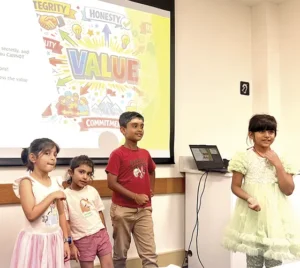
Organised by Basava Samiti Asia Pacific Ltd, the event aimed to highlight the charity’s mission of promoting values-driven living inspired by Guru Basava, the 12th-century social reformer known for his teachings on equality, compassion and ethical conduct.

Building a Values-Driven Community

At its core, the event emphasised the importance of creating a supportive and inclusive environment where individuals can grow personally while contributing positively to society. Through its programs, the organisation continues to foster intergenerational learning, encouraging people of all ages to share perspectives, experiences and values.
“Events like Connect @ Mahamane create a space where values are not just discussed, but experienced and practised,” a volunteer shared.

Interactive Learning in Action

One of the most engaging segments of the evening was the interactive activity “Act the Value”, where participants expressed values through short role-plays. This was followed by “Guess the Value”, where attendees identified values from real-life scenarios, sparking thoughtful discussions and collaborative learning.


These activities encouraged participants to reflect on how values are applied in everyday life, making the experience both educational and enjoyable.

Youth Leadership Takes Centre Stage

A standout moment of the event was the inspiring leadership of Saketh, a 15-year-old Year 10 student, who confidently facilitated the interactive sessions. His ability to engage both children and adults demonstrated the impact of youth leadership in community initiatives.
Children actively participated by acting out values such as kindness and honesty, bringing energy and enthusiasm to the sessions.
“Seeing young leaders step forward with confidence reflects the strength of our community and the future we are building,” an attendee noted.

Reflecting on Basava Jayanthi and Timeless Teachings

The event also featured a dedicated session on Basava Jayanthi, offering participants a deeper understanding of its significance. Discussions centred on the teachings of Guru Basava and their continued relevance in modern society.
The exploration of the Vachana “Chalabeku Sharange” encouraged attendees to reflect on its meaning and apply its message to their daily lives, fostering both cultural awareness and spiritual insight.

A Strong Sense of Community

The evening concluded with the sharing of prasad, reinforcing a sense of togetherness, belonging and community spirit. Participants left with not only new insights but also a renewed commitment to practising values in their everyday lives.

Callout: About Basava Samiti Asia Pacific

Basava Samiti Asia Pacific Ltd is an international charity dedicated to promoting Engage, Educate, Empower and Enlighten (4Es) through innovative programs such as Learn2Grow and Connect @ Mahamane. The organisation leverages technology, volunteerism and community engagement to build values-based, future-ready communities across Australia and New Zealand.

Key Takeaway

Values are best learned through experience.
Initiatives like Connect @ Mahamane demonstrate how communities can come together to learn, lead and live with purpose.

Jai Guru Basava

A Shared Planet, A Shared Responsibility

A Shared Planet, A Shared Responsibility

It has now been realised, as never before by the world leaders, that maintenance of environment and biodiversity is essential for the functioning of life support systems and that there is an interlocking of environment and development. Almost all the leaders of the world have now accepted the fact that we are all neighbours in an interdependent and interlinked world, having a common future.

We all dream of a world that is environmentally, socially and economically sustainable, where economic growth is accomplished within the constraints of realising social objectives of poverty eradication and social equity. Though this is an achievable dream, but in order to realise it, there is a need to understand the triple interdependence of economic, social and environmental factors and integrate them into decision-making in governments and the private sector.

Today, most of the countries are facing one common challenge that is, how to manage natural resources in order to contribute to poverty alleviation while maintaining the ecological life support system. For this, we need to realise that there are 5 major factors which have a great impact on the quality of our environment.

These are: number of people i.e population, the amount of energy and resources they consume, the damage caused by the form and extent of production and consumption involved, the state of economy of the people and finally, how much are we prepared to sacrifice our narrow commercial or national interests for our common future.

In economics the main issue deals with what, where and how much of the natural resources are required to alleviate poverty, while social issues deal with for whom and how much are resources developed, and environmental issues address how natural resources can be managed with minimum negative impact on ecosystems.

The need of the hour therefore is to realize economic growth within the constraints of social and environmental sustainability. This is however not an easy task mainly, because there are many countries which resist the call for having population control.

The problem is further confounded by the fact that about 90% of population growth, in the next decade, would be in those developing countries, where people value children all the more as forms of investment and security. That however does not absolve the developed countries of their share of responsibility. NO! because 25 % of the world population which lives in industrially developed countries consumes about 75% of the world’s resources and their industries have been a major factor in polluting the environment.

So, looking at the overall situation, it is a question of collective security in which all nations and each institution and individual has to play a role. The challenge is to generate substantial benefits simultaneously across multiple economic, environmental and social objectives. So, if we are to achieve our dream, the time to act is now by coming together and developing a spirit of co-operation, sense of responsibility and sharing of mutual concerns. Remember! If we fail to act now, it will impoverish our current and future generations.

By Rajyogi Brahma Kumar Nikunj Ji

Support lifeline for exploited migrant workers under threat

Support lifeline for exploited migrant workers under threat

Thousands of vulnerable migrant workers in Queensland could lose any support for visa and work-related assistance in the upcoming May budget.The Queensland Migrant WorkWise program, delivered by the Queensland Council of Unions and funded by the Department of Home Affairs, is a pilot initiative providing on the ground education and support to temporary visa holders and their employers about workplace and visa rights (www.qldmigrantworkwise.com).

Despite only being established last year, the pilot program is already showing significant impact across Queensland:
• 2,100+ migrant workers engaged
• 115 outreach activities across metro and regional areas
• 200+ stakeholder organisations engaged
• 40 referrals to specialist immigration legal services
• Materials and sessions delivered in 10+ languages
Workers across Queensland and particularly in regional Queensland are reporting
widespread exploitation, including:
• Wage theft and unpaid superannuation
• Visa-related coercion (threats linked to sponsorship or visa status)
• Unsafe workplaces and serious injuries
• Harassment, discrimination and unlawful fees
This reflects a much broader national issue. There are over one million temporary visa holders working in Australia, many in essential industries, and they face a fundamental power imbalance where employers can influence their ability to stay in the country. In Queensland key industries reliant upon significant migrant labour include agriculture, meat processing, manufacturing, aged care and hospitality.

Why this matters now

The Federal Government is currently reviewing the funding for this program nationally, and it is understood funding could be cut by up to two-thirds in the May Budget.
If this occurs, it would:
• Wind back outreach across Queensland
• Reduce multilingual education and support
• Leave vulnerable workers without trusted, independent advice
• Undermine recent reforms like the Workplace Justice Visa

Notably, research by the Department of Home Affairs indicates that seventy-five per cent of workers and employers are still unaware of these reforms, meaning without outreach programs like this, the laws exist “on paper but not in practice.”

Case studies (available for media)

Queensland Migrant WorkWise can provide real examples of exploitation uncovered through the program, including:
• A young UK worker seriously injured on a farm after being pressured to undertake unsafe work in exchange for visa sponsorship
• 70 migrant workers denied superannuation over years, with the employer phoenixing to avoid repayment
• A skilled visa holder coerced into returning to work injured under threat of losing permanent residency

Comments by Jacqueline King QCU General Secretary

“With less than a year of running this pilot program, we are just beginning to see the scale of the problem: wage theft, unsafe workplaces and visa coercion across Queensland.
“The program is also starting to make a real difference to some of the most vulnerable workers in our community. People who are too often exploited, underpaid and afraid to speak up because their visa is on the line.

“Unfortunately, without funded programs, much of this exploitation simply goes unreported and unchecked. Slashing Migrant WorkWise by two-thirds would effectively shut it down in Queensland, leaving thousands of vulnerable migrant workers with nowhere to turn, giving a green light to dodgy operators.”

The Unshakable Spirit: Resilience as the Cornerstone of the Indian Diaspora

The Unshakable Spirit: Resilience as the Cornerstone of the Indian Diaspora

By Jitendra Deo
Chief Executive Officer
JD Group Australia

As we navigate the complexities of 2026, a year already marked by shifting geopolitical tides, economic recalibrations, and the lingering echoes of environmental challenges in our Pacific backyard, I am struck by a singular, undeniable truth: the profound resilience of the Indian diaspora. From the bustling streets of Sydney and Brisbane to the coastal towns of Fiji, our community has consistently demonstrated an extraordinary ability to not only survive crises but to manage them with a level of sophistication and unity that serves as a global blueprint.

Resilience is often defined as the capacity to recover quickly from difficulties. However, for the Indian diaspora, resilience is not merely a reactive trait; it is a proactive, cultural imperative. It is woven into the very fabric of our history. We are a people of movement, of adaptation, and of enduring faith. Whether it was the early pioneers who crossed oceans to build new lives in the Pacific or the modern professionals driving innovation in Australia’s tech and healthcare sectors, the underlying strength remains the same: an unshakable core that refuses to be broken by circumstance.

Management in the Heart of the Storm

When we look at the recent events in Fiji, recovering from Tropical Cyclone Vaianu or the economic fluctuations caused by global supply chain disruptions, we see a community that does not panic. Instead, we see a community that organizes.

This “well-managed” nature of our diaspora is rooted in our social structures. During times of crisis, our community centres, religious institutions, and business networks transform instantly into relief hubs. It wasn’t just about providing aid; it was about the management of that aid and ensuring it reached the most vulnerable, coordinating logistics with precision, and providing the emotional scaffolding necessary for long-term recovery.

In business, this resilience manifests as a unique form of “frugal innovation” and strategic foresight. As entrepreneurs and business leaders, we have learned to build systems that are robust yet flexible. We anticipate market shifts and prepare for rainy days, ensuring that our enterprises can weather high interest rates or shipping delays without compromising the livelihoods of those we employ.

The Strength of Our Shared Identity

What makes the Indian diaspora particularly resilient is our dual identity. We are deeply integrated into the fabric of Australia and Fiji, contributing to the “Great Southern Land” with our professional expertise and cultural richness. Yet, we remain tethered to the values of our heritage and values that prioritize family, education, and communal responsibility.
In times of crisis, this identity acts as a shock absorber. When a family faces a health challenge or a business faces a downturn, they are never truly alone. The “invisible safety net” of the diaspora and composed of friends, neighbours, and professional associations, springs into action. This is the hallmark of a community that is well-managed: the ability to decentralize support and empower individuals through collective strength.

Looking Forward: A Legacy of Stability

As we look at the headlines today, from the stabilization of fuel supplies to the opening of climate-resilient roads in Vanua Levu, we must recognize that infrastructure is only half the story. The other half is the human element. You can build the strongest bridges and the widest roads, but without a resilient population to utilize them, progress is hollow.

Our community’s ability to remain grounded while reaching for the stars is our greatest asset. We celebrate the success of our leaders in the Australian Senate and the achievements of our youth in universities, but we never forget the importance of our traditional routines and the spiritual discipline that keeps us cantered.

I say this: let us take pride in our history of perseverance. We have proven time and again that we are built for the long haul. Whether the challenge is a global pandemic, a localized natural disaster, or an economic shift, the Indian diaspora will continue to lead with a calm hand and a determined heart. We are not just participants in the modern world; we are the architects of its stability.

Our resilience is our legacy. Our management is our strength. Together, we remain unyielding.

When Australian Regulators Answer to Foreign Parliaments

When Australian Regulators Answer to Foreign Parliaments

There are moments when a seemingly technical detail exposes a much deeper fault line in government. The demand that Australia’s e-Safety Commissioner, Julie Inman Grant, appear before a United States House committee is one such moment. It received passing attention and no domestic analysis despite the serious constitutional issues it creates. The Office of the e-Safety Commissioner is an agency of the Australian Government. The Commissioner’s functions are set out in the Online Safety Act 2021, including promoting the online safety of children. To that end, the Commissioner has the power to do all things necessary or convenient to be done for the performance of that and other functions. In addition, the Minister for Communications may issue directions to the Commissioner regarding his or her performance of the functions and exercise of powers.

Ordinarily, the congressional demand would not have been served in Australia. The US Congress has no jurisdiction to compel foreign officials to appear before it. Sovereign immunity, territorial limits and constitutional design all point in the same direction: Australia’s regulators answer to Australian ministers and, ultimately, the Australian Parliament.

But this case is different. The current e-Safety Commissioner is a dual Australian and US citizen.This single fact not only alters the legal landscape entirely but strikes at the core of national sovereignty and national security. While the US Congress is unable to compel Australia or Australians, it can compel one of its own citizens. Committee chairman Jim Jordan stated in his demand “that Congress has broad authority to gather information from U.S. persons”. Citing the US Supreme Court, Mr Jordan continued that “courts have routinely found that U.S. citizens living abroad are within the jurisdiction of the U.S. government and can be compelled to provide testimony”.

All acts and accountability of the Commissioner under the Act, are done in his or her official capacity as Commissioner, not in his or her personal capacity. Settled Australian law declares this to be the case.

The statutory powers are exercised by virtue of office, not by virtue of or reference to the identity of the holder.In the case of Ms Grant, the mechanism of accountability is no longer institutional; it is personal. And in that shift lies a profound constitutional problem.

While Australia is a nation of immigrants (seven prime ministers were born outside Australia), by appointing a foreign citizen to exercise Australian sovereign power, the Commonwealth has inadvertently imported foreign parliamentary oversight into its own executive branch. Ms Grant is not merely a regulator enforcing Australian law; she is also a person clearly capable of at least being pursued, if not being subpoenaed, examined and sanctioned by a foreign legislature. Accountability is no longer vertically aligned within Australia’s constitutional system. It is pulled sideways, into another.

This is not a question of loyalty or good faith. It is a question of structure. Accountability is not neutral. It always belongs somewhere. When an Australian official can be compelled to answer to a foreign parliament, Australian sovereignty is no longer complete, even if nothing improper is said or done. The possibility of a dual-citizen ASIO director-general is no longer a hypothetical. The current Victorian Police Commissioner, after all, is a New Zealand citizen.

The implications are serious. Senior regulators hold sensitive information, shape enforcement priorities, and operate in domains that intersect with national security, global technology markets, and intelligence-adjacent policy spaces. The risk is not espionage.

It is lawful pressure — exerted through hearings, questioning, reputational leverage, and the implicit threat of legal or political sanction under foreign law. There is also the question of institutional appearance: is the senior civil servant enforcing their statute with an even hand, or acting under the invisible thumb of or perceived fear of repercussions from a foreign power?

Australia is not unfamiliar with concerns about divided allegiance. In 2017-18, the High Court spectacularly disqualified members of Parliament who held dual citizenship. Yet no equivalent disqualification applies to senior executive appointments wielding vast regulatory power. That anomaly should tremendously trouble us. If divided allegiance is unacceptable in the legislature, why is it ignored in the highest levels of the civil service?

The issue is larger than this Commissioner, and larger than relations with the United States. The purpose of Mr Jordan’s demand is irrelevant. His argument that Ms Grant is “willing and able to return to the United States when it suits [her]” is manifestly frivolous. Instead, attention should urgently be fastened upon how modern states exercise sovereignty in an era of migration, transnational citizenship, global talent and borderless regulation. Appointments of dual citizens to the upper civil service now carry constitutional consequences. It must be arrested.

—Nilay B. Patel is a lawyer based in Melbourne

Heartbreak in Lautoka: Drua Edge Out Western Force in Thriller

Heartbreak in Lautoka: Drua Edge Out Western Force in Thriller

The second half saw the Force take a slim lead, thanks to disciplined work at the breakdown and accurate goal-kicking. However, as the clock ticked down, the heat began to take its toll. The Drua’s bench brought a fresh injection of power, and the momentum shifted decisively. A spectacular try sparked by a break from deep within their own half sent Churchill Park into a frenzy, putting the Drua ahead by two points with less than ten minutes to play.

The “Fortress” of Churchill Park in Lautoka lived up to its formidable reputation this weekend as the Fijian Drua secured a pulsating 24-22 victory over the Western Force. In a match that swung on the narrowest of margins, the Australian visitors were left to rue missed opportunities while the home crowd celebrated a win that cements the Drua’s status as the most dangerous “home” side in Super Rugby Pacific.The atmosphere in Lautoka was electric from the opening whistle. For the Western Force, the task was always going to be as much about managing the humidity and the deafening Fijian support as it was about the technicalities of the scrum and lineout. Despite the pressure, the Force started with commendable composure. Their tactical kicking kept the Drua pinned back early, and they found success through structured phase play that silenced the home crowd—if only momentarily.

The Drua, however, thrive on chaos and transition. Whenever the Force left the smallest gap in their defensive line, the Fijians exploited it with trademark flair. The first half was a masterclass in contrasting styles: the Force’s clinical, set-piece-oriented approach versus the Drua’s instinctive, high-octane running game. By halftime, the scores remained dangerously close, setting the stage for a dramatic second period.

The second half saw the Force take a slim lead, thanks to disciplined work at the breakdown and accurate goal-kicking. However, as the clock ticked down, the heat began to take its toll. The Drua’s bench brought a fresh injection of power, and the momentum shifted decisively. A spectacular try sparked by a break from deep within their own half sent Churchill Park into a frenzy, putting the Drua ahead by two points with less than ten minutes to play.

The final moments were a test of nerves. The Force launched a desperate late assault, camped inside the Drua’s 22-meter line. They cycled through nearly a dozen phases, searching for the drop goal or the penalty that would steal the match. But the Drua’s defence, often criticized for its lapses, held firm with a grit that defined their season. A final turnover at the breakdown allowed the home side to kick the ball into the stands, ending a classic encounter.

For the Western Force, the 24-22 loss is a bitter pill to swallow, particularly given the effort exerted in one of rugby’s most difficult road trips. They return to Perth with a losing bonus point but will feel they had the tools to win.

For the Drua, the victory is more than just four points on the table; it is a statement of intent. As the competition nears its business end, no team will relish the prospect of traveling to Lautoka. “The Fortress” remains unbreeched, and the Fijian spirit remains the heartbeat of Super Rugby Pacific.