By Jitendra Deo Chief Executive Officer JD Group Australia
Photo credit: www.theguardian.com
In 2004, Australia and the United States signed a landmark free trade agreement (FTA) following a year of intense negotiations. This agreement marked Australia’s second FTA, after its earlier agreement with Singapore in 2003, and was a pivotal moment in Australian trade policy. The U.S.-Australia FTA established a framework that not only enhanced bilateral trade but also paved the way for Australia to pursue further FTAs with other nations, including Japan, China, India, South Korea, and Malaysia.
Historically, Australia’s trade landscape has evolved significantly since its early colonial days, which were heavily reliant on imports from Europe. As local industries began to emerge, Australia shifted to exporting resources such as coal and wool. Initially, trade policy was tightly controlled by the British Colonial Office until the mid-19th century when greater autonomy was granted to Australian colonies. The gold rush and subsequent agricultural booms positioned Australia as one of the wealthiest nations per capita by the 1880s.
However, the economic collapse during the 1890s depression intensified debates between free traders and protectionists, leading to a complex tariff regime post-Federation.
Throughout the 20th century, Australia predominantly adopted protectionist policies, employing high tariffs to support local industries, particularly after World War I and during the Great Depression. This approach began to change in the 1970s as economic pressures and globalization prompted tariff reductions, leading to Australia signing the General Agreement on Tariffs and Trade (GATT) in 1947.
By the late 1990s, with changing global trade dynamics and a rising trade deficit with the U.S., there was a shift in Australian policy towards negotiating bilateral FTAs. The successful negotiation and implementation of the U.S.-Australia FTA was a significant step in this transition, promoting greater trade integration and economic cooperation between the two nations, ultimately reshaping Australia’s approach to international trade.
Defining Moment in Australian History
The Australian United States Free Trade Agreement has polarised opinion in Australia.
Critics claim that Australian negotiators failed to gain a significant share of the American market while at the same time providing significant concessions to the US on biosecurity, health policy, intellectual property and government procurement policies.
The process was further criticised for being hasty and secretive.
Advocates claim that one of the largest markets in the world was opened to Australian producers and consumers and that the agreement brought two long-term allies even closer.
The Australian American Free Trade Agreement marked a shift from Australia’s traditional focus on tariff reduction and multilateral trade agreements towards bilateral, preferential liberalisation.
The agreement became the catalyst for the Australian Government to initiate similar discussions with other major trading partners – Japan, China, India, South Korea, Malaysia and ASEAN all began negotiations with Australia over the next four years.
It’s hard to believe the year has flown by so quickly! Here we are, already in November, and it’s been an honor to the write for the Australian Indian Times. My heartfelt thanks go out to the Deo family and my mentor and friend, Jitendra Deo, who have provided such an amazing opportunity to connect with our community, advocate for readers, and support my studies and passion for media.
Throughout this journey, I’ve been thrilled by the enthusiasm of our readers who’ve engaged with our survey questions. Your honest, thoughtful feedback gives our paper the direction it needs to cover the issues you care about most.
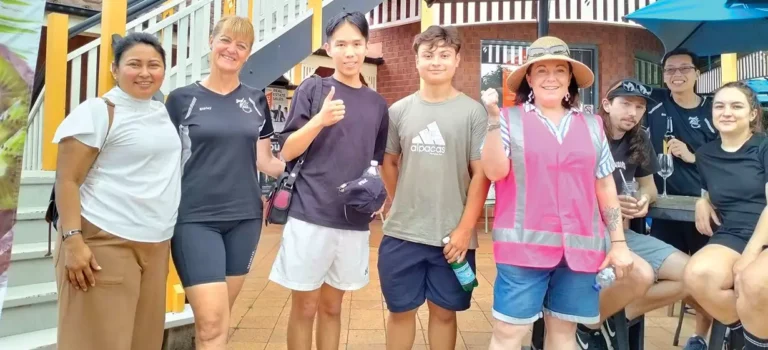
To start, I’d like to wish everyone who celebrated a Happy Diwali! Diwali is a powerful time of year when homes are illuminated, families gather, and Lakshmi Puja is performed to honor Goddess Lakshmi, the deity of wealth and success. This year, Diwali took place between October 31st and November 1st, and I had the privilege of attending many local Diwali events, including volunteering at the Diwali celebration at Dreamworld, organized by the Indian Community of Gold Coast and led by Vamish Gji. It was a joy to be part of such a vibrant festival, witnessing the community come together in celebration and support.
November is an eventful month for our community. Alongside Diwali, many will gather on November 11th for Remembrance Day at the Australians of Indian Heritage War Memorial in Sunnybank or their local RSLs to honor those who have served. On November 19th, we celebrate International Men’s Day, followed by Social Inclusion Week from November 23rd to December 1st, and on November 25th, we acknowledge the International Day for the Elimination of Violence Against Women, which marks the start of the 16 Days of Activism.
Another significant initiative this month is Movember. This campaign sheds light on men’s mental health, focusing on prevention, early intervention, and building a supportive community for men to feel empowered to care for their mental well-being. With male suicide rates shockingly high—three out of four suicides in Australia are by men—Movember addresses this urgent issue head-on, encouraging men to speak openly about their struggles and take steps toward mental wellness. We’re aiming for a future where men are not only motivated to care for their mental health but are also supported in doing so.
In line with this, I’m excited to invite you to the upcoming ACFC International Men’s Night Gala Dinner, presented by TFH Hire Services Australia and Titan Garages and Sheds, to raise awareness and show support for men’s mental health. Here are the details:
• Date: November 23rd
• Time: 6 PM
• Venue: Logan Entertainment Centre
Be sure to grab your tickets while they’re still available! This month, I was delighted to get out and volunteer alongside other youth in our community. I had the unforgettable opportunity to meet with Samoa’s Prime Minister, the Hon. Fiamē Naomi Mataʻafa, who expressed her delight at seeing young people involved and supporting each other. It was a proud moment to share how grateful I am to the Deo family for their mentorship and support in my community work.
My friends and I also had the chance to volunteer at the Forest Lake Community Festival, working day and night to bring people together. With the rising cost of living, events like these are essential, giving locals a place to connect and celebrate without added financial stress. Special thanks to President Kylie Gates and her team for their hard work in organizing this festival! Next up, we’ll be back for the Forest Lake Community Carols, and if you’d like to join or learn more, reach out. We’ll have performances from Sargam Music and many more.
Last month, I attended the Queensland Multicultural Council Dinner, where I enjoyed connecting with some of our most dedicated community leaders. I was honored to receive a special gift from Dr. Noel, chairman of the Noel Group of Companies—a book titled Pocket Philosophy for Sixty Plus Flowers of Paradise – Your Mind Never Grows Old. This incredible gift from such a respected leader was a reminder of the wisdom and kindness in our community. I’m also deeply grateful to GOPIO Brisbane for recognizing our efforts with an award for community service.
In response to reader feedback, I’ve made it my mission to involve more young people in volunteering and cultural activities. I encourage you to continue sharing your thoughts with us in the survey, helping us bring you content that resonates with your values.
In December, I’ll be helping sell Lions cakes for the Lions Club of Inala to fundraise for community causes. You can purchase one directly from the club, or you’re welcome to join us and volunteer! It’s an incredibly rewarding experience, especially as we head into the holiday season.
Finally, I’d like to reach out to anyone who may need a little extra support this Christmas. The holiday season, while joyful, can also be challenging, both financially and emotionally. If you’re feeling isolated or need assistance, please don’t hesitate to reach out. There are local charities I work with that are here to help.
Thank you for reading this month’s article, and I can’t wait to read your November survey responses. LINK: https://us17.list-manage.com/survey?u=e2a27a9d91a2076e4df41b4e0&id=4aea97ca96&attribution=false
— Xavier
Understanding the Queensland 491 Visa for Small Business Owners: A Pathway to Regional Australian Living
In an effort to encourage business growth and skilled migration in regional Queensland, the Queensland Government has introduced a specialized pathway under the Skilled Work Regional (Provisional) visa, commonly known as the 491 visa, designed exclusively for small business owners. This pathway allows eligible applicants to establish and operate a business in designated regional Queensland, providing a compelling avenue toward potential permanent residency.
Overview of the Queensland 491 Small Business Owners Pathway
The Queensland 491 visa – Small Business Owners pathway enables state nomination for those living and running a small business in regional Queensland. To qualify, applicants must meet the Department of Home Affairs (DoHA) requirements and those set by Queensland authorities.
The pathway is currently open for applications, providing a unique opportunity for business owners to contribute to the local economy while progressing toward Australian residency.
Department of Home Affairs Requirements
To be eligible, applicants must fulfill key criteria set by the DoHA:
• Points Requirement: A minimum score of 65 points on the points test, including state nomination points.
• Skills Assessment: Possess a positive skills assessment in a nominated occupation listed on the Home Affairs Legislative Instrument LIN 19/051.
• Age Limit: Be under 45 years old.
• English Language Proficiency: Meet at least a Competent level in English. For additional points, it’s recommended to take an English test even if from an exempt country (such as the UK, Ireland, the US, Canada, or New Zealand).
Features of the Queensland 491 Small Business Pathway
This pathway is tailored for migrants who are already residing in Queensland and managing a small business within designated regional areas. Key eligibility factors include:
– Occupational Alignment: Applicants must hold an occupation listed in the LIN 19/051 instrument and have an active skills assessment for that occupation.
– Work and Study Status: Full-time work rights are essential, and applicants should not be currently studying.
The pathway offers two distinct options, each with unique criteria:
Pathway 1: Purchase of an Existing Business
• Business Acquisition: Purchase an existing, registered business in a regional area for a minimum of $100,000.
• Employment Requirement: Employ at least one Australian resident.
• Business Duration: The business must have been operational for at least six months before lodging an Expression of Interest (EOI).
Pathway 2: New Business Start-Up
• Business Establishment: Start a new business and manage it consistently for at least two years.
• Profitability: The business must be profitable with a turnover of at least $200,000 in the twelve months preceding the application.
In both cases, applicants must complete an EOI on SkillSelect and submit a 491 – Small Business Owner Assessment Form to proceed with the visa application.
Understanding the 491 Visa
The Skilled Work Regional (Provisional) visa, subclass 491, is a five-year visa allowing skilled workers to live, work, and study in regional areas. It provides a pathway to permanent residency via the subclass 191 visa, provided applicants meet the required conditions after three years.
Regional Queensland Postcodes for Eligibility
To be eligible for this visa pathway, applicants must reside and operate their business in designated regional areas, covering specific Queensland postcodes. Currently, eligible postcodes include:
4019–4022, 4025, 4037, 4074, 4076–4078, 4124–4125, 4133, 4183–4184, 4207–4275, 4280–4287, 4300–4301, 4303–4498, 4500–4512, 4514–4519, 4521, 4550–4575, and 4580–4895.
If the nomination or application occurred prior to 5 March 2022, different postcodes may apply. Additionally, applicants with 491 visas granted before 19 November 2019 cannot include the Gold Coast as an eligible region.
Final Thoughts
The Queensland 491 Small Business Owners pathway represents a significant opportunity for skilled migrants to contribute to the economic fabric of regional Queensland while progressing toward Australian residency. Meeting both DoHA and Migration Queensland criteria is essential, and applicants should carefully evaluate which pathway aligns best with their business goals and eligibility. This unique pathway, catering to entrepreneurial and skilled migrants, underscores Queensland’s commitment to regional economic vitality and offers a promising route to a new life in Australia.
At Migration Guru, we remain committed to providing expert guidance and support to navigate these complexities and help our clients achieve their migration goals. For those seeking further information about this development or any other immigration advice, Migration Guru, with over 90 years of collective experience in Australian migration law, encourages you to get in touch. Our team of experts is dedicated to providing comprehensive assistance and guidance in navigating the evolving landscape of Australian immigration. Our team may be contacted via email at [email protected] or by calling 07-3036-3800. Readers are encouraged to follow us on Facebook for all the updates to Migration Law – Migration Guru Facebook. Migration Guru Pty Ltd, Level 3, 183 North Quay, Brisbane, QLD. Phone: 07-3036-3800 Disclaimer: The above article constitutes only generic information on migration issues and does not constitute specific migration advice to any entity or individual.
Australia’s participation in today’s global “wars” is essential, just as Australia’s own battle against household and children’s poverty onshore is inevitable
Our beloved country, positioned graciously in the Southern Hemisphere as the world’s largest island continent, is by no stretch of the imagination immune from the numerous volatilities presently ravaging lives and countries in the Northern Hemisphere.
Our island paradise is far away from Gaza in the Middle East—12,263 kilometers—and 12,975 kilometers from Ukraine, two hotspots of conflict for many months and years now. The human cost is staggering, with cosmic proportions and heart-wrenching data on casualties, ironically occurring in what was supposed to be a peaceful post-World War II era—the war thought to end all wars.
As a peace-loving democracy and a willing signatory to numerous international conventions fostering and protecting global peace and liberty, Australia unequivocally supports every country’s autonomy, sovereignty, and territorial integrity. Therefore, our national leaders, in bipartisan goodwill, acted swiftly in cooperation with many other democracies to hold Russia accountable for its alleged illegal and immoral full-scale invasion of Ukraine on February 24, 2022.
There are always two sides to any conflict. As citizens of the free world, we have the luxury to consider both sides without prejudice. President Vladimir Putin of Russia claims that Russia has existed for many centuries and contrasts this with Eastern Europe’s formation. He argues that Ukraine has always been part of Russia geographically and linguistically. Therefore, he claims that Russia’s actions in Ukraine on February 24, 2022, constitute a strategic military operation and are in no way an act of war, despite the condemnation from the West.
In stark contrast, Australia’s objective in the Ukraine conflict, along with 28 other countries, is to provide weapons and financial assistance to empower Ukraine to end this war on its own terms. In December 2022, US President Joe Biden pledged an additional $45 billion in support for Ukraine. At that time, this was the fourth US aid package, bringing total US funding for Ukraine since February to nearly $100 billion.
The Albanese Government continues its steadfast support for Ukraine, recently announcing Australia’s largest single military assistance package, worth nearly $250 million. This brings Australia’s military assistance to Ukraine to more than $1.1 billion since the start of Russia’s full-scale invasion, and overall assistance to over $1.3 billion.
Monitoring by U.S. defense officials has estimated that Russia has probably spent up to $211 billion on equipping, deploying, and maintaining military operations in Ukraine, aggravated by losses exceeding $10 billion in canceled or postponed arms sales. In terms of human cost, the U.S. claims Russia has lost 600,000 lives—an alarming and phenomenal loss. However, the independent Russian media outlet Mediazona reports that 71,000 Russian soldiers have been identified and confirmed killed in Ukraine, not including civilian lives lost near the border communities. Regardless, the figures are frightening in any language.
Whatever the actual numbers, it is claimed that Russia has sought assistance from its allies, such as the North Korean dictator, with thousands of North Korean military personnel reportedly training in Russia. On the Ukrainian front, the United Nations Human Rights Monitoring Mission has recorded 29,330 civilian casualties in Ukraine, comprising 10,191 killed and 19,139 injured since Russia’s invasion on February 24, 2022.
This wider involvement of countries on both sides has led some commentators to suggest an imminent world war. A few claim we are already in a global war with heavy geopolitical participation on both sides.
The NGO Emergency Action Alliance reminds us of the economic disruptions globally, with Australia being indirectly impacted by the Ukraine/Russia conflict. Australia’s agricultural industry has experienced mixed effects due to the war. Both Russia and Ukraine have been major powerhouses in agriculture, with a combined share of 20-30% of the world’s exports of several key commodities.
As a prime exporter of grains, Australia has seen increased demand for its agricultural products, particularly wheat, as Ukraine’s agricultural production has declined. This surge in demand has benefited Australian farmers, who have experienced higher prices and improved profitability. By late 2022, rural exports from Australia were up nearly 47% due to the war.
The global energy crisis is driving European countries to reduce their reliance on Russian oil and gas, creating opportunities for Australia. The United States is likely to support this shift, opening doors for Australian involvement. Regardless of the future political landscape in Russia, long-term global sanctions are expected to persist. Companies should evaluate their actions regarding international and Australian sanctions and consider their long-term presence and engagement in Russia. This is a critical moment for companies with Russian exposure to review and manage associated risks effectively.
About 1,950 kilometers to the south of Ukraine in the Middle East is a different type of volatility: the age-old Israeli-Palestinian rivalry. This conflict has re-erupted to ruthless heights following the invasion of Israel’s sovereignty by the militant group Hamas and its associates.
Many global citizens remain oblivious to the reasons behind the premeditated bombings and eventual invasion of Israel by Hamas. By understanding the history of Palestine and the events that led to the current situation, we can better appreciate the complexities of the Israeli-Palestinian conflict and work toward a future marked by peace, justice, and reconciliation for all parties involved.
As far back as 1993, Israeli and Palestinian leaders met secretly in Oslo, Norway, and reached agreements signed in 1993 (at the White House) and 1995 (in Taba, Egypt), known as the Oslo Accords. The Palestine Liberation Organization formally recognized Israel’s right to exist while Israel recognized the PLO as the representative of the Palestinian people.
The Oslo Accords viewed peace between Israel and the Palestinians as a process to be implemented in incremental steps. Over the years, however, shifting demands coupled with changes in leadership on both sides have thwarted any mutual resolution. Sadly, the failure of the two sides to reach a final arrangement has led to the stalemate that exists today.
Australia has taken a stand in the volatile Israeli-Palestinian rivalry, as echoed by Australian Foreign Minister Penny Wong in a press conference in Jerusalem earlier this year. She emphatically stated, “Australia is a friend of Israel’s. We are also a friend of the Palestinian people.” During her trip to the Middle East, Senator Wong announced that Australia commits $21.5 million in humanitarian support to Palestinians in Gaza and abroad.
The Brown University Watson Institute reports that the United States has spent $22.76 billion in support of Israel’s actions in Gaza and operations against the Houthis in Yemen.
In reflecting on the human costs of war, it is crucial to recognize the staggering toll of lives lost and the impact on communities. It goes without saying that the military spending of trillions of dollars by global leaders—whether democratic or dictatorial—ironically claims these expenditures are for the sake of achieving peace while neglecting the consequences of their actions.
Looking back over the past 60 years of recorded history, we may have regressed to a new low in decency as a global community, creating and fostering wars while diverting trillions to finance them. No generation will forget the USA and allies’ involvement in the Vietnam War. Although many Americans chose not to speak of this conflict, it was described by diplomat-turned-academic George Kennan as “the most disastrous undertaking” in 200 years of U.S. history.
“Disastrous” is an understatement; upon the U.S. withdrawal in March 1973, it was estimated that 58,132 Americans died in Vietnam, with more than 150,000 wounded and 21,000 permanently disabled. Over three million Americans served in the Vietnam War, and an estimated 100,000 fled the United States to avoid conscription, with approximately 50,000 deserters. The Veterans Administration estimates that 830,000 Vietnam veterans suffer from post-traumatic stress disorder, with 480,000 considered disabled. The estimated cost of the Vietnam War during the Kennedy, Johnson, and Nixon administrations was $176 billion.
However, a wave of justifications, criticisms, and retributions followed. Some argued that Vietnam was a nationalist conflict in which Washington had no business intervening. Australia sent over 60,000 personnel to Vietnam, with 523 dying as a result of the war and nearly 2,400 wounded, incurring a military cost of $220 million and millions more in care for veterans.
Just 28 years later, on September 18, 2001, the Bush administration enacted sweeping measures to combat terrorism, including invading Afghanistan. Twenty years later, U.S. participation in the Afghanistan war became the longest in U.S. history. Since invading Afghanistan in 2001, the United States has spent $2.313 trillion on the war, including operations in both Afghanistan and Pakistan. After the Afghanistan War, the U.S. government is obligated to provide lifetime care for veterans of this conflict, with a total of 243,000 deaths among military, allied workers, and civilians.
Australia spent $10 billion during the war and $213 million post-2021, resulting in 41 Australian deaths. Both sides of any conflict tenaciously stand by their justifications for engaging in war. However, the true human and monetary costs cannot be precisely determined, for it is war.
Wouldn’t the immense sums poured into wars make us envious of those fighting against poverty daily? According to the Reserve Bank of Australia, high inflation and interest rates continue to pressure household budgets. Real disposable incomes—after tax and interest payments and adjusted for inflation—have declined sharply since the start of 2022 on a per-capita basis. More people than usual are seeking support from community organizations like food banks, often for the first time, including dual-income households and mortgagors.
The Melbourne Institute of Applied Economic and Social Research has updated the poverty line for Australia to the March quarter of 2024. Inclusive of housing costs, the poverty line is $1,145.61 per week for a family of two adults (one working) and two dependent children. This is an increase of $4.78 from the previous quarter (December 2023).
The OECD – Organisation for Economic Co-operation and Development Poverty has found that poverty exists even in wealthy countries like Australia. A 2022 study indicated that 3.3 million people in Australia live below the poverty line, including 761,000 children. Many Australians face significant disadvantages and challenges in their daily lives. A major driver of poverty and homelessness in Australia is the rising cost of housing, making it increasingly difficult for families to make ends meet.
In 2024, the median weekly rent in Australia is $627, an increase of 8.5% from the previous year. For families living under the poverty line, affording a safe home can be out of reach, forcing many to choose between paying rent or buying food. Two million Australian households have experienced food insecurity in the past 12 months, leading to reduced food intake, skipped meals, or consumption of lower quality or unhealthy food. Sixty percent of households experiencing food insecurity go an entire day without eating at least once a week.
For the 761,000 children living in poverty in Australia, the detrimental effects on their education, health, and future outcomes are profound. By age 15, children growing up in poverty may be up to three years behind in school compared to their peers.
We are not advocating a pacifist doctrine entirely, as reasonable wars for global peace to end tyrannical regimes and genocide may be justified. However, it is crucial to recognize that the trillions of dollars spent on wars, especially those that have failed to yield positive outcomes like Vietnam and Afghanistan, have obliterated hundreds of thousands of precious lives.
Moreover, the casualties of these wars include their respective pre-war homeless and poverty-stricken citizens in these wealthy countries, now burdened with war debt that further hampers efforts to combat poverty at home. This is the dilemma of our age, and we must ask ourselves: when will a generation rise up and demand enough of war, and advocate for new “Oslo Accords” between Palestine and Israel, or a new treaty regarding the Russian-Ukrainian border?
This may not be a simplistic view; it could ensure a flow of vital resources into alleviating the suffering of their impoverished citizens. Which generation across these volatile regions will rise up and demand that enough is enough when it comes to war?
LifeGA directors with staff and patients at Life Blood Centre
The World Health Organisation says that a blood service that gives patients access to safe blood and blood products in sufficient quantity is a key component of any effective health system. While we take our blood service for granted in Australia, providing safe blood is not so easy in a country like India. That is why Life Global Australia supports the Life Blood Centre in Rajkot. The Centre is the lifeblood of health care in the region.
In Australia, access to blood and plasma is free in both private and public hospitals because blood products are funded by state and federal governments. In India, however, the cost can range from 1000INR to 10000INR. This can prevent access to life-saving blood for many living below the poverty line. LifeGA works with our in-country partner charity, Project Life, to provide free blood for needy people through the Life Blood Centre in Rajkot.
“The Life Blood Centre has been internationally recognized,” said LifeGA Founding Director and Chairperson, Dr Dipti McGowan. Project Life established the Life Blood Centre in 1981, and in 2020 the Centre received a prestigious ISBT Award for Developing Countries, citing its world class equipment and commitment to providing scientifically validated processes.
The work of the Life Blood Centre in Rajkot is particularly important for people with thalassaemia. Thalassaemia is a genetic disease in which a mutation causes the production of abnormal haemoglobin. If there is a mutation in one gene, it is called thalassaemia minor. Thalassaemia minor patients have mild anaemia but can usually conduct a normal life. However, if two people with thalassaemia minor have a child, each of them may pass on the mutation and there is a one-in-four chance that their child will have thalassaemia major. This is a very serious illness in which the faulty synthesis of haemoglobin means the child is susceptible to difficulties including bone deformities, delayed or stunted physical growth, lowered immunity and general weakness. Few patients live past their teens. These patients need blood transfusions every 2-4 weeks of their lives.
Dhaval Gadhiya has received over 600 blood transfusions. Now in his 30s, Dhaval tires easily and would like to decrease the amount of physical work in his job as a labourer. He is grateful for LifeGA’s support of the Project Life Blood Bank which provides high quality blood transfusions, enabling a much longer life than had been predicted. He is hopeful about the future for others living with thalassemia.
“Please keep up your good work so that others don’t have such a tough journey,” Dhaval said.
Rahul Bharatbhai Malasatar was diagnosed with thalassaemia major when he was two months old. “I have lived with weakness, tiredness, anaemia and facial bone deformities for 28 years,” Rahul said. Thanks to regular transfusions, Rahul attended school until he was 17, and has been employed since then. Less fortunate is Kinjahl Manubhai Vagh.
“I have never attended school or been able to do paid work,” Kinjahl said. Now 22-years-old, Kinjahl was diagnosed at five months, and has always suffered from anaemia, fatigue and slow growth.
Not one of Dhaval, Rahul and Kinjahl’s parents was aware that they had thalassaemia minor.
Project Life established the Life Thalassaemia Prevention Centre in 1993. To reduce the number of children likely to inherit the disorder, the Centre has now conducted over 700,000 thalassaemia screening tests and raised awareness of the condition and how to prevent it. Screening takes place as early as possible, preferably during adolescence, so that carriers do not get into relationships or have arranged marriages with other carriers.
“We provide awareness literature and explain by using a chart the possibility of having a child with thalassaemia minor or thalassaemia major,” Project Life Joint Executive Trustee, Ms Meetal Koticha Shah, said. People then go into a relationship with awareness, choosing either to be childless, or to be tested early in pregnancy. “If a screening test shows that a couple both have thalassaemia minor, we advise them to go for pre-natal testing”, Ms Shah said. Married couples are counselled so that they are aware of the issues a thalassemia major child will face, and the emotional and financial cost to the family.
Organising and funding screening camps, testing, education and counselling for people in remote areas of Gujarat where thalassemia is prevalent requires considerable resources. Project Life receives donations from individuals and socially responsible corporations, and has the support of local municipalities. The combination of education and testing has proven effective.
“As per a recent report, to date 122 cases of thalassaemia major have been prevented,” Ms Shah said. But Project Life and LifeGA want to do more than provide low cost transfusions, life-changing information and screening tests. “It seems that people are gaining awareness, but still a lot of work needs to be done to make our region thalassaemia-free.”
Added to the combination of pragmatism to treat thalassemia symptoms, and persistence to tackle the cause, comes the power of ambition. Not content with being the lifeblood of health care in the region, LifeGA and Project Life are determined to eradicate thalassaemia from Gujarat and from India. But then, LifeGA is always seeking to do more.
“When we work together, we can achieve all we envision and more,” Dr McGowan said.
www.lifeglobal.org.au
Launch of JD Media Corp and Australian Indian Times by Senator Paul Scarr
On October 5, during the Fiji Day celebrations, Senator Paul Scarr, representing Queensland, officially launched JD Media Corp and the Australian Indian Times. The event was graced by the Minister for Communities and Arts, Ms. Leanne Enoch, and Logan Mayor, Cr. Jon Raven, with renowned MC Lewis Lee OAM steering the festivities.
The launch of JD Media Corp and the Australian Indian Times introduces a vital new platform for the Indian community in Australia, aimed at amplifying their diverse voices, stories, and cultural aspirations.
Lewis Lee OAM highlighted the vision behind JD Media Corp, stating, “Founded in 2024, JD Media Corporation Pty Ltd is the parent organization of Australian Indian Times, Australian Indian Radio, and Australian Global Indian TV. Our mission is to advance Indian culture and heritage through a comprehensive cross-media approach.”
With approximately 30 million people in the Indian diaspora across 140 countries, JD Media Corp plays a crucial role in connecting and serving this global community, particularly within Western democracies like Australia. In today’s media landscape, often described as the “fourth estate,” the organization is dedicated to informing, entertaining, and engaging the public while fostering dialogue and accountability. JD Media Corp is resolute in its commitment to serve the Global Indian community through authentic and inclusive media.
Reflecting on their journey, the founders acknowledged the significant progress made in just a year. “It’s remarkable to think how far we’ve come. Just last year, we wouldn’t have imagined leading these three significant media entities,” they said. Although they could have continued in their successful Real Estate and Electrical business, the legacy of their ancestors, the Girmityas, inspired them to honour their sacrifices and build upon the foundations they laid.
The Deo Family Charitable Foundation, in partnership with JD Media Corp, is devoted to preserving and advancing the Girmit legacy, including the rich Indian culture and heritage. “We are committed to connecting the Indian community globally and grateful to those who join us on this journey,” they added.
JD Media: A New Era in Multicultural Journalism
JD Media Corp, led by Chairperson Jitendra Deo, is designed to bridge the gap between mainstream media and the Indian diaspora in Australia. With an increasing number of Indian Australians excelling in diverse fields—from technology to the arts—the necessity for a dedicated media outlet has never been clearer. JD Media Corp aims to empower these voices, showcasing their contributions and fostering a deeper understanding within Australian society.
The organization is committed to high-quality journalism that prioritizes integrity, inclusivity, and authenticity. Its experienced team possesses extensive knowledge in journalism, marketing, and community engagement, striving to produce content that is both informative and relatable to readers from various backgrounds.
Australian Indian Times: Celebrating Culture and Community
The launch of the Australian Indian Times marks a pivotal moment for the Indian community in Australia. This print and digital publication will serve as a platform for news, culture, and community events, focusing on issues that resonate with Indian Australians. From celebrating local festivals and culinary traditions to addressing community initiatives and social issues, the Australian Indian Times aims to reflect the multifaceted identity of its audience.
Featuring interviews with community leaders, profiles of local businesses, and discussions on pressing social matters, the publication will encourage community contributions, inviting readers to share their stories and insights.
A Commitment to Inclusivity and Representation
The launch of JD Media and the Australian Indian Times is particularly relevant as conversations about diversity and representation in media continue to gain traction. Both platforms recognize the importance of portraying the Indian community in all its complexity, sharing stories that reflect both their achievements and challenges. This approach aims to create a balanced narrative that resonates with both the Indian community and the wider Australian audience.
Community Engagement and Future Prospects
The teams at JD Media and Australian Indian Times are eager to engage with the community through events, workshops, and collaborations. These initiatives aim not only to promote the publication but also to strengthen community bonds.
As they embark on this exciting journey, JD Media and the Australian Indian Times invite readers to participate actively, whether through sharing stories, providing feedback, or staying informed. Together, they aspire to create a platform that not only informs but also inspires and unites the Indian community in Australia.
In conclusion, the launch of JD Media Corp and the Australian Indian Times signifies a significant advancement in the representation of Indian Australians within the media landscape. Through their commitment to quality journalism and community engagement, these platforms promise to celebrate the rich cultural heritage of the Indian diaspora while fostering connections that transcend boundaries. The future looks bright, and the community is ready to embrace this new chapter.
Celebrating Diwali in Greater Springfield with GSIA: A Festival of Lights, Flowers, and Community
Diwali, the festival of lights, is one of the most cherished celebrations for the Indian community, symbolizing the triumph of light over darkness, good over evil, and knowledge over ignorance. In the Greater Springfield area, this joyous occasion unites the community under the guidance of the Greater Springfield Indian Association (GSIA), with celebrations filled with warmth, love, and cultural pride.
A Special Thank you to Our President and Founder Member
Mr. Mukesh Dubey, the Founder Member and President of GSIA, is a cornerstone of this community. With over 17 years as a homeowner in our community, he is deeply connected to the area and its people. As a successful local real estate agent and the owner of his own real estate company, Mukesh has contributed significantly to the Community of Greater Springfield. Beyond his professional success, he has been dedicating his time and knowledge to serving numerous nonprofit organizations in Queensland, always prioritizing community welfare. His commitment to making Greater Springfield a vibrant, inclusive place to live is truly commendable.
Lighting Diyas and Welcoming Positivity
The heart of Diwali lies in lighting diyas, symbolizing hope, prosperity, and good fortune. In Greater Springfield, this tradition is embraced with great enthusiasm. As dusk falls, families across the community step outside to light their homes with the soft glow of diyas, creating a beautiful, illuminated atmosphere that mirrors the festive spirit.
Homes are adorned with vibrant flowers and colorful lights, transforming the neighborhood into a dazzling celebration of festivity. These decorations are not just for beauty; they symbolize the welcoming of happiness and prosperity into each home. As the homes light up, so do the hearts of families, friends, and neighbors, spreading a message of togetherness, positivity, and unity.
Sharing Sweets and Joy
Diwali is also a time of sharing and generosity. A beloved tradition is the exchange of sweets, and in Greater Springfield, we make this an integral part of our celebrations. Sweets are distributed to members, ensuring that everyone experiences the joy of Diwali. These treats are more than just food—they are symbols of love, friendship, and community spirit, reminding us that Diwali is as much about giving as it is about celebrating.
A Community United
GSIA is proud to bring the community together during Diwali. As a non-profit organization, we are committed to preserving the rich cultural heritage of India and sharing it with the wider Springfield community. Our events go beyond mere celebrations; they are cultural showcases filled with traditional dance, music, and performances that highlight the beauty of Indian culture.
During Diwali, GSIA hosts gatherings where community members come together to celebrate in grand style. These events offer a chance to enjoy festive food and entertainment while strengthening bonds between families and neighbors. We also decorate homes with flowers and lights, contributing to the joyous atmosphere and ensuring that everyone feels included and cherished during this special occasion.
A Celebration of Light and Love
As Diwali lights up our homes, GSIA brings the community together to celebrate this beautiful festival. Whether it’s lighting diyas, sharing sweets, or attending GSIA-hosted events, the spirit of Diwali is vibrant and alive in Greater Springfield. We at GSIA are dedicated to preserving this wonderful cultural festival and ensuring it continues to be a beacon of hope, light, and unity for generations to come.
Diwali is more than just a celebration; it’s a time to unite as a community, sharing the joy of tradition, culture, and togetherness.
Dazzling Dandiya Dance
Get ready to twirl and sway to the beats of Dandiya and Garba, accompanied by energetic and talented performers. Spectacular Venue
Our very own Robelle Domain Park in Springfield Central provides the perfect setting for a memorable and enjoyable evening. Delicious Delights
Treat your taste buds to a delectable array of Indian cuisine and snacks, available at various food stalls throughout the event. Entertainment Galore
Experience a range of cultural performances and traditional rituals that showcase the richness of our Indian heritage. Fun for Everyone
Enjoy exciting DJ music, traditional wear, and activities for all age groups, with fabulous prizes up for grabs.
Residents from Brisbane’s northern suburbs are again being invited to celebrate the area’s rich cultural diversity at the annual Diwali celebrations on October 19 at 1pm.
Event Organiser Devinder Bains said this colourful multicultural event was happening this year thanks to the sponsorship from the Brisbane City Council as a community festival and cultural event.
“We are planning for more than 800 people to converge on Banyo Memorial Park to experience the charms of Indian food, music and culture this year,” Devinder said.
“Our local community is proud that this is an inclusive event and preparations are already well underway.
“Event organisers are determined to make this an inclusive friendly and COVID safe event.”
Diwali – also known as the Festival of Lights – is an ancient festival celebrated across India in autumn every year.
The festival celebrates the victory of light over darkness, knowledge over ignorance, good over evil, and hope over despair. This year’s free afternoon experience will feature Indian entertainment, music and dancing, Indian food, sweets, and a jumping castle for the kids.
Long-time and new Banyo district residents are all invited to attend and celebrate this ancient calendar festival and enjoy their own community’s multiculturalism.
For more information contact Devinder Bains 0423 875537.
Banyo and District Community Group Inc. (BDCG) is a group of residents committed to improving our local community by embracing cultural diversity and the conduct of communal social, cultural, and sporting activities. For more information visit www.banyo.qld.au or @banyocommunity on Facebook.
The Vedas are almost the oldest written documents in the world. The Vedas are the highest and most important religious texts of the Hindu religion. Veda means “knowledge” in common language.
Basically, science is the light that destroys the darkness of ignorance in the human mind. The Vedas have been called a source of history, an endless repository of knowledge and science. The word Veda is derived from the Sanskrit word Vid, which means all kinds of knowledge contained in this one word. The sages of ancient India, called Mantradrishtas, after knowing, understanding, meditating and experiencing the deep secrets of mantras, compiled that knowledge in writings and presented it to the world, these ancient texts are called “Vedas”. It is believed that these mantras were brought by God to the ancient sages. Hence Vedas are also called Shruti.
The Vedas contain a tradition of worshiping only one God, a message of one religion – ‘Manav Dharma’. The Vedas teach people humanity, equality, friendship, kindness, love, unity, non-violence, truth, contentment, non-stealing, non-lordship, celibacy, purity of conduct, thought, conduct, purity of food and drink and consolidation of austerity – sacrifice – Active work in life.
Vedas are the basis of religion; Vedas are full of all knowledge. The true knowledge of this world, this life and the great Father God is “Veda”.
Vedas are those texts of Indian culture which are full of knowledge related to almost all subjects like astrology, mathematics, science, religion, medicine, nature, astronomy etc. Vedas are the backbone of our Indian culture. They contain remedies related to evil and remedies to achieve the desired result. But just as any work requires hard work, similarly, only by studying these gems like Vedas diligently can a person obtain the knowledge contained in them.
Compilation of Veda Mantras and Number of The Vedas
It is believed that initially there was only one Veda, and it was divided into four parts for the convenience of reading. This is evident from a verse mentioned in Shrimad Bhagwat. There are thousands of mantras and compositions in these Vedas which were probably not composed at one time and neither by a single sage. They were composed of sages from time to time and they kept getting collected.
According to the verse of Shatapath Brahman, Agni, Vayu and Surya performed penance and obtained Rigveda, Yajurveda, Samaveda and Atharvaveda.
The first three Vedas have been associated with Agni, Vayu and Surya. They have been related to the sages of these three names, because the reason for this is that Agni destroys the darkness which is the darkness of ignorance. Due to this, it has become a symbol of knowledge. Air is usually in motion; its work is to flow.
It means to keep doing work or action. Therefore, it is related to work. The sun is the most radiant one, to whom everyone bows down and worships him. Therefore, it is said that he is worthy of worship. According to a text, the four Vedas originated from the four mouths of Brahmaji.
1. Rigveda
Rigveda is the first Veda; it contains knowledge of the things of creation. It describes the qualities of God, living beings and nature, ideal principles of life and practical knowledge.
• This Veda has 1028 verses (mantras) and 10 mandalas (chapters). The verses of Rigveda describe prayers, praises of the gods and their status in Devlok.
2. Yajurveda
Yajurveda mainly describes rituals. That is, how a man should use his acquired knowledge to get his desired results and salvation.
• This Veda has two branches, Shukla and Krishna. There are 1975 mantras in 40 chapters.
3. Samveda
Samveda describes the ways of praising God, worshiping Him and spiritual advancement. Sam means transformation and music. It contains devotional and peaceful prayers, which are very helpful in mental and spiritual development.
• This Veda contains the musical form of the verses (om mantras) of the Rigveda. It is basically the worship of music. It contains 1875 mantras.
4. Atharvaveda
Atharvaveda contains science and technical knowledge. Such as – psychology, economics, sociology, politics, agriculture, Ayurveda, cosmology, mathematics, astrology, physics, chemistry, military science etc.
• This Veda is the largest, it has 5687 mantras in 20 chapter. Reference: https://elibrary.thearyasamaj.org/browse/authors.




 It’s hard to believe the year has flown by so quickly! Here we are, already in November, and it’s been an honor to the write for the Australian Indian Times. My heartfelt thanks go out to the Deo family and my mentor and friend, Jitendra Deo, who have provided such an amazing opportunity to connect with our community, advocate for readers, and support my studies and passion for media.
 In line with this, I’m excited to invite you to the upcoming ACFC International Men’s Night Gala Dinner, presented by TFH Hire Services Australia and Titan Garages and Sheds, to raise awareness and show support for men’s mental health. Here are the details:
 This month, I was delighted to get out and volunteer alongside other youth in our community. I had the unforgettable opportunity to meet with Samoa’s Prime Minister, the Hon. Fiamē Naomi Mataʻafa, who expressed her delight at seeing young people involved and supporting each other. It was a proud moment to share how grateful I am to the Deo family for their mentorship and support in my community work.
 If you’re feeling isolated or need assistance, please don’t hesitate to reach out. There are local charities I work with that are here to help.
 Our beloved country, positioned graciously in the Southern Hemisphere as the world’s largest island continent, is by no stretch of the imagination immune from the numerous volatilities presently ravaging lives and countries in the Northern Hemisphere.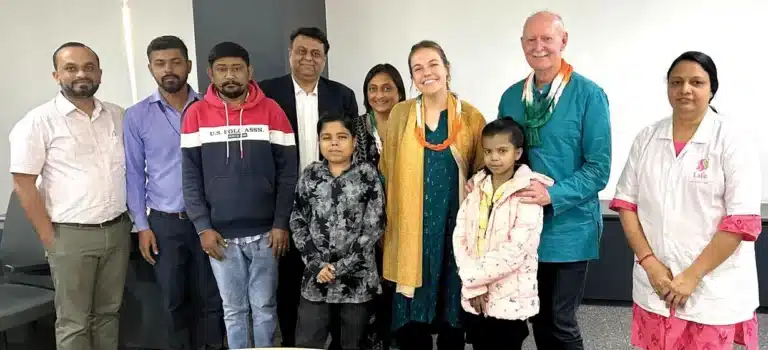
 The World Health Organisation says that a blood service that gives patients access to safe blood and blood products in sufficient quantity is a key component of any effective health system. While we take our blood service for granted in Australia, providing safe blood is not so easy in a country like India. That is why Life Global Australia supports the Life Blood Centre in Rajkot. The Centre is the lifeblood of health care in the region.
 Project Life established the Life Thalassaemia Prevention Centre in 1993. To reduce the number of children likely to inherit the disorder, the Centre has now conducted over 700,000 thalassaemia screening tests and raised awareness of the condition and how to prevent it. Screening takes place as early as possible, preferably during adolescence, so that carriers do not get into relationships or have arranged marriages with other carriers.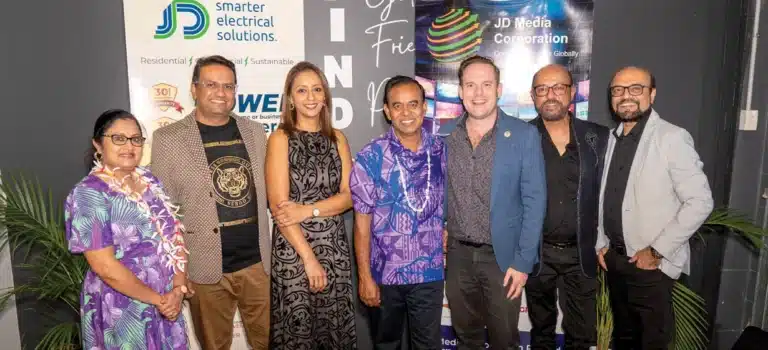


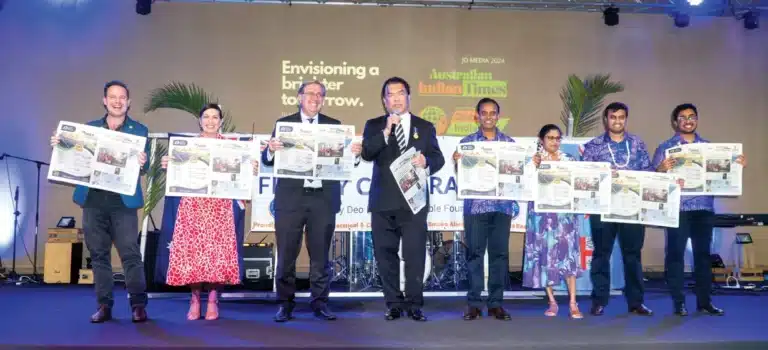

 On October 5, during the Fiji Day celebrations, Senator Paul Scarr, representing Queensland, officially launched JD Media Corp and the Australian Indian Times. The event was graced by the Minister for Communities and Arts, Ms. Leanne Enoch, and Logan Mayor, Cr. Jon Raven, with renowned MC Lewis Lee OAM steering the festivities.

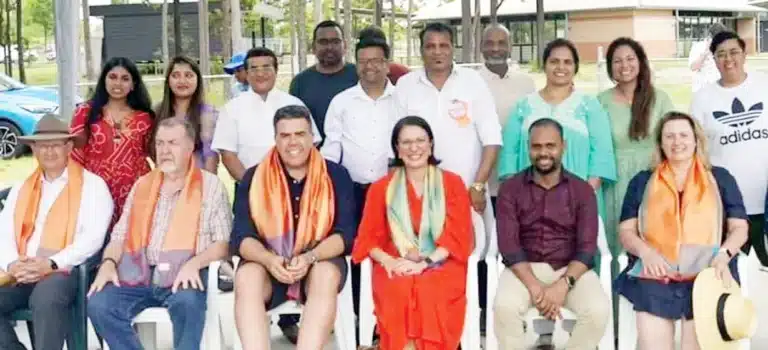


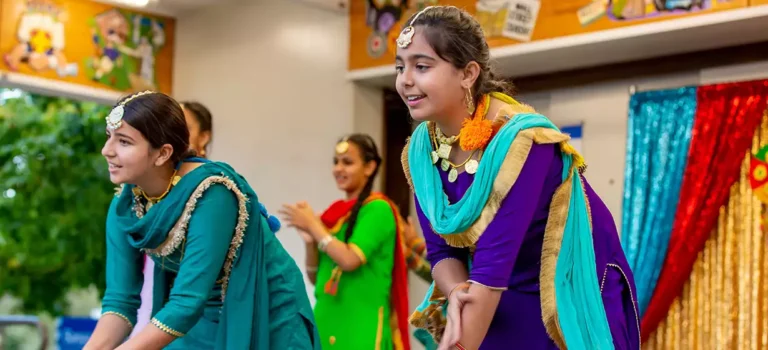

 Residents from Brisbane’s northern suburbs are again being invited to celebrate the area’s rich cultural diversity at the annual Diwali celebrations on October 19 at 1pm.
 This year’s free afternoon experience will feature Indian entertainment, music and dancing, Indian food, sweets, and a jumping castle for the kids.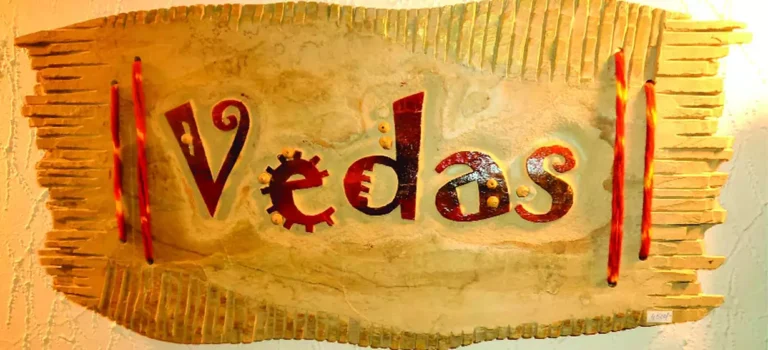
 The Vedas are almost the oldest written documents in the world. The Vedas are the highest and most important religious texts of the Hindu religion. Veda means “knowledge” in common language.
 It means to keep doing work or action. Therefore, it is related to work. The sun is the most radiant one, to whom everyone bows down and worships him. Therefore, it is said that he is worthy of worship. According to a text, the four Vedas originated from the four mouths of Brahmaji.