Arijit Singh Thrills Sold-Out Crowd at Sydney’s Qudos Bank Arena
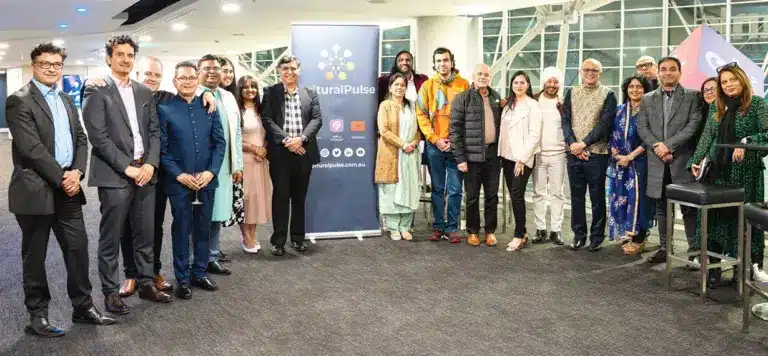
Left to Right: Ashish Desai (President) Council of Indian Australians, Terrence Trujillo (Director of Commercial) Qudos Bank Arena, Patrick Skene (Founder and Chief Creative Officer) CulturalPulse, Praful Desai (Joint Secretary and Past President) Council of Indian Australians, Irfan Malik (President) Australia India Business Council, Poorva Anand (Masters student UNSW), Dee Raghavan (Senior Manager Engagement Marketing) CulturalPulse, Consul B K Anand (CGO) representing Consulate General of India Sydney Australia, Mrs Neeru Anand, Reg Raghavan (Founder and CEO) CulturalPulse, Vishal Anand Amazon Prime Seattle USA, Dr Yadu Singh (President) Federation of Indian Associations NSW, Arti Banga and Dimple Deez Owner Editor Desi Australia, Dr. Sunil Vyas, (President) United Indian Associations and Mrs. Jyuthika Vyas, Rajesh Sharma Indus Age, Sourav Mukherjee (President)Bengali Association NSW and Mrs Paromita Mukherjee, Priyanka Hatwalne (Journalist) SBS Hindi Sydney and Minu Sharma (Owner and Editor) Indus Age.
LINKEDIN, Facebook and Instagram:
The Indian-Australian community came out in force to enjoy an incredible performance by Indian musical superhero Arijit Singh in a sold out Qudos Bank Arena at Sydney Olympic Park on Saturday July 13.
Singh is one of India’s premier musicians and enthralled the audience with a record 103 songs in a concert that finished after midnight.
For the last four years, Singh has been the most downloaded Indian artist on Spotify and the crowd sang along joyously with the Punjabi-Bengali maestro who showcased his vocal range and mix of classical and modern songs.
CulturalPulse provided cultural advisory services to Qudos Bank Arena which included pre-event communications and announcements in Hindi, as well as Hindi language speaking event staff and an Indian tasting box which sold out.
A corporate event was also hosted featuring Indian media, business, community and government leaders including Consul B K Anand and his family who represented the Consulate General of India in Sydney.
A special thanks to Terrence Trujillo and the hardworking team at Qudos Bank Arena for executing the cultural initiatives that turned Qudos Bank Arena into a ‘home away from home’ for the Indian and South Asian patrons.
Reg Raghavan, founder and CEO of CulturalPulse said the event highlighted the vibrancy and colour of the Indian-Australian diaspora:
“One of India’s greatest artists came to Sydney and the sold out crowd was in raptures,”
“We look forward to working with Qudos Bank Arena with other communities to create a culturally inclusive experience for upcoming concerts.”
Thanks to our team at CulturalPulse with a special shout out to @Reg @Patrick @Jake @Dee Raghavan.
The Generosity of the Australian Government to Pacific Islands and Timor Leste
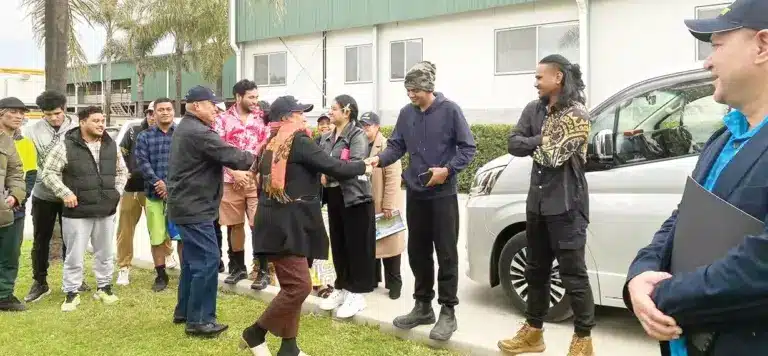
The Australia Federal Government through her Department of Home Affairs has generously invited Citizens of her neighboring countries, between the ages of 18 to 45 to try their luck on a migration kind of ballot.
“The Pacific Engagement Visa (PEV) pre-application ballot aims to give eligible people from Pacific Island countries and Timor-Leste equal access to the PEV. The ballot provides a fair and transparent process by randomly selecting people to apply for the visa. It makes sure there is equal access for people of any skill level, occupation and gender.” Dept Home Affairs. The Australian Government has generously allocated up to 3000 visa places per year, which includes partners and dependent children.
Majority of these Pacific young, age 18 – 45 are descendants of Pacific Islanders who shared the agony, sweat and blood in the trenches with brave Australia diggers/soldiers in both world wars, Malayan campaigns, Vietnams, East Timor, Middle East and other volatile spots on earth.
Australians’ goodwill has opened employment opportunities in Australia for Pacific Islanders under the PALM scheme. The latest update as at end of 2023 there were 39,644 PALM scheme workers in Australia and 423 current Approved Employers.
This new Visa sub class 192 offer has excited the majority of these PALM workers who may be eligible to try their luck on the draw, hoping should they be chosen to have their respective families join them in Australia.
Potential 100,000 plus applicants for the 3,000 spots?
Let’s do a bit of simplistic arithmetic, shall we?
The Pacific Island population of 2.3 million added to PNG’s 11.78 million equals 14.08 million.
Now, in Fiji’s case 48.5% are between the ages of 20 – 45 years old, within the eligible age to put their names in the draw. So, 48.5% of Fiji’s 939,535 population is 455,567. So, to borrow Fiji’s equation pacific wide without any other socio-economic mitigation will be 48.5% of 14.08 million is 6,790,800.
Say if only 2% of the 6,790,800 puts their names in the draw, that’s leave us with 135,816 potential applicants vying for 3,000 spot. No wonder there are late night prayer meetings in the PALM workers camp, declaring a verses in the Chistian Bible in the book of Proverbs 16:33 to favour them!
It seems that the only hope to be one of the 3,000 is by divine intervention of whatever deity each worship.
Recent visa embargos are that no PALM workers holder of Sub class 403 may apply for Student visa as in the previous years. However, the possibility for PALM worker spouses applying for Student visa may still be available and could be a real fallback plan should the luck of the draw fall far off the mark.
Our papers very best wishes to all who thew their $25 and name to the draw so you may further enjoy Australias hospitality.
Personal opinion with data sources: abc news, fijistatsfiji.gov.fj, world bank, homeaffairs.gov.au
Opinion: Integration of Seniors with Younger Generations
By Jitendra Deo
In my view, the integration of seniors with younger generations is not merely a beneficial endeavour; it is an essential one. The vast reservoir of experience that older individuals have accumulated over many years—whether through triumphs or trials—holds the potential to offer invaluable guidance to the younger generation. This process of knowledge transfer ensures that the wisdom gained from years of life experiences is not lost but instead serves to illuminate and ease the journey of those who follow. In essence, it is about leveraging the lessons of the past to avoid reinventing the wheel.
Intergenerational engagement provides a profound opportunity for mutual learning. Each generation possesses unique skills and knowledge that, when shared, can foster significant benefits for all involved. Older generations, with their deep well of life experiences and historical insights, offer younger individuals’ wisdom that extends beyond traditional education. This includes practical skills, historical context, and cultural understanding, which can be instrumental as younger generations navigate the complexities of contemporary life.
Conversely, younger generations bring fresh, innovative thinking and a grasp of new technologies and trends. Their ability to approach problems from novel angles and adapt to technological advances can offer older individuals’ new perspectives and keep them engaged with current developments. This reciprocal exchange not only bridges the generational divide but also stimulates personal growth across the board. Both young and old can gain valuable insights and enrich their understanding through these interactions.
My personal experience with community engagement has been deeply inspiring, underscoring the profound impact that such intergenerational connections can have. Research highlights that engaging in intergenerational relationships brings significant psychological and emotional benefits. For older adults, interactions with younger people can rekindle a sense of purpose and motivation, mitigating feelings of depression and anxiety while potentially enhancing cognitive function. The vitality and enthusiasm of younger individuals can invigorate older adults, making them feel valued and relevant in an ever-evolving world.
For younger people, forming bonds with older generations offers emotional stability and a sense of belonging. These relationships provide guidance and support during formative years, helping young individuals develop a positive outlook on life. The mutual encouragement and support that emerge from these interactions can be profoundly inspiring, contributing to a more balanced and optimistic perspective on life.
One of the most significant aspects of intergenerational engagement is the opportunity to share and preserve family history and cultural heritage. Older family members have the unique ability to recount personal experiences, historical events, and traditional practices that are crucial for understanding one’s roots. This sharing not only maintains a sense of continuity and identity within families but also allows younger generations to appreciate and embrace the traditions and values that have shaped their families and societies.
In turn, younger generations can provide their elders with insights into contemporary phenomena, new technologies, and evolving cultural trends. This reciprocal exchange enriches both parties’ understanding and helps dismantle stereotypes. By learning from each other’s experiences and perspectives, individuals cultivate greater intercultural competence and empathy.
Furthermore, the benefits of intergenerational activities extend beyond personal growth and emotional support. These interactions can provide practical advantages, such as enhancing digital literacy for older adults through technology guidance from younger individuals. Shared physical and mental activities promote overall well-being and help challenge and dispel negative stereotypes about aging, fostering a more inclusive perspective.
Engaging in shared activities like storytelling, arts and crafts, cooking, and outdoor events can strengthen these intergenerational bonds. Volunteering together or working on family history projects further enhances the sense of shared purpose and heritage. By actively participating in these interactions, we can create more inclusive and supportive environments that benefit all generations.
In conclusion, the integration of seniors with younger generations is a powerful and enriching process. By valuing and fostering these intergenerational connections, we can ensure a more cohesive, empathetic, and supportive society for everyone.
I hope, like me, you’re enjoying the cooler weather and beautiful Winter days as embrace the month of August.I truly appreciate all the feedback I have received last month and when I have been out and about in the community! It has been wonderful to hear from readers about what is important to you.
I would like to start this month by acknowledging that some of our readers are going throw difficult times, many I have been told are experiencing poor health, financial hardship or have lost a loved one recently. What makes us different at the Brisbane Indian Times is that family and community matter and we are here for you in difficult and good times. We hope you take comfort in our paper. August is a month filled with joy as many people celebrate India Day, Janmashtami, and Onam in Kerala. These occasions hold great significance for locals in Queensland and around the world. I know that many have marked these important dates by celebrating with family at home or participating in local community events.
On behalf of the team, I would like to congratulate the GOPIO Qld committee and all involved for organizing another successful India Day Fair at Roma St, Parklands. Witnessing thousands of families, both young and old, from diverse backgrounds coming together throughout the day brought immense joy to me and so many. I have fond memories of attending this event since I was very young, and it has become a tradition for me to volunteer and celebrate with the community members, who I now consider as my extended family. These events hold a special place in my heart, and I am delighted to see the increasing participation of young people this year, whether it’s through dance, accompanying their parents, helping their parents in the food stalls, or simply showing their respect. It was wonderful to hear and see that so many families decided celebrate at home by wearing traditional clothing, making and sharing delicious Indian dishes, while signing and listening to their favourite Indian music. Witnessing individuals from diverse backgrounds, including those of Indian descent and those who are not, unite to partake in the festivities was truly heartwarming. This particular year held added significance for me, as I was given a lesson on preparing authentic Masala Chai tea at a friend’s residence.
I am pleased to announce that the feedback received from my July survey has been overwhelmingly positive, reflecting the diverse ways in which we celebrate culture and promote inclusivity in society. I want to express my gratitude to all the readers who took the time to share their thoughts, ideas, and opinions. Interestingly, 33% of our readers discovered Indian Times through word of mouth for the first time. The majority, 70%, indicated a preference for reading the paper online, while the remaining 33% still enjoy the traditional paper copy. This is encouraging news, as it shows our commitment, along with the Deo family, to ensuring that everyone, regardless of internet access or income, can still engage with our informative and community content. According to our readers, local news is the most popular category, followed by National, Environmental, cultural, political, and sports news.
I would like to emphasize the feedback we received from a reader who suggested that we concentrate more on homelessness, particularly concerning middle-aged women, women of cultural and linguistically diverse backgrounds (CALD) and domestic and family violence (DFV) issues within multicultural communities. Additionally, there are studies on the integration of youth and seniors, highlighting the advantages of social events for these groups, as well as addressing the pressing issue of the current housing crisis in our community. I believe it is crucial to recognize these comments, as I recently I attended a DV fundraiser. This is one of many that I have attended despite my age. During the event, I listened to a Domestic Violence (DV) survivor share her story and emphasize the importance of educating our youth about DV while taking proactive steps to prevent it. Additionally, I discovered that there are over 40,000 Queensland Women aged 55 and above experiencing financial difficulties due to various factors such as increasing living expenses, unemployment, inadequate superannuation, and limited affordable housing options. I thank raising these significant issues with us. Some important numbers:
Kids Helpline:1800 551 800
1800 RESPECT: 1800 727 732
DVCnnectWomensline: 1800 811 811
DVConnect Mensline: 1800 600 636
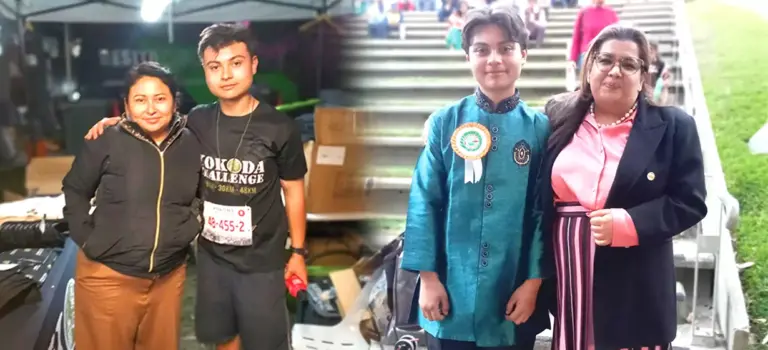
I’m pleased to report that I completed the 48Km Kokoda youth challenge in 15.5 hours and was in the top 5 out of 1,232 fundraiser. I’m thinking next year we have a senior and youth Brisbane Indian Times team take part. Watch this space.
More information can be found at https://www.housing.qld.gov.au/initiatives/housing-older-women
Thanks to feedback, my August survey is centered around determining the preferred topics for articles. Feel free to scan the QR code or approach me for a discussion on how we can further support the Deo and team’s objectives of producing a more informative and diverse newspaper for both seniors and youth by scanning the barcode.
Link: https://us17.list-manage.com/survey?u=e2a27a9d91a2076e4df41b4e0&id=5733a2587e&attribution=false
IN harmony with the cultural ethos of Deo Family Charity Foundation, and in association with the JD Media Corp and organized by events guru Jitendra & Imran the Hindi speaking Queensland Indians enthusiastically awaits the globally renown Indian singer sensation Abhijeet Bhattacharya’s personal appearance in concert here in Brisbane, Hillsong Center, Upper Mount Gravatt on October 19th, 6.30pm. Jitendra & Imran event gurus are envisaging the sitting capacity of 1,500 at Hillsong is filling up very quickly through Star Tickets sales and late booking may be disappointed.
Recently, at The Langham concert venue in London, the Bollywood backing vocalist Abhijeet Bhattacharya mesmerized the London audience with his melodies tunes. You should never miss this opportunity brought right here to the Queensland Capital. He has performed live in nearly every country in the Hindi speaking world.
Abhijeet Bhattacharya, professionally known as Abhijeet is a Bollywood playback singer was born in Kanpur, Uttar Pradesh, India in October 1958. Ironically, his parents were against his singing as education was the professional pursuance Kanpur parents strive and dreamt for their children. Abhijeet was the youngest of four brothers, so in 1981 he went to Mumbai to study Finance and Accountancy.
Jitendra and Imran with National Promoter Manmohan Singh of Desi Rocks
But his childhood fascination for singing and music got the better of him and Abhijeet made the life changing decision to pursue a career in playback singing. Later started his singing career in the late 1980’s, now is renowned to have has sung in more than 18 languages. Rightly so, he was recognized in the industry where Abhijeet Bhattacharya won a Filmfare Award in 1997! Abijeet also has served as a judge for Indian reality television series including Indian Idol.
Today, according to Industry publication and sources “……. Abhijeet is one of the top names when it comes to male playback singers. He has entrenched himself firmly in the music world, with several other hits like ‘Ole Ole’ in Yeh Dillagi, the title track of Main Khiladi Tu Anari, ‘Zara sa Jhoom loo main’ Dilwale Dulhaniya Le Jaayenge ‘Teri ankhen jhuki jhuki’ Fareb, ‘Shaher Ki ladki’ Rakshak, ‘Jhanjhriya’ Krishna, ‘Tan tana tan tan tara’ Judwaa. Be it a Sunil Shetty, Anil Kapoor, Akshay Kumar, Saif Ali Khan , or Salman Khan, Shahrukh Khan and now Hrithik Roshan, Abhijeet has sung for them all. He performed for many films like Baaghi, Sadak, Khiladi, Raja Babu, Yeh Dillagi, Yes Boss, Baadshah, Josh and Dhadkan and many more. After his success in playback singing, he thought of singing pop. He launched two albums, Main Deewana Hoon and Tapori No. 1. But both albums did not click commercially. After these two pop albums, he launched Aashiqui, which was appreciated by audience. Recently he has launched a pop album, Tere Bina, whose songs and video are chartbusters….”
Your Brisbane Indian Times opinion of Abhijeet as a contemporary Intergenerational singer and performer, a gift to mankind, we say! Today the star-singer lives in a Bollywood dream bungalow (named Sunny vistas) of white façade and red-tiled roof. He was the apple of the eye of the community for his singing talents and pampered and cherished by a loving family of his lovely wife Sumati Bhattacharya and their two children.
Abhijeet Bhattacharya is not only a vocalist, but also an accomplished musician and with ease plays guitar and drums and is also a recognized composer. His achievement has led him also be a real estate businessman.
In reminiscing about his humble beginning Abhijeet recalled the day he was packing his bags to go back to Kanpur after a long struggle in Bombay when he received a call from R.D. Burman to sing for Dev Anand’s son’s debut film. R.D Burman who passed away in 1994 is one of the greatest and most successful music directors of the Hindi film music industry. The late Burman composed musical scores for 331 films. Later Abhijeet also got to sing with Kishore Kumar, his idol, in the same film. It all happened to Abhijeet as he received a new lease of life when music director Ravindra Jain gave him an offer to live with him. Ravindra Jain a.k.a Ravinder Sharma is a well known music director, who has given some very popular musical scores in hindi films in the 1970s and early 1980s. He was born, blind, in Aligarh on 28th February in 1944.
It was during his stay with Ravindra that Abhijeet’s proximity to Bollywood grew in a phased and gradual manner. He began vis iting R.D. Burman’s residence and started getting frequent opportunities to sing for stage shows. Abhijeet got opportunities to sing as a chorus singer for music directors Rajesh Roshan and Jagjit Singh. It was R.D. Burman who acted like a mentor to Abhijeet and gave hi m his first break as a playback singer in Dev Anand’s Anand Aur Anand.
In his exemplary charting busting career Abhijeet has sung 6034 songs in more than 1000 films. He was nominated for Forbes Popular 100 Indian Celebrity in the year 2014.
When Abhijeet walks onto our Brisbane Hillsong stage on October 19th stage it will be with pomp and aura so captivating for i n front of you is the one and only Abhijeet whose journey to that stage has been remarkable unsurpassed achievement in the Bollywoo d and Hindi performance industry.
It will be majestically sensational, and you’ll be forgiven should you loss a heartbeat thinking the 30 year reign of Egyptian President Hosni Mubarak is resurrected right before your eyes in the Sun State! For Abhijeet facial resemblance of the late Egyptian President is Astonishingly close and warms the hearts of many Egyptians.
No doubt Abhijeet deservingly is an Industry royalty in his own right, with respect, he is revered in Cairo- Egypt, London-UK, Seoul- South Korea and in many global entertainment venues.
You would not want to miss him here in Brisbane, Queensland, would you?
Ganga Aarti Brisbane Style: A Harmonious Celebration on the Banks of Maiwar River
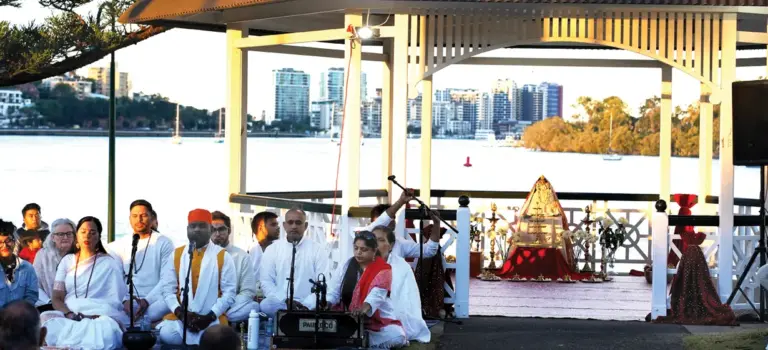
On a sunny Sunday afternoon, Maiwar River (Brisbane River) came alive with the vibrant colours of devotion during a heartwarming Ganga aarti ceremony. Approximately 400 people gathered, their spirits lifted by the perfect weather, the stunning riverside setting at Newstead Park, and the uplifting music. The gathering was to mark Ganga Dassea.
One of the organisers Marina Chand from Shiva-Shakti Maa Charitable Foundation, the charitable arm of the Sai Saileshwara Mandiram, said that the event was “A dream come true – a beautiful fusion of cultures paying homage to both Mother Maiwar and Mother Ganga on such an auspicious day”. She also said that having such a large crowd participate in the event was really heartening which encouraged unity and harmony among all the groups in attendance. “Ganga brings us all together – regardless of which community we are from. Everyone loves to participate in Ganga aarti and it’s a great family event too”.
Turrbal Songwoman Baringa Barambah Meeanjinu graced the gathering, invoking her ancestral heritage with powerful songs and stories including a Turrbal creation song that celebrates the Maiwar River. Attendees were moved by her performance and learned of the Turrbal people’s resilience—once thousands strong, but reduced to only 50 survivors during colonisation. Through Songwoman Baringa, the energy of the ancestors blessed the proceedings.
Guruji Sai Saileshwara led the kirtan and prayers, infusing the atmosphere with invocations, mantras and song. As the aarti program concluded, Soul Sounds, the talented musicians, had many dancing in celebration.
The highlight of the evening was the collective Ganga aarti. Songwoman Baringa and Marina Chand jointly performed the main aarti, while everyone present had the opportunity to also offer aarti to the beloved Brisbane River. After all, Brisbane is rightfully known as the River City.
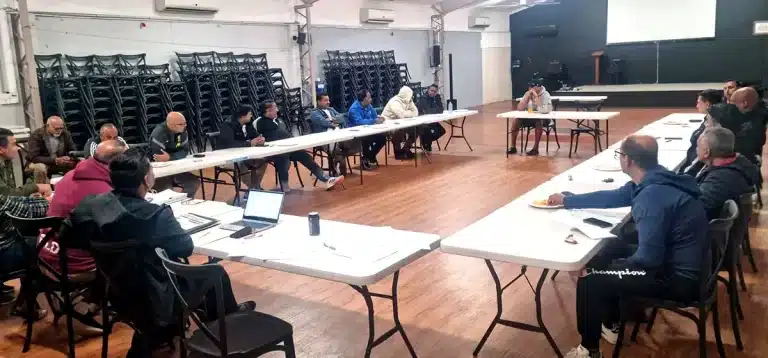
Queensland Fiji Football Association Inc held its strategic planing workshop on Sunday 16th June
A well crafted agenda of items focussed on a ‘Bolder, Bigger and a More Relevant’ QFFA was participated by 100% of the affiliated clubs, and well wishes.
Led by Master of Ceremonies Nick Maharaj, and with Treasurer Lawrence Chand facilitating the workshop dynamics, QFFA steadfastly moves towards a new horizon.
Opening Keynote address by Past President Aveen Singh certainly established the ‘tone’ of the workshop, reflecting on the past but focussing on the future as QFFA after more than 20 years since inception should now be ready to ‘ be bold’. He expressed that growth is only attainable from collective strengths of the affiliated members and stakeholders, aligning to similar goals and values. He reflected on his legacy of a strong and practical player rules which governs the basic product of QFFA, enjoying the beautiful game, Soccer and reliving our Fiji heritage. However, relevance is now becoming the fundamental issue to address.
An era of legacy, and a journey of challenges and opportunities and success was shared by 2 legends of the game, Esala Masi and Stewart Bola, and an emotional presentation that had everyone inspired.
Krishneel Maharaj shared the mental and psychological aspects of Sports, warmly received by all attendees, an area of sports that needs more focus and attention.
The attention of the workshop shifted towards strategic alliance and branding, with Arvin Datt challenging a corporate strategy and culture, with ‘Bula Lounge’ as feature of the tournaments.
Shivanjay ended the session with Branding strategies for QFFA, website and social media as integral platforms. A robust, well designed digital QFFA will create efficiency for internal operations.
The following were some of the focussed areas:
• Formation of Ref’s committee under leadership of Praveen Lal
• Relaunch of Women’s Football under astute leadership of Anjali Naiker,
• Player Strategic welfare pillar under guidance of Esala Masi, Jim Smith and Krishneel Maharaj
• A select committee for Player Rules and Eligibility Guidelines headed by Nick Maharaj, Ali Munif, Madhukar Naicker and Ray Ali.
• Financial, Governance, corporate alliance and Strategic visioning led by Lawrence Chand and Arvin Datt.
• Junior development and ‘ Finding the next Lucas/ Kewell/ Krishna under guidance Raj Oshen
• Digital transformation of QFFA to be spearheaded by Shivanjay
QFFA welcomes you to add value to the QFFA express and be part of the journey as we achieve our vision to ‘connect communities’.
Please direct your suggestions and ideas to Secretary Ray Ali on [email protected]
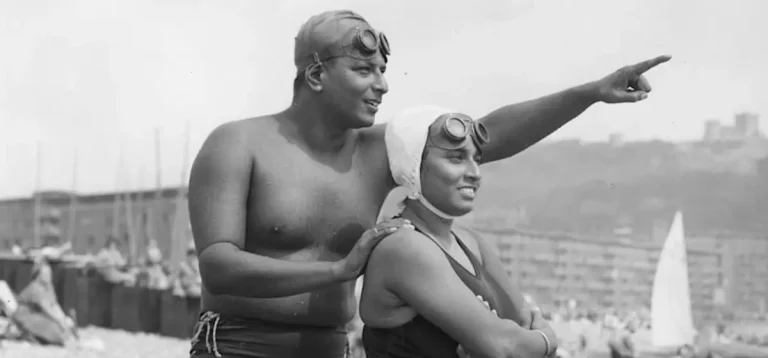
Lest we forget the Youngest Indian to compete at the Olympics – Arati Saha
Source: Getty Images
At the tender age of just 11 years and 10 months old Indian swimmer Arati Saha was qualified and participated in the 1952 Helsinki Olympics.
Only a few days after her 19th birth Arati Saha became the first Asia woman to swim cross English Channel.
Born on 24 September, 1940 in Calcutta (now Kolkata), Arati Saha was just 11 years, 10 months and 305 days old.
It is a record which still stands and looks unlikely to be broken in the foreseeable future.
Sadly, her mother past away when she was barely 2 years old. She was raised by the loving family of an uncle and he grandmother.
Saha was introduced to swimming at the age of four and won her first competition when she was five years old.
It kickstarted her swimming career and under the mentorship of Sachin Nag, an Asian Games champion and Olympian, Arati Saha soon emerged as one of the best young swimmers in India.
Arati Saha mainly swam short-distance freestyle and breaststroke events and won several competitions in her native state of West Bengal.
When Arati Saha jumped in the pool on July 26, 1952 for the women’s 200m breaststroke heats, it made her the youngest Indian Olympian.
Arati Saha swam in the third heat of the women’s 200m, along with eventual bronze-medallist Elenor Gordon of Great Britain. Gordon was seven years senior to Arati.
While Arati Saha may be the youngest Indian to compete at the Summer Games, she is better known as the first Asian woman to cross the English Channel.
Inspired by Bangladeshi swimmer Brojen Das, who was the first Asian man to swim across the English Channel in 1958, Arati Saha began training for the gruelling course. She was supported in her endeavour by Mihir Sen, the first Indian man to swim the English Channel.
Five days after turning 19, on September 29, 1959, Arati Saha made swam crossing the English Channel.
After swimming for 16 hours and 20 minutes, Arati Saha covered 42 miles and reached Sandgate, England, to successfully swim across the English Channel and etch her name in the record books.
Sadly, like her mother dying young at only 54 years old on 23 August, 1994 due to health complications.
Source: Olympic.com, hercircle.in.
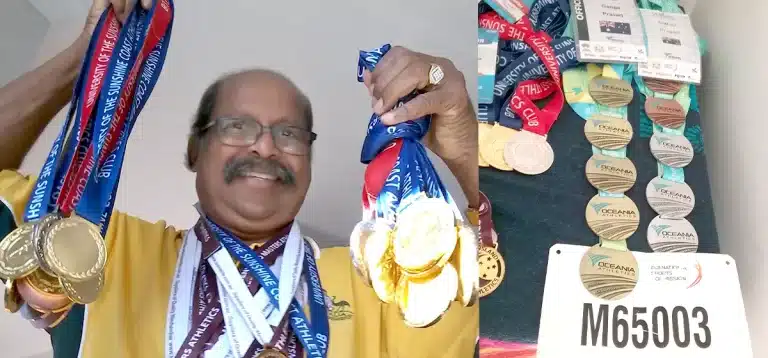
10th, featuring athletes from 28 countries competing in various disciplines. Athletes across different age groups showcased their talents, including former Olympians and seasoned competitors in both male and female categories.
Participants ranged from 16 to 95 years old, representing nations such as Australia, New Zealand, Fiji Islands, Western Samoa, Cook Islands, and many others. Originating in Fiji in 1982, this biennial event has since been hosted in various Oceania locations, including Canberra, Apia, Noumea, and Auckland among others.
This year’s championship marked another significant milestone, encompassing age groups from U16 to Open grades, providing a platform for athletes across Oceania to excel.
Noteworthy among the competitors was Fiji Islands’ Prime Minister, Mr. Sitiveni Rabuka, who participated in several Masters category events and secured a Bronze medal in Shot Put.
Australia emerged as the overall champions, followed by New Zealand, with Fiji Islands placing third in the Medals Tally. Ganga Prasad of Australia demonstrated exceptional performance by competing in 12 events within his age category, claiming 10 medals — 5 Gold, 3 Silver, and 2 Bronze.
The Oceania Athletics Organization Committee, headquartered in Fiji, hailed the 2024 championships as one of the best ever, underscoring the participation of all Oceania nations.
Best wishes were extended to all athletes preparing for the next championship.
Kid from Kavanagau, Nadroga, Fiji, a proud descendant of Girmityas and qualified Level 1 Rugby Union referee.
Nadi Barrister and Solicitor Elvin Dass is probably the first Indo-Fijian in the region to be a Level 1 Rugby Union referee.
Players and Coaches, in rugby world better be very very careful should they make the silly decision to question his on-field rulings. Not only is he the chief justice on the field as the “Man in the Middle with the Whistle’, but goes without saying Elvin studies the Law! That’s his fulltime Kaam!
Elvin is a resident Associate of the well-known Nadi Law firm Chetty Law & Associates.
He is proud to add that “Both my parents, Davendra Dass & Prem Kumari are proud descendants of the Girmityas.
Majority of the Fiji rugby players are native Fijians and Alvin has never been intimidated by some burly rugby players towering over him during a game he officiates in. In fact, these players afford him the respect he deserves as a referee and native of Fiji’s rugby mecca, Nadroga!. Alvin reminisced that “I grew up watching rugby and always admired the game. I was interested in being a referee in the rugby arena. I learnt most of the rules just by watching and later on reading the law book that governs international refereeing. I went further to complete the level 1 officiating programme and obtained my license to officiate.”
Alvin joined the Nadroga Rugby Referees Union and trained by very experienced referees like
1. Joe Bosoka (former Nadroga Referees President) 2. Kele Naruma (current president of Nadroga Referees) 3. Aisake Drekeni( Elite Panel Referee) 4. Sam Tuidraki and Illisoni Ratumaikoro 5. Johnson LEE (Fiji Rugby Referees Director) and Fiji Rugby Referees Association.
Alvin said that “My dream is to one day officiate at the National Level and the International level. I remember the words of Mr Joe Bosoka When I officiated for the very first time at a sevens tournament in Nadroga and Mr Bosoka announced, “this is Nadroga this is Rugby”.
No doubt, Alvin Dass is grateful to his nephew Ahaan Dass and parents for their motivation to make a distinguished career choice and sport life arbitrating in the rugby fields.
We in Australia may soon see Alvin officiating in one of our many seven tournaments or 15 a side game.
Alvin Dass, a true son of Nadroga, can be contacted in these contact details. Elvin Dass (Mr) Associate Chetty Law & Associates Level 2, Unit 6, Paper Power Complex, Navo, Nadi, Fiji Ph: 9991205/7991205/8019236




 The Australian Government has generously allocated up to 3000 visa places per year, which includes partners and dependent children.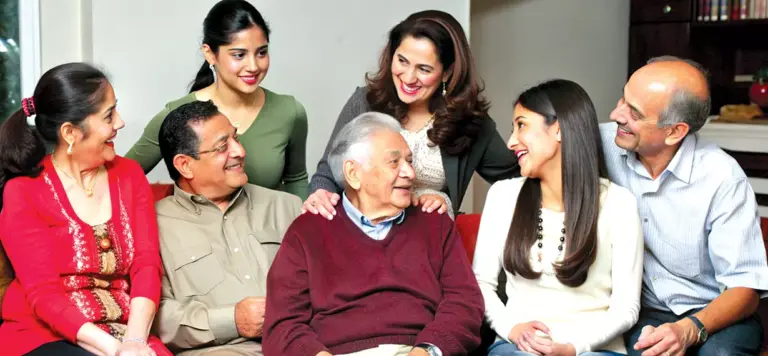

 I hope, like me, you’re enjoying the cooler weather and beautiful Winter days as embrace the month of August.I truly appreciate all the feedback I have received last month and when I have been out and about in the community! It has been wonderful to hear from readers about what is important to you.
 August is a month filled with joy as many people celebrate India Day, Janmashtami, and Onam in Kerala. These occasions hold great significance for locals in Queensland and around the world. I know that many have marked these important dates by celebrating with family at home or participating in local community events.
 It was wonderful to hear and see that so many families decided celebrate at home by wearing traditional clothing, making and sharing delicious Indian dishes, while signing and listening to their favourite Indian music. Witnessing individuals from diverse backgrounds, including those of Indian descent and those who are not, unite to partake in the festivities was truly heartwarming. This particular year held added significance for me, as I was given a lesson on preparing authentic Masala Chai tea at a friend’s residence.
 I believe it is crucial to recognize these comments, as I recently I attended a DV fundraiser. This is one of many that I have attended despite my age. During the event, I listened to a Domestic Violence (DV) survivor share her story and emphasize the importance of educating our youth about DV while taking proactive steps to prevent it. Additionally, I discovered that there are over 40,000 Queensland Women aged 55 and above experiencing financial difficulties due to various factors such as increasing living expenses, unemployment, inadequate superannuation, and limited affordable housing options. I thank raising these significant issues with us.
 Some important numbers: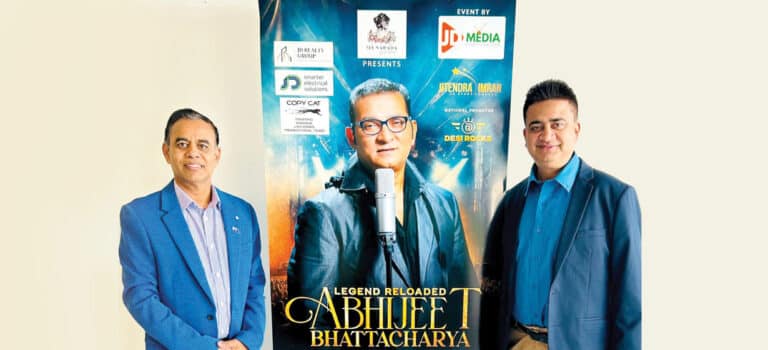
 IN harmony with the cultural ethos of Deo Family Charity Foundation, and in association with the JD Media Corp and organized by events guru Jitendra & Imran the Hindi speaking Queensland Indians enthusiastically awaits the globally renown Indian singer sensation Abhijeet Bhattacharya’s personal appearance in concert here in Brisbane, Hillsong Center, Upper Mount Gravatt on October 19th, 6.30pm. Jitendra & Imran event gurus are envisaging the sitting capacity of 1,500 at Hillsong is filling up very quickly through Star Tickets sales and late booking may be disappointed.




 Kid from Kavanagau, Nadroga, Fiji, a proud descendant of Girmityas and qualified Level 1 Rugby Union referee.
 Alvin reminisced that “I grew up watching rugby and always admired the game. I was interested in being a referee in the rugby arena. I learnt most of the rules just by watching and later on reading the law book that governs international refereeing. I went further to complete the level 1 officiating programme and obtained my license to officiate.”