A Kaleidoscope of Unity Celebrating Holi in Australia
In Australia, the arrival of March marks a shift in the air, not toward the spring of the Northern Hemisphere, but toward a vibrant autumnal celebration of Holi, the Hindu Festival of Colours. What was once a niche community gathering has evolved into a cornerstone of Australia’s multicultural calendar, embraced by people of all backgrounds. From the iconic shores of Darling Harbour to the suburban backyards of Brisbane, Holi in Australia is a powerful symbol of “Unity in Diversity.”
The Spirit of the Southside
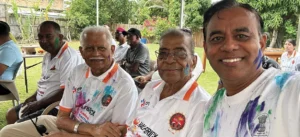
While massive public festivals like the Brisbane Festival of Colour draw thousands to the city’s parks, the heart of Holi remains in the intimate, grassroots celebrations that keep ancient traditions alive. A shining example of this is the annual gathering hosted by Mr. Adrian and Roshni Naidu in Brisbane’s south.
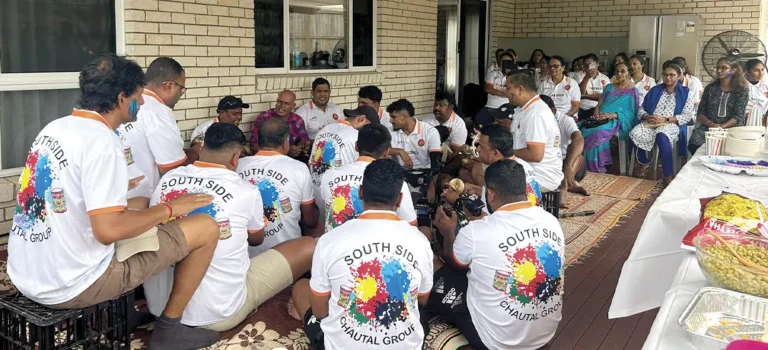
Their home becomes a sanctuary for the Southside Chautal Group, a dedicated mandali that preserves the rare and rhythmic art of Chautal and Faag singing. These traditional folk songs, rooted in the rural landscapes of Uttar Pradesh and Bihar and carried to the Pacific by the Girmitiyas, find a new resonance on Australian soil.
At the Naidus’ residence, the air is thick with more than just gulal (coloured powder); it vibrates with the sound of the dholak (drum) and the clash of manjira (cymbals). The Southside Chautal Group leads the gathered families in high-energy, competitive singing that narrates the playful antics of Lord Krishna and Radha. This isn’t just a party; it is a cultural transmission, where the younger generation watches their elders reclaim a heritage of joy and resilience.
A Modern Australian Tradition
The beauty of such private celebrations is the seamless blend of the old and the new. Between the spirited rounds of singing, guests enjoy a fusion of traditional treats like gujiya and bara and sweets.
As Prime Minister Anthony Albanese recently noted, Holi has been “heartily embraced” as part of the modern Australian story. Whether it is through the grand scale of the Swaminarayan festivals, the community kitchens of the Gurudwaras, or the rhythmic folk songs at Adrian and Roshni Naidu’s home, Holi in Australia serves as a vibrant reminder that our traditions are the threads that weave us into the fabric of this great nation.
Elchi: Redefining Indian Fine Dining in Melbourne’s CBD
In the heart of Melbourne’s CBD, where cultures intersect and celebrations unfold beneath the glow of city lights, Elchi is quietly redefining what Indian fine dining looks and feels like.
At its helm is Manpreet Sekhon, a chef whose journey has not been shaped by a single dramatic moment, but by what she describes as a gradual calling a steady pull toward elevating Indian cuisine onto a refined, contemporary stage.
Yet my introduction to Manpreet Sekhon did not begin within the walls of her restaurant. It began at a book launch an evening layered with conversation, curiosity and spirited debate. Amidst the energy of the room, her presence stood out. There was warmth in her smile, humility in her manner, and an effortless ease in conversation that immediately drew me in.
That evening, I discovered the woman many affectionately call Melbourne’s own “curry queen.”
Before long, our paths crossed again this time as I stepped into the intimate, candlelit elegance of Elchi itself to have a chat about her culinary journey.
1. What defining moment made you realise it was time to open a restaurant like Elchi in Melbourne’s CBD?
“There wasn’t just one moment,” Sekhon reflects. “After opening Eastern Spice and later Masti, I felt I had more to say through food.”
Indian cuisine could be elegant, layered and experiential not only comforting but refined.
Melbourne CBD, she explains, felt like the right stage. “It’s where cultures meet. Where people celebrate milestones. Where romance happens.” From that vision, Elchi was born a space where Indian food stands proudly in a fine-dining setting, experienced in a completely new way.
2. How do you strike the balance between authenticity and innovation on your menu?
“For me, authenticity isn’t about copying tradition, it’s about respecting its soul. I grew up with these flavours. I understand their depth, their emotion. That foundation never changes. Innovation comes in how we present it, how we refine it, and how we surprise guests. Maybe it’s a modern plating style, maybe it’s a contemporary cocktail pairing, or a lighter technique that enhances the spices instead of overpowering them. The goal is never to reinvent Indian cuisine, it’s to elevate it while staying true to its heart.”
3. How intentional were you about designing the overall guest experience beyond what’s served on the plate?
Food, Sekhon insists, is only part of memory-making.
“Dining, to me, is theatre. The plate is the star, but the setting is the stage.”
From lighting and music to the subtle scent of spices in the air, Elchi was designed to feel intimate but not intimidating, luxurious yet welcoming.
4. Was romance always part of your vision, and how has it shaped the culture and standards you uphold here?
“Romance was always part of that vision a space for anniversaries, proposals and Valentine’s evenings. Service is paced, never rushed. The team is trained to read the table to know when to engage and when to quietly step back.”
Manpreet sees food as sensory storytelling. “Indian cuisine is naturally romantic. It’s layered, slow-cooked, deeply aromatic. It invites sharing. It invites conversation.”
“At Elchi, dinner becomes more than a candlelight meal. Thoughtfully curated tasting menus, cocktails that surprise, moments designed to be remembered long after the night ends is part of the experience.”
5. What inspired the decision to welcome guests aged 12 and above, and how has it shaped the atmosphere?
To preserve that tranquil, elevated atmosphere, Elchi welcomes guests aged 12 and above. A decision Sekhon describes as clarity of concept rather than exclusion.
“It’s about protecting the experience. Guests come here knowing they’re stepping into something calm, refined and intimate. And what we’ve created is beautiful. People relax, linger and truly connect.”
As our time together ended, we lingered over a beautifully brewed chai from the Elchi kitchen. In that quiet moment, something softened within me. The warmth of the spices, the intimacy of the space it all felt cinematic. I found myself thinking, almost instinctively, that one day this would be the place I would return to for a truly heartfelt evening with someone special.
For those visiting Melbourne be sure to add to your itinerary and mention this article:https://www.elchirestaurant.com.au/
Life has a quiet way of reminding us that nothing remains exactly the same. Sometimes the shift is gentle. Other times it arrives like a sudden turn in the road we did not expect.
Life throws many curve balls. The question is not whether change will come as it always does. The deeper question is this, what does your sense of security truly depend upon?
Is it the freedom to be yourself within a relationship, or the invisible tie that slowly asks you to lose parts of who you are just to keep something intact?
True connection does not require the loss of self. In fact, the healthiest relationships are those where two whole people walk beside one another, not where one disappears so the other can remain.
The Fragility of Life
When we are young, life often feels endless. We imagine the people around us will always be there, that the rhythms of our days will continue unchanged.
Yet as we grow older, a deeper awareness begins to settle in. Life is inherently fragile. No person, no moment, no experience stays forever.
This realisation can feel confronting at first. But it can also be profoundly awakening.
Life truly is short.
Fortunate are those who walk beside us a little longer on this path. And those who cannot stay still leave their imprint in quieter ways. Sometimes they walk in the shadows of our memory, supporting us in whispers we can still feel when we pause long enough to listen.
When the Heart Begins to Close
There are moments in life where something inside us begins to harden.
Perhaps a disappointment, a betrayal, or a loss that felt too heavy to carry at the time. Slowly the heart becomes guarded, the mind begins to avoid what hurts, and what once flowed naturally becomes blocked like a heavy rock sitting in the middle of a river.
In the PEMA Mind and Motion philosophy, these moments are not signs of weakness. They are signs that the emotional system is trying to protect itself.
Yet protection can quietly turn into isolation if we are not careful.
Because when the heart closes completely, the very experiences that could heal us connection, love, laughter, all struggle to find their way in.
A Vedic Lens on Impermanence
Ancient Vedic teachings speak openly about the impermanent nature of life. Rather than resisting it, they invite us to see impermanence as a teacher.
The Bhagavad Gita expresses this wisdom simply:
“As a person sheds worn-out garments and wears new ones, so the Self discards old forms and enters new ones.”
The Bhagavad Gita 2.22
From this perspective, change is not a loss of life’s meaning. It is the movement through which life renews itself.
Understanding this does not remove sadness or grief. But it allows us to hold them alongside gratitude for what has been.
A Gentle Reminder
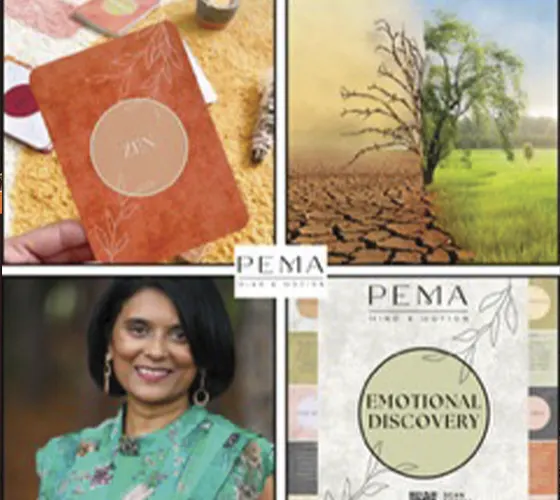
Within the emotional discovery with the research informed Mind and Motion Cards, the Change card often appears when someone is standing at an emotional crossroads.
It does not tell us what decision to make. Instead, it offers reassurance that even when life shifts in ways we did not plan, something essential within us remains steady.
The deeper message of this card is simple yet powerful:
Knowing that if life changes, you will still be OK.
Sometimes the most healing realisation is recognising that our strength does not come from controlling every outcome. It comes from trusting our ability to meet whatever life brings.
The Gift of the Present Moment
Time waits for no one. This truth can feel confronting, but it can also become the greatest invitation of all, to fully appreciate what exists right now.
Enjoy the conversations, the shared meals, the laughter, the quiet companionship of simply sitting beside someone you care about. These are the moments that quietly become the memories we carry forward.
Tomorrow sometimes never comes.
Holding onto regret can quietly drain the life from the present. The heart becomes heavy, and energy that could be used for connection gets trapped in the past.
But when open hearts meet open hearts, something remarkable happens. Life feels lighter, authentic and real.
Conclusion
Change is inevitable. Relationships evolve, seasons shift, and people move through different chapters of life.
But the deeper truth remains, we are more resilient than we often realise.
When we allow ourselves to stay open to life, to connection, to the present moment we discover that even through change, something meaningful continues to grow.
And perhaps that is the quiet wisdom life offers us again and again:
Nothing lasts forever.
So love well.
Speak kindly.
And be fully present while the moment is here.
Explore Further
The Mind and Motion Cards offer guided reflections like this to support your personal growth journey. These tools are designed to complement, not replace, professional support.
For more resources or to purchase the deck, please visit
https://www.monicapema.com/mindandmotiondeck
Monica Pema | Integrated Wellness Expert
MSc. Psychology
“From Passion to Purpose in All Walks of Life”
This article is intended for self-reflection and general education only. It is not a substitute for professional medical, mental health, or psychological care.
A Simple Health Step, A Brighter Future: The Power of “Give to Gain”
The 8th of March is International Women’s Day, a well-recognised day to celebrate the lives of women around the world. The ECCQ Love Health Program joins communities across Queensland in honouring the strength, resilience, and leadership of all women.
This year’s International Women’s Day theme is “Give to Gain.” It reminds us that a small action taken today can create long-lasting benefits for the future. This year’s theme is particularly relevant to health: caring for your health is one of the most valuable investments you can make—for yourself and for your family’s wellbeing.
Taking a proactive approach to your health can make a real difference. One simple but important step is having a routine check-up for key health conditions. Some health conditions do not cause obvious symptoms at first but can have serious long-term effects if left undetected, unmanaged and untreated such as chronic hepatitis B, chronic hepatitis C, HIV, and syphilis.
By giving a little time for a hepatitis blood test, you gain:
• Peace of mind
• Early access to effective monitoring and treatment if needed
• The ability to protect yourself and those you care about
Understanding the Facts
Hepatitis B and Hepatitis C
• Hepatitis B can be prevented through vaccination. For people living with chronic hepatitis B, it is a manageable condition like other chronic diseases needing regular medical care and monitoring.
• Hepatitis C can be cured. Simple treatments taken over a few months can completely clear the virus.
HIV and Syphilis
• HIV is now a manageable long-term condition. With early testing and effective treatment, people can live long and healthy lives. Treatment also prevents HIV from being passed on to others.
• Syphilis is increasing in Australia. While it is a serious infection, it is easily cured with antibiotics when detected early. Without treatment, it can cause severe health complications.
Give Protection, Gain a Healthy Start: For Expectant MothersPregnancy is a time of special care. Getting tested is one of the most important gifts you can give your baby.
• Hepatitis B: Babies can be fully protected by effective, essential vaccination at birth, and again at 2, 4, and 6 months. If a mother has hepatitis B, additional steps during and after the birth can prevent transmission to the baby. It is important to get the baby tested for hepatitis B 3 months after completing all the vaccination doses.
• Hepatitis C: Knowing your status allows for appropriate care planning. Treatment for hepatitis C can be started after birth.
• HIV: With effective treatment during pregnancy, the risk of passing HIV to a baby is very low.
• Syphilis: Testing and treatment during pregnancy are crucial to prevent serious harm to both mother and baby.
This International Women’s Day, Make the Choice
GIVE yourself the gift of knowledge—talk to your doctor about a simple blood test. You can also contact our program for free rapid hepatitis B and C testing.
GAIN empowerment, protection and health for yourself and your family.
Caring for yourself and your loved ones is the ultimate gain.
Get checked. Stay healthy.
For more information in your language, visit:
www.eccq.com.au/bbv
Or contact our friendly Love Health Program team: Email: [email protected] Phone: (07) 3844 9166
Faith, Service and Courage: A Young Leader’s Message to the Community
By Xavier Hernandez
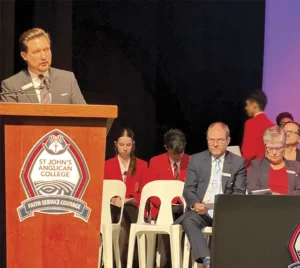
I am delighted to begin this edition of the Brisbane Indian Times by sincerely thanking our readers for supporting this wonderful publication and for encouraging young contributors such as myself. I am proud to share that I have been selected as a Senior School Council member for 2026 at St John’s Anglican College, it is a true privilege to serve alongside my peers and other outstanding student leaders and to give back to a school community that has given so much to me.
Our College motto — Faith, Service and Courage — guides everything we do, encouraging us to be faith-led, service-oriented and courageous in our actions. I would like to acknowledge our Principal, Mrs Maria McIvor, along with Mrs Robern Hinchliffe (Deputy Head of College – Pastoral Care), Mr Andrew Landroth (Deputy Principal – Curriculum and Innovation), and Mr Braydon Giles (Head of Middle School & acting Head of Senior School). Their leadership and dedication strengthen not only our school, but also the wider community. I am also deeply grateful to the broader community, including the Deo family and many others, who continue to support and encourage me.
This month is particularly significant as we prepare to commemorate ANZAC Day 2026, marking 111 years since Australian and New Zealand troops first landed at Gallipoli. ANZAC Day falls on Saturday, 25 April 2026. I will be attending the local Forest Lake service, and I warmly encourage readers to attend a service in their area. ANZAC Day provides us with an important opportunity to honour the courage and sacrifice of the Australian and New Zealand Army Corps, established in 1914, and to recognise the significant contributions of Indian and British soldiers who served alongside them. Approximately 16,000 Indian troops fought in the Gallipoli campaign, with around 1,600 losing their lives. Their bravery and sacrifice must always be remembered.
As part of my commitment to keeping our community informed about international developments, I read an article published on 1 March 2026 by journalist Joseph Olbrycht-Palmer in NewsWire, reporting that Ayatollah Ali Khamenei was reportedly killed in joint airstrikes carried out by Israel and the United States. Iranian state media confirmed his death, while the Islamic Revolutionary Guard Corps warned of an imminent “devastating offensive.”
In Australia, opponents of the regime gathered in Canberra, Sydney and Melbourne. Prime Minister Anthony Albanese stated that his passing would not be mourned. While a ceasefire is currently in place, the situation remains fluid. Australians requiring consular assistance can contact the Consular Emergency Centre on +61 2 6261 3305 (overseas) or 1300 555 135 (within Australia).
Closer to home, I recently had the privilege of speaking with community champion Sonya, a Home and Investment Lending Specialist with ANZ Browns Plains. I was inspired by her passion for helping families achieve home ownership, during our catch-up she mentioned, “Many people give up after one ‘no’ sometimes they just need someone to look deeper. I love being that person for my community, I genuinely want to help more families feel confident about home ownership.”
She shared a moving story about assisting a client whose loan application had previously been declined. By carefully reassessing the situation and guiding her through the process, Sonya secured approval just in time. When she delivered the good news, her client was overwhelmed with gratitude. Moments like this remind me that leadership is grounded in compassion, persistence and genuine care.
I also enjoyed hearing about her recent travels to Delhi and her continued support of community events. With International Women’s Day approaching, I extend my heartfelt gratitude to all women — especially those whose efforts often go unrecognised — for the extraordinary difference they make every day.
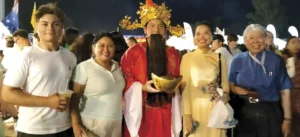
I would also like to acknowledge the Vietnamese Community in Australia – Queensland Chapter President Khue Oanh Do and her team for hosting a memorable Tet Festival celebration at CJ Greenfield, Forest Lake and I would like to wish Khue Oanh a happy birthday. It was a pleasure to volunteer and support fundraising efforts by Vietnam Grace Church for important local causes. Community spirit like this truly strengthens us all.
There are also several wonderful upcoming local events I encourage readers to support:
• Walk for Breast Cancer – Forest Lake 2026
Hosted by Lions Club of Inala President Kylie Gates
Sunday, 8 March 2026
8:00am
The Esplanade, Forest Lake
• Social Smash Cricket Program – Wolston Park Cricket Club
Hosted at CJ Greenfield, Forest Lake
Every Sunday from 8 March to 29 March 2026
Ages 10–14: 3:00pm – 4:00pm
Ages 15+ to Adult: 4:00pm – 5:00pm
Cost: $40 for four weeks (+ Cricket Australia insurance)
These events promote health, connection and participation for people of all ages, and they are excellent examples of community engagement in action.
As always, thank you for your continued support and for the positive feedback I receive about my contributions. It is an honour to bring you both international updates and local community news. If you would like to share your story in a future edition, please feel free to reach out.
Recognising International Women’s Day Honoring the Strength That Sustains the World
In our life we are all in contact with women, in fact our first contact was the minute we entered the womb. With this my mind you can say that women give life. Life is so precious that we need to value each moment we have. To value we need to utilize each moment to bring positivity, happiness, love and more peace in today’s world where people have forgotten the value of their lives.
International Women’s Day is not just a date on the calendar. It is a reminder. A reminder to recognise the contribution of women in our homes, workplaces, and communities. A reminder to appreciate their resilience, patience, and strength. And perhaps most importantly, a reminder to reflect on how we can become better human beings ourselves.
The importance of women in our lives cannot be overstated. Without their encouragement, sacrifice, and quiet determination, society would struggle to hold itself together. As the well-known saying goes, “Behind every successful man there is a woman.” In truth, behind every thriving family, organisation, and community, there are women who support, guide, and uplift.
One such inspirational figure was Dadi Janki, the former administrative head of the Brahma Kumaris. Known worldwide for her spiritual wisdom and clarity, Dadi Janki led countless individuals from confusion to clarity, from despair to hope. Her presence was known to transform the atmosphere of a room. She lived not for personal recognition, but to sustain and uplift others.
Dadi Janki often spoke of a future filled with hope. Despite being deeply aware of the selfishness and conflict affecting human relationships today, she remained unwaveringly optimistic. “In the winter, we foresee the spring,” she would say. Her vision was of a world where human potential is realised, where people give freely, and where peace becomes natural rather than rare.
In her view, such a future is possible. But it requires a change in consciousness. It requires us to rethink how we relate to one another.
On this International Women’s Day, it is worth reflecting on four qualities Dadi Janki believed were essential for healthy relationships and a healthier world:
Interdependency
True relationships are built on give-and-give, not take-and-take. Interdependency means that everyone contributes. Each person adds value. In contrast, co-dependent relationships often lead to imbalance and disappointment. When we shift from “What can I get?” to “What can I give?” harmony grows.
Flexibility
Healthy boundaries protect us, but they should not become rigid walls. When our values are strong, we can remain flexible in our responses. Flexibility allows understanding. It creates space for dialogue rather than conflict.
Caring
Real caring is not control. It is not interference. True care gives others room to grow. It allows them to make choices, even mistakes, and learn from them. Mistakes do not define us; they refine us. Genuine care supports without suffocating.
Self-Esteem
When we live in ego, we take things personally. We react quickly. We defend an image shaped by society and expectation. But when we reflect deeply and ask, “Who am I, truly?” we begin to discover inner peace, love, and wisdom. From this place of self-respect, our responses become calmer and more compassionate.
Women across the world demonstrate these qualities every day. They balance responsibility with empathy. They nurture while leading. They tolerate while teaching. They sacrifice while strengthening others.
International Women’s Day is an opportunity not only to celebrate women but also to learn from them. To recognise that their strength is not loud, yet it is powerful. Not always visible, yet deeply transformative.
As we honour the women in our lives, may we also commit to embodying the qualities they so often reflect patience, courage, flexibility, and love.
When we do that, we do more than celebrate a day. We help build the future they have always quietly worked towards.
Brahma Kumaris Shailer Park provide free Raja Yoga Meditation, Positive Thinking and Anger Management Courses. Please contact us on 0414685144 or [email protected] for further information. https://brahmakumaris.org.au and find out the events happening close to your location.
Om Shanthi
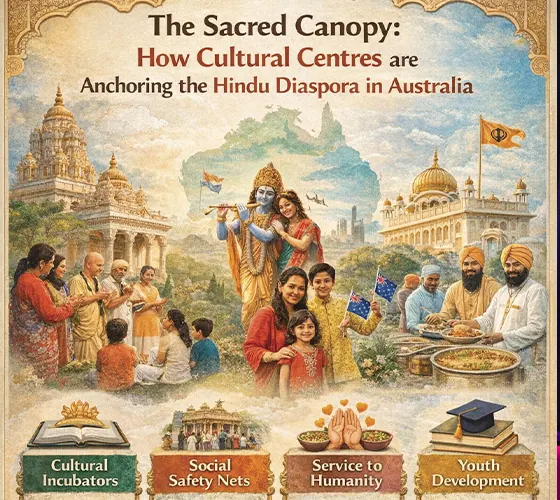
The Sacred Canopy: How Cultural Centres are Anchoring the Hindu Diaspora in Australia
by Jitendra Deo Chief Executive Officer JD Group Australia
In the quiet suburbs of Logan, across the sprawling reaches of Western Sydney, and through the tranquil hills of Victoria, a transformation is occurring. It is not merely a shift in demographics, but a grounding of spirit. As the Hindu community in Australia grows, the emergence of dedicated cultural and spiritual centres—like the recently realized Sanatan Cultural Centre in Berrinba—has become the vital “third space” between the home and the secular world. These centres are the anchors of our identity, ensuring that the ancient wisdom of the East flourishes within the modern framework of the West.
A Tapestry of Faith: The Multi-Faceted Indian Diaspora
The beauty of the Indian presence in Australia lies in its diversity and the shared commitment to Sewa (selfless service). While the Sanatan Association provides a home for the traditional Vedic and Indo-Fijian heritage, it is part of a broader, vibrant ecosystem of spiritual organizations that have found fertile ground in Australian soil.
Institutions like ISKCON (Hare Rama Hare Krishna) have long been beacons of Bhakti Yoga in Australia. From their iconic temples to their famous “Crossways” restaurants, they have introduced the philosophy of devotion to the wider Australian public. Similarly, the BAPS Swaminarayan Sanstha has redefined the Australian skyline with magnificent mandirs that serve as masterpieces of traditional architecture and hubs for youth development, emphasizing disciplined living and family values.
The Brahma Kumaris offer a different but equally vital sanctuary, providing world-class meditation centres that focus on “Raja Yoga” and inner reflection. Their presence emphasizes the universal appeal of Indian philosophy—peace, purity, and self-sovereignty—providing a sanctuary for those seeking mental clarity in a fast-paced society.
Crucially, our Gurudwaras stand as the ultimate symbols of equality and humanitarianism. The Sikh community’s commitment to Langar (community kitchen) has made Gurudwaras across Australia, from Brisbane to Perth, essential pillars of social welfare, feeding the hungry and welcoming all regardless of religion or background.
From Temples to Community Hubs
The modern cultural centre in Australia serves a purpose far beyond the ritualistic. It is a holistic hub designed to address the challenges of the 21st century. At the Sanatan Cultural Centre, the vision is clear: to be a place where the ancient heritage of the Ramayan meets the contemporary needs of a diaspora.
These centres act as:
• Cultural Incubators: Where the next generation learns that their identity is a source of strength, not a barrier to integration.
• Social Safety Nets: Providing a sense of belonging for new migrants who may feel isolated in a new country.
• Service to Humanity: Whether it is the free meals at a Gurudwara or the cultural programs at the Sanatan Centre, these spaces transform spiritual energy into social action.
Nurturing Noble Citizens
Perhaps the most critical role of these centres is the development of our youth. In an era of digital distraction, the cultural centre provides a grounding force. By teaching the values of Dharma (duty), Satya (truth), and Seva (service), these diverse organizations are not just creating “religious” people, they are nurturing noble citizens.
These are young Australians who move through the world with a moral compass, contributing to the nation’s economy and social fabric while remaining deeply rooted in their heritage.
From the chanting of Hare Krishna to the silent meditation of the Brahma Kumaris, the grand arches of the Swaminarayan Mandirs, and the open doors of the Gurudwaras, our culture is safe. It is our collective duty to keep these fires burning for the generations yet to come.
Australian High Commissioner’s Reflect on 20 Years of Australia-India Relationship in Rare Exchange
Current and former Australian High Commissioners to India have shared rare insights into the achievements and challenges of their tenure, in a first-of-its-kind panel reflecting on a defining two decades of the Australia-India bilateral relationship.
The Australia India Institute’s ‘Two Decades of Australia-India Relations: Reflections from High Commissioner’s Past and Present’, featuring current Australian High Commissioner to India, His Excellency Philip Green OAM (2023 – present) and former Australian High Commissioner’s to India, Mr Patrick Suckling (2013-2016) and Mr John McCarthy AO (2004 – 2009), took place today at the Melbourne Global Centre – Delhi.
In a panel discussion moderated by Australia India Institute CEO, the Honorable Lisa Singh, High Commissioner’s reflected on their tenure, exploring key areas including strengthened education ties, economic cooperation, cultural exchange, a bolstered defence relationship and other broader areas of bilateral interest.
The panel comes as the Australia India relationship continues to make steadfast progress in the face of geopolitical uncertainty – within the last 12 months new defence dialogues have promoted a safer Indo-Pacific, significant advancements have been made in collaborating on the technology needed for the clean energy transition, and our education and skills relationship continues to grow from strength to strength.
Australia India Institute CEO Lisa Singh said today’s panel event marked a period of significant growth in the Australia India relationship.
“The Australia India relationship has well and truly moved beyond the traditional ‘three C’s’- Cricket, Commonwealth, and Curry, with this esteemed panel event reflecting on the evolution of our collaboration across two transformative decades.
“Since its inception in 2008, the Australia India Institute has been at the forefront of this growth as Australia’s leading research and policy centre dedicated to promoting the Australia-India relationship and its cooperation in the Indo-Pacific region.”
Australian High Commissioner to India His Excellency Philip Green OAM said India and Australia have never been closer.
“When I reflect on the trajectory of the Australia-India relationship, what strikes me most is the sheer pace of change. In Australia’s history, we have never seen such a rapid ramp up in a major power relationship. “Our partnership will continue to broaden and deepen, so that we are fully integrated strategic, economic, and cultural partners, collaborating across all domains. I’m confident that at our next stocktake in five years, we will see a relationship that is delivering on its immense potential.”
Hold onto your seats — Hudsons Circus is back with a brand-new show that will blow your mind and steal your heart. This isn’t just a circus. It’s a two-hour adrenaline-charged celebration of wonder, talent, and jaw-dropping spectacle. From the four corners of the globe, our international artists bring you gravity-defying stunts, dazzling acrobatics, and edge-of-your-seat entertainment. Experience the magic of beautifully presented animals, cared for with love and respect, performing in harmony with their trainers in a show that celebrates tradition and innovation.
Crafted by Hudsons Circus’ visionary creative team, this year’s show blends theatrical flair, immersive lighting, and heart-pounding music to create an unforgettable experience.
2 HOURS OF PURE MAGIC, From the first beat to the final bow, you’ll be breathless, amazed, and begging for more.
BOOKINGS NOW OPEN
Don’t miss your chance to witness the circus reimagined. Perfect for families, thrill-seekers, and anyone who believes in the power of live entertainment.
Orion Springfield Central
www.hudsonscircus.com.au
The Electric Revolution Within Reach: MG4 EV Urban Set for April Arrival
As we move further into 2026, the Australian automotive landscape is undergoing a silent but swift transformation. For years, the conversation around Electric Vehicles (EVs) was dominated by luxury price tags and high-end tech. However, as the “Year of the Fire Horse” charges forward, a new contender is set to make the electric dream a reality for thousands of Australian Indian families.
MG Motor Australia has officially confirmed that the MG4 EV Urban will arrive in showrooms this April, positioning itself as a cornerstone of affordable, sustainable transport.
Redefining Value for the Modern Family
For many in our community, the decision to switch to an EV has always been a balance of environmental responsibility and fiscal reality. With the 3.8% inflation rate and the rising “time-price” of living, every dollar counts. The MG4 EV Urban arrives at a critical moment, expected to challenge the price floor of the market currently occupied by the BYD Dolphin.
Unlike the existing rear-wheel-drive MG4 models, the “Urban” is a fresh, front-wheel-drive hatchback built on the new E3 platform. It is designed specifically for city dwellers—the professionals commuting from the outer suburbs of Melbourne or the families navigating the busy school runs in Brisbane’s Sunnybank. By simplifying the drivetrain to front-wheel drive, MG has been able to “sharpen the pen” on pricing, with industry experts predicting a starting price potentially under $33,000.
Performance Meets Practicality
Don’t let the “Urban” tag fool you into thinking it lacks substance. The vehicle will be offered with two distinct battery options to suit different lifestyles:
• 43kWh LFP Battery: Offering a range of approximately 325km, perfect for those whose daily routine stays within the metropolitan area.
• 54kWh LFP Battery: Extending the range to over 400km, providing that extra peace of mind for weekend trips to the coast or visiting extended family across the city.
One of the standout features for the Australian Indian community will be the interior. Despite its budget-friendly positioning, the MG4 EV Urban borrows its sophisticated cabin design from the MG S5 SUV. It features a streamlined dashboard with a 12.8-inch touchscreen and a 7.0-inch digital cluster, ensuring that the driver stays connected to navigation and family calls with ease.
The “Safe” Choice
Safety is often the primary concern for our community leaders who frequently emphasize the well-being of our elders and youth. The MG4 EV Urban comes equipped with a 5-star ANCAP safety rating and the “MG Pilot” suite, which includes autonomous emergency braking, lane-keep assist, and adaptive cruise control. Furthermore, the use of Lithium Iron Phosphate (LFP) battery technology means the car can be charged to 100% daily without the degradation issues seen in older EV chemistries and it is backed by MG’s industry-leading 10-year warranty.
A Future-Proof Investment
As the federal government continues to review EV tax exemptions and FBT benefits, choosing an affordable entry point like the MG4 EV Urban is a savvy move. It represents more than just a car; it is a hedge against rising fuel costs and a commitment to the cleaner Australia our children will inherit.
Whether you are a student looking for your first car or a family looking to add a second, more economical vehicle to the driveway, the MG4 EV Urban is a sign that the electric revolution is finally inclusive.


 In Australia, the arrival of March marks a shift in the air, not toward the spring of the Northern Hemisphere, but toward a vibrant autumnal celebration of Holi, the Hindu Festival of Colours. What was once a niche community gathering has evolved into a cornerstone of Australia’s multicultural calendar, embraced by people of all backgrounds. From the iconic shores of Darling Harbour to the suburban backyards of Brisbane, Holi in Australia is a powerful symbol of “Unity in Diversity.”
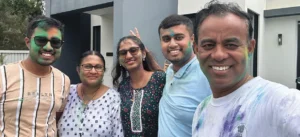 While massive public festivals like the Brisbane Festival of Colour draw thousands to the city’s parks, the heart of Holi remains in the intimate, grassroots celebrations that keep ancient traditions alive. A shining example of this is the annual gathering hosted by Mr. Adrian and Roshni Naidu in Brisbane’s south.
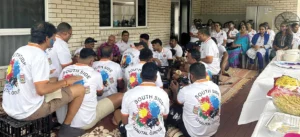 Their home becomes a sanctuary for the Southside Chautal Group, a dedicated mandali that preserves the rare and rhythmic art of Chautal and Faag singing. These traditional folk songs, rooted in the rural landscapes of Uttar Pradesh and Bihar and carried to the Pacific by the Girmitiyas, find a new resonance on Australian soil.
 At the Naidus’ residence, the air is thick with more than just gulal (coloured powder); it vibrates with the sound of the dholak (drum) and the clash of manjira (cymbals). The Southside Chautal Group leads the gathered families in high-energy, competitive singing that narrates the playful antics of Lord Krishna and Radha. This isn’t just a party; it is a cultural transmission, where the younger generation watches their elders reclaim a heritage of joy and resilience.


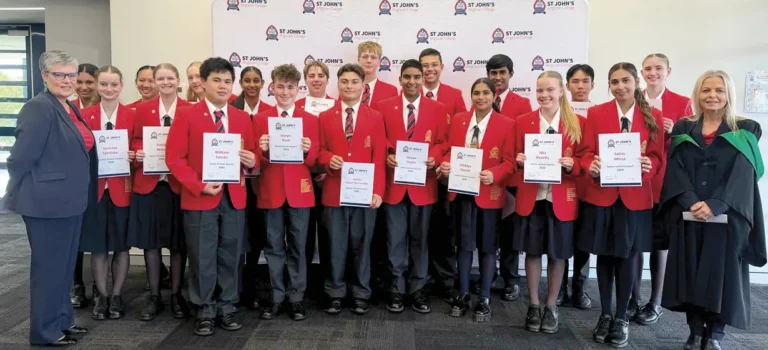
 I am delighted to begin this edition of the Brisbane Indian Times by sincerely thanking our readers for supporting this wonderful publication and for encouraging young contributors such as myself. I am proud to share that I have been selected as a Senior School Council member for 2026 at St John’s Anglican College, it is a true privilege to serve alongside my peers and other outstanding student leaders and to give back to a school community that has given so much to me.
 Our College motto — Faith, Service and Courage — guides everything we do, encouraging us to be faith-led, service-oriented and courageous in our actions. I would like to acknowledge our Principal, Mrs Maria McIvor, along with Mrs Robern Hinchliffe (Deputy Head of College – Pastoral Care), Mr Andrew Landroth (Deputy Principal – Curriculum and Innovation), and Mr Braydon Giles (Head of Middle School & acting Head of Senior School). Their leadership and dedication strengthen not only our school, but also the wider community. I am also deeply grateful to the broader community, including the Deo family and many others, who continue to support and encourage me.
 This month is particularly significant as we prepare to commemorate ANZAC Day 2026, marking 111 years since Australian and New Zealand troops first landed at Gallipoli. ANZAC Day falls on Saturday, 25 April 2026. I will be attending the local Forest Lake service, and I warmly encourage readers to attend a service in their area. ANZAC Day provides us with an important opportunity to honour the courage and sacrifice of the Australian and New Zealand Army Corps, established in 1914, and to recognise the significant contributions of Indian and British soldiers who served alongside them. Approximately 16,000 Indian troops fought in the Gallipoli campaign, with around 1,600 losing their lives. Their bravery and sacrifice must always be remembered.
 As part of my commitment to keeping our community informed about international developments, I read an article published on 1 March 2026 by journalist Joseph Olbrycht-Palmer in NewsWire, reporting that Ayatollah Ali Khamenei was reportedly killed in joint airstrikes carried out by Israel and the United States. Iranian state media confirmed his death, while the Islamic Revolutionary Guard Corps warned of an imminent “devastating offensive.”
 In Australia, opponents of the regime gathered in Canberra, Sydney and Melbourne. Prime Minister Anthony Albanese stated that his passing would not be mourned. While a ceasefire is currently in place, the situation remains fluid. Australians requiring consular assistance can contact the Consular Emergency Centre on +61 2 6261 3305 (overseas) or 1300 555 135 (within Australia).
 Closer to home, I recently had the privilege of speaking with community champion Sonya, a Home and Investment Lending Specialist with ANZ Browns Plains. I was inspired by her passion for helping families achieve home ownership, during our catch-up she mentioned, “Many people give up after one ‘no’ sometimes they just need someone to look deeper. I love being that person for my community, I genuinely want to help more families feel confident about home ownership.”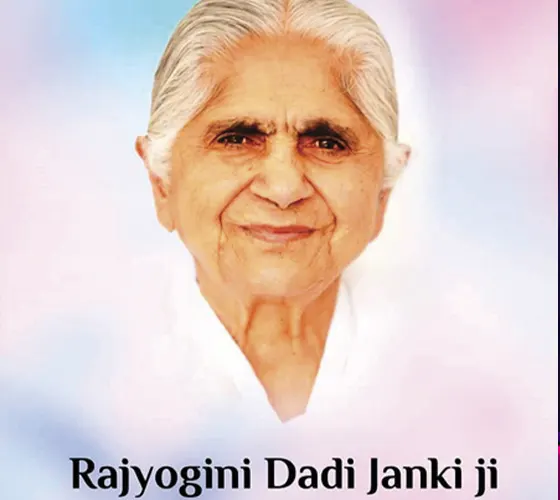
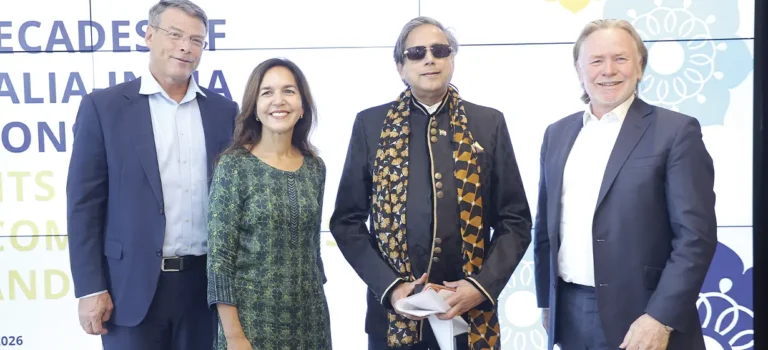
 Current and former Australian High Commissioners to India have shared rare insights into the achievements and challenges of their tenure, in a first-of-its-kind panel reflecting on a defining two decades of the Australia-India bilateral relationship.
 In a panel discussion moderated by Australia India Institute CEO, the Honorable Lisa Singh, High Commissioner’s reflected on their tenure, exploring key areas including strengthened education ties, economic cooperation, cultural exchange, a bolstered defence relationship and other broader areas of bilateral interest.
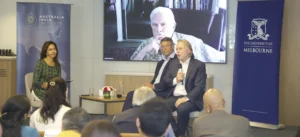 Australia India Institute CEO Lisa Singh said today’s panel event marked a period of significant growth in the Australia India relationship.
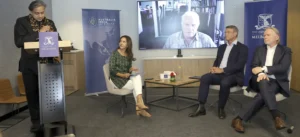 “When I reflect on the trajectory of the Australia-India relationship, what strikes me most is the sheer pace of change. In Australia’s history, we have never seen such a rapid ramp up in a major power relationship. “Our partnership will continue to broaden and deepen, so that we are fully integrated strategic, economic, and cultural partners, collaborating across all domains. I’m confident that at our next stocktake in five years, we will see a relationship that is delivering on its immense potential.”


 Hold onto your seats — Hudsons Circus is back with a brand-new show that will blow your mind and steal your heart. This isn’t just a circus. It’s a two-hour adrenaline-charged celebration of wonder, talent, and jaw-dropping spectacle. From the four corners of the globe, our international artists bring you gravity-defying stunts, dazzling acrobatics, and edge-of-your-seat entertainment. Experience the magic of beautifully presented animals, cared for with love and respect, performing in harmony with their trainers in a show that celebrates tradition and innovation.