
Honouring Mothers, Strengthening Minds, and Building Community Together
By Xavier Hernandez
 Wishing everyone a very Happy Mother’s Day. This month, we celebrate not only mothers, but also grandmothers, aunties, carers, and all those who have embraced the role of a mother through love, sacrifice, and unwavering support. My own mother, a single parent, arrived in Australia unable to speak English. Through determination, resilience, and kindness, she provided for our family and taught me the importance of helping others, doing what is right, and viewing challenges as opportunities while embracing our faith.
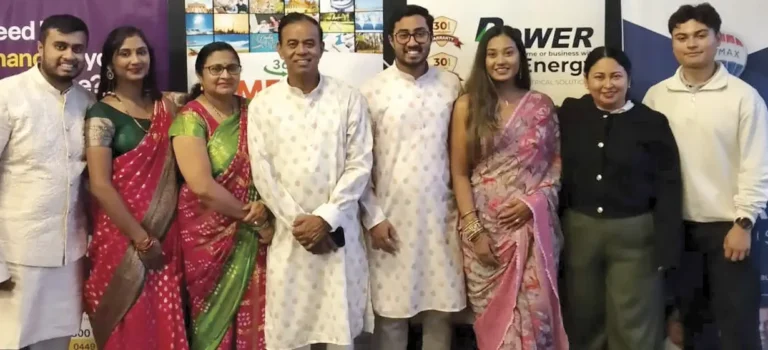
 I would also like to acknowledge remarkable women including Sandy Deo, Usha Chandra, Khue Oan Do, Mandeep, my grandmother, and the many women across our community who quietly go above and beyond each day, sharing kindness, compassion, and strength.
May is also Mental Health Awareness Month, an important reminder that mental health matters for women, men, and young people alike. In recent reader surveys, one message came through clearly: there is a strong desire for greater conversations around mental health, particularly within culturally and linguistically diverse communities.
Recently, I had the privilege of sitting down with Cr Nathan St Ledger, Councillor for Division 4, City of Logan which includes Bannockburn, Belivah, Buccan, Cedar Creek, Kairabah, Waterford, Windaroo, Wolffdene, Yarrabilba, Tamborine, parts of Bethania, and Logan Village. We discussed his journey, his passion for the Logan community, and his unwavering commitment to mental health advocacy.
 Mental health is a topic that I care deeply about, particularly when it comes to young people. Like many families, I know individuals who have struggled with self-harm and suicidal thoughts. These conversations are not always easy, but they are necessary, and they can save lives. If you are able to support Cr St Ledger and his team in their important work, I encourage you to reach out.This is an issue that matters greatly to our readers. Many have asked me to cover mental health, especially as young people navigate the growing challenges of social media and artificial intelligence. Please enjoy my interview with Councillor Nathan St Ledger, who is helping break down barriers in this space. He spoke openly and honestly in the hope of helping others. Over the coming months, I will be sharing more from this important conversation.
Xavier: Would you mind introducing yourself to our readers?
Cr Nathan St Ledger: My name is Nathan St Ledger, and I’m an Ambassador and Director of, “A Chance for Change” (ACFC), a mental health and suicide prevention charity supporting men and the wider community.
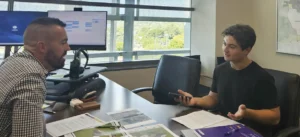 Xavier: Are you able to tell readers more about mental health?
Cr Nathan St Ledger: I think the key thing with mental health is understanding that everybody has mental health—whether it is good, bad, or somewhere in between. I’m fortunate enough to teach Mental Health First Aid, and one of the biggest lessons is that mental health does not discriminate.It doesn’t matter who you are, your race, your background, or the colour of your skin. Everyone can be affected. For me, it is about spreading awareness, making sure people know what resources and support are available, and reminding people that it is okay to struggle and okay to reach out for help.
Xavier: Would you like to tell our readers a little more about ACFC and how they can support you, your team, and the community?
Cr Nathan St Ledger: Absolutely. A Chance for Change (ACFC) is a mental health and suicide prevention charity that was established in 2015. One of my best mates, Ivan, founded it, and I came on board about nine months later.
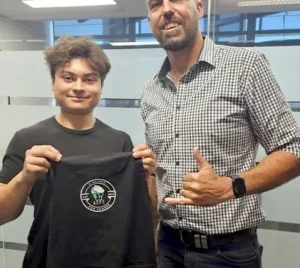 At the time, I was running youth programs, and we wanted to strengthen the mental health component of that work. We invited Evan to get involved, and the partnership grew from there. I have always loved what A Chance for Change stands for.
It was created by mates, for mates, to look out for one another. That is really what we are all about. We lose seven men every day to suicide in this country, which is far too many. Suicide is also the leading cause of death for males under 25. That is something we must work together to change.
Xavier: What advice can you give Australian Indian Times readers?
Cr Nathan St Ledger: Honestly, it is the same challenge facing young people everywhere. The world is changing very quickly. We live in a world of instant gratification, where everyone wants everything immediately, and where people compare themselves to others far too often.
If I could offer one piece of advice, it would be this: surround yourself with good people, build simple daily healthy habits, and understand that being yourself is more than enough. That realisation alone can be incredibly powerful.
 Xavier: Are you able to share your views about social media?
Cr Nathan St Ledger: One of the biggest traps with social media is that it is not very social at all. In many ways, it is the complete opposite. If you look at how people comment and interact online, many would never speak that way to someone face-to-face.
You are always better off having a conversation rather than a confrontation. Genuine human connection is incredibly important for good mental health. Put the phone down sometimes, spend time with people in person, and have real conversations.
Most importantly, find something you are passionate about and get involved. Whether it is Pokémon, football, boxing, music, or anything else, there is a community out there for you. Discover your passion and chase it wholeheartedly.
Mental health affects every family and every community. Seeking support is a sign of strength, and by having open conversations, we help break down barriers and build a more compassionate society.
End of interview.
Over the coming months, I look forward to sharing more from my conversations with Cr. St Ledger and highlighting the important work he continues to do alongside many dedicated members of our community.
From 18 to 24 May, Australia celebrates National Volunteer Week, recognising the extraordinary contributions of volunteers across the country. Volunteering has been a part of my life for as long as I can remember. It has allowed me to work alongside inspiring community leaders, raise awareness about important issues, and connect with people from all walks of life.
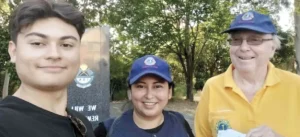
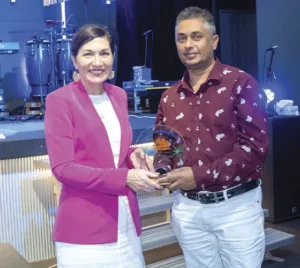
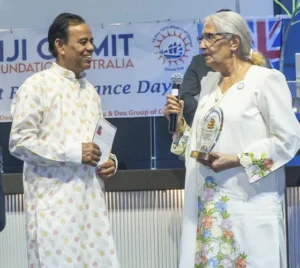
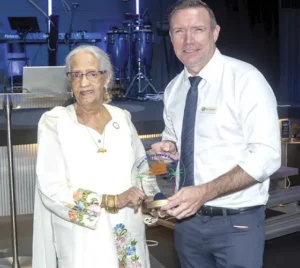
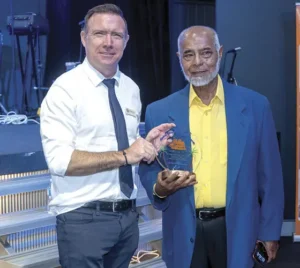
I was honoured recently to volunteer at the Girmit Day celebrations in Hillcrest, an event that beautifully honoured history, culture, and community. Another highlight was volunteering at the Lions Club of Inala BBQ at Oxley Bunnings. I have grown up with the club members, and I am proud to call both them and the community we serve family. A special thank you to the Deo family for their ongoing support. Giving our youth, our community, and so many others a voice is truly remarkable.
Volunteering offers countless benefits, from improving mental wellbeing to building lifelong friendships and supporting those in need. At the same time, it is important to remember that while serving others is deeply rewarding, we must also care for ourselves. You cannot pour from an empty cup.
On 20 May, we recognise World Bee Day, highlighting the vital role bees play in our environment and food production. Many readers may not know that I am also a proud beekeeper. I am passionate about supporting our environment, promoting good health, and sharing honey with those who often need it for medicinal purposes.
Unfortunately, the spread of the Varroa mite is posing a serious threat to bee populations and hives across Australia. Raising awareness and supporting our local beekeepers has never been more important. Our bees may be small, but their contribution to our world is enormous.
As always, thank you for your continued support. Together, through kindness, service, and understanding, we can continue building stronger, safer, and more connected communities. Please do not hesitate to reach out if there is anything I can assist with or if you have a story to share.
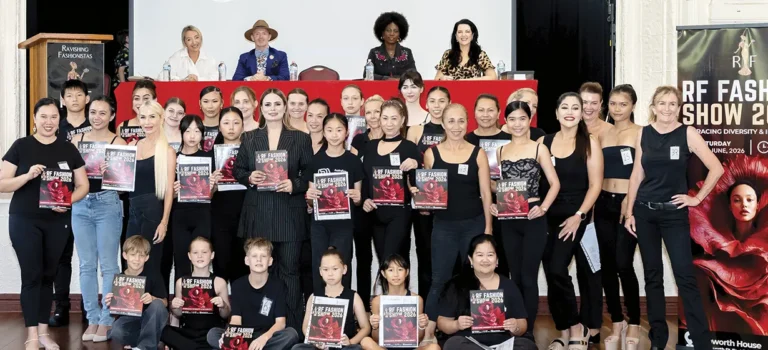
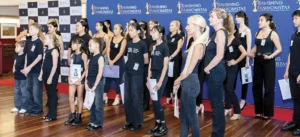
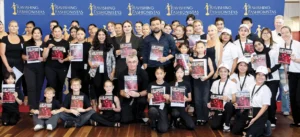
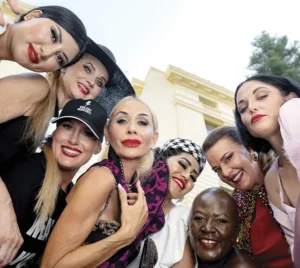 As the excitement builds, the RF Fashion Show 2026 journey is unfolding into something truly extraordinary. With the highly anticipated show set to take place on 6th June at the stunning Hanworth House, the vision of Ravishing Fashionistas is now coming to life in powerful and inspiring ways.
 We are proud to share that our first official model rehearsal has been successfully completed, marking a major milestone in this year’s journey.
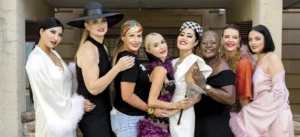
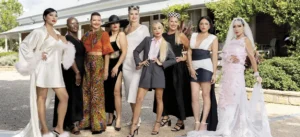 Following the rehearsal, the official promo shoot captured the essence of RF Fashion Show 2026.With carefully curated styling, bold creative direction, and a strong sense of identity, the shoot reflected everything RF stands for — diversity, empowerment, and fearless self-expression.These visuals are now shaping the narrative of the show, offering audiences a first glimpse into the energy, beauty, and impact that awaits on the runway.
 Behind the scenes, preparations are moving at full pace. Designers, models, and the production team are working together to create a show that goes beyond fashion — one that tells real stories and celebrates individuality in all its forms.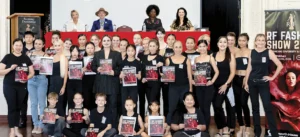
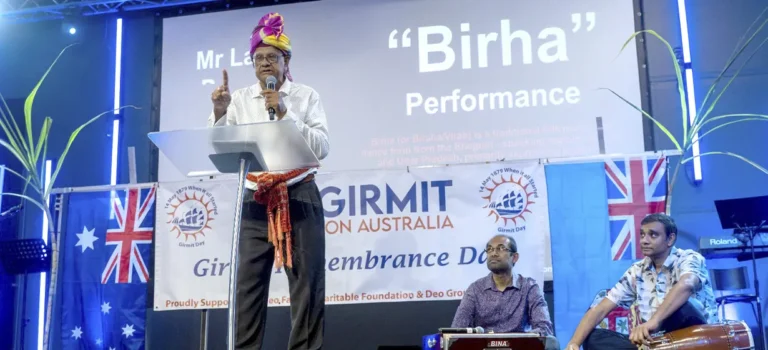
 In the quiet moments of reflection, I often think back to the stories whispered by our elders, stories of a vast, churning ocean, of the unknown horizons of Fiji, and of a word that would come to define an entire people: Girmit. It was a phonetic corruption of the word “Agreement,” but for the 60,000 souls who made that journey between 1879 and 1916, it was much more than a legal contract. It was a testament to survival, a blueprint for resilience, and the birth of a global diaspora that now calls Australia home.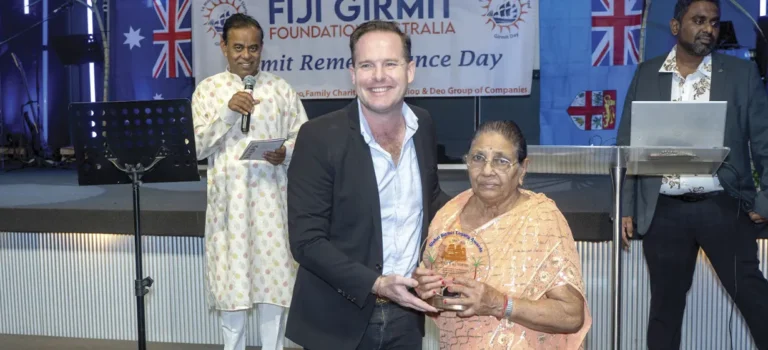
 History is often written in ink, but for the descendants of the Girmitiyas, it is written in sweat, salt water, and an unbreakable spirit. As we observe Girmit Remembrance Day, we are called not only to look back at the arduous journeys across the Kala Pani (black waters) but to look forward at the vibrant community that has blossomed from those initial seeds of hardship. In Brisbane, this flame of remembrance is kept alive with vigor by the Deo Family Charitable Foundation, whose dedication ensures that the story of the indentured labourers remains a cornerstone of our local cultural fabric.
 In the heart of Brisbane, the Deo Family Charitable Foundation has become a vital bridge between the past and the present. Their focus on Girmit Remembrance Day is not merely about an annual ceremony; it is about the preservation of identity. For many younger Indo-Fijians born in Australia, the stories of the plantations can feel like distant echoes. The Foundation works tirelessly to amplify those echoes into a clear, proud voice.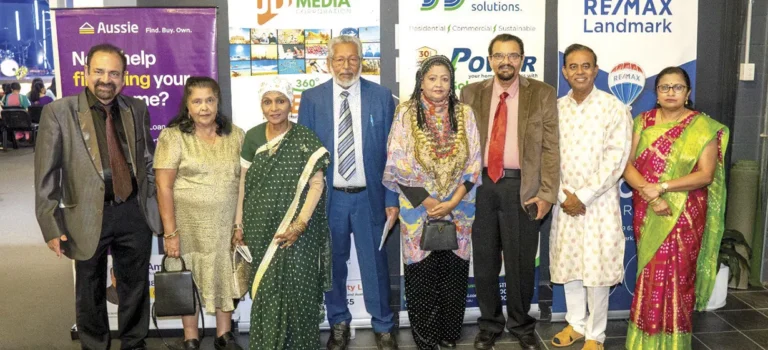
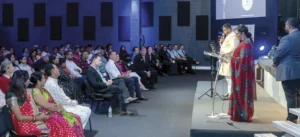 The word Girmit is a linguistic corruption of the English word “agreement.” Between 1879 and 1916, approximately 60,000 Indians were transported to Fiji under this system of indentured labour. This era, known as the Girmit years, fundamentally reshaped the demographic, cultural, and political landscape of the South Pacific, leaving behind a legacy defined by profound suffering and an even more profound triumph of the human spirit.
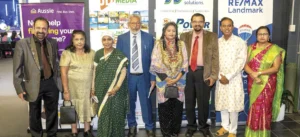 Following the abolition of slavery in the British Empire in 1833, colonial plantation economies faced a massive labour shortage. The British solution was the Indentured Labour System. In Fiji, the first Governor, Sir Arthur Gordon, sought to develop a sugar industry without disrupting the traditional Fijian way of life or exploiting the indigenous population. His solution was to import labour from India.
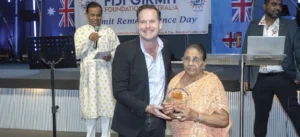 The journey to Fiji was the first of many traumas. Packed into ships like the Leonidas (the first to arrive in 1879), the labourers were stripped of their social identities. On these vessels, caste hierarchies began to dissolve out of necessity. High-caste Brahmins and Dalits ate, slept, and lived side-by-side.This forced proximity birthed a new bond: Jahajibhai (Brotherhood of the Ship). These relationships often became stronger than blood ties, providing a crucial support network for the hardships that awaited them in the cane fields.
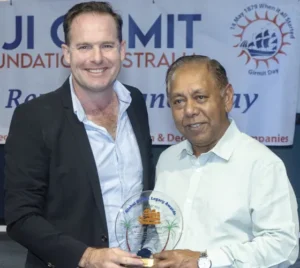 Upon arrival, the Girmityas (those under agreement) were assigned to various plantations, mostly run by the Colonial Sugar Refining Company (CSR). The conditions were so brutal that the labourers frequently referred to the plantations as Narak, the Hindi word for hell.
 The workday was governed by the “task.” A task was a set amount of labour like hoeing, weeding, or cutting cane and that a worker had to complete to earn their daily wage. If the task was deemed incomplete or unsatisfactory by the sirdars (overseers), the labourer was not paid, yet they could still be prosecuted for “refusal to work.”
 Despite the systematic attempt to strip them of their dignity, the Girmityas held tenaciously to their culture. In the coolie lines at night, away from the eyes of the overseers, they gathered to sing bhajans (hymns), recite the Ramayana, and celebrate festivals like Holi and Diwali.Because the recruits came from various regions, speaking Awadhi, Bhojpuri, Magahi, and Tamil, a new language emerged to bridge the gap. Fiji Hindi became the lingua franca of the plantations. It was a simplified, robust dialect that incorporated English and Fijian loanwords, serving as a linguistic testament to the adaptation and survival of the Girmityas.
 The indentured labour system was eventually abolished in 1916, influenced by the rising Indian nationalist movement led by figures like Mahatma Gandhi and C.F. Andrews, who visited Fiji and reported on the “shameful” conditions of the women. By 1920, all indentured contracts had expired.
 The Girmit era created a permanent Indo-Fijian population that eventually became nearly half of the nation’s total population. This demographic shift laid the groundwork for the complex political history of Fiji. The struggle for “Common Roll” voting and equal rights became the hallmark of Indo-Fijian politics throughout the 20th century.The memory of Girmit remains a sensitive and powerful touchstone. It is a story of being “uprooted and transplanted.” While the initial years were defined by colonial exploitation, the long-term result was the creation of a vibrant, hardworking community that has contributed immensely to Fiji’s economy, particularly through the sugar industry, commerce, and the professions.
 In a significant diplomatic breakthrough that has sent ripples of cautious optimism across the globe, a ceasefire agreement between Iran and the United States has been brokered, with Pakistan serving as the unexpected primary mediator. The development, finalized this weekend, aims to de-escalate months of heightened regional tension.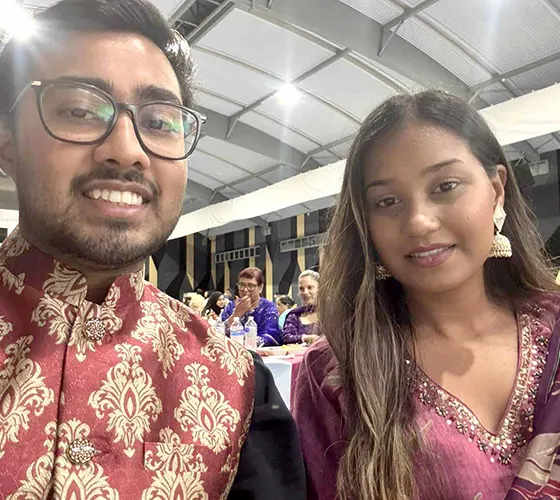
 A vibrant Multicultural Eid Dinner organised by Crescent AusIndia Inc brought together people from across the community for an evening of celebration, connection and shared values.The event welcomed a number of distinguished guests, including Federal Speaker Milton Dick, along with Julie-Ann Campbell MP, James Martin MP and Peter Russo MP. Their attendance reflected strong support for community-led initiatives that promote inclusion and cultural harmony.
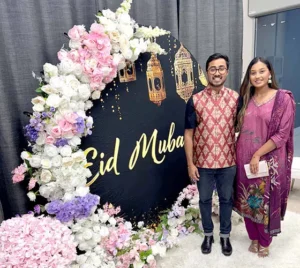 The program featured a mix of meaningful and entertaining segments. Young participants impressed the audience with Quran recitation and the national anthem, while a range of cultural performances brought energy and enjoyment to the night. The performances were warmly received and appreciated by all in attendance.The success of the event was made possible through the support of key organisations including Brisbane City Council, Federation of Indian Communities in Queensland (FICQ), Queensland Muslims Inc (QMI), Urdu Forum, Muslim Charitable Foundation (MCF) and GOPIO Brisbane, along with several generous sponsors. Their contributions helped create a welcoming and well-organised event for the community.
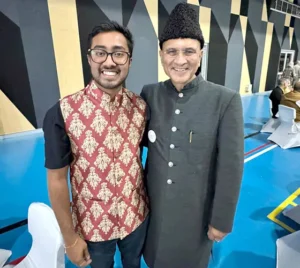 Guests were treated to a delicious dinner along with a variety of homemade desserts, adding a personal and festive touch to the celebration. The evening also featured special treats that were particularly enjoyed by families and children.Crescent AusIndia Inc was commended for its efforts in organising the event, with many acknowledging the time and dedication required to deliver such a successful program. The dinner provided a valuable opportunity for people from different walks of life to come together, interact and celebrate in a positive environment.