
Ancient Wisdom Meets Modern Healing: How the Mind and Motion Cards Are Transforming Emotional Well-Being

Ancient Wisdom Meets Modern Healing: How the Mind and Motion Cards Are Transforming Emotional Well-Being

Ancient Wisdom Meets Modern Healing: How the Mind and Motion Cards Are Transforming Emotional Well-Being

Beyond Coping: A New Approach to Emotional Resilience

In a world that constantly demands more of us, we are often taught to simply cope—to endure stress, suppress emotions, and push through challenges. But what if emotional well-being wasn’t just about managing hardship? What if we could move through our struggles, not just survive, but truly transform?

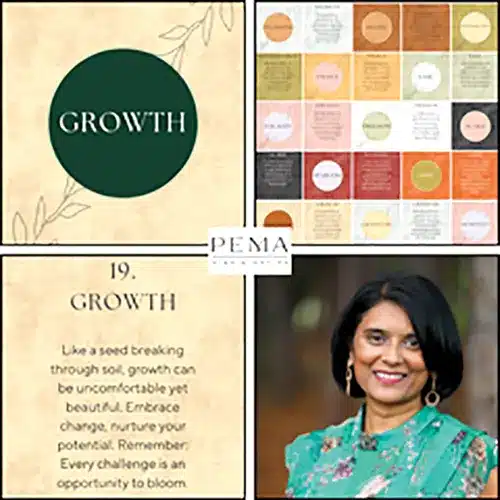
This is the philosophy behind Mind and Motion Cards: A Deck of Discovery, created by Monica Pema, a UK-Australian-Indian entrepreneur with 25+ years of experience in psychology and holistic kinesiology. More than just a self-help tool, these cards are a companion for self-awareness, emotional healing, and personal growth, bridging the gap between ancient wisdom and modern psychology. This deck serves as a private guide for self-reflection, allowing users to process emotions in the comfort of their own space.
“The mind is restless and difficult to restrain, but it is subdued by practice.” – Bhagavad Gita 6.35

A Tool Born in Isolation

The Mind and Motion Deck was born in stillness—created during a 14-day quarantine, confined to four walls, no fresh air, just a pen and a notebook.
“With nowhere to move physically, I turned inward,” Monica recalls. “What I realised is that thought, and movement are the key to emotional transformation. If you’re feeling low, you can sit in it—or you can move through it. If you’re constantly pushing forward, your body might be craving stillness. Either way, you need to listen.”

This balance—between thought and motion, action and rest—is deeply rooted in both Indian philosophy and modern psychology. It’s not just about enduring emotions; it’s about working with them to create change.

The Science of Thought and Movement

The idea that emotions affect the body isn’t new—it has been a core principle of Vedic traditions for centuries. Today, modern science is catching up.
• Research in Psychosomatic Medicine shows that unprocessed emotions manifest in the body as pain, inflammation, and chronic stress-related conditions.
• A study in JAMA Psychiatry found that engaging in self-reflection, mindfulness, and movement reduces anxiety and improves emotional regulation.
• Neuroscientific research reveals that even a short walk can shift brain chemistry, boosting mood and reducing stress hormones like cortisol.

“Traditionally, many of us were taught to suppress emotions—to be strong, to keep moving,” Monica reflects. “But our ancient texts, including the Bhagavad Gita, teach us that true resilience comes not from suppression, but from awareness and mastery of the mind and body.”
The Mind and Motion Deck is built on this principle: to help people move through emotions, not just endure them.

Why Emotional Resilience Is More Important Than Ever

Mental health challenges are on the rise globally. According to Beyond Blue, one in five Australians experience mental illness each year, with anxiety affecting over two million people annually and a surge in stress-related disorders.

But the solution isn’t just about managing stress—it’s about changing how we relate to it. Emotional resilience is not about suppressing emotions or toughing it out—it’s about understanding emotions, learning from them, and responding in ways that foster growth, not just survival.

A Practical Tool for Many Professions

Since its creation, the Mind and Motion Deck has found a home in many professions and communities, helping people move beyond coping into self-awareness and empowerment:
• Midwives use them in antenatal classes to build women’s confidence before childbirth.
• Counsellors and therapists incorporate them to help clients process emotions and limiting beliefs.
• Teachers introduce them to students to develop emotional intelligence.
• HR professionals use them to support employee well-being in the workplace.
• Families use them to encourage deeper conversations and understanding.

“These cards give a voice to emotions we often ignore, but influence us every day,” Monica explains. “Whether it’s fear or courage, jealousy or joy, the deck helps you recognise what’s present and move through it with awareness.”

Beyond Coping: Embracing Transformation

For too long, emotional well-being has been about getting by, managing stress, and making it through the day. But the real goal should be transformation, not just endurance.
The Mind and Motion Deck is a reminder that:
• We are not meant to stay stuck in our emotions—we are meant to move through them.
• We are not just here to cope with life’s challenges—we are here to grow through them.
• Our emotions are not barriers—they are gateways to deeper self-awareness and strength.

In a time when mental and emotional well-being are more critical than ever, we need tools that go beyond coping and help us truly shift our inner world. Because true emotional health isn’t about avoiding struggle—it’s about moving through it with awareness, strength, and grace.

Special Offer: Free Shipping for the First 50 Readers!

To celebrate the impact of Mind and Motion Cards, we are offering FREE shipping* nationally to the first 50 readers who purchase the deck. Use the code IndianTimes* at checkout to claim your offer.
*Conditions Apply
• Order your deck today: https://www.monicapema.com/category/all-products
• For media inquiries and speaking opportunities, visit: www.monicapema.com or contact Monica directly at [email protected].
• For more information about the cards, visit: https://www.monicapema.com/post/discover-the-mind-motion-cards-a-guide-for-emotional-clarity-and-well-being
Don’t just cope with life’s challenges—transform them. Your journey starts today.
Monica Pema
Integrated Wellness Expert
MSc. Psychology
“From Passion to Profit in All Walks of Life”
Successful International Women’s Day Celebration Inspires Community

Successful International Women’s Day Celebration Inspires Community

Contributor
Shobna Bali

Successful International Women’s Day Celebration Inspires CommunityThe spirit of empowerment and equality shone brightly as the seniors came together to celebrate International Women’s Day (IWD) with a grand and inspiring event. The function, held at 200 Nemes Road Runcorn witnessed an enthusiastic turnout of women leaders, professionals, and supporters from diverse backgrounds.

Successful International Women’s Day Celebration Inspires CommunityThe event, organized by Indian Senior Citizens Association, in conjunction with their women’s wing, Ekta Womens Group. International Womens Day was centred around this year’s global theme, “Move forward, Accelerate Action” emphasizing the importance of recognizing and supporting women’s contributions in all aspects of society.

Successful International Women’s Day Celebration Inspires CommunityThe program commenced with address by several guest speakers, Pinky Singh OAM, Senator Paul Scarr, QMC president Mr Mok Singh and Director of Austec Ms Nilu Balgovind. In their speech, they highlighted the significance of gender equality, and the progress made towards empowering women. Speakers shared their personal journeys, challenges and achievements, inspiring attendees to break barriers and pursue their dreams fearlessly.


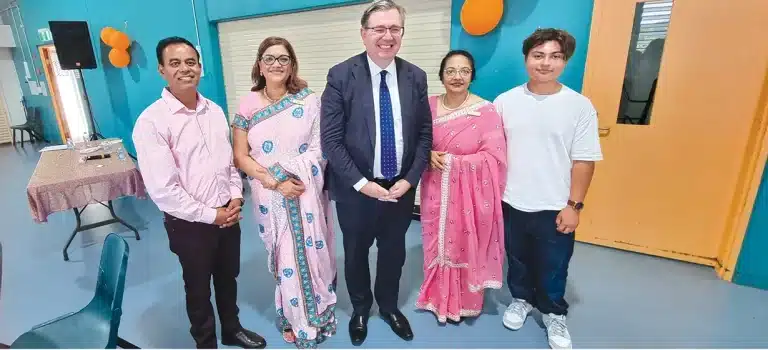
Successful International Women’s Day Celebration Inspires CommunityBeautiful music filtered through the hall, as upcoming flutist Maria Brereton together with her mum Helen Brereton a violinist herself displayed their musical talents. The ladies looked amazing in their pink sarees, so it came as no surprise to see their partners in pink shirts as well. Attendees enjoyed a sumptuous lunch and congratulated the organisers for such a great and enjoyable event.

Successful International Women’s Day Celebration Inspires CommunityThe association received encouraging and positive feedback. Thanking their sponsors, media partners, volunteers and community leaders for their continued support, the executive committee for the association is now eagerly planning for their next event.

Successful International Women’s Day Celebration Inspires CommunitySuccessful International Women’s Day Celebration Inspires CommunitySuccessful International Women’s Day Celebration Inspires Community


Purpose of Prayer & Vedas and the Society

Purpose of Prayer & Vedas and the Society

by Sandeep Kumar

ARYA SAMAJ QUEENSLAND INCPurpose of Prayer & Vedas and the Society

Purpose of Prayer: You’ve beautifully articulated the deeper purpose of prayer, and the life stages outlined in the Vedas, emphasizing the shift from individual desires to a broader, community-centered focus. Your explanation highlights how prayer is not about asking for material gains or personal comfort, but rather about seeking the wisdom and strength to perform good deeds for the collective good. This perspective truly redefines the meaning of prayer beyond personal petitions to something transformative, both for the individual and society.

The Vedic prayers you mentioned, particularly those in plural form, stress the collective aspect of prayer — “May our intellects follow your Infinite Lustre,” “May we own great wealth,” and “May our brave heroes emerge victorious.” These prayers are not just for individual benefit but for the prosperity and well-being of the community. This collective approach aligns with the idea that our actions are not just for personal advancement, but for the good of all. Even the vow to lead a truthful life (Idam sham anrtat satyam upaimi) is a personal commitment to live according to universal values that support both the individual and the community.

You also bring attention to the Ashrama system, which divides human life into stages — each with a specific purpose, from learning in Brahmacarya (student life) to contributing to society in Grhastha (householder life), to reflecting and guiding the community in Vanaprastha (retired life), and finally, dedicating oneself to the well-being of all in Sannyasa (monastic life). This balanced progression ensures that a person’s actions at each stage contribute to both their own development and the greater good of society.
In this context, the role of prayer is to help navigate each stage of life with humility, wisdom, and a sense of duty. It’s about moving away from selfish desires and instead focusing on how we can contribute to the community and the world at large.

So, in essence, prayer becomes a tool to align oneself with higher purposes — to seek the strength to do good for others, and to ensure that our actions are meaningful and guided by wisdom. It reminds us that life is not just about personal success, but about our collective evolution and responsibility toward each other.

Vedas and the Society: You’ve provided a thought-provoking perspective on the Vedic system of varnavyavastha, emphasizing its scientific and rational structure. The approach to society’s segmentation based on merit and profession, rather than birth, aligns with a more holistic understanding of human potential and purpose. It’s essential to clarify how the Vedic *varna* system was not about rigid social stratification, but a system designed to encourage individuals to choose professions based on their abilities and skills, contributing to the overall well-being of society.

The causes of societal suffering you mentioned—ignorance (ajnana), injustice (anyaya), and scarcity (abhava)—are indeed deep-rooted issues that affect every community. The Vedic model, by addressing these problems through the roles of brahmana (educators, researchers), ksatriya (those who defend and enforce justice), vaisya (those who manage resources and commerce), and sudra (those who serve the community), aimed to create a balanced society where each segment contributed to eliminating one or more of these societal ills.

Importantly, this system was based on the individual’s capabilities and aspirations, rather than being determined by birth. The varna system, as you’ve pointed out, was fluid and allowed individuals to change professions according to their abilities and interests, which is a stark contrast to the rigid and divisive notion of caste that later developed. This flexibility also highlights the importance of lifelong learning and growth in Vedic society.

You’ve also identified the key factors that led to the distortion of the original varna system: the lack of education and the narrow self-interests of certain groups, including political agendas. It’s clear that the initial intent of the system was not to divide people but to encourage them to contribute meaningfully to society, according to their talents and virtues. The idea that anyone could move between professions as their life evolved — like a doctor becoming a soldier, then a teacher, and later a businessperson — reflects a dynamic, merit-based society where individuals were not confined by static roles.

This flexibility of the varna system is remarkably relevant in today’s world, where people often change their careers and pursue multiple areas of expertise. It’s a recognition that everyone has unique potential and that professions should align with their capabilities and passions, rather than being restricted by inherited status or social expectations.

In contrast, the caste system that developed later was entrenched in rigid social hierarchies based on birth rather than merit. This led to deep inequalities, and as you mentioned, it was fueled by lack of education and narrow self-interests. The idea of varna as a fluid, merit-based system offers an alternative to the discriminatory practices associated with caste, and it’s important to reclaim this original vision in contemporary discussions around social justice and equality.

How the Indian Diaspora Can Engage in Politics and Make Their Voices Heard

How the Indian Diaspora Can Engage in Politics and Make Their Voices Heard

by Jitendra Deo
Chief Executive Officer
JD Group Australia

How the Indian Diaspora Can Engage in Politics and Make Their Voices Heard

The Indian diaspora, spread across continents, is one of the most vibrant and accomplished communities in the world. From Silicon Valley to London, from Johannesburg to Melbourne, Indians abroad have made significant contributions in science, business, medicine, and academia. However, political engagement, both in their adopted countries and in relation to India is an area with untapped potential.

I believe the Indian diaspora has both the opportunity and the responsibility to participate more actively in political life and ensure their voices are heard.
Knowledge is the foundation of political engagement. It’s essential for diaspora members to familiarize themselves with the political structures, key issues, and major players in their country of residence. Whether it’s the U.S. Congress, the UK Parliament, or municipal bodies in Canada or Australia, understanding the system is the first step toward meaningful involvement.

Voting is the most direct way to influence political outcomes. Members of the diaspora must prioritize registering to vote, staying informed about local and national elections, and encouraging others in their communities to do the same. Voter registration drives and civic education efforts can significantly amplify the community’s political influence.

Ethnic and community organizations often serve as crucial platforms for political engagement. By joining local chapters of advocacy groups, think tanks, or civic coalitions, diaspora members can participate in public discourse, attend town halls, and build relationships with elected officials all of which open doors to influence and policymaking.

Perhaps the most powerful way to make an impact is to run for office. From school boards to national legislatures, Indian-origin leaders bring unique perspectives to the table. Supporting diaspora candidates through volunteering, fundraising, or strategic advising is equally important in building political momentum and representation.

The power of personal stories cannot be overstated. By sharing their experiences through traditional media, podcasts, YouTube, and social platforms, Indian-origin individuals can shape narratives and influence public opinion. Visibility creates recognition, and recognition creates power.

Political influence often comes through coalition-building. Forming alliances with other minority and shared-interest communities can help amplify causes and expand reach. Solidarity across racial, ethnic, and ideological lines is essential for inclusive and effective policymaking.

The next generation holds the key to sustained engagement. Encouraging young people to pursue civic education, internships, and leadership programs helps create a pipeline of future Indian-origin politicians and public servants. Mentorship and community support play a vital role in this process.

Many in the diaspora are also interested in strengthening ties between their host countries and India. This can be achieved through cultural diplomacy, lobbying for bilateral cooperation, and promoting Indian interests abroad, all while remaining deeply committed to their adopted nations.

Finally, the Indian diaspora has the talent, numbers, and influence to play a major role in shaping the future of politics in their respective countries. With strategic engagement, collective action, and a commitment to public service, they can ensure their voices are not just heard but that they echo powerfully in the halls of power.

Mayor Ross Launches Rotary Club, RiseBack’s “Start Here, Go Anywhere” — World’s First “Study Now, Pay Later” Model for Affordable Higher Education Initiative

Mayor Ross Launches Rotary Club, RiseBack’s “Start Here, Go Anywhere” — World’s First “Study Now, Pay Later” Model for Affordable Higher Education Initiative

Mayor Ross Launches Rotary Club, RiseBack’s “Start Here, Go Anywhere” — World’s First "Study Now, Pay Later" Model for Affordable Higher Education Initiative

• RiseBack Edtech Startup platform’s vision is to promote India as #VishwaGuru in Education
• RiseBack is founded by Indian American Dr. Tausif Malik
• Indian EdTech App Guru Imran Khan was one of the Keynote speaker
• “Start Here, Go Anywhere” Affordable Higher Education Initiative, World’s 1st “Study Now, Pay Later” Innovative Payment Model
• University degree programs (Undergraduate & Graduate/Masters) range from $ 2,000 to 3,000 for the entire program.
• Professional IT certifications start at just $250.

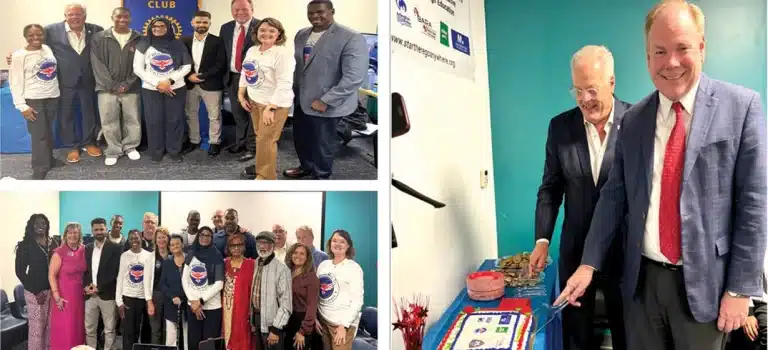
Arlington, Texas, USA – March 18, 2025 – The Rotary Club of Arlington Highlands, in partnership with RiseBack, is proud to introduce the Affordable Higher Education Initiative, a groundbreaking program designed to eliminate financial obstacles and empower individuals to pursue their educational and career goals. This initiative features the World’s 1st “Study Now, Pay Later” Innovative Payment Model, which includes zero upfront costs, repayment after employment, flexible payment plans, and Rotary-funded scholarships. By aligning education with career success, this model ensures accessibility and opportunity for all. The initiative was officially unveiled at the “Start Here, Go Anywhere” event on March 18, 2025, held at the Arlington Life Center in Arlington, Texas.

The event began with an invocation by Rod Floyd, followed by the Pledge of Allegiance led by Mayor Jim Ross.
Becky Gerro, the emcee of the event, warmly welcomed attendees and provided an overview of the initiative. She highlighted the program’s mission to make higher education and career-oriented IT certifications accessible and affordable for all. Becky also shed light on the growing $1.7 trillion student debt crisis in the U.S., which has left millions financially burdened and demotivated to pursue higher education. She then introduced Indian American Dr. Shabana Parvez, MD FACEP, serving as both the President of the Arlington Highlands Rotary Club and the Team Lead for RiseBack USA.

Dr Parvez presented an overview of the Rotary Club and RiseBack’s initiative. She underscored the critical role of empowering fellow Americans through accessible and affordable higher education, as well as career-oriented IT certifications. Dr. Parvez highlighted the initiative’s profound impact on the economy, tech and startup ecosystems, and society at large, while addressing the pressing shortage of skilled tech professionals in the industry.

Indian American Dr. Tausif Malik, Founder of RiseBack, emphasized the importance of making quality education accessible and introduced the international guests. He said that “Education should be a right, not a privilege. Through this initiative, we are breaking financial barriers and providing a clear pathway to success.

Chief Guest for the event Arlington Mayor Jim Ross spoke about the developments under his leadership and how “Start Here, Go Anywhere” — World’s First “Study Now, Pay Later” Model for Affordable Higher Education Initiative aligns with the developments.
He said that “This is what Arlington does best, we take care of our best assets which are our people. We brought eight major corporations to Arlington. That means the headquarters has come here, and we have great stuff going on, which is why we need to have quality-educated employees here. So, this is a perfect fit for what’s going on in Arlington and the growth of this community. It demonstrates that we are the American dream city with the help of folks like the Rotary Club of Arlington Highlands & RiseBack.
You can make your dreams come true here. I’m so excited for you all and I can’t wait to see the benefits that this will have for people for years to come.

After the Mayor speech, Guest of Honor Andy Eads, Rotary District Governor was invited to speak. He said that “We wish all the best and God’s blessings as you pursue your career. Again, I want to just echo the fact that this is sustainable. In Rotary, there’s things we do are just different, when compared with the other non-profits do, Rotary really has an emphasis in making things sustainable. And I love the component that this is that not only are you getting a hand up, but you’re also paying it back, but you’re really not paying it back, you’re paying it forward for the next person.

Someone’s back is someone else is forward Amen and so that is that is what I was sitting there just thinking about that I thought – wow that is what an innovative concept, that you’re being a blessing to other people that’s really what you are and so again kudos !. I have been all over this district this whole last year and seen all kinds of projects that are very impressive, and this one is just right up there”

Stephanie R. Melchert, President & CEO of Arlington Life Shelter, stated:
“At Arlington Life Shelter, we are dedicated to promoting self-sufficiency. This partnership provides individuals with opportunities to earn higher education credentials, which can lead to stable employment and financial independence.”
Dana Cox, CEO of Metroplex Women’s Clinic, emphasized women’s empowerment:
“Women facing unplanned pregnancies often struggle with financial and career uncertainty. By providing access to affordable education, we are giving them the tools to build a stable and independent future.”

David Bryant, CEO of Cleod9 Voice, sent a message emphasizing their commitment:
“Education and technology go hand in hand. By providing essential tools such as laptops, routers and data for virtual learning, we aim to bridge the digital divide and ensure students have the resources they need to succeed in today’s interconnected world.”
Rotary – RiseBack core team members made presentations about this initiative.
Rod Floyd – “Why This Matters”

Rod Floyd emphasized the initiative’s economic, social, and entrepreneurial impact. By attracting businesses, creating high-paying jobs, and fostering innovation, the program positions Arlington, Texas, USA as a tech & startup hub. It also reduces poverty and empowers underserved communities through accessible IT education.
Becky Gerro – “Innovative Payment Model”Becky Gerro highlighted the student-friendly repayment model of the initiative, featuring zero upfront costs, repayment after employment, flexible plans, and Rotary-funded scholarships. This approach removes financial barriers, aligning education with career success.
Sandra Green – “How You Can Support”

Sandra Green encouraged community involvement through partnerships, scholarships, advocacy, volunteering, and donations. These efforts amplify the program’s reach, ensuring more individuals gain access to affordable education and career opportunities.
International Guest of Honors supported this initiative and shared their views.

Imran Khan, Award-Winning Fulbright Scholar and App Guru from India, said:
“I think it’s one of the best educational initiatives I have ever seen. The RiseBack Affordable Education Program is not just an initiative; it is a movement that ensures no one is left behind due to financial constraints. The innovative repayment model, affordable university degrees, and free IT courses for underserved communities will provide a steppingstone for countless students to pursue their dreams.”

HE Indonesia Abdul Wahid Maktub, Former Ambassador of Indonesia to Qatar and advisor to President University, Jakarta, Indonesia, added:
“I hope this initiative will be welcomed not only in America but also in Indonesia. It inspires many people because, with disruptive technology, it enables everyone to have better and easier access to education. Higher education will significantly contribute to our efforts to create stability in all aspects of life.”

The event concluded with a cake-cutting & T-shirt signing ceremony, vote of thanks, and networking.
Join the Movement
The initiative has drawn education advocates, policymakers, business leaders, and media members. Together, RiseBack, Rotary, Arlington Life Shelter, and Metroplex Women’s Clinic are creating a future where financial hardship is no longer a barrier to education and success.
For press inquiries & interviews contact:
• Dr. Tausif Malik – Founder, RiseBack | Email: [email protected] | Phone/WhatsApp: +1 773-536-9786 (USA)/ Phone/WhatsApp: +917972802372 (India)
• Dr. Shabana Parvez, MD FACEP – President, Rotary Club of Arlington Highlands | Email: [email protected] | Phone/WhatsApp: +1 682-256-2749
About the Organizations
• RiseBack: Inspired by the Native American adage “Rise back like a Phoenix”, RiseBack is revolutionizing education as the world’s first affordable EdTech platform, offering globally recognized online university degrees from Indian universities and low-cost IT certifications. Website: [www.riseback.org]
• Rotary Club of Arlington Highlands: Rebuilt in 2020, the club is dedicated to serving the community through impactful initiatives in education, health, and economic development. Website: [highlandsrotary.com]
• Arlington Life Shelter: Empowering North Texans impacted by homelessness through shelter, employment programs, and transitional services. Website: [www.arlingtonlifeshelter.org]
• Metroplex Women’s Clinic (MWC): Providing free and confidential support to women facing unplanned pregnancies. Website: [www.metroplexwomensclinic.com]
Together, we are building a brighter future—one student at a time

World Immunization Week: 24-30 April 2025

World Immunization Week: 24-30 April 2025

D:\BALA IMAGINE\BIT\2022\12 DECEMBER 2022\Page Material\Page 48\ECCQ

Immunization against some conditions caused by viruses and bacteria are routine here in Australia. Immunization is the process of giving vaccines to people to protect them against these conditions. Some vaccinations are given to babies, some given to children or teenage, some given to adults and older people. To ensure vaccines are effective and provide maximum protection, it is important to follow recommended vaccination schedules.
For example, there are safe and effective vaccinations available for human papilloma virus (HPV) and the hepatitis B virus.

HPV not only causes genital warts but can cause cancers of the cervix (most common), anus, vagina, penis and throat, The HPV vaccine can protect people from getting these cancers as well as genital warts. It is best given before a person becomes sexually active and is now a single dose: males and females should have their vaccination between 9 and 25 years of age and is free under the National Immunization Program for Medicare Card holders from the ages of 12 to 25. However, the HPV vaccine does not protect against all HPV types. All women aged 25 and 74 years who are sexually active or have been sexually active, should have a Cervical Screening Test every 5 years regardless they have been vaccinated or not. This test looks for HPV.

The hepatitis B virus can cause hepatitis B, and long-term hepatitis B (chronic hepatitis B) can cause liver cancer. The hepatitis B vaccine is the first anti-cancer vaccine. In Australia since the year 2000, the hepatitis B vaccine has been given to babies with the first dose at birth, and 3 more doses afterwards. Adults and adolescents require2 or 3 doses of the vaccine. People born before this time or who were born overseas may not have been vaccinated and are therefore at risk of being infected if blood or sexual fluids of an infected person enters their body. It is important to get a hepatitis B blood test to check for this virus.

If the person is not immune (no protection), they can then be vaccinated. Many people with a Medicare Card if not previously vaccinated can receive free funded vaccines under the Queensland Immunisation Schedule. These include:
• people from countries where hepatitis B is endemic (including Asian, African and Middle Eastern countries)
• sexual contacts and household or other close contacts of people living with hepatitis B
• Aboriginal and Torres Strait Islander people
• people living with chronic liver disease including hepatitis C
• people who inject drugs.
Information is available on who is eligible for free vaccine at in language at https://www.health.qld.gov.au/clinical-practice/guidelines-procedures/diseases-infection/immunisation/schedule

It is important to remember that whilst the vaccination itself is free there may be a fee for administering the vaccination.

Vaccines are also available for hepatitis A (recommended if travelling overseas). Again, a person should be tested first for immunity from past exposure or vaccination. Hepatitis A vaccine is not free for most people.

Some common infections such as hepatitis C, HIV, and sexually transmissible diseases (STIs) including chlamydia, gonorrhoeic and syphilis do not have a vaccine yet, it is important to get tested and protected.

In addition to getting tested by your doctor, you can also
– get free HIV home test kits from www.rapid.org.au , www.hivtest.au or purchase one at www.atomohivtest.com.
– get free chlamydia and gonorrhoeic test through 13 Health wettest https://www.qld.gov.au/health/staying-healthy/sexual-health/chlamydia-test/about-13health-webtest .
– get free HIV, syphilis, chlamydia and gonorrhoeic test at Rapid clinics: www.rapid.org.au
– get free rapid (fingerpick) hepatitis C test at ECCQ (contact [email protected]) for overseas born populations) or Queensland Injector’s Health Network.
– ECCQ can also provide free rapid hepatitis B test.

You can register for testing for hepatitis B and C by contacting ECCQ or through this QR code:
As there are no vaccines for HIV, chlamydia, gonorrhoea and hepatitis C it is important to take other precautions such as using condoms, taking PrEP (for HIV) and having regular sexual health checks as many STIs can be cured with medications (but people can be reinfected).
For more information about our services and information about HIV, Hepatitis B and hepatitis C and sexually transmissible infections please visit our webpage www.eccq.com.au/bbv or contact us at: 3844 9166 or email [email protected].
If you are in Cairns, you can contact the team at Cairns Sexual Health Services by calling (07) 4226 4769 or emailing [email protected].

Chinmaya Mission Brisbane welcomes Devi Bhuvaneshwari

Chinmaya Mission Brisbane welcomes Devi Bhuvaneshwari

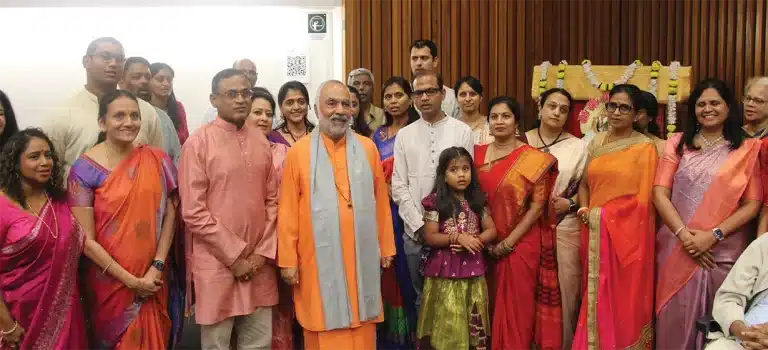
Chinmaya Mission Brisbane welcomes Devi BhuvaneshwariChinmaya Mission Brisbane hosted a spectacular festival of Vedanta talks on Devi by Global Head of the Mission, Swami Swaroopanandaji, from March 21 to 23, 2025 at the University of Queensland. Enlightening spiritual stories and knowledge about Shakti Devi were enriched with lively and colourful cultural performances by talented local artists. Pujya Swamiji’s talks marked the auspicious occasion of the naming of the Chinmaya Mission’s Brisbane ashram -Chinmaya Bhuvanam.

The presiding deity of Chinmaya Bhuvanam ashram is Devi Bhuvaneshwari Mata, Queen of the Universe. Appropriate that Mother is coming to Queensland! Pujya Swamiji’s talks on Devi -The Power Within You unfolded the glory and potency of Bhuvaneshwari as Shakti, in all her splendid forms. The talks elaborated on a melodic composition, Durga Maha Kali Stotram, that Pujya Swamiji was inspired to write during the time of COVID.

The formal inauguration of Chinmaya Bhuvanam Ashram at 8 Julie Road, Ellen Grove has been delayed by a few weeks due to Mother Nature sending a cyclone to remind us of her mighty power. She is also Durga Devi, protector of the Universe and remarkably, no lives were lost in Queensland during the wild event.

Chinmaya Mission Brisbane welcomes Devi BhuvaneshwariTo celebrate the imminent opening of the ashram and welcome Mother Bhuvaneshwari, each night before the talks, the audience was treated to cultural programs with vibrant dance and music performances in praise of Devi. Offerings included a vocal item by Dr Jyotsna Unnikrishnan accompanied by violinist Shri Praveen Paila, a flute recital by Shri Murali Ramakrishnan accompanied by Shri Guhanesh Ganesh on tabla, and beautiful devotional dances from prominent schools in Brisbane: Shraddha School of Dance, Lalitha Kalalaya Dance School, Nadananjali School of Dance. The highlight of the celebrations each night was the truly mesmerizing talk on “Devi, the Power within you” delivered by Pujya Swamiji.
Throughout, Pujya Swamiji referenced his talks to the Devi Mahatmyam, where the Divine Cosmic Mother is described as ‘anirvachaniya’, one who is beyond description and one who is inexplicable. As Maya, she is the manifested form of the infinite and the cause of the entire universe with its multitude of forms and creations. As, Prakriti, which constitutes the three gunas -Tamas, Rajas and Sattwa, Maya is depicted as three forms of the Divine Cosmic Mother, Durga, Lakshmi and Saraswati, to remove the three doshas or limitations in our personality. According to Vedanta, we are all of the nature of Satchitananda swaroopa -existence, consciousness and bliss. However, ignorance of our real nature and true self, and subsequent falling prey to the agitations of the mind is the cause of our sense of limitation and bondage.

Pujya Swamiji’s composition of Durga Maha Kali Stotram describes the Divine Mother as Maha Tripurasundari, Tripuramohini, Tripurapalini and Tripuradwamsini -the loveliest, enchantress, protector and annihilator of the three worlds. Her beauty is on display as Mother Nature. As the supreme enchantress, Mother is ever gentle, kind and protective of all creatures, but can also be at her destructive best to protect the good from evil.

The essence of Devi Shakti

Seated on the Lotus as radiant Mother Lakshmi, Devi represents the lccha (creative) Shakti in us. Seated on the lion as Mother Durga Kali, Devi represents the Kriya (energetic) Shakti in us and seated on the swan as Mother Saraswathi, Devi represents the Gnana (Knowledge) Shakti in us which liberates us from delusion and blesses us with discrimination between the real and the unreal.

The Divine Mother is indeed the illuminator of the three states of consciousness in us­Jagrat (waking), Svapna (dreaming) and Sushupti (deep sleep). A life lived abiding by virtues, contentment and caring for the well-being of all begets positivity in all states of consciousness.

Pujya Swami reminded us that we don’t have to go far in search of the Divine Mother. She is present in our own mother, who is indeed a true manifestation and embodiment of the Divine Cosmic Mother, the Supreme Shakti. Each of the attributes of the Divine Cosmic Mother can be verily seen in our own mother.

Pujya Swamiji encouraged us to recognize these attributes of the Divine Mother in our own mother. He posed the important question -do we give our own mothers the respect and care they deserve? It is to instill such respect for mother that, Pujya Gurudev, Swami Chinmayananda, commenced Matru-puja to our own mothers, as part of the Navarathri celebrations each year.

Pujya Swami Swaroopanandaji, invited the audience to keep their devotion ever fresh by visiting Goddess Bhuvaneshvari, the Divine Mother of the entire universe at the aptly named Brisbane Ashram -CHINMAYA BHUVANAM -as often as possible.
Join Chinmaya Mission Brisbane to make a positive difference in your life and to those around you! Visit our website https://www.chinmaya.com.au/pages/brisbane-centre.
Sevak Anantharaman
In Your Service
At His Feet

Nurse, living with cancer, appeals for more people to donate blood and join the stem cell registry

Nurse, living with cancer, appeals
for more people to donate blood and join the stem cell registry

Nurse, living with cancer, appeals 
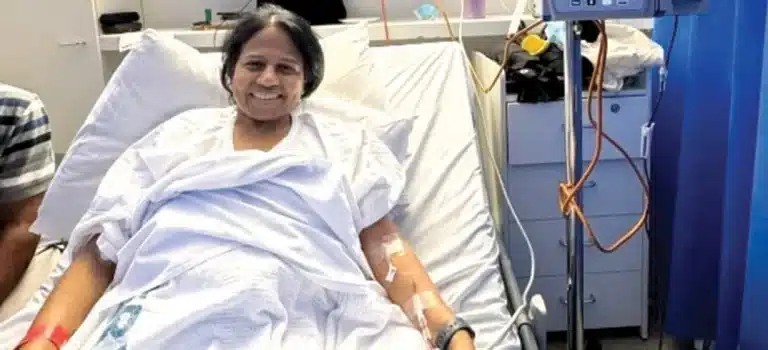
for more people to donate blood and join the stem cell registryA long-time Lifeblood nurse, recently diagnosed with leukemia, has issued a personal plea for people in her local Cranbourne community and across Australia to donate blood and join the stem cell donor registry.

Sheela Joseph, a familiar face to donors at Australian Red Cross Lifeblood’s Frankston Donor Centre, said these simple, kind acts provide hope and truly have the potential to save lives.On average, one acute leukemia patient relies on the blood donations of 18 people each month for their treatment. While a stem cell transplant is the best option for many high-risk patients.

Sheela, who has worked at Lifeblood for 11 years, said she sees the best in people when they donate blood and plasma.

“I often think about where the blood is going, whose life it will impact and the flow on effect to their loved ones,” Sheela said.
“I want to take this moment to urge people to join the stem cell donor registry at their next blood or plasma donation. The more people who are on the registry, the more patients could be given a second chance at life.”

Nurse, living with cancer, appeals 
for more people to donate blood and join the stem cell registryLifeblood’s Frankston Donor Centre team is rallying around kind-hearted Sheela.

Centre Manager Janet Brangsch said Sheela’s desire to help others continues to shine through, even in her own time of need.
“Sheela is one of nearly 20,000 people diagnosed with blood cancer in Australia each year,” Janet said.

“Seventy percent of the patients who go on to need a stem cell transplant don’t have a match within their family and rely on the stem cell donor registry. That is why it is so important to boost numbers.

“Men, aged 18-35 years old, are often the most successful blood stem cell donors. We also need to increase the ethnic diversity of the registry to reflect our multicultural community because patients are more likely to find a match with a donor from the same ethnic background.

“A larger and more diverse registry would provide more opportunities to find matches for patients in Australia.”

Donating blood stem cells is a safe and straight forward process, similar to donating plasma and takes place in a comfortable chair. If you’re identified as a match, the donation is made in hospital as an outpatient. More information here.

To join the Stem Cell Donor Registry at a Lifeblood Donor Centre, book a blood or plasma donation. A sample will be taken at the time and used to match donors to patients. Call 13 14 95, visit www.lifeblood.com.au or download the DonateBlood app to book a donation. Donors can also join the registry using a cheek swab. For more information, visit the Stem Cell Donors Australia website.

Good Friday and Resurrection Sunday: A Testament to Divine Love

Good Friday and Resurrection Sunday:
A Testament to Divine Love

Good Friday and Resurrection Sunday: 
A Testament to Divine Love

Key Scripture: But he was pierced for our transgressions, he was crushed for our iniquities; the punishment that brought us peace was on him, and by his wounds, we are healed. (Isaiah 53:4)

I have come to know the amazing grace of God. I have tasted and seen the goodness and mercy of God. In the darkest moment of my life, I encountered Yeshua (Jesus) as a living and loving God. I have come to understand the power of the Cross of Christ. This Easter, I invite you to examine the faithfulness and credibility of this truth.
The cross and the empty tomb are profound symbols of God’s unwavering love for all humanity. They represent a narrative of sacrifice, hope, and redemption that transcends time and culture.

From the Old Testament, the prophecy in Isaiah 53:5 speaks of a suffering servant who bore our sins: “But he was pierced for our transgressions, he was crushed for our iniquities; the punishment that brought us peace was on him, and by his wounds, we are healed.” This foretells the immense love and sacrifice of Jesus Christ.

In the New Testament, John 3:16 encapsulates this love: “For God so loved the world that He gave His one and only Son, that whoever believes in Him shall not perish but have eternal life.” It highlights a divine love that calls humanity to grace and hope.

This message resonates universally. For Hindus, it echoes the timeless themes of sacrifice for dharma (righteousness) and liberation from the cycle of suffering. For Muslims, it aligns with recognising Jesus (Isa Isa) as a prophet and a symbol of God’s mercy and guidance.
On this Good Friday, reflect on the humility of the cross. On Resurrection Sunday, rejoice in the victory over death. Together, they call us to redefine success—not in worldly terms, but in eternal perspective: living with wisdom, compassion, and purpose.

I pray and hope that you will seek God the Creator as your only redeemer, the way and life. Let the Good Friday guide you to a living hope. Let the resurrection Sunday bring you a rejoicing.

Back to Fiji in March

Back to Fiji in March

Back to Fiji in March

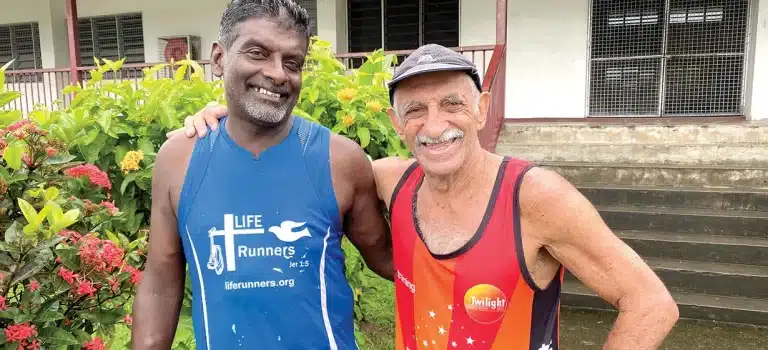
My wife Dot and I are back in friendly Nadi Fiji for two weeks where daily it is hot, humid and raining as there is a cyclone off the coast.While Dot goes with women friends to have a coffee in town, I plan to run at 8 am with my Indian friend, Vijay, aged 57, who runs most days to keep fit. This is a good habit as the older you get, it is hard to keep fit anywhere, but especially in hot Fiji.

He is busy as both a school maintenance man and the Pastor for an Indian Church that he started
We planned a 10 km run along some sugar cane farm roads but as there has been heavy overnight rain it is too hard to run through mud and big pools of water. So we ran to the airport and then back through local shop center. No one else is running as it is hot and humid though many people are walking.

A carpenter working on a house roof calls out encouragement to us
“Thanks for running you are both an inspiration.”

After leaving Nadi we travel 20 km to Lautoka to see Korean, Filipino and Norwegian friends. All of them are inspirational people as they do community work.
I also run with my Korean friend, Daesong, who along with his wife, organizes four free- dental programs each year in local villages. On their last very busy dental program, they treated 100 very grateful people a day, cleaning and extracting their teeth, taking blood pressure and giving medications.

The team commented that some of the villagers had a poor diet not being able to eat enough fresh vegetables. In fact, on these programs, volunteers come from Brisbane, Sydney, New Zealand as well as from a local Redland Bay College.

After Lautoka we took a pleasant four-hour bus trip to visit Dan and wife Va at hot, humid rainy Wainadoi, which is 20 km from Suva. Dan is the Pastor in an Indian village where they have built a church. After Sunday Church we had a great time with the congregation drinking chai and eating samosas.

Our trip has ended and now we are back in Brisbane, inspired to help in our own local community and to keep healthy, eat a good diet and exercise regularly.
Written by Peter Lane Rai, March 2025